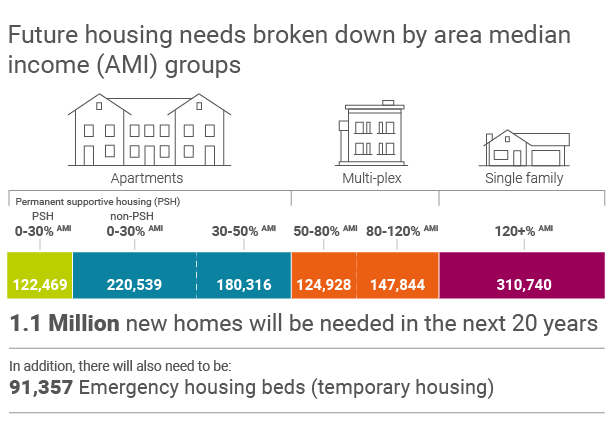
A final report approved Tuesday by a 19-member taskforce implores the state legislature to take action to stand up a new housing department in 2027, identifying gaps and inefficiencies that are standing in the way of the state's housing goals. The proposed department would be led by a cabinet-level Secretary of Housing and charged with "owning" outcomes around market-rate and affordable housing, including the production of more than one million new homes expected to be needed over the next two decades.
The taskforce was the product of an executive order issued by Governor Bob Ferguson last year, charged with creating a "clear mission and vision" for a new statewide housing department after the idea had been floating around for years. Currently, most housing-focused work is housed (so to speak) within the state's Commerce Department, with that workload increasing significantly over recent years as the legislature created new land use mandates and accountability frameworks.
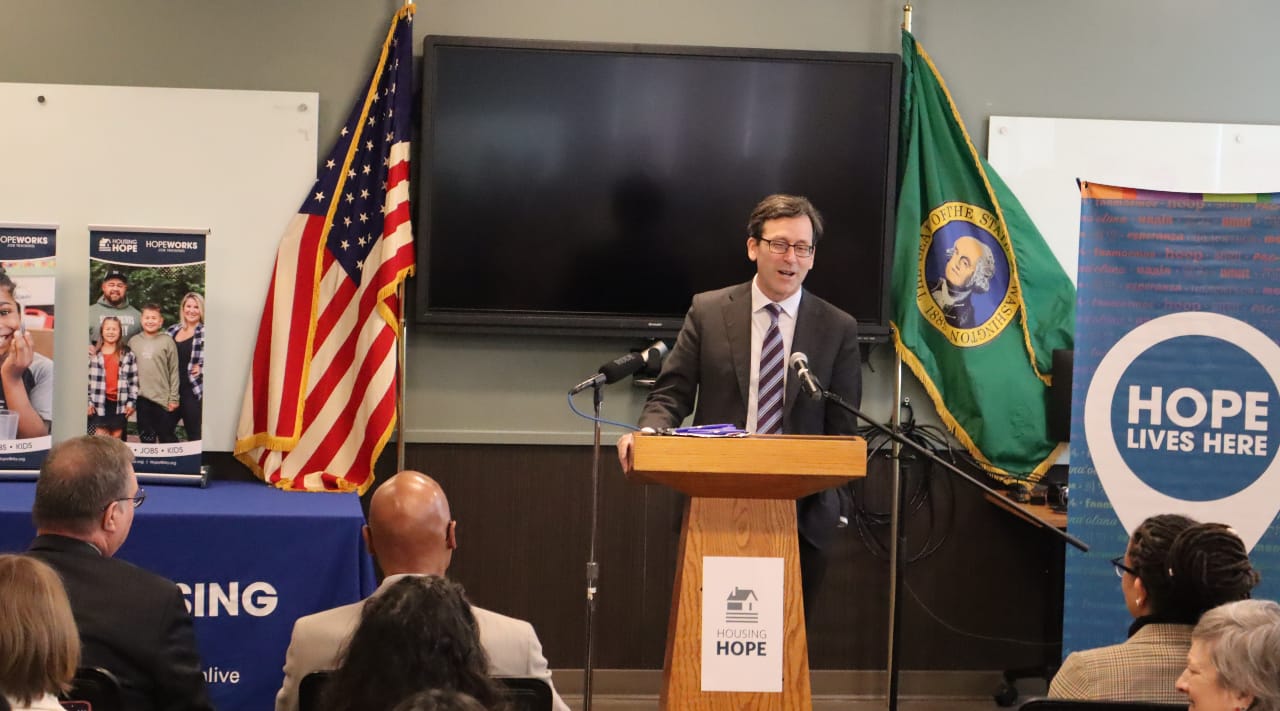
The taskforce was chaired by former state Senator David Frockt, who currently serves as Ferguson's Deputy Policy Director for Healthcare, Housing, and Public Safety. Other heavy-hitters on the panel included State Senator Jessica Bateman, Pierce County Executive Ryan Mello, and Lieutenant Governor Denny Heck.
"Our task was challenging: build the framework for a new governing system for housing, while doing nothing to distract from the ongoing housing work that must continue even as we stand up a new agency," Frockt wrote in an introductory letter embedded in the report. "[Our report] gives policymakers recommendations they can consider in 2027: one accountable agency, built in phases, without disrupting the programs that people depend on today."
Frockt framed a state housing czar as the missing ingredient in a recipe that was otherwise coming together.
"Washington has the people and the programs to build the homes we need," Frockt continued. "What we have lacked is one cabinet-level official leading a single results-oriented agency that interacts with other state actors and local public and private partners in a spirit of innovation, acceleration, and red tape removal."
Just last month, The Urbanist reported on new data showing that most housing growth targets around Central Puget Sound – an area that includes the state's largest growth centers – aren't being met, with overall rates of housing production since 2019 being carried by just a few jurisdictions, including Seattle. Of the 40 cities across King, Pierce, Snohomish and Kitsap Counties that are expected to accommodate the largest share of regional housing growth through 2044, just 14 are on track and many are significantly behind.
A spate of statewide housing reforms, including middle housing legalization, reduced parking requirements, and transit-oriented zoning mandates, have either gone into effect recently or set to be implemented in the coming years. Those reforms are expected to play a big role in moving the needle, but it will fall to the state to prod recalcitrant jurisdictions along.
One piece of that puzzle is the Housing Accountability Act, which reviews underperforming cities and towns on a rolling annual basis, provides guidance on how to get into compliance, and carries a major stick in the form of the "Builder's Remedy." Under that law, if a jurisdiction stays out-of-compliance with state law after being given an opportunity to make updates, they will have to approve any complete building permit as long as certain affordability thresholds are committed to, regardless of existing zoning.
So far, no Washington city has yet triggered it – although Bainbridge Island had flirted with testing the law.
"The recommendation responds to a housing system that produces too little housing despite substantial effort," the taskforce report's executive summary states. "To date, despite the more than 50 pieces of housing-related legislation that Washington has enacted in just the past five years, no state agency or the executive has established a single clear mission for a consolidated state housing department that encapsulates what the state is trying to do."
A phased implementation for the housing department would see a small startup team established alongside the housing secretary, using $5.38 million in seed funding in the next biennial budget. Four divisions would be established: data and performance, research and innovation, problem solving and partnerships, and standards and accountability. An initial strategic plan and an operating plan are both delivered during that phase, and a Washington Housing Results Council would be created and chaired by the secretary.
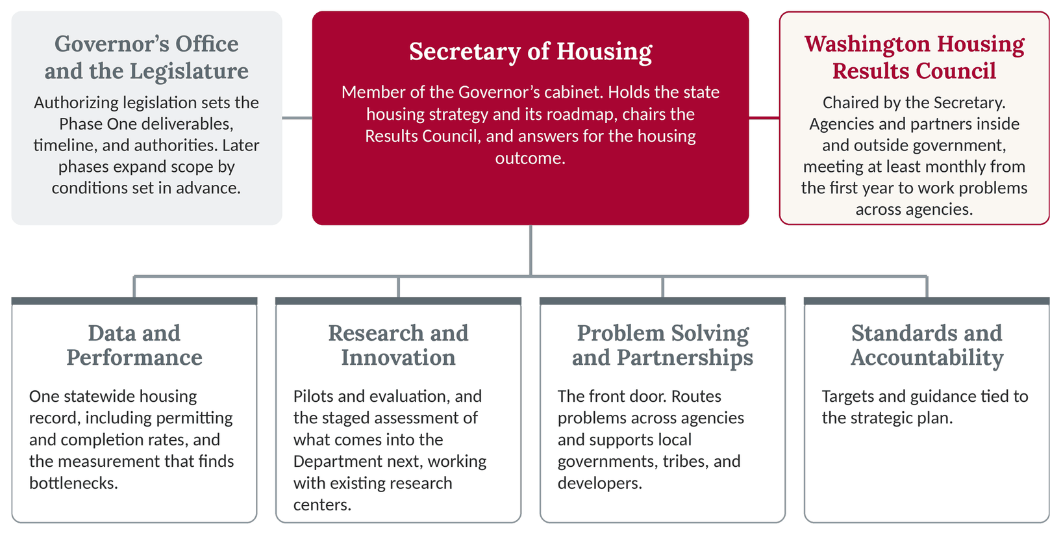
Phase two would occur during and after the 2028 legislative session, with programmatic functions and authorities officially moved into the new department and a "strategic housing action plan" established by that November. Phase three adds more programs and functions over time.
"With this phased approach, we're not waiting around for a new agency to build momentum and continue to advance the state's housing goals," said Amy Buckler, Assistant Director of Commerce's Housing Division. "We are concurrently working on the Washington Accelerator for Residential Production report, which is going to create a platform for building momentum and evolving. And we're doing that work concurrently with this."
Over the course of the taskforce's work, housing organizations of various stripes familiar with what it's like to navigate state government have weighed in on what could be achieved with a unified department, while clearly wanting to see more than a simple reorganization come out of the process.
"We believe the greatest benefit of this Department would be to serve as a visionary, central problem-solver and partner for affordable housing projects, the primary housing policy resource for the Legislature and Governor's Office, and a voice for the State in national housing policy discussions," Pamela Parr, President of the Washington Association of Housing Authorities, told the taskforce in letter this April. "In all these potential roles, the Department must be formed with an ingrained bias towards being a problem-solver in Washington State's housing framework, not a punitive enforcer of policy. This would be manifested in the vetting of projects (requiring skilled and knowledgeable staff), that once accepted, are supported by the Department in solving problems and removing barriers, even if those are from State policy."
With most of the big-ticket housing legislation checked off the legislature's to-do list, implementation and accountability will be a major focus over the coming years. The taskforce report clearly spells out a need for change, without proposing any bombshell changes that might make legislators skittish.
"I think that we have a practical, smart way forward that it can be recommended to Governor Ferguson to potentially propose to work with our colleagues in the legislature, both from a budgetary and policy standpoint," Frockt said ahead of a final vote to adopt the report. "We'll see how it all plays out in the current budget environment, but it's a smart, appropriate way forward that doesn't, I think, bite off too much initially, but also sets the stage for good work to come."
 Ryan Packer