A 6-1 vote Tuesday night adopting interim development standards in Bainbridge Island means a new state accountability tool intended to pave the way for increased housing production will be narrowly avoided. The new standards, which only impact the ferry-adjacent growth center of Winslow, will modestly expand development capacity in a jurisdiction that has long kept a tight lid on density.
With Bainbridge Island 20 months behind on a state-imposed deadline to update its growth plan, City officials were spurred into action by a 2025 law called the Housing Accountability Act, which subjected the city to a "selected review" process this year along with seven other cities and towns. Without adopting a slate of changes recommended by the Washington Department of Commerce by Wednesday, the so-called Builder's Remedy would have been triggered, allowing a development of any size so long as it included long-term affordable units, no matter the underlying zoning on the site.
A tool that has long been in place in California, the Builder's Remedy is brand new in Washington, and represents a strong incentive for cities to get their growth plans into compliance on top of the potential loss of state grant funding.

A vocal contingent of Bainbridge residents were ready to challenge the idea that the Builder's Remedy would even apply in their city, due to having a federally designated sole source aquifer – a fact that has caused Bainbridge to be exempted from other state housing mandates.
However, since the Builder's Remedy represents uncharted territory for Washington, councilmembers appeared to want to steer clear of the risk that it would apply and adopt Commerce's recommendations.
"Nobody knows what the Builder's Remedy is. Commerce doesn't really know. I think it's sort of an empty threat in a lot of ways, which is probably why some of us felt like we should perceive it that way. And maybe, gosh, we agree with this level of affordability. Go for it," Councilmember Kirsten Hytopoulos said Tuesday. "But the problem is, it does make some broad references to what we would have to sweep away in our development regulations in order to facilitate that development, and we don't know what that is. We literally don't know if that's seven stories tall, lot line to lot line, whatever, whatever. We don't know."
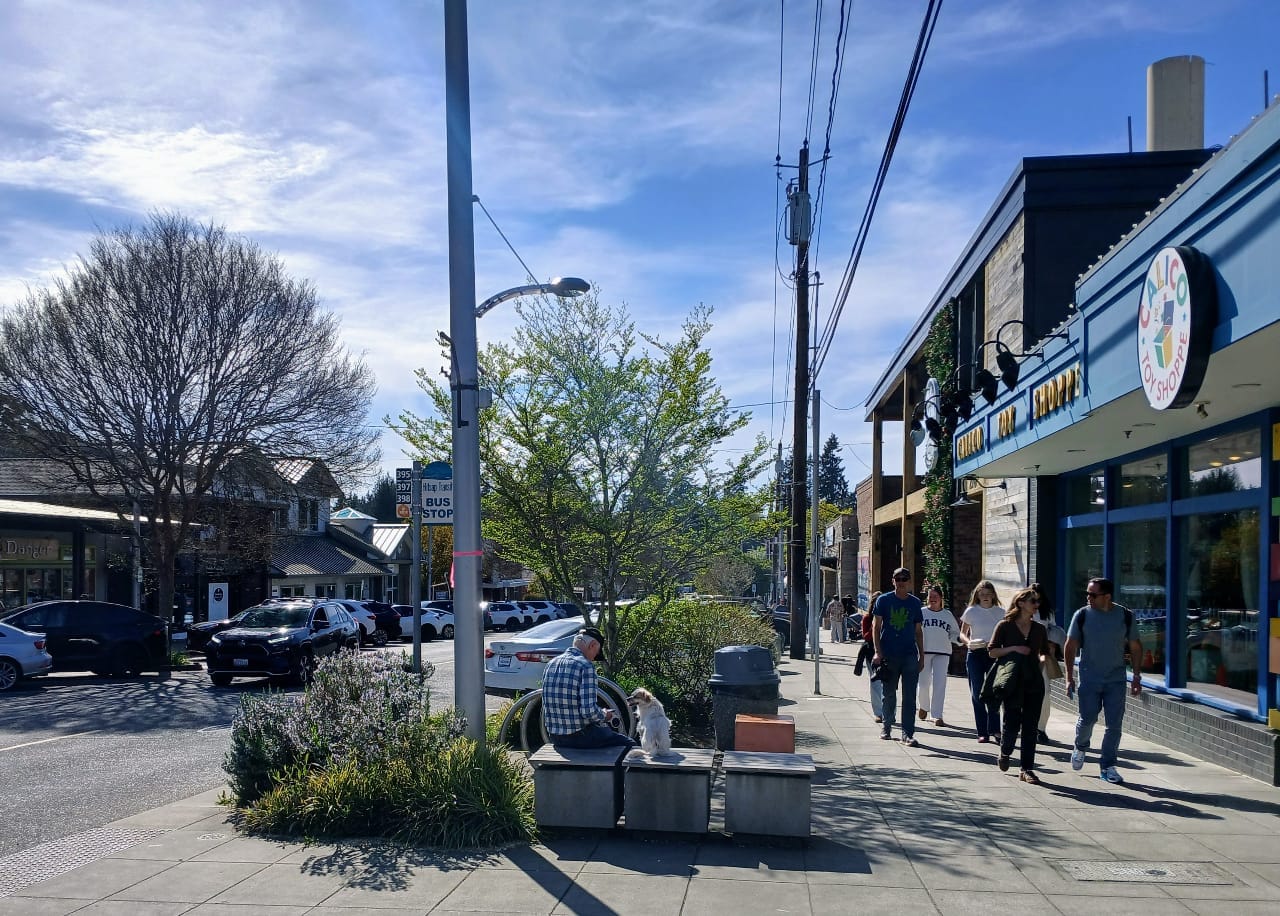
With the regulations approved Tuesday, builders will be able to receive permits for slightly larger housing projects, especially in the Ferry and High School Road districts that the city sees as the most primed for redevelopment. Limits on lot coverage in the Ferry District, for example, will jump from 75% of a lot to 100%, though height limits will not dramatically change even if builders participate in a voluntary density bonus program that offers them significantly more capacity than the new base limits.
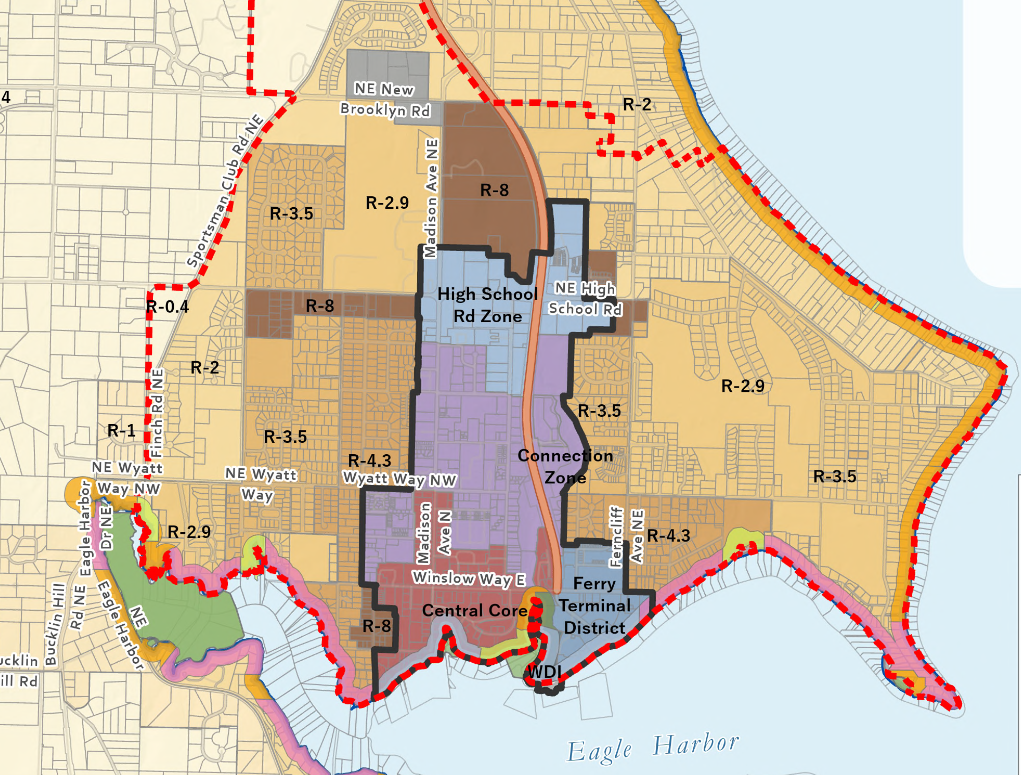
City officials did get buy-in from Commerce to layer on a new, mandatory inclusionary zoning (IZ) program that will impact any project over 10 units, just in the Ferry and High School Road districts. Builders will be required to set aside 10% of units to households making up to 80% of Kitsap County's area median income and another 10% for households making up to 110% of the area median income.
Those IZ provisions are intended to carve out units for the types of people who can't currently afford to live in Bainbridge Island, but may ultimately end up making all but the largest projects in those zones infeasible – or they might push builders to stay under 10 units.
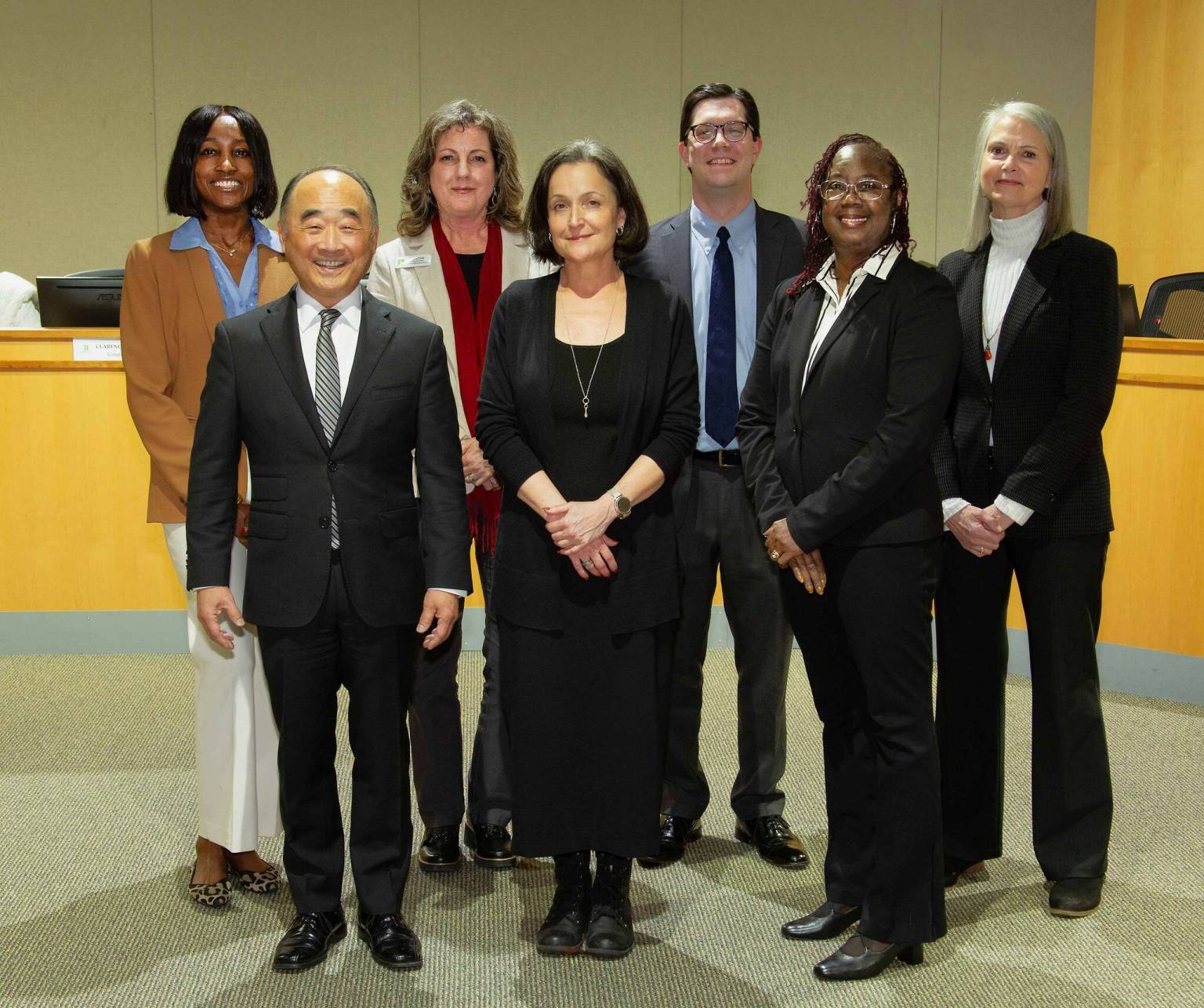
Voting no was Councilmember Mike Nelson, who praised his colleagues for their "bravery" in layering on those additional affordability requirements but said that the base capacity increases were just too much for him to stomach. Earlier this month, Nelson suggested that the city could pursue legal action to ultimately determine whether the Builder's Remedy applies on Bainbridge Island.
"My preferred approach was not to play ball, frankly, right, because this is just putting in place a lot of market-rate upzoning that will eat into sewer and water capacity instead of focusing on affordable housing," Nelson said.
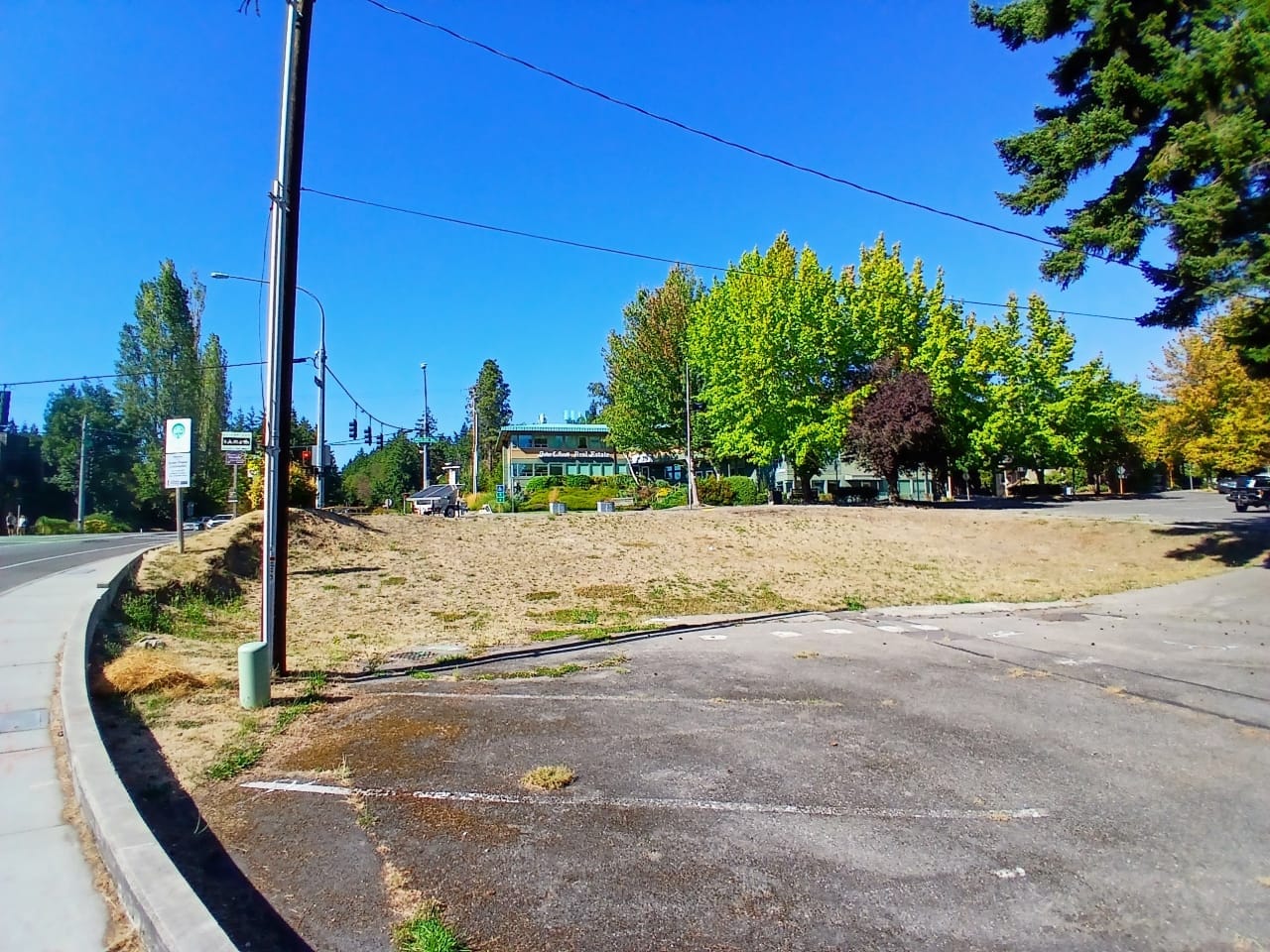
During last year's campaign, Nelson was a vocal opponent of the island's most high-profile affordable housing project, the Low Income Housing Institute's plan to build around 90 units of workforce housing at a high profile corner near the ferry terminal. That project remains in limbo but could advance more quickly with the zoning changes approved Tuesday.
"I oppose the current City Council's plan for a massive development in front of the ferry terminal without adequate consideration of environmental, traffic, and community impacts," Nelson's website stated at the time.
While all six other councilmembers ultimately voted yes, Tuesday's discussion was dominated by concern over future actions that might be taken at the state legislature to rein in the use of inclusionary zoning programs that don't offset their requirements for affordable units with any tax breaks. A bill approved earlier this year in Oregon bans cities from enacting IZ without fully funding them, a move that would represent a sea change in how Washington cities approach such programs.
"I also want to share some feedback from our state lobbyist, who has let me know that some state legislators and others are observing our discussions and our progress, and are becoming concerned that we are not compliant with the state's land use laws and the Housing Accountability Act," Interim City Manager Ellen Schroer told councilmembers. "I think that she also shared that it is possible that a bill will be introduced in the upcoming session limiting how cities can use mandatory inclusionary zoning. We don't know yet what that will be, and we also don't know what it would do. But she just wanted you to have that information as you consider this."
This news prompted criticism of state legislators from several councilmembers, including Lara Lant and Hytopoulos.
"Just hearing about yet another round of this flak from the state makes it so hard to play ball. I think it's important for the community to know that some of us are working really, really hard to play ball in a game in which the rules are inequitable and completely unintelligible," Hytopoulos said.
This faction raised the idea that state housing mandates were a sort of trap designed to humiliate them.
"I just want to put out there in the public record for the 11th time or 100th time that some of us are making a lot of noise up here and flailing around because we are so angry at the hypocrisy of this level of control of our local planning in the name of affordable housing," Hytopoulos continued. "And then being humiliated and whatever – ostracized in Olympia as though we're playing games here and trying to delay to December, when in fact what we're doing is we're saying for some of us it is a non-starter to vote for just upzoning Winslow for no affordable housing. This is the very thing we've been told we're supposed to do."
With this interim ordinance adopted, the council will move onto permanent regulations. Given the mood on council, some of the capacity increases approved this week appear likely to be walked back to the absolute bare minimum that's required to get into compliance.
City planners are eyeing December for the permanent ordinance to be considered, but that is likely a tall order given the delays the city has experienced in the past, and the likelihood that a permanent ordinance would be subjected to a lengthy appeal under the State Environmental Policy Act (SEPA) – something an interim ordinance gets to sidestep. For example, the Bainbridge Island Planning Commission logged around 30 meetings on the rezone plan in 2025 alone before finally issuing a final recommendation in 2026.
Until a final vote on new regulations, the interim ordinance will remain in effect, potentially getting renewed after six months.
"This is the open book final, and they say you have to pass this. And here's the open book, and they're telling us this is what the final is going to be," Mayor Clarence Moriwaki said ahead of the final vote. "So that's the open book. Whether we agree with how that got there, that's a whole 'nother thing, but they gave us the roadmap to make us hopefully give us a quick extension and get all work done. And I'm in equal frustration with all of my colleagues, I believe, up here. But here we are."
 Ryan Packer
 Ryan Packer