Now that Seattle has passed limited reform to the City’s procedures for the State Environmental Policy Act (SEPA), it’s time for the Washington State Legislature to pick up the torch and embark on more extensive changes. We can maintain environmental protection while removing bureaucratic barriers to change. And really the best way to build a more sustainable society is to do so.
Washington’s State Environmental Policy Act was passed into law in 1971. Modeled on the National Environmental Policy Act, its goal is to protect the environment by requiring state agencies and local governments to disclose potential environmental impacts of proposed projects and land use policies and regulations. Often this results in lengthy Environmental Impact Statements (EIS), exhaustive, multi-phase studies of possible impacts that are also subject to appeal.
Unfortunately, SEPA has become a law that is often weaponized to stop projects and policies that will have huge net benefits to the environment and local communities, including sprawl-reducing housing policies, bike and pedestrian trails, affordable housing, and even replacing a vacant grocery store with a new grocery store in a food desert. The case has become clear that SEPA must be reformed if our state is to achieve its goals around urban growth and sprawl prevention, reducing car dependence, and climate change.
In 1990, the state legislature passed the Growth Management Act (GMA) with a goal of protecting our state’s rural fields and forests by encouraging development in urban areas, reducing sprawl, and promoting multimodal transportation options. A core idea of the law is that urban areas will be surrounded by Urban Growth Boundaries (UGBs) and that new development will primarily be focused within those boundaries in order to protect rural land outside of them.
Generally, the GMA has been a success, but there are also many ways it leaves much to be desired. While the GMA has limited suburban sprawl outside of UGBs, it has not done so as much as it should. And, it has not done enough to encourage urban growth within GMAs, particularly in built-up core areas within them.
The GMA’s primary sprawl-reduction goal often comes in conflict with SEPA, as the policies and projects needed to achieve the GMA’s goals get slowed by endless study and appeal. In order to make the GMA work better, we need to make SEPA work better.
Recently, we have seen several examples of the conflict play out in Seattle, such as the One Seattle Comprehensive Plan.
The One Seattle Plan
The plan started under Mayor Bruce Harrell and is a required once-per-decade update under state law. Harrell’s proposal will allow more housing, more types of housing, in more places in our city. Beyond meeting state requirements, allowing apartments and multiplexes in more places should keep us growing in a way that is more affordable for more people.
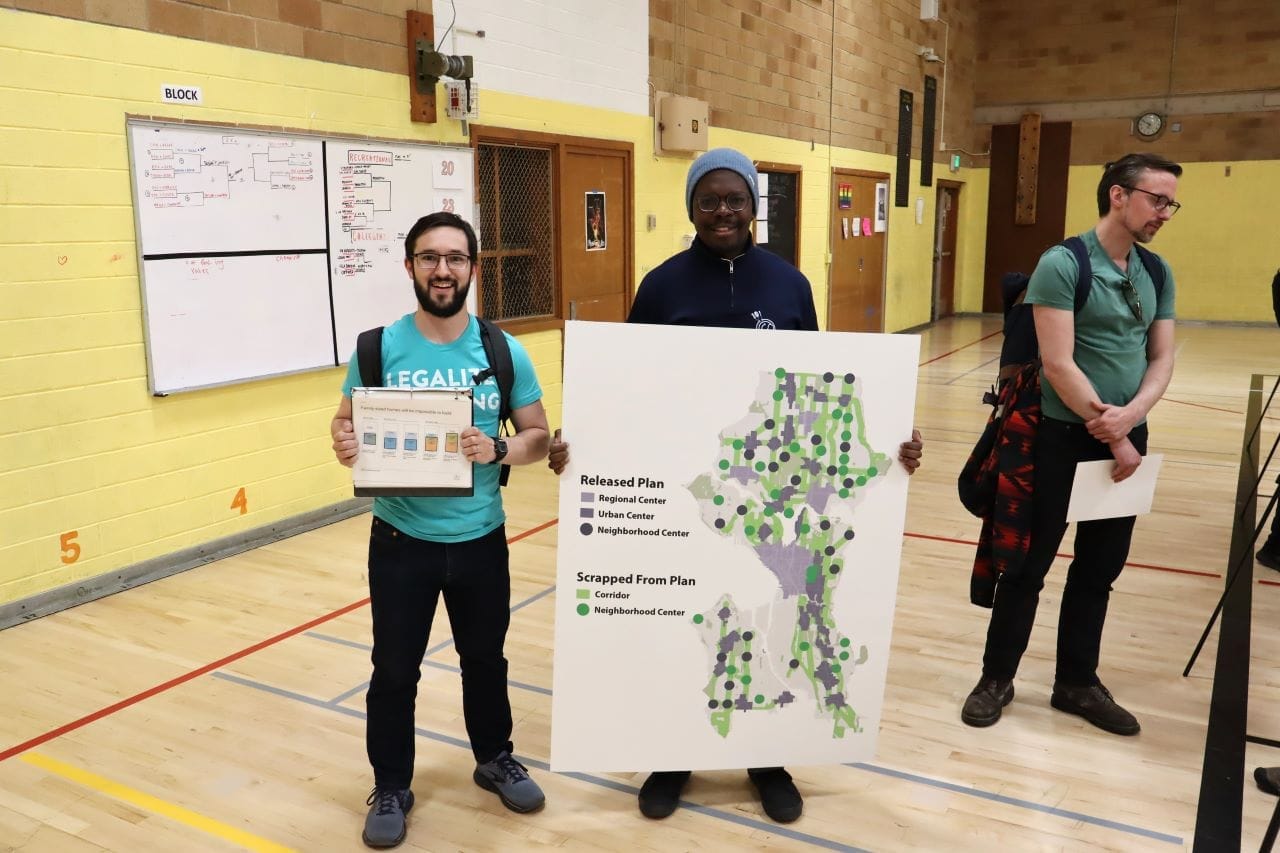
The problem is that the plan has been mired in SEPA paperwork and appeal hurdles. The plan and future legislation to fully implement it has taken years to develop as the thousand-plus page EIS has been scoped, developed, commented on, and then appealed and worked its way through the legal system. All of this study to change urban land to other urban uses within an urban growth area that is designated by the GMA to absorb development.
Should we need to study allowing greater density on a lot that once held only one home?
Should we need to study allowing two more floors on a parking lot that currently only allows four?
And as several commenters pointed out at the council vote on Councilmember Eddie Lin’s SEPA reform bill, SEPA requires no study for maintaining a harmful status quo, but it does for adding infill housing that we know leads to less sprawl and less driving, two large environmental harms. Even without SEPA review and a multiyear EIS process, development and city policy still must comply with numerous laws that provide actual environmental protection. We should end the requirement for SEPA review of land use and other policy changes within UGBs.
The Burke-Gilman's Missing Link
The Burke-Gilman Trail’s “Missing Link” saga is a long and winding tale. The short version though is that one of the region’s most significant pieces of bike and pedestrian infrastructure, linking many communities throughout the region with an all ages/all abilities path, has a gap that keeps it from passing through Ballard and connecting to Puget Sound at Golden Gardens Park. It has been delayed for many reasons and by various parties, but a primary tool that has been used is SEPA.
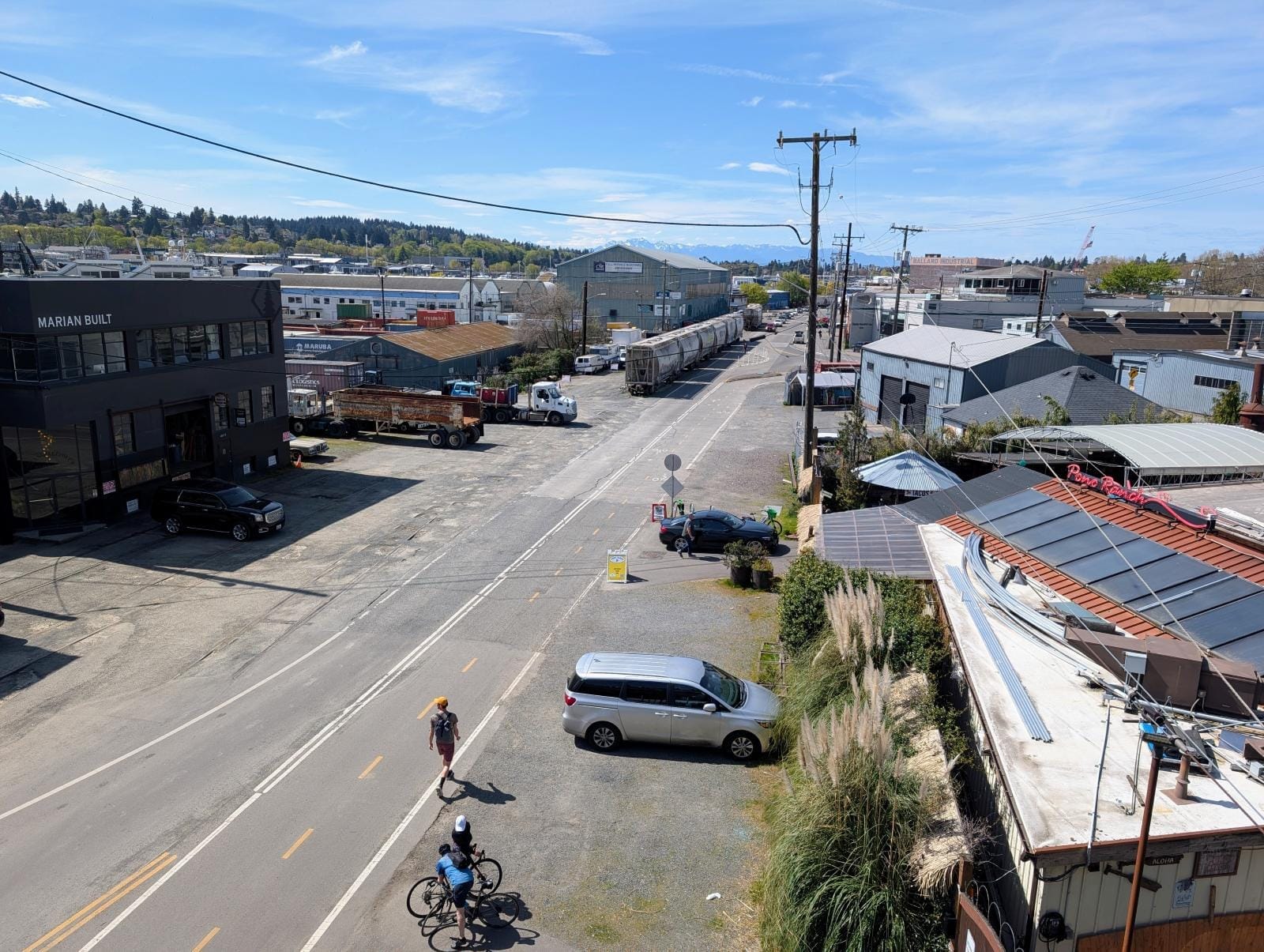
These appeals have added additional studies and further opportunities for appeal that have resulted in over 15 years of delay. All of this for a small stretch of a bike trail running through an area that is 100% urbanized and industrial/mixed-use. And this is a project that is clearly a net environmental good, encouraging climate-friendly, non-automotive transportation.
The state legislature should end SEPA for bike, pedestrian, and transit projects.
Fort Lawton
A proposal to build 500 units of much needed affordable housing on surplus military land near a park has spiraled into a bureaucratic vortex that has endured since 2005, the point at which Seattle begins planning for affordable housing, and it still is not done. Located in Magnolia, it's a site with enormous potential, next door to Seattle's largest park.

The SEPA process has produced a 1,482-page EIS released in 2018, which was appealed by wealthy not-in-my-backyard (NIMBY) activists and triggered additional study in the form of a recently released 391-page supplemental EIS, which also may be appealed.
The state legislature should end the weaponization of SEPA.
Winco on Aurora Avenue
Who would think that a grocery store replacing a vacant grocery store would trigger SEPA review? Well, the Seattle Hearing Examiner did – the same hearing examiner that a city councilmember cited during the council’s SEPA reform vote as saying appeals are not a big deal. When Winco proposed taking over a space in Aurora Avenue N once home to a Sam’s Club, the Seattle Department of Construction and Inspections found no significant environmental impact as it was a store replacing a store.
The hearing examiner, though, determined that it was not a grocery store replacing a grocery store, but rather a grocery store locating within a vacant building with no established use, and thus requiring SEPA review. This will delay and could possibly kill a project that will bring low-cost food to a food desert and replace a blight on the neighborhood with a business filled with shoppers and employees. All in an urbanized area within the UGB. The state legislature should exempt changes of use from SEPA.
SEPA Reform
If we want to fulfill the goals of the GMA and keep growth in our urban areas and protect our rural areas from sprawl, we must reform SEPA.
If we want to make our communities more affordable, we must reform SEPA.
If we want to transition away from fossil fuels and cars and toward a climate positive world of bikes, buses, and renewable energy, we must reform SEPA.
While the state legislature has not taken on wholesale SEPA reform head-on, state legislators have made clear through their actions that they know it’s a problem. In the last several years, state legislators have both passed carveouts and exempted local land use legislation from the SEPA process.
In 2023, the state legislature passed Senate Bill 5412, granting a categorical exemption in areas planning under the GMA from SEPA review for all projects that propose to develop one or more housing units. I work on housing projects at an architecture firm and it was a sea change. A whole many-months-long process, with pages of drawings, studies, correction rounds from regulators, and the risk of appeal disappeared overnight. This saved people wanting to build housing time and money, helping more projects find a path to construction.

In 2020, the state legislature passed Senate Bill 5818, exempting actions taken by cities planning under the state GMA intended to “increase housing capacity, increase housing affordability, and mitigate displacement” from SEPA appeal. The state also inserted SEPA exemptions into numerous individual laws, knowing that without the exemption implementation would be delayed years as actions are mired in study and appeal. Such laws include the Middle Housing Law (House Bill 1110), the transit-oriented development bill (House Bill 1491), and statewide parking reform (Senate Bill 5184).
Now, the time has come for the legislature to take on broader SEPA reform. And this can be done in a way that maintains protections for our natural areas and systems that are so important. Below are a few ideas for what some elements of a reform bill could include:
- Categorical exemptions for land use and other policy actions within UGBs. Changing urban land to another higher intensity urban land use in the areas we have already designated for growth should not trigger environmental review.
- Categorical exemptions for transit, bike, and pedestrian facilities or changes to roads that result in less automobile capacity. Projects that promote climate-forward transportation projects or reduce automobile use should not require environmental review.
- Categorical exemption for most building projects within UGBs. In general, building where we have said people should build should not require SEPA-level environmental review. Thresholds should be set that capture actual impactful projects like large polluting industrial facilities, energy- and resource-intensive data centers, or climate-impacting projects.
The state legislature, working with members of our state's great advocacy community, have passed a number of transformative changes relating to building more homes that we are just beginning to feel. They should work together again to bring forth the best ideas on how to streamline our environmental review processes so that we can move forward more quickly with the changes needed to build the sustainable and affordable future that we want.
 Ryan Packer