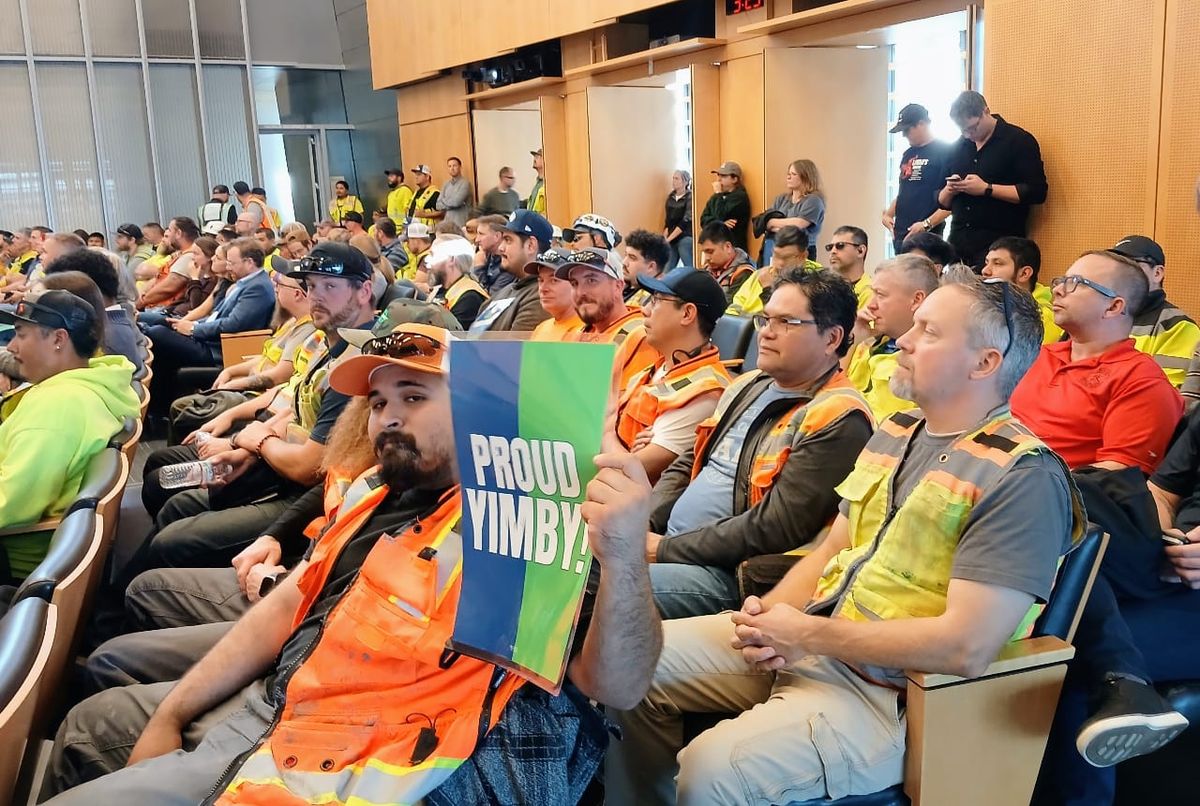
The next phase of zoning changes planned to implement Seattle's twenty-year housing and job growth plan are on track to be delayed another year, according to a city briefing provided last week to the city's planning commission. A holdover from the Bruce Harrell administration, the "Centers & Corridors" zoning update had been set to rezone thirty new "neighborhood centers" for denser development and allow larger apartment buildings directly along transit corridors, but legal appeals have kept final approval at bay.
It doesn't look like that trend is set to change any time soon.
The appeals that have been assailing the environmental review underlying Harrell's One Seattle Comprehensive Plan since last February asserted flaws that have allegedly led to understated impacts from future growth on stormwater runoff, tree canopy, and other issues. But last month, a ruling from the state's Growth Management Hearings Board failed to find any evidence for those claims, upholding the way that the plan's final Environmental Impact Statement (EIS) was conducted.
But the board did throw the city officials a curveball that they're still grappling with.
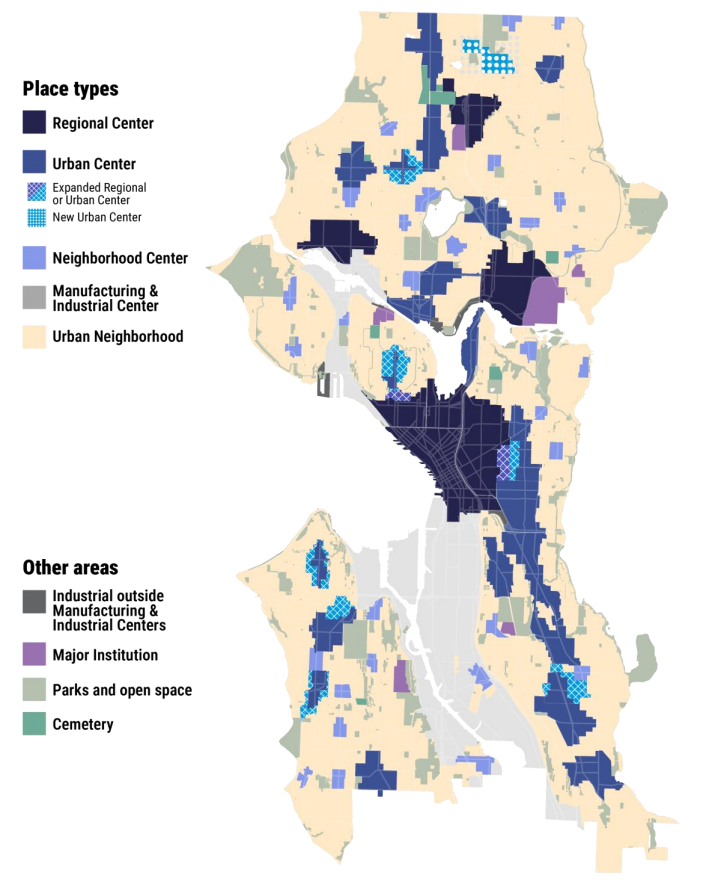
Rather than studying "maximum likely development" under a future zoning scenario, the ruling stated, Seattle's Office of Planning and Community Development (OPCD) was required to analyze "maximum possible development", a fact that ropes in a significant number of housing units that are unlikely to be built in the plan's twenty-year horizon. Readjusting to study that maximum possible development expands the scope of the EIS considerably, even as the ruling itself acknowledges that Seattle is unlikely to see all parcels develop before updating its Comprehensive Plan again.
While the city was given a year to go back and fill in that additional analysis, any new zoning changes stemming from the EIS won't be able to be approved by the city council until the hearings board gives its stamp of approval. The deadline to get that analysis updated is September 9, 2027, with a compliance hearing scheduled for later that fall.
But despite the fact that OPCD is opening the EIS back up to do more analysis, there are no plans to adjust the city's preferred growth plan, despite what the aims of the appellants who had challenged it may be.
"The decision and order from the board is narrowly focused on the analysis in the EIS and what was, in their view, required to be in that analysis," Michael Hubner, OPCD's Long Range Planning Manager, told the planning commission last week. "We're certainly not bringing forward a new Comp Plan proposal, or any amendments to the plan based on this decision. And what's important is that the board did not order us to do so. The board did examine the Comprehensive Plan with respect to the issues raised in the appeal, and the city prevailed."
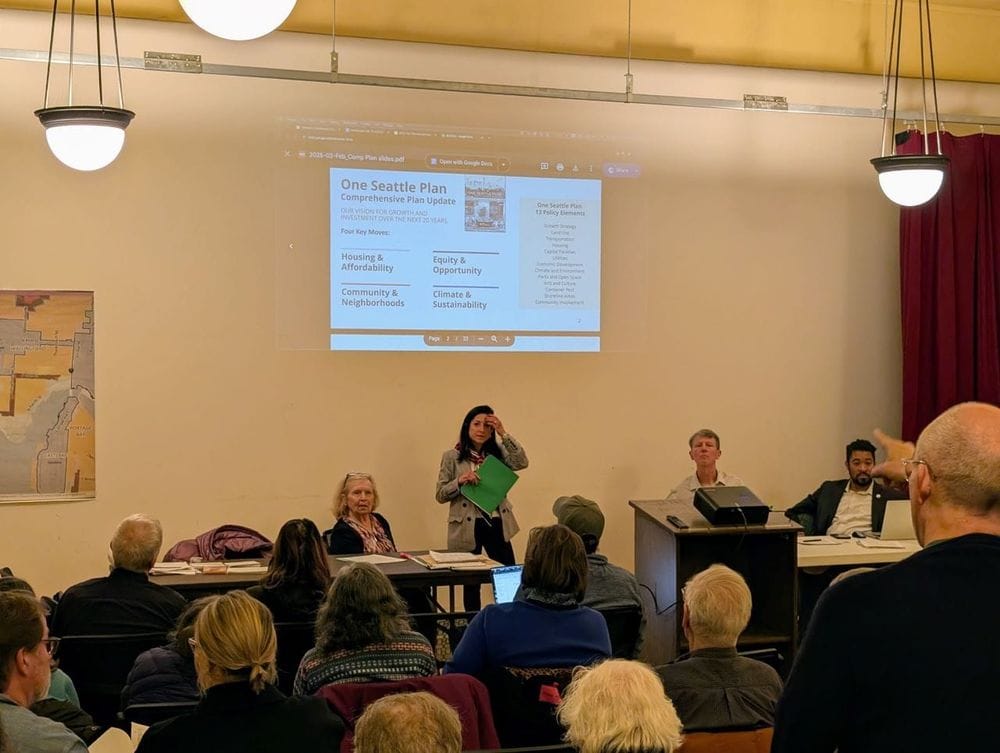
Hubner, who has been the planner sent to face community groups angry about seeing zoning changes brought to their neighborhoods, described the update that the city is required to make as a technical one.
"I think of it as really a technical add-in to our existing EIS, rather than changing anything fundamental about how we're planning for the next 20 years related to concurrent infrastructure investments, parks, all the things that the Comprehensive Plan addresses," Hubner said.
There are still a lot of outstanding questions that remain to be answered in the months ahead, including whether this additional required EIS work will impact Mayor Katie Wilson's attempt to go even further than the One Seattle plan when it comes to allowing additional density across Seattle's neighborhoods. Referred to as the "Taller, Denser, Faster" plan, Wilson's initial proposal has faced even more local opposition than Harrell's plan, but city planners had laid out a schedule that included potential adoption as soon as late 2027 – a schedule that now looks to be in doubt.

Could the city wrap up work on redoing the EIS well before the September deadline? Hubner described that as being unlikely.
"It's a pretty heavy lift to essentially add that information to the Comprehensive Plan EIS," Hubner said. "There's a lot of moving pieces there, so it's good we have a year, and we're starting to look at what it will take to update our analysis to meet the expectations of the board."
Updating the EIS to include these additional potential units would be a big enough lift for OPCD, but the hearings board appeal isn't the only challenge to the One Seattle Plan still alive. The same day that Hubner provided his update to the planning commission, Seattle's hearing examiner held a conference to discuss a set of city-level appeals that continue to advance on a parallel track.
Filed by Seattle symphony performer Jennifer Godfrey (who also filed the growth hearings board appeal) and Mount Baker lawyer John M. Cary, those two appeals have been trying to stop the One Seattle Plan in its tracks since last February. But changes in state law relating to exemptions under the State Environmental Policy Act (SEPA) caused the hearing examiner to dismiss both challenges, a dismissal that was ultimately reversed after further appeal to the state's Court of Appeals. That ruling seemed to affirm a major loophole in SEPA exemptions that applies to environmental review that hasn't yet been acted upon by a legislative body.
But there's another twist. Though the hearing examiner's office now has the appeal back in front of them, they may be forced to dismiss it again, following the approval of a bill approved this summer by the Seattle City Council that removed the path of city-level SEPA appeals for area-wide rezones and Comprehensive Plan amendments. Proposed by land use committee chair Eddie Lin, the bill proved very divisive and passed on a 5-4 vote, despite the fact that other jurisdictions including Bellevue, Tacoma and King County do not allow this path of city-level appeal.
Though it was initially unclear if that new law would apply retroactively to appeals that were already active, the hearing examiner has already dismissed another appeal on the grounds that the office now lacks jurisdiction, a challenge to the city's plans to keep housing prohibited in the Stadium District. While that suggests dismissal could occur here as well, the examiner hasn't yet ruled on that question.
"One of two potential things could happen: the hearing examiner will grant that motion and dismiss, and be appealed, or the hearing examiner will hear the appeal on its merits again over the next number of months," Hubner said. "We're looking at a calendar for the case that stretches into early next year potentially."
The exact schedule for those two appeals would likely be a bigger deal if OPCD wasn't already scrambling to address the Growth Management Hearings Board ruling. But a hearing on the merits, should they reach that stage, could potentially force additional changes to the EIS on top of those, extending the process even further.
While all of those legal issues continue to play out, Seattle's zoning framework – where midrise affordable housing projects are only legal to build on 3% of the city's land – will stay in place indefinitely.
 Ryan Packer
 Ryan Packer