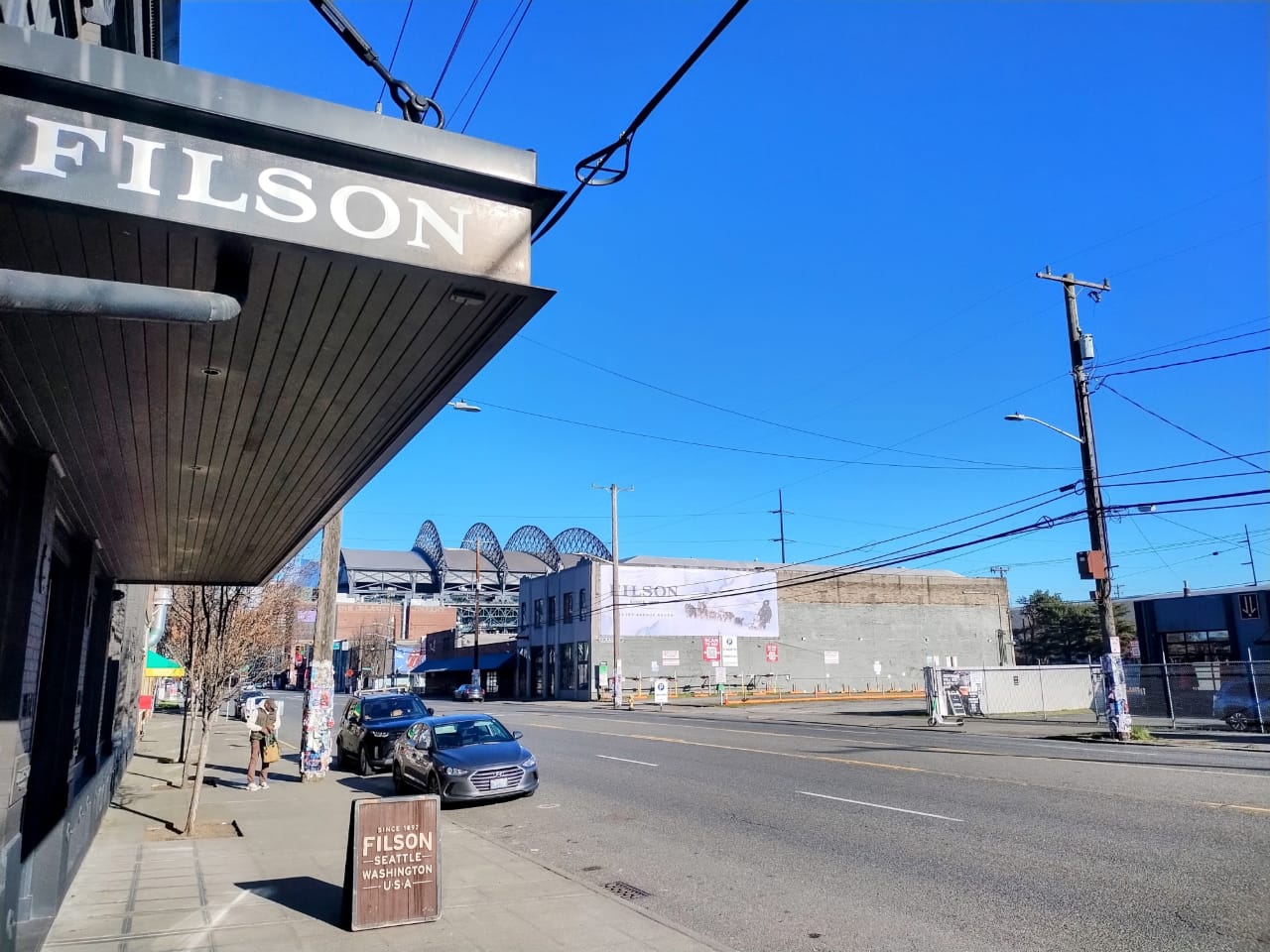
Just when it looked like the issue of allowing housing construction on a hotly contested swath of industrial land in north SoDo had been put to rest, a new appeal that was quietly filed late last month could reignite it.
Just weeks after the Seattle City Council officially repealed a law that would have paved the way for residential uses around SoDo's stadiums, the municipal corporation charged with overseeing T-Mobile Park has joined with the Seattle Building & Construction Trades Council to challenge a pending plan that could ban housing there, turning the tables on the debate.
While a state planning board had ruled in November that the 2025 law opening the door to housing there was illegally adopted, this filing argues that the City is heading too quickly toward the other extreme by keeping the door sealed shut.
The hotly contested area is known as the Stadium Transition Area Overlay District (STAOD), an area clustered around First Avenue S north of Holgate Street just south of Pioneer Square. Last year, stadium boosters and building advocates came together to support a bill put forward by former Councilmember Sara Nelson that would have legalized around 1,000 units of housing in what was dubbed a new "Makers District" combining light industrial uses and workforce housing.
Advocates for shipping and freight interests pushed back on the move, criticizing a "rushed" process and raising concerns about traffic impacts hurting the Port of Seattle next door. The state Growth Management Hearings Board ultimately sided with opponents, ruling that corners had been cut ahead of the vote.
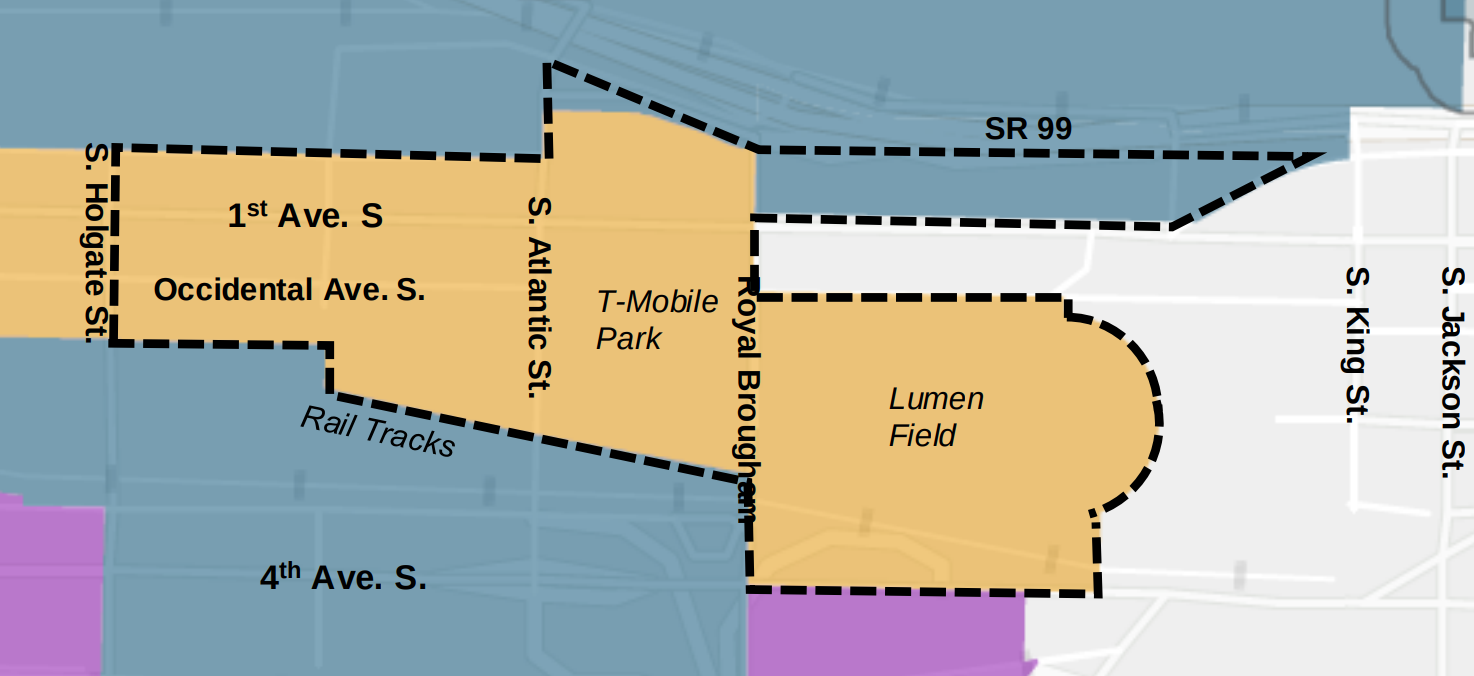
Now the Washington State Major League Baseball Stadium Public Facilities District (PFD) and the construction trades council are challenging a planned update to the City's plan for the Duwamish Manufacturing and Industrial Center (MIC), which includes SoDo. They assert that a proposed policy tucked into that plan isn't aligned with the city's newly adopted Comprehensive Plan, approved in December.
"Encourage a broader mix of uses and a stronger orientation to retail and entertainment uses within the STAOD than in other parts of the MIC, including lodging, but do not allow any residential uses and do not amend codes to enable even limited residential uses or residential uses under conditions," the proposed policy reads.
"Contrary to the recently adopted One Seattle Plan, the City’s proposed adoption of the Greater Duwamish Manufacturing and Industrial Center Subarea Plan would completely eliminate the possibility of future housing in the STAOD, placing a blanket ban on future housing and undermining that area’s redevelopment a envisioned by the Seattle Municipal Code and the PFD’s mission," the appeal states.
Among the legal claims: that the MIC plan's final environmental impact statement (FEIS) failed to take a "hard look" at the impacts of allowing housing in the STAOD and that the impact of keeping housing banned there are "likely to be significant."
The two groups are seeking to send the Seattle Office of Planning and Community Development (OPCD) back to the drawing board when it comes to the plan for industrial lands in the Duwamish Valley.
How to get competing interest groups to come to agreement on the long-term future of Seattle's industrial lands was a topic that vexed City Hall for many years, including the entirety of former Mayor Jenny Durkan's term in office. In 2023, Mayor Bruce Harrell unveiled a proposal that seemed to do just that, with the topic of stadium Makers District something that looked to disrupt all of that work given significant opposition from the Port of Seattle. In the end, the final proposal Harrell signed didn't include any provision for housing in the STAOD.
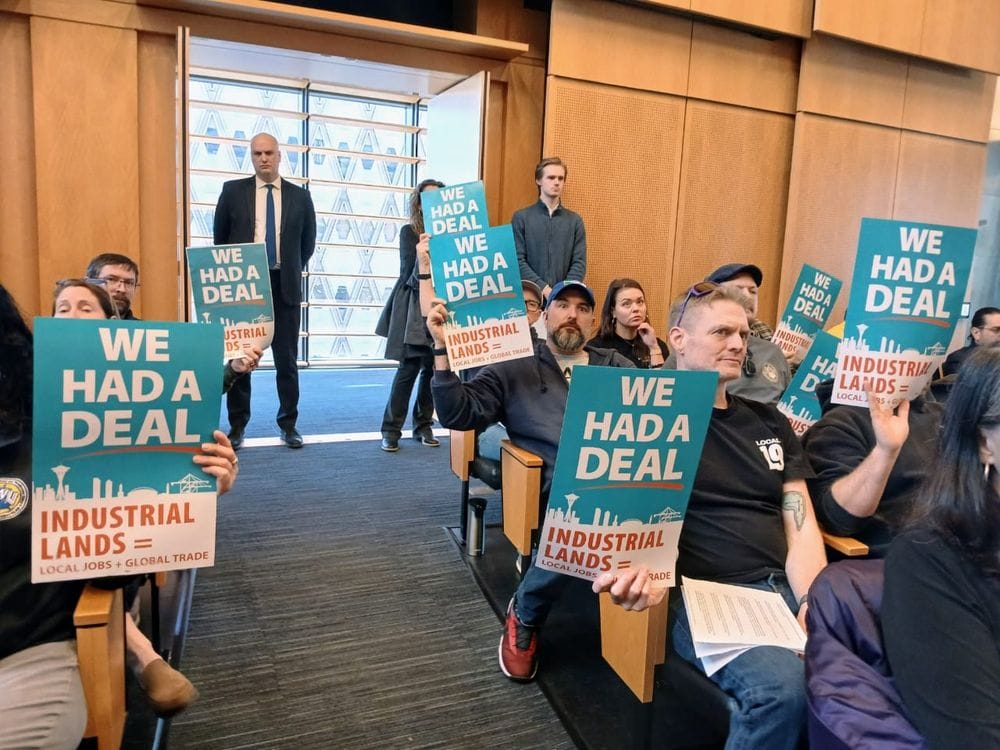
When Nelson put forward her bill two years later and reopened the issue, "We Had a Deal" signs carried by port and maritime workers became a common sight at the city council, where the bill eventually passed by 6-3. The issue divided the city, but not along familiar ideological lines.
For example, representatives of the affordable housing sector largely supporting the move, but other urbanists voiced concerns around siting housing in an industrial area with few amenities, when many areas of the city that are less polluted remain off limits to multifamily housing. Voting no were Dan Strauss, Alexis Mercedes Rinck, and Bob Kettle – hardly the council's most common bloc.
While the vote to repeal the bill in May, in alignment with the Growth Management Hearings Board's ruling, was unanimous, the original coalition that supported Nelson's bill clearly isn't ready to let the issue get taken off the table.
"Since 2000, Seattle’s vision for the STAOD has been to encourage redevelopment and maintain the health and the vibrancy of the area," the appeal states, asserting that "one of the broadest coalitions ever assembled around a Seattle land use measure" came together to support Nelson's bill in 2025. In addition to misalignment with the Comprehensive Plan, appellants argue the City ran afoul of the State Environmental Policy Act (SEPA).
"The City’s current Comprehensive Plan policies contemplate STAOD residential uses, especially dwellings for workers east of 1st Avenue South," the filing states. "As currently proposed and evaluated by the City under SEPA, the Greater Duwamish Manufacturing and Industrial Center Subarea Plan would frustrate that vision, completely eliminating any possibility of future housing in a manner that would both (a) harm the PFD and the members of the Seattle Building & Construction Trades Council and (b) be inconsistent with the City’s Comprehensive Plan and Seattle Municipal Code."
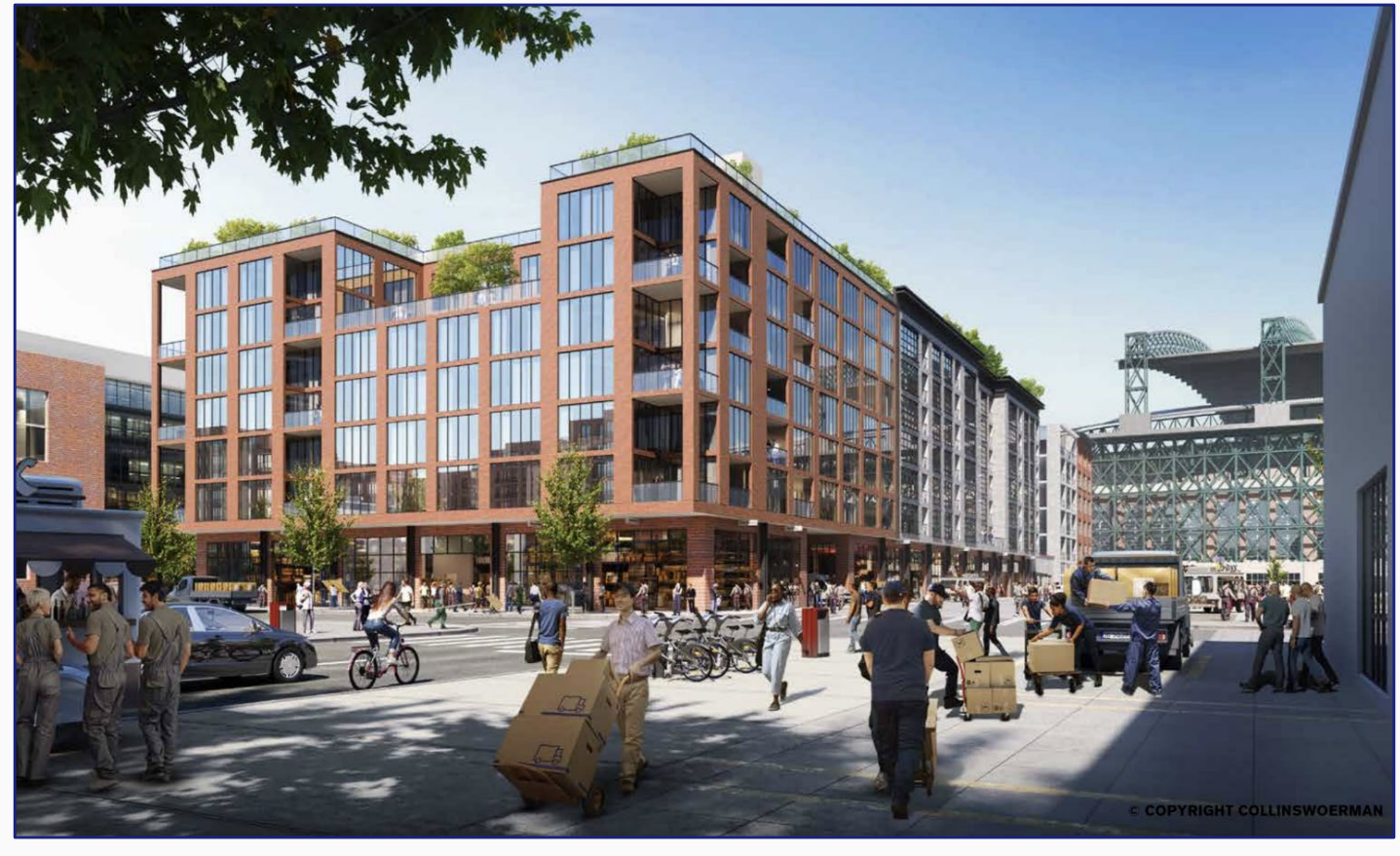
The Greater Duwamish Manufacturing and Industrial Center Subarea Plan had been set to head to the City Council within just a few weeks, a small part of the work that the City is required to complete to get into compliance with the state Growth Management Act. But this appeal could push that timeline back, in much the same way that a slate of appeals filed last year against the overall Comprehensive Plan's environmental review caused a monthslong delay and pushed the second phase of the plan into 2026. (Those appeals are still, somehow, not resolved despite state legislation intended to shield housing growth plans from SEPA appeals.)
It's exactly appeals like this that have been put front and center by a recent proposal by land use committee chair Eddie Lin that would bring Seattle in line with cities like Tacoma and Bellevue and prevent land use appeals to the hearing examiner in the first place, instead directing appellants back to the Growth Management Hearings Board or King County Superior Court. That bill, which is heading to a public hearing in early July, is already seeing push back from neighborhood groups used to being able to wield process to slow land use changes.
When it comes to the stadium district, the goal of appellants looks to be putting a wedge in the door for a potential Makers District at some point down the road. It remains to be seen whether the appeal is ultimately successful and wedges open that door.
Yet another question is whether the City can ever reform industrial land use policy without ending tangled up in a seemingly endless string of political squabbles and legal battles.
 Ryan Packer
 Ryan Packer