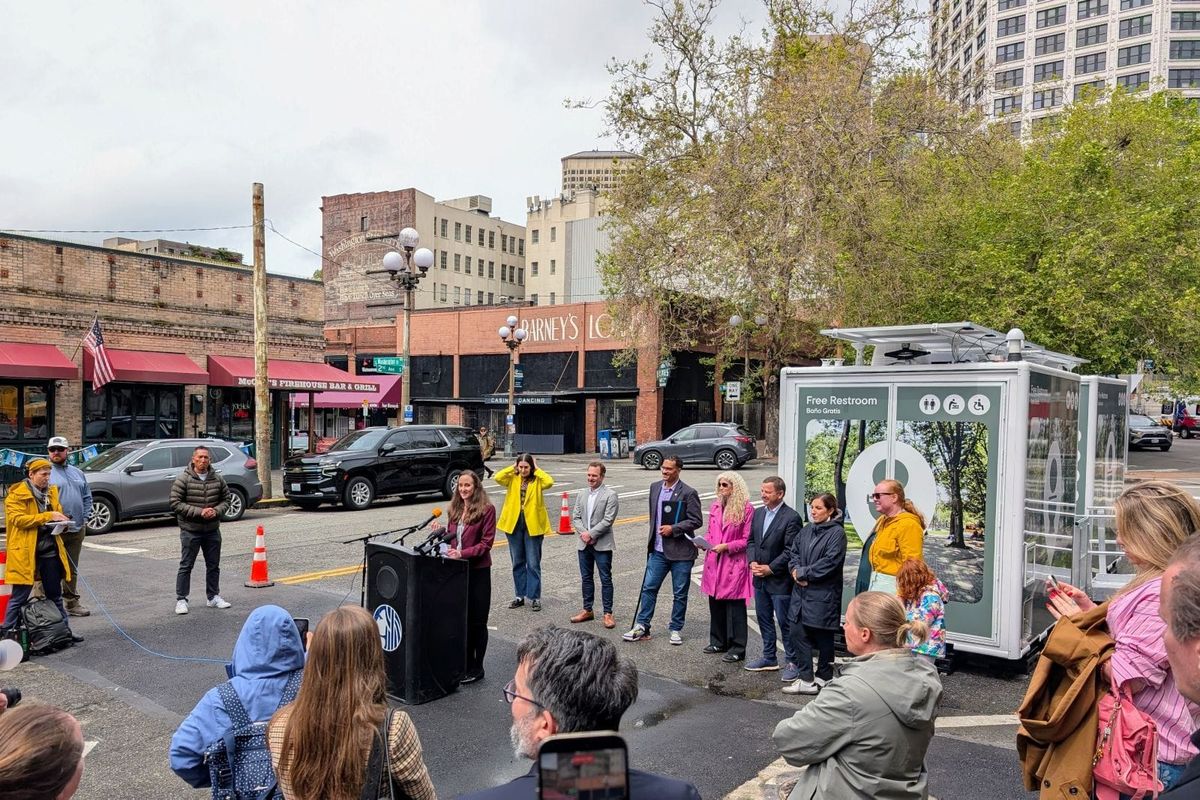
At least two of the recently installed public restrooms in Seattle's Pioneer Square neighborhood will be heading to new locations soon following the protests of a nearby property owner.
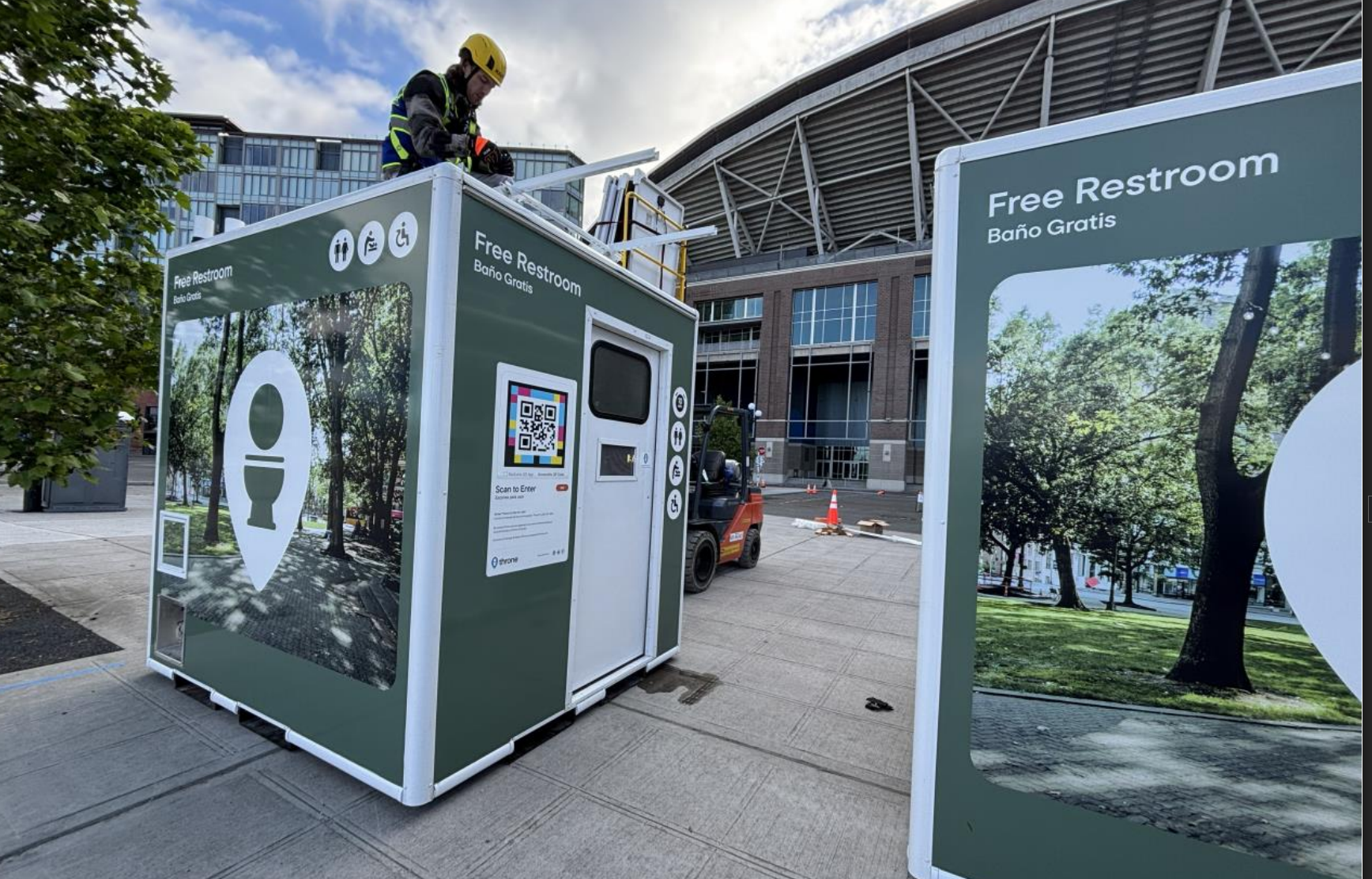
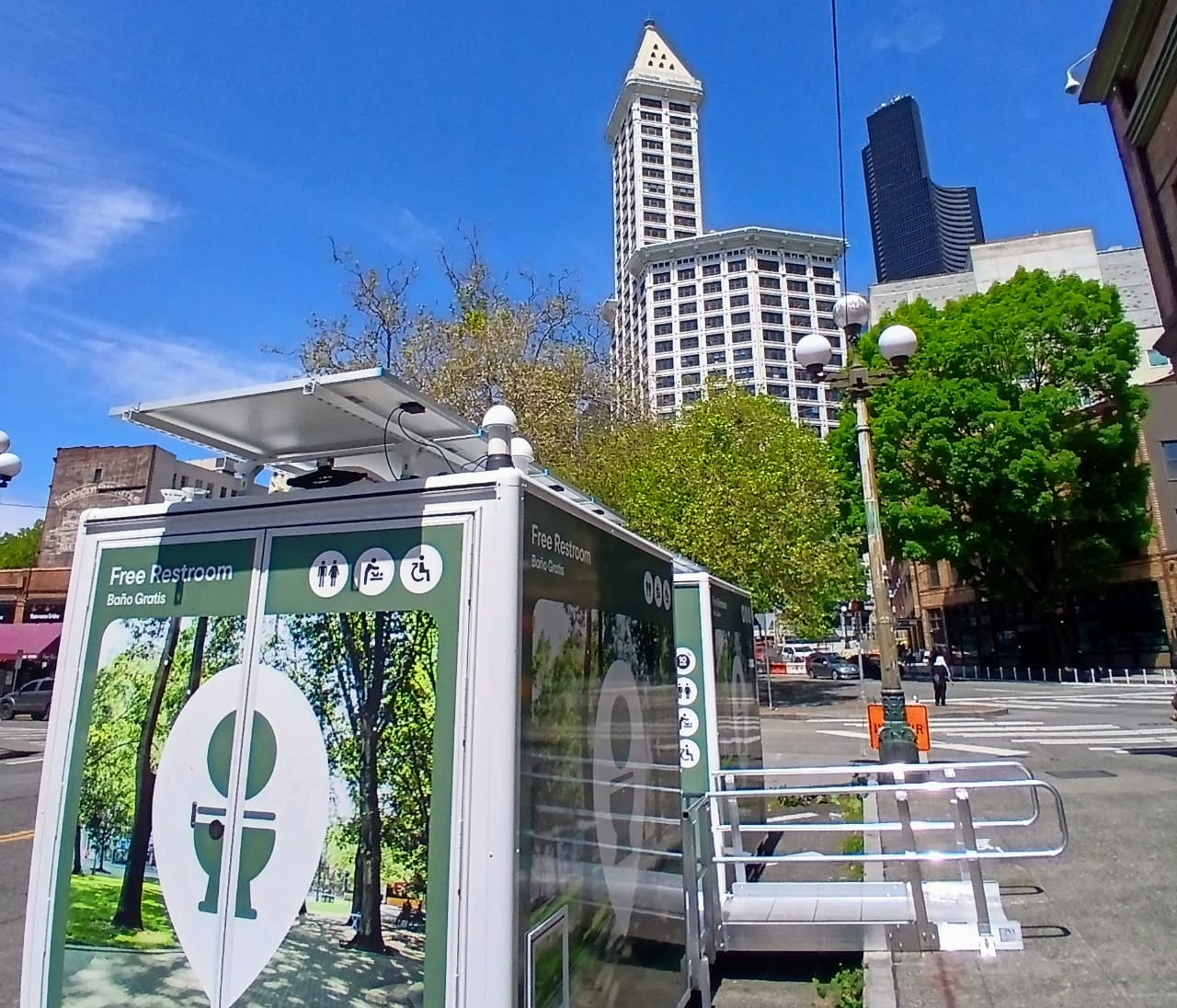
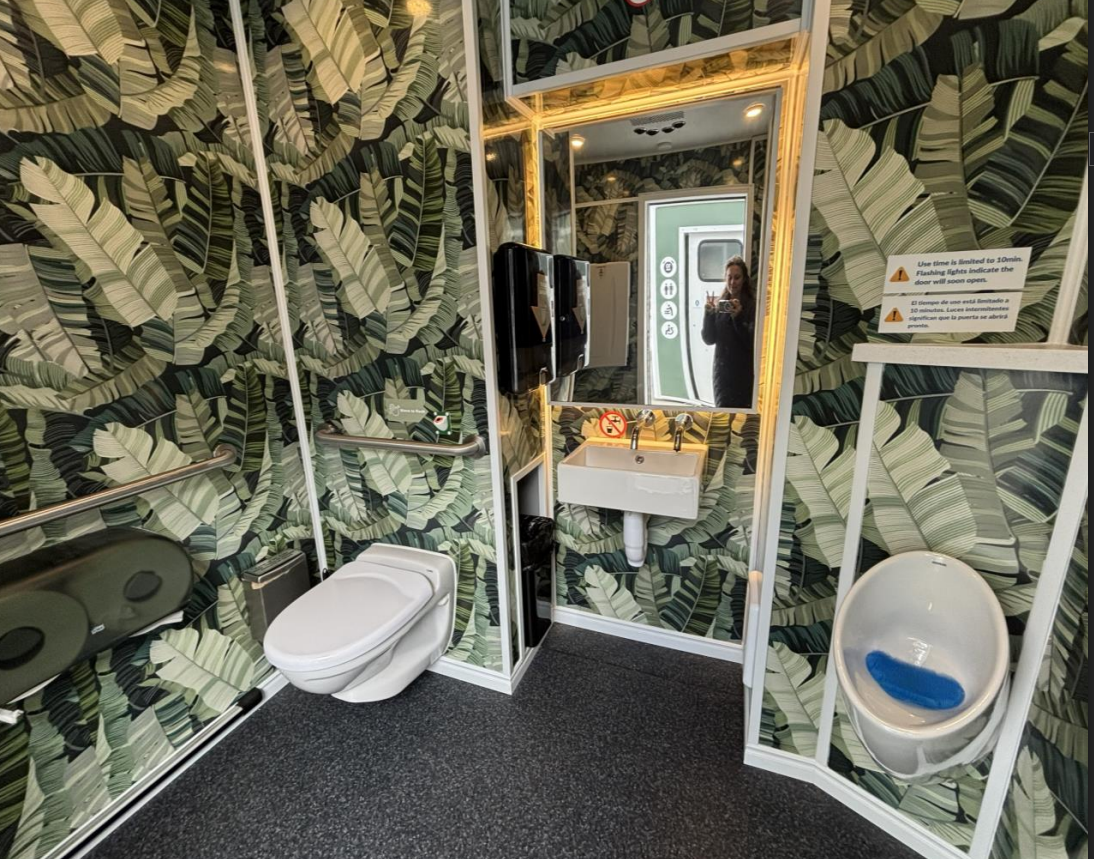
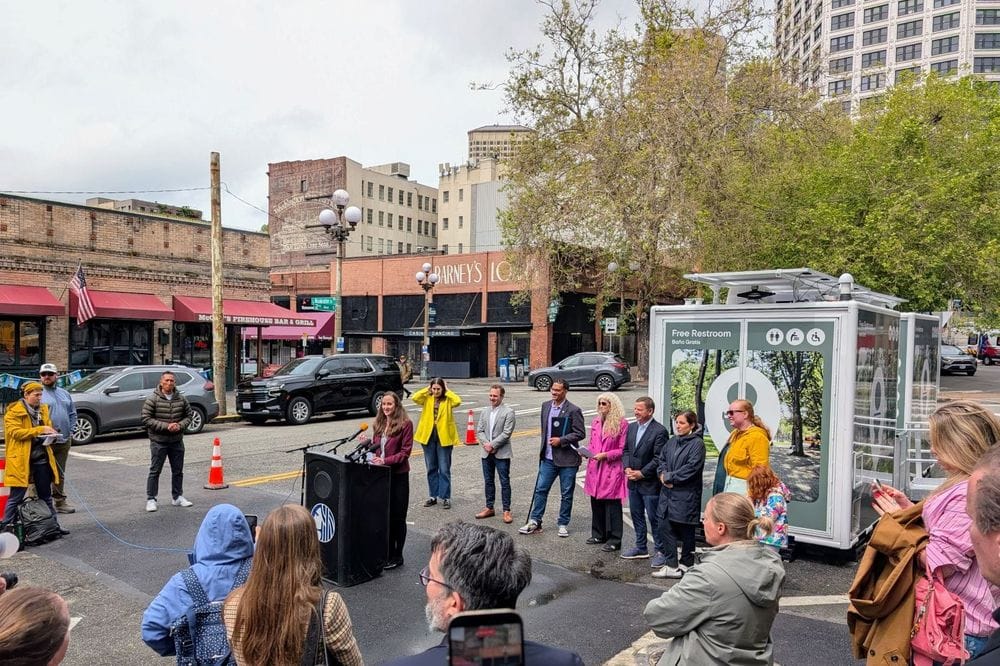
Operated by vendor Throne, the digitally-operated restrooms opened in May at in-street locations at First Avenue S and S Charles Street and Second Avenue S and S Washington Street. So far they seem popular, and enabled more than 9,000 individual pit stops for visitors and residents in their first four weeks of operation.
But last week, the Seattle Department of Transportation (SDOT) told the Pioneer Square Preservation District board that it's looking for new locations for the two Charles Street Thrones after reaching an agreement to settle an outstanding appeal over whether the restrooms' Certificate of Approval (COA) was properly issued.
The leverage point here are the rules governing changes to structures and streetscapes within the Pioneer Square historic district. Shortly after the preservation board gave SDOT its approval to install the Throne restrooms this spring, Cederstrand Rentals LLC, the owner of a property at 820 First Avenue S immediately adjacent to the Charles Street restroom site, filed an appeal. The company's filing argued that the solar-powered restrooms are "incompatible" with requirements in city code that govern standards within the preservation district, including regulations covering exterior building design and signage.
"The purpose of these regulations is to preserve the Preservation District’s historic architectural character," the appeal stated. "The Decision [by the board] fails to include a single example or assertion how the Project satisfies the approval criteria articulated in SMC 23.66.100—190, SMC 23.66.050, and/or the Rules for the Pioneer Square Preservation District."
Special rules governing historic districts, particularly in highly contested Pioneer Square, have been a major hurdle for City projects for years. A major bus stop revamp and repaving project was nearly derailed in 2024 at the Preservation Board, not over aesthetic issues, but rather vehicle access concerns from nearby business owners. More recently, SDOT had to scale back a plan to add bike and scooter corrals near intersections with a goal of improving safety thanks to (you guessed it) opposition from nearby business owners.
Even before the Certificate of Approval was issued, Cederstrand had been pushing hard against the idea of the Throne pilot, which is set to extend for a full year. The company sent a letter to SDOT in March, via the land use firm Tharsis Law, detailing 14 different COA approval criteria that it asserted the Thrones do not meet. Rather than take the issue to a hearing, SDOT settled with Cederstand, and agreed to find a new location for the restrooms by early August.
In comments to the board, Tharsis attorney Isaac Patterson referenced the city's beleaguered history when it comes to delivering public restroom access. Those criticisms predate the City's partnership with Throne, which has been successfully operating its public restroom model in many other cities including Los Angeles and Atlanta.
"As far as we can tell, this would be the first public toilets on SDOT property in at least a very long time. Given SDOT's lack of experience operating toilets, all questions about their financing and maintenance must be addressed before they're installed," Patterson said. "Public toilets have been attracting nuisance behaviors in Seattle for over 100 years. SDOT is now rolling the dice and hoping that this time will be different."
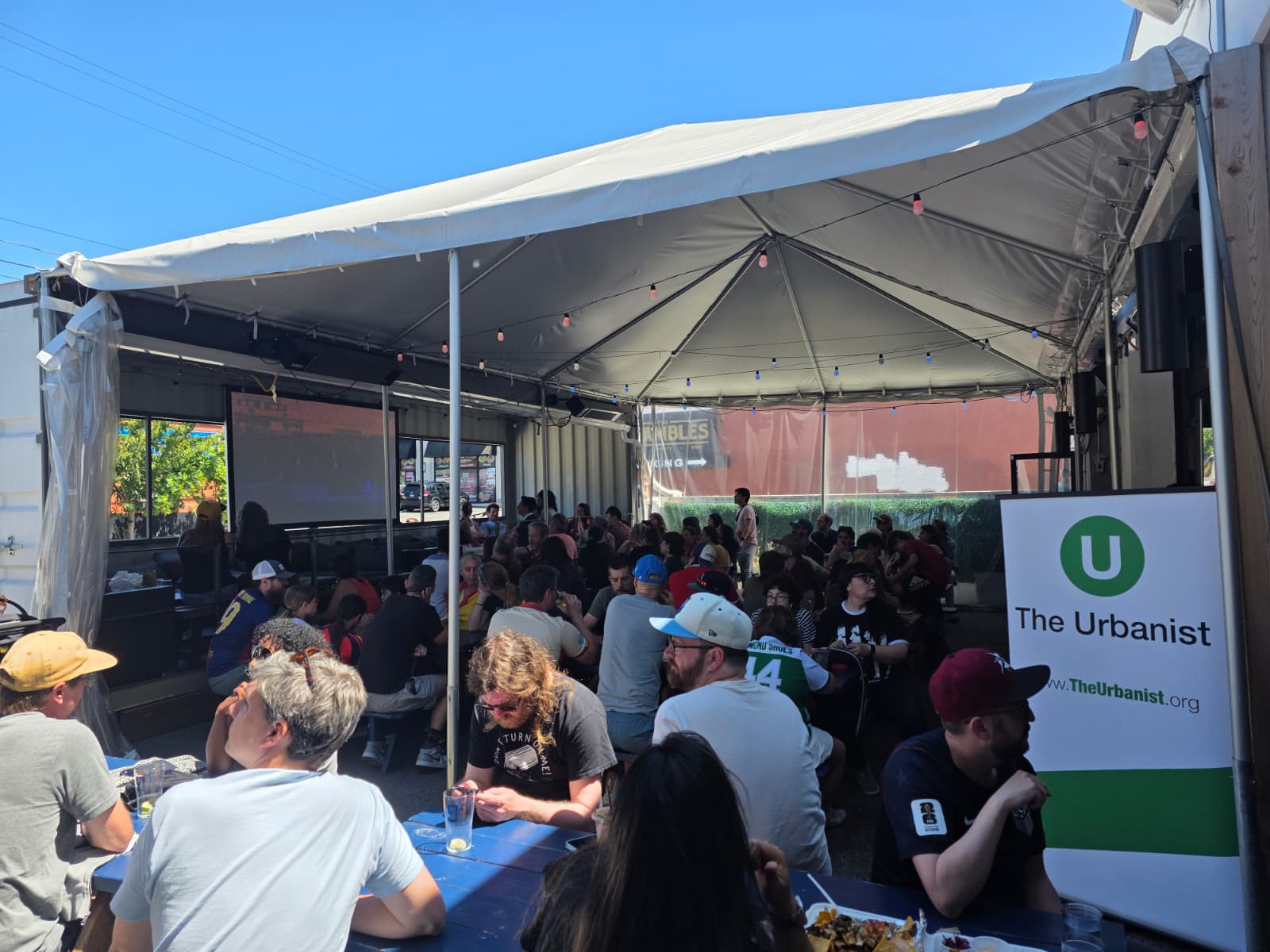
The decision to locate a set of Thrones at First and Charles immediately adjacent to Lumen Field was clearly strategic, given the timing of the pilot's launch right before the FIFA Men's World Cup. While event staff did add additional port-a-potties to areas within the Pioneer Square pedestrian zone on days when Seattle was hosting a match, the Throne installation offered quickly implementable restroom access for the duration of the entire tournament, close to watch parties like the one at Victory Hall.
So far, the pilot seems to be going swimmingly, with users giving the Thrones an average of 4.22 on a cleanliness scale out of 5, though that data doesn't reflect the height of soccer tourist visitation.
"While we understand SDOT's in a hurry to prepare for the World Cup, this is about more than one event. It's about preserving the preservation district's unique historic character and providing opportunities to build a future honoring that legacy," Patterson continued.
Now SDOT is considering a number of other locations around the neighborhood, including one just across the street. Spots closer to the Alaskan Way waterfront promenade could provide a southern counterweight to the staffed public restrooms already in place on the waterfront near the aquarium, or SDOT could select a spot that's more central to the neighborhood. Any final decision will ultimately need to be approved by the Preservation Board yet again – and could be subject to another appeal by litigious property owners.
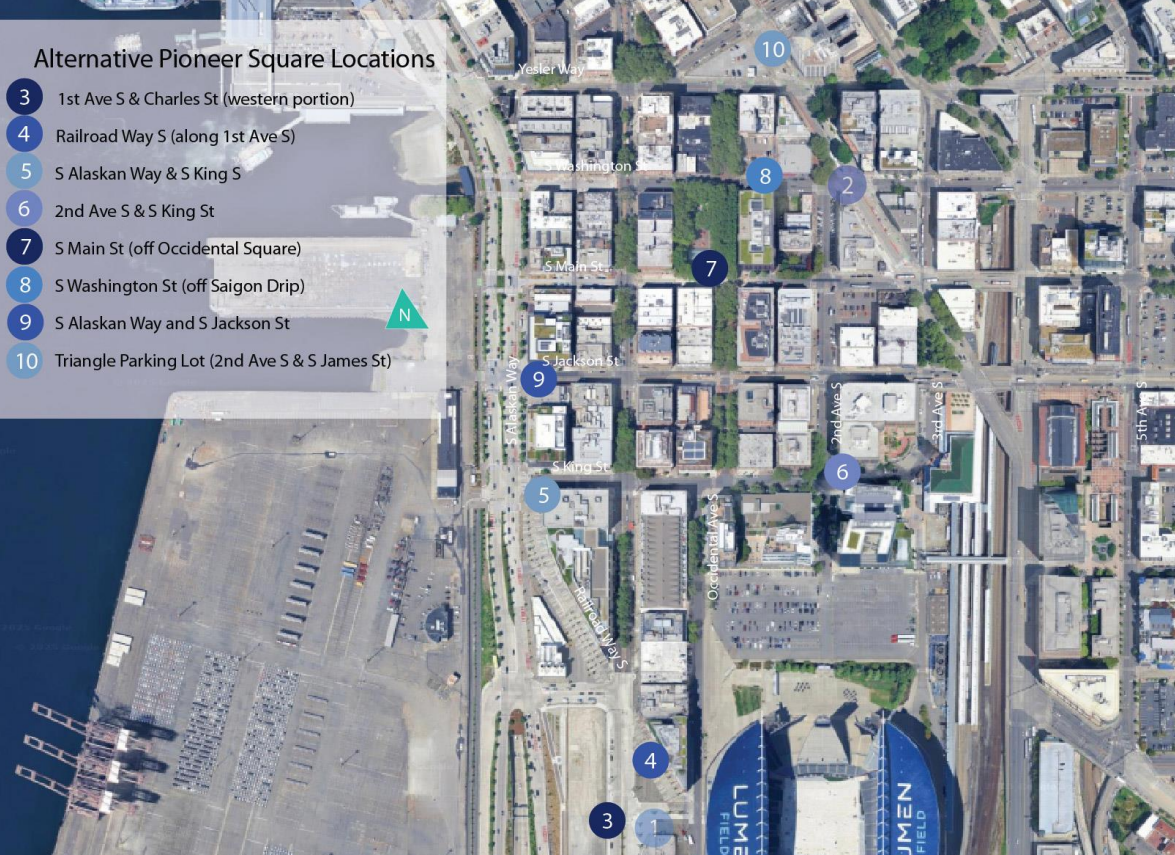
The Thrones at 2nd Avenue S and S Washington Street might have to move as well – but for completely different reasons. Located closer to the heart of downtown near the Smith Tower, that pair has seen higher usage overall than the pair on Charles Street, with nearly 60% of the overall visits in the first few weeks of the pilot. But the location may not get enough sunlight.
"We’re also considering moving the restrooms at 2nd Ave and Washington St because of power supply concerns, but that’s in early stages of observations and hasn’t been decided. Our concern is that these solar-powered units may not get enough power during the dark months," SDOT spokesperson Amy Abdelsayed told The Urbanist.
"Once any new sites are recommended, we would still need a final Certificate of Approval and then work with the Alliance for Pioneer Square and other interest-holders," Abdelsayed continued.
While the City of Seattle has not yet announced any plans to expand its Throne pilot beyond these four restrooms, King County Metro has also partnered with the company to implement restrooms at its Aurora Village and Burien transit centers, after years of debate about the cost of staffing security guards to monitor restrooms there.
While these restrooms remain open for use, the ordeal illustrates the issues that come from siting bathrooms, even when the public broadly agrees Seattle needs more of them – and the leverage that historic districts offer as a way to veto projects that are broadly popular.
 Ryan Packer
 Doug Trumm