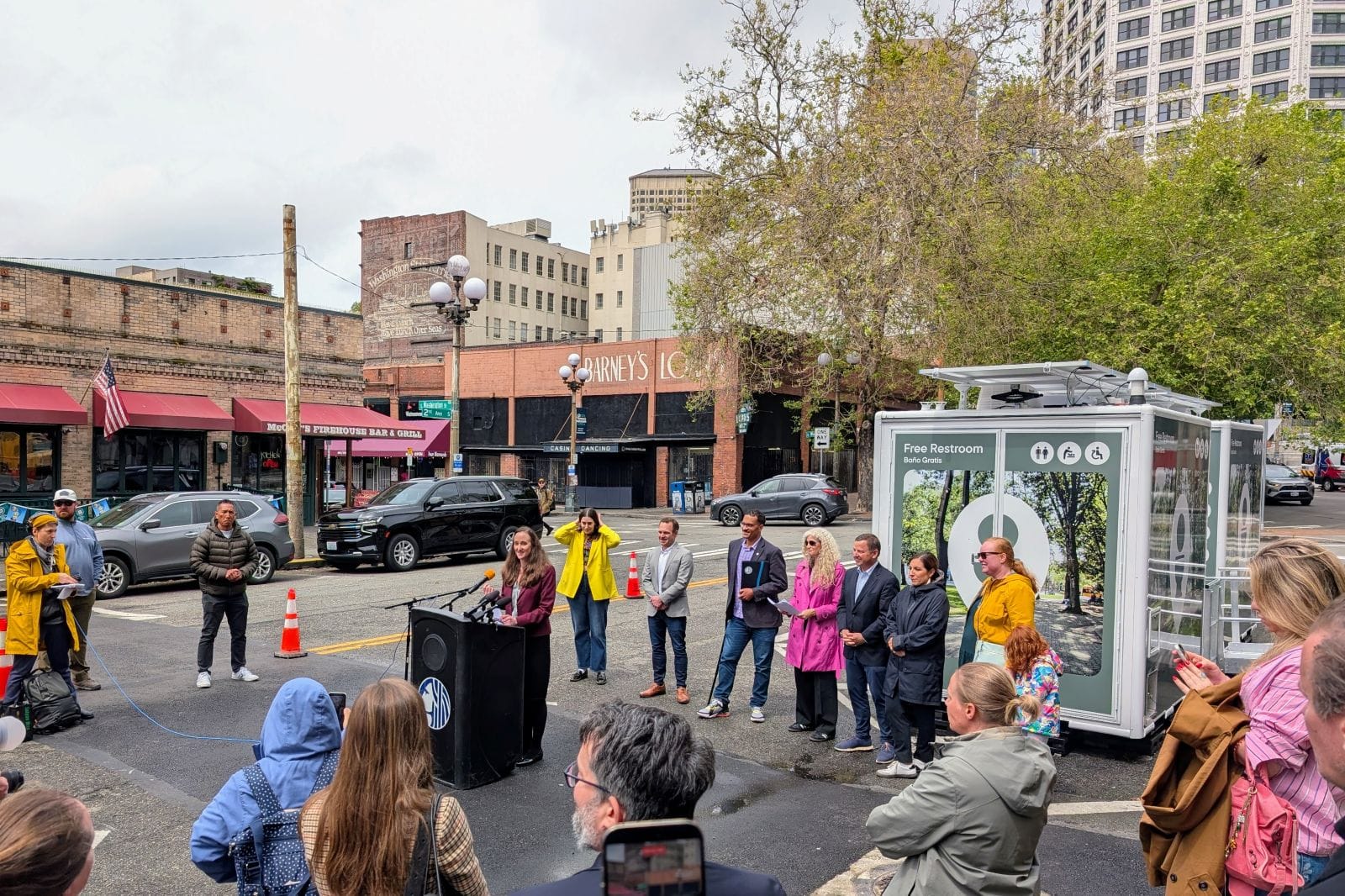
People in Seattle have a new tool in their kit when it comes to meeting nature's call while in Pioneer Square. On Friday, officials opened two new restrooms at a ceremony at the 2nd Avenue and Washington Street location, near the Smith Tower.
The other new set of two bathrooms are located at 1st Avenue S and S Charles Street outside of Lumen Field. The new facilities will certainly come in handy during FIFA World Cup festivities in June and early July, though those events will also add "more than 100" temporary portable bathrooms given the huge crowds expected.
Rather than cutting a ribbon at this event, leaders sliced through a ceremonial roll of toilet paper. Speakers sprinkled in plenty of dad jokes, while also noting that the lack of public restroom facilities is a real concern facing the the region in need of serious attention. Mayor Katie Wilson struck both of these chords.
“Today is a first step to delivering on Seattle's number 1 and number 2 priority: creating clean, accessible, and safe public bathrooms,” Wilson said. “This is a simple solution to address one of our most basic human needs, and a step towards creating a more livable and welcoming city for everyone.”
That's a wrap. Open for business.
— Doug Trumm (@metropolitanglide.bsky.social) May 15, 2026 at 1:25 PM
[image or embed]
Wilson noted she has lived the need firsthand, echoing the plight of many parents.
"I'm the parent of a toddler, and actually a toddler who just recently finished potty training," Wilson said. "But as the parents in the audience today probably know, I'm starting to realize that actually diapers were the easy part, because you can kind of change a diaper anywhere, but now when she's got to go, she's got to go, and access to a bathroom can be the difference between a nice day out in the city and a day cut short by crisis and tears."
Wilson said she hoped that these new facilities would be the first of many, filling in gaps in bathroom access across the city. The City's current steep budget deficit will complicate expansion in the near term, she granted, while still pledging to work on it.
"There should really be an accessible public restroom within like a block of every transit hub," Wilson told The Urbanist. "I would love to help make that happen."
The lack of public bathrooms in Seattle costs people money, time, and dignity. This restroom is super exciting -- when do we get #2?
— Brittney Bush Bollay (@brittneybush.bsky.social) May 15, 2026 at 2:43 PM
[image or embed]
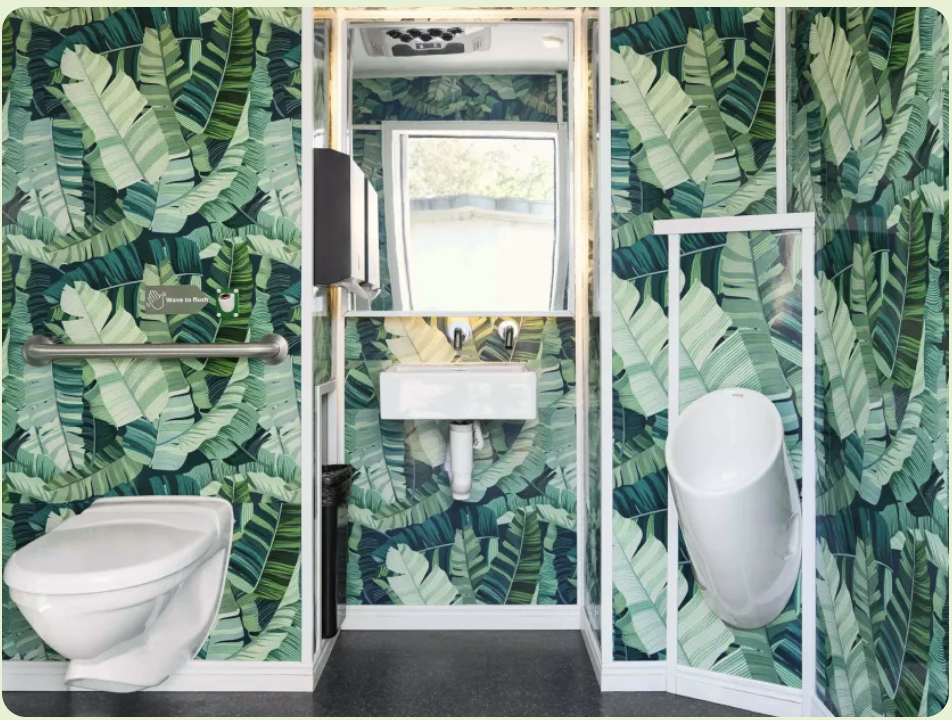
The solar-powered bathroom pods are operated by a third-party vendor called Throne Labs, which specializes in portable public bathrooms. The City has commissioned the project as a one-year pilot program, with the cost starting at $465,000 per year. The bathrooms will be cleaned several times a day by Throne, with the City portraying the project as highly cost-efficient. Throne is also being retained by King County Metro to provide restroom access at its Burien and Aurora Transit Centers, after significant issues finding a way to provide access at those locations.
"Now, before anyone starts writing stories about how the mayor wants to open a new public bathroom to serve her own family, let me add that public bathrooms really do benefit everybody," Wilson said. "We all have the same basic needs. Everyone poops, whether you're spending the day exploring the neighborhood, or you need to use the bathroom before you head home the bus down to a long shift, or you have kids who really need to know when they need to go. None of that should trigger a panic. Pioneer Square is a great place for this pilot project, because thousands and thousands of people move in this area every day, working, shopping, staying, visiting, and just living their lives."
Councilmember Rob Saka's kids are a bit older than Mayor Wilson's daughter, and he noted they could be a prime audience for the jokes sprinkled into the event.
"Now I don't mean to be cheeky, but today we're getting a bottoms-up approach to bringing more restrooms to our city," Saka said. "Come on guys, this is a fun, playful moment. Laugh at corny dad jokes. I can't wait to let my kids watch the recording of this, but really, this is a fun, playful moment, but also a crucial one for our city. We simply do not have enough public restrooms. Period."
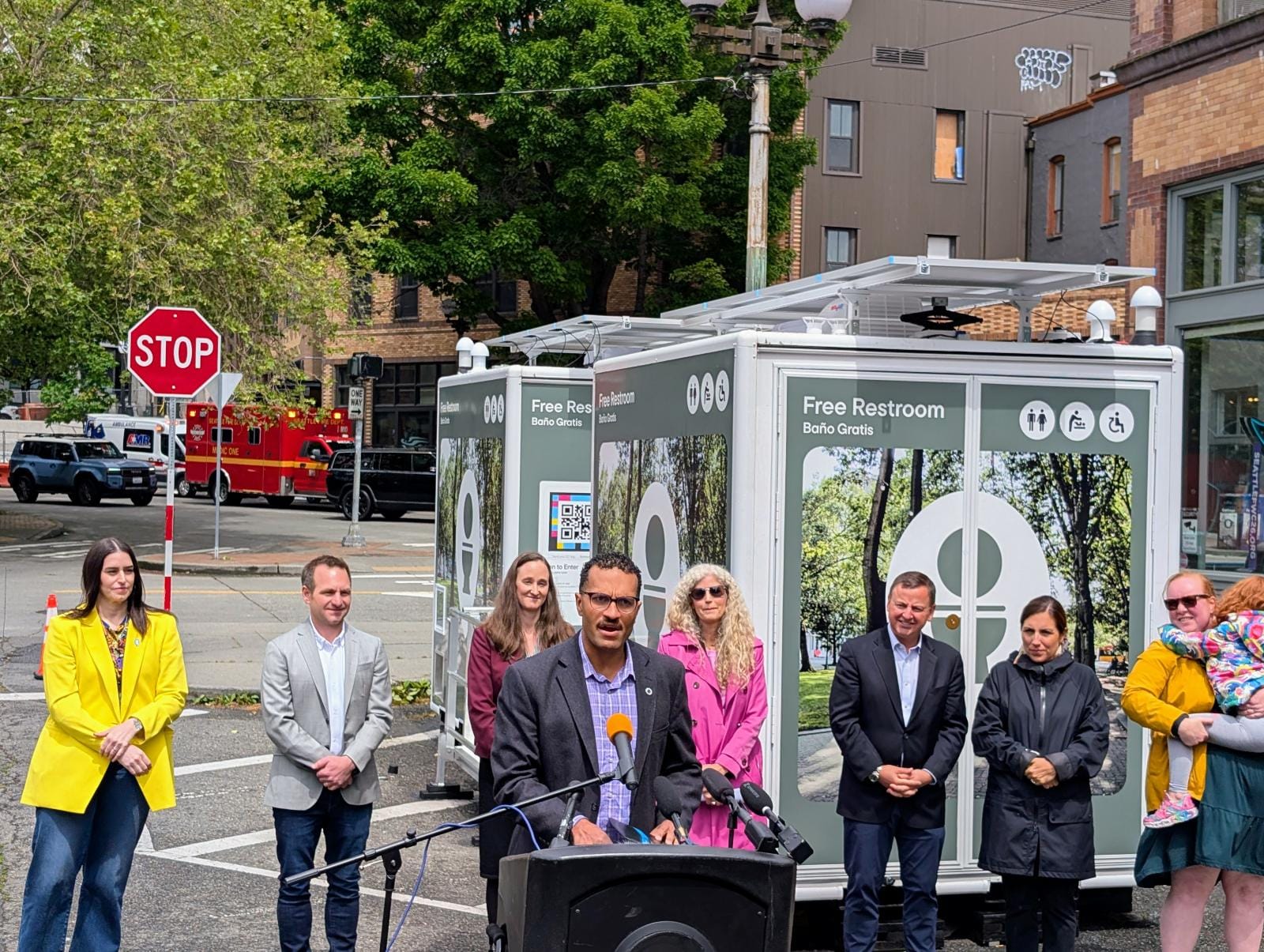
Illustrating his commitment to the issue, Saka said last year he introduced an amendment to fund more portable restrooms in District 1, which he represents, using Seattle Parks dollars. "That amendment helped look at restrooms and address restrooms in problematic areas, including Lincoln Park, Alki Beach Park, and Don Armeni Boat Ramp," Saka said.
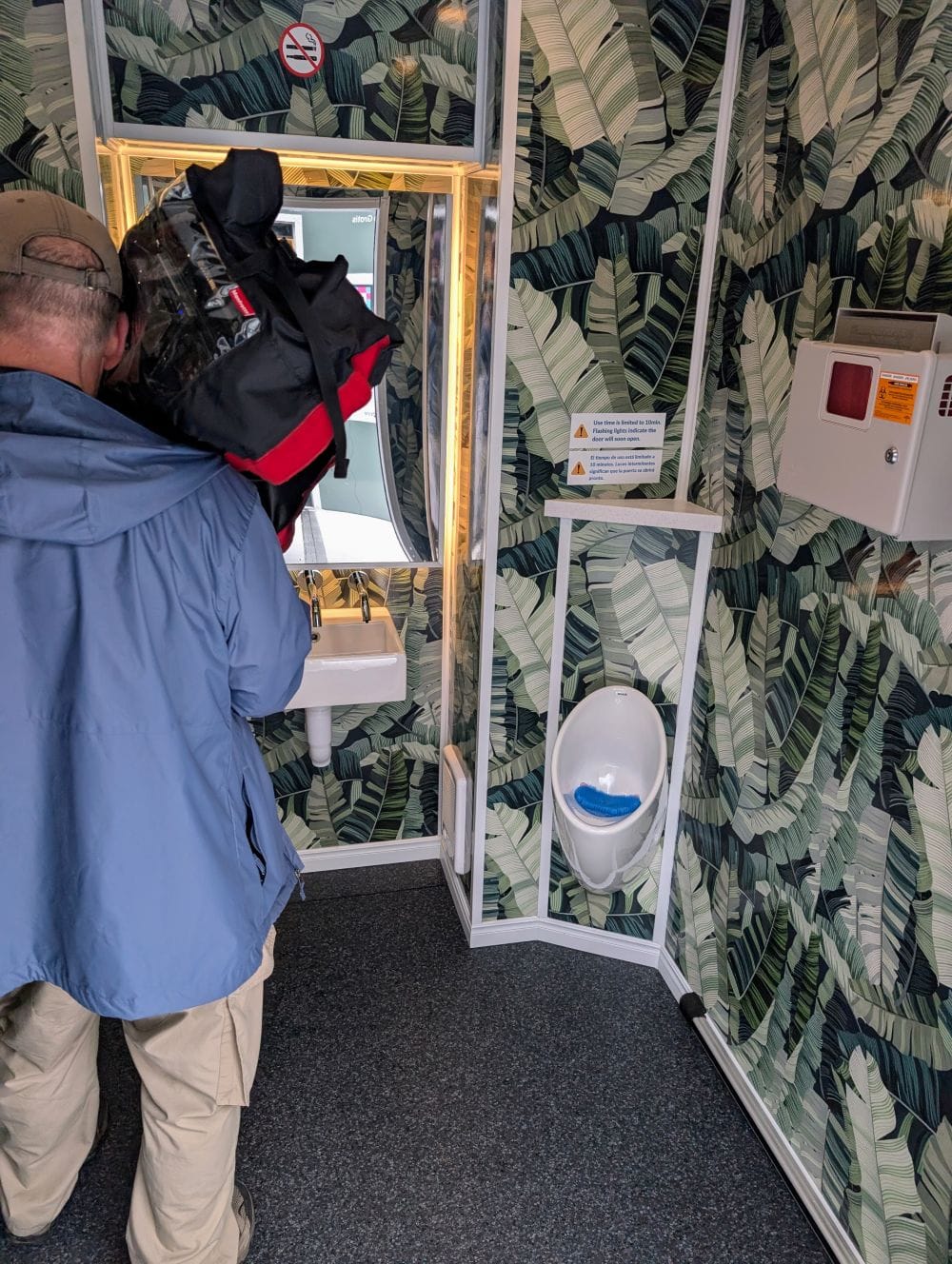
With Throne's model, users generally use a phone to unlock the bathrooms, but aren't required to download an app or pay to use the facilities. Users have a 10-minute limit before the door automatically opens, signaling the next user's turn, ready or not. In addition to ensuring everyone gets their turn, this feature is intended to reduce the likelihood of illicit behavior, like drug use or vandalism, within the stalls.
The app does provide accessibility features, such as laying out the location of amenities in the bathrooms for blind users. Throne said user feedback indicated this approach was preferable to using braille tactile signage due to sanitation.
Since the bathrooms are in street right-of-way, the Seattle Department of Transportation (SDOT) will be overseeing the project, with funding coming from the 2024 Seattle Transportation Levy.
Pioneer Square locations will be open from 7am to 10pm, SDOT spokesperson Ethan Bergerson said.
"People can access the restroom by scanning a QR code, sending a quick text, or using the Throne app," Bergerson said. "If someone damages the restroom, Throne can limit their access in the future. This helps keep the restrooms clean and available, so that everyone has a positive experience."
The City's Community Assisted Response and Engagement (CARE) department will aid in the outreach strategy to raise awareness of the new bathrooms and how to use them, including provide access cards that allow folks without phones to use them.
"The City is partnering with Throne to train our downtown ambassadors and CARE team members," Bergerson said. "This training will help them provide access for people who don't have cell phones. They will be ready to help people access the restrooms within the coming weeks."
Throne Labs bathroom pods have been deployed in several other metropolitan regions, including San Francisco Bay Area, Los Angeles County, Washington D.C., and Ann Arbor. Among other agencies buying into Throne's model is Pierce Transit, which similarly pointed to the quick deployment as a plus.
“Pierce Transit is proud to partner with Throne Labs to pilot a clean and accessible restroom facility for riders at the Lakewood Transit Center,” Adam Davis, Pierce Transit’s Chief Maintenance Officer, said in a prepared statement. “Public restrooms are an important part of the transit experience. We aim to provide amenities that help riders feel more comfortable and supported, which can contribute to increased ridership and stronger community connections. Throne’s innovative, fast-to-deploy model is a promising complement to the reliable, community-focused service we strive to deliver.”
From her first week in office, Wilson has been clear public bathrooms would be getting her attention, as she brought up when she sat down with an interview with The Urbanist.
"Public bathrooms is something that I talked a lot about on the campaign, and I think it would be great if we could start to actually do something about that pre-World Cup," Wilson said in January. "I think we’re gonna have a lot of people in our city walking around enjoying the city, and it would be nice if they had a place to pee."
While the vibes were good on Friday, of course nothing good can happen in Seattle without pundits seeking to summon some rain on the parade. Some local TV news stations had questions about if the restrooms were too pricey or would repeat the failure of a public bathroom effort two decades ago, which was ultimately closed due to issues with vandalism, drug use, and crime concerns.
“I think that we collectively have learned a lot since then about how freestanding toilets like this can work well,” Wilson said in response to this thread of poo-pooing doomerism.
For now, the one-year pilot program is underway and the bathrooms are open for business.
 Barbara Clabots (Guest Contributor)
 Guest Contributor