After explicitly campaigning on tackling restrictive zoning regulations in the name of housing affordability, Mayor Katie Wilson is advancing her Taller Denser Faster zoning update to allow more types of housing across Seattle.
Though the broad contours of her "Taller Denser Faster" plan were announced last month, its full scope is continuing to be fleshed out. Last week, the Seattle City Council considered a resolution that would give councilmembers a chance to buy in on the plan – and influence it.
The resolution makes clear the ways in which Wilson's administration will build on the growth plan developed under former Mayor Bruce Harrell. That plan had taken a step beyond the 1990s "urban village" model that focused density within a relatively small share of Seattle's footprint, but still steered clear of much of the city.
In contrast, the resolution directs the City's Office of Planning and Community Development (OPCD) to look at both new and expanded growth centers, study zoning changes "within walking distance of frequent transit stops, including areas not directly adjacent to major arterials," and to consider implementation of House Bill 1491, Washington's transit-oriented development bill, well before a state-imposed deadline of 2029.
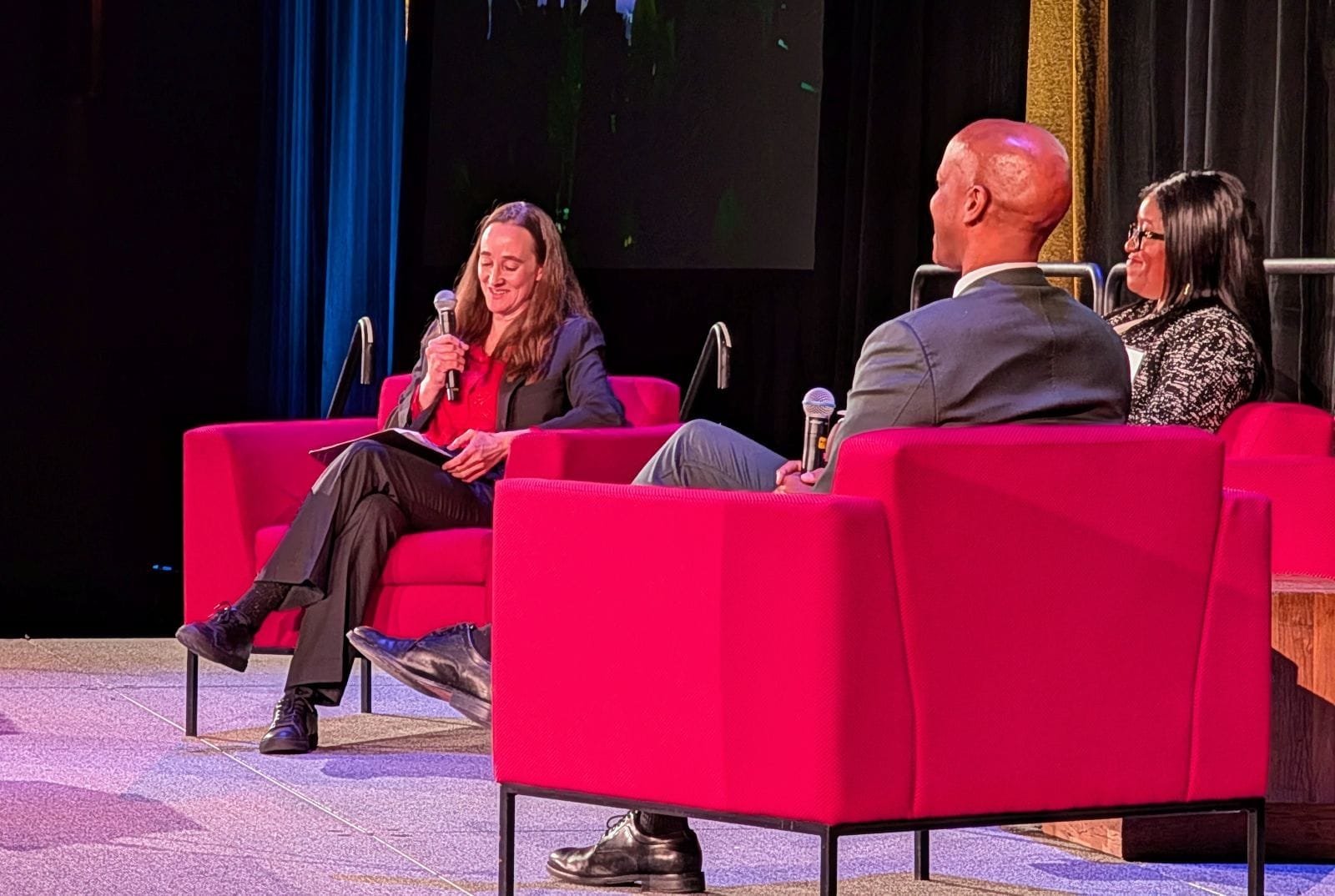
As Council considered the resolution Thursday, Alex Hudson, Wilson's senior policy advisor on transportation and livability, made a pitch that touched on public health and walkability.
"We know that Seattleites are facing and trying to survive in a severe housing affordability crisis, and by addressing the constraints around supply quickly, we can begin to bend the trend on that, by adding zoning capacity for all kinds of new housing," Hudson said. "We also are hoping to create the foundation for thriving and complete neighborhoods by making sure that we're putting housing near where transit is, and therefore where historically we have also put many of our community amenities, such as parks, schools, and shops, and very importantly, for the Mayor and the Mayor's Office, is responding to very consistent feedback and facts around putting dense housing where we have arterials and therefore exposing high numbers of people to air pollution and the public health effects of that."
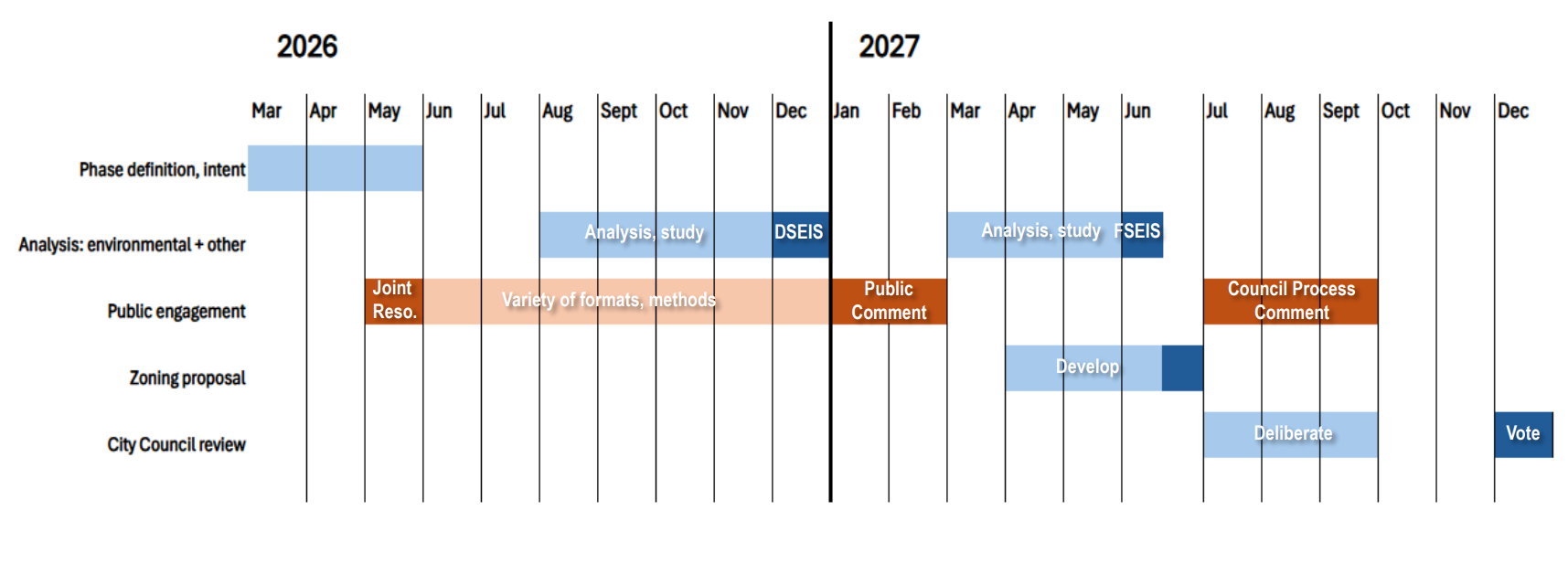
Though the "faster" moniker comes from the fact that Wilson is combining what had been set to be two separate phases of Harrell's plan into one, moving the timeline up considerably, the process is far from lightning-quick. OPCD doesn't expect to complete its environmental review until next summer, with the City Council given a very narrow window next year to deliberate on potential amendments. A final vote would not actually be planned until after the 2027 general election, in which all seven district-based councilmembers will be up for reelection.
Meanwhile, the Council is still considering the second phase of Harrell's growth plan right now, a phase that includes narrow upzones around 30 new neighborhood centers – tightly clustered around existing business districts like Montlake and Tangletown – and in the immediate half blocks along the city's most frequent bus routes. That work is proceeding at a rather leisurely pace.
After an upcoming committee meeting on May 28, the Council will not meet to discuss the plan at all for nearly two months, with a public hearing scheduled for July 23 where Seattleites can weigh in on potential amendments. A final vote isn't expected until August 5, ahead of the Council's annual summer recess.
Though some amendments will be debated over the coming weeks, the ways Phase 2 could be beefed up are severely limited thanks to the environmental review that was already completed under Harrell. The new review being set in motion now as part of Taller Denser Faster is an opportunity to consider much more ambitious options that are more in line with what Wilson campaigned on.
"There is a strong feeling, both from some councilmembers and a range of stakeholders, to set these bookends quite broadly," Michael Hubner, OPCD's Long Range Planning Manager, told the Seattle Planning Commission later that day. "So that there isn't a situation as happened with the Comprehensive Plan itself and the first two phases [where] the lack of a sufficiently broad environmental review became a barrier for Council or the Mayor to consider different options for zoning for more housing in different parts of the city."
What will definitely be studied: the nine additional neighborhood centers advanced forward by the Council last year for consideration. Due to environmental appeal concerns, those centers were docketed for future deliberation, but not adopted.
Located in places like North Capitol Hill, Alki, and around Gasworks Park, these neighborhood centers had been looked at during initial scoping on Harrell's plan, but were ultimately dropped under the justification that they were not as close to being complete neighborhoods as other neighborhood centers. That logic, of course, is self-defeating: without additional density, they likely never will reach their full potential as complete neighborhoods. It was Councilmember Alexis Mercedes Rinck who put the bulk of these growth areas back on the table.
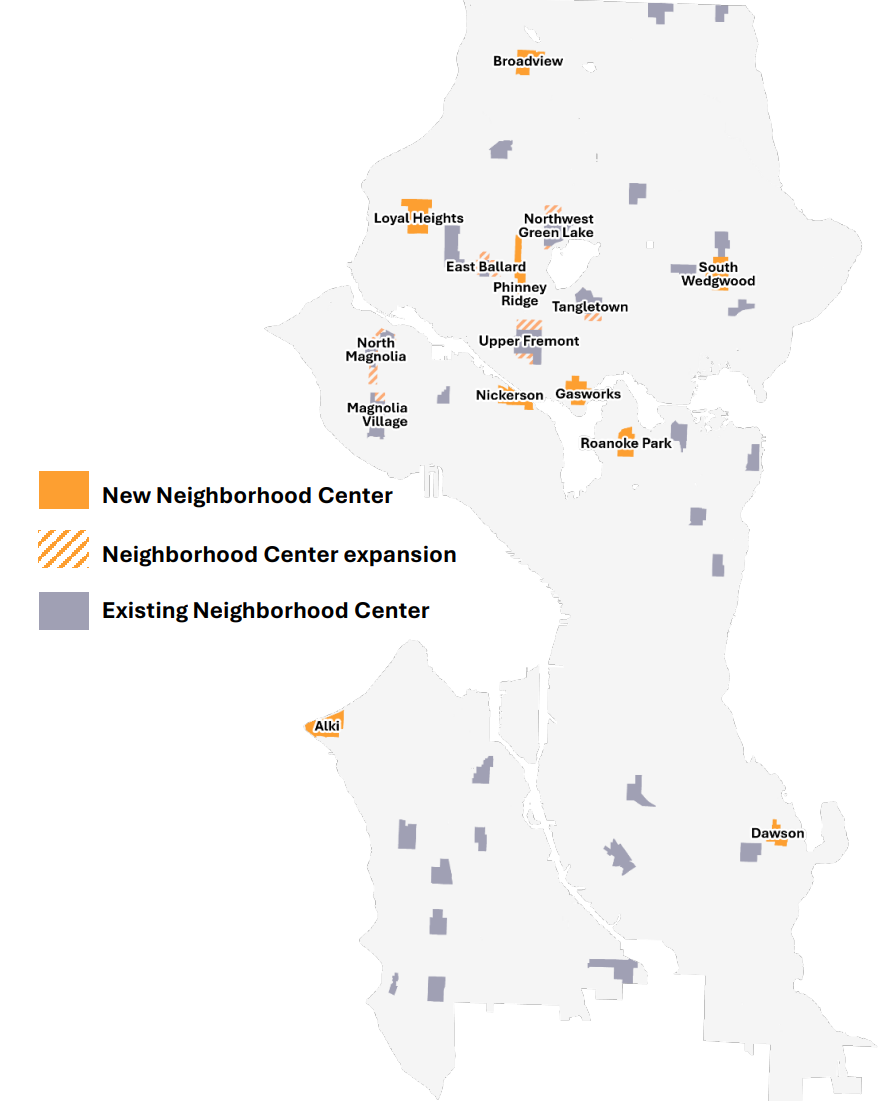
Bigger neighborhood centers are also on the table, expanding beyond the very narrow three to five-minute walkshed initially considered and now baked into the city's Comprehensive Plan. The ones explicitly being considered for expansion now include Northwest Green Lake, Upper Fremont, Tangletown, and both North Magnolia and Magnolia Village, but there could be others. Several neighborhood centers were explicitly shrunk by OPCD after local pushback, largely from homeowners, and this could be an opportunity to reverse those cuts.
And then there's the state transit-oriented development bill, which gave cities around the region marching orders when it comes to upzones near transit. In addition to allowing significant amounts of density within a half-mile of light rail stations, Seattle will also need to allow additional housing capacity within a quarter mile of all RapidRide bus stops. An OPCD map illustrated how many areas of the city are already meeting the density requirements, with the places that aren't yet in compliance heavily weighted toward West Seattle, Delridge, Loyal Heights, and around Green Lake.
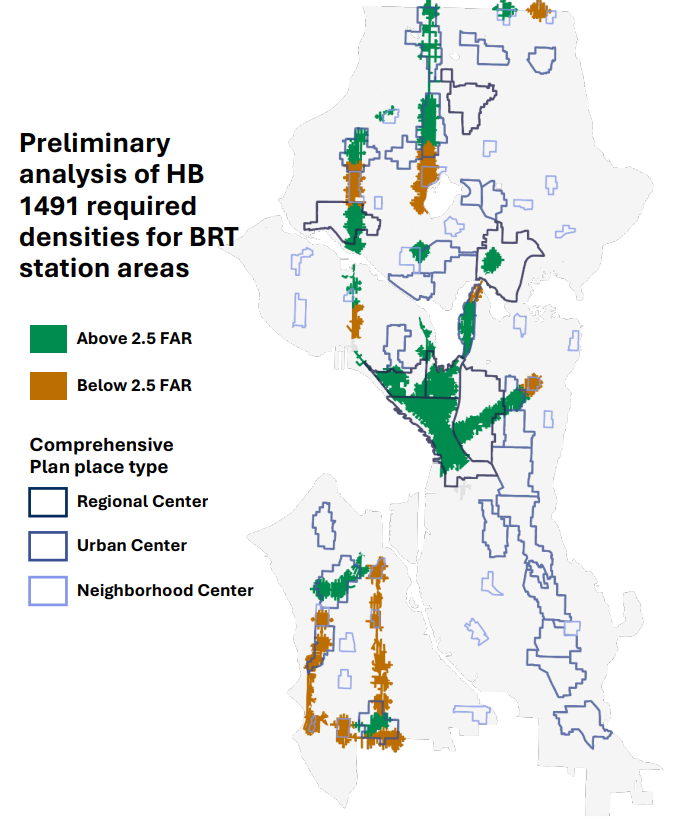
While the housing density baseline has been raised under state law, the review happening now may consider going much broader. The Complete Communities Coalition (which includes The Urbanist among its members) is pushing the City to study upzoning within a 10-minute walk of major transit, with Wilson echoing the same interest.
"I state my support for studying what's possible because it was challenging to be in a position where we were really constrained on what our options were, and I want to give this body options to put forward policy ideas," Rinck said. "There were ideas on the table, from anti-displacement measures to additional bonuses or bringing online new neighborhood centers, and we weren't able to move forward with those in Phase 1."
For now, the resolution asks OPCD to study transit corridor upzones within "walking distance of frequent transit stops, including areas not directly adjacent to major arterials," without yet defining walking distance in numeric terms.
Rinck also pressed on the tight timeline to adopt a plan next year, with deliberations wedged in between a summer recess, budget season, and a high stakes election.
"I certainly think this is a possible timeline," Seattle Council legislative analyst HB Harper told Rinck. "I think it may be a little optimistic. I would say I would not be surprised if it were to push into 2028. I would hope it wouldn't push far into 2028."
And while neighborhood groups like the Wallingford Community Council have accused the City of "purposely exclud[ing] neighborhood voices" by declining to mail direct notices to property owners who would be impacted by potential zoning changes, the coming months will include significant community outreach around the plan. In fact, community engagement is part of what is stretching the timeline to 18 months, along with producing the legally-required draft and final Environmental Impact Statements, which processes that public feedback.
"'Faster' is a relative term here. None of this has been fast," Eddie Lin, chair of the Select Committee on the Comprehensive Plan said. "Nothing has been decided yet. There will be, and we heard today, the importance of ongoing public engagement, particularly with communities that are facing displacement pressures that have been ongoing for many, many years."
As OPCD gets cracking on this work, housing advocates across Seattle continue to prep for the next big hearing on Phase 2, scheduled for July 23.
 Doug Trumm
 Ryan Packer