In the wake of accelerated immigration enforcement by U.S. Immigration and Customs Enforcement (ICE) across the country this summer and into fall, new data shows that Washington state driver data is still being used to enable and assist in these arrests.
The update comes from the University of Washington Center of Human Rights (UWCHR), which published an initial report at the beginning of the year showing how Washington state driver data was being accessed to assist in federal immigration enforcement. Now, nine months later, UWCHR has data showing this practice has continued unabated. Researchers have confirmed 356 arrest incidents between August 1, 2025 and October 13, 2026 that have resulted from federal agents receiving Washington State Department of Licensing (DOL) driver data through the interstate querying system Nlets.
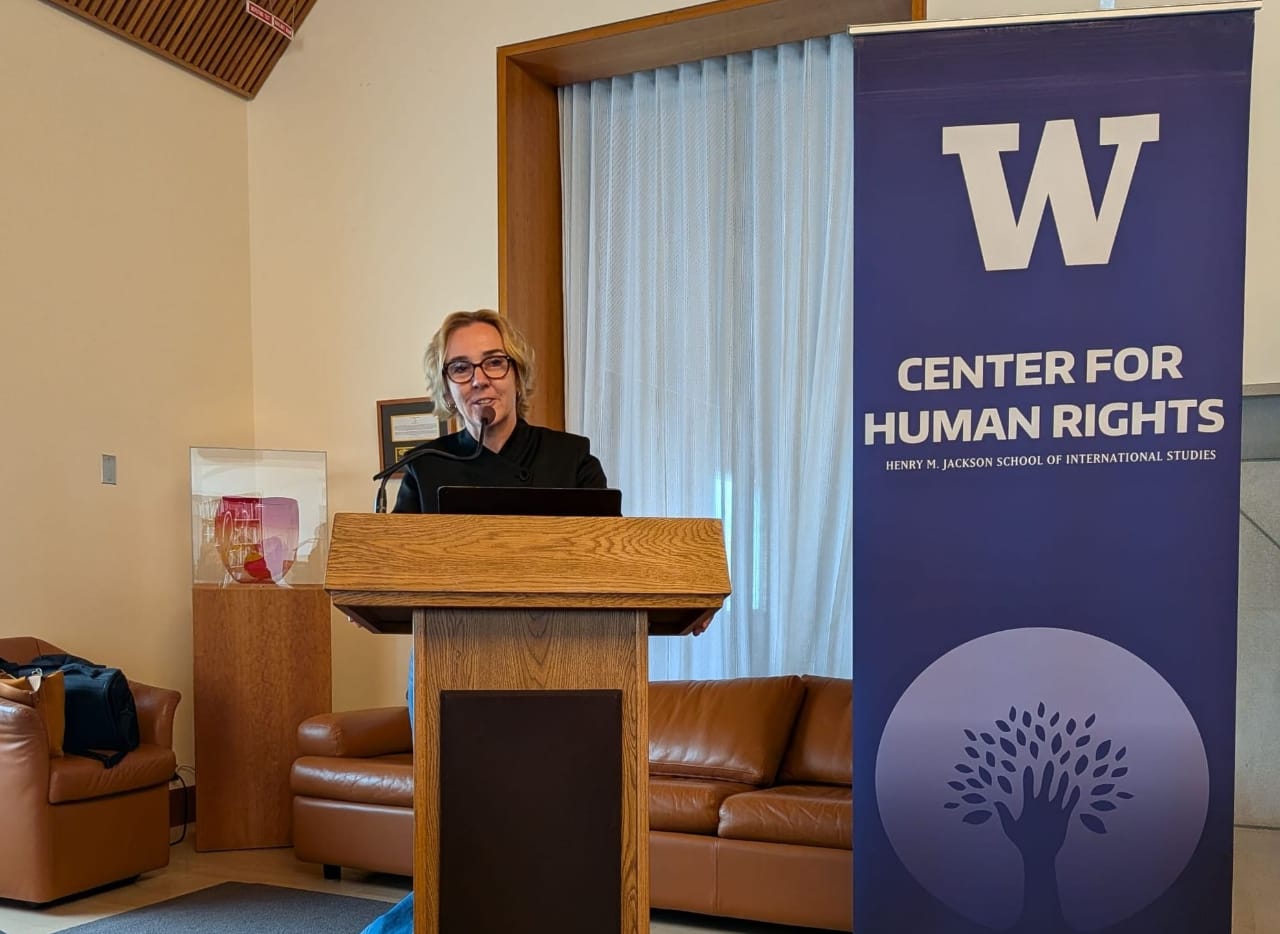
“We know that 356 is likely only a small fraction of the total cases that are happening,” said UWCHR Director Angelina Godoy at a press conference on Tuesday. “Those are just the ones where we were able to confirm it with smoking gun evidence connecting a given plate search to a known immigration arrest.”
ICE continues to access this DOL data in spite of the 2019 Keep Washington Working Act and government officials being aware of this data access pathway since at least 2018, according to the report.
Federal agents’ general operating procedure is to travel to target-rich environments where they think they might find immigrants. They ask the state for data about certain license plates via Nlets, run the registered owner names they are given via Nlets through their own databases, and then decide whether to make an arrest.
Nilu Jenks, a candidate for the District 5 seat of the Seattle City Council, wants to add the Seattle Police Department’s use of Nlets to the Office of the Inspector General’s annual surveillance review while also calling for action from the state legislature and Governor Bob Ferguson.
“In District 5, ‘target rich’ is a polite way of saying racial profiling,” said Jenks. “It means agents deciding who looks deportable by the color of their skin and the work truck they drive: the roofer outside a hardware store on Aurora, the landscaping crew in Maple Leaf, the dad dropping his kids at school in Lake City. When a license plate becomes a name and home address in moments, every trip is a risk. Nobody should have to wonder whether it's safe to drive because of how they look, and no state database should help put a target on their backs.”
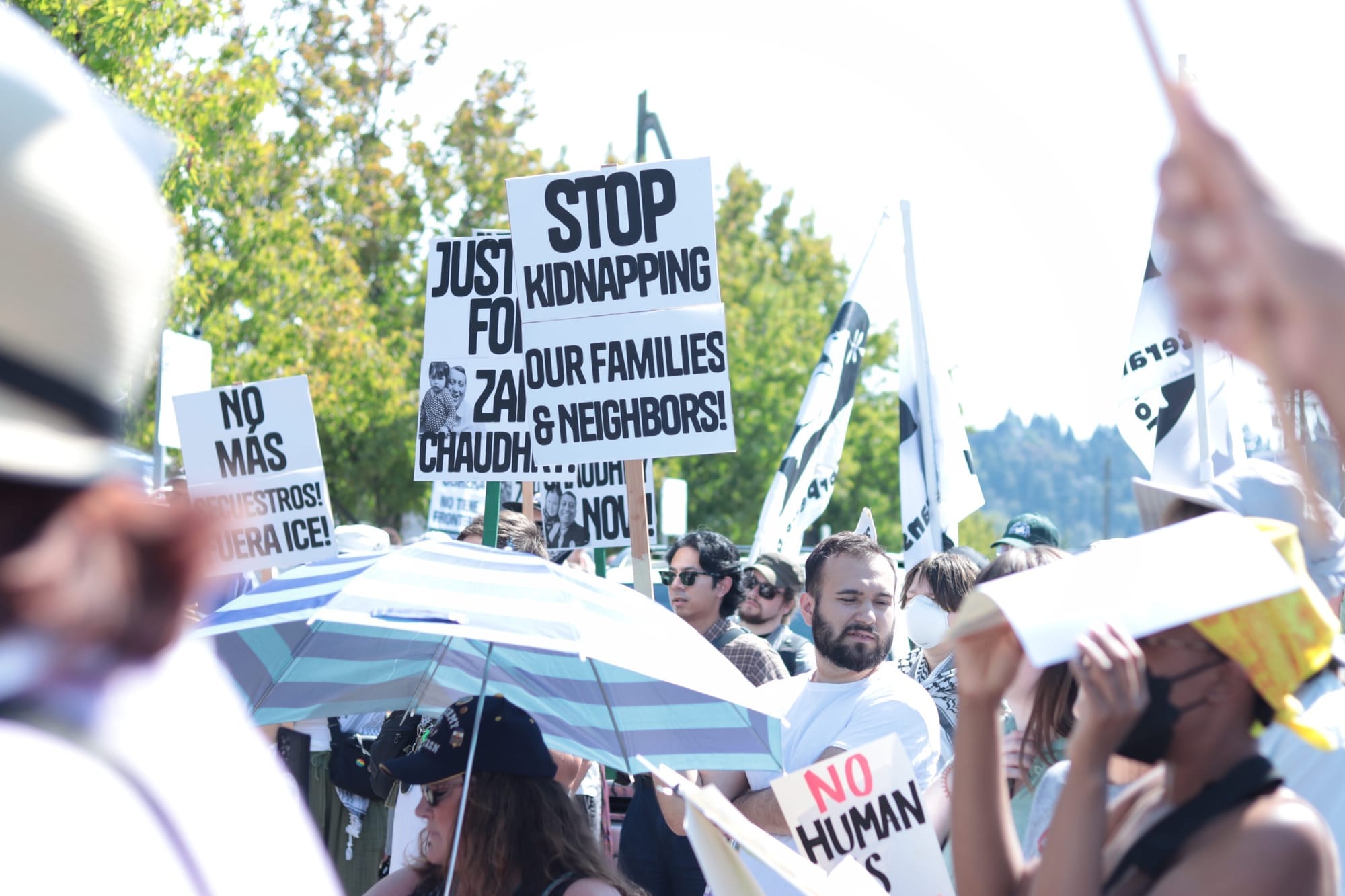
Godoy underlined that Washington state hasn’t been doing enough to address the increasing levels of violence and fear experienced by immigrant residents.
“This is a time of extraordinary pain and difficulty for immigrant communities in Washington and around our country, not only because we are experiencing unprecedented levels of immigration enforcement here in the region and around the country, but also because we're experiencing the use of increasingly violent tactics, which appear to involve overt racial profiling, often warrantless arrests, which challenge the Constitution,” Godoy said. “Multiple courts around the nation have found these practices to be unconstitutional, in fact, but here in Washington, this has been greeted thus far with relative silence, which I believe contributes to the invisibilization and isolation of immigrant communities in our midst.”
An escalating situation
Immigration enforcement has quietly increased across the country this summer, with ICE eschewing the more dramatic “surges” it conducted earlier in the year in Minneapolis, Chicago, and other cities. Washington state has been no exception to this swell, and Godoy said she expects to see the numbers continue to rise over time.
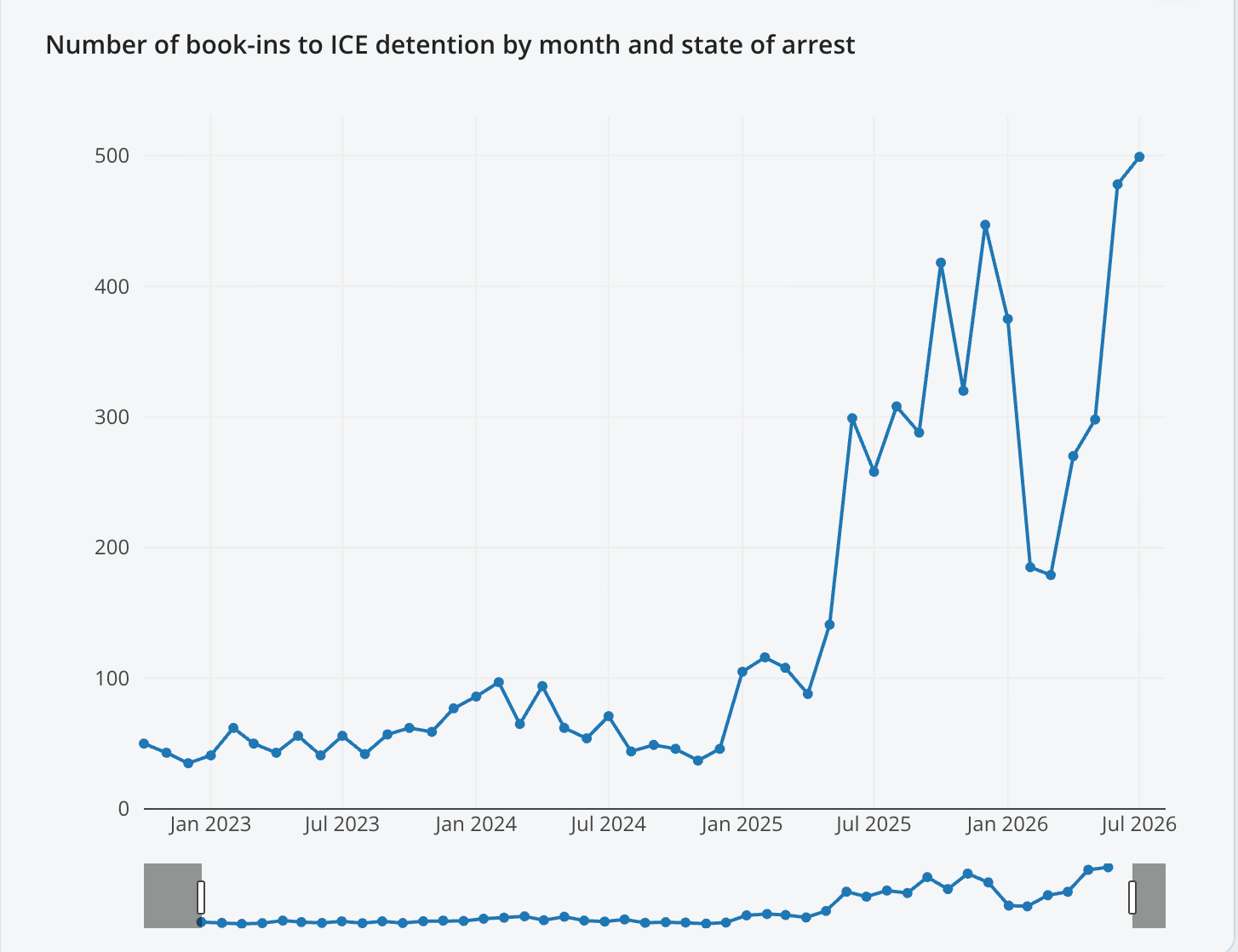
The Seattle Times reported that 74% of ICE arrests in Washington in June and July did not involve people with criminal convictions or pending charges.
Guillermo Rivera from Eastside for All, an equity advocacy organization, spoke about the detentions being observed on the Eastside at the press conference. “Most of these cases happen when people were driving, or close to their vehicles, or inside their vehicles, and this is not only happening in East King County, this is happening all around the state,” Rivera said. “The people are being detained when they are driving. People, we are afraid now to go into our cars, that they can stop us at any time. We're afraid to go to the supermarket, to take the kids to the doctor, to take our children to school.”
The UWHRC report described a common new technique being seen in ICE detentions known as “jump outs.” “Jump outs” involve multiple unmarked vehicles, sometimes lacking license plates, surrounding a target who is driving. Unidentified officers then jump out of their cars and violently detain their target. Officers often already know the name of the person they are detaining due to the state driver data they have accessed.
The “jump out” has become one of ICE’s key enforcement strategies since President Donald Trump began his second term.
19 of 22 shootings by immigration agents in Trump’s second term have taken place during these ICE traffic stops, an analysis this summer found, with the UWHRC identifying at least two additional ICE shootings during traffic stops since then.
The increasing brutality of immigration enforcement is also typified by two recent investments by ICE: up to $2 million on robot dogs and up to $20 million on gloves that deliver painful electric shocks.
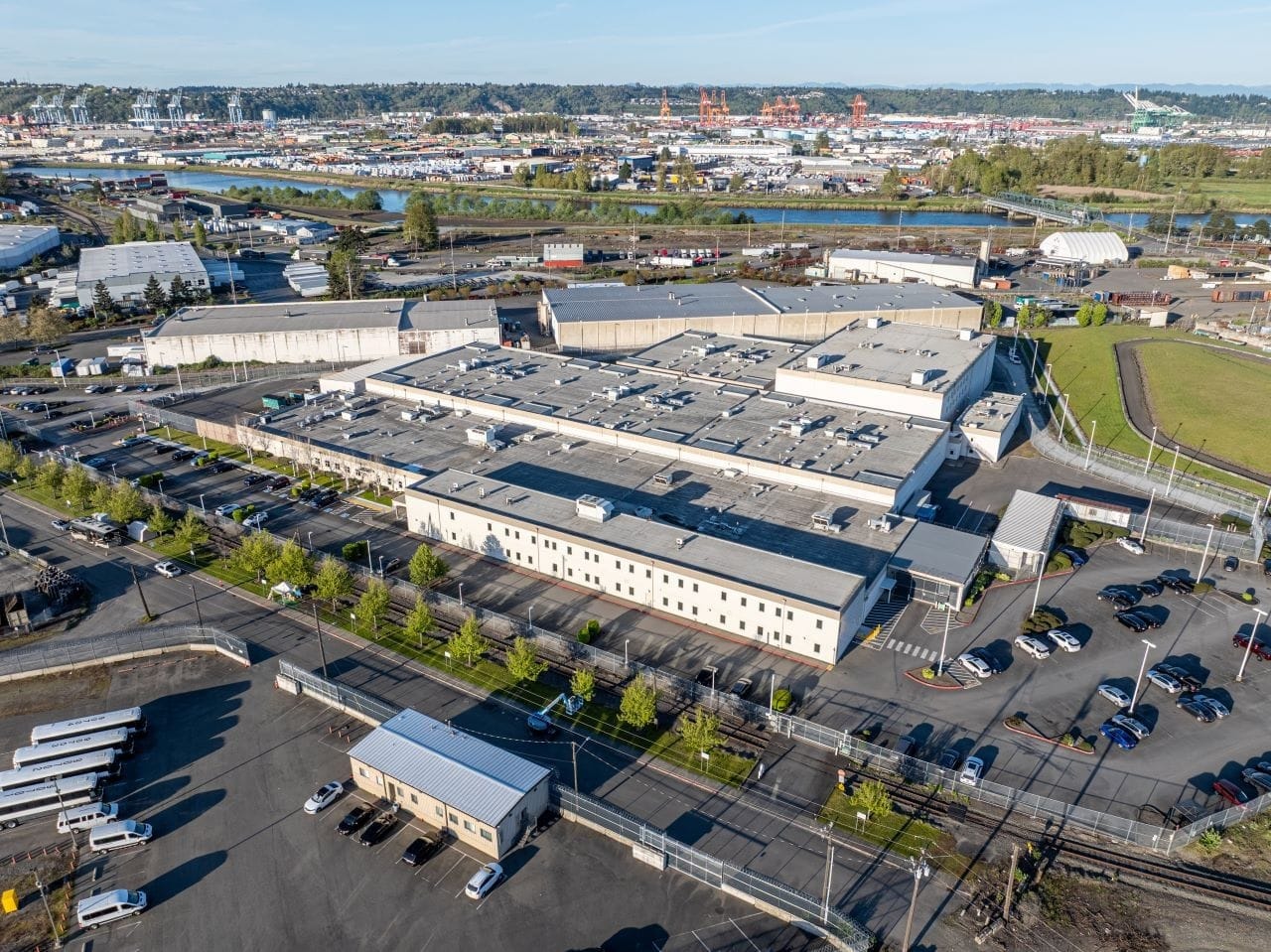
Meanwhile, local lawmakers still don’t know if ICE is planning to buy the Northwest Detention Center in Tacoma, which could stymie state efforts to impose oversight on the facility. ICE’s current contract with the facility is set to expire on October 27.
The detention center has been receiving complaints about poor and dehumanizing conditions for years. Indeed, conditions there are so bad that Washington State Senator Yasmin Trudeau (D-Tacoma) refers to the facility as a concentration camp.
State data sharing also endangers U.S. citizens
UW researchers found evidence that in Minnesota, driver data queries were also being used to obtain information about community observers of ICE activity, which shows how similar tactics can be used to both increase immigration detentions and to surveil U.S. citizens without a warrant.
The UWHRC also found evidence that this practice is happening right here in King County.
This past June, community member Tony Andrews saw a suspicious vehicle in a Fred Meyer parking lot in Bellevue. Andrews had attended a constitutional observer training through Indivisible Eastside, which allowed him to identify the vehicle as possibly belonging to ICE. Even though Andrews kept his distance, the suspicious vehicle circled tightly around Andrews’ car in the parking lot.
Andrews gave his vehicle information to the UW researchers who submitted a records request. The returned records showed that his license plate had been run through Nlets on the day and time that the incident with the suspicious vehicle took place.
“For me, this was just a violation of my privacy,” Andrews told The Urbanist. “For the immigrants, these violations are life-changing. For them, it can mean family separation.”
Handing data over to ICE
The UWHRC report detailed four different pathways by which ICE and other federal agents are able to get state driver data:
- Direct access to state DMV databases
- Access via Nlets queries
- Access via data brokers
- State and local agencies directly sharing the data
The report emphasized that all pathways must be addressed simultaneously; otherwise ICE will simply shift to a new means of accessing the data.
In Washington state, ICE had been accessing driver data via direct access to the state DMV databases as recently as last year, but for now, that pathway appears to be closed.
DOL sold its data to 14 companies last year, including at least three who held Department of Homeland Security (DHS) contracts in the near past. While these contracts with DOL forbid the data brokers from selling the data for immigration enforcement purposes, one of the companies, LexisNexis, has structured at least one past contract with ICE in such a way that LexisNexis would have no ability to see how ICE has been using the data. Therefore, it is impossible to be confident that ICE cannot use the data broker pathway to access Washington state driver data.
Direct agency sharing data with ICE is illegal under the Keep Washington Working Act, although that doesn’t mean it isn’t happening anyway.
However, the primary way ICE appears to be accessing DMV data in Washington state at this time is through the Nlets queries.
Governor Bob Ferguson has said that his office’s actions of canceling ICE and DHS’s access to Nlets has resulted in blocking 100,000 attempts to use Nlets to access state data. However, the UWHRC report found that from January 1, 2025 to May 31, 2026, DHS-affiliated agencies still searched the DOL database via Nlets 3,696,147 times, showing the gaping hole in the state’s data protections.
“What happens is that those arrest patrols, whether they're made of ICE, of the Border Patrol, of combined agencies, or of unknown masked men, simply log in under another agency's ORI, just like you might share your Netflix password with a family member,” Godoy said. “As a result, between January and June 2026, Washington DOL data itself shows that over one million searches were completed of Washington driver and vehicle data by agencies who are part of DHS.”
So far UWHRC has documented 38 unique ORIs, or passwords, affiliated with federal agencies prior to arrests by ICE and U.S. Customs and Border Patrol (CBP) in Washington state.
The report did find that New York State has been successful at cutting off the Nlets channel of information via robust legislation. In New York, federal agents are now only able to search out-of-state license plates via Nlets.
How Washington can do better
Pacific Rim Solidarity Network sent a statement to be read at the press conference instead of coming to speak due to fears of retaliation. They called for Ferguson to enable more transparency and accountability when it comes to DOL data sharing.
“Legislatures take time, and our communities need an answer now. We cannot wait until the next fall to have protections for Washington residents,” Rivera said. “We're asking the governor's office to act now. We're asking the governor to review how this information is being collected, how it's been shared, find any gaps or misuse, and use his authority to protect Washington residents.”
If Ferguson continues to choose not to close these documented gaps, the state legislature can act in January to make the Keep Washington Working Act more robust. Godoy emphasized that being even more explicit about the need for a court warrant in order to access state driver data wouldn’t be sufficient.
“The state has already incorporated specific requirements that Nlets comply with Keep Washington Working or face consequences, and yet has been inexplicably reticent to enforce these very agreements,” the report reads.
Accordingly, Godoy suggested adding explicit enforcement mechanisms to the Keep Washington Working Act, including a private right of action so that those harmed by the data sharing could receive restitution and potentially obtain court injunctions ordering a halt to illegal data access.
“We need to demand that Washington take action to at least protect us in the ways that it can,” Godoy said. “There's no way for Washington to just expel ICE agents from the state. That's not going to happen. But they don't need to serve us up to them on a silver platter with all of our data to make it so easy for them, to allow them to legitimate their arrests and their campaign of fear. So I think for electeds, this is your moment.”
Godoy also praised community members who have chosen to be involved in rapid response in defense of their immigrant neighbors.
“These are heroes, right?” Godoy said. “These are people putting their own life on the line to stand with people who are deeply vulnerable. So there's a lot that can be done. I think a lot of us are not doing as much as we could.”
 Amy Sundberg