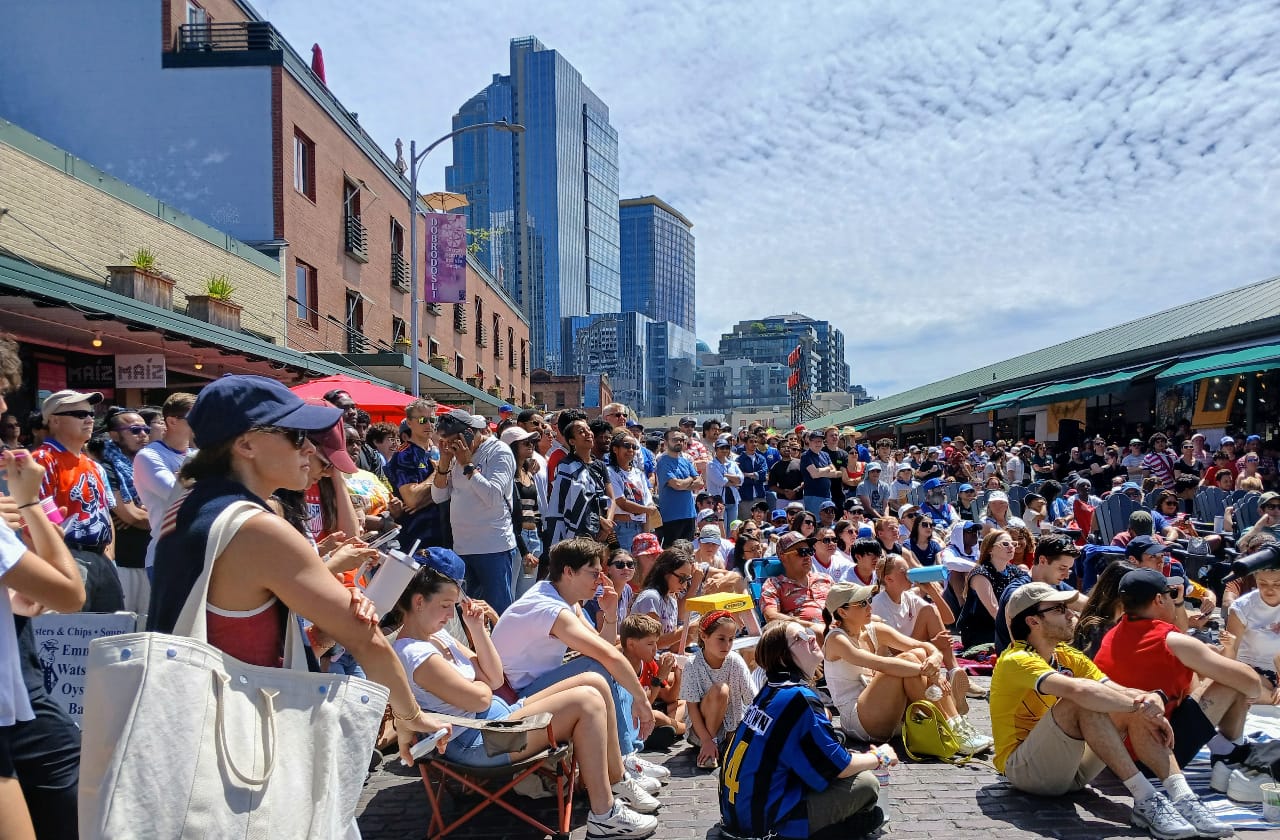
The City of Bremerton is debating how to use the newly completed, $4 million Quincy Square, located at the heart of downtown. As with Seattle’s Pike Place Market, Bremerton Public Works proposed closing the ‘Q Square’ about half the days of the year. At a Sept 3rd City Council meeting, councilors were split 3-to-3 between supporting the 182-day closure and seeking more car-access days. It’s just the latest debate in an on-going tug of war as the city tries to carve out safe multimodal spaces from Bremerton’s thoroughly car-dominated streets and neighborhoods.
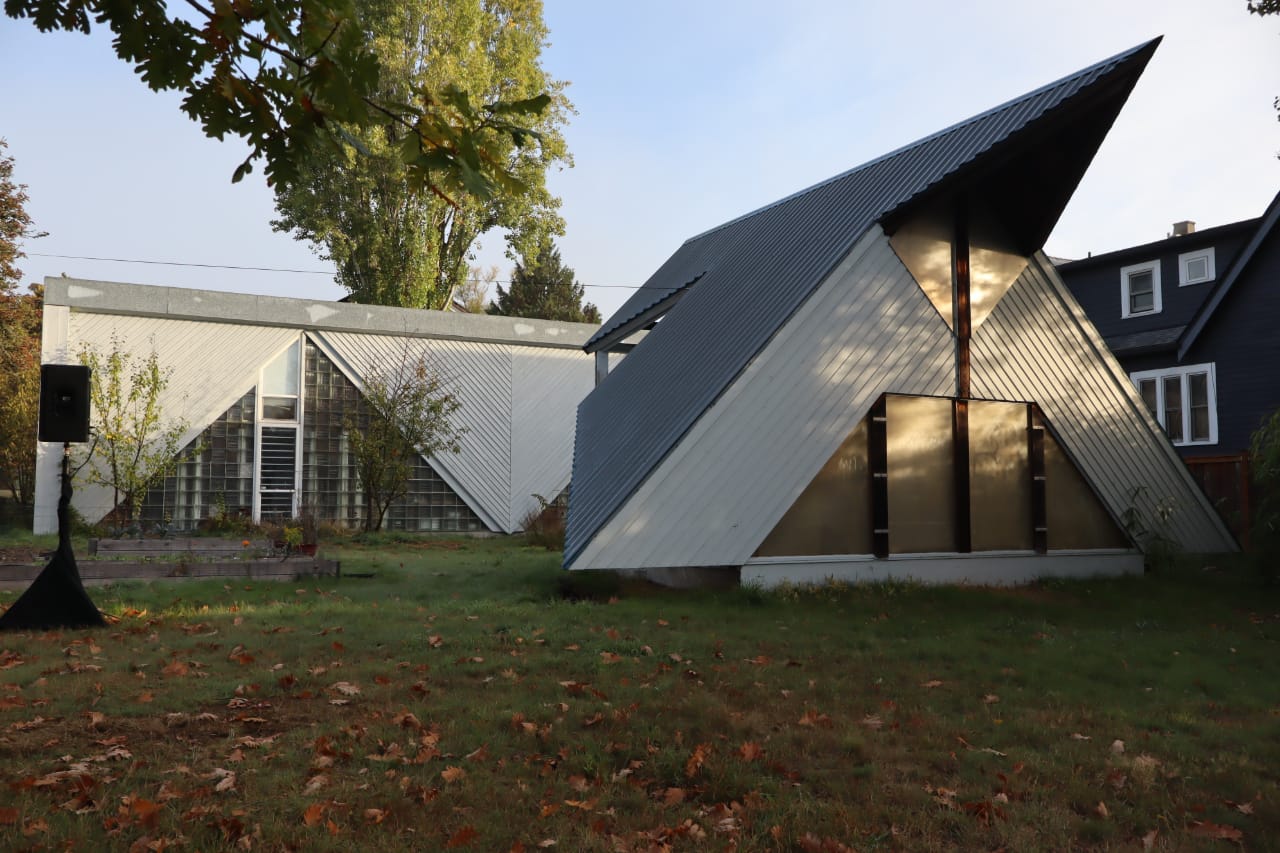
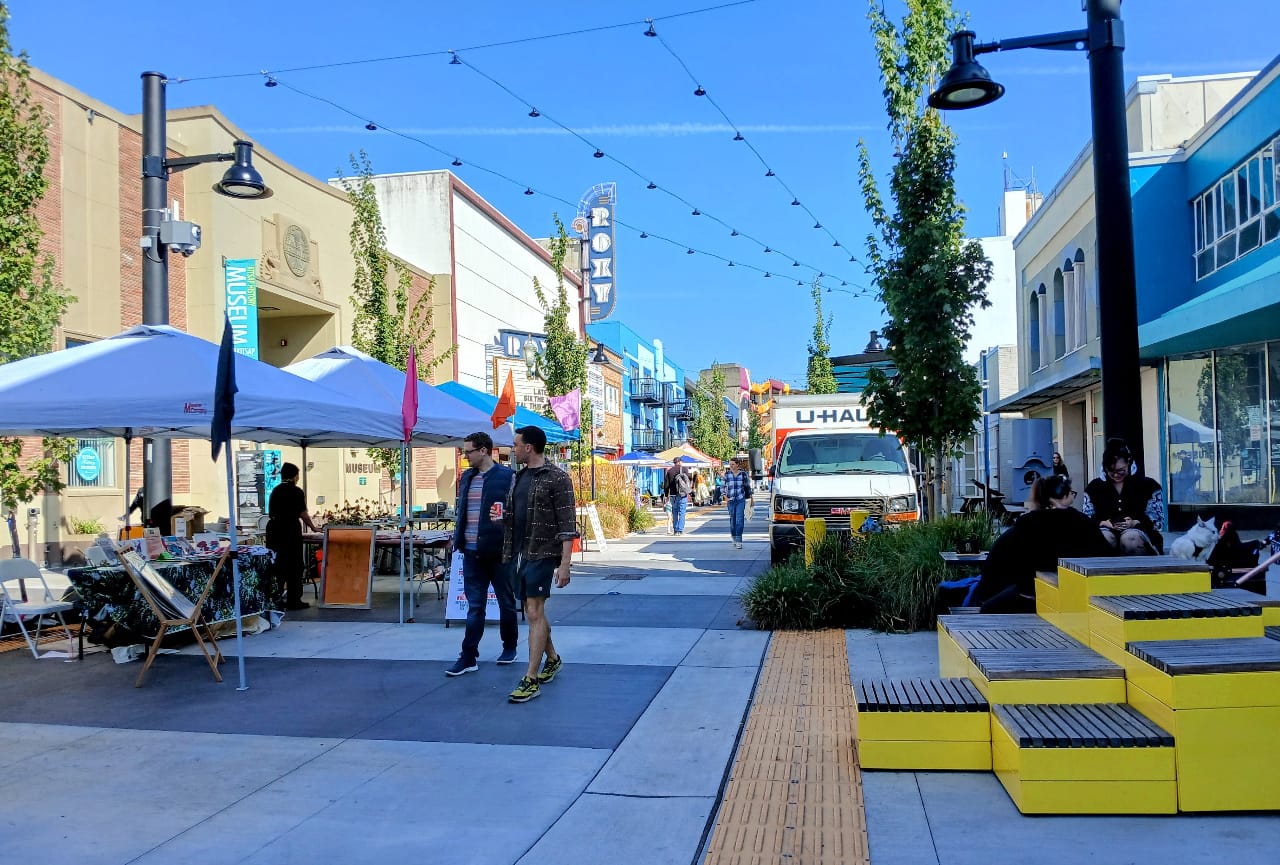
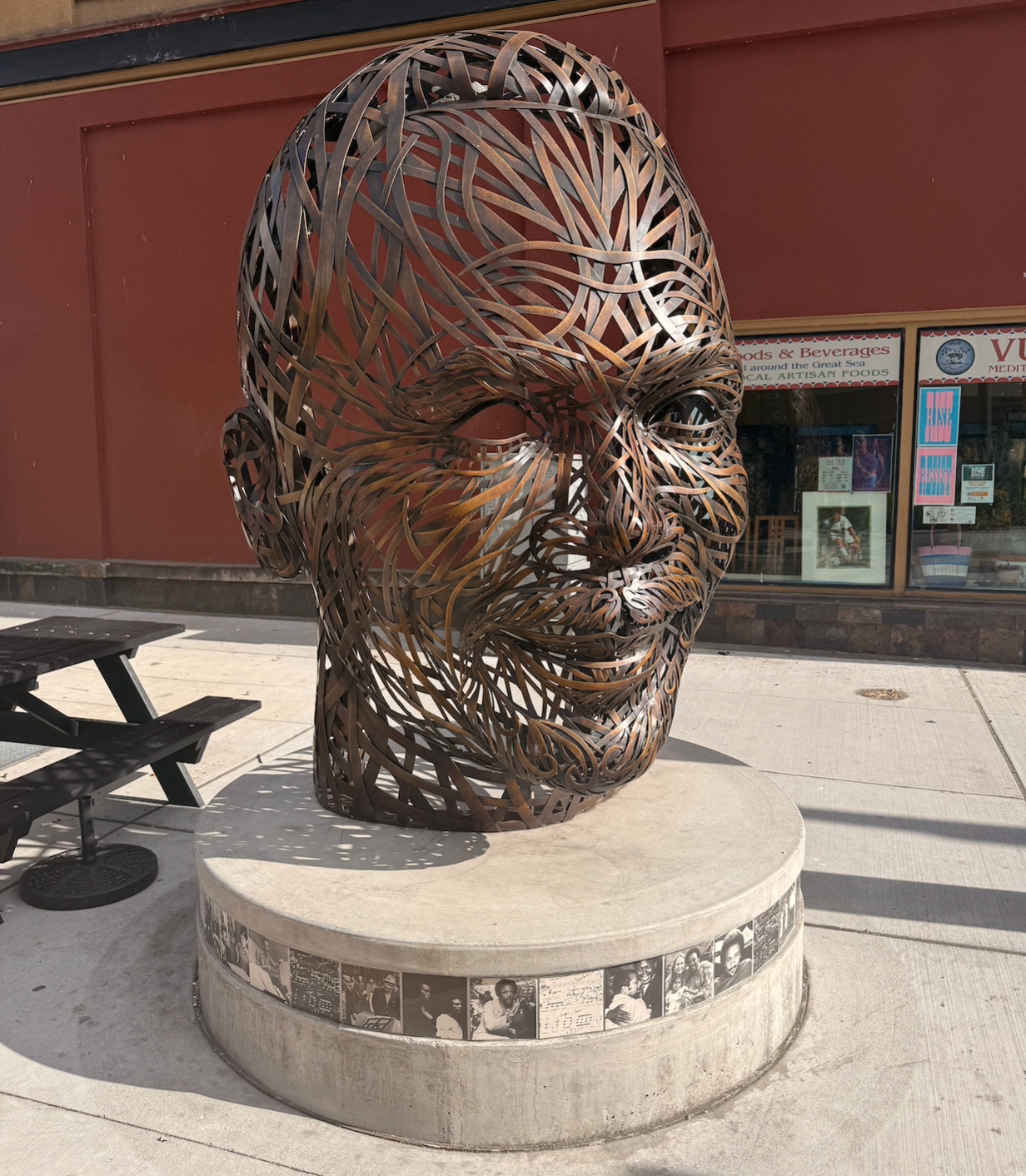
Completed in 2025, Quincy Square is a half-block of 4th Street in the heart of downtown. It features a permanent stage, seating and tables, and interactive music installations honoring the late, great music impresario Quincy Jones, who spent his middle school years in Bremerton, before moving to Seattle.
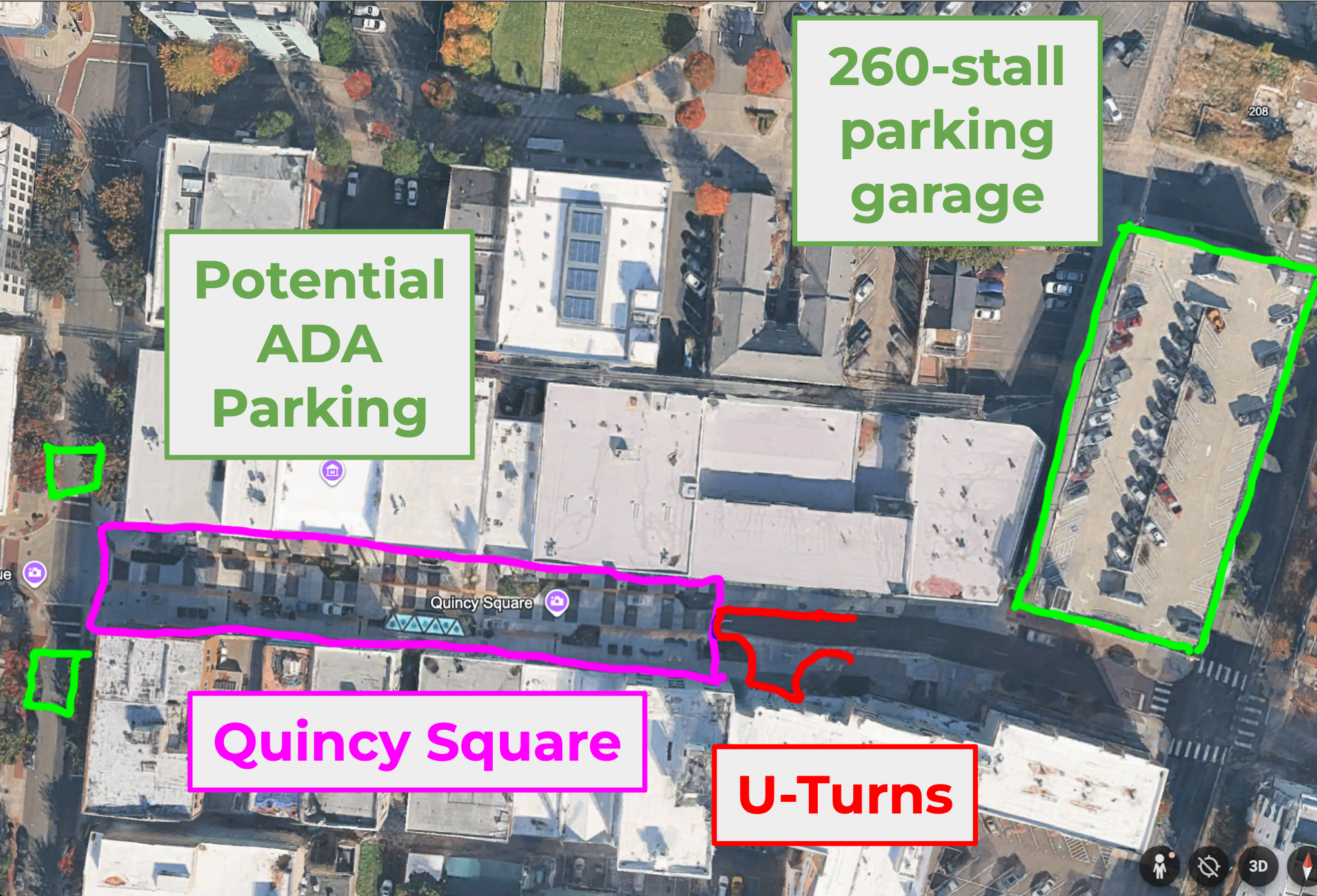
Q Square was designed as a hybrid street, transforming via mid-block, removable bollards between pedestrian-oriented plaza and a one-way street with 14 parking spots. The debate this fall at Bremerton City Council is about how many days the plaza should be open to cars.
The Public Works plan attempts to split the baby, via middle-of-the-road Resolution No. 3417. The resolution would change Bremerton city code to create ‘pedestrian mall’, under a little used Washington state law from the 1960s. On September 3, City Council voted 5-1 to create a pedestrian mall, but a major rift formed over whether Q Square should be primarily a pedestrian street closed to cars or just a regular street which closes sometimes for events.
Split the baby: 182 pedestrian days
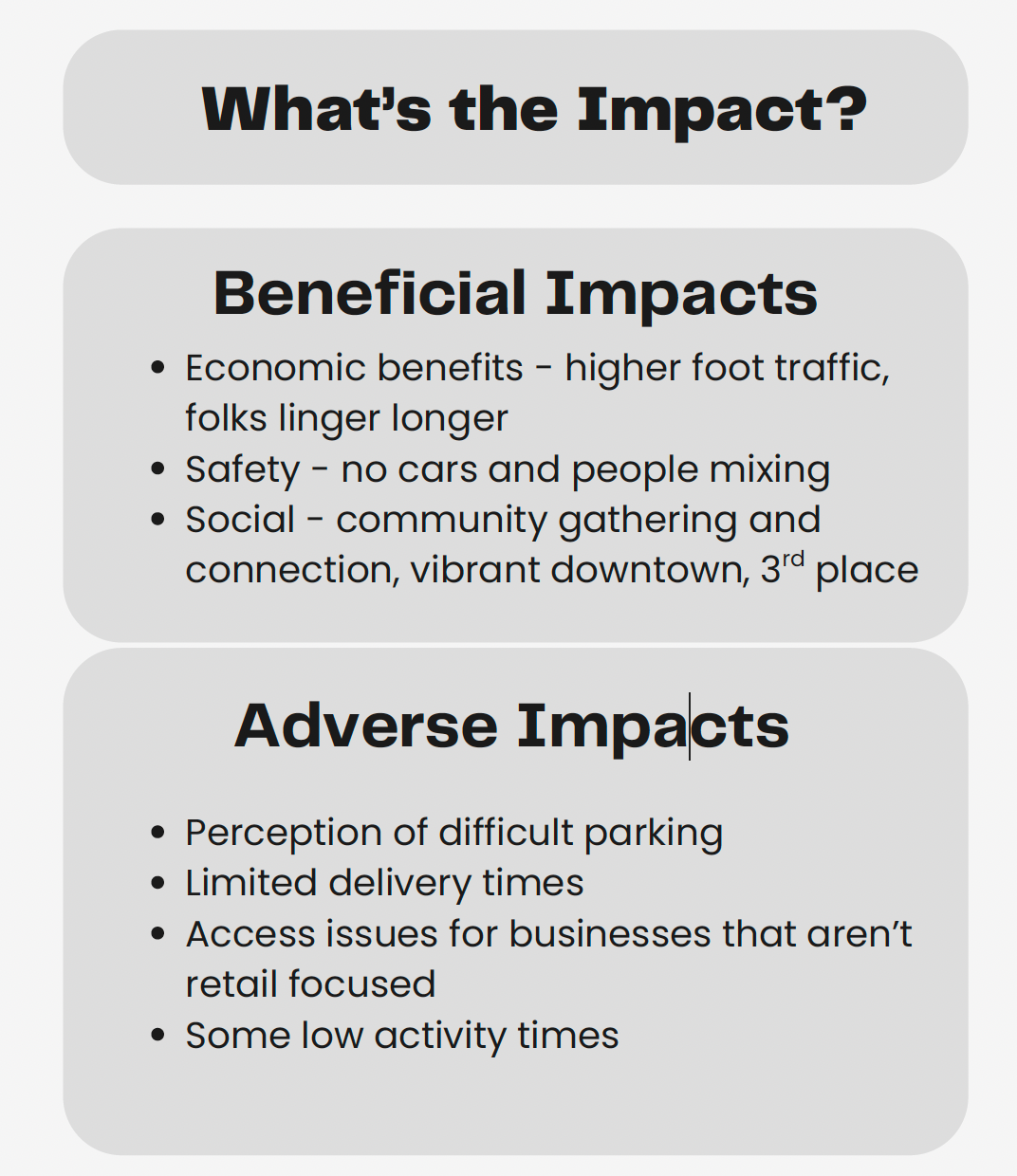
Public Works’ initial proposal offered a vision of Quincy Square offering economic, safety and social benefits of a predictable schedule and community gathering space. It also cited the costs of the current, on-again off-again street closures, including resource drain and overtime required to replace signage and bollards at odd hours. The administration’s plan also cited confused drivers, forced into awkward u-turns on a street that might be open the day before.
Public Works is seeking guidance on a separate, administrative decision, to set the calendar which designates which days Q Square is open to traffic. The initial proposal was for about 182 days closed, concentrated in the summer and between Thanksgiving and New Years, with the plaza open to traffic the other 183 days.
During its September 3rd deliberations, Council was split 3-3 (with one councilmember absent) between closing Q Square to cars for at least 182-days per year, and three councilors who sought more car-access days.
The Case for a Car-Oriented Status Quo
Opponents of more pedestrianization of Q Square have understandable and sincere concerns about the downsides of closing the street. People who park or drive on the street are being asked to shoulder a disproportionate burden of an amenity that benefits the entire city.
Those opposing more pedestrianization of Q Square have three primary complaints:
- Businesses require vehicle access on 4th Street for deliveries and client drop-off
- Loss of 14 parking spots, including two ADA spots, hurts local business
- Outside of planned festivals, nobody really uses Q Square
- Awkward, mid-block u-turns on a street ill-designed for that purpose
Every multimodal project that restricts automobile access faces backlash from those who would otherwise have unfettered usage of a given space. Q Square is home to four dozen businesses, including a theater, corner store, skate shop and over 30 professional offices in a mid-rise tower. For those people, it’s more convenient to get dropped off right in front of the door than walk from a parking garage or street parking 200 feet away.
And opponents argue that, with the exception of City-sponsored events, the Square is little-used. That too few people - or the wrong kinds of people (e.g., unhoused) - hang out in the Square to justify the loss of parking and car traffic. This echoes a common criticism of ‘empty’ bike lanes; if somebody isn’t constantly in them, the space should be available for cars.
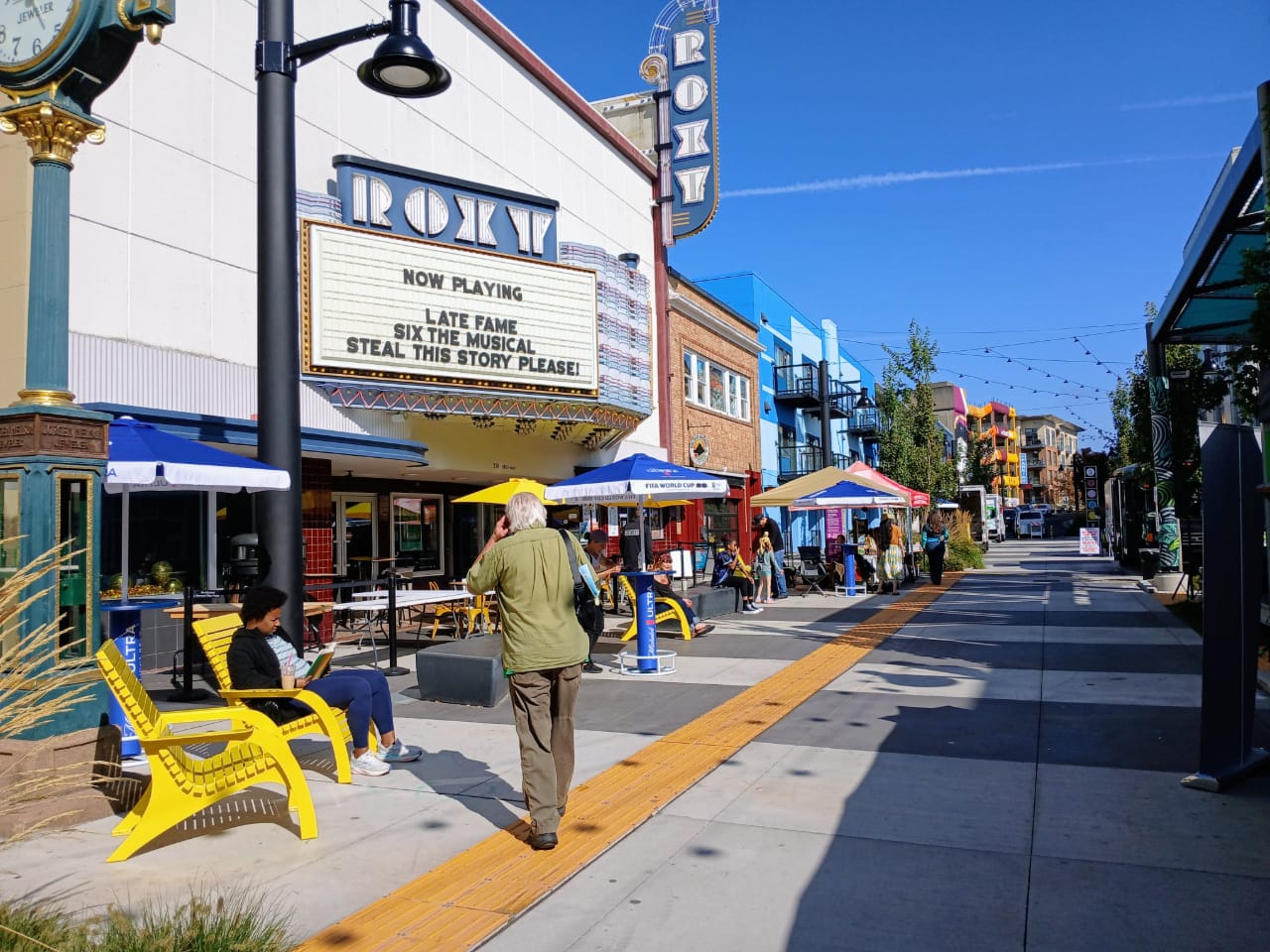
Bremerton must decide if the creation of a central, community gathering space is worth forcing inconvenience on a few dozen drivers every day. This half block of 4th St is probably downtown’s lowest-traffic street, and the 14 parking stalls are just 0.2% of downtown’s 6,300 public parking spaces. And many city amenities - parks, free street parking, park benches, and schools - sit empty most hours of the year. These amenities are valuable because they are available when needed. Nobody tears down a church because it’s empty on a Tuesday afternoon.
The status quo of random 4th Street closures leads to confused motorists making awkward half-block u-turns on a street not fit for purpose. The street could be reconfigured as a u-shaped drop-off site for cars and shuttle buses, with short-term, off-hour parking for deliveries. Resolution 3417 allows acquisition of right of way, and the affected hotel would likely welcome an improvement to the chaotic turn-arounds.
Leaving Q Square closed for long blocks of time allows drivers and businesses to adjust and find new hacks to efficiently navigate and do commerce downtown. Meanwhile, designating Q Square for pedestrians will, over time, attract more people downtown, and delight visitors who stumble across the open space.
The case for a full(er)-time pedestrian plaza at Q Square
Great cities have great plazas. Plazas are where poems are written, friends meet for lunch and kids first learn to ride bikes. The $4 million Quincy Square is brand new and, if left open for people to gather, will become the beating heart of thriving downtown Bremerton. Q Square will help downtown recover from the suburban flight of the 80s and 90s which pulled commerce out of the city, off to distant strip malls outside the city.
In modern-day Bremerton, virtually every inch of downtown street is maximized for vehicles. Among downtown’s 6,300 public parking spots are four, city-owned, multistory parking garages. Most downtown streets host two-way traffic plus dual-side on-street parking. Pedestrians are shunted aside onto narrow sidewalks, with few benches to sit on or places to linger. Street eateries that granted street life to downtown during the pandemic are nearly all swept away, to make room for street parking. The nearest playground swing is 0.75 miles away.
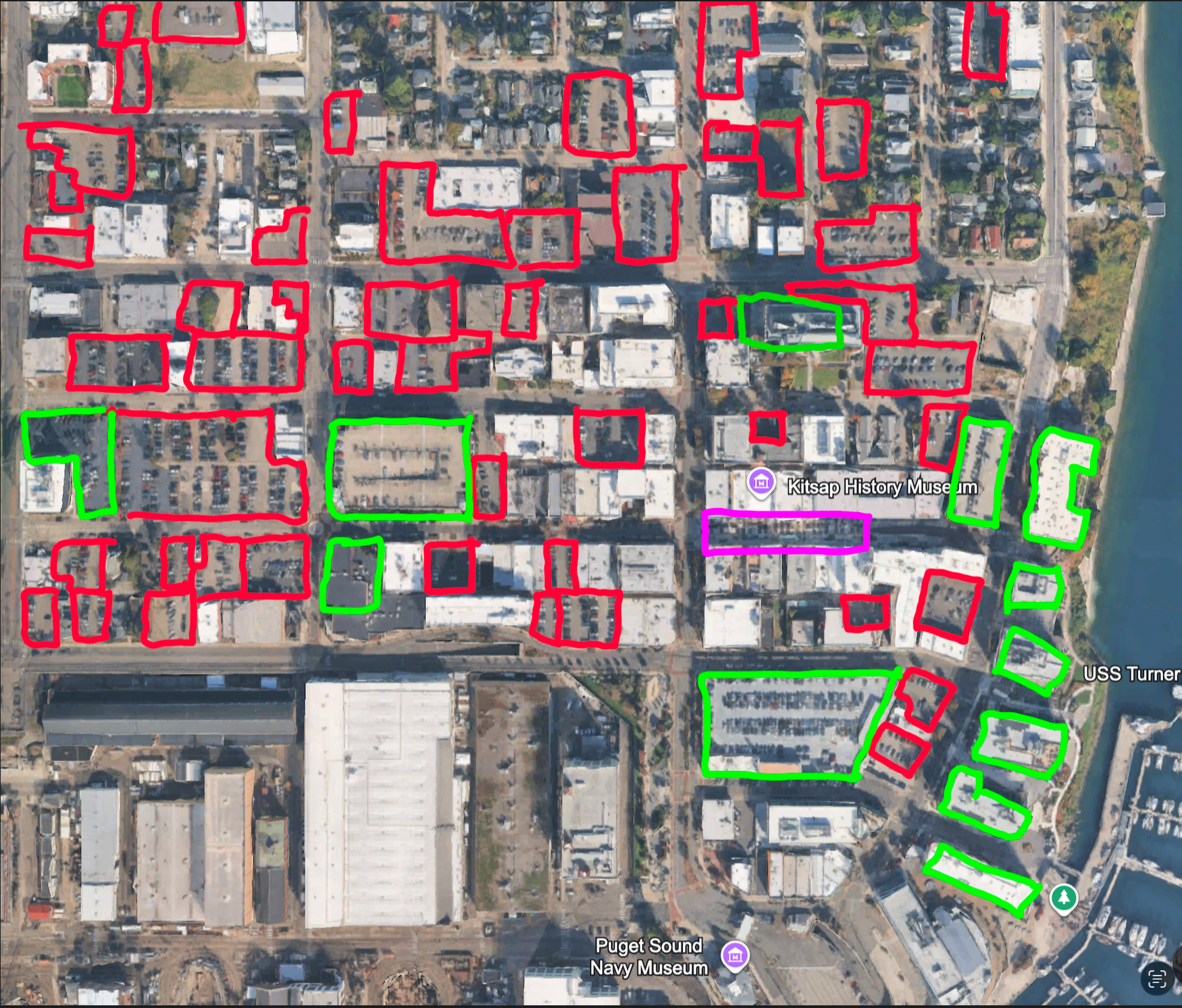
Revitalization of downtown requires people to get out of their cars, window shop and spend money in downtown businesses. A lovely, welcoming square that encourages people to linger will benefit many businesses downtown, even if the lost parking affects some more than others.
Bremerton could take action to reduce the hyperlocal problems caused by vehicle restrictions. Additional short-term and ADA parking could be created very near Q Square. The City could designate the four Pacific Avenue parking stalls nearest Q Square as ADA and place 2-hour parking limits on the bottom two floors of its 4th and Washington parking garage. Also, an improved turn-around and drop-off spot could be created in collaboration with the hotel immediately east of the half-block vehicle barriers.
More people would use Q Square if the city offered very low-cost rental of the space for bike polo matches, band rehearsals and mass outdoor Dungeons and Dragons tournaments (Bremerton’s nerd game is strong). The burden of filling the square need not fall on the City funding big events.
Opponents of closing Q Square predict terrible outcomes. But outcomes will probably be less dire than they predict, especially if Bremerton makes adjustments. Besides, unexpected upsides are just as likely as miserable downsides. Cities have always thrived because of spontaneous interaction in public places, which sparks ideas, creates new commerce and builds community. Q Square is unique in all of Bremerton, but common across the world: a safe, inviting, central plaza where people go just because, and where interesting and unexpected things can happen.
Great cities have great plazas. Quincy Square is Bremerton’s once-in-a-generation shot to create Bremerton’s first great plaza. Let’s not throw away our shot.
The Bremerton City Council will debate the Mayor’s proposal at an upcoming council meeting this fall.
 Ryan Packer