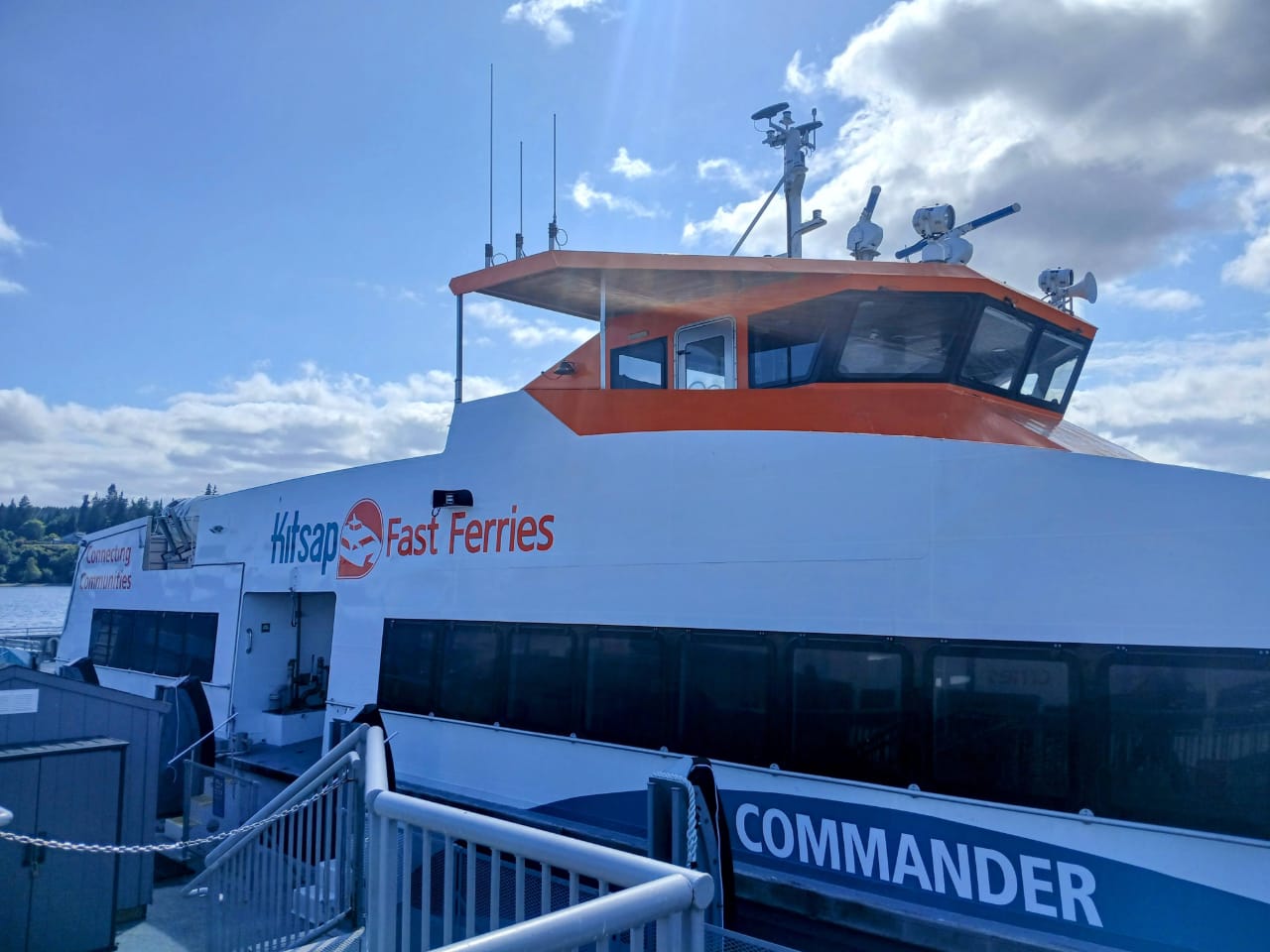
Transit riders hoping to catch a quick trip between Bremerton and Downtown Seattle will have much fewer options starting September 1, with Kitsap Transit set to scale weekday fast ferry trips back by 35% following an end of supplemental state funding for the service.
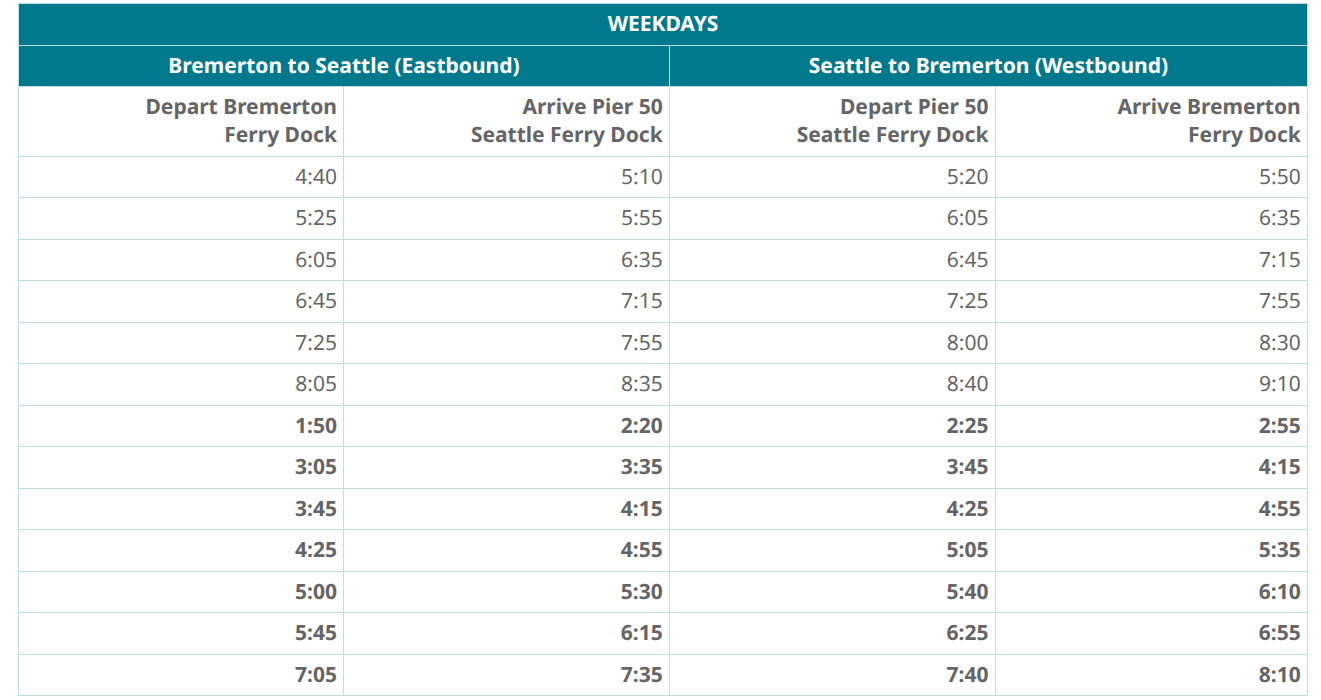
Dropping from 20 daily round trips to 13 will create a major gap in service between between mid-morning and early afternoon, with no service from Bremerton after 7:05 pm or from Seattle's Pier 50 after 7:40 pm.
In an announcement Wednesday, Kitsap Transit confirmed the 8:35 am, 9:15 am, 9:50 am, 10:25 am, 6:20 am, 7:40 am, and 9 am sailings from Bremerton and the 9:10 am, 9:50 am, 10:25 am, 11 am, 7 am, 8:20 am, and 9:40 am sailings from Seattle will no longer operate after August. That leaves the Bremerton fast ferry schedule looking very sparse heading into the future.
The seven additional Monday to Friday round trips have been happening since 2022 thanks to the state legislature, to supplement scaled-back Washington State Ferries (WSF) service during the pandemic. WSF's Seattle-Bremerton run had been reduced to one-boat service at that time, and only returned to the two-boat service city residents were used to in spring of 2025.
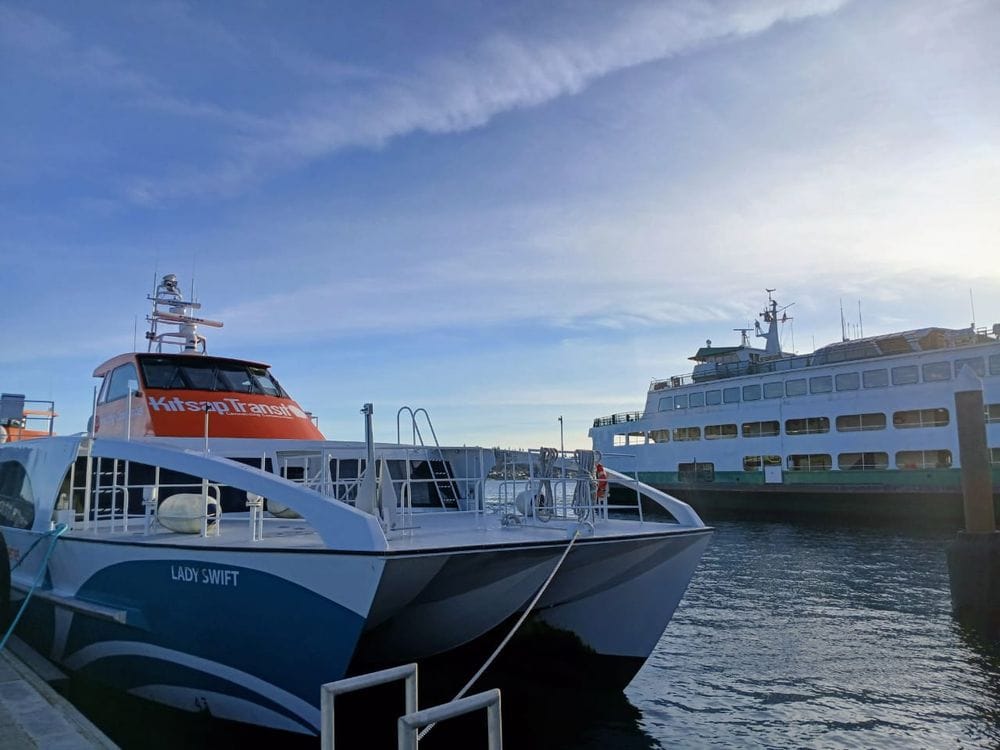
While the idea of providing state-funded fast ferry service had always been framed as temporary, its sunset will ultimately still come with big impacts for the riders who had come to depend on those runs. A 30-minute fast ferry trip compared to the 60-minute crossing times for WSF vessels provides a major benefit for multimodal travelers.
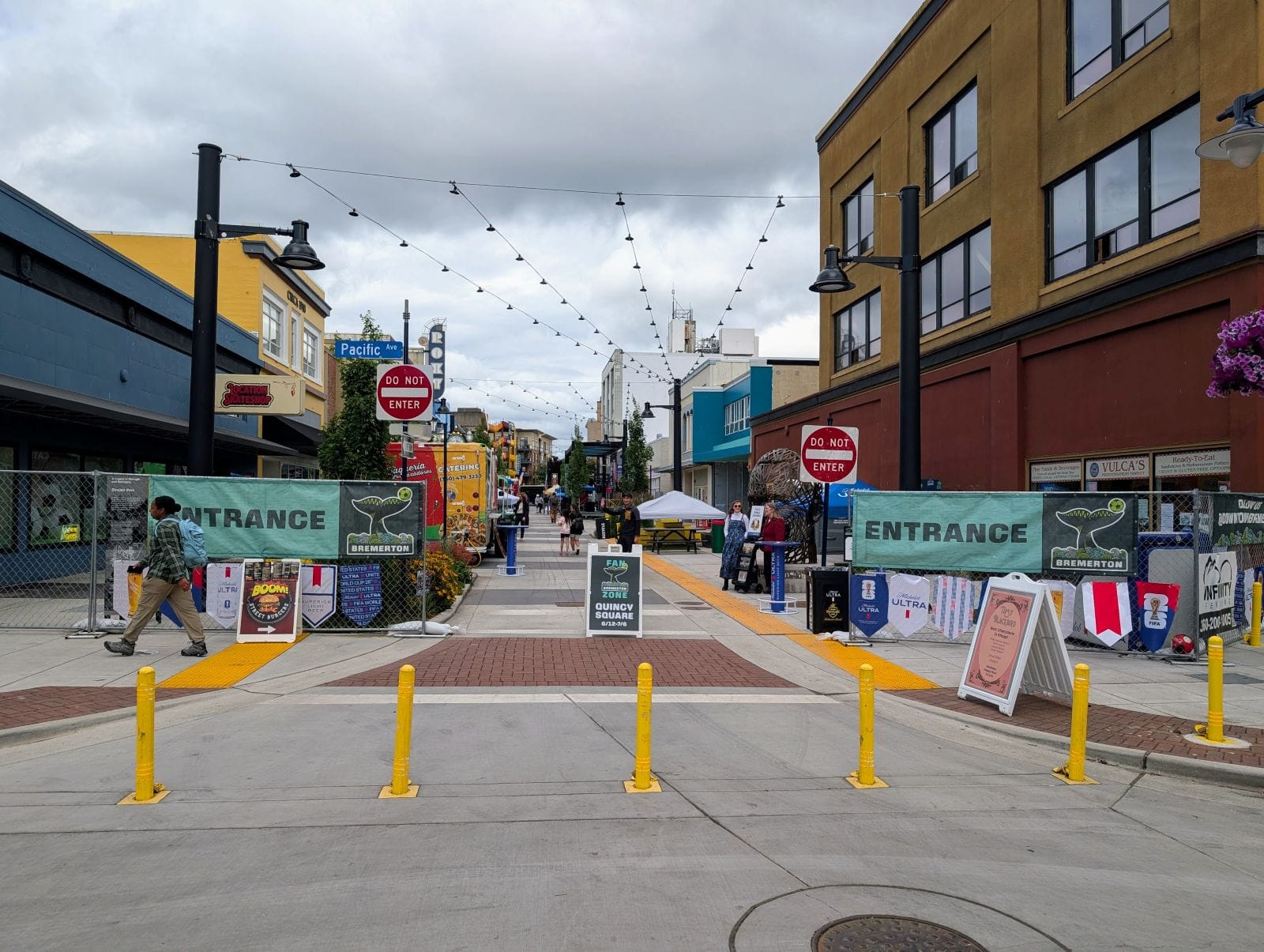
This is ultimately the second phase of Kitsap Transit service reductions following the pullback in state funding. Last year, the agency had to eliminate Saturday service from Bremerton through the offseason, with only enough one-time dollars provided to continue the additional weekday trips through the FIFA World Cup tournament. That funding helped connect Bremerton's FIFA popular fan zone at pedestrianized Quincy Square to the tournament itself.
Ultimately, these Kitsap Fast Ferry cuts represent the fallout from an intentional decision at the state legislature to step away from the idea of funding fast ferries as a less expensive, more nimble option to aid ferry-dependent communities. And it comes at the same time that the legislature failed to advance a bill allowing additional local funding options for fast ferry service for the second year in a row.
HB 1923, sponsored by Rep. Greg Nance (D-23rd Legislative District, Bainbridge Island) and dubbed the Mosquito Fleet Act, would have enabled other local governments including cities, counties, and port districts, to copy Kitsap Transit's funding model and tap into local dollars via passenger-only ferry districts. Currently, only King County Metro and Kitsap Transit have access to a special carve-out in state law that allows them to operate those types of districts, though other counties also operate vehicle ferries.
Despite passing the House in both 2025 and 2026, the bill ran into choppy seas after Senate transportation committee chair Marko Liias (D-21st LD, Edmonds) voiced concerns over fast ferries taking away resources from the state ferry system, which is focused on hauling cars and in need of billions to update the fleet. Last year, those concerns kept the bill from advancing out of a Liias's committee, while this year they did advance from committee but with a raft of amendments that the bill's supporters framed as poison pills.
While last year Governor Bob Ferguson announced a plan to deliver three new WSF vessels that will cost more than $1 billion in total, expanded fast ferry service requires a vastly smaller investment. The extra year of expanded weekday service cost just $2.9 million.
After Nance's bill hit the rocks for a second time, he took the unusual step of penning an op-ed in the Kitsap Sun that slammed Liias for what he framed as a "transactional" way of doing business. But Liias has also been open about the idea that creating more passenger ferry districts might create more mouths to feed at state budget time, something he's wary of.
"People keep asking me why the ferry system is broken," Nance wrote in his op-ed. "My answer has consistently been that it’s a genuinely hard problem with lots of moving pieces. But I now have an additional answer: It certainly does not help that our elected officials are fearful of retaliation by the chairman of Transportation if they speak up on what better policy would look like."
Bremerton's state vehicle ferry currently remains on two-boat service, with relatively few cancellations over recent months – the route logged a 100% trip completion rate for fiscal year 2025. But that may not be the case in future years as vessels continue to age. The overall WSF system currently operates with 21 vessels, maintaining a service plan that calls for 18 in active duty, leaving few vessels in reserve.
"With 21 vessels […] we really don’t have a margin of error," WSF's Jenna Forty told community members in a public meeting this May to provide an update on the state of service planning.
The Seattle-Bremerton route is second in line to lose a vessel if there aren't enough available, just behind the "triangle" route between Vashon Island, Southworth, and Fauntleroy. Fast ferry service had been available as a backup, but now the schedule will be cut back to the bone with little slack to provide there as well.
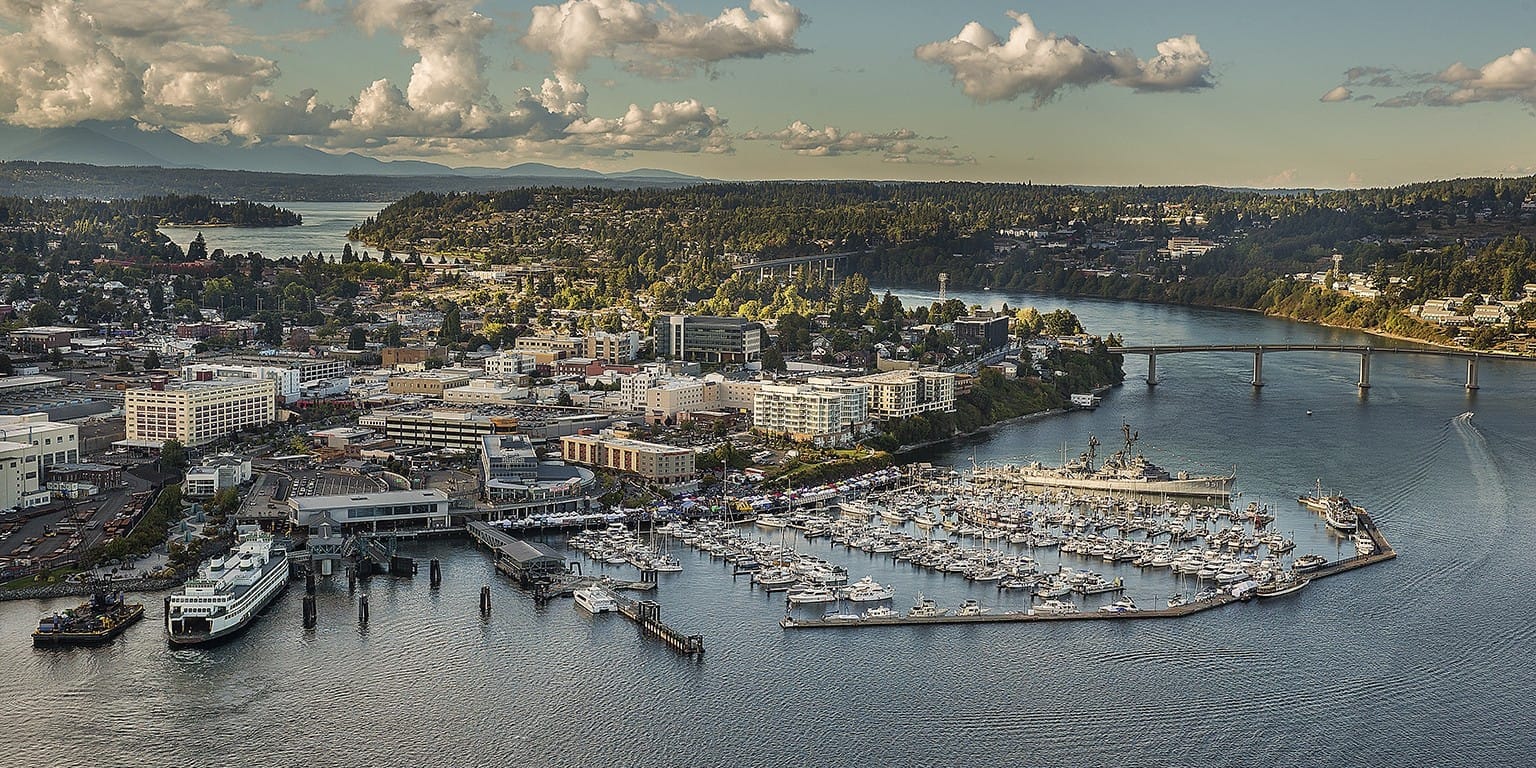
But on top of emergent needs that can't be predicted, a step away from fast ferries has even more fundamental implications when it comes to the types of communities that get served by ferries. In 2024, KUOW's Joshua McNichols profiled Bremerton Mayor Greg Wheeler and his city's newfound reliance on the "nimble" fast ferry, with Wheeler describing a silver lining that came from a pivot to a more multimodal transit option.
“I just see this potentially having an opportunity to expand what we do and be better at it," Wheeler said at the time.
Bremerton, which has ambitious plans to add density over the coming decades, would likely have continued to benefit from being a fast ferry hub instead of primarily being a place where you drive to get on a boat.
"In the long run, Wheeler dreams that walkable waterfront communities along Puget Sound could be linked by a passenger-only mosquito fleet, like the one that bound them together 100 years ago," McNichols wrote. "The foot ferry service represents a down payment on that vision."
Now it looks like that down payment was a deposit that's being returned.
 Travis Merrigan
 Ryan Packer