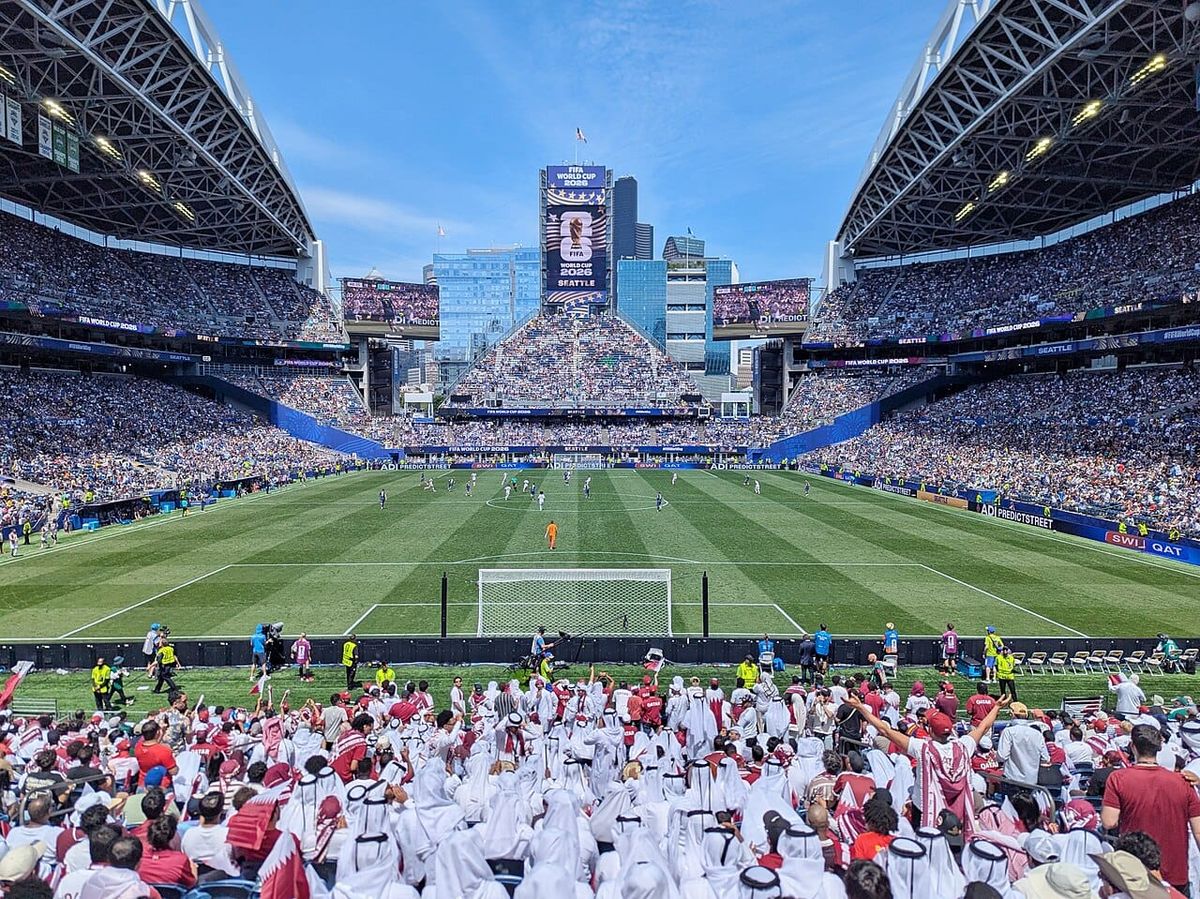
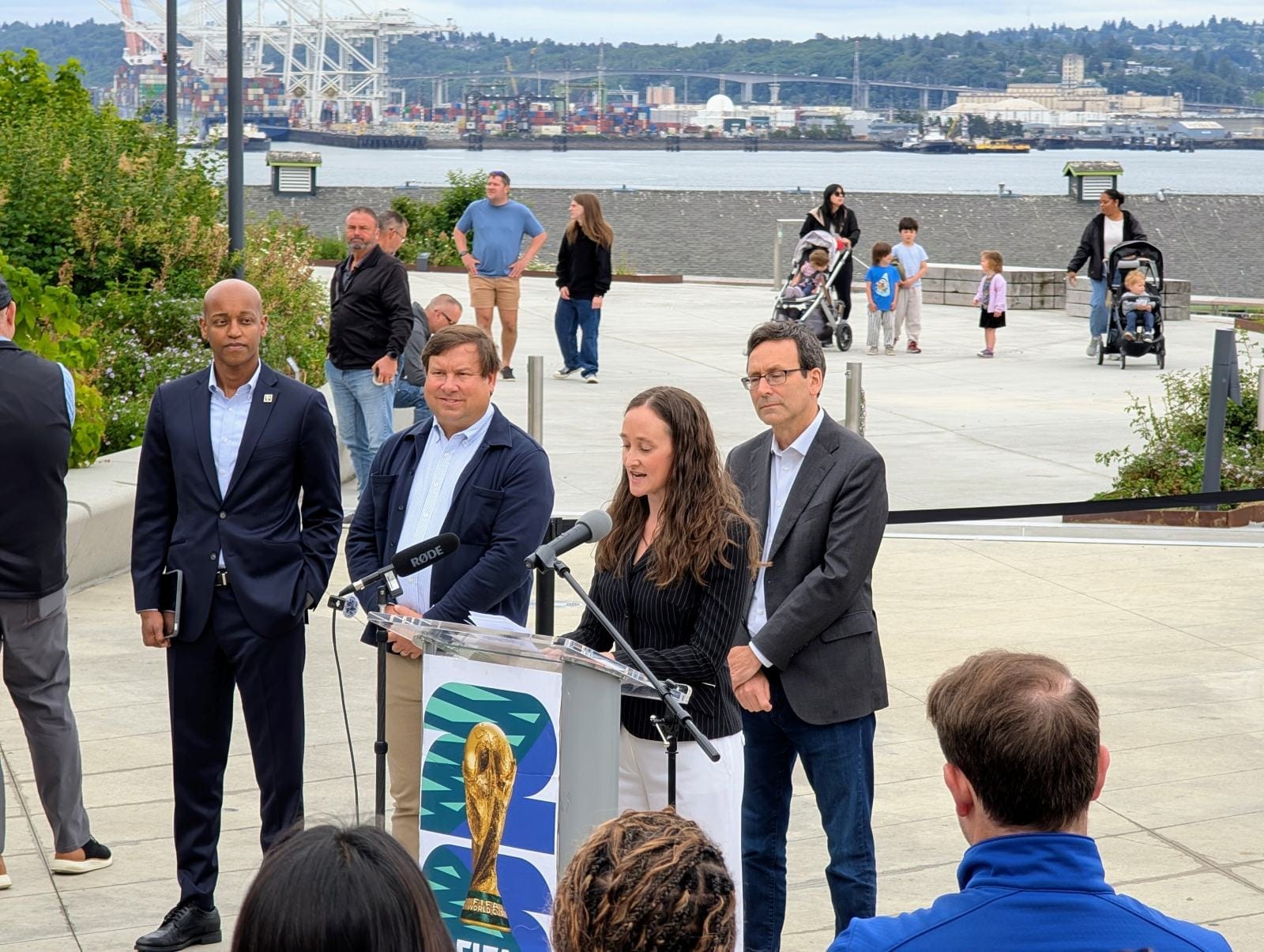
The 2026 World Cup may be over, but Mayor Katie Wilson sees Seattle's momentum as a host city as carrying forward and progress as just beginning. Wilson made just such a case in an op-ed in the Seattle Times this weekend.
"I’ve never seen so much collective joy filling our streets, our buses and trains, our public spaces," Wilson wrote. "National and international press sang Seattle’s praises, from the ease of getting around to our tasty Seattle hot dogs. I’ve never felt prouder of our city. And there is much we can learn from this success."
The mayor is booting a corner kick and crossing it in front of the goal; progressives should be ready to head it into the net. Pedestrianizing streets, boosting housing production, and expanding transit service should not be hard for Seattle urbanists to get behind.
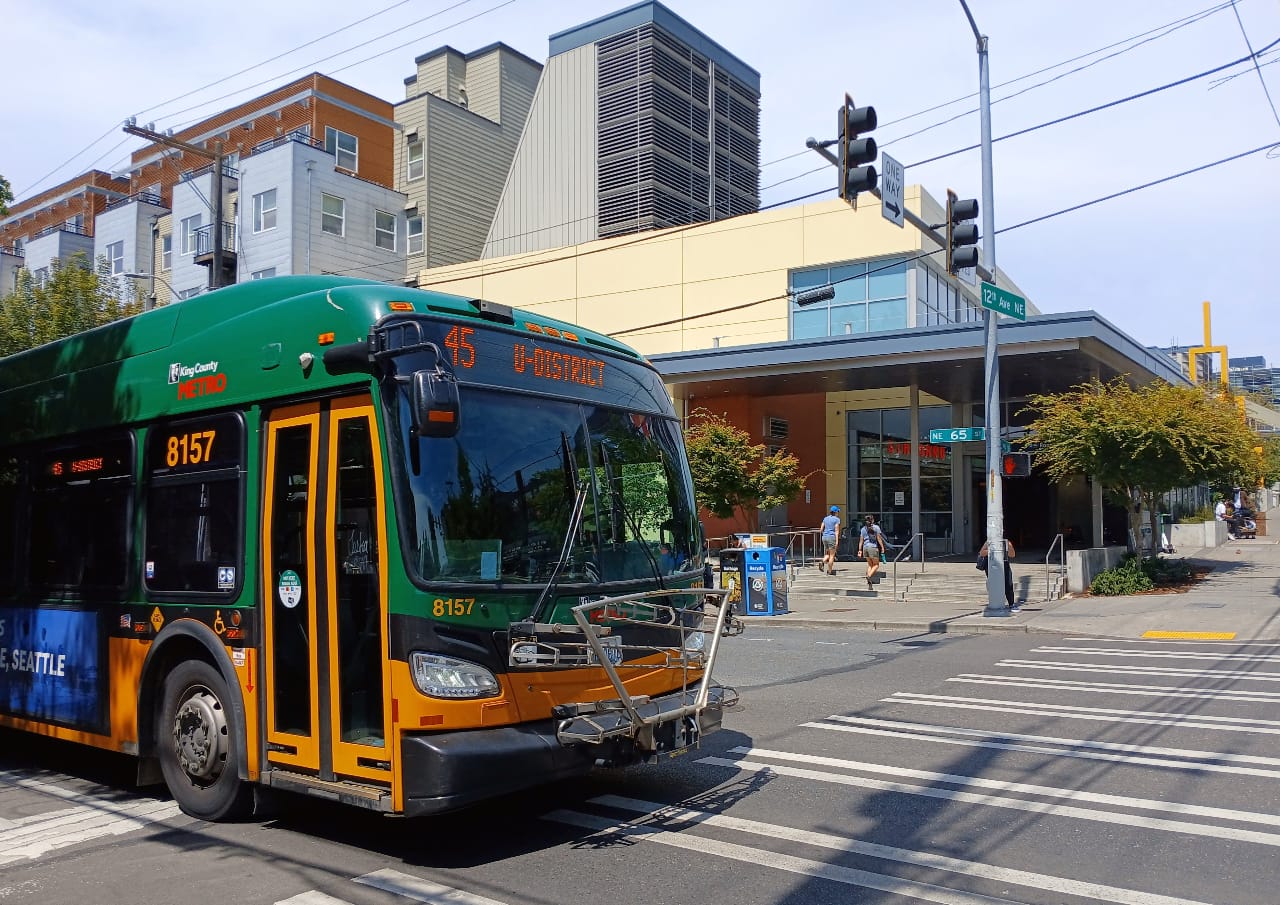
In large part, what allowed Seattle to smash transit ridership records and become a top-rated host of the games is also what makes it a great place to live or visit year round, built on urbanist-minded investments made over decades. While some improvements to streets, storefronts, and public spaces were temporary for the games, others are permanent or could be if City leaders so will it.
And Wilson is trying to will it.
"How can we carry this joyful energy forward? We can’t keep the USMNT and the Socceroos in town to face off weekly, as buoying as that might be for civic spirit," Wilson wrote. "But we can continue city-crafting, building Seattle into the greatest city in the world."
I'm going to paraphrase the mayor and color in the lines to outline the lessons learned as:
- Pedestrianize more streets to create safe gathering places and social events. Occidental Avenue could be Pioneer Square's central pedestrianized artery if we carried forward the World Cup pedestrian zone.
- Build more housing, jumpstarting production with builder fee breaks, streamlined permitting, and upzones. More people in the core of the city clearly makes a more vibrant space.
- Invest in transit, starting with the expanded Seattle Transit Measure this fall, so that we can keep breaking ridership records.
- Program fun stuff for people to do in public spaces. Seattle has plenty of festivals and activities all summer long, but few get the red carpet treatment rolled out for the World Cup.
Wilson's Taller Denser Faster housing plan is a way to channel one key aspect of World Cup energy: an abundance of people in the city – especially when paired with streamlined permitting and the mayor's proposal to temporarily slash builder fees (currently shelved for more stakeholder work) to spur homebuilding and ensure upzones actually result in more housing.
"Another ingredient in the World Cup magic was simple: more people," Wilson wrote. "What if more residents mingled with the visitors? Supporting local businesses, raising families, working downtown, starting businesses and contributing to our culture and civic life? Let’s embrace Seattle as a growing city — and build the abundant housing, safe streets and great public transit that are essential to urban vitality."
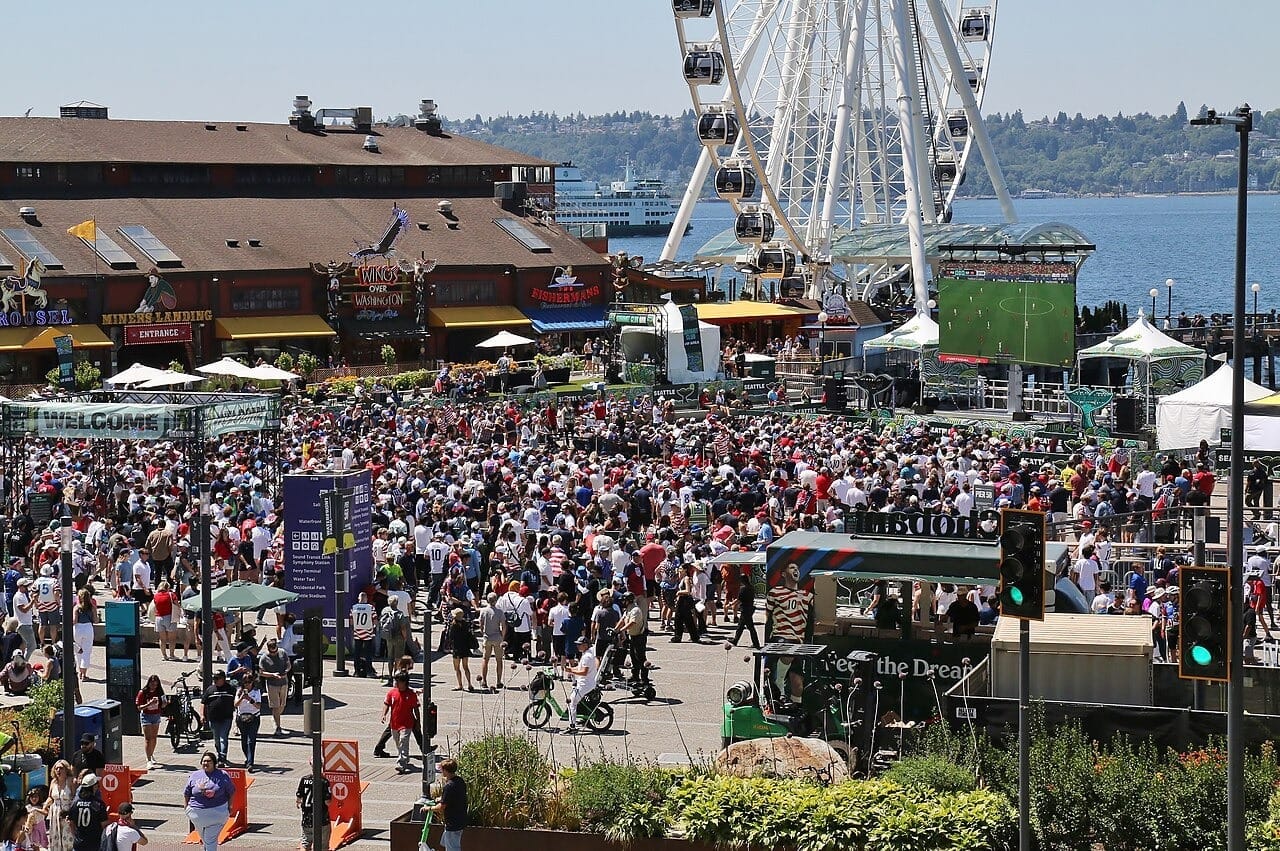
Seattle's downtown has been booming. The population of greater downtown is nearing 110,000, as broader Seattle burst past the 800,000 mark. One in 8 Seattleites live in the broadly-defined downtown core, which is a lot more than many peer cities. This helps downtown stay lively day and night, rather than turning into a ghost town at night as office workers flee.
Inspired to run by a successful campaign to publicly fund social housing and buoyed into office on grassroots energy, Wilson also acknowledged Seattle can't just be a playground for the rich and a class of dual-income, no-kids white-collar professionals.
"None of this works if housing and childcare are out of reach for working families," Wilson wrote. "Great cities can’t just be playgrounds for the wealthy, and cities without kids are neither resilient nor fun."
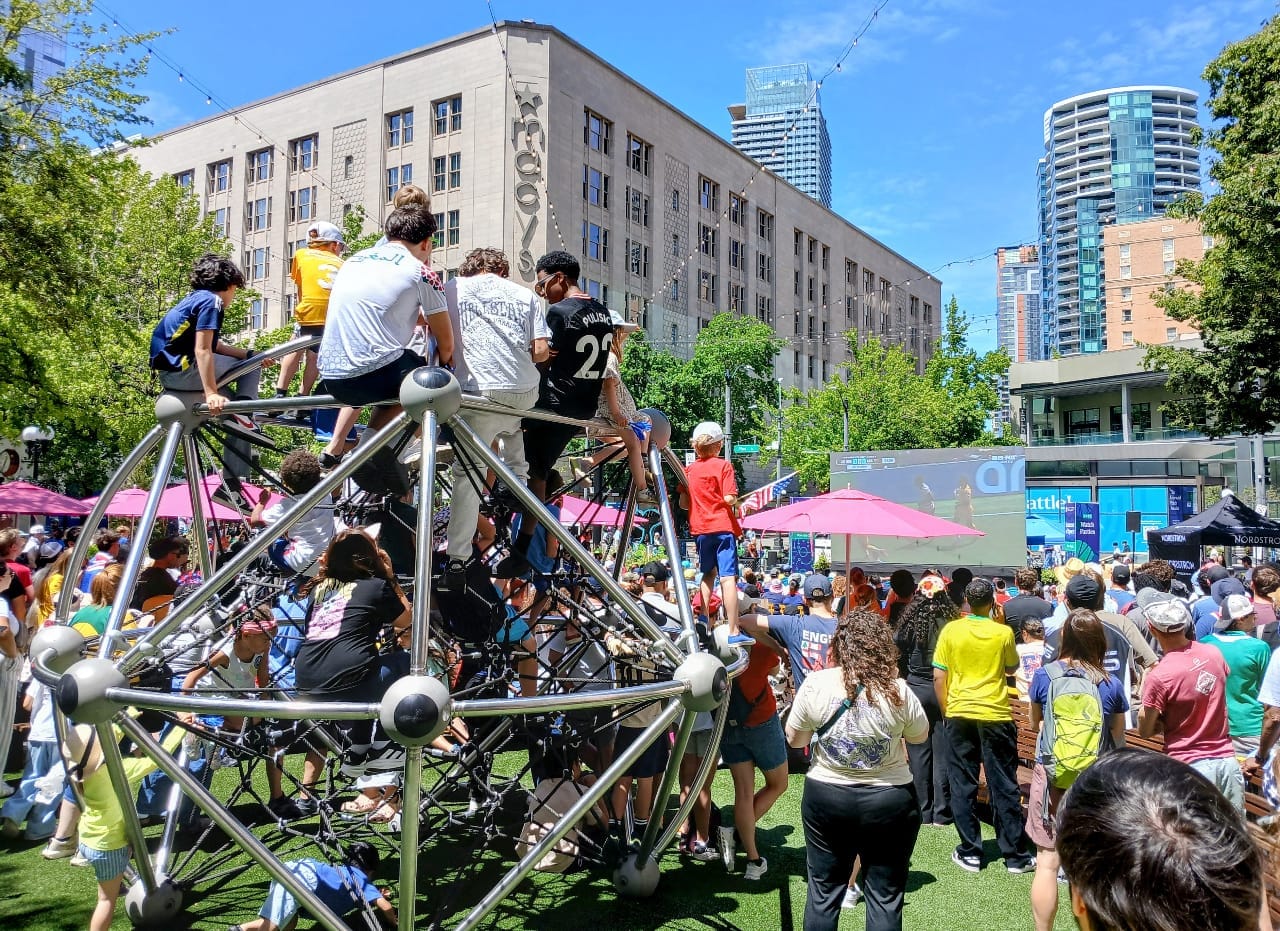
Thanks to transit that is increasingly world class, many Seattleites (and residents of Shoreline and Bellevue for that matter) live a short transit trip away from the core of the city. Wilson has sought to continue this trend by ramping up bus investment in a doubled Seattle Transit Measure. If approved by Seattle voters this fall, the measure would boost frequencies on about a dozen key bus routes.
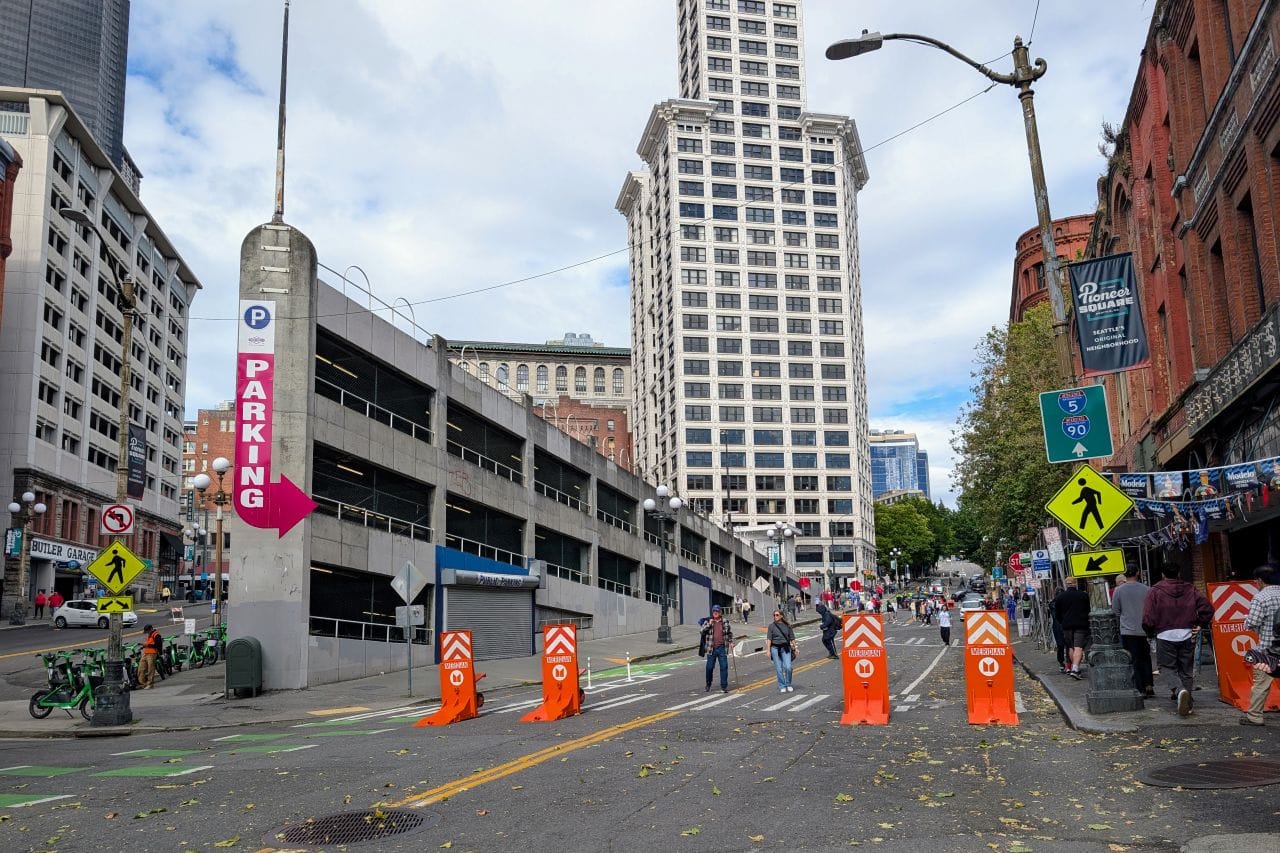
As she did during her Urbanist-endorsed mayoral campaign, Wilson signed onto the long-running urbanist dream to pedestrianize more of downtown, with Pike Place and Occidental Avenue high on the list. Some areas should be permanently pedestrianized, but street fairs, art walks, and music festivals also can create occasions for temporary closures on streets too important to the vehicular grid to close on a permanent basis.
"Magic happens when we create inviting, people-centered public spaces — a car-free Pioneer Square, Pike Place Market, our new Waterfront Park, Seattle Center — and give people reasons to gather and shop there," Wilson wrote. "Let’s do more of this across neighborhoods citywide, including those that didn’t see the hoped-for boost from World Cup crowds."
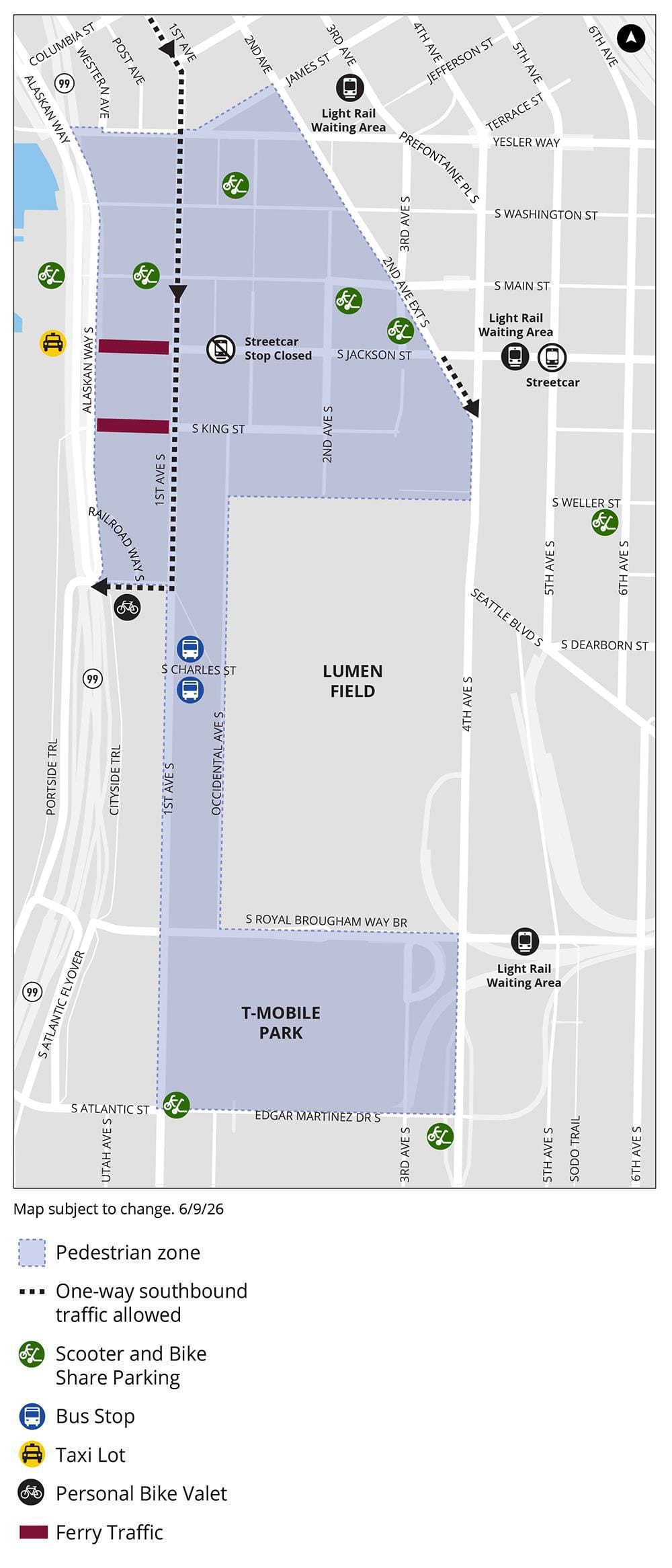
The World Cup clearly showed Pioneer Square is an amazing gathering space, especially when we close the core around Occidental Park to cars, creating space for stages, food stalls, art, marches, beer gardens, you name it. The zone thrived even with much of its parking taken offline due to FIFA security protocols, showing how much civic boosters overestimate parking's role in business access. The key ingredient for foot traffic it turns out is feet.
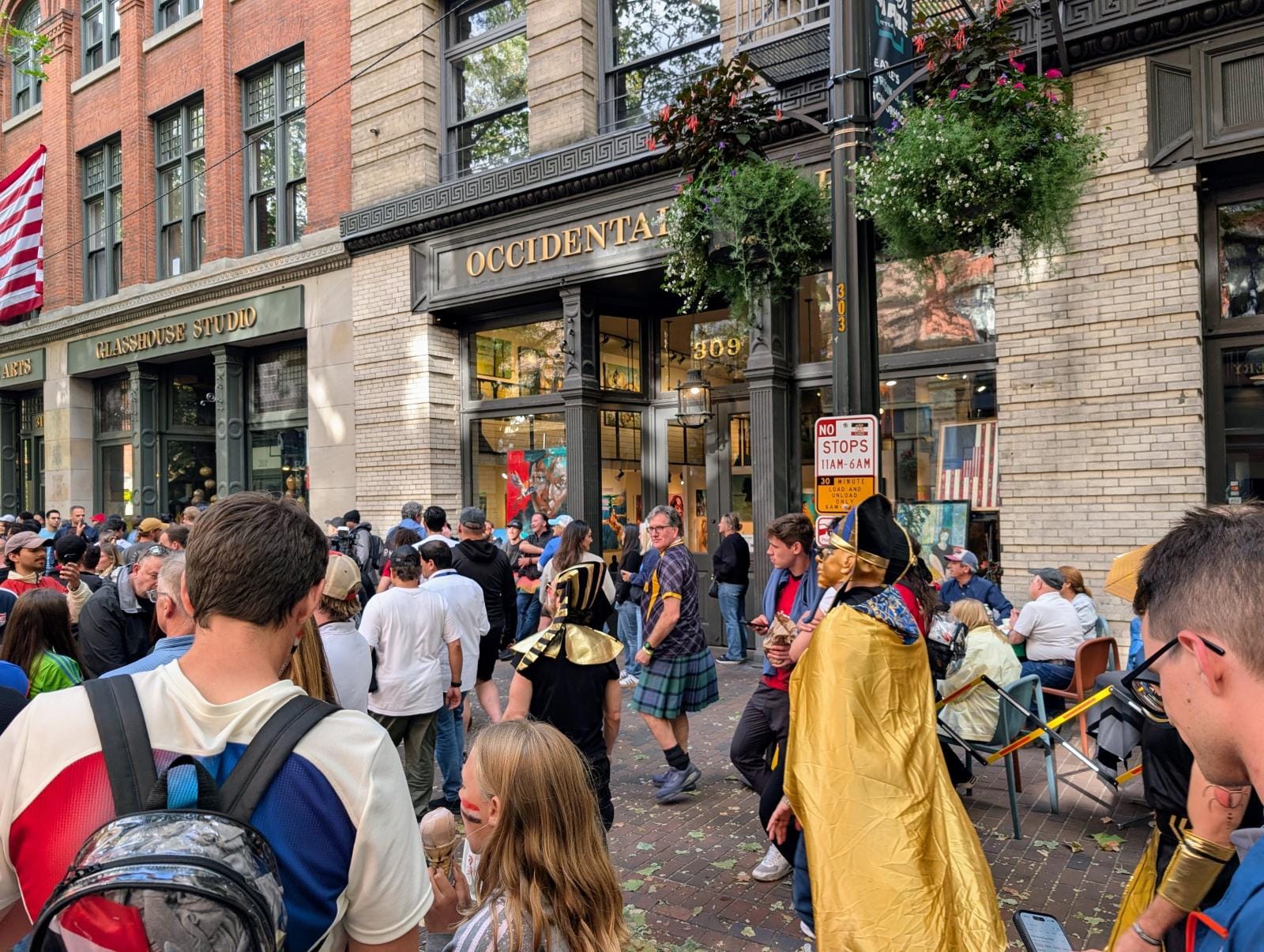
The half-hearted pedestrian treatment on Occidental Park has to end. The lax treatment allows the street to be intermittently inundated with cars, including hotrod rallies some weekend nights, with local vigilante motorheads clogging the pedestrian thoroughfare to show off their shiny custom cars and look under each others' hoods, obstructing the flow of people on their way home from sports games and concerts in the stadium district. If ever there was a problem that a bollard could fix, we've found it.
Despite being next door to Pioneer Square and the stadiums, the Chinatown International District (CID) was chief among neighborhoods complaining of a World Cup lull instead of a boom in business. The dim sum gathering world record that the neighborhood set in June helped drive some foot traffic, but it was a fairly isolated event, as soccer crowds largely stayed away. More concerted efforts to promote the CID could do wonders for area businesses, such as bringing regular night markets to King Street or increasing programming at Hing Hay Park and Union Station.
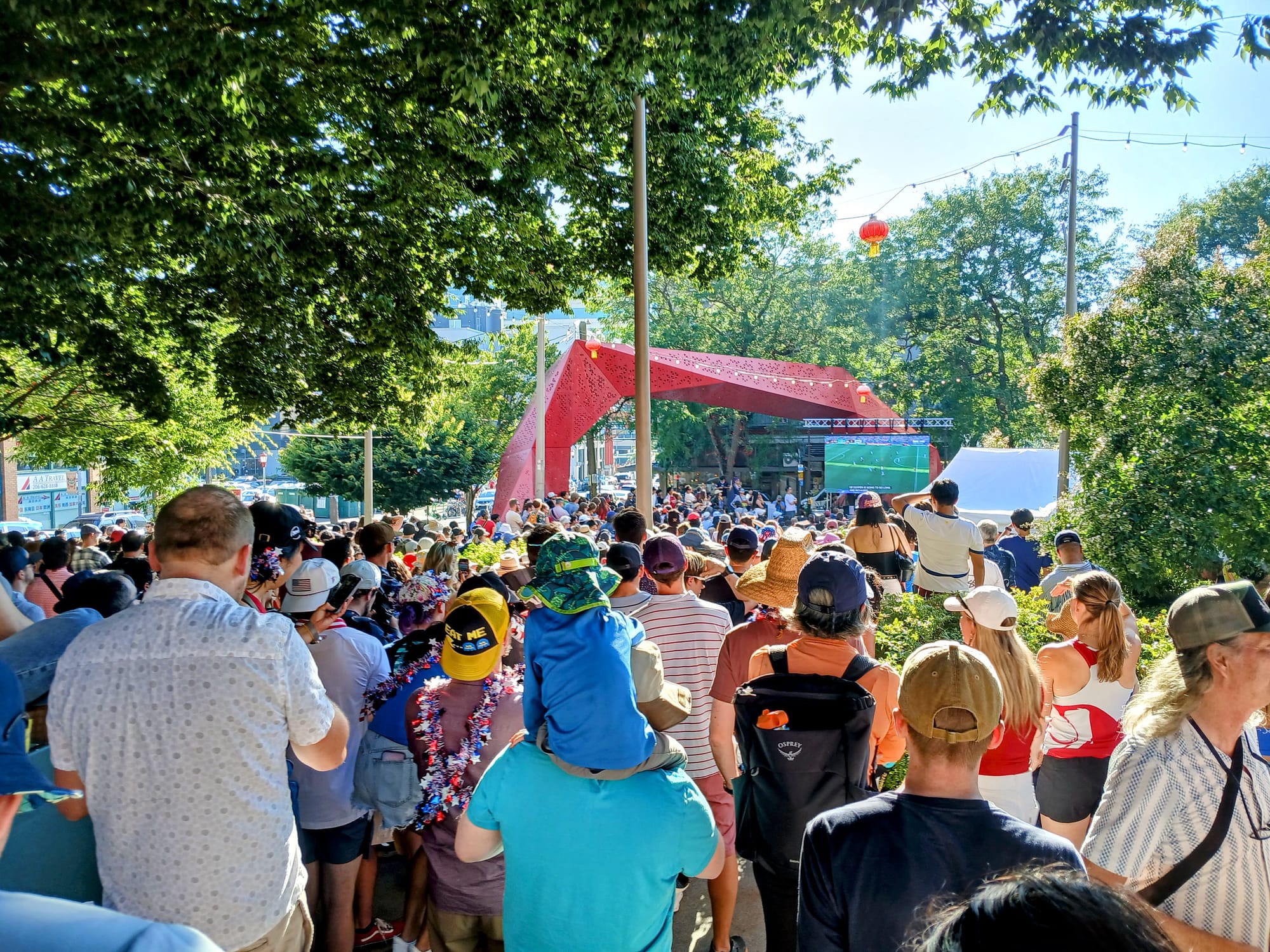
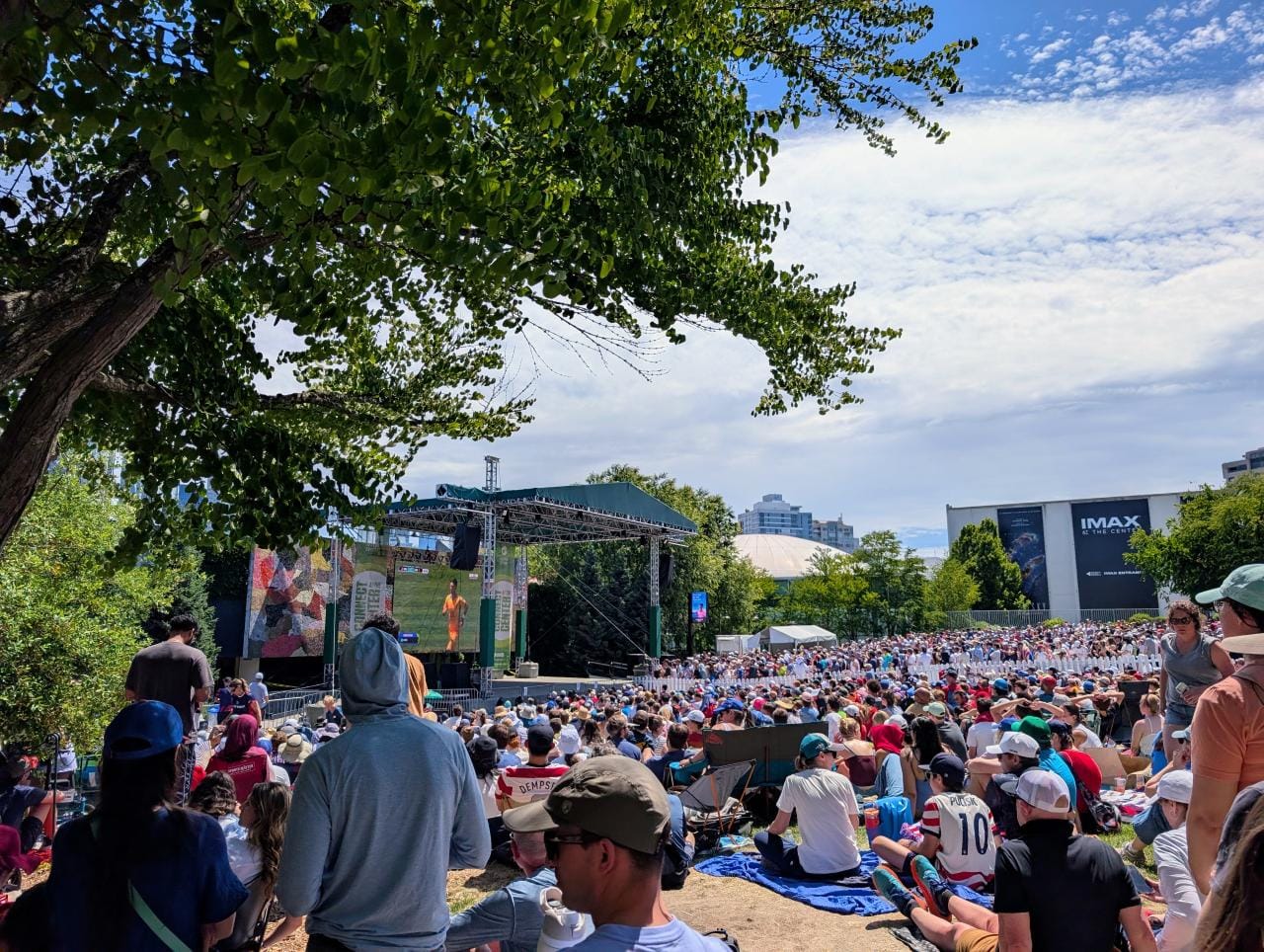
Wilson rightly pointed out that a downtown stadium location was another key competitive advantage over peer American cities, helping fans experience much of the city without getting stuck in traffic or forced into a pricey cab ride or bespoke travel option. With Seattle's soccer stadium located on the doorstep to the city's recently overhauled Waterfront Park and its resurgent downtown, Cup festivities could easily spill into the city, flowing into neighboring civic assets and imbuing the urban fabric with energy and light like a sequin cape.
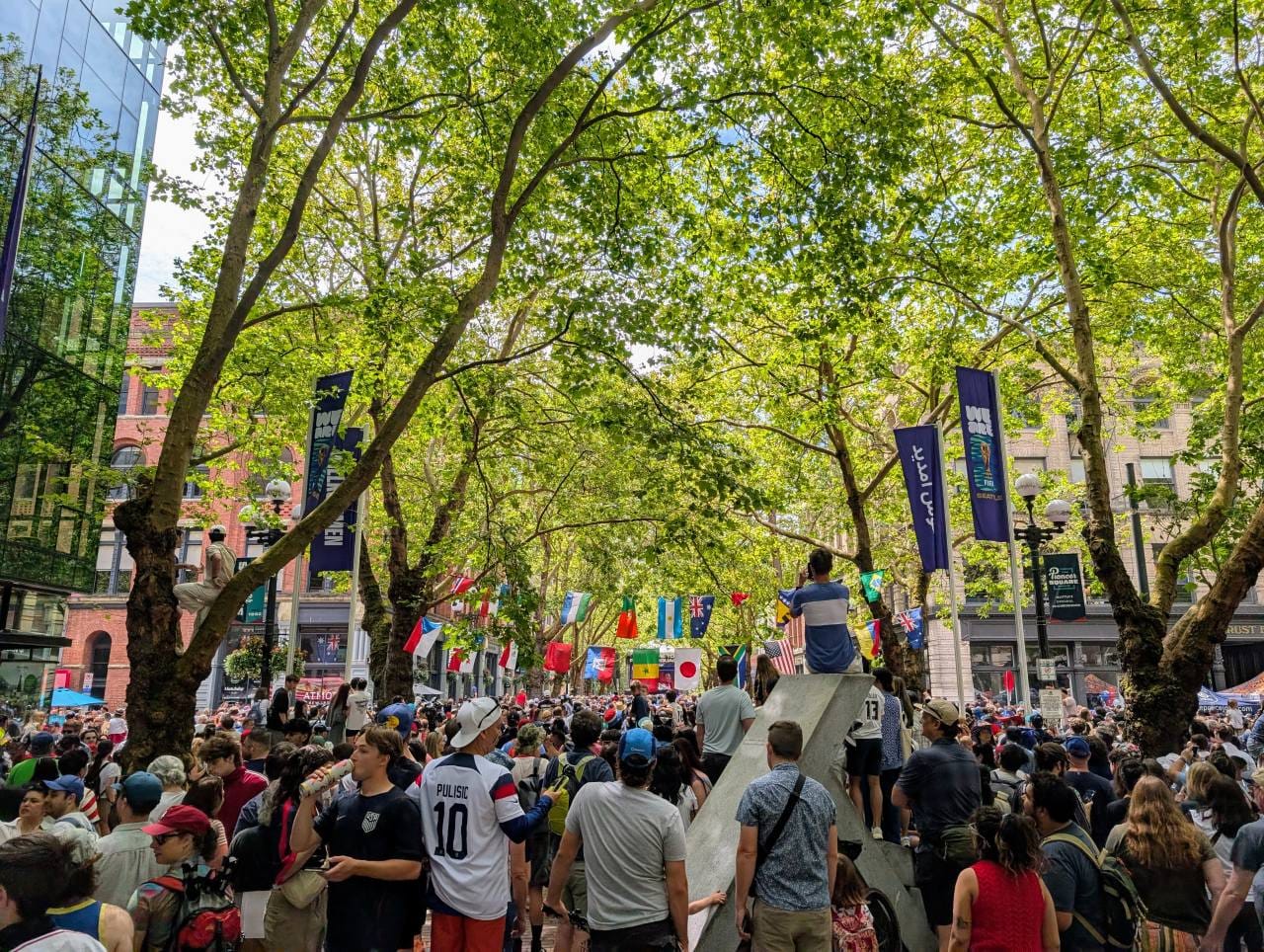
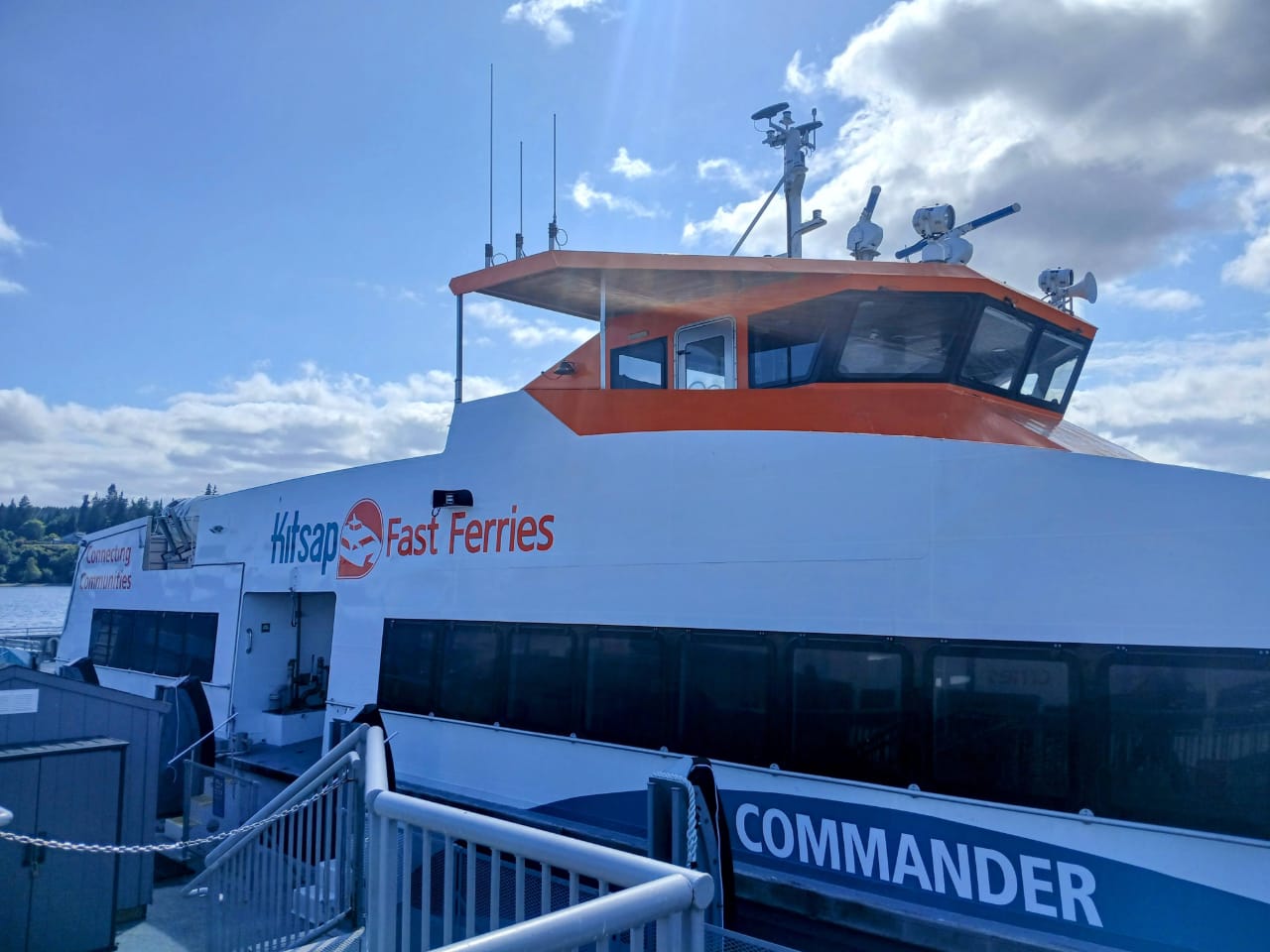
"'I fell in love with my city all over again.' I’ve heard this from so many residents. And from visitors: 'Seattle surpassed my expectations, it’s been the best stop of our trip,'" Wilson wrote. "That enthusiasm isn’t just about mountains, water and long summer days. It’s about what we’ve built over generations. Fans didn’t just attend a soccer match. They wandered our waterfront and marched through Pioneer Square before the game. They rode trains, buses and ferries. They gathered in parks, plazas and restaurants. They experienced a World Cup hosted in the heart of a real city."
Part of the recipe to Seattle's success, Wilson said, was that it collaborated well across important institutions – cutting across governmental jurisdictions and uniting transit agencies, tribal governments, local business groups, and community-based organizations – all working closely together in a spirit of collaboration and civic pride.
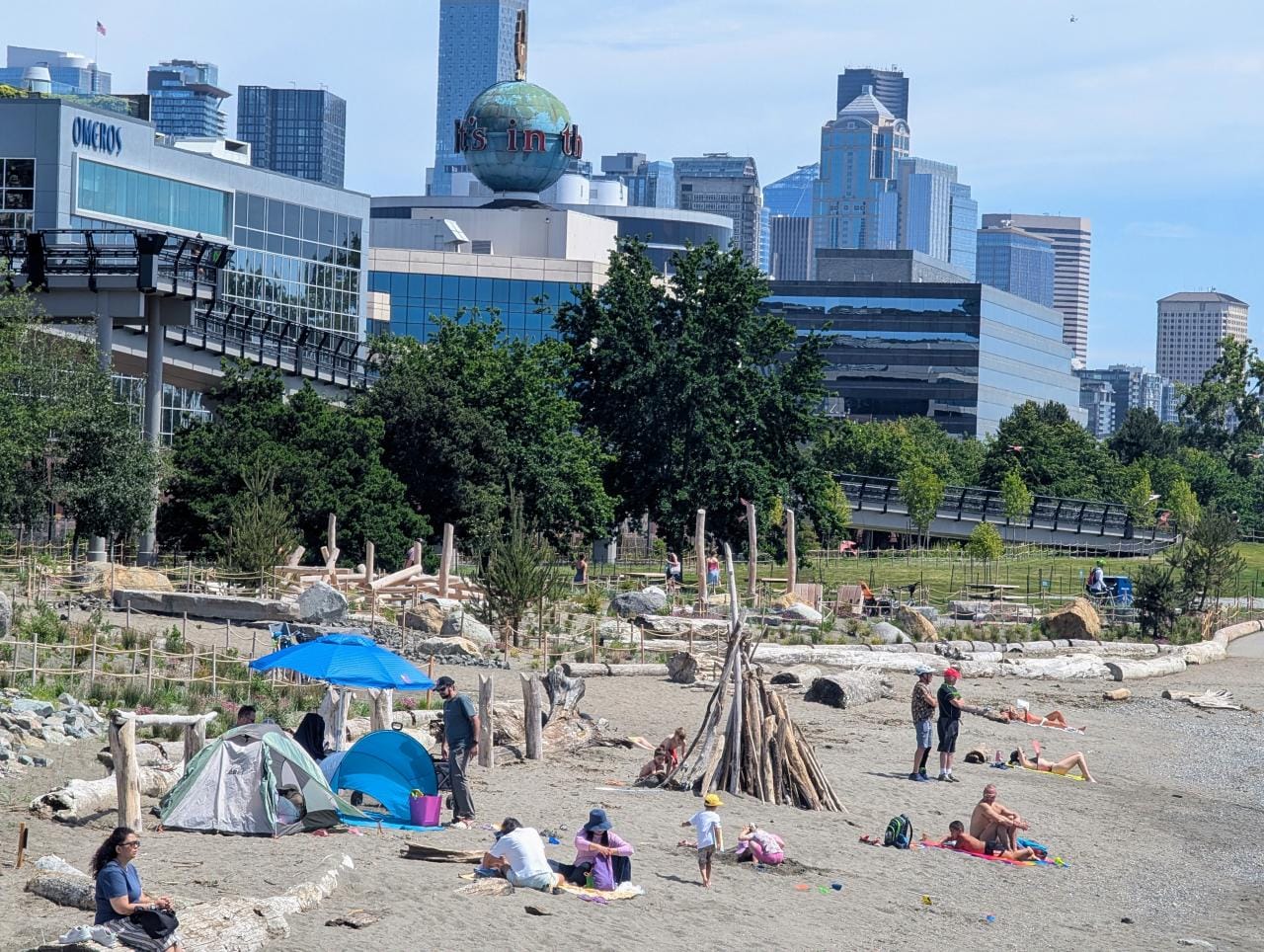
Quickly delivering an overhaul of the Elliott Bay Trail and the neighboring Centennial Park in less than three years from project inception was a clear proof of concept that Seattle can move fast when all boats are in rowing in the same direction and leaders clear obstacles.
"This is what we achieve when we show up, dream big and work together," Wilson wrote. "Seattle’s World Cup revealed something else, something many of us knew, despite the persistent voices pushing narratives of decline. Seattle is a great city. A world-class city. A city we’re proud to call home."
While some local pundits and news outlets appear focused on portraying the mayor as struggling to lead, wide-eyed, and overmatched – a wildly successful World Cup is a powerful counterexample. The mayor's decision to try to capitalize on the World Cup energy in a long-term way is a further credit to her.
Centrists have a tendency to overplay their hand or get locked into shortsighted squabbles. For example, the same "Seattle is dying" narratives centrists were happy to stoke in the leadup to a 2021 backlash election that swept progressives out of power on the Seattle City Council are also the narratives they lament when it comes time to fill vacant office space or convince frightened suburbanites to come back downtown to shop.
This is very much the crossroads that the centrist faction finds itself in now: do they sabotage Wilson at all costs to ensure she is a one-term mayor and attempt to nip a progressive resurgence in the bud? Or will they compromise and work with her for the greater good of the city?
Wilson made a pitch for Seattle to get better at owning its narrative and keeping the collaborative spirit going year-round, instead of only cleaning up for company.
"Most of all, we must tell our own story," she wrote. "It’s time to discard the notion that Seattle is 'dying.' The forces pushing that narrative never wanted Seattle to succeed. This isn’t a call to ignore challenges, but to tackle them with a sense of possibility, because we’ve seen what our city feels like when we pull together.
Finally, Wilson ended her recent op-ed with an urbanist manifesto that's too good not to share in full:
"Cities are humanity’s greatest invention. Where opportunity, creativity, culture and democracy come together. Cities are where people who are different from one another learn how to live together. Cities are where innovation happens because people encounter new ideas, new neighbors and new possibilities. That’s always been Seattle’s story, and we have an opportunity, a responsibility, to write the next chapter."
 Doug Trumm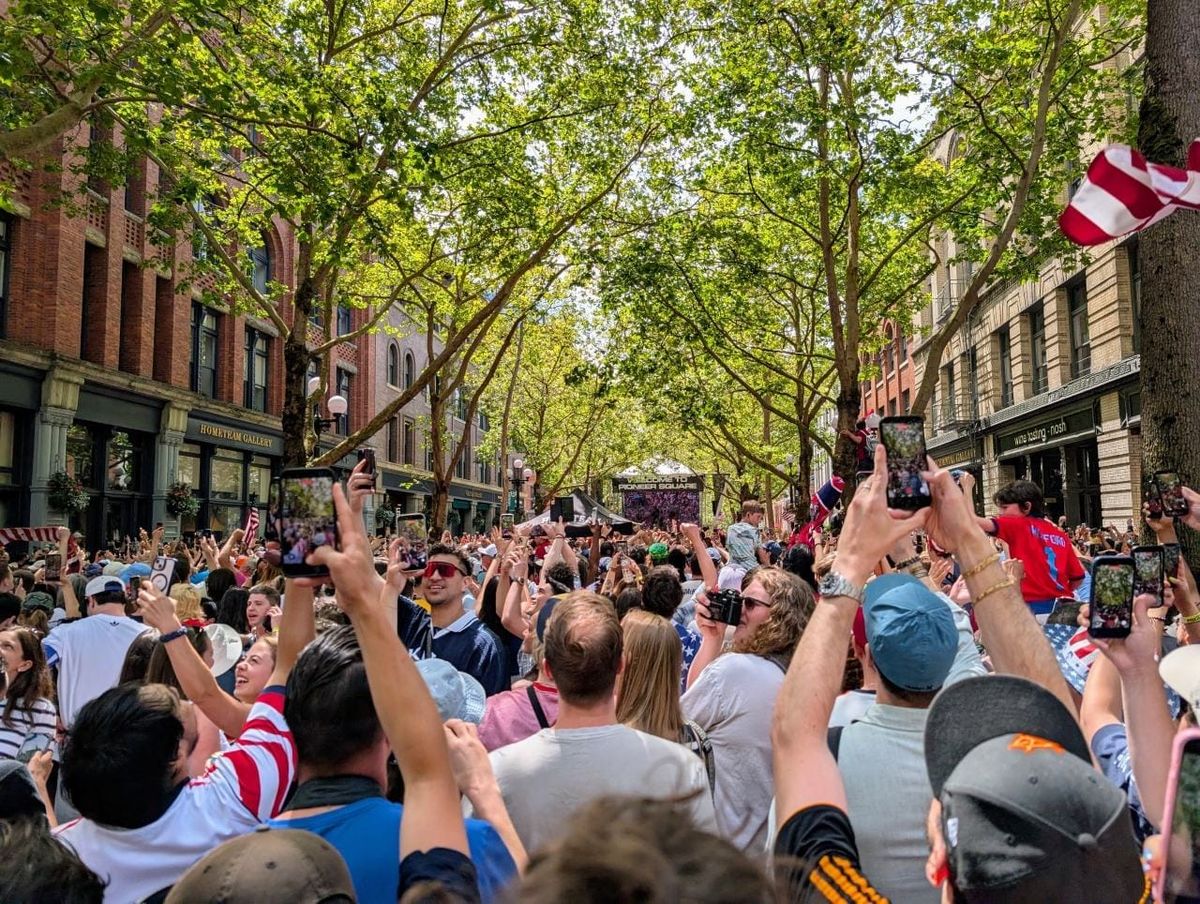
 Doug Trumm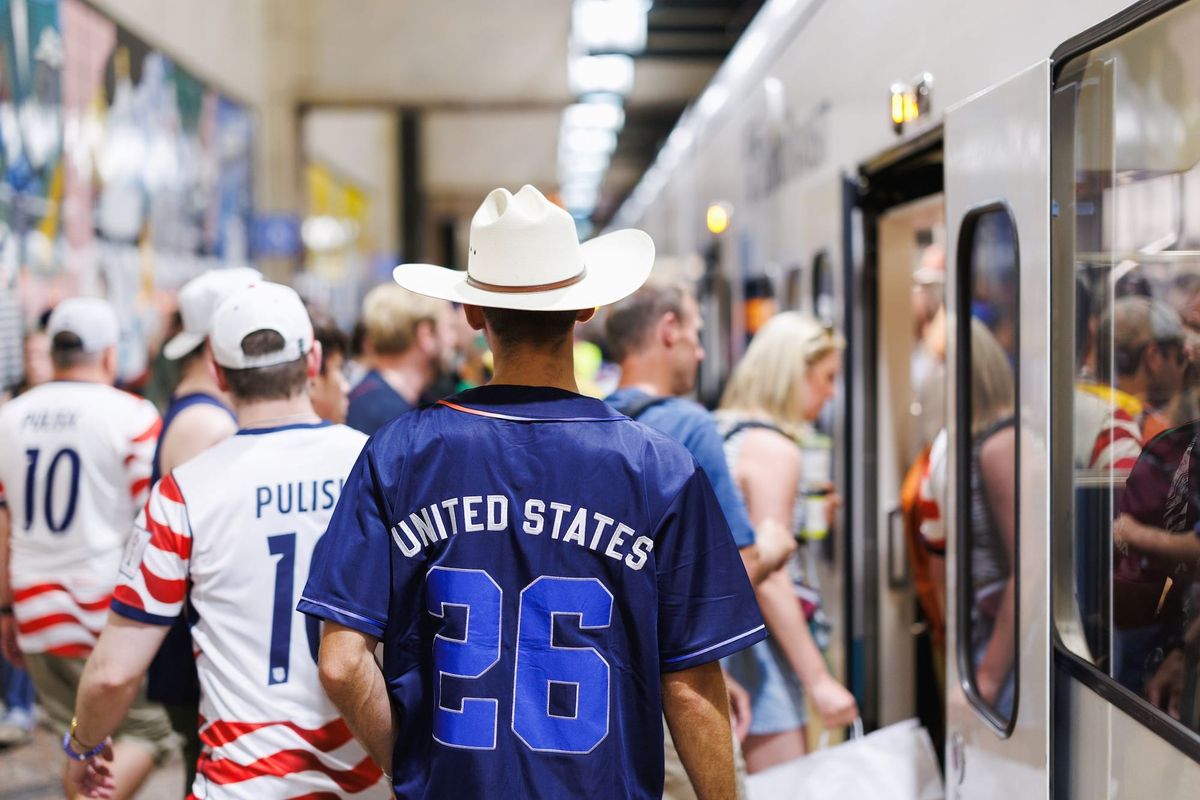
 Leah Hudson