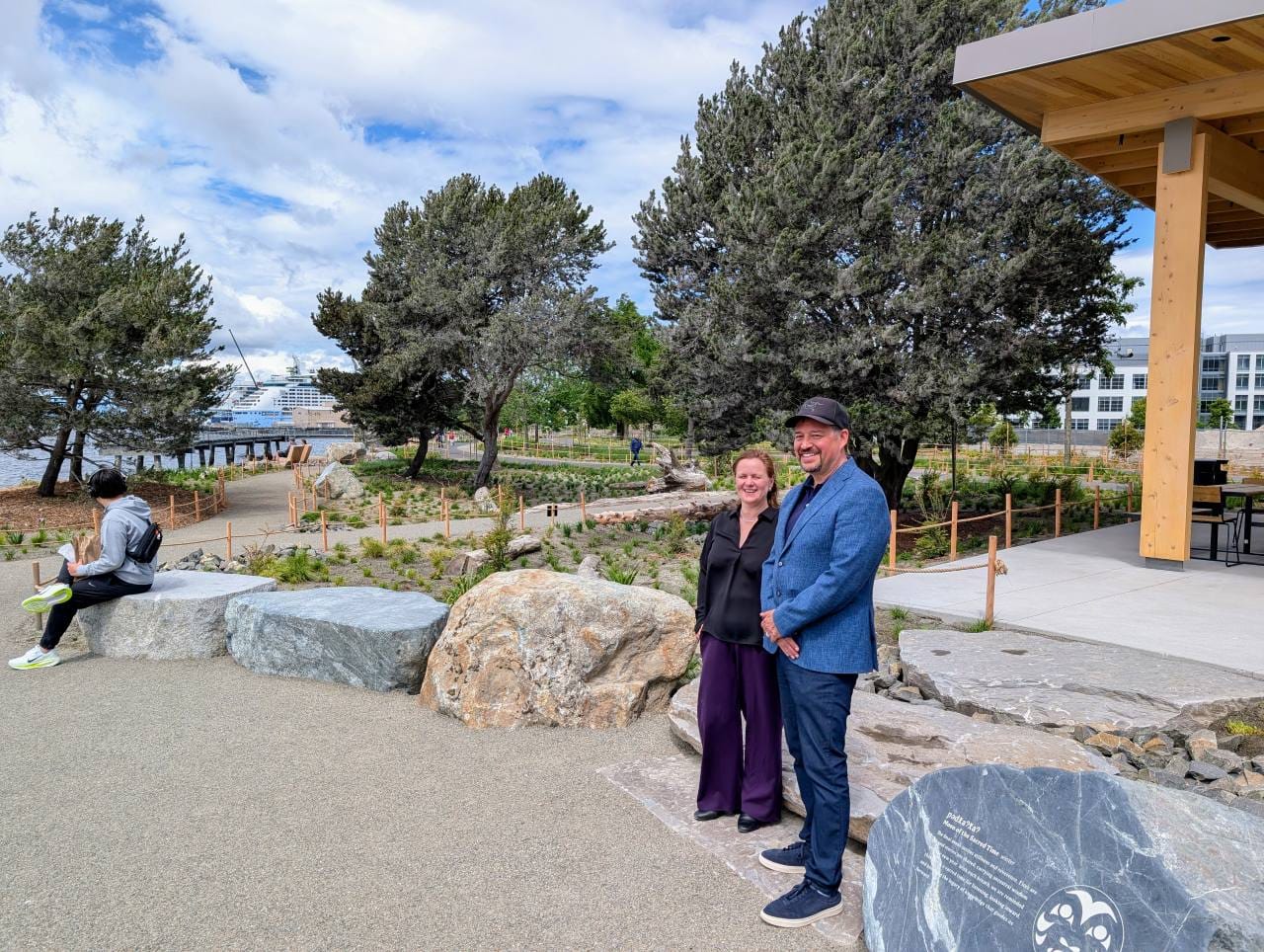
Seattle's newly overhauled Elliott Bay Trail and linear park through Belltown and Uptown is replete with nods to the land's Indigenous Coast Salish heritage. Project architects explained their design touches on a recent media tour commemorating the project opening last week, just in time for the FIFA World Cup.
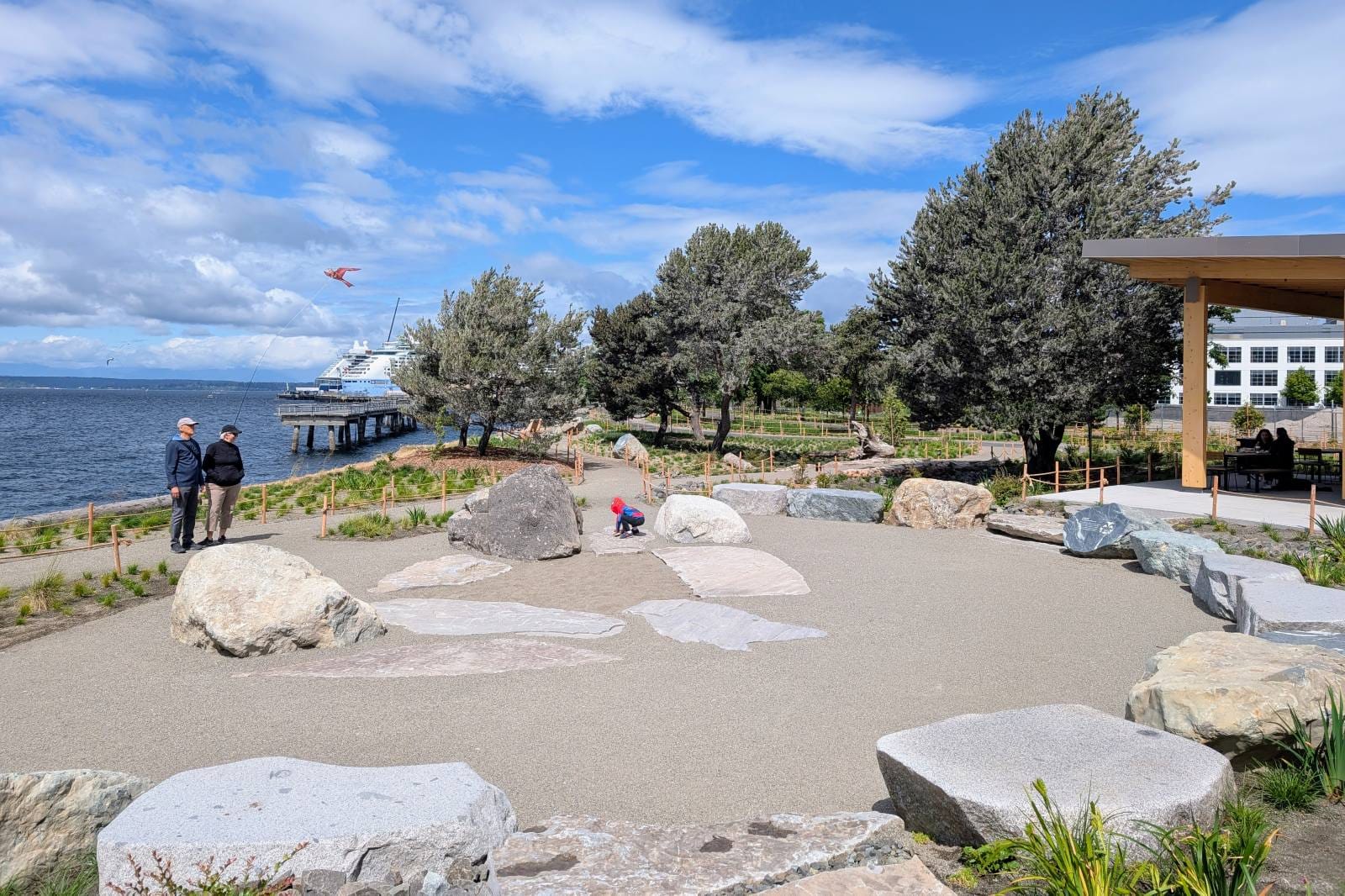
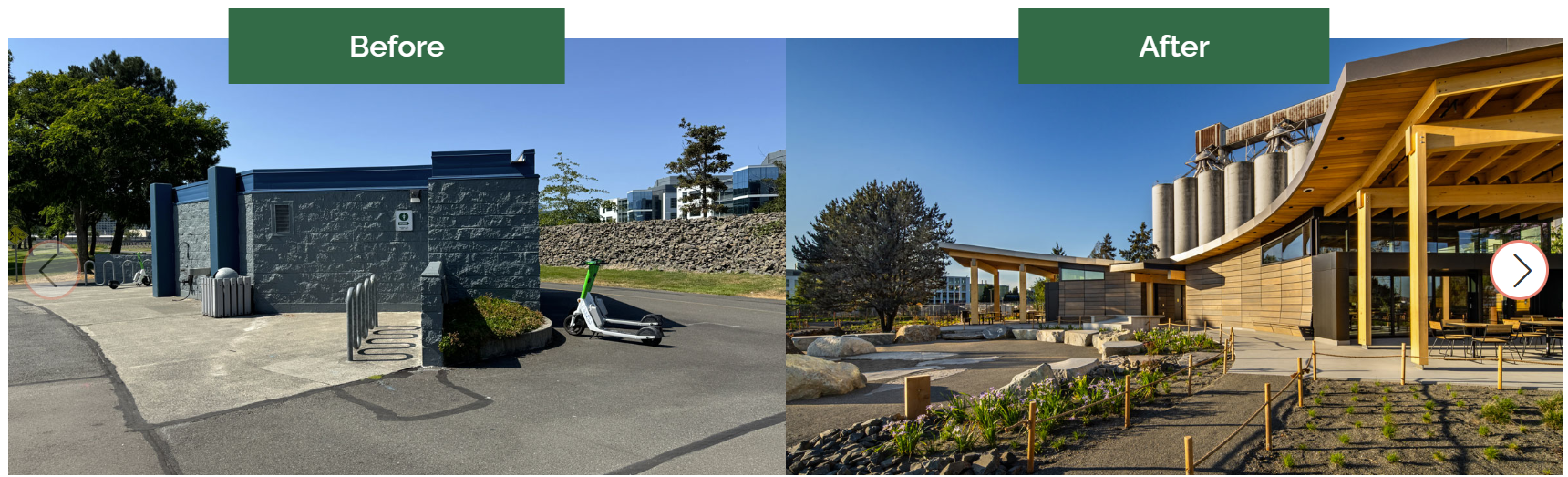
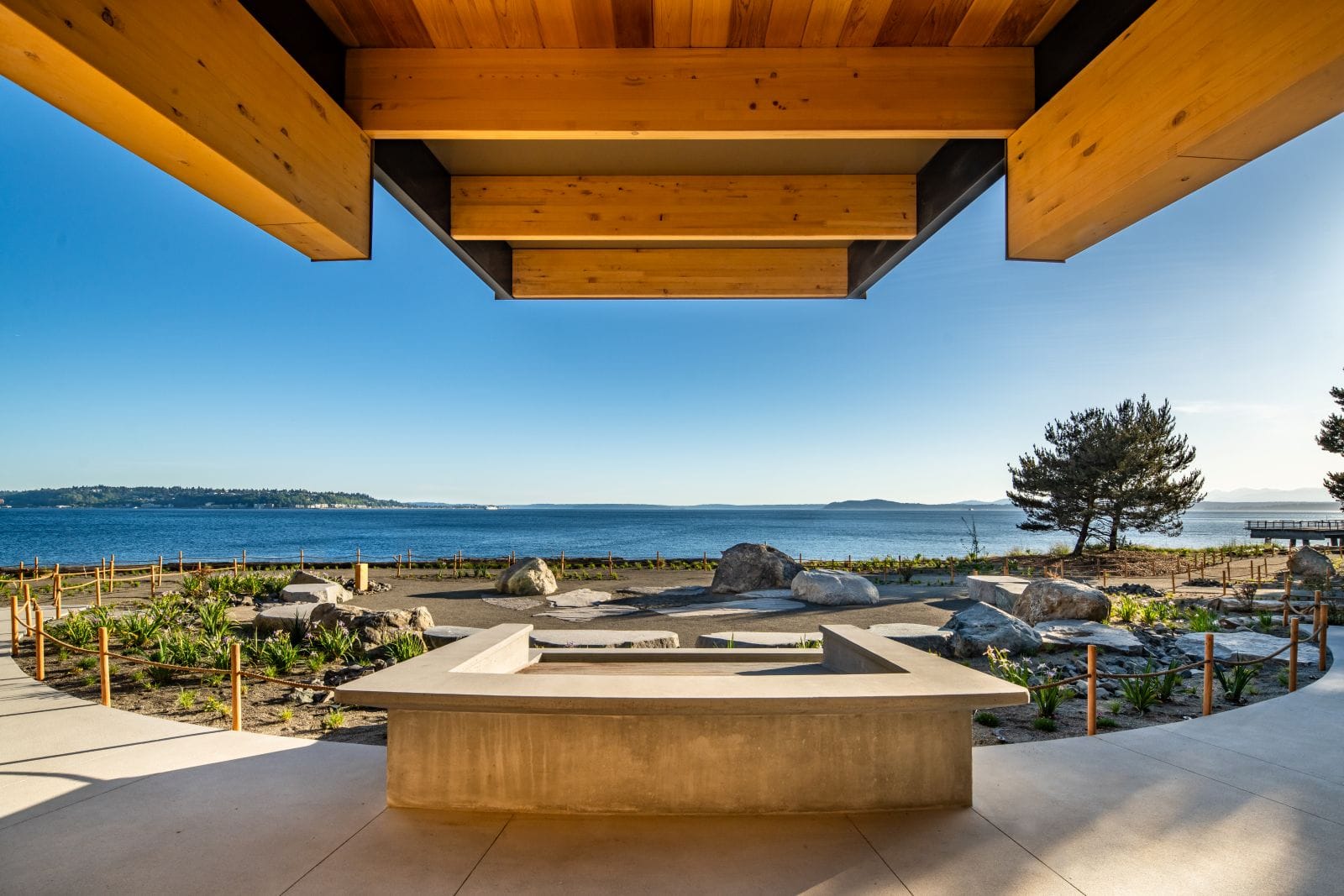
Indigenous architect Alfred Waugh, of the Chipewyan Nation born in Yellowknife in Canada's Northwest Territories, principal of the British Columbia-based firm Formline Architecture + Urbanism designed the new amenities building in Centennial Park. Inspired by the Coast Salish longhouse, the building is built of yellow cedar and red cedar, and it hosts a public bathroom, concession space, plenty of covered seating, and a gathering circle with a firepit intended to host salmon bakes.
The Suquamish Tribe was given naming rights on the new amenities building, which they dubbed haʔłali (pronounced roughly: hah-thlah-lee).
“The Suquamish Tribe is happy to take part in celebrating the re-opening of Myrtle Edwards and Centennial Parks and appreciate being part of the design process. Our tribe’s Culture Committee suggested the name haʔłali for the new park building which means ‘the good place’ in Lushootseed, the mother language of Suquamish,” Suquamish Chairman Leonard Forsman said in a statement. “This transformation of the waterfront has indeed made it a good place for reflection, recreation, and learning more about our ancestral waters.”
Since time immemorial, Seattle's coastline has hosted fishing villages and other settlements of the Duwamish, Suquamish, Muckleshoot and other Coast Salish people, given the strong salmon runs in the area historically.
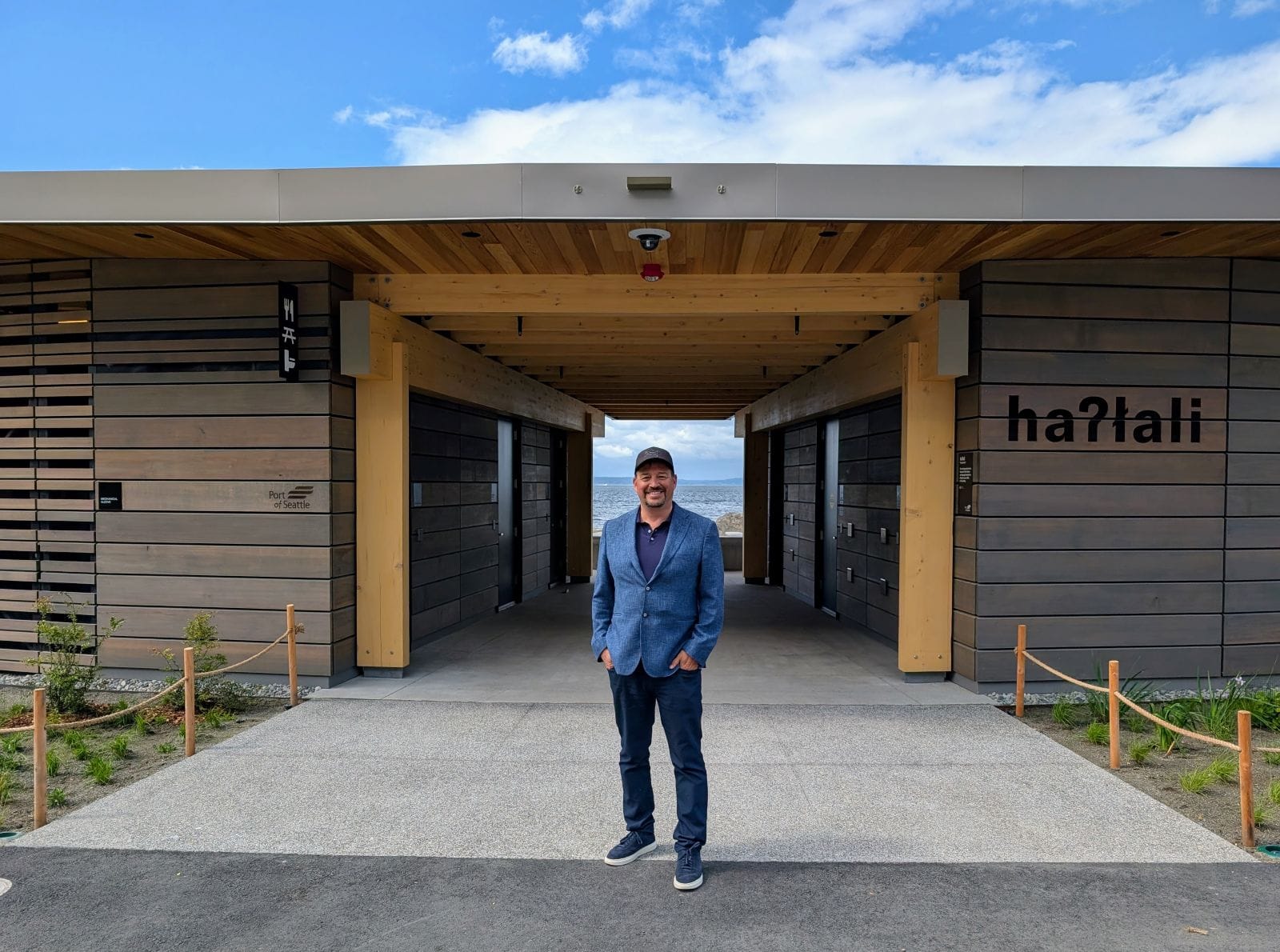
"The whole idea from the Salish culture is they have this idea: 'O’siyam' – of welcoming," Waugh told The Urbanist. "The building is opening its arms to welcoming the Salish Sea, expressing that interconnection and how important the ocean is to us for food and all that kind of stuff, and the other aspect we tried to do with this building is whether you're coming from downtown or whether you're coming from oceans or Expedia, you're greeted by a nice, generous canopy as a welcome feature, as well."
It being Seattle, of course there's coffee, with Café Hagen Waterfront taking up residence in the concessionary space in haʔłali. The cafe opened Monday, serving food and drink 8am to 5pm daily.
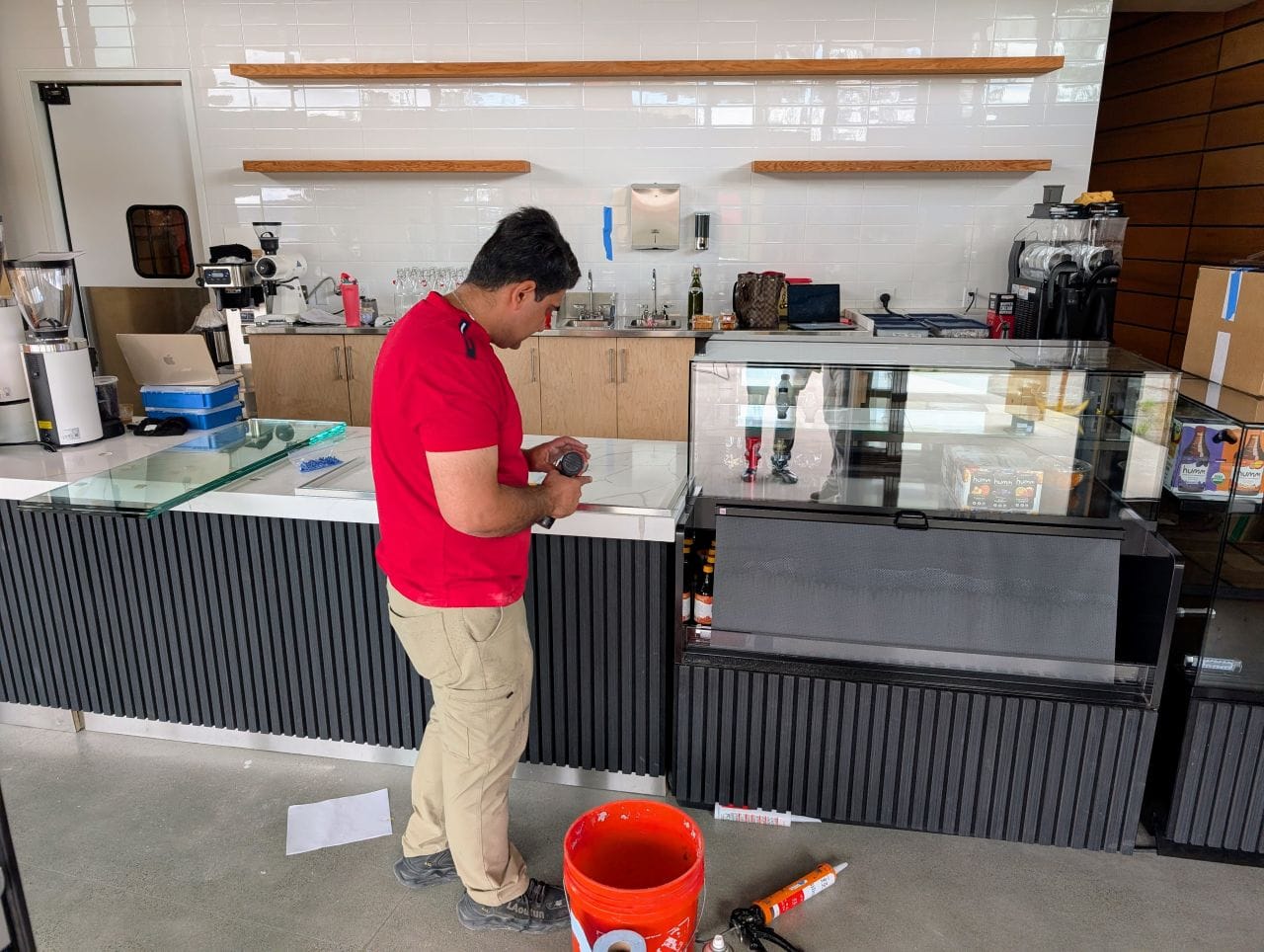
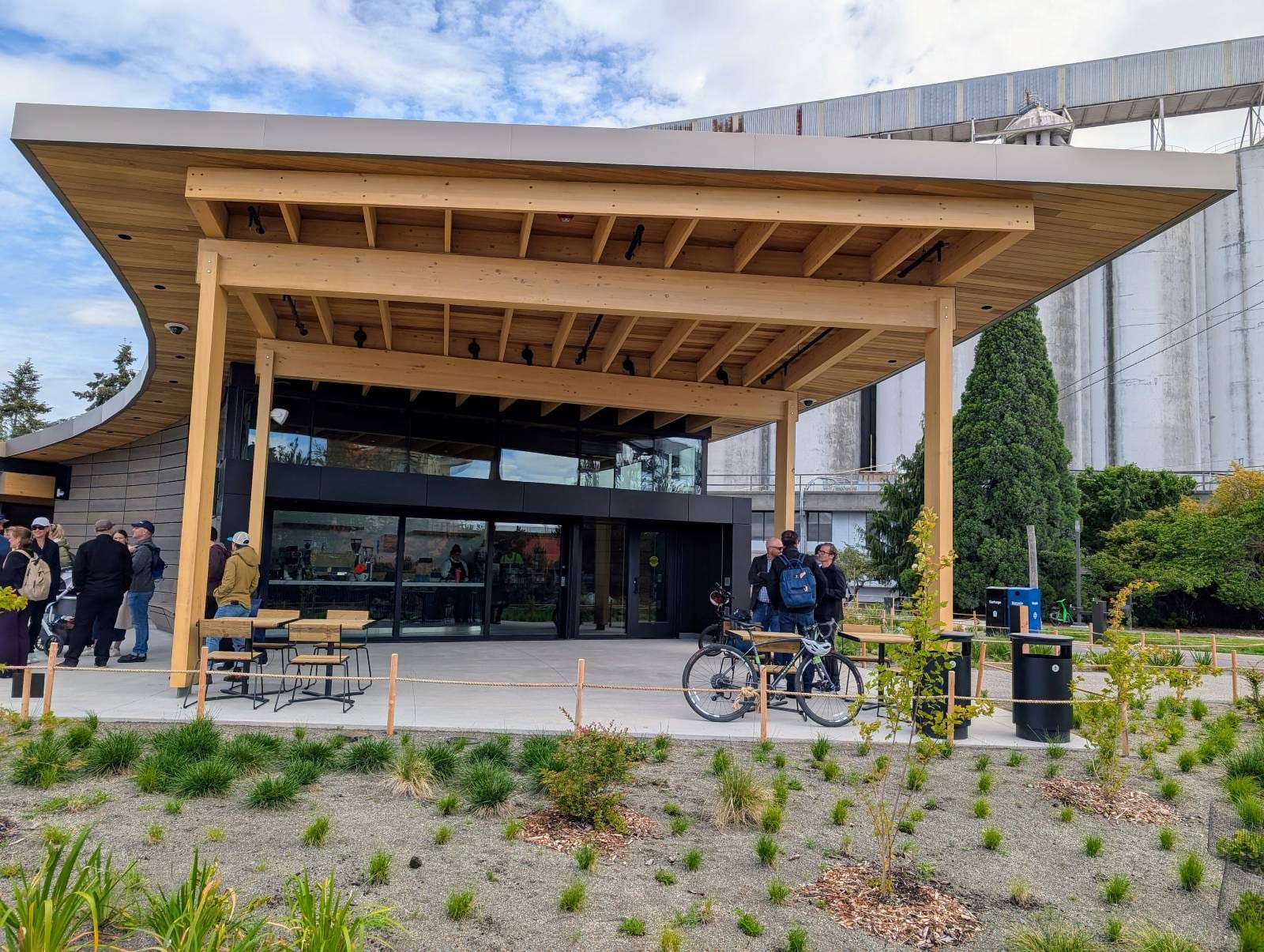
A worker put final touches on the new coffee counter at Café Hagen Waterfront during a June 5 tour. A generous overhang provides covered seats. (Doug Trumm)
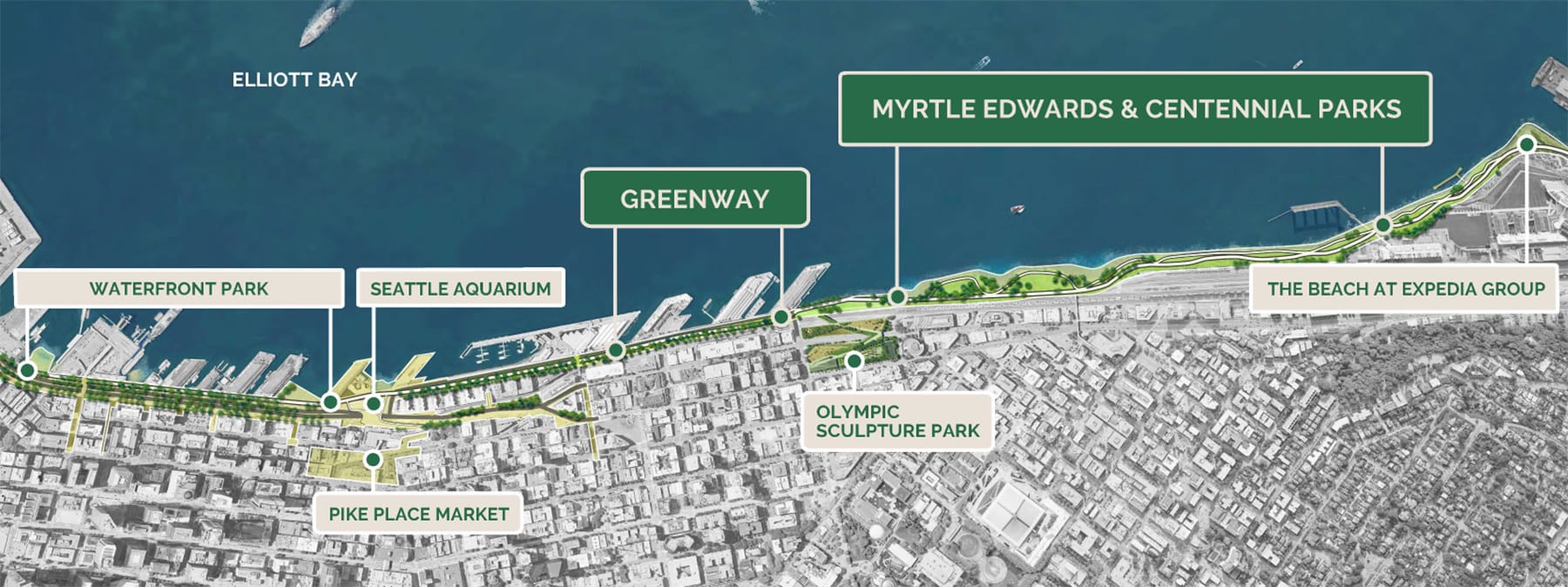
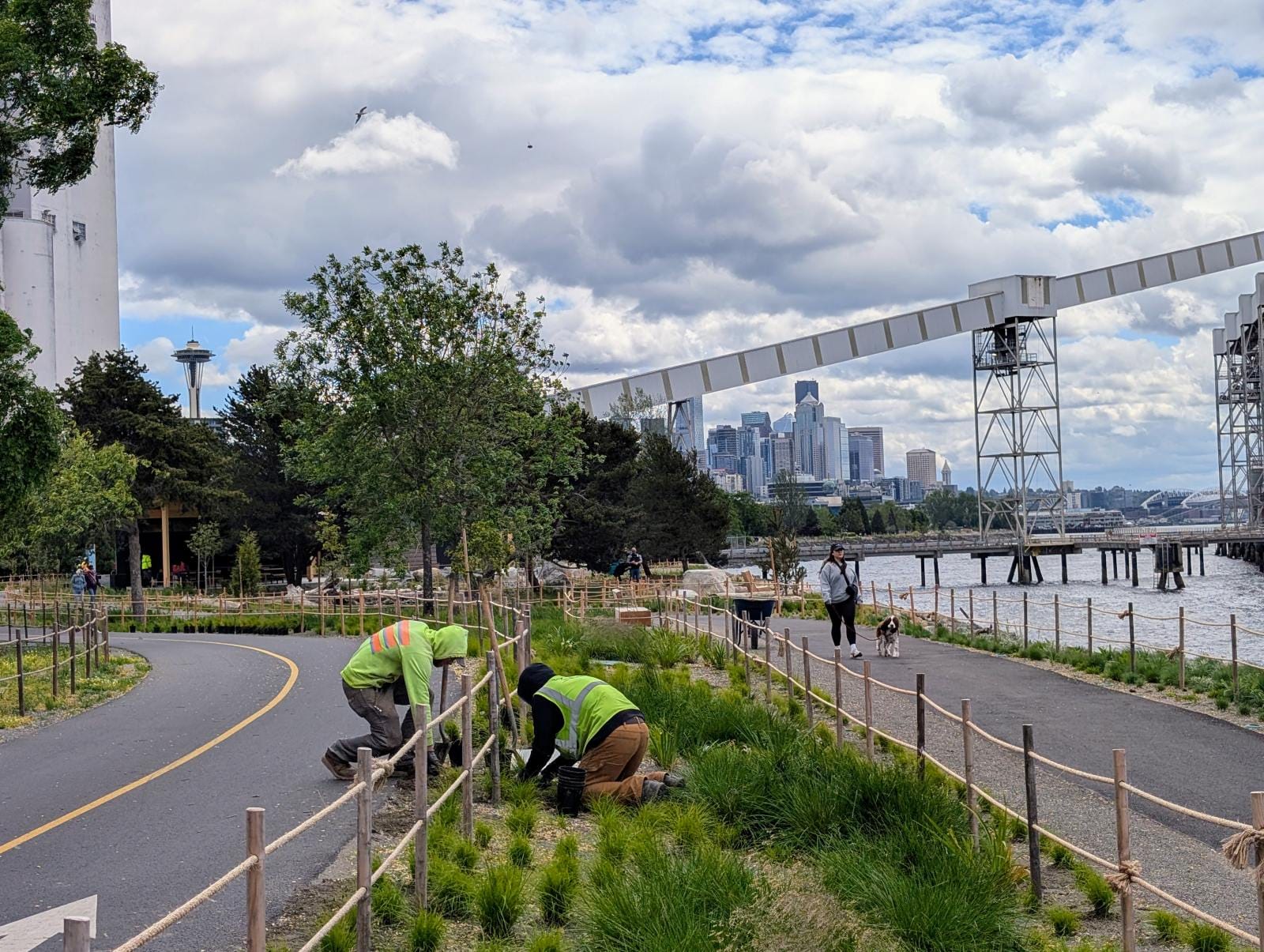
Waugh, landscape architect Lara Rose, and Downtown Seattle Association CEO & President Jon Scholes led media members on a walking tour of the revitalized parks on June 5, celebrating the reopening and upgraded offerings. Dubbed the Elliott Bay Connections (EBC) project, work temporarily closed Myrtle Edwards and Centennial Parks to resurface the recreational trail, add new seating and the amenities building, and improve landscaping with new plantings – 74,000 shrubs in all.
Big things on a quick timeline
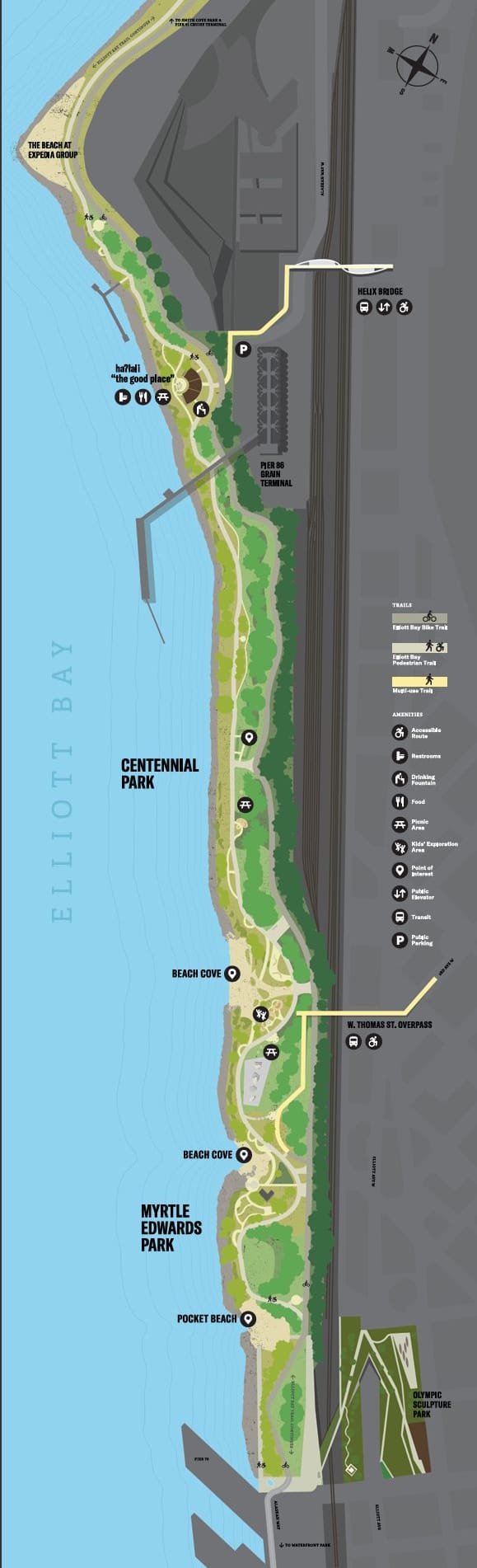
"Today we've got three and a half miles of this connected, cohesive waterfront from Smith Cove to the north, all the way through Pioneer Square, an incredible greenway, 10 feet-plus in its width, protected landscapes that connects the Olympic Sculpture Park and these parks to Pier 62 and the Overlook Walk, a complete home run for our city," Scholes said. "It wouldn't have happened without close partnership with the Port of Seattle, the City of Seattle, [and] Burlington Northern Railroad. This was constructed in just 15 months, a pretty incredible length of time to get all of this work done. Sixty permits had to be pulled, so an incredible amount of partnership and collaboration. It shows that Seattle gets big things done."
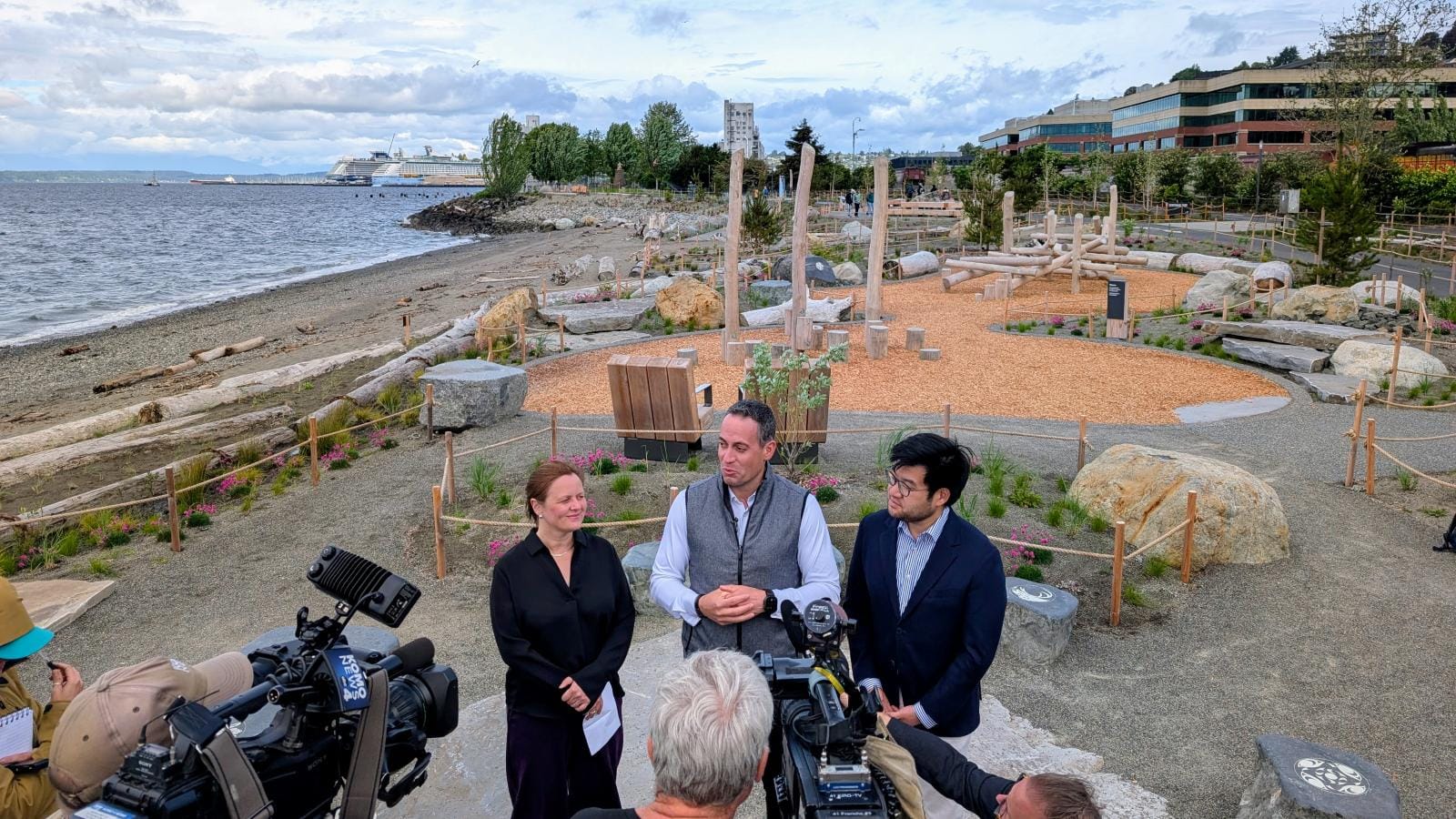
Project partners closed the trail and park in April 2025 to begin the restoration work and improvements, though the trail reopened under various detours once work had progressed. The City of Seattle owns Myrtle Edwards Park, with Seattle Parks managing the facility. The Port of Seattle owns and manages Centennial Park, given its proximity to its grain terminal, piers, and cruise ship terminal.
“Seattle can maintain connections to our working waterfront, while taking advantage of the beautiful green spaces in between," Seattle Port Commissioner Sam Cho said in a statement. "We’re especially excited for the new haʔłali amenities building (haʔłali means “the good place”) within Centennial Park, including beloved local Scandinavian coffee shop Café Hagen which will open this summer."
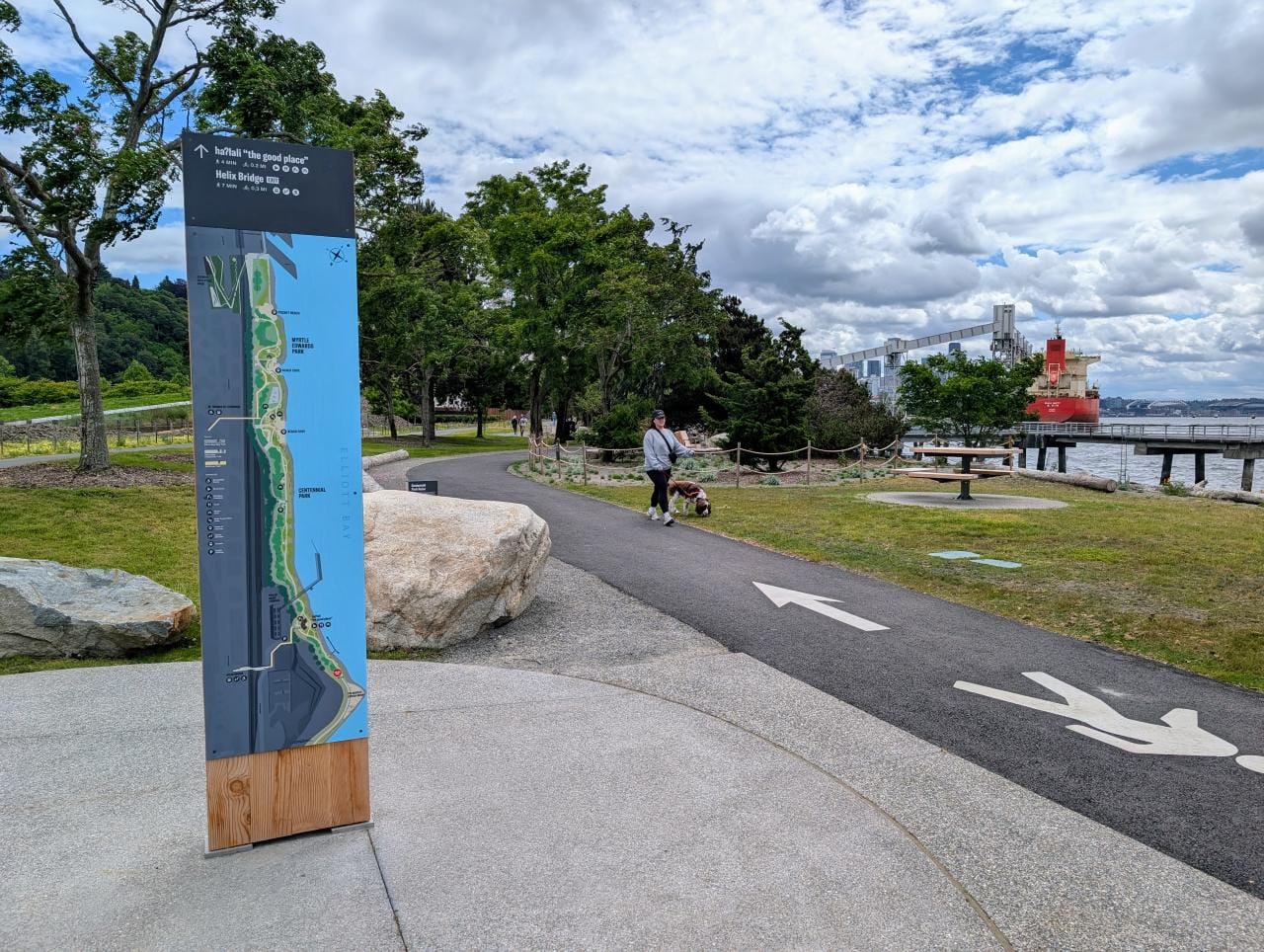
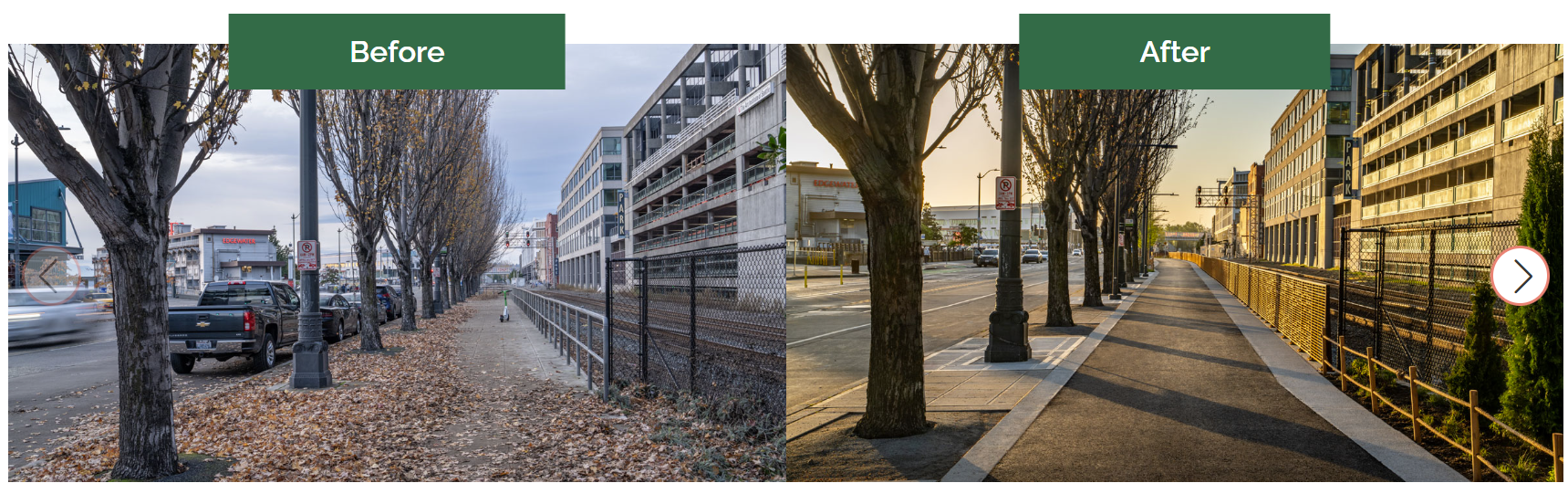
Closer to downtown, a "greenway" replacing old waterfront streetcar tracks celebrated its grand opening in April, improving bike and pedestrian connectivity between Myrtle Edwards Park and Pier 62 and the new downtown waterfront park. That greenway project was also part of Elliott Bay Connections, in Seattle Department of Transportation managed right of way.
The ambitious vision was funded by private philanthropists led by billionaire Melinda French Gates, starting with a $45 million infusion in 2023 – the project ultimately came in at $56 million. MacKenzie Scott (ex wife of Jeff Bezos) and the Diller-Von Furstenberg Family Foundation were also donors. (The ex-wives to big tech CEOs club appears to have significantly higher favorability than their husbands, with Bezos 26 points underwater in a recent Reuters national poll and Bill Gates treading water.)
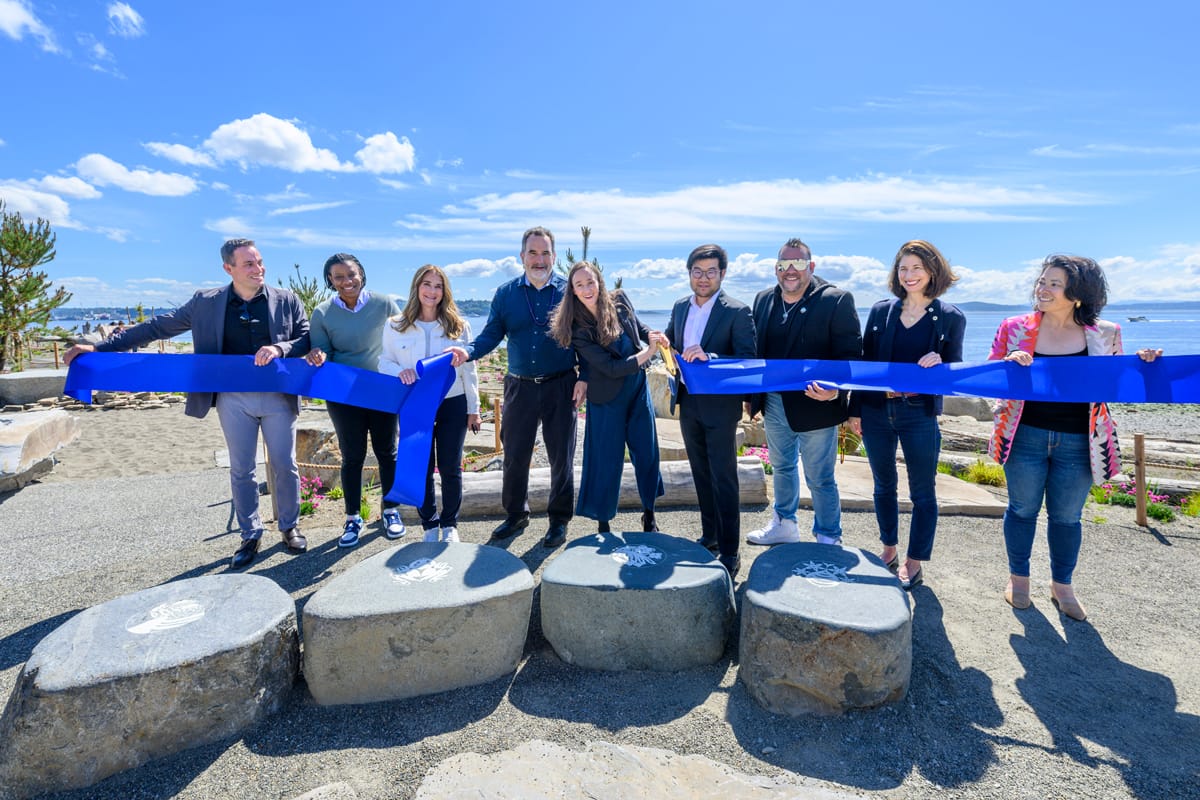
French Gates joined other officials and dignitaries in cutting the ribbon on the project on June 4. Media (or at least The Urbanist) was not invited to that ceremony, which may have related to the security needs of having one of the world's richest people in tow or a general desire to keep it a more exclusive affair.
“I’ve always believed that the most beautiful spaces in a city should belong to everyone,” French Gates said in a statement. “Walking along the waterfront, you can see what’s possible when communities and civic leaders come together to invest in shared spaces."
Expedia Group CEO Ariane Gorin also attended the VIP ceremony, with past improvements near its corporate campus funded by the travel industry giant as part of public benefits negotiated into the project. Expedia also contributed to the philanthropic seed money to launch the new upgrades.
The philanthropic partners have agreed to cover the first few years of upkeep on the new plantings and revitalized park spaces. "The Downtown Seattle Association (DSA) will continue to serve as the implementation partner for the EBC project following the re-opening of these parks and public spaces," the press release noted. "DSA has a track record of partnership and stewardship of vital parks and public spaces in the heart of Seattle. Uplift Northwest will provide daily cleaning and custodial care."
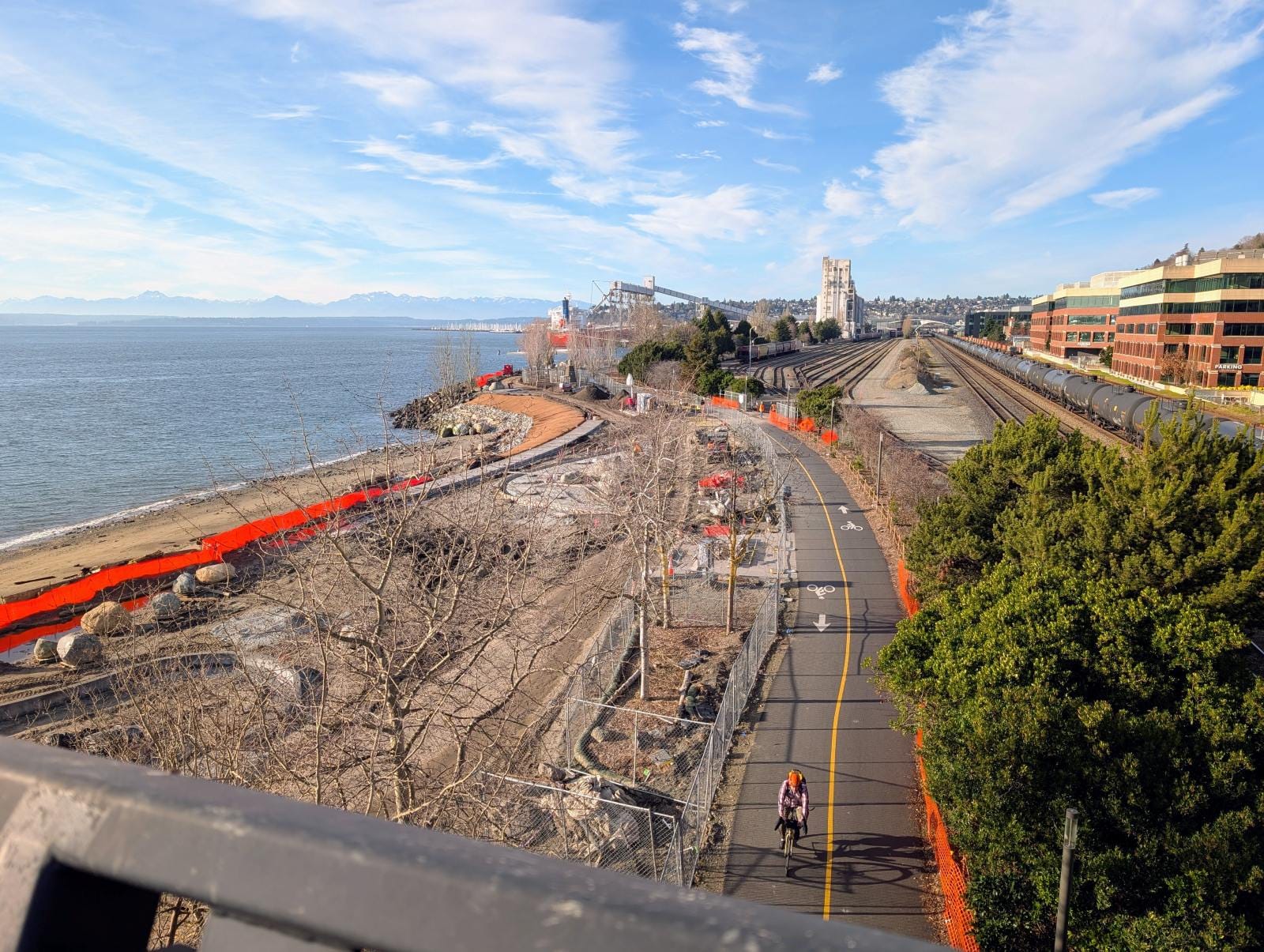
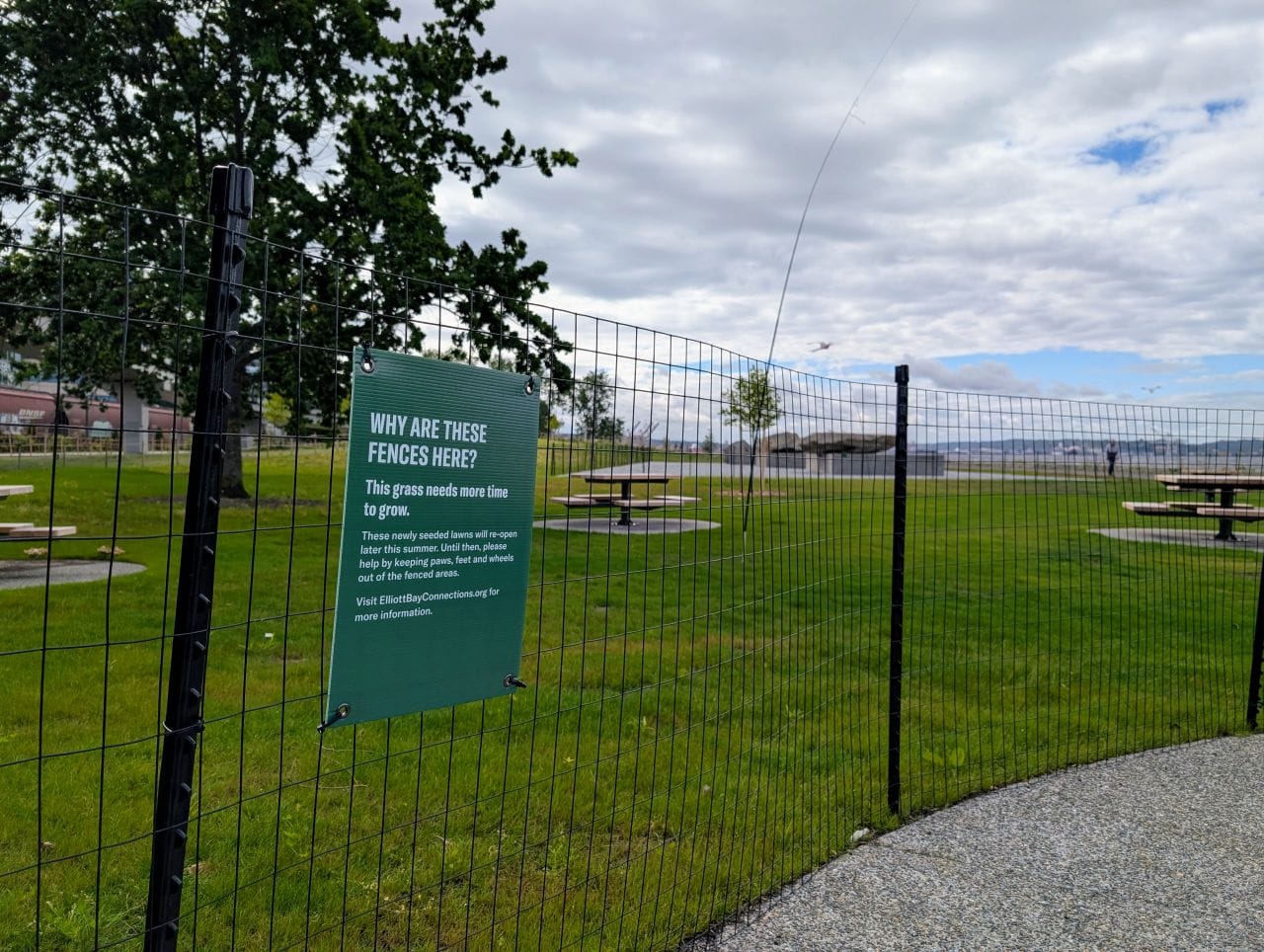
One side effect of the fast timing of the project – the parks were still all torn up this winter – is that new plantings are still getting establishing, leaving much of the park fenced off during the tour.
"The metal fences should come down this summer," Rose said. "They're there just to help the lawns establish, and then everybody will be able to walk on them again and enjoy them. The rope fencing is also temporary, but will be up a little bit longer, maybe for a couple of years, just to help the plants get established."
While the City of Seattle did not have to front the money for Elliott Bay Connections – fortunate considering tight City budgets recently – it was responsible for expediting the 60 permits necessary to get the project ready in time for the World Cup and for helping with public outreach and logistics.
“The Elliott Bay waterfront has long been a favorite gathering place for Seattleites. Thanks to this unique public private partnership between the City, the Port, and generous philanthropic support, Seattle now has refreshed, more accessible parks for everyone to enjoy just in time for our long and beautiful summer days,” Seattle Mayor Katie Wilson said in a statement.
One amenity that isn't ready yet is the Elliott Bay Fishing Pier steps away from haʔłali. The state-owned facility will need additional funding and more in-depth engineering and design work to ensure a durable replacement for the decommissioned dock. For now, it sits disconnected from the shoreline.
Building salmon runs and salmon bakes
Former mayoral candidate Colleen Echohawk, who consulted on Elliott Bay Connections during the design phase, said the fishing access is an important part of the project, noting members of the Muckleshoot Tribe still fish out of Elliott Bay.
“They’re Muckleshoot tribal members, and they’re out there in the boat, and they’re sending pictures of them out there doing what they should… what they’ve been doing there since time immemorial in this space,” Echohawk said in 2023. “They’ve had a good fishing year, because I’ve gotten lots of pictures.”
“The Seattle waterfront shoreline has hosted a string of villages ancestral to the Muckleshoot people and served as a vital piece of our traditional homeland for thousands of years and hundreds of generations prior to the treaties of Medicine Creek and Point Elliott,” said Donny Stevenson, Chairman of the Muckleshoot Indian Tribe. “We are so pleased to see how the Elliott Bay Connections project honored our presence here and tie to the lands with plantings of our traditional medicines, and the teaching of the 13 Moons, acknowledging our strong oral tradition. EBC, the Port of Seattle and the City of Seattle working with us in true partnership on this important waterfront parks project honors our important ties to this place since time immemorial.”
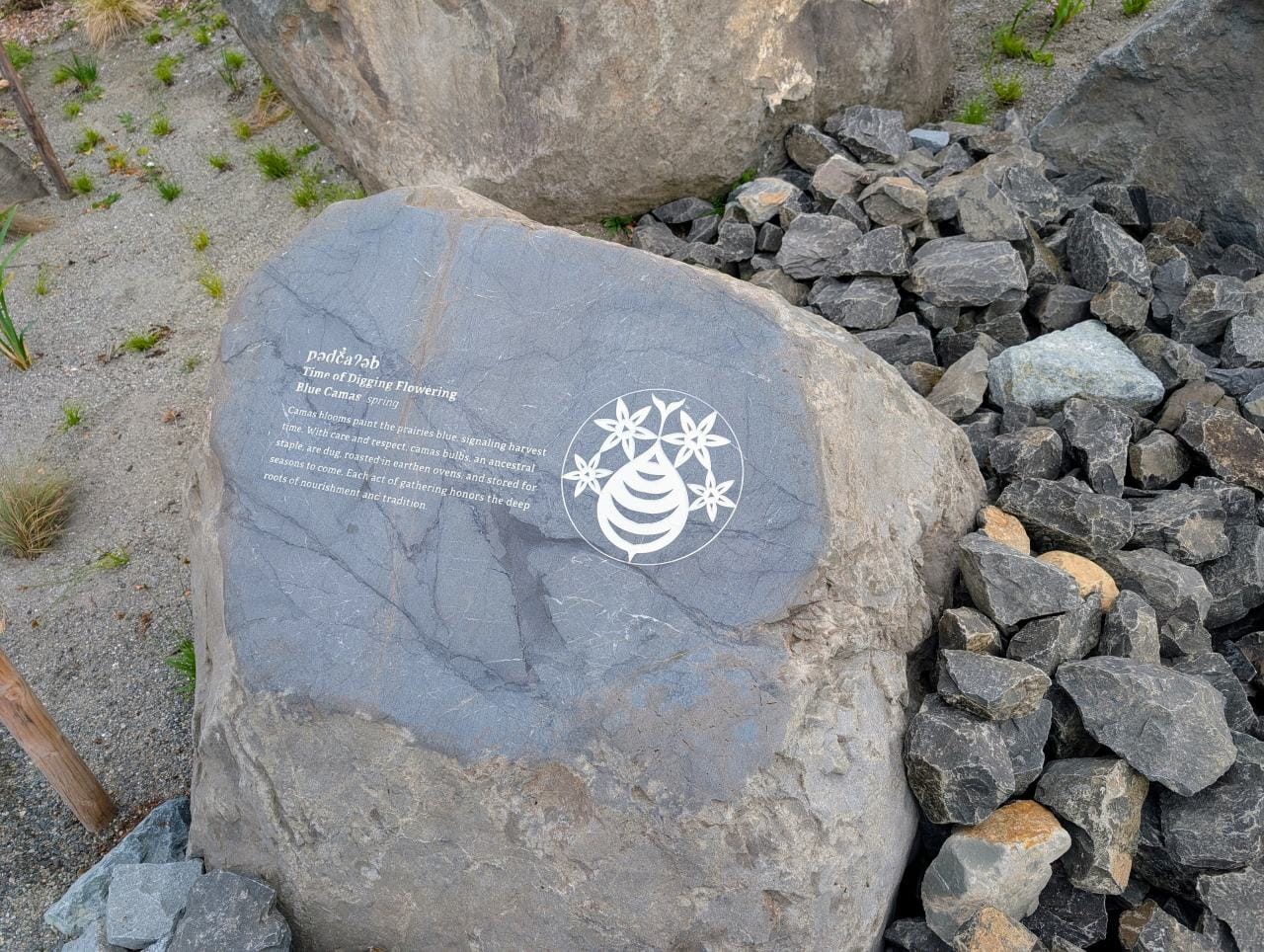
Echohawk helped connect the project team to Indigenous experts on get input on native plantings. Muckleshoot tribal member Valerie Segrest selected the plantings and Samish artist Anabel Baker illustrated the moons in the story of the 13 Moons from the Coast Salish lunar calendar carved into interpretive signs and rock sculptures, which tie each season to a flower or natural process. Echohawk also helped select an Indigenous-owned design firm for haʔłali, with Formline based in nearby Vancouver, BC.
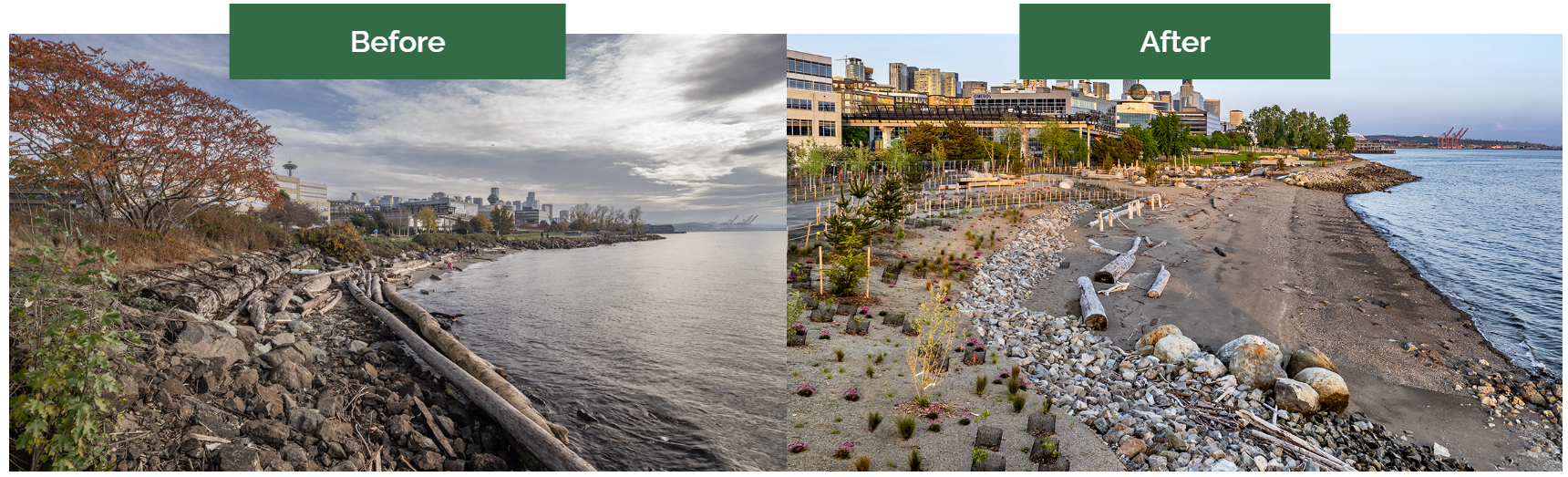
The landscaping choices are intend to promote salmon health and help keep Elliott Bay a healthy marine ecosystem.
"Right now, we have huge, huge areas of native planting, and all of those plants and trees will help take up and cleanse storm water," Rose said. "And then we created salmon-friendly beaches with shallow water habitat. We hope that this might be used as a fire pit. We hope that might be used for a salmon bake in the future."
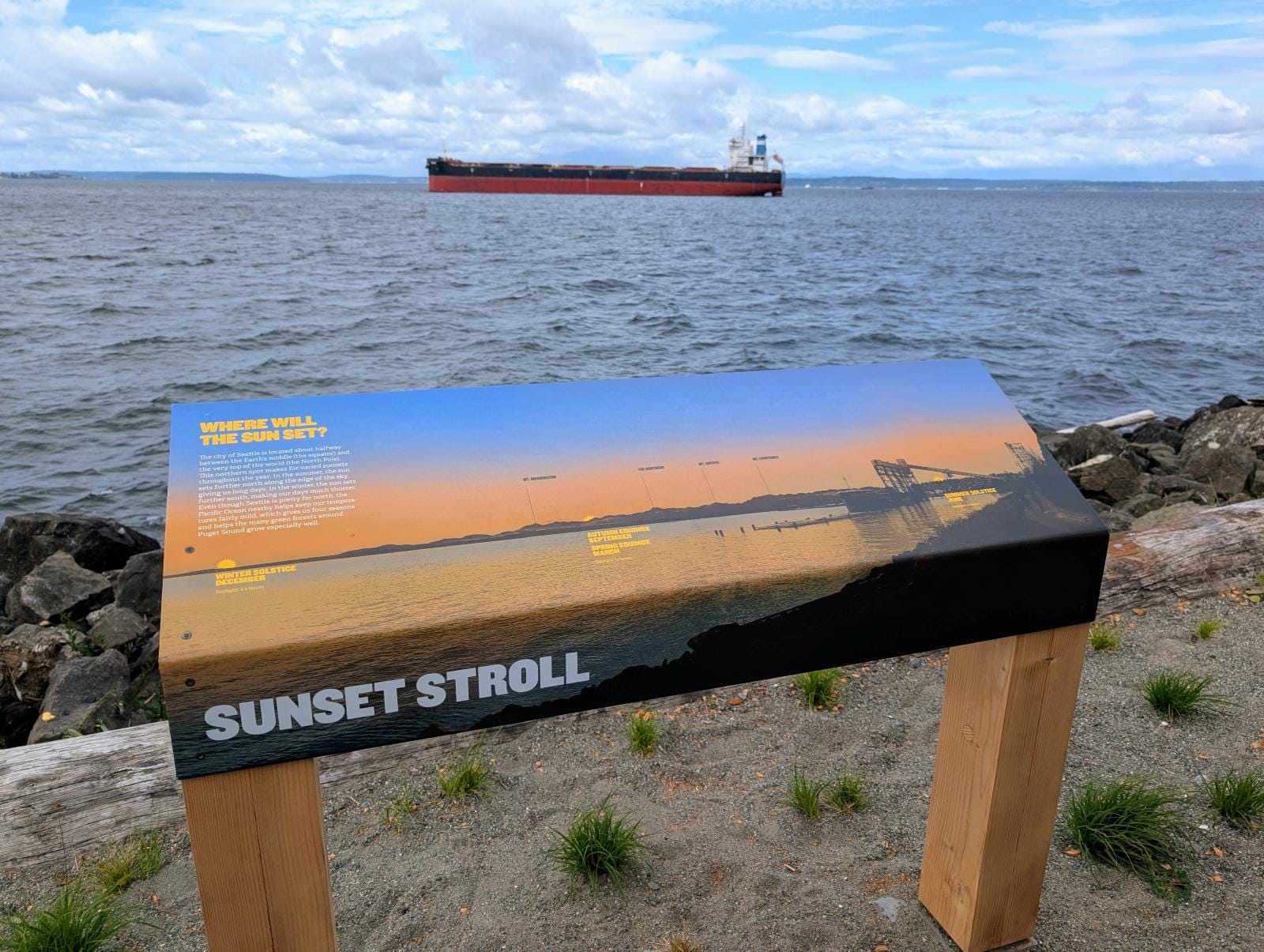
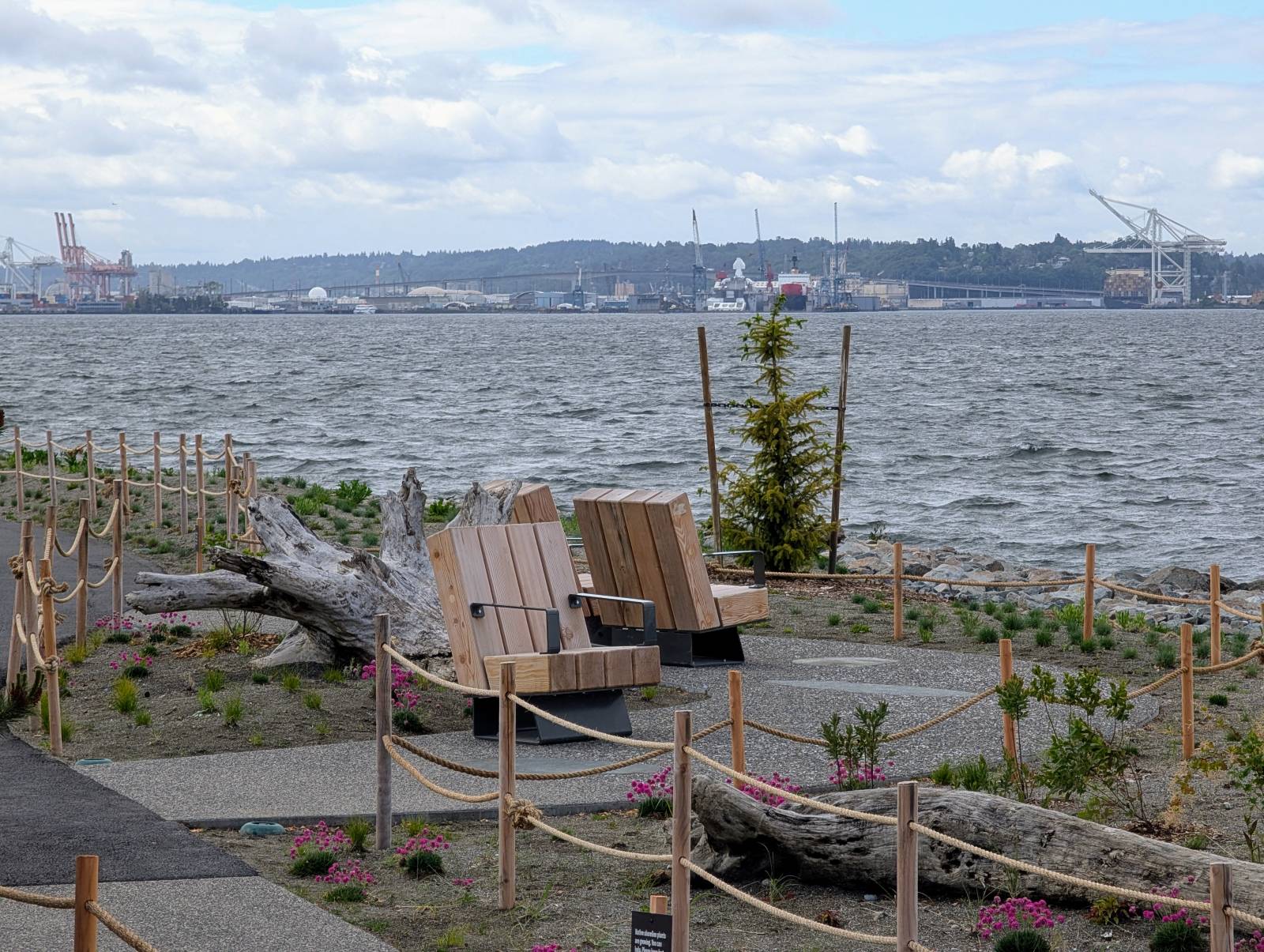
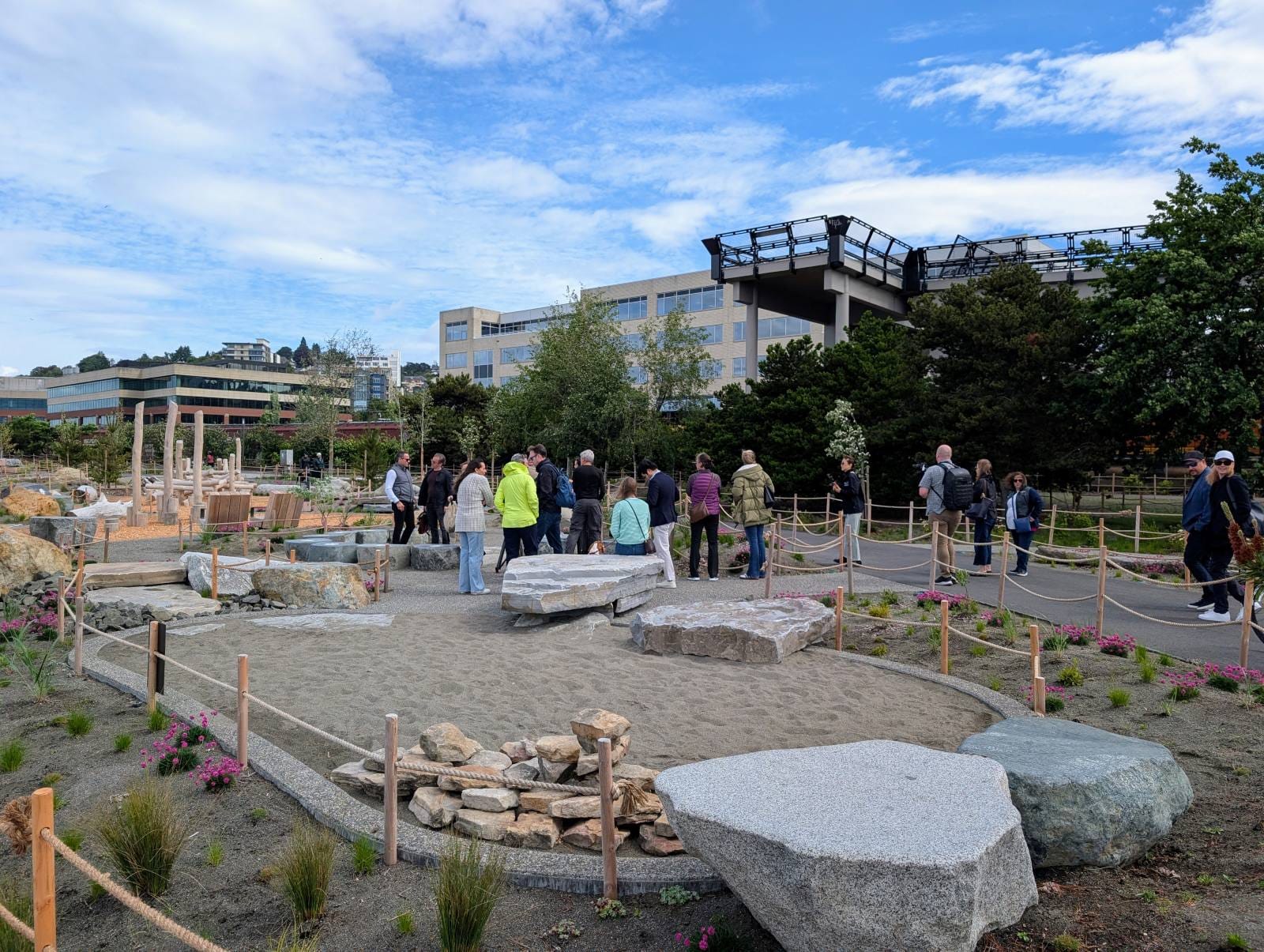
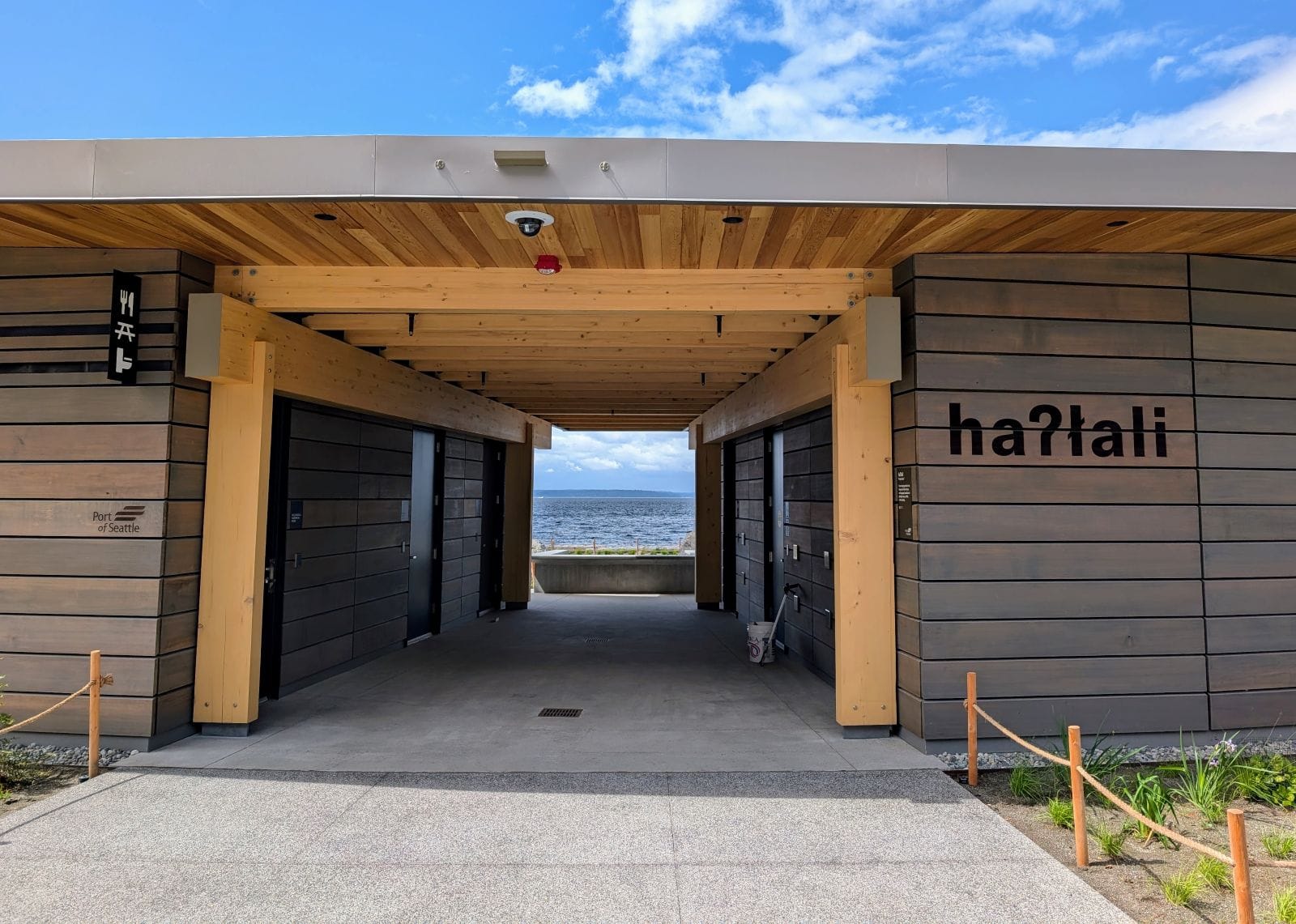
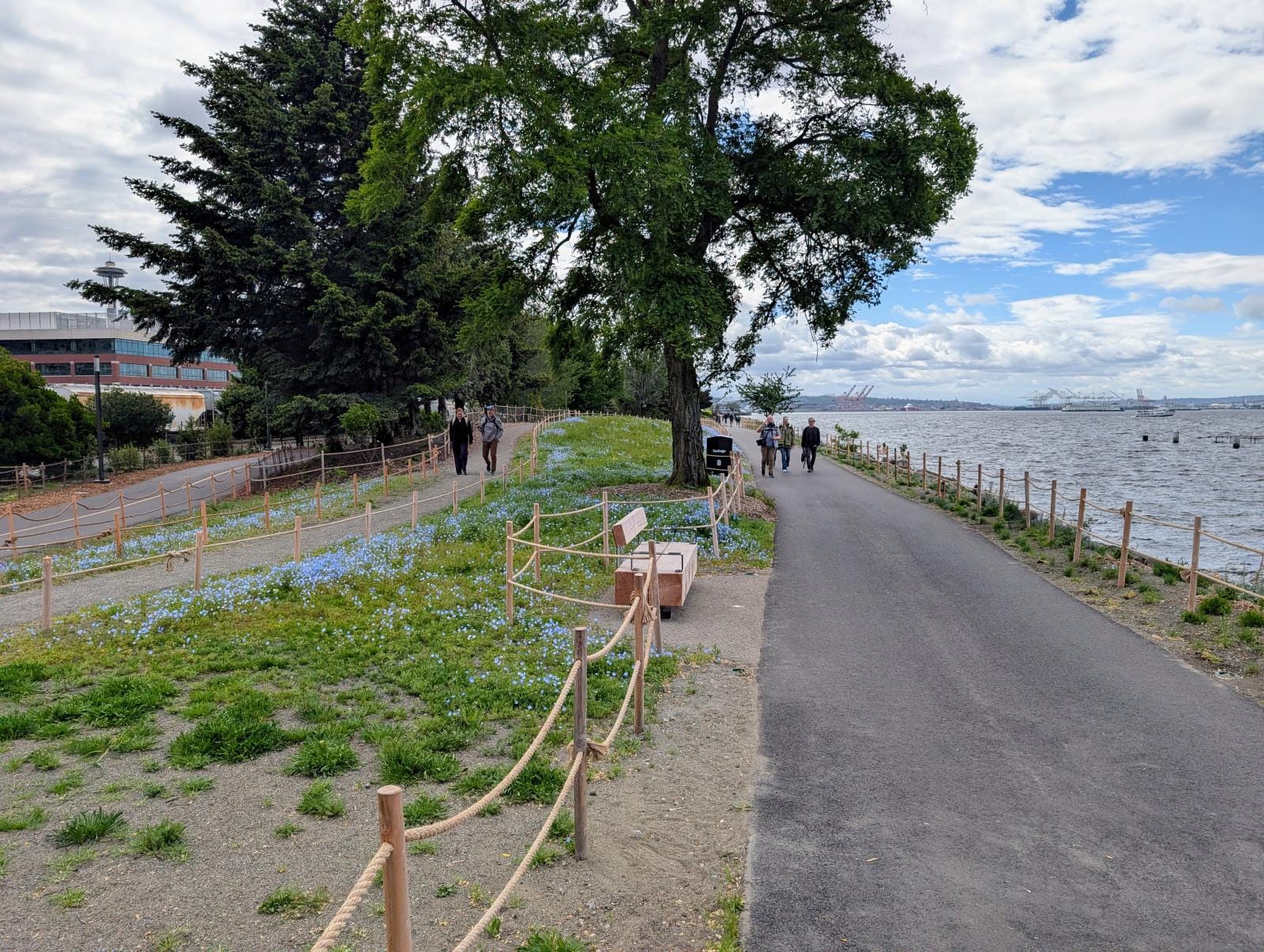
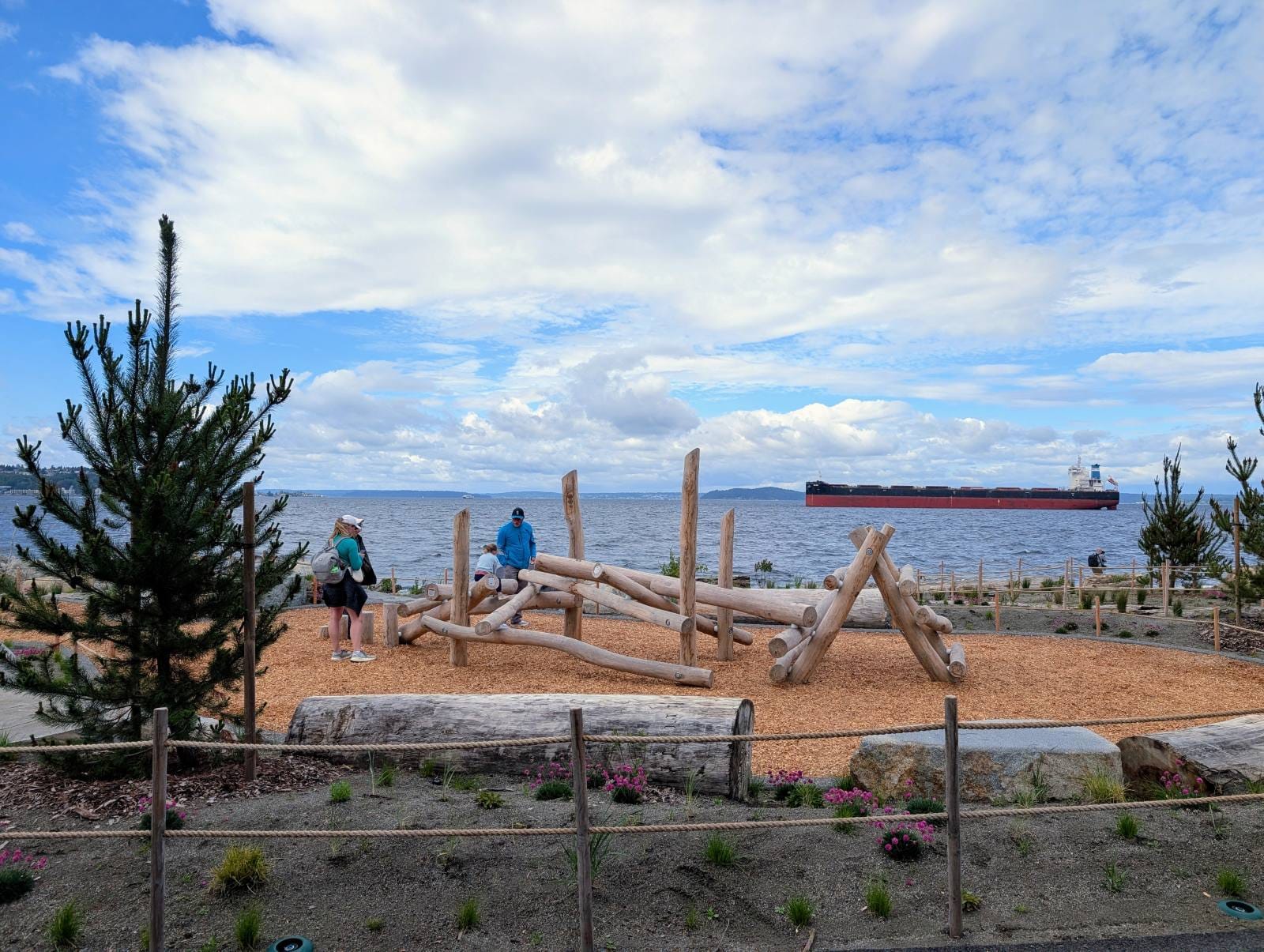
New features at Myrtle Edwards and Centennial Park make heavy use of native plants and wood. (Doug Trumm)
While the project was timed to be ready for the World Cup, the Downtown Seattle Association stressed they would be a long-lasting improvements for locals and visitors to enjoy for many decades.
"These improvements will dramatically change how Seattleites use the downtown waterfront," Scholes said. "The generous investments of private donors and the work of some terrific Seattle firms have transformed these spaces into areas to linger, recreate and enjoy, taking some of our amazing natural assets to another level with an impact that will be felt for generations to come."
Something to enjoy each season
That "this is bigger than the World Cup" mindset could end up being doubly important, with early signs pointing to a potential letdown as far as hopes for record-breaking tourism during the matches. Despite early projections for 750,000 visitors in Seattle for the World Cup, flight bookings to Washington state are down 20% and June hotel bookings are actually down 7% year over year, according to KUOW reporting.
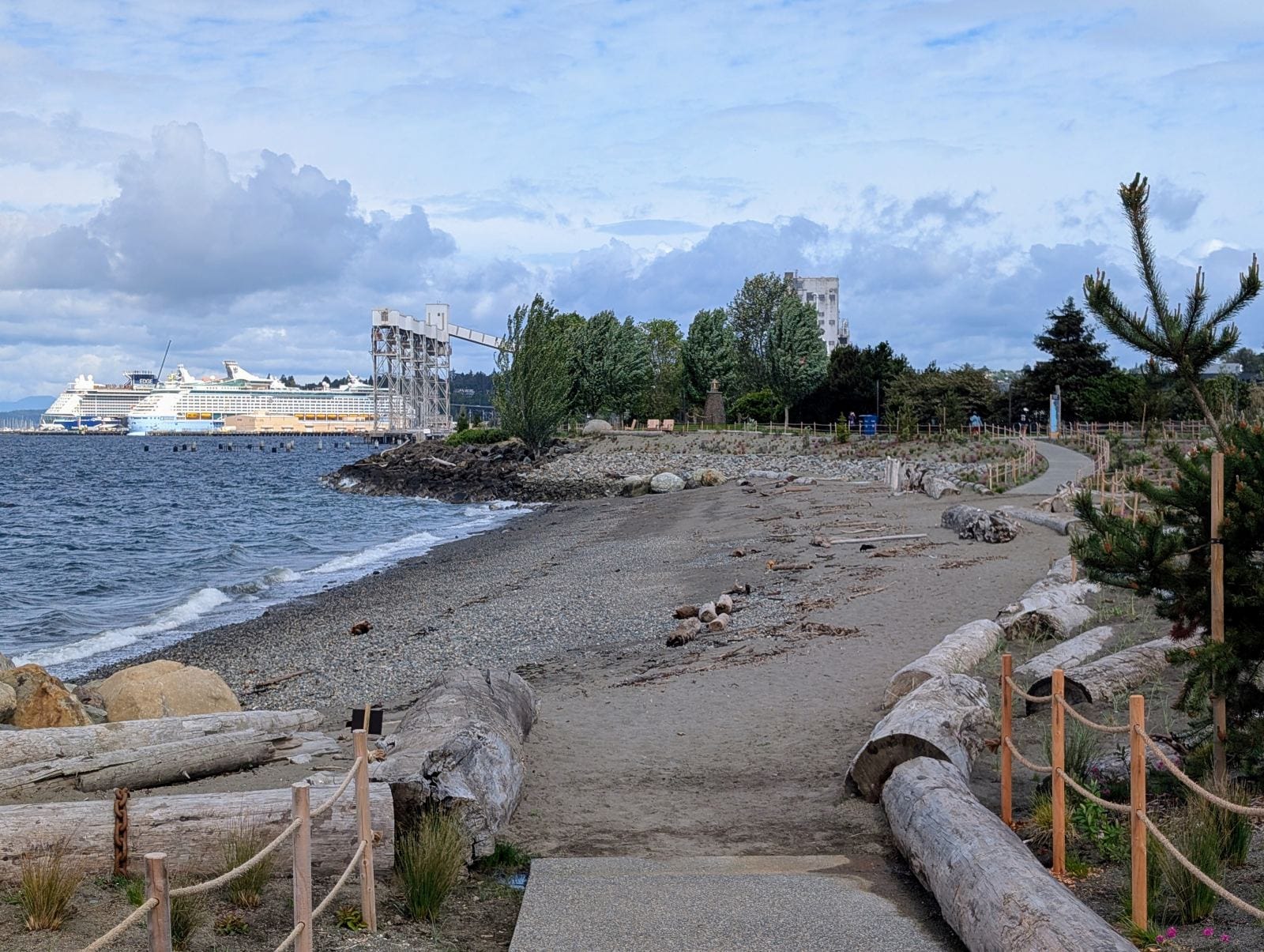
Even with the potential for international tourism to be lower than expected, the region is still gearing up to overcome traffic challenges and potentially gridlock, with special shuttles and augmented light rail, bus, and water taxi service.
A warm, clear, sunny day is probably be the ideal conditions to enjoy the new waterfront trail, which boasts sweeping views of the Olympic Mountains and Mount Tahoma (known also by its non-Indigenous name, Rainier). That said, some features are intended to shine in the rain that Seattle is famous for in the winter and spring. Prime among them is the rain screen flowing off the roof of the haʔłali building.
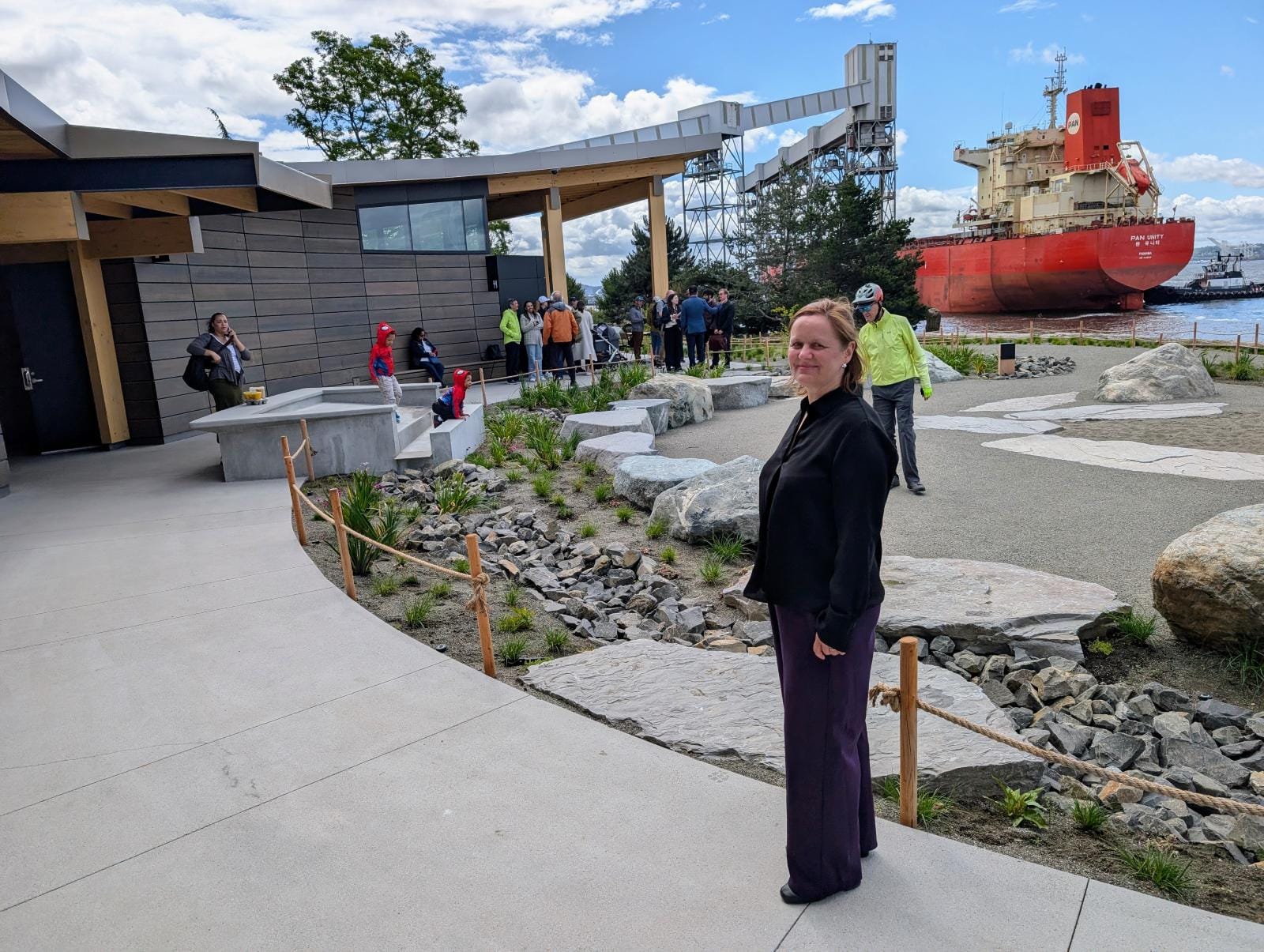
"It creates like a rain screen when it's pouring. It's a beautiful feature, and then it flows into this swale into that area over there," Rose said, pointing to rock beds above. "So, yes, it creates sort of a whole stormwater garden on that side of the building."
The building also provides a bevy of public bathrooms, which are in much better condition than the old cinderblock facility. These outdoor facilities join staffed restrooms along the central waterfront, and a pair of high-tech outdoor loos in Pioneer Square that are part of a yearlong pilot.
Improving a key bike connection
Overhauling the building also removed an infamous blind corner for people biking, rolling or walking on the Elliott Bay Trail, as the facility awkwardly hooked around the old building.
"The upgraded path through Myrtle Edwards and Centennial Parks is smoother, safer, and genuinely enjoyable — a transformed experience that welcomes all types of riders to discover the breathtaking beauty of the Seattle waterfront by bike," Cascade Bicycle Club executive director Lee Lambert said. "Whether you’re a seasoned commuter or a family out for a Sunday ride, this path was designed with everyone in mind. And the connectivity it unlocks is remarkable: this is a vital link in a network that stretches from West Seattle all the way across the region — through the Ship Canal Trail, onto the Burke-Gilman, and out the Sammamish River Trail to the Eastside."
The new sightlines are much improved, and the trail includes fewer unnecessary twists and turns and a smoother surface. The freshly upgraded trail will be a big draw for cyclists, scooters, joggers, and flaneurs this summer.
“We’re excited to see the revitalization of the Elliott Bay Trail, one of the most popular multi-use trails in Washington State," said Gordon Padelford, executive director of Seattle Street Alliance. "Trails and parks like this not only connect people walking, biking, scooting, and rolling to where they need to go, but enhance our quality of life, increase our health, and ground us in a sense of place. We encourage all Seattleites and visitors to go explore and experience the trail that now stretches from Interbay to Alki along the beautiful Elliott Bay.”
Will philanthropists fund more major public works?
Asked if he thought the public-private partnership model could be repeated on other public realm upgrades, DSA's Scholes said "absolutely," noting it been used other places around downtown and at Seattle Center's Memorial Stadium.
"I think there's a model here that we can leverage and do more of," Scholes said. "And at the end of the day, everybody benefits."
Less clear is if any other philanthropic groups have lined up funding in the ballpark of $56 million they'd be willing to invest for such a purpose, in order to operate again on a similar scale. No shortage of public asset candidates for upgrades exists – whether neglected or missing sections of other regional trails like the Burke-Gilman, Chief Sealth, or Interurban Trails – let alone bold proposals to lid the I-5 freeway downtown or in the U District, much more capital-intensive projects.
Building spiritual and ecological connections
Elliott Bay's overhauled 50 acres of public park space is sure to mean different things to different people, but one thing its Indigenous designers hope it can engender is a greater sense of interconnection with nature and an understanding of needing to live more harmoniously as part of a greater ecosystem.
"So it's subtle, but I don't want to kind of [say] 'oh, here we're claiming this territory,' It's all about sharing, because our whole idea is bringing Indigenous ways of knowing and Western knowledge together," Waugh said. "And recognizing we're all on this Earth together, and we have to find a new way to approach development, and one of them is like, let's put nature at the center of our value system, so that your plants, animals, trees, everything has the same value as us, rather than putting us at the center, and everybody serves us."
 Doug Trumm
 Doug Trumm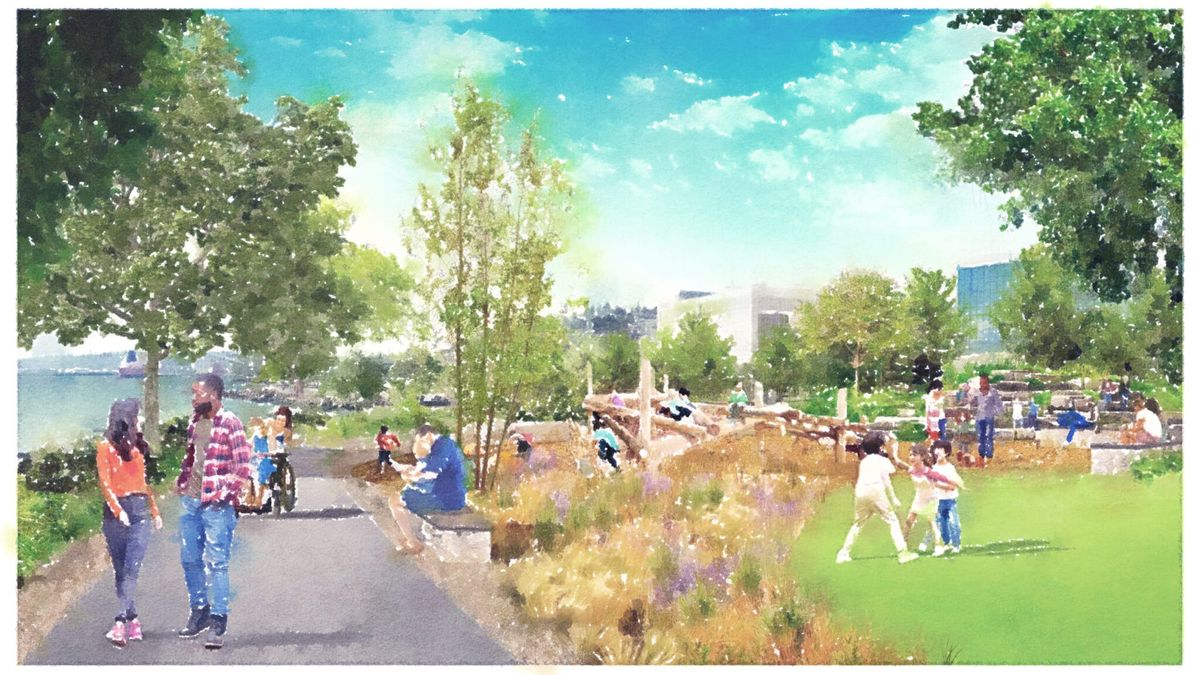
 Doug Trumm