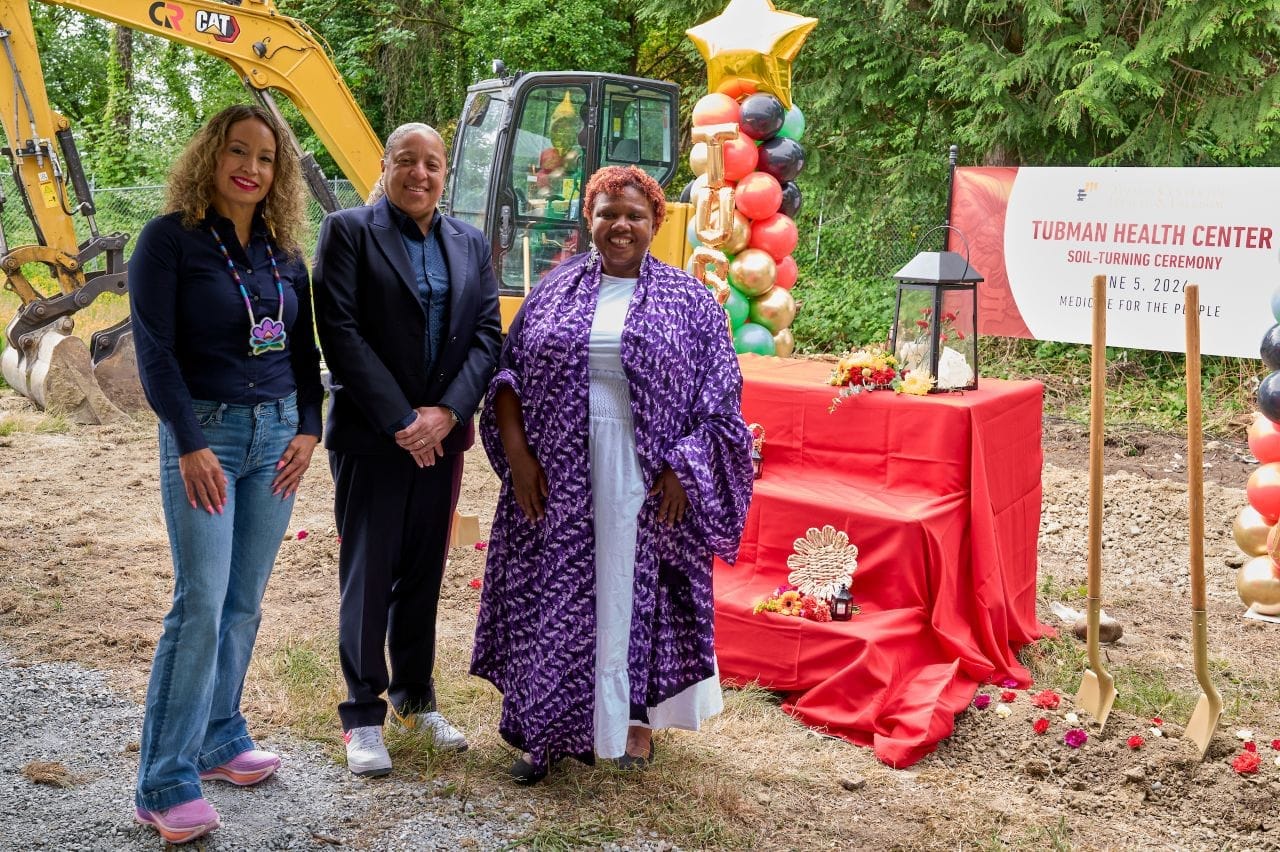
Last week, the Tubman Center for Health & Freedom held a soil-turning ceremony to celebrate the start of the first phase of construction of the new Tubman Health Center. With construction projected to be completed in 18 months, the 26,000-square-foot facility located in Seattle’s Rainier Beach neighborhood will serve 12,000 primary care patients annually with a new model that aims to empower people to be an integral part of their own healthcare.
Monisha Harrell, Lynnwood’s assistant city administrator and a community ambassador for Tubman Health, emceed the ceremony. (Harrell served as Seattle’s deputy mayor under her uncle Bruce Harrell from 2022 to 2023.)
“Now you've all heard of today being called our soil-turning rather than our groundbreaking, and that is because we're not breaking anything in Rainier Beach,” said Harrell. “A soil-turning says we are here to start this new chapter in relationship with the land, in relationship with one another, in relationship with the neighborhood. Today belongs to all of us.”
The Tubman Center for Health & Freedom was founded in 2020 by six Black, Native, and queer community members who recognized that healthcare as it currently existed wasn’t designed with marginalized people in mind. The founders had a vision for a healthcare model that was instead created for and informed by the community.
“The Tubman Health Center did not begin as a construction project,” said Carmen Davis, the organization’s board president. “It began as a response, a response to community saying we are worthy of health and freedom. As someone who has had the privilege of working closely with the Tubman Center for Health & Freedom. I have to say, if anyone was going to make this moment happen and this day happen, it was going to be this team and this organization. They are about that action, as we always say, what you see today is not a result of one minute. It is years of organizing, listening, advocating, innovating, relationship building, late nights, difficult conversations, bravery, and most of all, love for our people.”
In addition to providing health care, Tubman Health conducts community-driven research and engages in community organizing and policy advocacy, all done in service to the belief that physical wellbeing is deeply connected to the collective pursuit of liberation.
“Our name says everything about our purpose. Harriet Tubman was a well-known abolitionist, but she was also a healer and nurse in the Union Army,” said Dr. Peter Asante, the director of health services at Tubman Health. “She held both things at once: the work of liberation and the work of healing. We follow that same methodology. We address health and wellness from both systemic and clinical approaches because you can’t truly heal a community without also confronting the systems that make that community sick.”
Begun during the Covid-19 pandemic, Tubman Health first focused on pandemic response, from distributing appropriate personal protective equipment (PPE) to vaccinating Seattle’s Black and brown community.
The center engaged in a community design process that involved the founding of its Community Health Research Institute and incorporated more than 24,000 touchpoints from community members across the region.
Asante said that the research showed community members wanted health care that was less clinical and more interactive.
“What people told us was consistent and clear,” Asante said. “Community members want to feel seen. They want providers who come from their communities, who understand their cultural context, who don’t bring a set of assumptions and biases into the exam room. They want to be believed when they describe their symptoms. They want care that honors the full complexity of who they are, not just their diagnosis.”
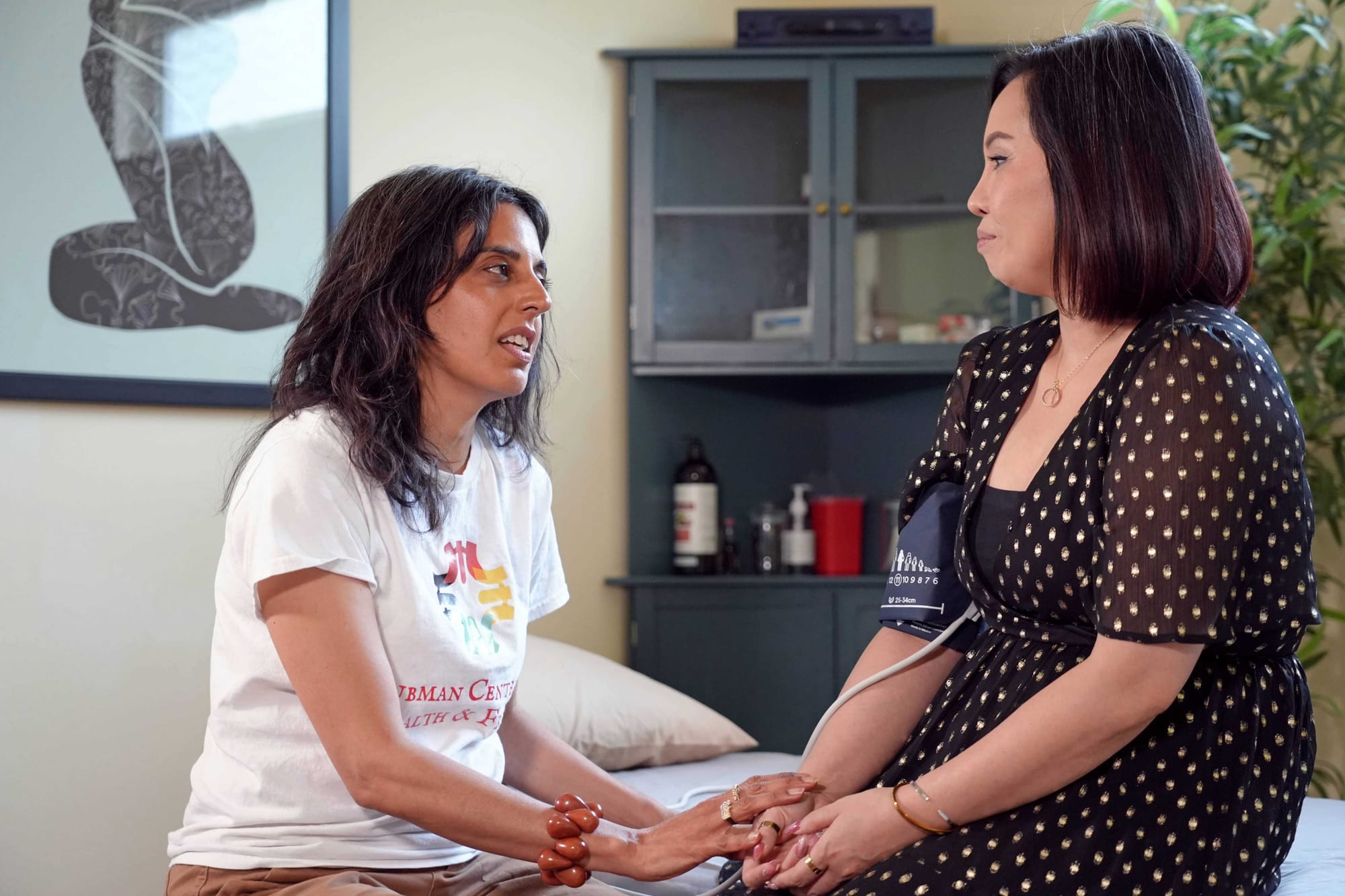
The research also found that people care about the physical setting in which they receive their health care: that it be safe and welcoming and incorporate natural elements.
The resulting healthcare model is one of integrative family medicine that combines modern Western medicine with wellness practices rooted in African, Indigenous, and other cultural traditions while centering patient dignity and trust.
Asante said Tubman Health is an abolitionist organization with non-negotiable guiding principles.
“We believe that in order to improve the health of the people, we must address social determinants of health by abolishing systems and practices that make us sick and replacing them with systems that actually work,” Asante said. “We reject White supremacy in all its forms, which means we actively interrupt racism, homophobia, ableism, sexism, xenophobia, and all other forms of oppression that show up in healthcare and in community life.”
In practice, these principles mean that the center offers an integrated model of care that encompasses primary and preventive care, behavioral health care, community resources, social services, political education, and advocacy. The center employs people who look like the patients they serve, with the goal of meeting patients with affirmation instead of dismissal. Treatment addresses the social, economic, and environmental conditions of patients as well as their specific medical ailments and symptoms.
Tubman Health was founded in part because its founders were tired of losing their loved ones to medical neglect and dismissal, Asante told The Urbanist.
“Medical racism and sexism continue to shape the care people receive every day, and that has resulted in the erosion of trust and the delaying of critical care,” Asante said. “The effects of that permeate through society. When we talk about higher rates of chronic illnesses and poorer health outcomes, we are also talking about a legacy of historical trauma and ongoing racism that impacts every facet of our lives.”
Tubman Health’s progress
Tubman Health is already putting its principles into practice. The organization started piloting their model of care by opening the Freedom Clinic, a school-based health center at Rainier Valley Leadership Academy. Then, in 2024, the center opened the Healing House, a small community clinic in the Rainier Valley. Both sites are operating near capacity.
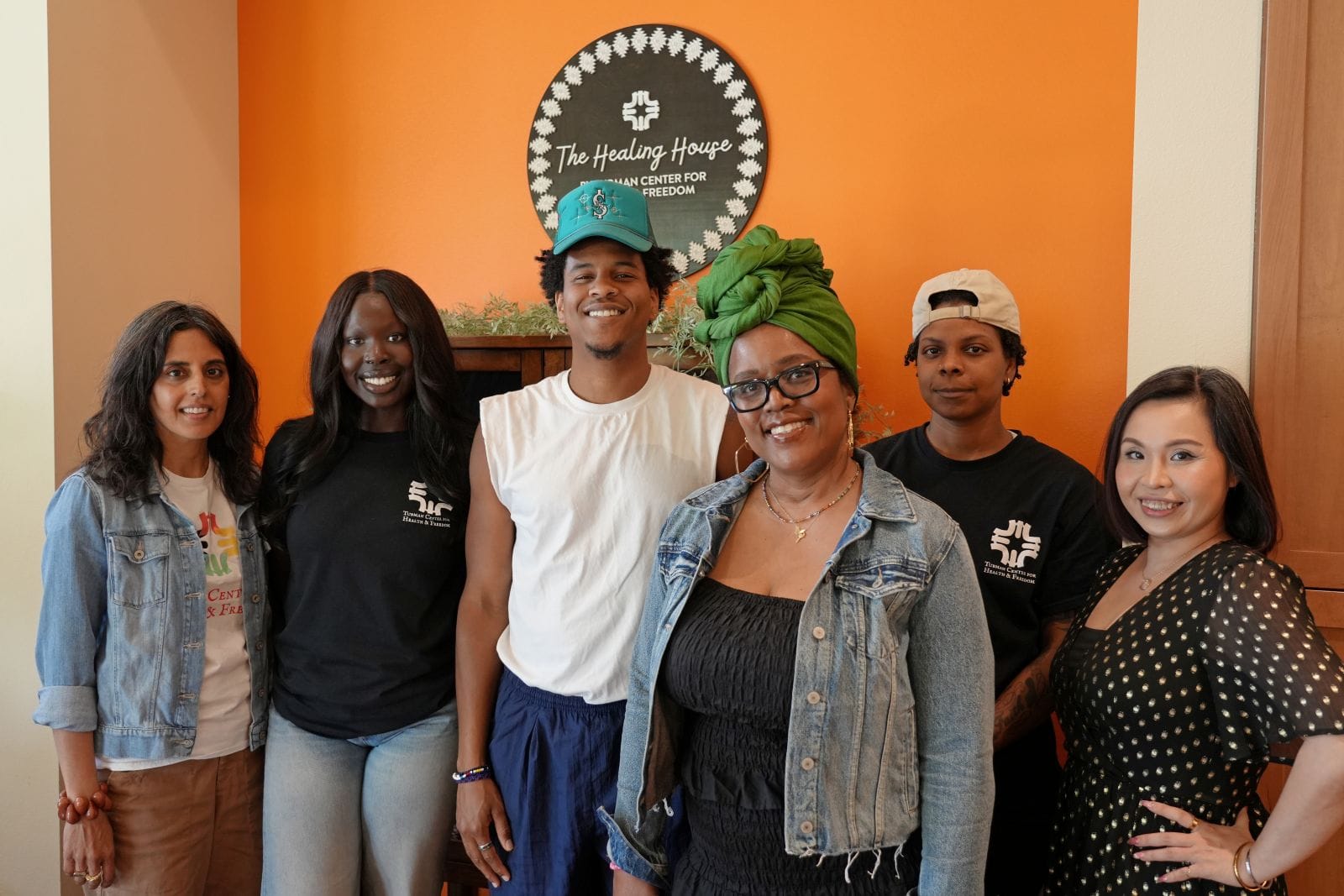
Later this summer, Tubman Health is launching their Black Elders Wellness program, which will provide the Seattle-King County Aging & Disability Services’ services for Black elders. The program will augment current services with primary care, visiting nursing services, mental health therapy, acupuncture, and massage therapy. Participants will also have access to Tubman Health's community programming as well as the Tubman Guides, who are personal healthcare advocates who help patients navigate their care.
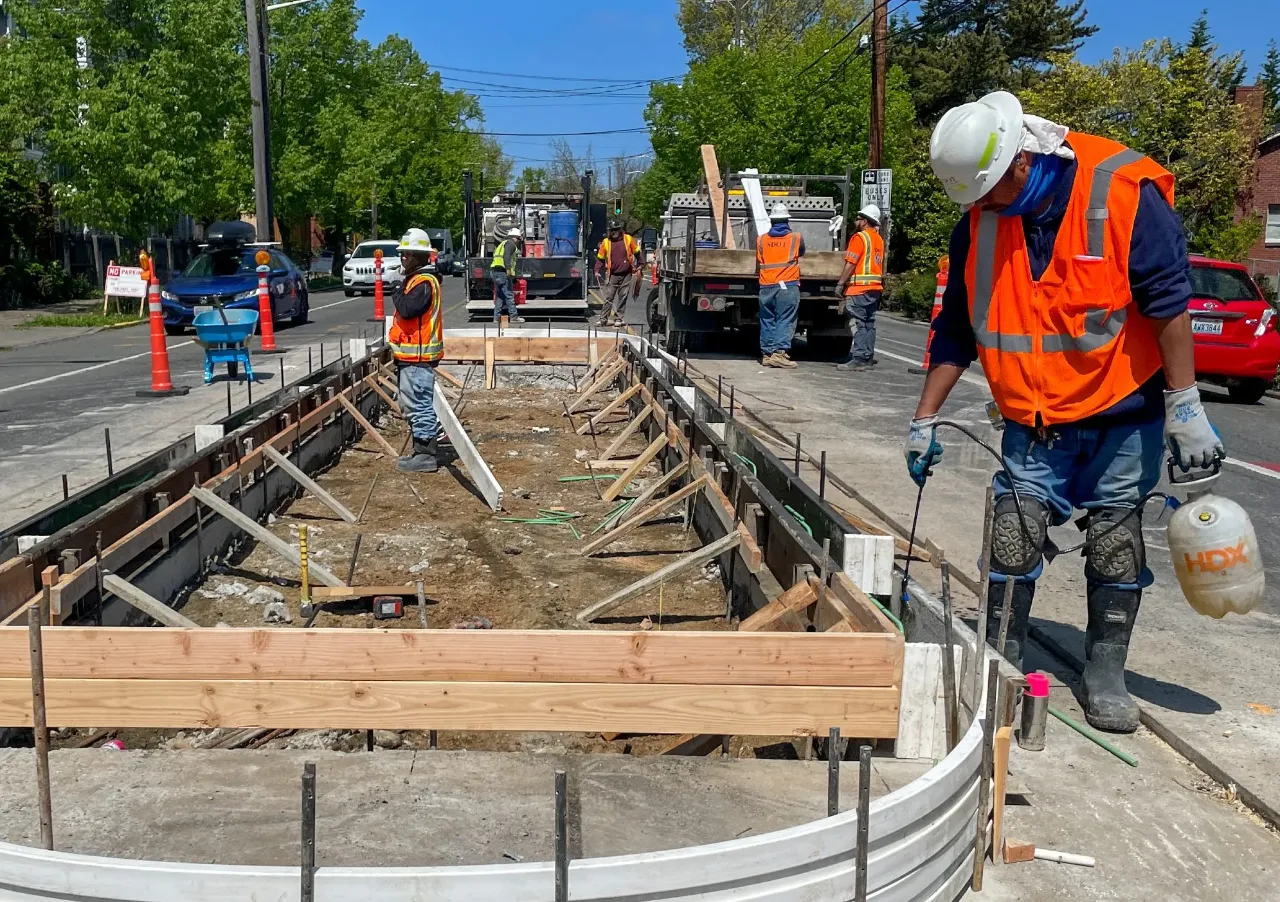
The June 5 ceremony officially marked the start of construction for Tubman Health’s much larger center within walking distance of the Rainier Beach light rail station. The facility is expected to open in winter 2027.
In addition to primary care and access to the Tubman Guides, the new health center will provide other services that community members have asked for: acupuncture, massage therapy, a grab-and-go café and community gathering courtyard, an apothecary providing access to herbal medicine, a hydrotherapy spa, and physical therapy and movement as medicine. A mammography and ultrasound suite will allow patients to receive affirming health care while receiving a type of cancer screening that can often be uncomfortable or even traumatic.
In addition, Tubman Health will offer a variety of community gathering opportunities, including cooking classes, group therapy, and cultural activities, in order to more fully integrate community into the healing process.
Asante sees these offerings as integral for making patients feel welcomed and celebrated instead of simply processed by an unfeeling system.
“When Black and brown patients come to us and we offer care that draws on traditions they recognize — that might remind them of what their ancestors used, or what they’ve always known in their body — that is healing in a way that a standard clinical encounter often is not,” Asante said. “It signals respect. It communicates that we see the whole person and their preferences for how they would like to seek the state of wellness. Beyond cultural affirmation, integrative medicine simply produces better outcomes for many conditions.”
At the soil-turning, Nacala Ayele, the founding board chair and a current patient of Tubman Health, thanked the Duwamish Tribe for coming to bless the new center and spoke about the quality of care she has already been receiving.
“My doctor is a brilliant Black woman who partners with me in my health care, and it is exactly the care that we envisioned when we started and that the community asked for,” Ayala said.
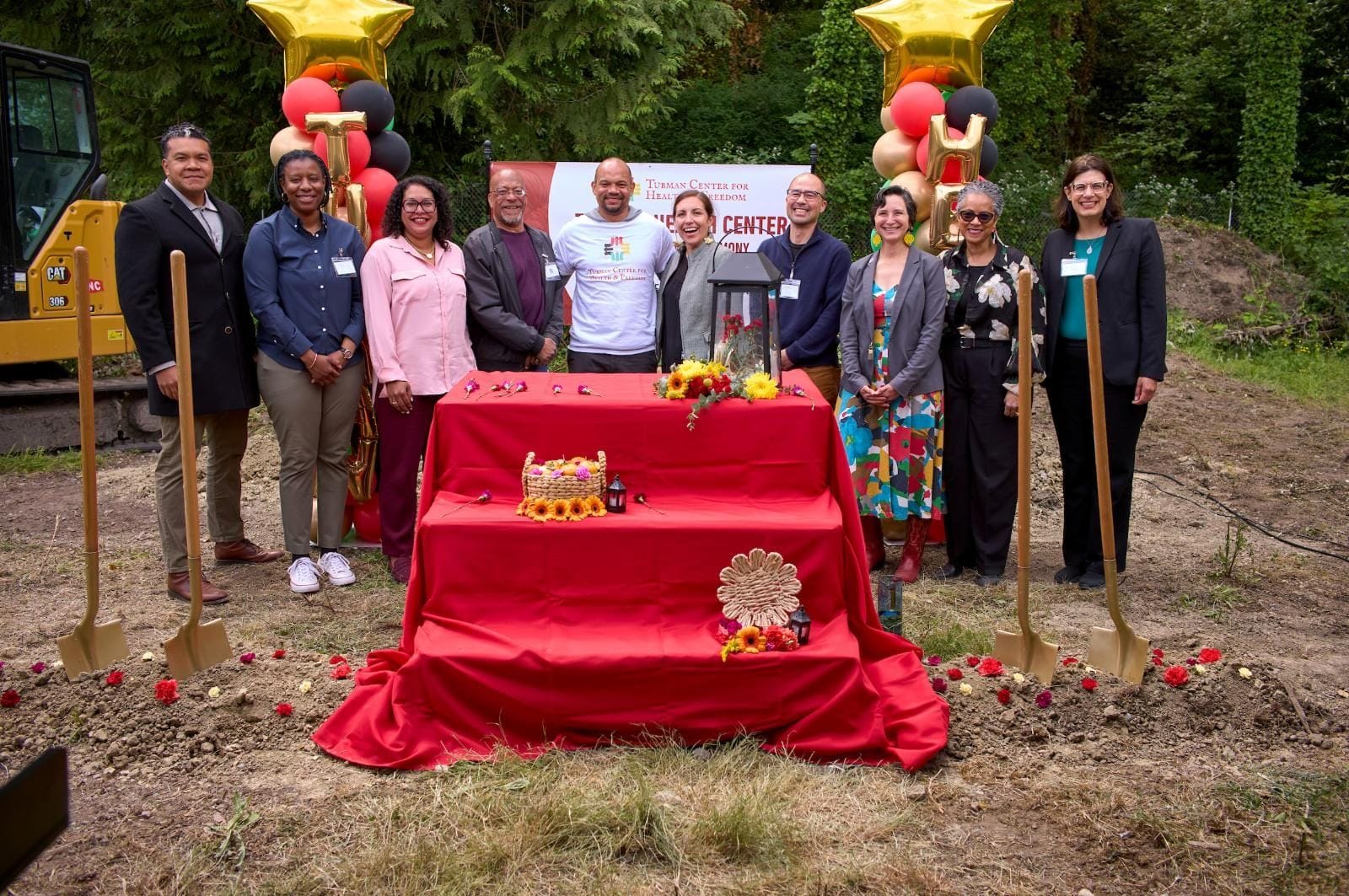
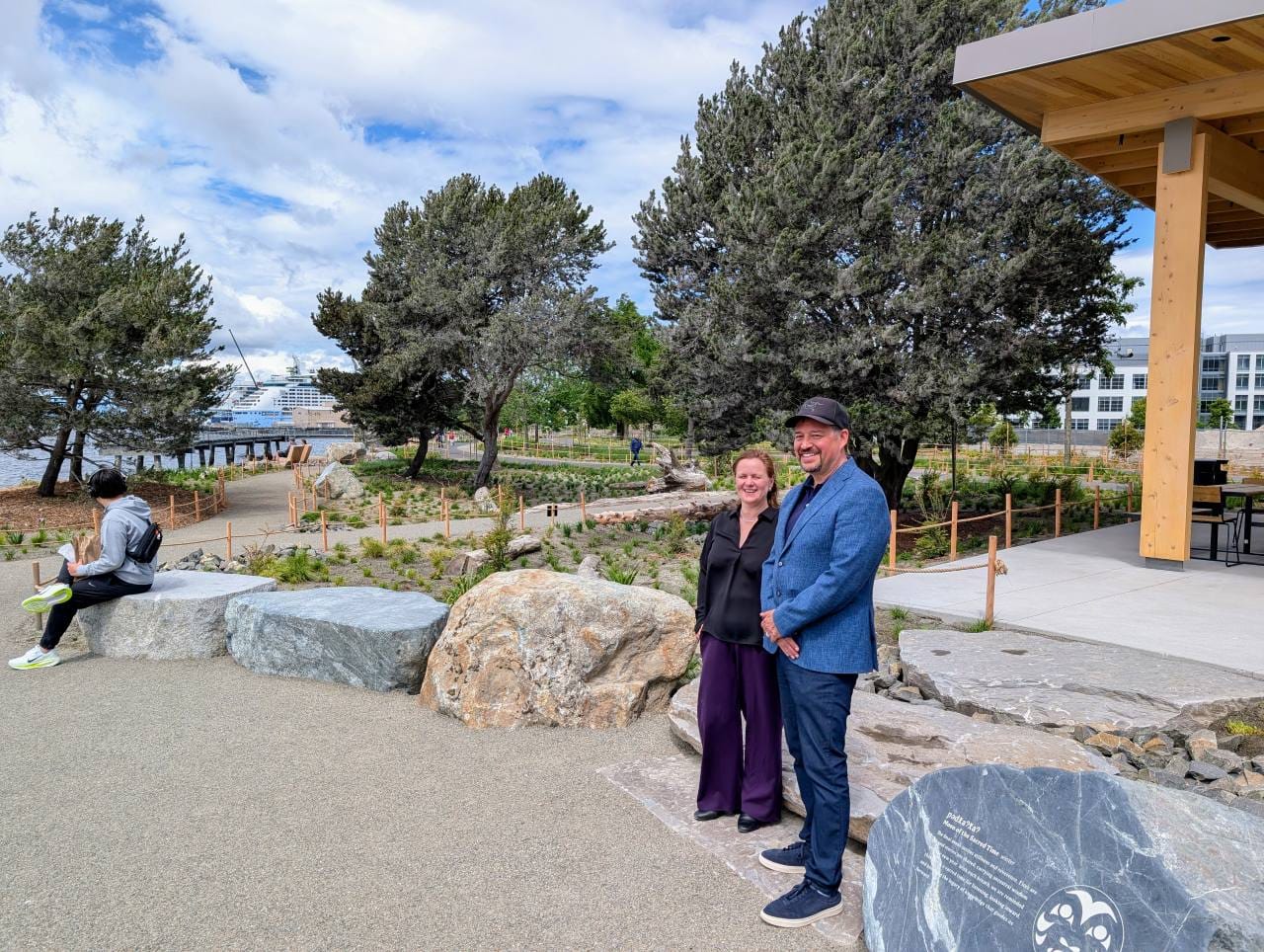
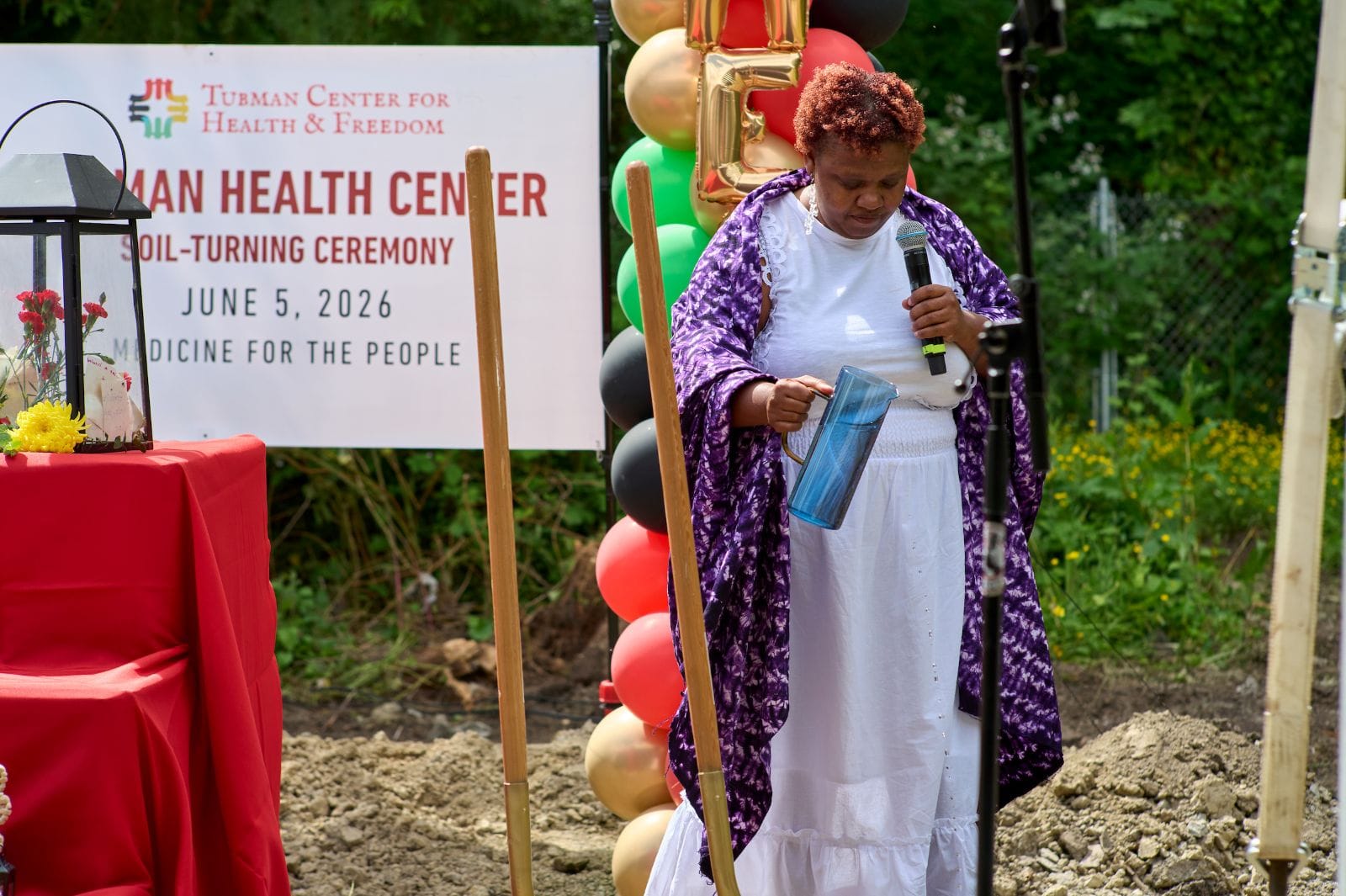
Ayala conducted a libations ceremony to honor the ancestors, followed by the soil-turning that set intentions for the new center being built. Elected officials including King County Councilmembers Teresa Mosqueda and Rhonda Lewis, Seattle City Councilmembers Joy Hollingsworth and Eddie Lin, and Washington state legislators Rebecca Saldaña, Chipalo Street, Nicole Macri, and Brianna Thomas put flowers on an altar as an offering to the soil to support the dream of the center.
Tubman Health accepts most health insurance plans, and they plan to provide a sliding fee scale for people who are un- or under-insured. The new center includes additional revenue streams for the organization, including the café and the hydrotherapy spa, that will help them offer more uncompensated care, a looming reality as health insurance premiums continue to skyrocket and the impacts of last year’s federal cuts to Medicaid take shape.
Meanwhile, Tubman Health has secured over $34 million in funding towards the total $42 million cost to construct the new center. Funders include the State of Washington, King County, and the City of Seattle, along with community members and philanthropic partners. Just last week, the City of Seattle announced that its Equitable Development Initiative (EDI) will be providing more funding to Tubman Health, as they are now ready to move on to the next phase of the project.
Harrell brought up how quickly Tubman Health has been able to realize their vision.
“This is six years later. This is what we can do when we put our energies together,” Harrell said. “We don't have to wait lifetimes. We don't have to wait generations to get what we deserve when we work together. This was a need we felt. We knew that it had to come forward, and today is the day we turn the soil to build that.”
The final $8 million to complete construction is still being actively raised through the Campaign for Health & Freedom, which accepts individual donations as well as cultivating philanthropic partnerships.
Correction: Nacala Ayele's name was misspelled in the original version. We regret the error.
 Amy Sundberg