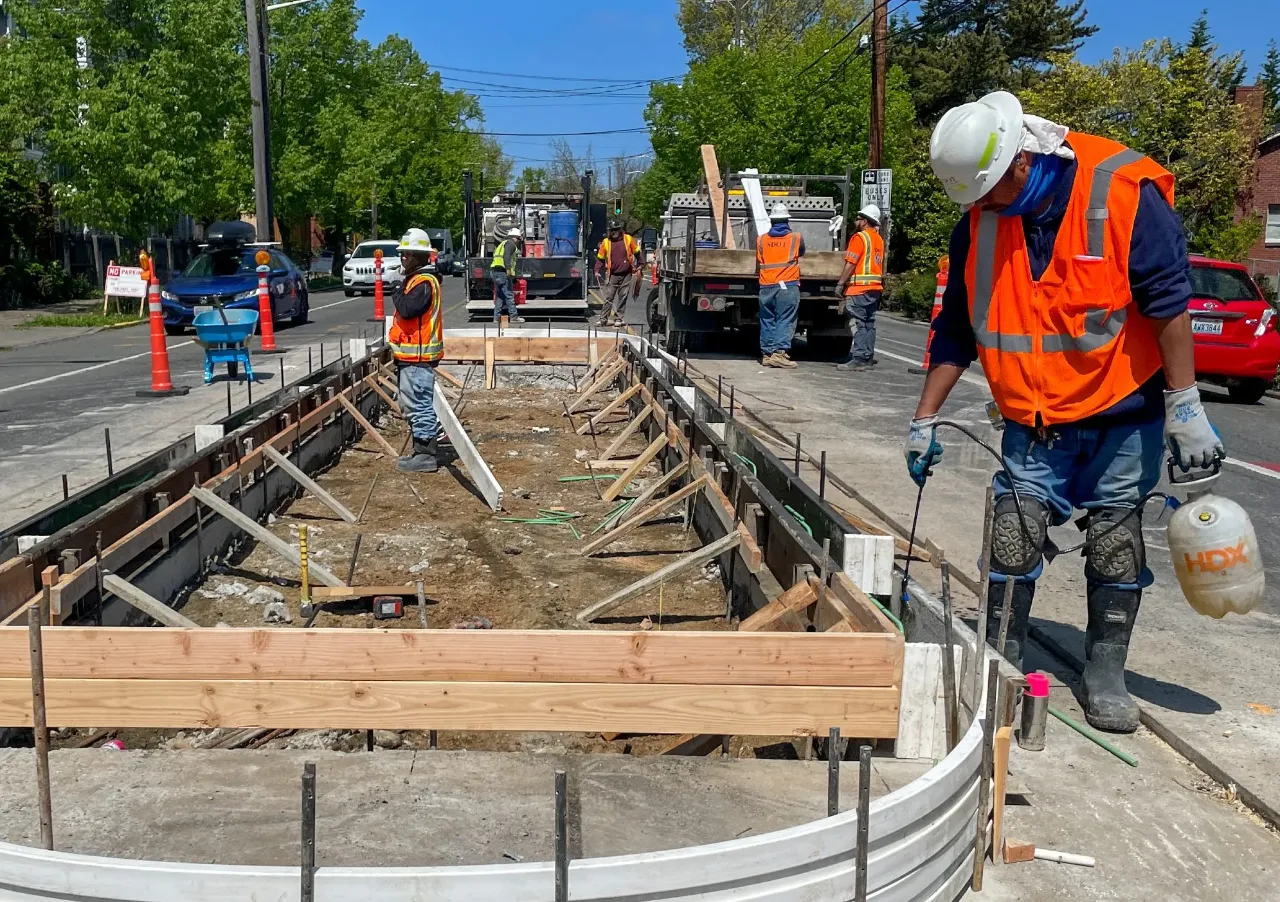
Seattle elected officials are pushing back on an expected King County provision that could result in the city losing out on millions of dollars in funding annually. The 0.1% countywide sales tax proposal would fund transportation investments across the county – although potentially shortchanging Seattle – pending the results of a vote of the King County Council scheduled Friday.
The 0.1% tax hike is being implemented via King County's transportation benefit district with a board made up of all nine King County Councilmembers. It is largely intended to fund the county's unincorporated roads.
King County's road network totals around 1,500 miles and has been underfunded for years with deferred maintenance piling up, even before last year's record-breaking flooding that caused significant damage. Even with acute needs in rural areas, elected officials across King County's cities have been asking for a cut of the new funding stream. A program creating a 12.5% "pass-through" mechanism is expected to make it into the final package.
Tucked into a proposed amendment from County Councilmember Steffanie Fain, who represents South King County, is a 15% cap on the amount any individual city can receive in that new program – a cap that only impacts the City of Seattle, which accounts for around 38% of the county's incorporated population.
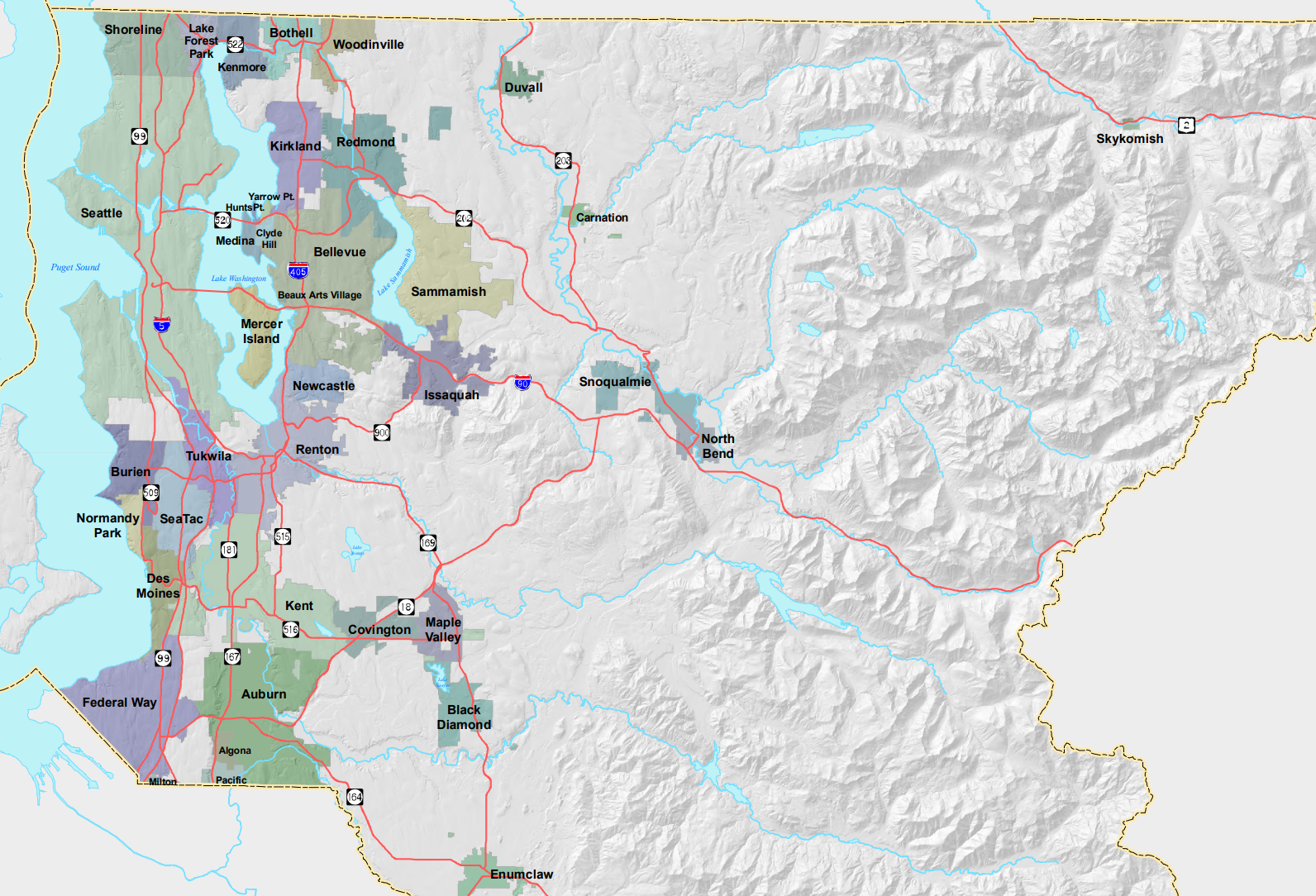
The funds Seattle would have otherwise received are poised be redistributed to the county's other 38 cities, which range in size from 158,000-resident Bellevue to 165-resident Skykomish. Unused funds could potentially return to King County roads. A $10,000 minimum distribution would provide even more funding for those very small cities.
County Councilmember Jorge Barón, who represents Northwest Seattle, has been the strongest voice pushing back on such a cap, but a letter approved Tuesday by eight members of the Seattle City Council backs Barón up in that fight. The letter was written and put forward by citywide councilmember Alexis Mercedes Rinck, vice-chair of the council's transportation committee.
"As King County considers new revenue options for funding roads maintenance in unincorporated King County, a focus on affordability and equity is critical. Passthrough dollars to cities is a good start, but the proposal to cap that funding and restrict how it can be spent is not acceptable nor equitable," the letter states. "We ask that King County Council consider removing the binding cap that solely impacts City of Seattle."
The letter notes that according to analysis completed by City staff, the amount Seattle is poised to receive annually would drop from $4.8 million to $1.9 million, with that funding disproportionately shifting to smaller jurisdictions on the Eastside. Many of those cities and towns have extremely high median incomes, but also have limited tax bases due to limited commercial activity and a low appetite for ballot measures to fund public services.
(You can check out which amounts different cities would receive under different potential allocations here.)
"[C]ities like Hunts Point, Yarrow Point, Beaux Arts Village, and others would receive a disproportionately high amount of pass-through funding per capita," the letter continues. "And the redistribution of Seattle’s sales tax dollars won’t go to the small cities that need this funding most, like Skykomish and Carnation; these dollars will go to medium and large cities such as Redmond, Kirkland, and Sammamish."
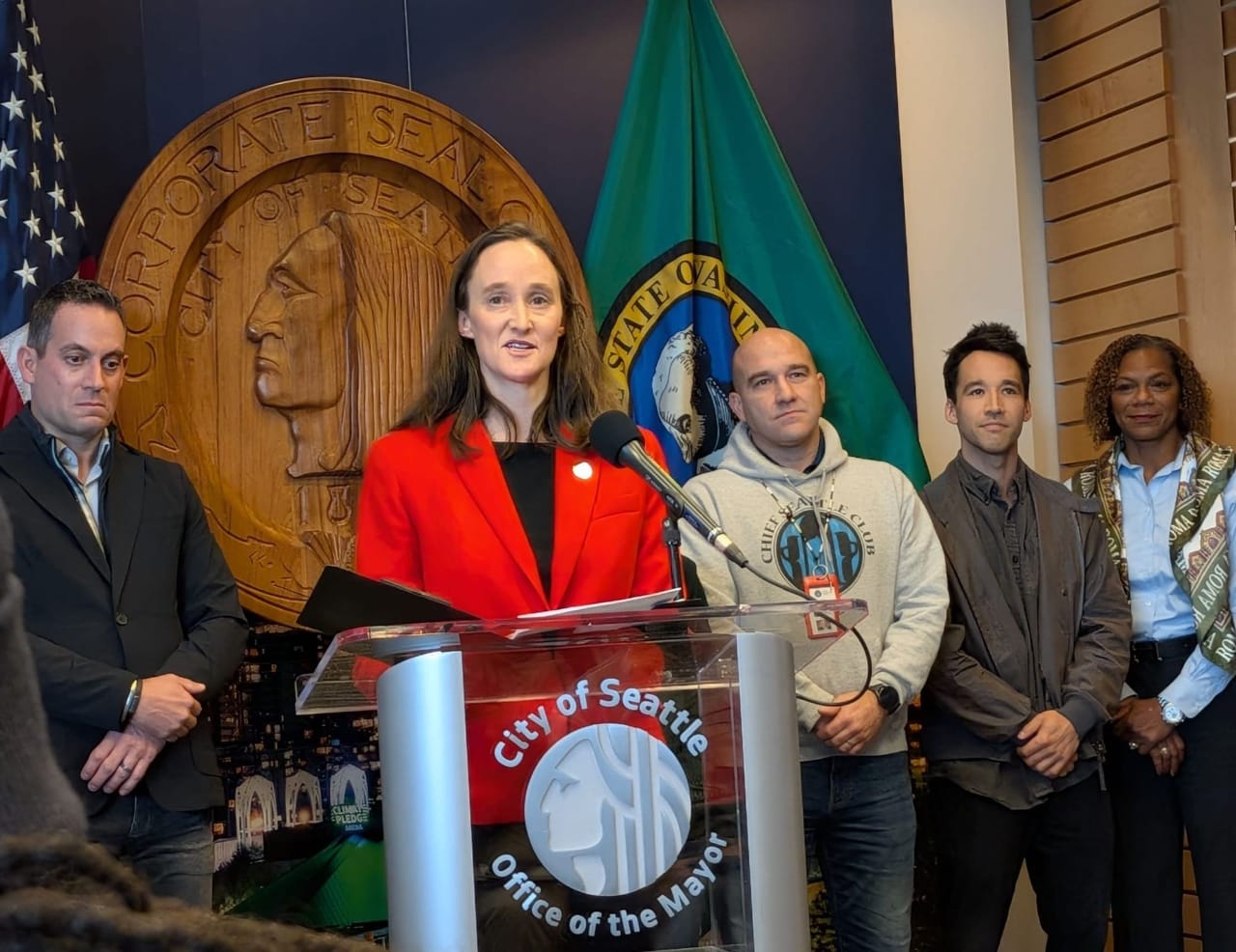
The City of Seattle is considering its own sales tax measure right now, to replace the expiring Seattle Transit Measure, providing supplemental funding to run bus service within the city on top of what King County Metro provides among other transit-related programs. Mayor Katie Wilson's proposed renewal has been getting considerable attention for doubling the existing rate from 0.15% to 0.3%, potentially overshadowing its benefits, including 100,000 more bus trips per year.
The county's measure, meanwhile, has flown under the radar; unlike the city measure, it would not actually go to voters for approval.
"For our residents and businesses to be singled out to receive less is unacceptable," Councilmember Eddie Lin said in signing onto the letter Tuesday. "This would be millions of dollars, and I believe that would be millions of dollars each year that we would be losing out on. There's just no policy reason, there's no reason for us to be treated this way. So I think it's important for us to send a strong message to our county colleagues and to other regional partners that we deserve to be treated equitably, and this revenue is very much needed."
Even if all county councilmembers who represent different areas of Seattle oppose the cap at a Friday vote, one vote from outside the city will still be needed from the five councilmembers who represent districts outside the city. Claudia Balducci, the transportation district board's current chair who represents many of those Eastside cities but no unincorporated areas, may ultimately be the deciding vote.
Councilmember Rhonda Lewis, who represents a major swath of the city from Ravenna to Rainier Beach but also Skyway, has signaled support for a cap, and Teresa Mosqueda – representing West Seattle but also Vashon Island and Burien – has been less open about where she stands.
Councilmember Rod Dembowski, who represents Northeast Seattle but also Shoreline, Lake Forest Park, Kenmore, and parts of Kirkland, told The Urbanist late last month that he doesn't support any cap. Dembowski said that he saw a cap as punitive, a fact that could trickle down to other areas of regional policymaking.
"I hope that there will be no cap, given that the city, I think, puts in north of 40% of the receipts here," Dembowski said. "We've got to work together as a region. If you zero out a particular part of our county, you may get away with it on one vote, you know, because you can power through, but I think it has implications for working together."
Seattle Councilmember Bob Kettle, who did not sign onto the letter but nonetheless aligned himself with its message, seemed to underline Dembowski's concerns that the move could engender animosity between the city and the county in his comments Tuesday.
"This is a very important issue," Kettle said. "To be blunt, it's shortsighted on the part of the King County Council. If you want to go down the route [of] looking at what pays what and this kind of thing, they'll find that Seattle is basically subsidizing in a lot of areas of King County."
Late Wednesday one of Seattle's largest transportation advocacy groups, the Seattle Street Alliance, jumped into the fray and started pushing back on the idea of a cap.
"Siphoning nearly $3 million of regressive sales tax from Seattleites to subsidize building roads in wealthy suburbs like Medina, Bellevue, Yarrow Point, and Beaux Arts is unacceptable," the group's newly created action alert stated. "I understand the need to find funding for road maintenance in unincorporated King County, and that the King County Council has limited funding options available to it. But to use Seattle sales tax to subsidize wealthy suburbs instead of places that need it the most is deeply troubling,"
Another potential fight on Friday has to do with how cities can use their pass-through funding. Fain's initial amendment would have prevented the use of those dollars for transit service, essentially barring local governments from using transportation benefit district revenue in the way that Seattle does and which is permitted under state law. Last month, Balducci had put forward an alternate proposal that would have allowed broader use of the funds.
"I think Councilmember Fain was trying to manage some complex negotiations with other councilmembers and folks, and that's the best she could do, and I think she's made progress," Dembowski told The Urbanist. "But I'm more aligned with, I think, Councilmember Balducci's vision of: just pass it through, use it for anything that the law allows."
If this measure is approved and Seattle voters sign onto the Seattle Transit Measure renewal, the city's sales tax rate will rise to 10.8% on January 1. But, between the two hikes, the direct benefits to the typical Seattle city resident will be vastly different, especially if the 15% cap stays in place.
The King County Transportation District meets this Friday at 1pm. As a special-purpose government distinct from the County Council, there would be no second chance for amendments after a final vote, and no opportunity for County Executive Girmay Zahilay to veto the measure.
 Ryan Packer
 Ryan Packer