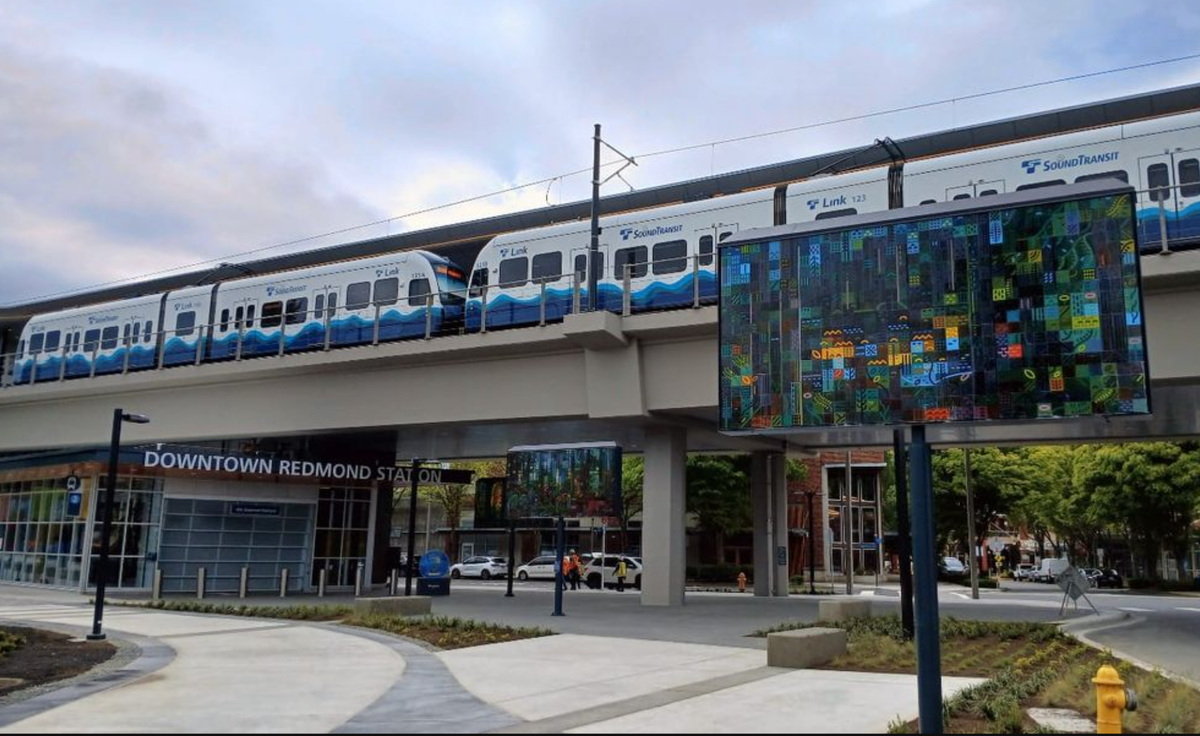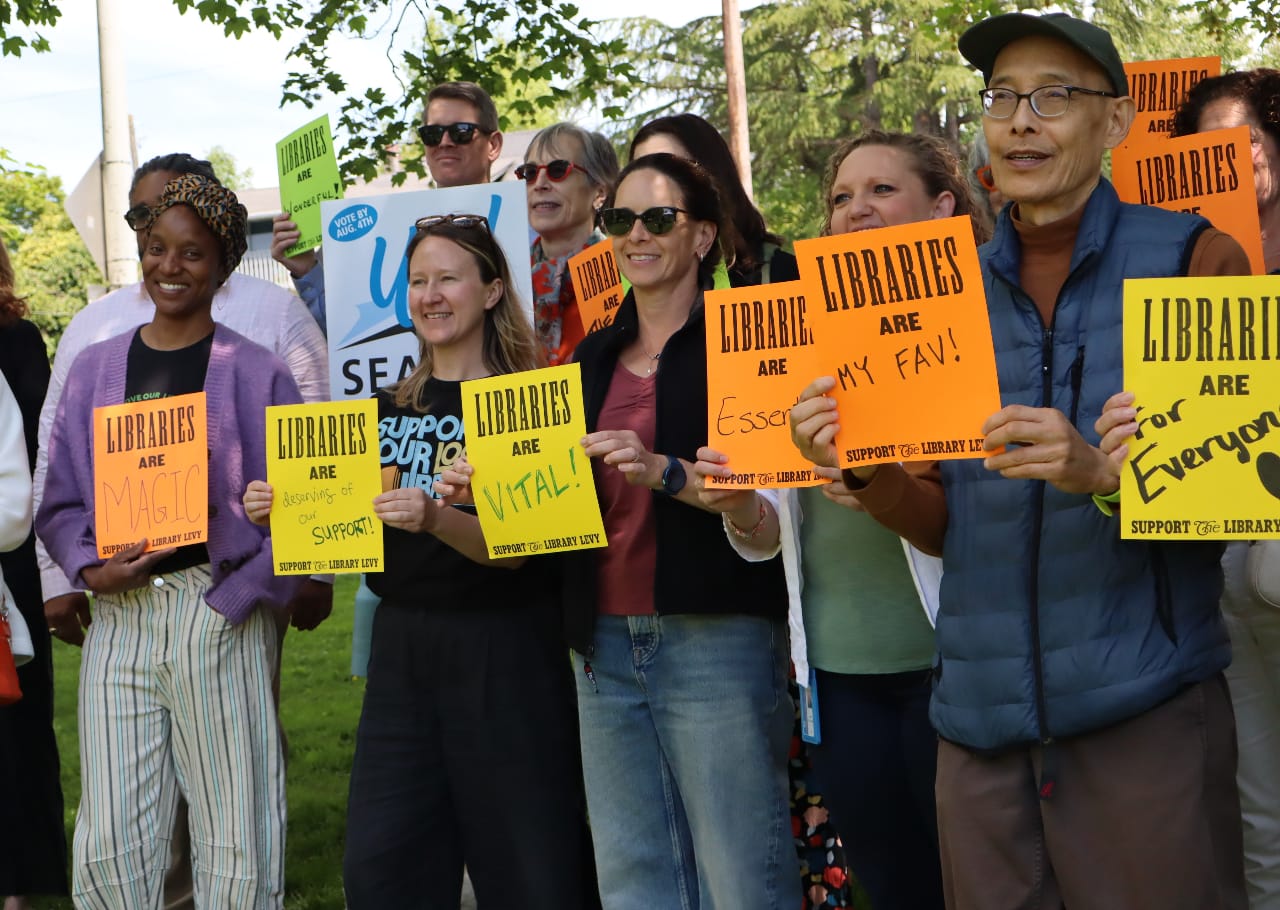
Seattle Mayor Katie Wilson unveiled a proposal to renew Seattle's expiring transit funding measure on Tuesday, charting a path to increased frequencies on buses in every corner of the city via additional investment in King County Metro. The current 0.15% sales tax rate approved by voters in 2020 as the Seattle Transit Measure (STM) would be doubled to 0.3%, the maximum amount a city can charge via a transportation benefit district under state law. The renewal, if approved this fall, would extend for 10 years, though 2036.
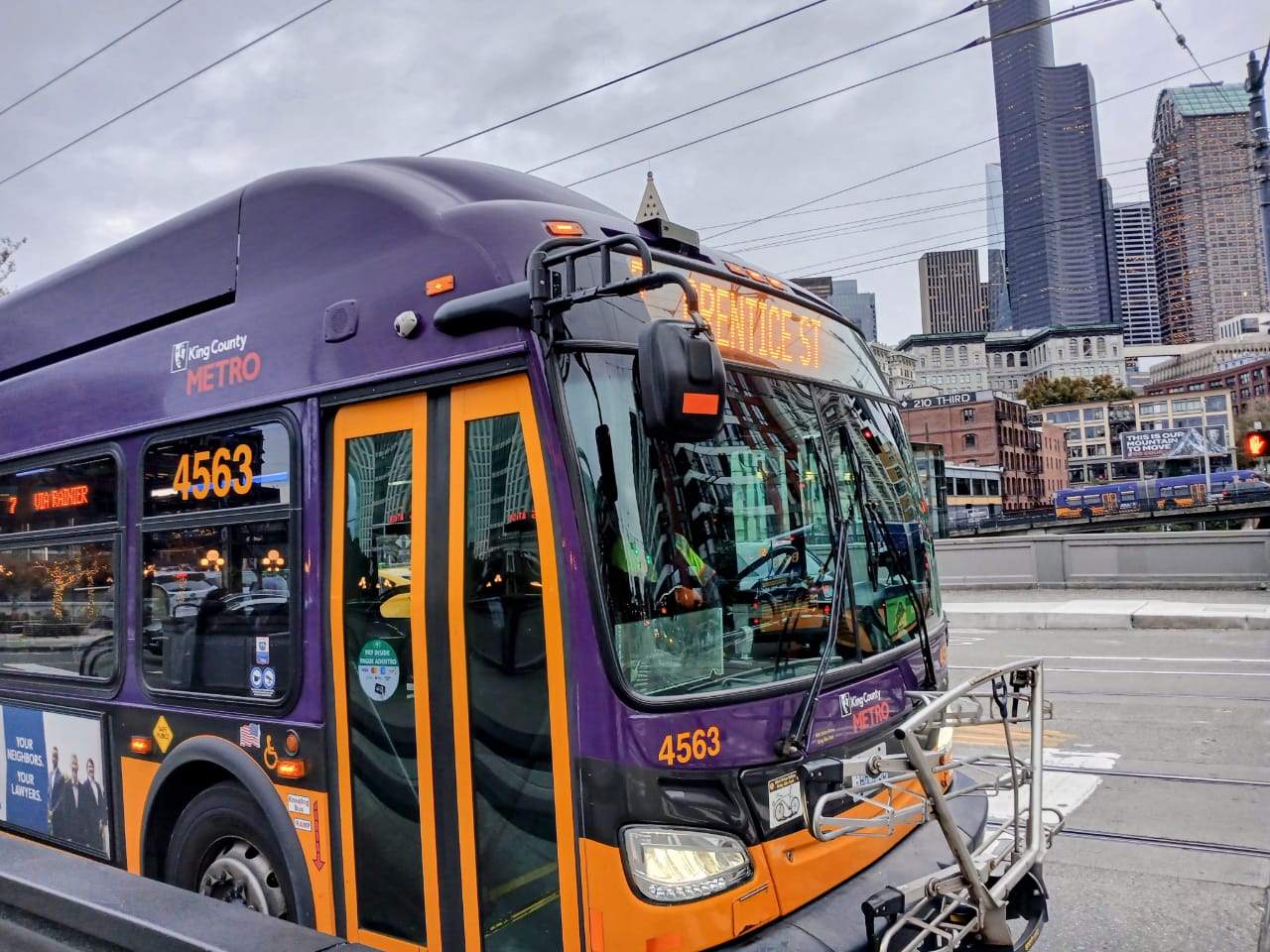
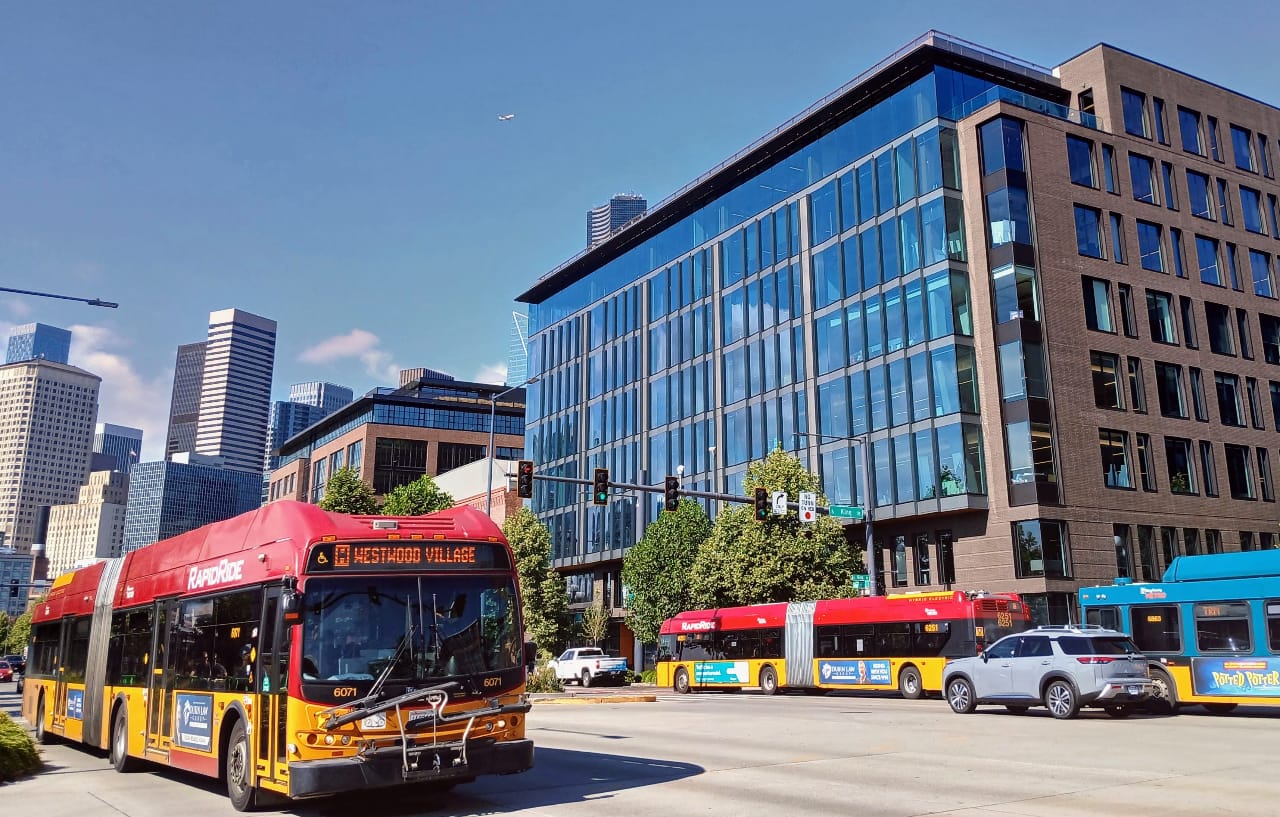
With the added funding, Seattle expects to ramp up current supplemental service at King County Metro from approximately 176,000 hours per year to 280,000. The City hasn't had the ability to provide that much additional transit service since 2018, and those additional service hours are poised to allow dozens of routes to operate more regularly, particularly during off-peak periods like nights and weekends.
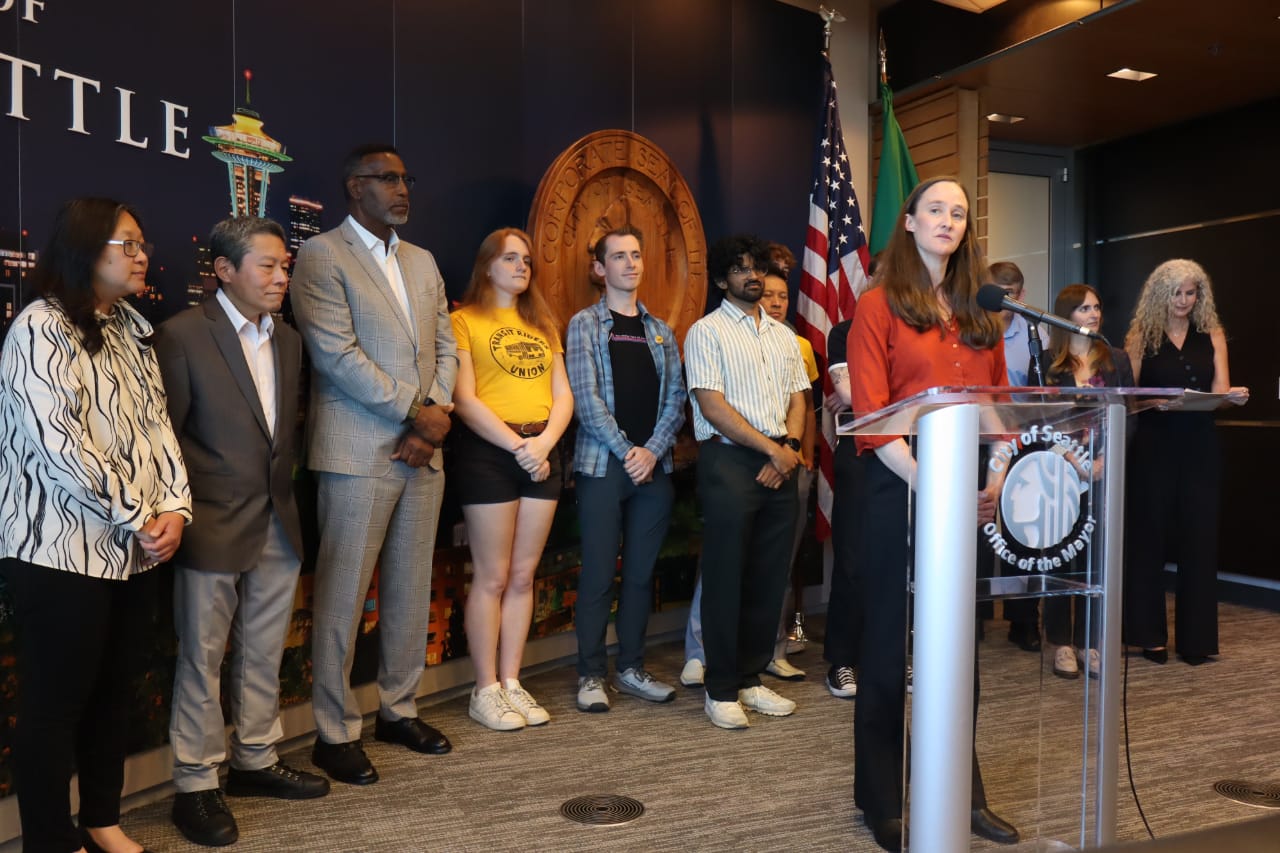
"When transit is frequent, reliable, and affordable, it does more than move people from one place to another. It gives people freedom. It gives families choices," Wilson said in rolling out the proposal. "It helps workers reach opportunity, and it helps students to build their future. It helps seniors stay independent, and it helps more people stay in the city they love."
The current 0.15% STM raises around $50 million per year, with around 40% of those dollars going directly to King County Metro. The remaining dollars are used to fund physical improvements to Seattle roads that help transit riders, like bus lanes or bus stop upgrades, free ORCA passes for residents in subsidized housing, and to subsidize operations for the Seattle Streetcar. With this renewal, the direct investment in bus service would ramp up to close to 70%.
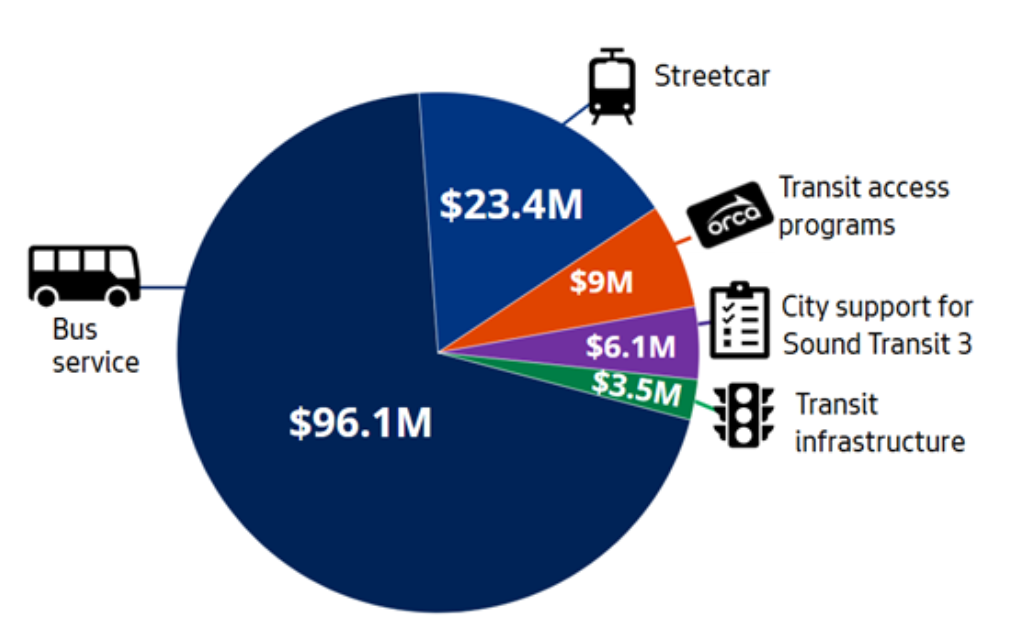
When the 2020 measure was approved, some of the funding categories were set broadly due to uncertainty around the future of transit service. An "emerging mobility needs" category was added, partly in response to the emergency closure of the West Seattle Bridge that spring, and the categories were broadened even further by Mayor Bruce Harrell in 2024 to allow the city to spend STM revenue on planning work for Seattle's Sound Transit 3 projects. An operator shortage at Metro ultimately proved to be a backstop on how much funding could be put into service hours, but the agency in a significantly better place today when it comes to its workforce.
Thanks to renegotiation work between Metro and Seattle, the number of free ORCA cards made available will more than double from around 10,000 residents to 22,000 without a commensurate increase in City contributions.
"We are focused on making investments where they can make the biggest difference, especially in neighborhoods where people rely on transit the most, and in places where Seattle is planning for an increase in homes and jobs," Interim Seattle Department of Transportation (SDOT) Director Angela Brady said. "I want to also recognize that transit service is only as strong as the streets it runs on. That is why work on transit priority, bus stop improvements, signal upgrades, and targeted capital projects are so, so important. These are practical behind-the-scenes improvements, but for riders, they can mean a bus that comes more often, a connection that is safer, a trip that feels more reliable, or a commute that is that no longer requires a car."
Preemptively responding to concerns around tacking on yet another increase to Seattle's sales tax, already one of the nation's highest, Wilson framed the benefits to Seattle residents as outweighing the added costs. The funding tools available to cities through their transportation benefit districts are rigidly prescribed, with a potential $50 car tab fee the only lever available that the city could have turned to here – a sticky political issue given issues with the car tab-funded Sound Transit 3 ballot measure right now.
"That is why better transit is also an affordability strategy," Wilson said. "Transportation is one of the biggest costs in a household budget, and most of that cost comes from owning a car, gas, insurance, repairs, parking, monthly payments, and maintenance all add up fast. So, when we make our transit system better, we make it possible for more households to live car free or car life, and that could put hundreds or thousands of dollars back into a family's budget, that is real affordability."
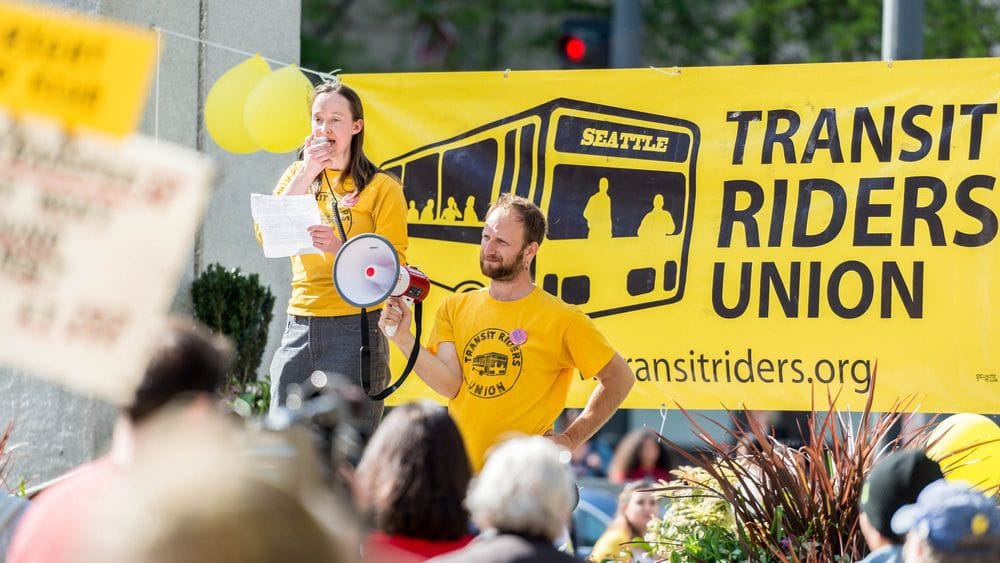
Putting forward a renewal to the Seattle Transit Measure is clearly a big deal for Wilson. In 2011, she helped to launch the "Save Our Metro!" campaign to push back against potential service cuts at King County Metro in the wake of the Great Recession. After securing temporary relief in the form of a $20 car tab increase, Wilson went on to co-found the Transit Riders Union (TRU) along with her husband Scott Myers. After playing a pivotal role in the creation of a low-income fare at Metro in 2014, TRU helped to pass the 2014 Seattle Transportation Benefit District (STBD) later that year – after voters outside Seattle rejected the idea of a countywide transit funding measure.
The measure announced today is set to be the third iteration of that 2014 funding source. When Mayor Jenny Durkan announced the renewal of the STBD in 2020, she proposed keeping the 0.1% sales tax rate and dropping an attached car tab fee, a move that would have scaled it back. It was Council President Lorena González who proposed to increase it to 0.15%, a move that directly led to additional buses plying Seattle's streets today.
"When we're investing in public transit, making it possible for people to live car free or car light, when we're investing in affordable fares, those are really direct supports that are creating affordability for the people in our communities that need it most," Wilson said. "And it's unfortunate that we don't have more progressive options for funding our transit system, but that's something that we can continue to work at at the state level."
A 0.15% increase to Seattle's sales tax rate is set to come at the same time that the King County Council approves a 0.1% increase across the county, largely to shore up funding for roads through the county's unincorporated areas. With a vote tentatively scheduled for June 12, that measure won't need to be signed off on by voters, and has been held up over recent weeks due to a lack of agreement around a proposed pass-through for King County cities. King County Councilmember Steffanie Fain has proposed a 15% cap on Seattle's contributions from that fund, despite the fact that the city makes up nearly 40% of the county's incorporated population. Councilmember Jorge Barón has pushed back on such a cap.
At Tuesday's event, Wilson told The Urbanist she's concerned about the prospect of Seattle's sales tax dollars being diverted away to other jurisdictions. If both the county measure and city's bus measure are both approved, Seattle's sales tax rate would increase to 10.8% on January 1.
"Obviously, I would like, if some of that money is going back directly to cities, Seattle taxpayers are paying that money, and I'd like to see Seattle get our fair share of that money. We have a lot of needs here," Wilson said.
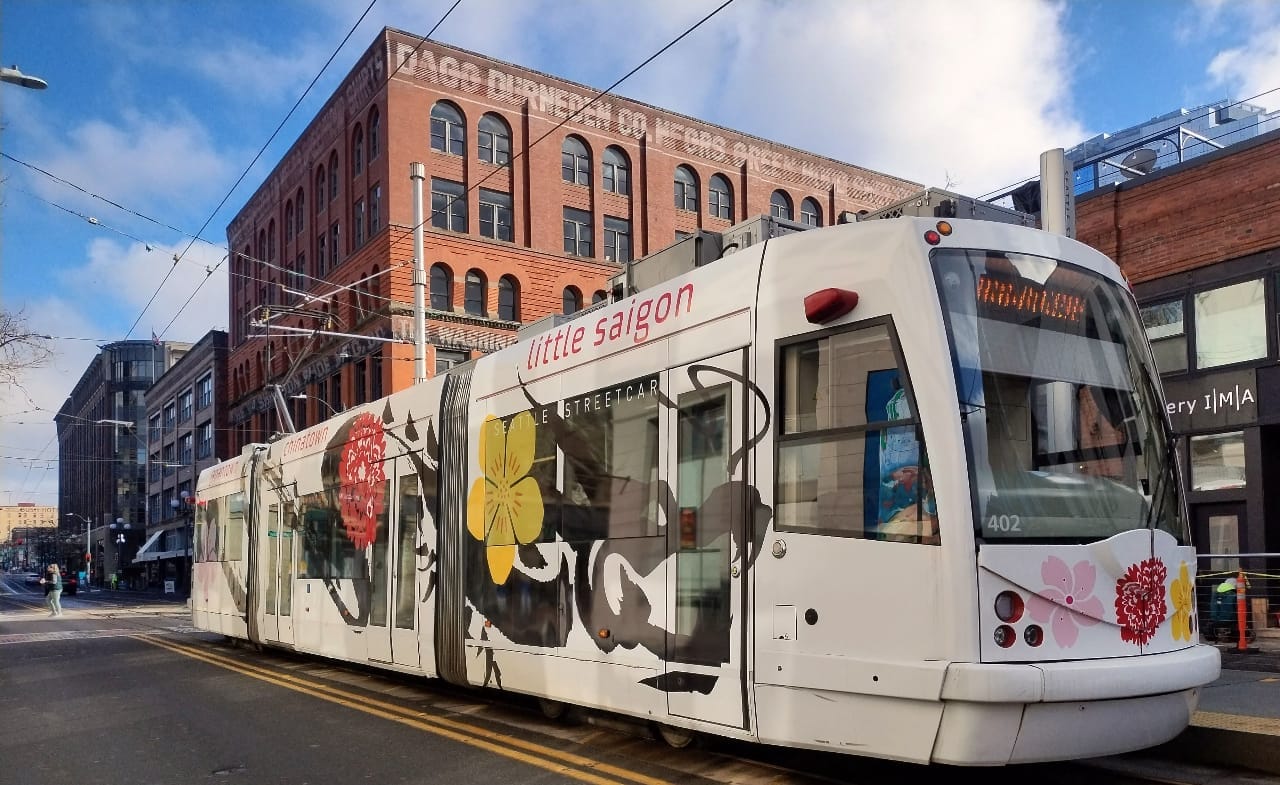
One major question surrounding this renewal has been how the Wilson Administration will approach funding for the Seattle Streetcar. The city's two streetcar lines have been eating up a bigger and bigger share of STM funding over recent years, as costs to operate the system have increased much faster than fare revenue and a Sound Transit subsidy expired. Last year, SDOT had to divert $3.4 million from STM-funded transit related capital projects into streetcar operations to keep the system running, with the total city subsidy to the streetcar system climbing to $13.4 million this year. But Wilson described the city as staying the course right now.
"I think the First Hill line is like performing extremely well. I think the South Lake Union line, it has had a little bit more challenges in terms of ridership, although there was a big bump in ridership recently," Wilson told The Urbanist. "So it's trending, I think, in a good direction. So, we're going to be monitoring how ridership on that line goes, especially as we're making other changes to our investments in our transit system."
The measure now heads to the Seattle City Council for approval. Rob Saka, chair of the transportation committee, has been signaling a desire to divert some of these new dollars to boost SDOT's funding for new sidewalks, in addition to the $111 million investment over an eight-year period approved in 2024 as part of the Seattle Transportation Levy. But Seattle's transit and traffic safety advocates are expected to remain largely united in wanting to see transit dollars stay allocated to transit service.
"I think we are looking forward to a future where more people are riding transit, especially as our region keeps growing, and I also think it's really important to frame this: this is not just something that we are doing for transit riders, right, as people continue to move to our region, we have to make it possible for more people to get around without a car, because we simply don't have the space to keep adding more cars and more parking to our roads indefinitely," Wilson said. "So, this is really something that is good for everyone, whether or not you own a car, whether or not you have to drive."
 Ryan Packer