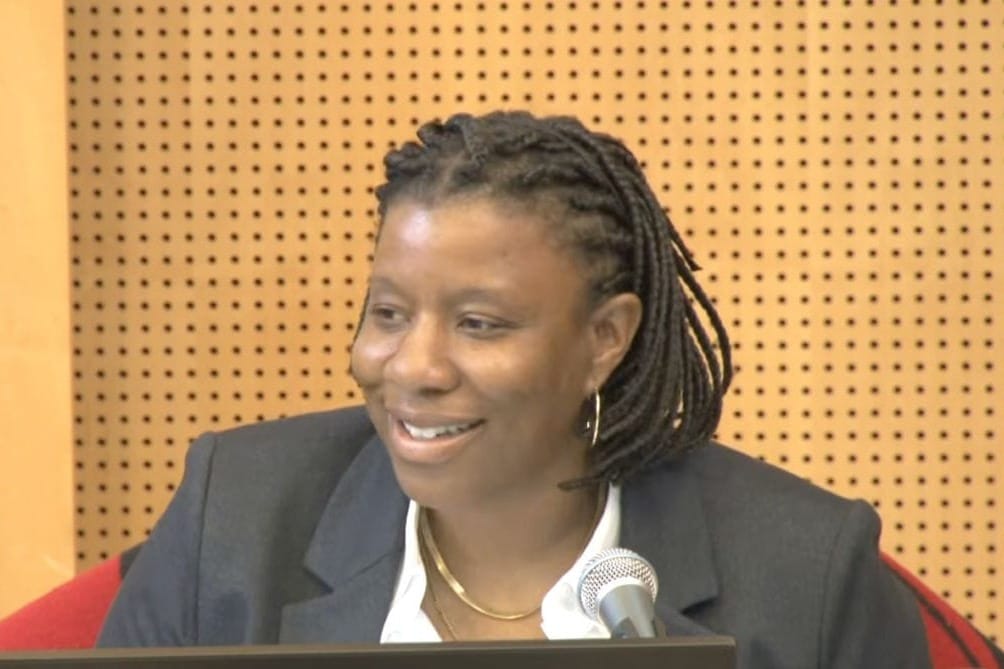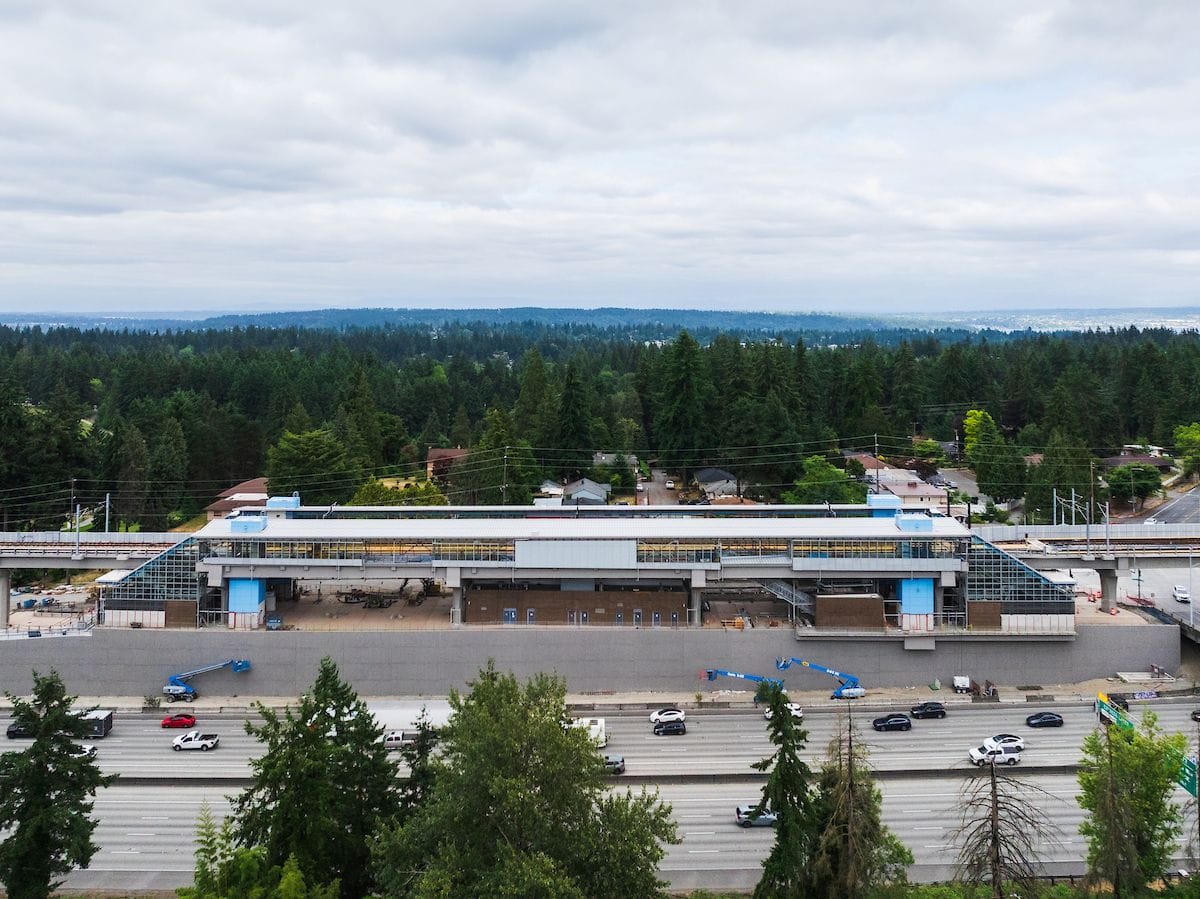
On June 23, the four candidates for Seattle City Council’s District 5 seat faced off in a forum in the Akin Building in Lake City, moderated by Chris Leverson, the executive director of the Lake City Business Alliance. Representing the usual Seattle spectrum of business moderate through progressive to democratic socialist, candidates Dimitri Georgakopoulos, Julie Kang, Nilu Jenks, and Silas James made their cases for why they’d do the best job representing D5 on the city council.
Jenks and Kang are the clear frontrunners to win the primary. Both have received high profile endorsements, and the two candidates are neck-in-neck in their fundraising, with Jenks having raised $108,000 and Kang having raised $106,000. Both are also participating in the city’s democracy voucher program, along with James. (Yesterday, The Urbanist Elections Committee announced its endorsement of Jenks.)
The Urbanist interviewed frontrunners Jenks and Kang at the beginning of the year. While Jenks has remained consistent since that time, Kang has done a complete reversal on a few of her stances about public safety in the district. Kang appears to have waffled during her initial interview with The Stranger at around the same time, but in her interview with The Urbanist, she clearly expressed an opposition both to the Stay Out of Area Prostitution (SOAP) ordinance passed by her predecessor and to surveillance cameras.
“As a first-time candidate, I don't believe I have all the answers on day one,” Kang told The Urbanist. “My PhD training taught me to ask questions, gather evidence, analyze data, and be willing to change my views when the facts support doing so. That's exactly what I did on both CCTV and SOAP.”
Kang’s change of heart on public safety aligns her with the views held by The Seattle Times editorial board, who gave her their endorsement.
Now running firmly in the business moderate lane, Kang is an educator, small landlord, and the co-founder of a community bank that later merged with another bank in 2013. Kang said her priorities are affordability, public safety, and support for small businesses.
“Right now, we have interconnected challenges operating within disconnected systems. I want to connect those systems so that residents can feel safe and feel the impact of effective leadership for public safety,” Kang said.
Kang said that what makes D5 different from other districts are the gun violence, trafficking, and dangerous driving on Aurora Avenue North and Lake City’s small businesses struggling because of public safety concerns and economic uncertainty.
Kang also received a “best choice” nod in the race from the King County Republican Party. Kang noted she did not seek this recommendation.
Firmly in the progressive lane with a lukewarm endorsement from The Stranger, Nilu Jenks is an advocate for taking climate action and strengthening democracy. Jenks said she’d focus on four things if elected: increasing affordable housing, ending food deserts, building a child and senior friendly city, and addressing public safety by expanding the role of the Community Assisted Response and Engagement (CARE) team, investing in gun violence prevention programs, and addressing human trafficking.
“At the end of the day, I'm working for the city that works for all of us, one that's affordable, fair, and well governed,” Jenks said.
Jenks said that D5 has been forgotten, not receiving needed investments, while also being fractured between its east and west sides. Jenks wants to build community “with all my neighbors.”
Jenks also received the endorsement of the King County Democratic Party.
Also running are Dimitri Georgakopoulos, a broker and realtor at Windemere Real Estate in Sand Point who wants to help businesses thrive, and democratic socialist Silas James, a researcher at the University of Washington Medical Center and disability advocate who wants to tax corporations, stop spending money sweeping homeless people, and stop contracting with Axon, the company that provides Seattle Police Department (SPD) with much of its surveillance apparatus.

“I know a lot of systems are broken, I know where the gaps are, and know how to fix them,” James said.
How we got here
Normally, Seattle City Council elections do not happen in even-numbered years, outside of special elections to fill vacancies. Former D5 Councilmember Cathy Moore resigned last summer, shortly after the cut-off date that pushed the election for her replacement until this fall. Moore had only served a year and a half of her four-year term when she stepped down, citing “health and personal reasons.”
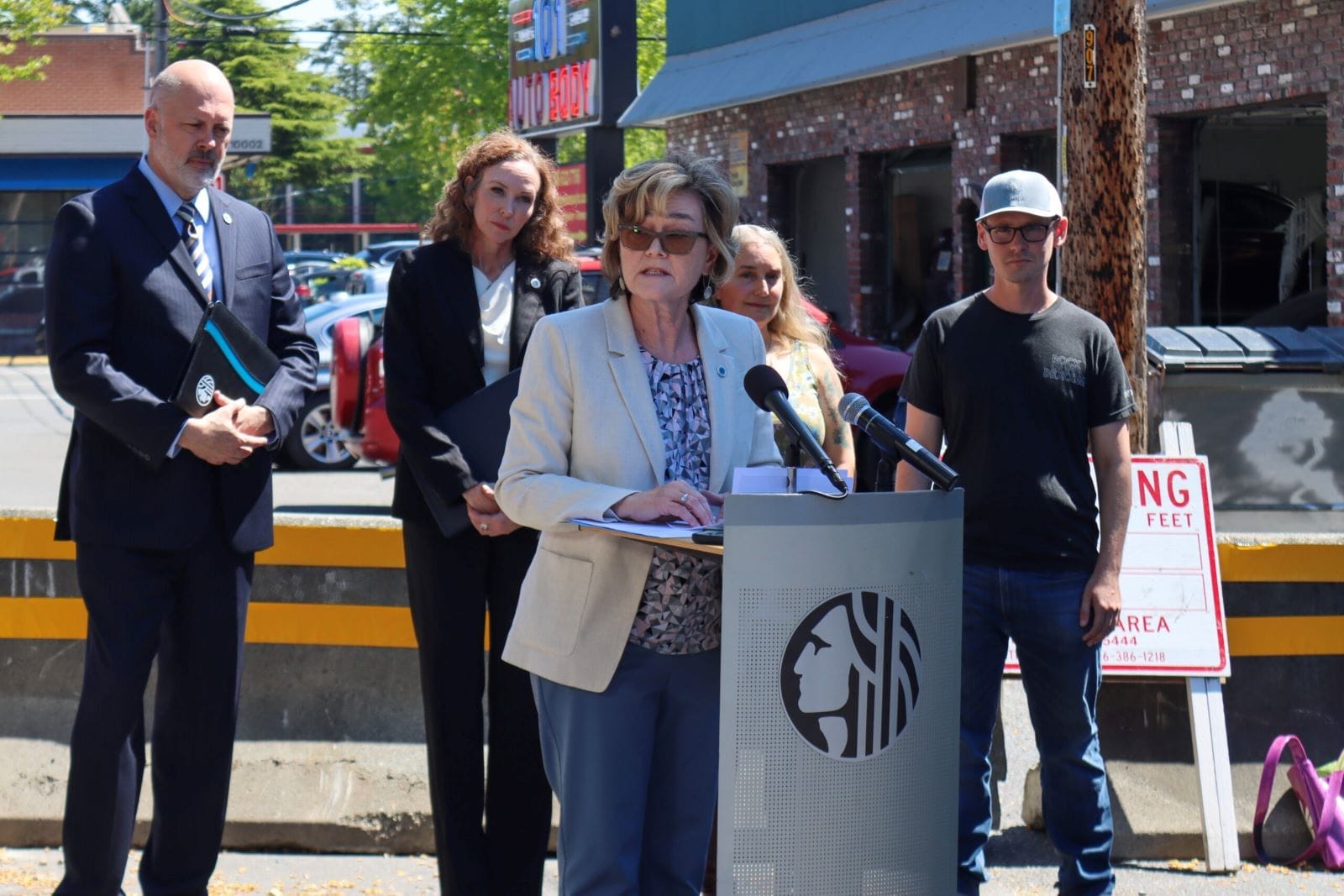
Moore’s time on the council was not without controversy. In addition to introducing legislation that would have weakened the ethics governing the council, she championed the Stay Out of Area Prostitution (SOAP) orders covering a lengthy zone around Aurora Avenue N. Current Seattle City Attorney Erika Evans has said multiple times that SOAP orders aren’t effective.
Moore also espoused a city-wide capital gains tax during the sole budget season during which she served. The tax proposal didn’t have enough council support to pass.
Following Moore’s resignation, the council appointed Debora Juarez to the seat for the year and a half before a new councilmember could be elected. Juarez had previously served as the D5 councilmember from 2016 to 2023, including a stint as council president.
These four candidates will compete in the primary election on August 4, with the top two vote winners advancing to the November election.
Whichever candidate wins the seat in November will only serve the final year of Moore’s original term. In 2027, the new D5 councilmember will face reelection with the other district-based seats, with the opportunity to win a full four-year term at that point.
The D5 winner this fall will determine the makeup of the council and how much of an uphill battle Mayor Katie Wilson might face in aggressively pursuing her progressive agenda in 2027.
This election could also act as a bellwether when considering the seven district seats up for election at the end of next year. Last fall, all three progressive candidates for city council won their seats handily, but what happens in D5 at the end of this year could show both whether the progressive wave is holding and how strong it is in city districts where centrist candidates have seen success in the past.
Public safety in D5
Public safety is where Kang has most visibly flip-flopped since the beginning of the race.
Kang originally told The Urbanist that she didn’t support the SOAP ordinance, citing Seattle City Attorney Erika Evan’s opposition to the policy. Now Kang has changed her mind (and notably, Evans has not.)
“I met with Councilmember Cathy Moore, reviewed the 2024 implementation data, and spent time understanding how the ordinance has been used in practice rather than relying solely on the policy debate surrounding it,” Kang told The Urbanist about her reversal
Kang also now supports SPD’s CCTV surveillance camera program. Previously, she told The Urbanist that surveillance cameras can’t work right now because of the climate of fear and anxiety caused by ICE’s actions. But even as ICE continues to ramp up arrests in the local area and killed two people in the last week, one in Texas and one in Maine, Kang no longer has concerns that local surveillance could be used to harm immigrant communities.
Since our interview in February, Kang says she met with Seattle Councilmember Bob Kettle, who is the public safety committee chair and chief proponent of SPD surveillance on the council. Kang also visited the North Precinct.
“I learned that the footage is retained for a limited period (5 days) and is not stored indefinitely, which significantly reduces many of the concerns I originally had,” Kang said. “Based on what I learned, I now believe the public safety benefits, particularly in addressing violent crime and improving investigations, outweigh the concerns that initially led me to oppose the technology.”
CCTV cameras have not been shown to be effective at preventing violent crime.
At the forum, Kang supported the idea of a satellite to the North Precinct located on Aurora, which could prove to be pricey. In 2016, Mayor Ed Murray had proposed a new $160 million North Precinct building on Aurora Avenue N, but councilmembers shelved the plan in the face of public outcry over high costs and a bunker-like design. While a satellite precinct would be smaller, construction costs have skyrocketed since the mid 2010s.
Kang also wants to give SPD officers cultural competence training. Earlier this year, Axios reported that only 55% of SPD’s officers have taken one or more cultural awareness courses. However, studies don’t support the conclusion that such training reduces racial disparities in policing, with one study showing the effect of such training is “fleeting” and “unlikely to change police behavior.”
Kang said she will “set up shop” on Aurora Avenue N, telling The Urbanist she wants to regularly walk Aurora and Lake City Way and make herself accessible to residents.
“That could include holding office hours at community spaces such as the meeting room above the Lake City Library, similar to Councilmember Dan Strauss's satellite office model in Ballard,” Kang said. “I would also explore opportunities to regularly work from community spaces or setting up the District office.”
When it comes to homelessness and drug use, Kang said at the forum that she wants to treat substance use disorder like a public health issue while enforcing laws against those who exploit or profit from children and addiction.
Jenks, on the other hand, first underlined the importance of the rapid expansion of housing, including tiny homes and permanent supportive housing like the new DESC Birch Grove building.
Jenks would like to replicate the success of DESC’s downtown Opioid Recovery & Care Access (ORCA) center by building a similar center in the North End and expanding CARE service and funding for behavioral health services in general.
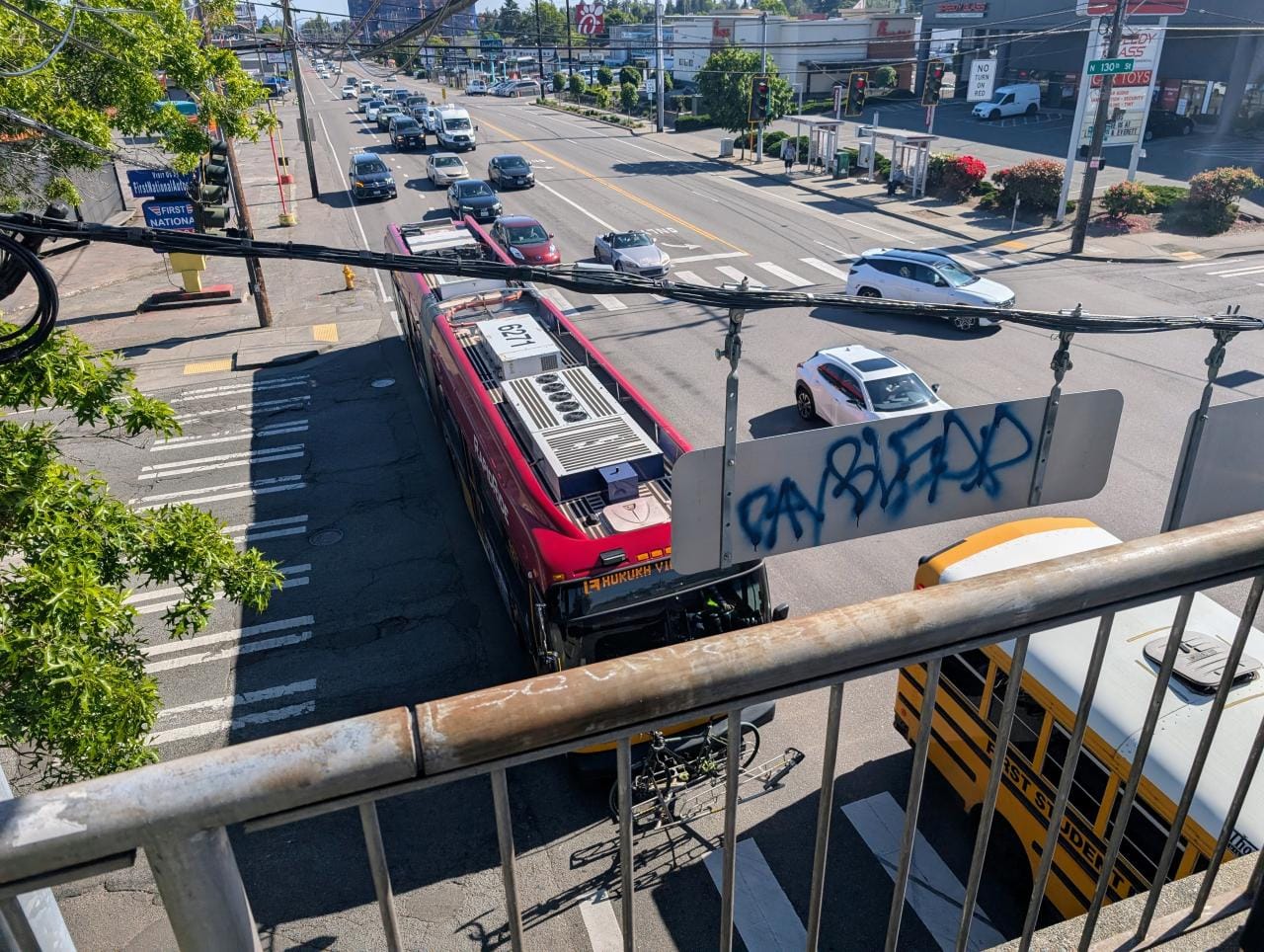
When it comes to public safety issues on Aurora Avenue, Jenks was clear. “The fact that we are closing streets on Aurora is a sign of a failure to that community,” Jenks said. “We should have been addressing the issues sooner.”
Jenks would like to see more gun violence interruption programs operating in the area. She said she wants to see community-based responders sent to the neighborhood, as Mayor Wilson and Seattle City Attorney Erika Evans recently did. She said they should visit every day until trafficking is no longer an issue there. Jenks also wants scheduled traffic improvements to happen sooner.
Jenks called out the CARE team’s inability to respond to most 911 calls, saying that the police chief could decide to direct more calls to CARE. Jenks would also like to see a police oversight committee with teeth, the hiring of more detectives, and the centering of survivors and victims.
Unlike Kang, Jenks doesn’t support SPD’s CCTV surveillance camera program nor the SOAP ordinance.
As for the other two candidates, Georgakopoulos wants to utilize diversion programs and move "individuals who are linked to drugs” just outside the city limits so they can rehabilitate themselves. Goergakopoulos also wants to hire more police officers by making it more lucrative for them and have a mobile Aurora precinct that he referred to as his “Trojan horse.”
“We have to figure a way to bring in more police and have the prosecuting attorney held accountable to do what she has been elected to do,” Georgakopoulos said, in an apparent critique of Evans’s commitment not to enforce the City’s SOAP legislation.
James, on the other hand, wants to stand up a second responder team of comprehensive case managers and ensure there are services for people who are trying to recover beyond initial crisis response.
James called out SPD continuing to respond to behavioral crisis calls even though a 2020 survey inside the department found that civilian responders would be better for behavioral crisis calls.
“SPD is responding to calls that they already don’t think they should be responding to and delivering services they don’t need,” James said.
The candidates on housing
While all four candidates held up their “Yes” cards when asked if they supported Wilson’s Taller Denser Faster housing proposal, her body language seemed ambivalent, so we reached out to ask her what she thinks of the policy.
Kang told The Urbanist that she supports “the overall direction” of the agenda because of the City’s failure to build housing to keep pace with the growing population, and she also voiced support for reforms to streamline construction permitting and the push to temporarily reduce Mandatory Housing Affordability (MHA) fees to jumpstart housing construction, with permitting in a nosedive over the past few years.
“My biggest reservation isn't about adding housing capacity. It's about execution,” Kang told The Urbanist. “We also need to ensure community engagement remains meaningful while avoiding processes that unnecessarily delay much-needed housing. Ultimately, I believe Seattle can be both pro-housing and pro-neighborhood. We don't have to choose between affordability and livability.”
Kang emphasized the need to pair growth with other neighborhood infrastructure such as sidewalks, parks, schools, utilities, and reliable transit, along with her support for strong anti-displacement strategies. Requiring concurrent infrastructure upgrades is an issue many community councils and homeowners’ groups have raised and sometimes weaponized in opposition to new housing.
“My focus is making sure we build smarter, not just faster,” Kang said. “Growth needs to be paired with the infrastructure that makes neighborhoods livable: sidewalks, safe crossings, parks, schools, utilities, and reliable transit. We also need strong anti-displacement strategies, preservation of naturally affordable housing, and continued investment in deeply affordable and supportive housing so longtime residents aren't priced out.”
Jenks was more unequivocal in her support, calling out the "remarkable amount of agreement" that more housing needs to be built and citing last week's 21st Century ROAD to Housing Act passed in Congress with bipartisan support. Jenks doesn't believe Seattle should wait until the last minute to implement the state's transit-oriented development law, House Bill 1491.
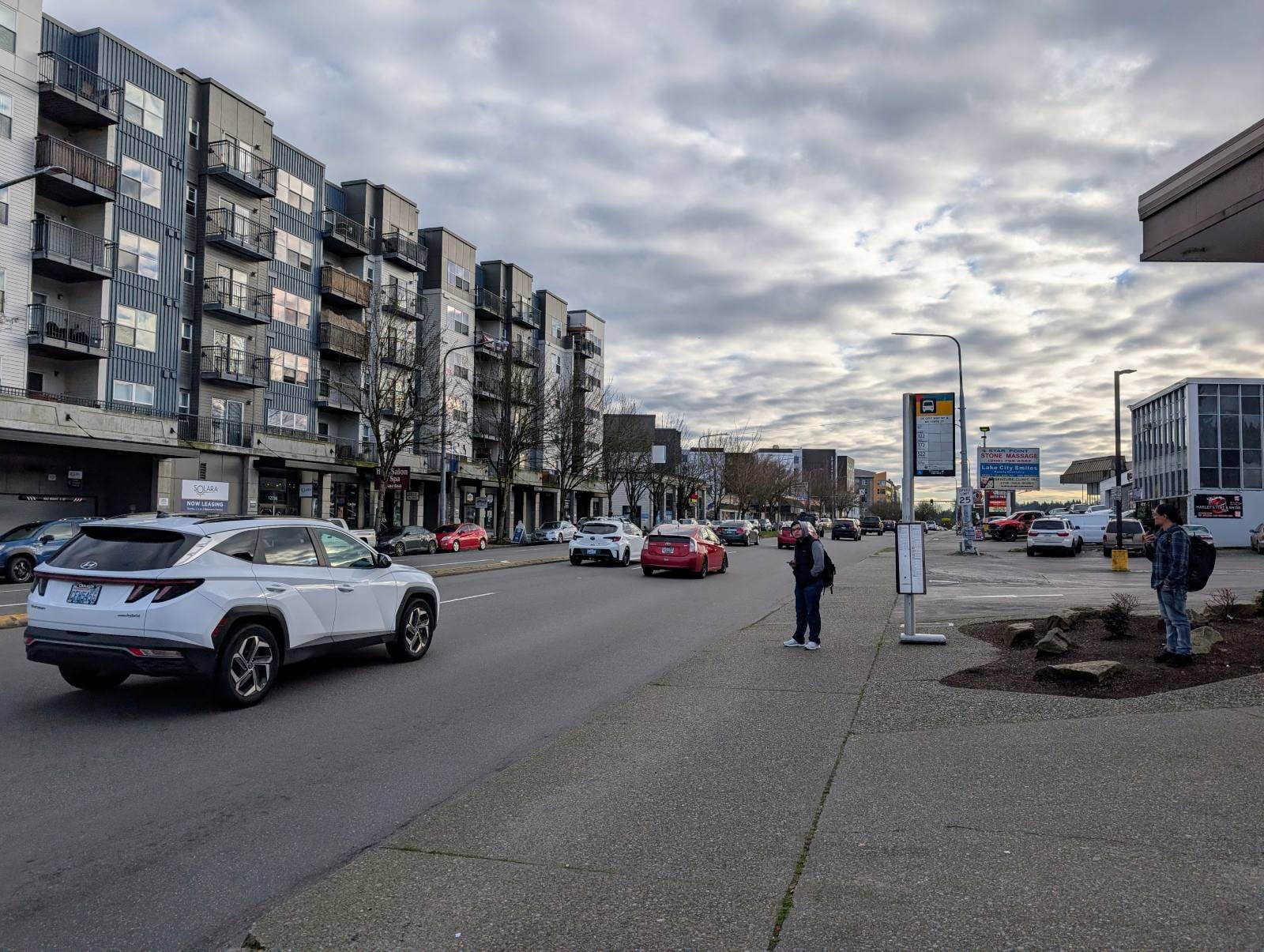
"Right now you can ride light rail from Northgate and Roosevelt, and the new Pinehurst station at NE 130th is coming to our district," Jenks told The Urbanist. "We built the transit. We should let people live next to it. That is the heart of Taller Denser Faster."
Jenks added that she wants to watch the implementation closely.
"Faster has to actually mean faster. It cannot drift into 2028 while rents keep climbing," Jenks said. "We also need to pay attention to displacement so that as we welcome new neighbors, we aren't pushing out the families, immigrants, and renters who built these communities. And I want us to think about the kinds of housing we are creating. I would like to see us incentivize more family-sized units near amenities like parks and schools, and make sure that as neighborhoods become denser, people still have access to the infrastructure that makes density work."
Kang told The Urbanist she wants the temporary MHA fee holiday, which builders have dubbed the “Housing Accelerator,” to move forward, and she criticized the mayor’s decision to delay the proposal for more stakeholder work.
“While I understand why the proposal was paused, MHA has been an important source of funding for affordable housing, and nonprofit housing providers raised legitimate concerns about protecting those resources, I am disappointed that Mayor Wilson chose not to move forward with the proposal,” Kang said in an email. “I spoke with some local builders who have paused and even lost some initial investment money when they chose to withdraw their plans because they are concerned with the unpredictable building climate in Seattle.”
Jenks told The Urbanist she was disappointed to see progress stalled on the MHA fee holiday proposal, calling out the number of stalled building projects that could be built with a lower fee in place.
"My takeaway from the pause is that we need more stakeholder work to answer that question," Jenks said in an email. "If I am elected, I am ready to get people back in the room and get this done. We need nonprofit and market-rate housing providers, housing advocates, labor, and other involved parties actually producing housing to figure out how we can make MHA work better. A temporary accelerator may help us get stalled projects moving, but we also need a longer-term solution so we are not having this same conversation again in two years."
Jenks added that she is concerned about how the construction slowdown will negatively impact the budget.
"My biggest concern is our growing unsheltered homelessness crisis," Jenks continued. "We need more affordable housing, more supportive housing, and more housing overall. Not building at all does not help us solve any of those problems."
Transportation and utilities
All four candidates agreed that new sidewalk construction is both important and expensive, and that there will be a need to prioritize which areas are most critical. James mentioned the possibility of pedestrianizing more streets, and Jenks said she’d be fighting for D5, which deserves big projects just as much as downtown or wealthier districts.
Meanwhile, Georgakopoulos said he’d prioritize sidewalks over bike lanes. “I don’t see a lot of people riding bikes in the city,” Georgakopoulos said.
When discussing the Seattle Transit Measure, which will raise the city’s sales tax in order to pay for more frequent bus service, Kang said she wants more east-west service but expressed worry over the impact of the increased sales tax on general affordability.
In addition to east-west service, Jenks wants to see more north service to Lake Forest Park, which has a grocery store, and buses to light rail stations. She also would like to see public restrooms at light rail stations.
Jenks said that as a climate advocate, she’d like to see more people take the bus. Jenks cares about frequency and reliability in transit service.
D5 has several aging electrical, water, and drainage systems that aren’t in good repair. While James touted more progressive taxes to deal with the problem, Kang said she believes in core city services and an accountable budget.
“I wouldn’t say we need to collect more taxes from our constituents,” Kang said. “It's something that the government should prepare for.”
Jenks said she’d fight for D5 to not be put behind wealthier communities when it comes to critical utility repairs and upgrades. She also wants to see the Seattle Department of Transportation and the Seattle Public Utilities coordinate better with one another. Finally, Jenks is advocating for an AI tax on already existing data centers in the city to help pay for electrical upgrades.
Georgakopoulos lacked an answer to both these questions, but he didn’t waste the opportunity to issue a sarcastic apology to Katie Wilson while espousing his belief that tax money should be spent building businesses instead of helping bus riders.
All four candidates support the data center moratorium.
King County Elections will be mailing out ballots for the primary this week, with election day falling on Tuesday, August 4. The top two vote getters will progress to the general election, which will take place on Tuesday, November 3. Because the winner will be finishing out Moore’s term, they will take office as soon as the vote is certified instead of waiting until 2027.
Clarification: After publication, Julie Kang reached out to note she did not solicit the recommendation of the King County Republican Party.
 Elections Committee
 Amy Sundberg
 Doug Trumm