Ahead of a final vote this Thursday to amend the pending renewal of the Seattle Transit Measure before it gets sent to voters in November, transit advocates from across the city have been pushing back on adjustments put forward by councilmembers that would scale back the 10-year package. A public hearing held Monday brought out dozens of speakers who weighed in on amendments, with a sizable majority opposing District 7 Councilmember Bob Kettle's proposal to slash the measure by one-third, a move that would halt city-funded transit service expansion across the city.
Those public comments came in the wake of a letter sent early this week by Seattle's Transit Advisory Board (TAB), which also took dead aim at the Kettle proposal as well as several other proposed amendments. In a special meeting last week, TAB members were unequivocal in opposing the idea of scaling back the measure, and also pushed back on amendments from transportation committee chair Rob Saka to limit the measure's duration and add an annual council veto point when it comes to Seattle Transit Measure expenditures.
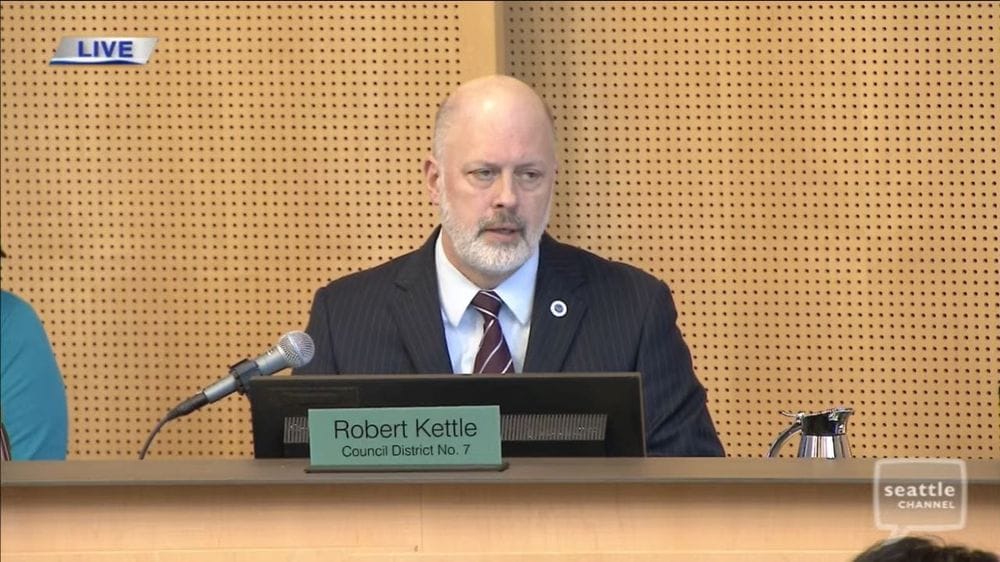
"In the strongest terms, the TAB opposes this amendment and urges Council not to pass it," the board wrote of Kettle's proposal. "Amending the sales tax rate to be 0.2% represents the worst of all worlds – a tax increase that would result in less service. With the rate needed to break even on transit service being ~0.23%, this amendment would result in LESS transit service when Seattle needs it expanded more than ever."
Kettle has painted his amendment as drawing a line in the sand when it comes to limiting tax increases on Seattleites, and has pointed to lower ridership on King County Metro buses compared to 2019 numbers as evidence that the city doesn't need a major infusion of bus service.
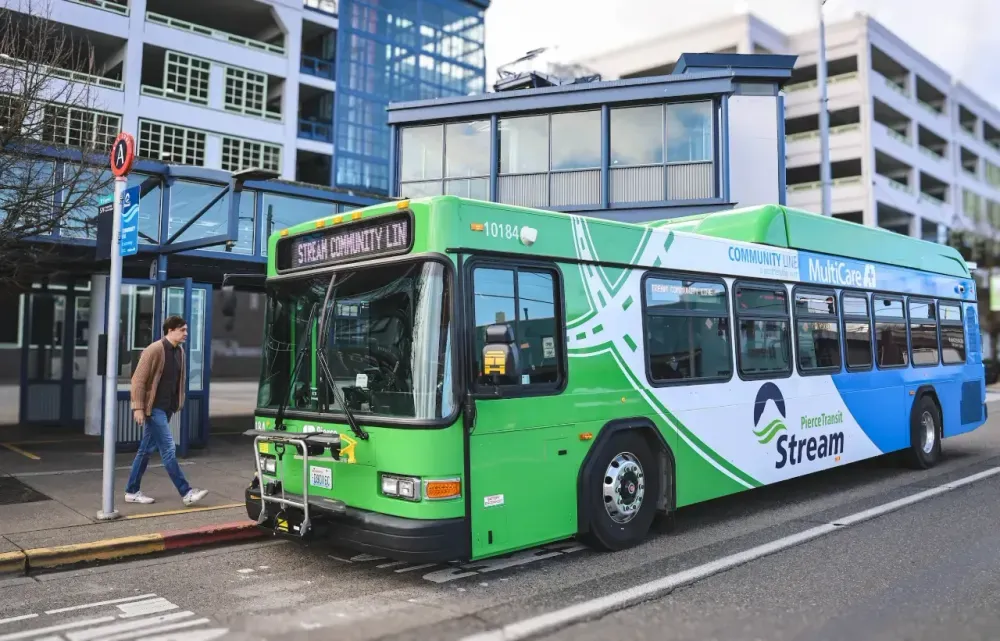
If approved, the average Seattle household, earning $121,000 per year, would pay an additional $29 per year in exchange for more frequent bus service on 10 to 15 different routes, along with a number of other transit-related programs including continued operation of the Seattle Streetcar network.
"I know that some criticize my using current transit ridership statistics versus 2019 numbers, but these are the ridership metrics we have: before and after the pandemic. The pandemic shifted transit behavior across the board, and we do not yet have a full picture of what steady, post-pandemic transit use looks like," Kettle wrote in an email newsletter on July 9. "Good governance demands that we don’t just assume ridership numbers."
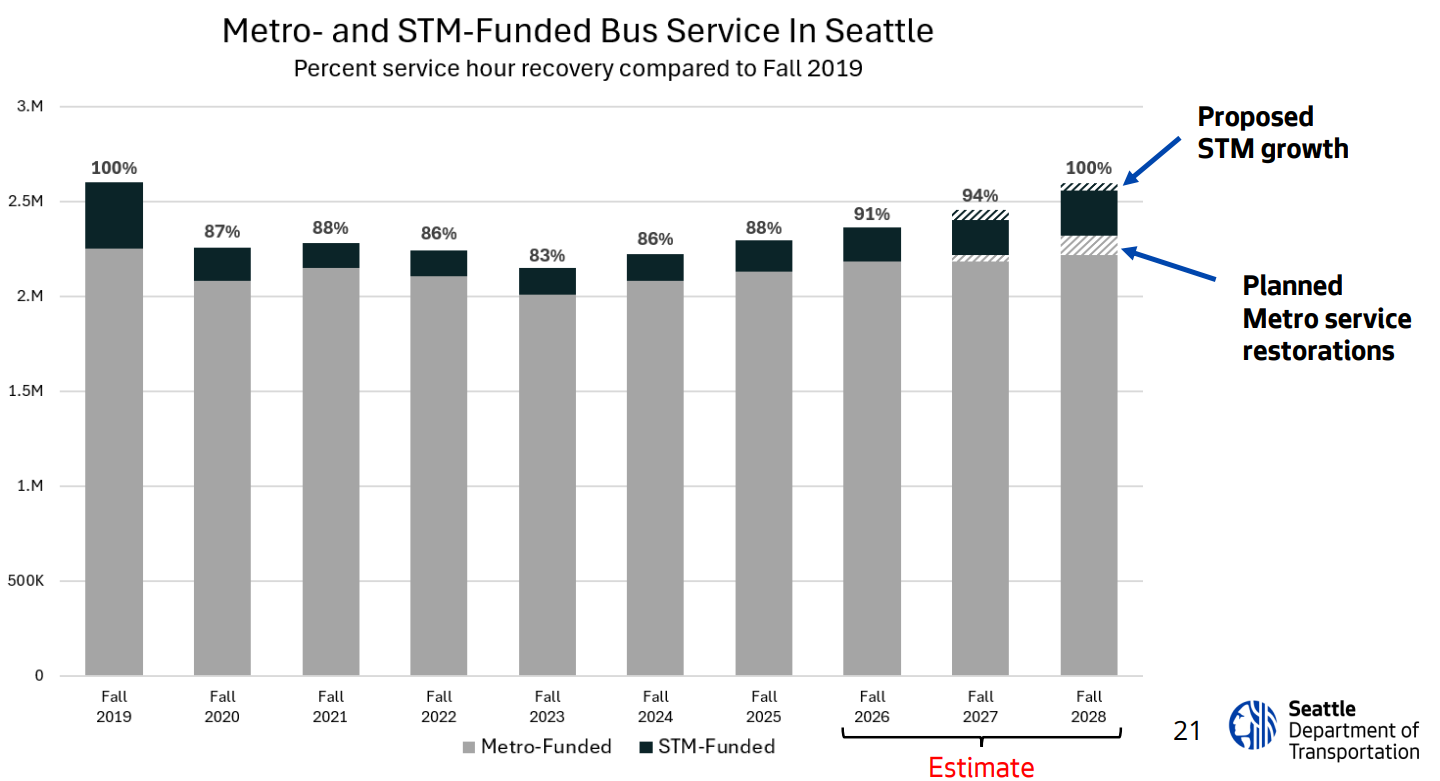
Of course, increased ridership goes hand-in-hand with increased service. And the Transit Advisory Board argues that Kettle's proposal looks at affordability in a myopic way.
"Any savings this amendment seeks to provide to voters would be drastically outweighed by the costs of cutting transit service and increasing reliance on cars for transportation," the board's letter continues. "Driving a car is significantly more expensive than taking transit and more transit is one of the best ways to address the affordability issue for working families. From the beginning of this process, TAB has emphasized that service must be expanded and that voters must get the most value for their dollar. This amendment undermines both of these goals."
If Kettle is able to persuade four of his colleagues to sign onto a 0.2% measure, it's unclear whether Seattle transit advocates would support the proposal, and could ultimately end up campaigning against it. But if it were to fail, thousands of bus hours currently active on city streets every week would be without a funding source, leading to fairly painful cuts.
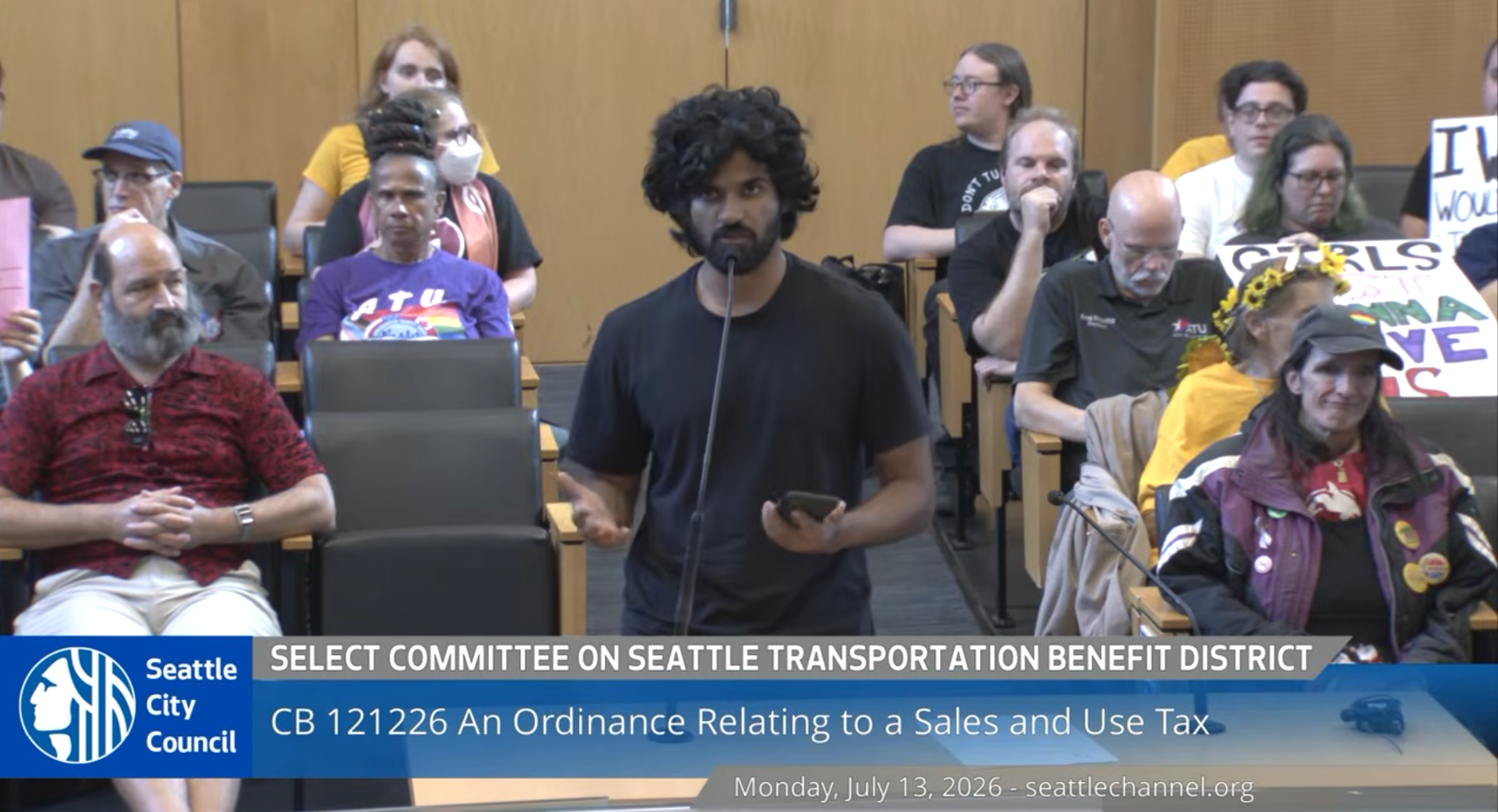
At in-person portion of the public hearing Monday night, TAB co-chair Ashwin Bhumbla showed up to testify and relay the board's opinion directly, noting that Kettle's amendment would require cuts to the current level of service being provided by the Seattle Transit Measure, with a 0.223% rate needed to just keep with inflation.
"You cannot ask people to pay more for either less service or the same amount of service. That is explicitly against what Seattle voters have demonstrated through their votes and through their time again and again," Bhumbla said.
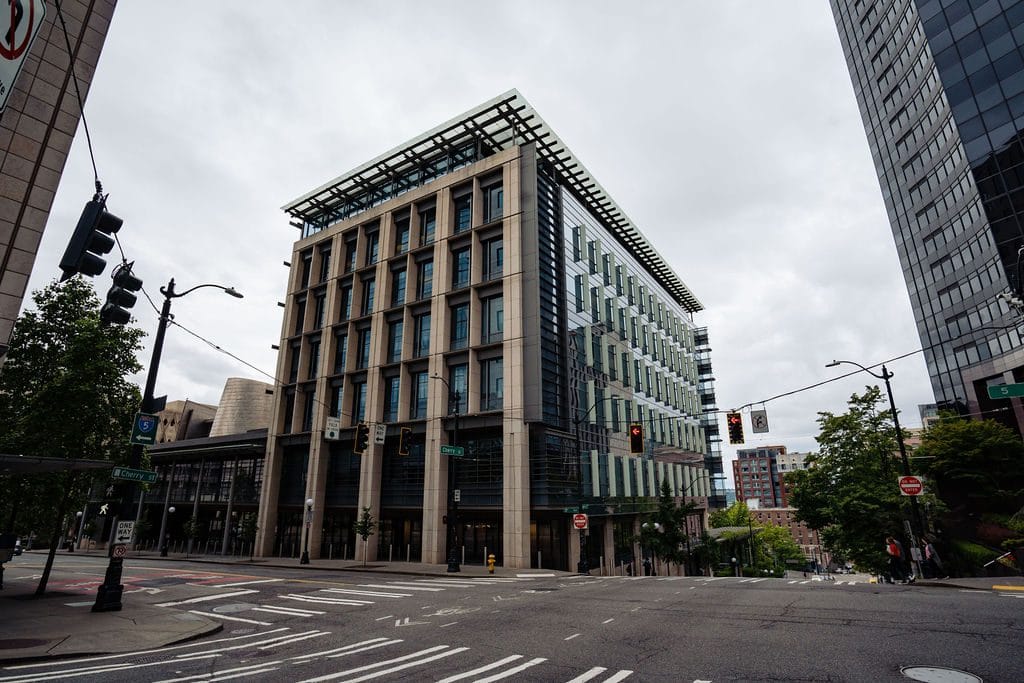
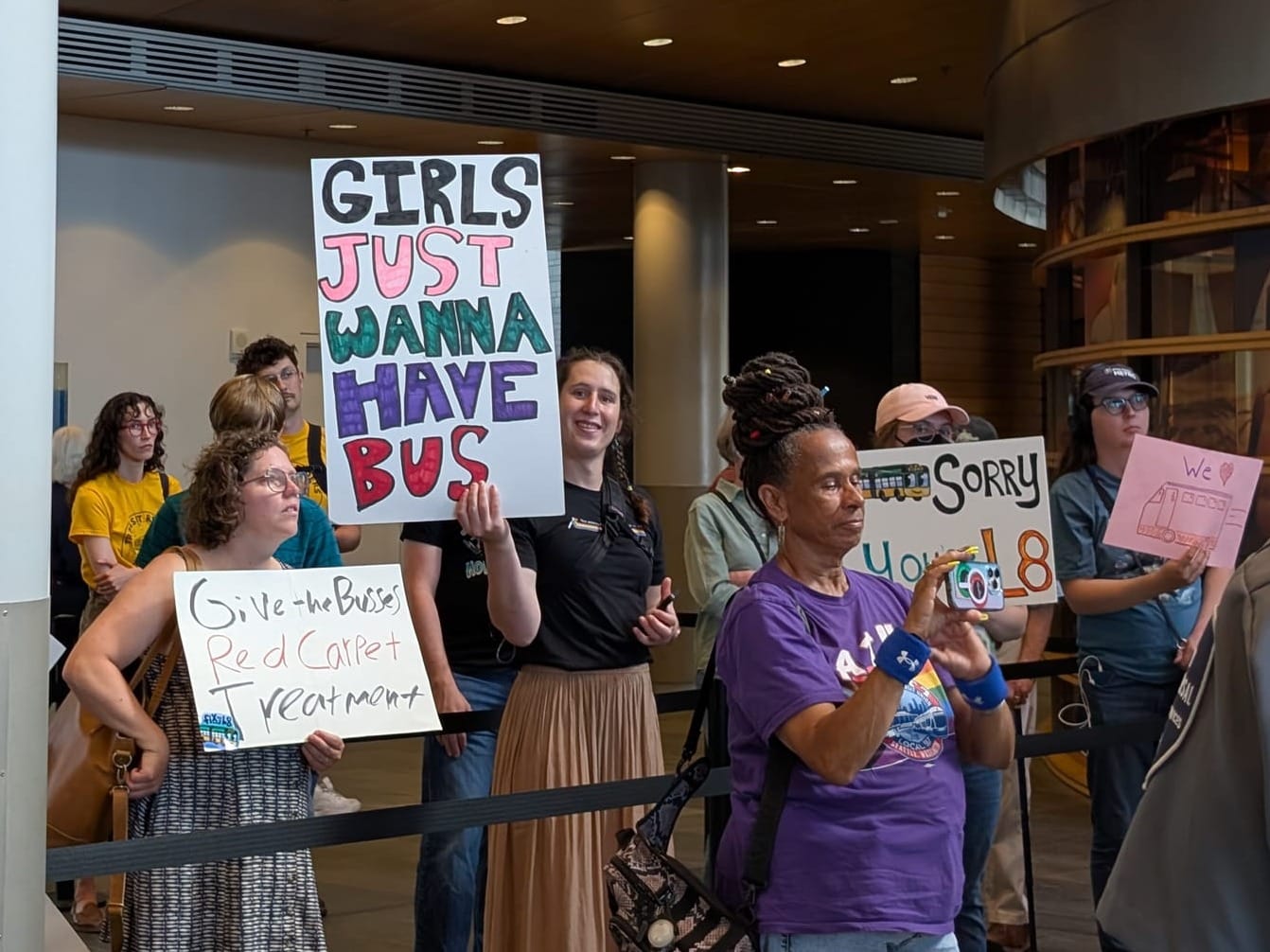
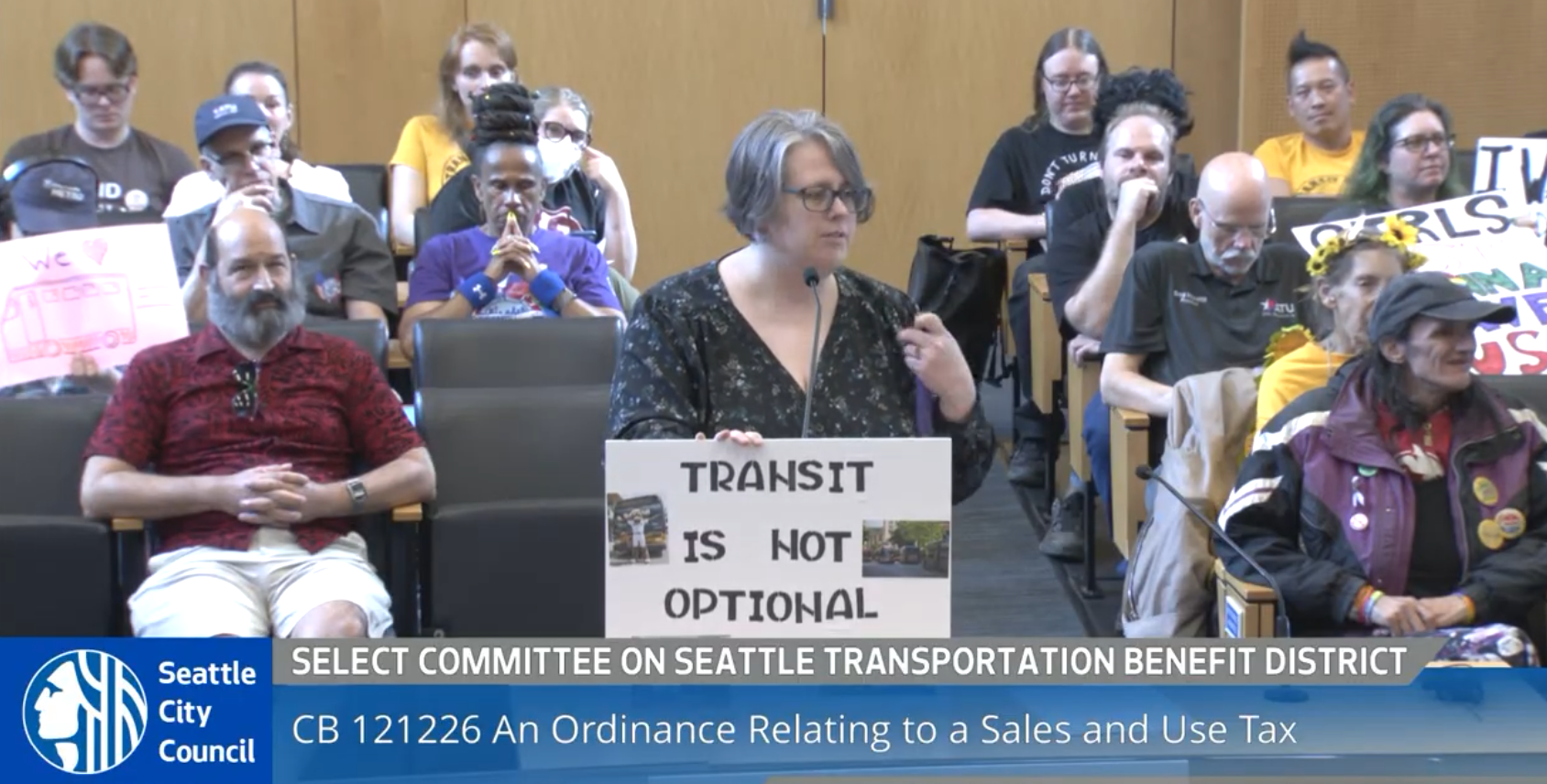
Among those testifying alongside Bhumbla at City Hall on a sunny Monday evening was Brittney Brost, who lives in Kettle's district. Brost told the council she can't drive and depends on transit to get around, and described Metro as providing a much more inexpensive alternative to relying on rideshare.
"This measure should be the full 10 years for the full amount. Transit helps me get around. It makes sure that I have a job and can be a productive member of society. It gets me to my doctor's appointments. It gets me to the grocery store," Brost told councilmembers, holding a sign that read "transit is not optional."
Other commenters took a more pointed aim at amendments put forward by other councilmembers, which include another Kettle amendment asking for a report on running smaller coaches on Metro routes and an amendment from Maritza Rivera looking at ridership on two specific routes in her District 4.
"The number one barrier preventing transit usage is lack of bus service. This measure needs to reflect this clear need and not the parochial interests of individual council members," Andrew Lindstrom told the council. "I am testifying in opposition to all the ticky-tacky amendments micromanaging Metro. These all add costs and reduce the number of buses that this measure can provide. We don't need reports on smaller buses; we need more buses. I don't have time to reply to each amendment in turn, but I urge you all to vote for amendments that reflect transit riders' actual need for more bus service, not the needs that you project onto us."
Appeared to be about 50 folks heading up to give comment, including several ATU 587 members. Council also accepted online comments this morning.
— Doug Trumm (@metropolitanglide.bsky.social) July 13, 2026 at 4:58 PM
[image or embed]
At a rally of transit advocates before the public hearing, Greg Woodfill, president of Amalgamated Transit Union (ATU) Local 587, noted the measure is extremely likely to pass based on the huge margins the last measure ran up in 2020. He said the push to shrink the proposal in the name of progressive values is misguided.
"Transit, in the end, provides family living wage jobs for 5,000 people in the city's community. Every tax dollar invested into public transit is, by definition, progressive, not regressive funding," Woodfill said. "We know that the public in Seattle will vote to extend this tax. We know that. How do we know that? Because last time it was up, they voted it 80% yes."
ATU 587 is also pushing for the full 0.3% rate and 10-year term, with no annual micromanaging mechanism. Woodfill framed councilmembers as the pinch point, with voters almost certain to get onboard.
"So, the question isn't whether they want more transit, whether they want more funding," Woodfill said. "But will our council have the courage to put it forward bold enough? And that's what we're all here for."
A committee vote on amendments Thursday tees up a final vote of the full council next week, allowing the measure to make it onto the November ballot ahead of an early August approval deadline.
 Ryan Packer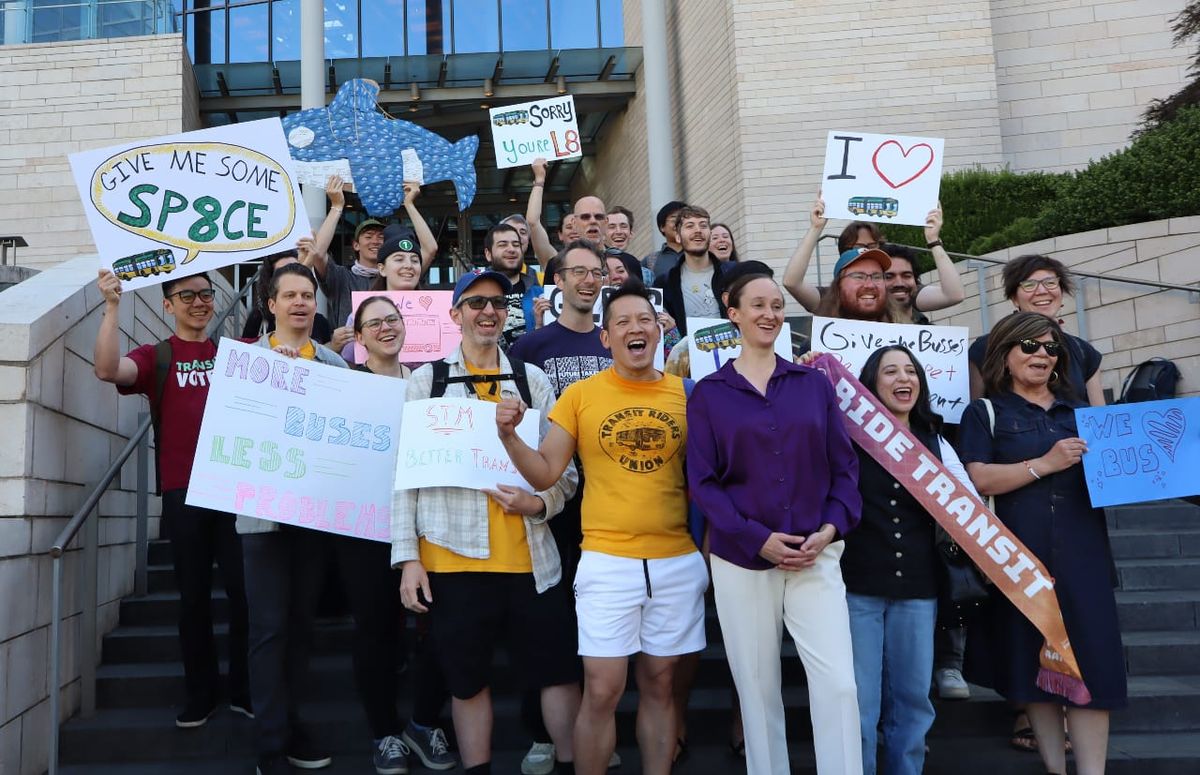
 Ryan Packer