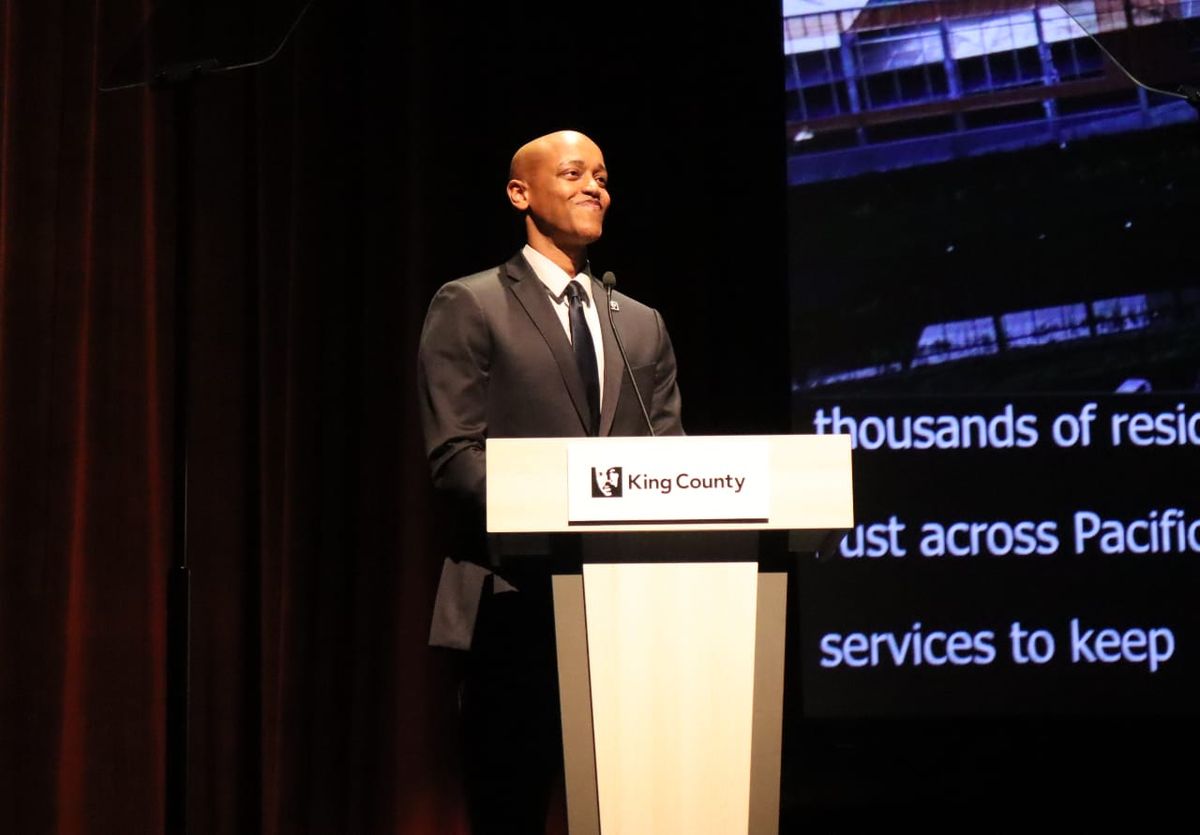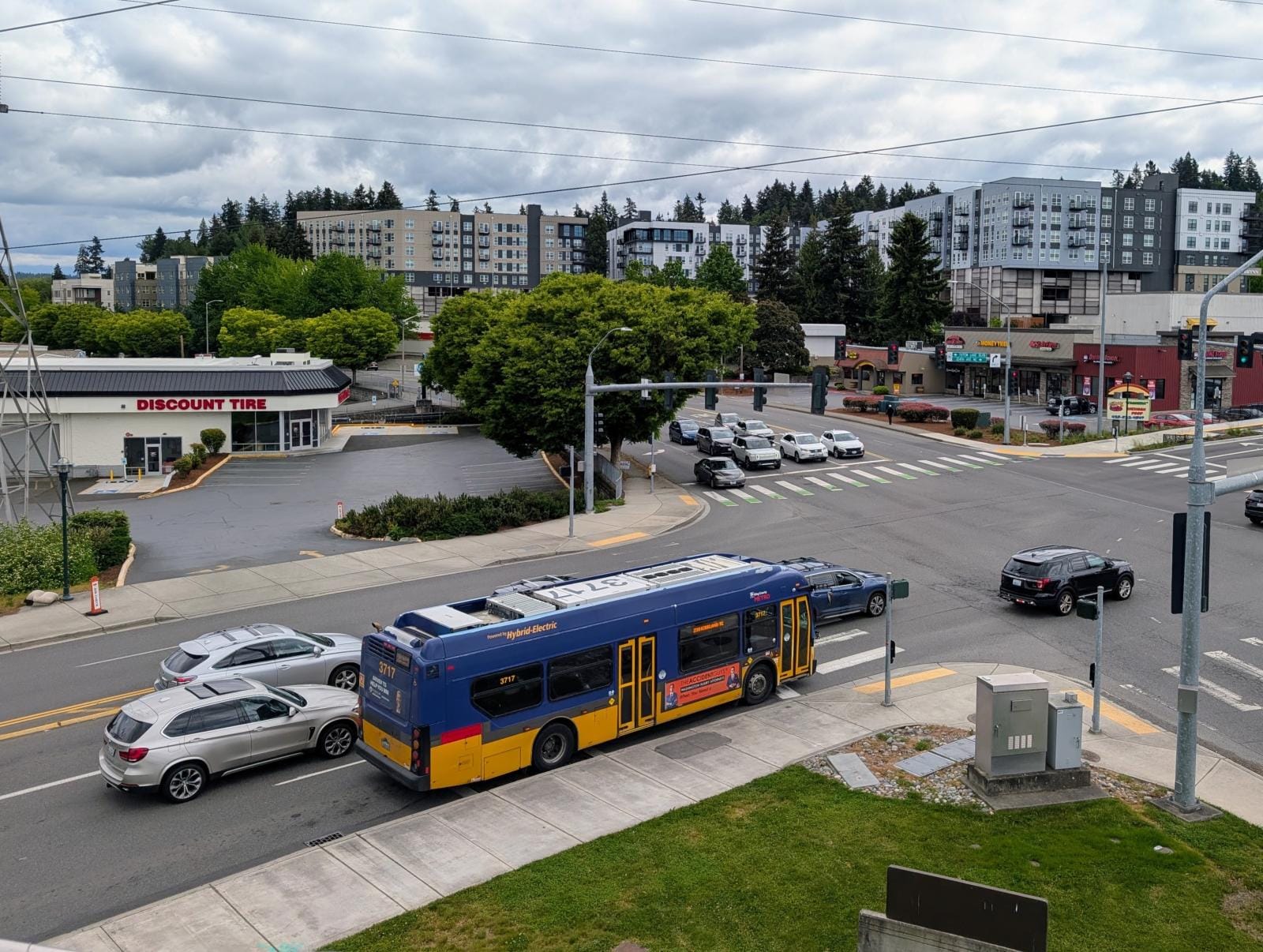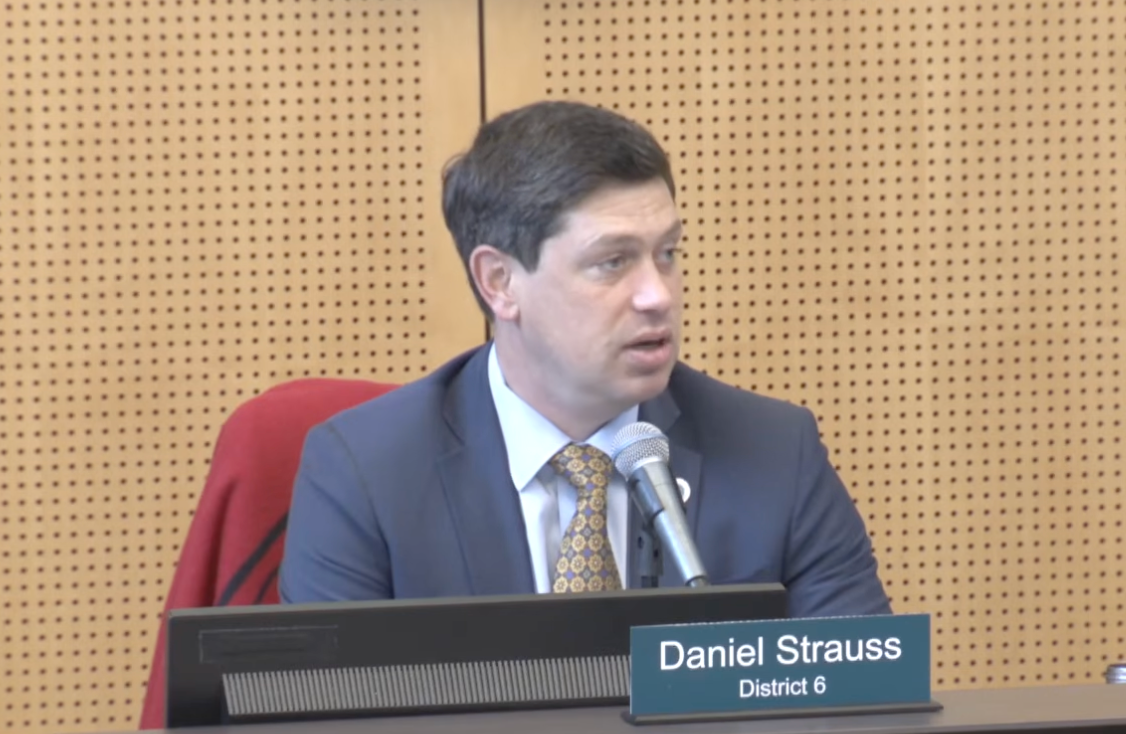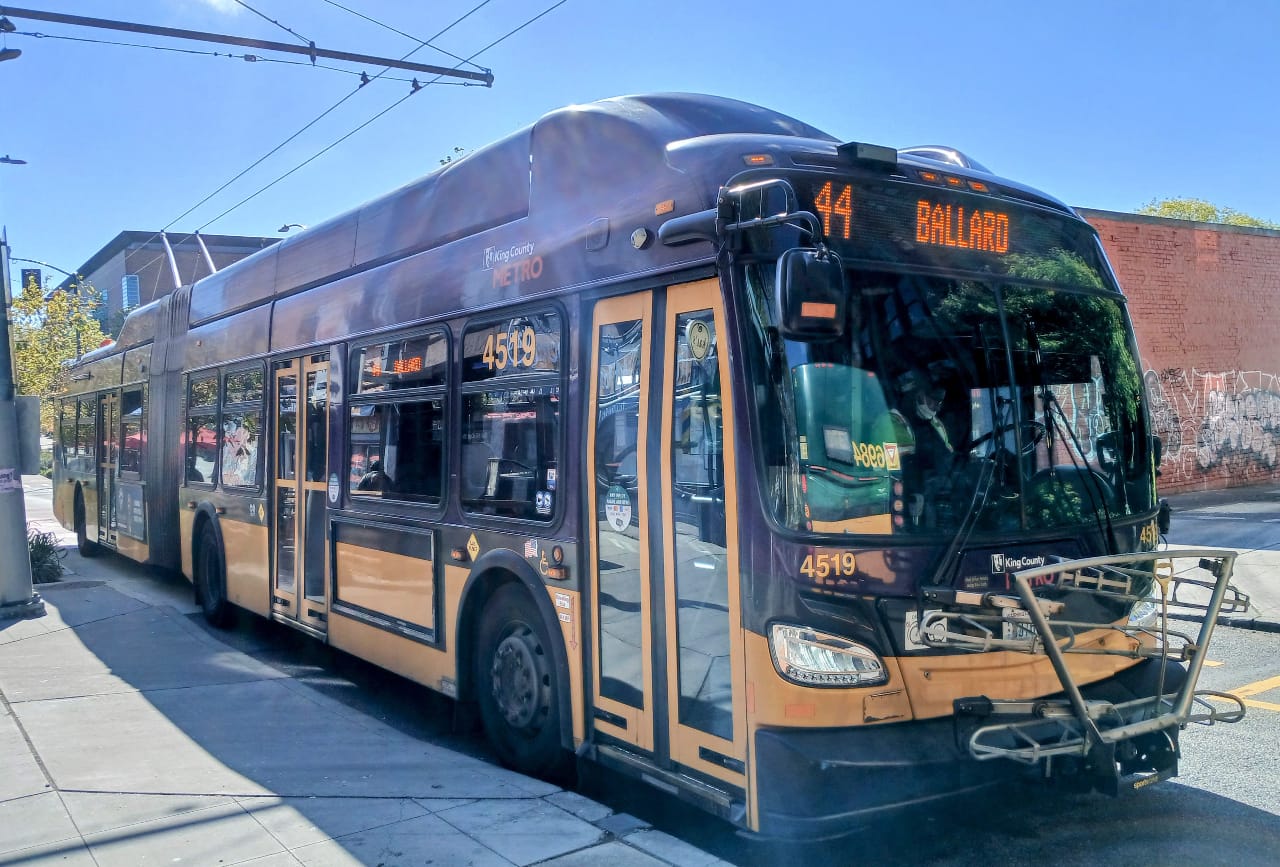
A proposal from District 7 Councilmember Bob Kettle released Thursday would dramatically scale back the pending renewal to the Seattle Transit Measure (STM) that Mayor Katie Wilson put forward last month. In cutting the measure by a third, Kettle's amendment would put the kibosh on any future King County Metro service growth funded by the City of Seattle, and provide less resources than are needed to sustain the transit measure that's currently in effect today (due to inflation).
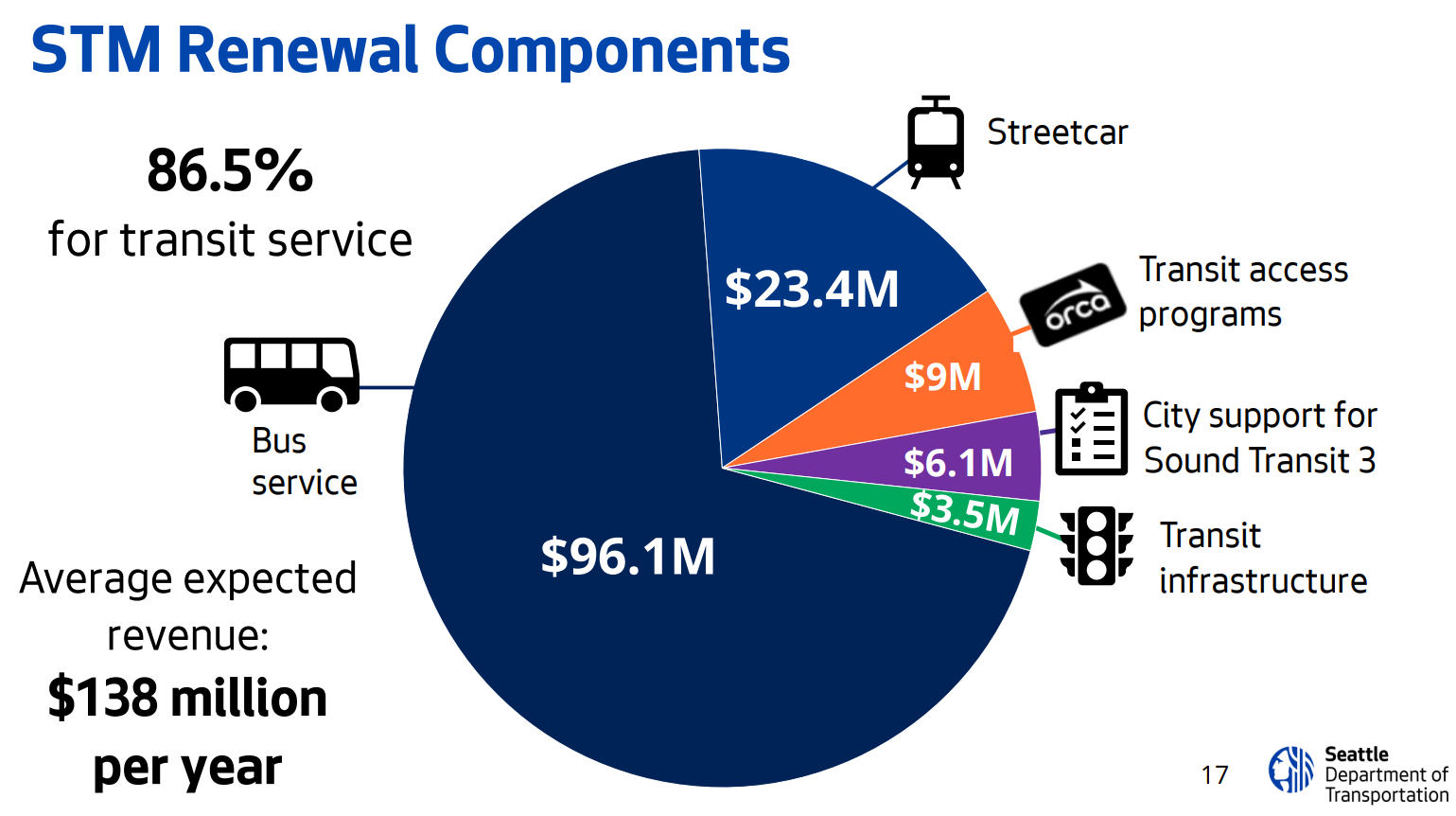
Wilson's proposed STM renewal is set to generate around $138 million per year for public transit programs, bumping up an existing 0.15% dedicated sales tax to 0.3% – the maximum amount allowed under a state-authorized transportation benefit district program. It's that proposed rate doubling that's attracted the renewal considerable attention, much more scrutiny than recent sales tax hikes that have occurred without voter approval.
But Wilson has argued that the benefits of additional transit service, which allows many Seattleites to maintain car-free or car-light households, outweigh the costs. Overall, the increase is expected to cost a median two-person household in Seattle, earning $121,000 per year, an additional $29.
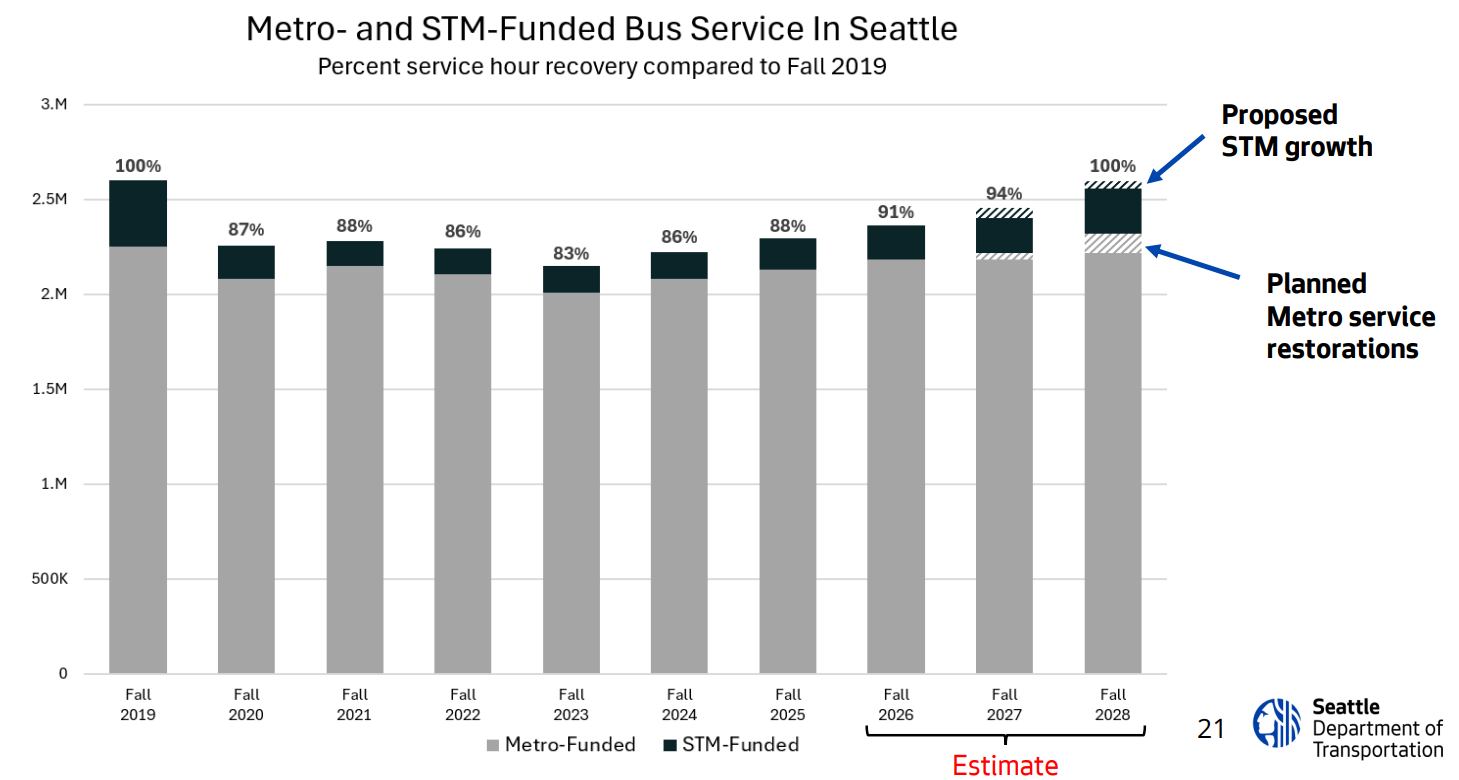
Kettle's amendment would shrink the measure to 0.2%, while leaving the remaining 0.1% in sales tax authority able to be tapped directly by the council at a future date – without the need for voter approval. This would reduce the amount of funding set to go to public transit over a 10-year period by nearly a half billion dollars, an amount that translates to 1.1 million lost service hours.
Councilmembers released 22 other amendments Thursday, but Kettle's would be the most impactful one by far. Another amendment from Transportation Committee Chair Rob Saka would reduce the proposed ten-year term of the renewal to six years and nine months, a bizarre move that could require the city to fork over funding for a special election when the next renewal comes along. Most of the other potential tweaks are anodyne proposals like requests for reports on transit service performance or changes that add explicit reference to prioritizing late-night bus service.
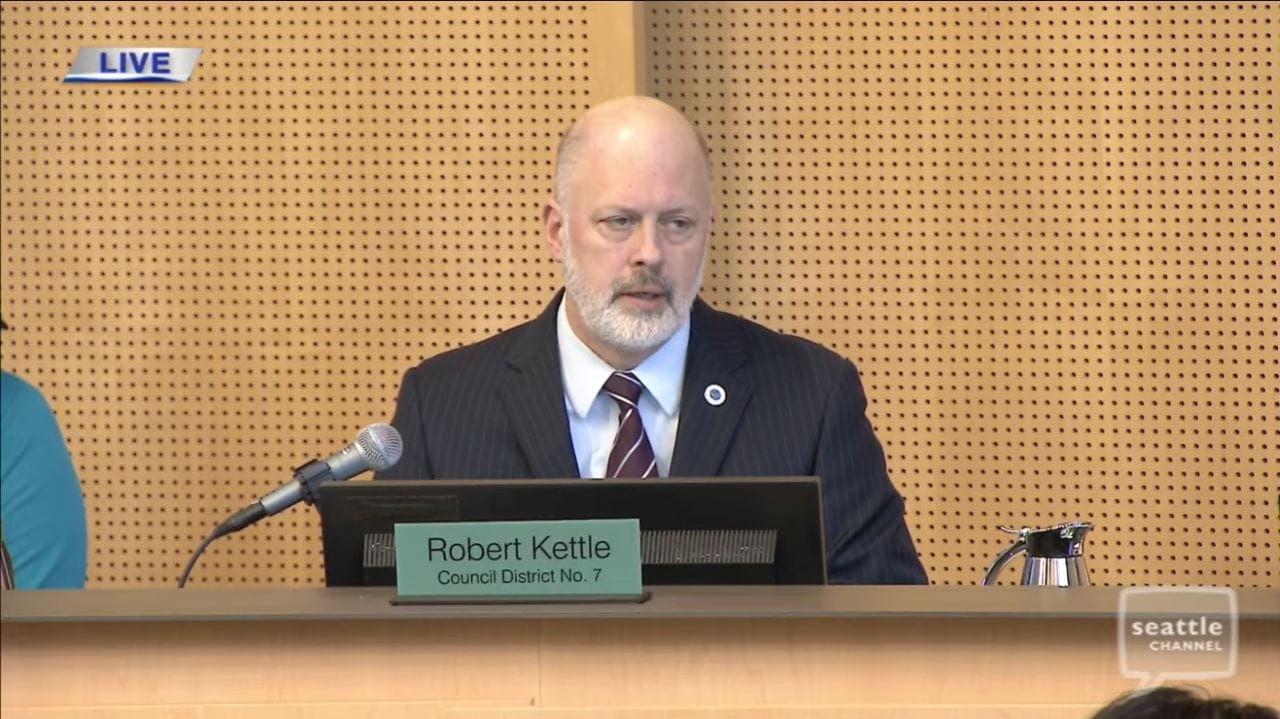
Increasing public transit service was a core plank of Wilson's successful mayoral run against Bruce Harrell, but in a press release timed with the release of his amendment, Kettle suggested that ramping up city spending on transit service isn't an essential need. That release cited the fact that Metro had only regained 70% of its 2019 ridership figure as of 2024, and that "[f]ifty percent of today’s riders are commuters, compared 60 percent in 2019."
"A healthy transit and transportation system is absolutely essential for Seattle. As both a strong supporter and believer in public transit, I know how vital these connections are to our daily lives,” Kettle said. “However, we must spend our public dollars strategically, rather than raising the sales tax simply because we can. Every day, I hear from neighbors about how living in Seattle is becoming less and less affordable. My alternative offers a pragmatic increase in transit funding for bus service and ORCA cards while preserving the flexibility we need for emerging transit-related investments.”
Kettle also pointed to planned service restoration at King County Metro happening independently from the STM as a reason why a larger renewal isn't needed. While those restorations are in the works, they are far from a certainty, as Metro faces its own financial challenges. A presentation just last month at the King County Council noted that the agency could have to look at service reductions if an additional funding source isn't found by 2028, as expenditures continue to outpace revenue and Metro draws down its fiscal reserves.
What could the 0.1% sales tax increase that Kettle's amendment keeps in reserve end up being used for? It remains unclear, though Kettle references "any emergent transportation investment" that could come up in the intervening years. Without a commitment to invest in transit service, it's easy to imagine the council tapping into that funding source for any number of priorities.
Just a few days before Kettle cited a comparison to 2019 ridership in justifying a major cut to the STM, well-known national public transit consultant Jarrett Walker had taken aim at the idea of drawing comparisons to pre-Covid transit usage in a blogpost on his website.
"When are we going to stop describing our ridership as a percentage of pre-COVID? Because as long as that’s below 100%, which I expect it to be for a long time, we are playing into a narrative of relative failure, instead of talking about our real success," Walker wrote, noting that most forward-thinking agencies are attracting new riders with all-day service rather than trying to regain peak-hour commuters. At King County Metro, this has been the exact direction that service planners have been heading for many years.
"When a transit agency describes their progress in terms of how far 'back' to 2019 they are, they concede several things that they shouldn’t be conceding," Walker wrote. "They imply that 2019, rather than the future, is their north star. They imply that history really can be rolled back. Worst of all, they allow people to fantasize that all this is possible if transit agencies just work harder, from which it’s easy to conclude that if that doesn’t seem to be happening, it means transit agencies are misgoverned and the only way for a voter to object is to vote no on funding them."
Kettle's amendment clearly falls in line with that analysis, and the question now is whether he will be able to convince four of his colleagues on the City Council to sign on. A vote is expected on July 16, after a public hearing scheduled for July 13.
 Ryan Packer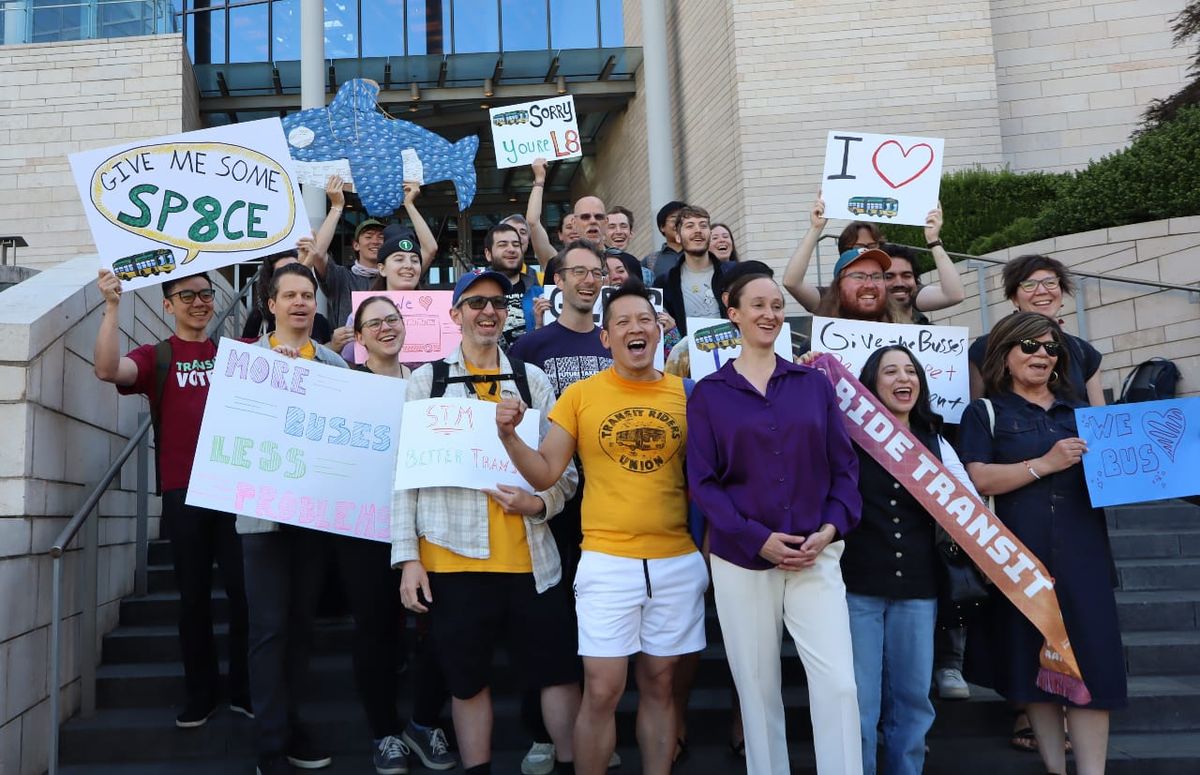
 Ryan Packer