When Sound Transit adopted its updated long-range expansion plan on May 28, Seattle and regional transit advocates rightly called foul. The Urbanist covered Seattle Mayor Wilson’s reaction while advocates with the Save Ballard Rail coalition carried a casket to the Sound Transit Board’s door. Even with Link’s postponement, transit interest – and ridership – remain some of the strongest in the region. Ballard’s King County Metro routes, the RapidRide D and Route 40, hold some of the highest ridership in King County, and Seattle recently launched a Ballard to Golden Gardens direct transit connection.
When the 2016 Sound Transit 3 (ST3) ballot measure promised voters a Ballard Link, the neighborhood delivered with some of the highest voter approval in the region. Projections put Ballard Link at some of the highest ridership projections in the package.
So, what’s to be done? When Sound Transit couldn’t deliver a First Hill station as part of ST2, it provided Seattle funding for the First Hill Streetcar. It’s past time Seattle demanded a similar First Hill Streetcar level of support to activate the rail service to Ballard that already exists: build the Sounder N Line’s Ballard infill station (or, as Transportation Choices Coalition puts its: Build the Damn Trains).
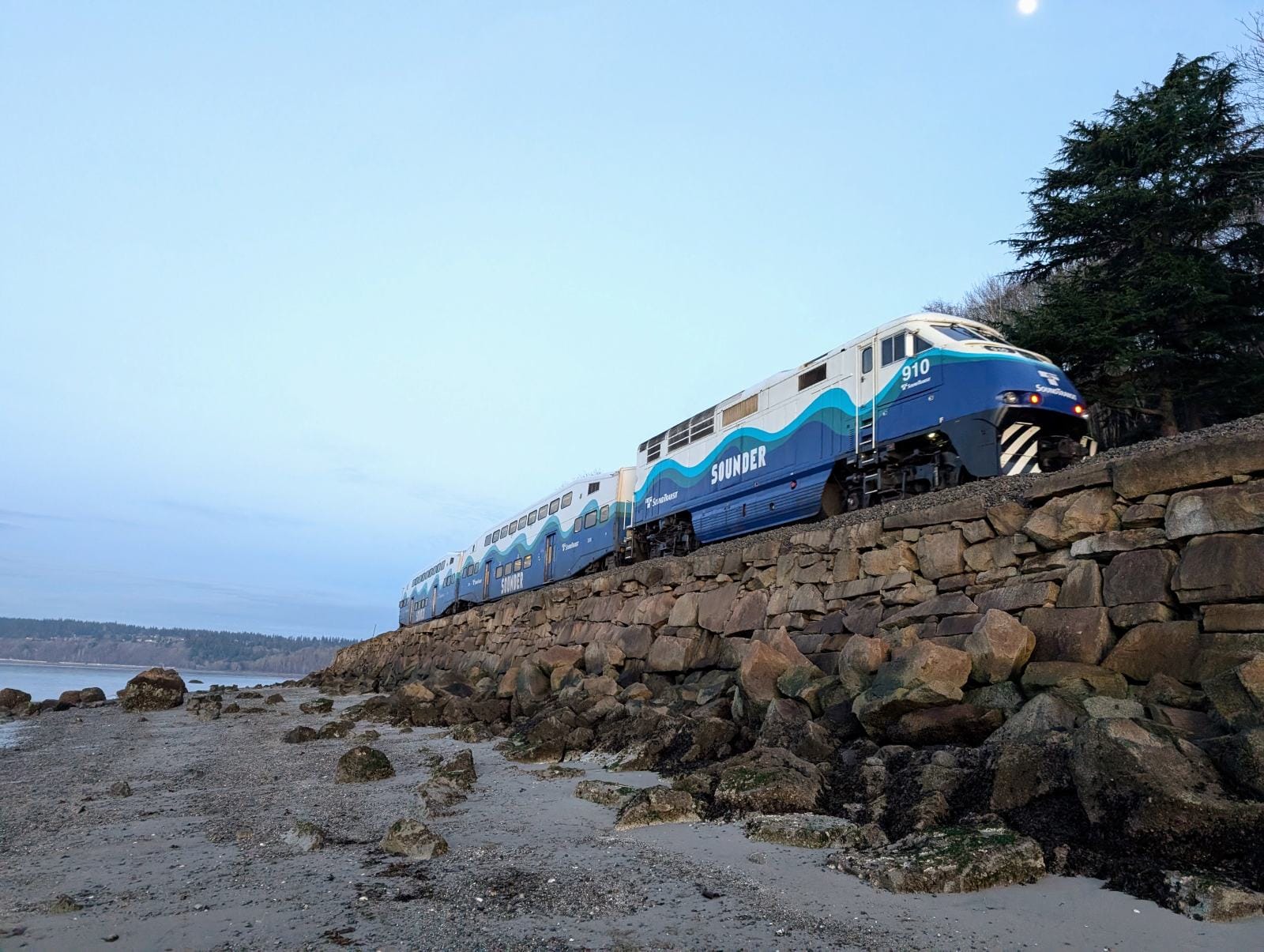
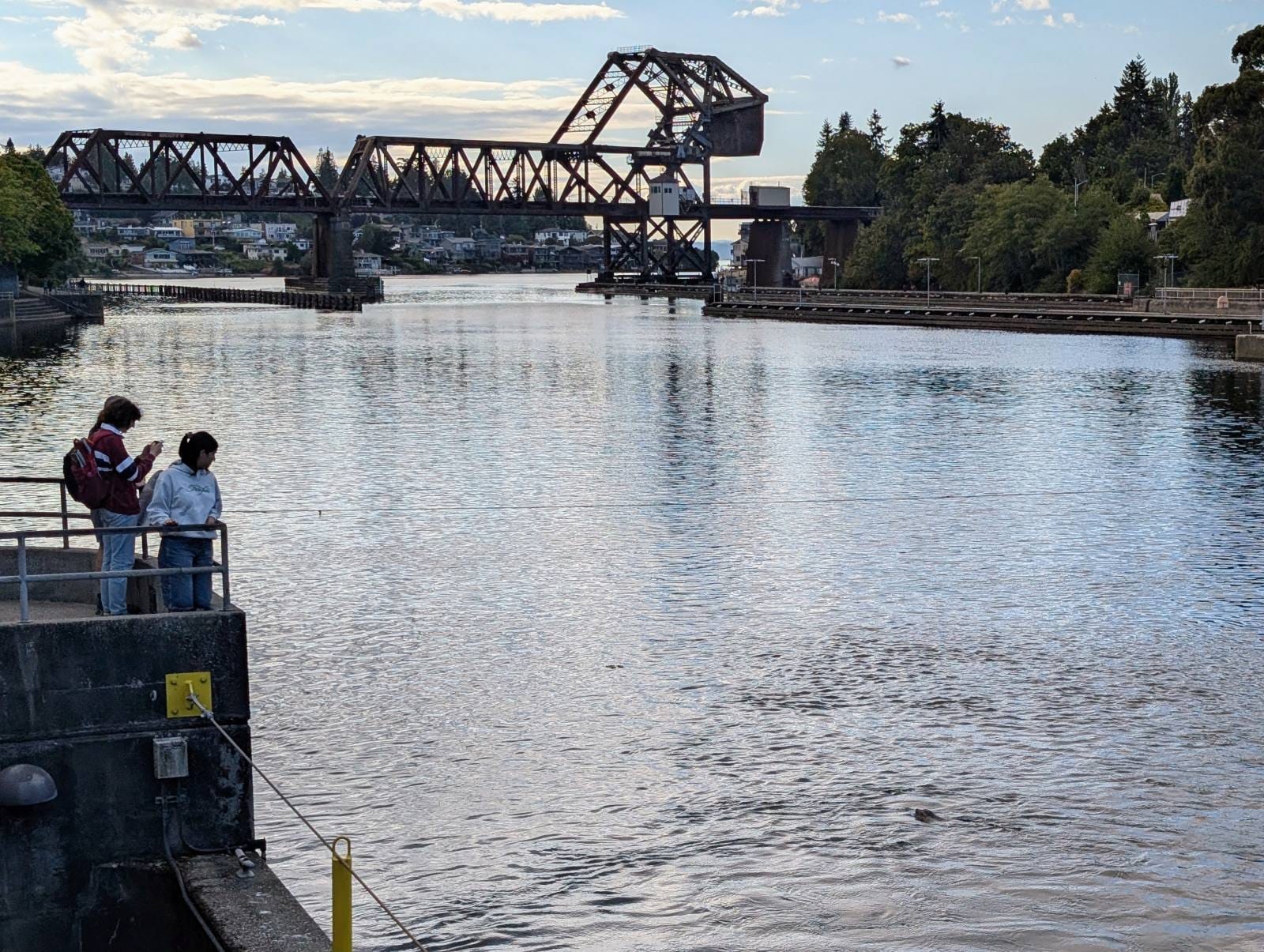
With the Ballard Link postponement, Sound Transit needs to use its existing Sounder service to connect Ballard and other identified station areas with direct, traffic-free service to downtown Seattle and its Jackson Street transit hub and bus connections. Sounder N Line trains pass by the Ballard Locks, but continue another nine miles in either direction without stopping. With Sound Transit's failure to deliver light rail to Ballard by 2035 as originally promised, now is the moment for Sound Transit and Seattle to build a no-frills, quick-build station to connect people to a rail service that’s already up and running.
A quick note of acknowledgment goes to Stephen Fesler, who covered – in technical detail – how to get Seattle’s deserved infill stations in his 2018 article “The Case for Four New North Sounder Stations…In Seattle.” I won’t rehash Fesler’s great work. Instead, this is a call to action to Seattle’s councilmembers, to Mayor Katie Wilson (who long led the Transit Riders Union) and to Sound Transit: we already have a train running through Ballard – and it’s time to give us access!
For anyone who’s ridden the Sounder system, you’re already aware of the benefits: traffic-free travel with on-board bathrooms, beautiful views, and quick trips. While the same ST3 meeting that realigned Ballard Link also puts Sounder N Line on the chopping block for 2033, we have seven years to take advantage of Ballard’s direct train connection to not only downtown, but to Edmonds, Mukilteo, and Everett as well while we still have it.
Providing strong and renewed interest in the N Line may also, ultimately, save the service, in which Everett, Mukilteo, and Edmonds should equally engage, as current station locations.
The ridership potential of a Ballard Station is very promising, and the cost to retrofit a station should be quite low compared to other agency projects. For example, Sound Transit added the South Tacoma infill station for just $11.5 million in 2009, with physical construction taking months rather than years.
The chart below outlines distance between S Line and N Line stations, layering this information onto Sound Transit’s own map showing estimated travel times between stations.
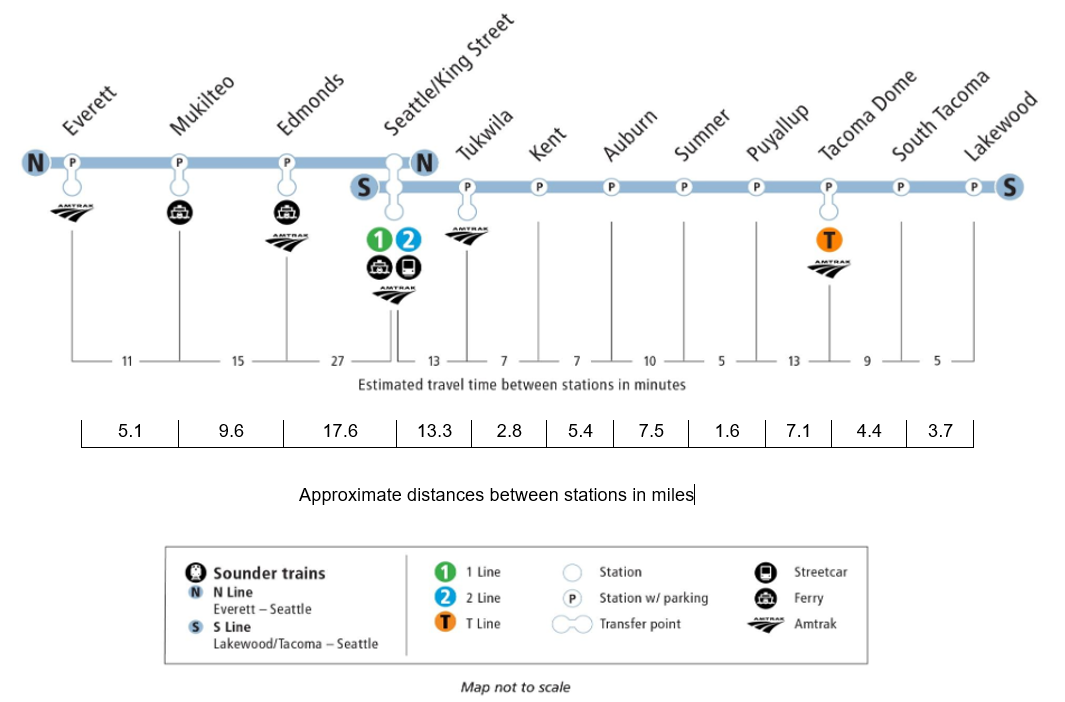
From Downtown Seattle to the next closest stations, Seattleites have to travel over 10 miles in either direction, while residents in Pierce and Snohomish Counties were provided station access every 3-7 miles along the majority of the route. This practice of ignoring the densest parts of the Sounder network - where boardings and alightings (getting on and getting off) the train would be strongest – does not align with best practice nor Sound Transit’s own missions statements for equity, sustainability or efficiency.
Seattle does not need to look far to see how poorly its commuter service is operating without secondary in-city infill stations. Los Angeles’ Metrolink has its first non-downtown station under six miles away on three routes and at 10 or fewer miles on all of its routes. The Bay Area’s CalTrain offers an even better example of how to serve a community with commuter rail, offering stations every 2-7 miles for nearly the entire route between San Francisco and San Jose/Gilroy.
Ridership potential is high
In contrast, the N Line doesn’t serve a single community before it has traveled a full 17.6 miles to Edmonds from King Street Station in Seattle. At over eight miles away, Ballard makes the perfect location for an intermediary stop both to make up for a failed Ballard Link timeline and to grow ridership on an underutilized regional transit asset.
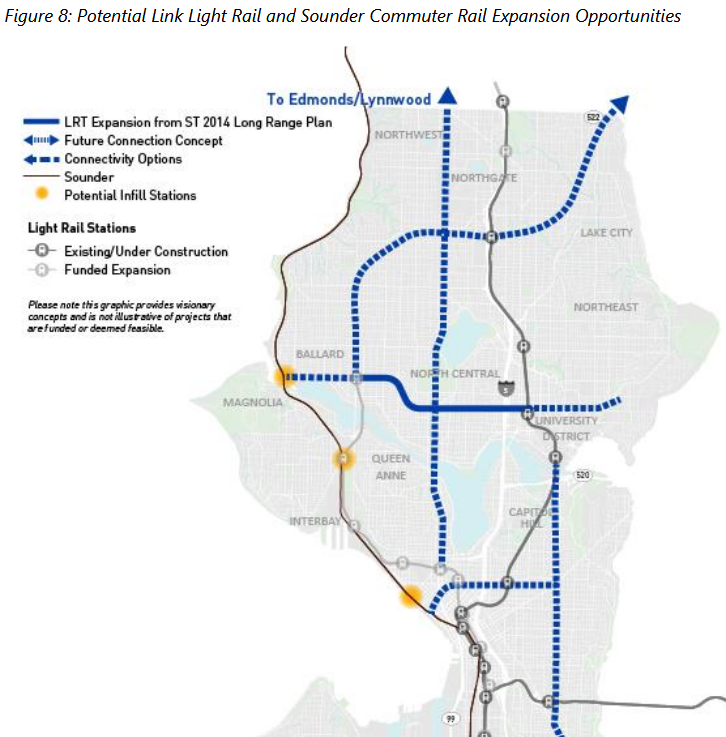
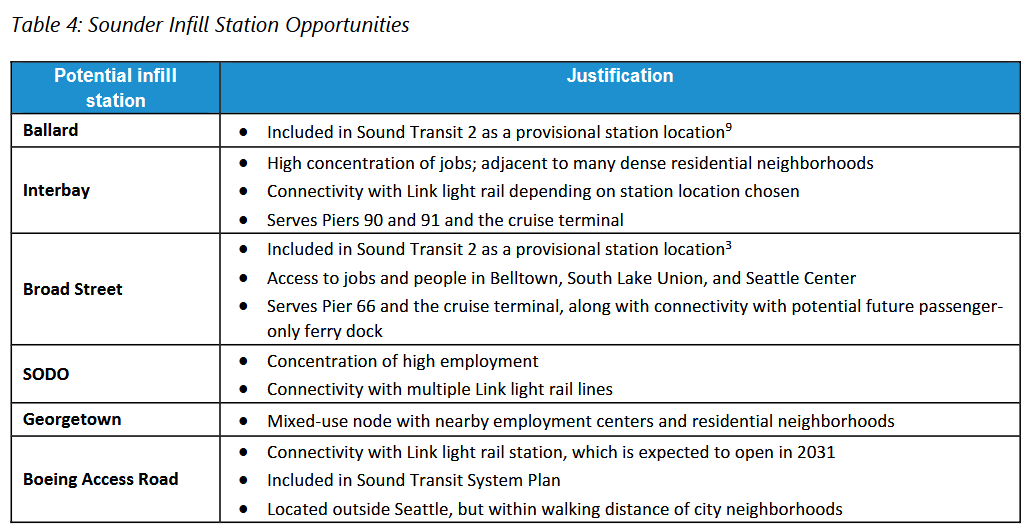
Sound Transit and the region knew the value of a Ballard station as early as the 90s, but left the work for future generations, even including Ballard as a provisional project in the 2008 ST2 ballot measure. Even now, the Seattle Transportation Plan, published in 2024, calls out Ballard, Interbay, Broad Street (another ghost station pledged in ST2 but never delivered), SoDo, Georgetown and Boeing Access Road as potential N and S Line stations.
Not only would a Ballard Sounder station provide direct access to downtown Seattle’s King Street station in an under a 20-minute trip, it would connect commuters from points north to the University of Washington via local bus routes, connect Ballard with a faster transit trip to both SEA and Paine Field airports, and provide the Sounder N Line with the ridership boost its detractors have pointed to as a reason to discontinue this vital service.
While some Sound Transit board members may point to an upcoming Link extension to Everett as a replacement, Seattle and transit users know that Link will be significantly slower than Sounder N Line. (And this isn’t just because of a jog over to a manufacturing plant and airfield that will add over an hour to weekly commutes for every Everett commuter forced to undergo the detour.) If we want people to use alternatives to driving and for Sound Transit to fulfill its purpose, we need to give people what they consistently say they want: short trips that are competitive with driving and better public transit options.
A Ballard N Line station provides both Ballard and the region efficiencies: the N Line is already running under agreement with BNSF, Sound Transit has successfully implemented temporary boarding platforms before, and new Golden Gardens Direct service offers at least a seasonal test case in bus connectivity to an eventual station location. Metro also has experience in time-bound route extensions, meaning Route 44 could also extend several trips to meet the four daily Sounder departures. Instead of returning express bus service to downtown, why not connect people to a truly express and traffic-free train?
But, let’s look at the numbers. For those able to catch a morning flight out of SEA, a trip to the airport would go from over 90 minutes on Ballard’s public transit options today to almost half that. Trying to catch the Amtrak train northbound to Bellingham or Vancouver in the evening? A 15-minute Sounder train ride to Edmonds on the N Line gets you connected. Compare this to the current 45+ minute bus ride to King Street Station – all without doubling back over the same tracks. Best of all for sports fans, Ballard could finally take advantage of Sound Transit’s celebrated game day trains to and from Lumen and T-Mobile Fields.
Estimated, approximate trip times, not including transfer windows:
* Time estimates assume King County Metro Route 44 extension to meet Sounder N Line
Challenges remain, but the need is great
There remain challenges - a primary one will be to ensure transit service to the location. While Golden Gardens Direct would likely provide service to any new Ballard Station, the service is in its inaugural – and seasonal – run. Metro’s Route 44 currently stops several blocks east of any possible station.
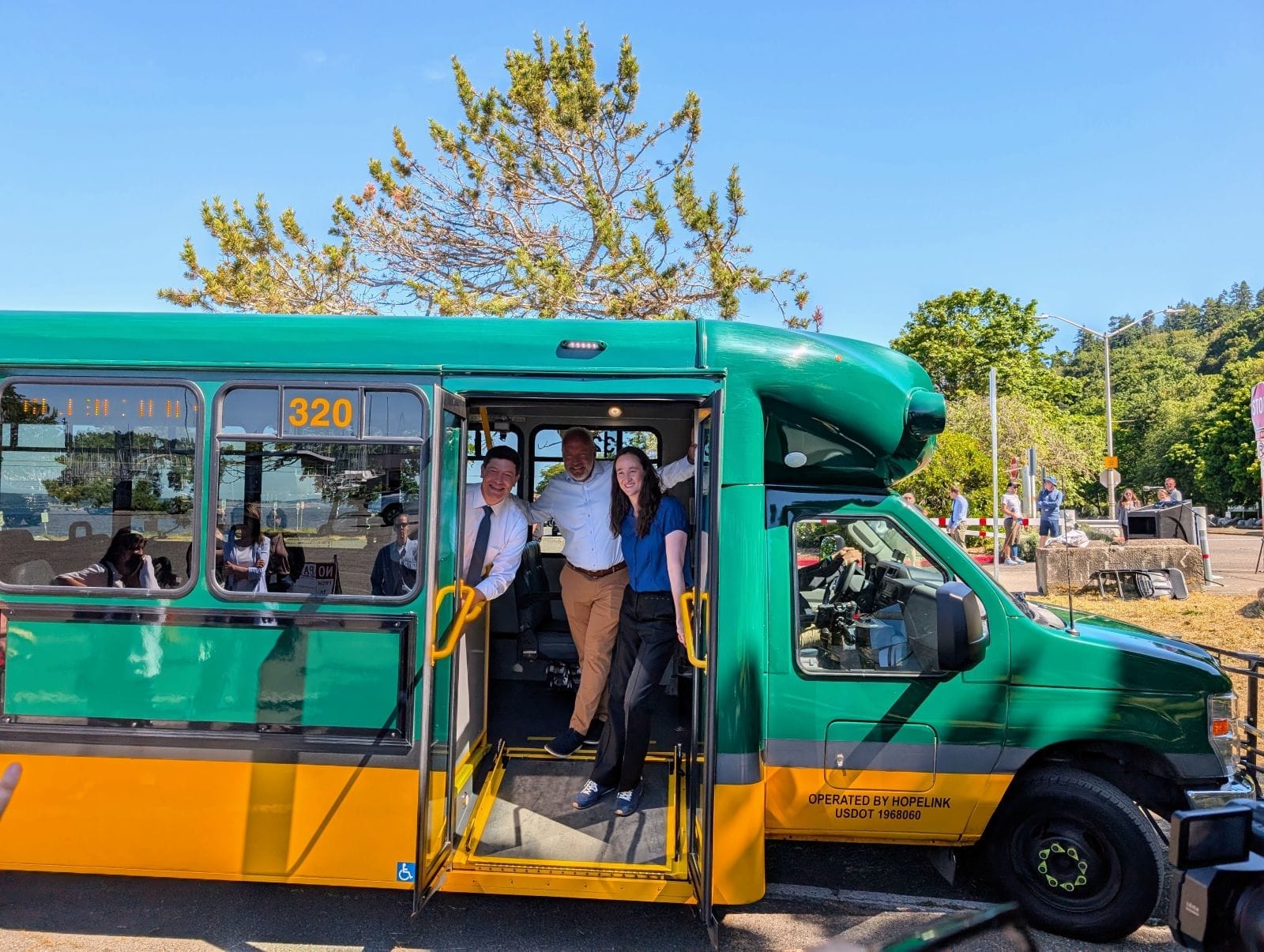
Yet, Metro is adept at running service that can extend or terminate early, based on time of day - RapidRide E, for instance, terminates at three different locations throughout the day in Pioneer Square, and Metro previously connected its RapidRide D service with Link in SoDo to reach early morning light rail departures that didn’t serve downtown stations. With similar planning, Route 44 could terminate at the Ballard Sounder Station during the 2 hours or so of Sounder N Line departures – both ferrying Ballard, Fremont, Wallingford and U District residents to a quick 15-20 minute trip downtown and connecting commuters from points north to those same communities and job sites.
Ensuring that any Ballard station remains a low-cost construction, accessible and whose construction is motivated primarily by the Sound Transit Board’s failure to deliver its promised ST3 plans is another imperative. While multiple projects have ballooned in cost and required Sound Transit’s Enterprise Initiative, the City of Seattle’s ability to negotiate for a quick build that gets people on trains is the goal.
Waiving non-essential costs, approving a station that serves the needs of Seattle communities – getting on the train in a safe, accessible way – and getting something built quickly will allow both Ballard to get the access it deserves while we continue to fight for the ST3 Seattle was promised. To be clear, Ballard’s N Line Station cannot replace Link whose Ballard Station was expected to generate 13,000 daily boardings. What it can do is provide capacity for another ~1,000+ riders, given the N Line’s per trip 300-450 rider capacity, its current four trips per day and June 2026’s average daily boardings of 626 riders.
Given current ridership numbers, it’s also imperative that any infill stations bring both Seattle and Sound Transit to the table to discuss a key ingredient to success of any infill additions: frequency. In March 2008, Sound Transit added another round trip to the N Line (and two to the S Line), leading to an over 20% ridership growth in the Sounder system. In July 2008 – and in a similar economy to today's, marked by high inflation and gas prices – Sound Transit saw a 41% increase in its N Line ridership, partially explained by the opening of the Mukilteo Station between Everett and Edmonds.
Even non-commuter systems see the direct benefits of frequency. The outstanding case of New Buffalo, MI’s Amtrak service demonstrates the power of frequency and connection. With the majority of its passengers connecting to nearby Chicago, New Buffalo had operated on a once daily Pere Marquette line train to the Windy City until October 2009. With a new station constructed on alternate tracks, the city was suddenly disconnected from the Pere Marquette line and served by Michigan’s Blue Water and Wolverine Amtrak lines. This resulted in service increasing from one to three roundtrips a day to Chicago and ridership grew over 300% within one year of the more frequent service.
Once Ballard’s N Line station is built, it will be time for Seattle to pursue the additional infill stations it deserves along with frequent service to connect people to and through their own city and region. Ballard and new City of Seattle stations will allow Sounder to finally serve its full purpose as a fast, direct, and accessible form of transportation for our region.
 Stephen Fesler