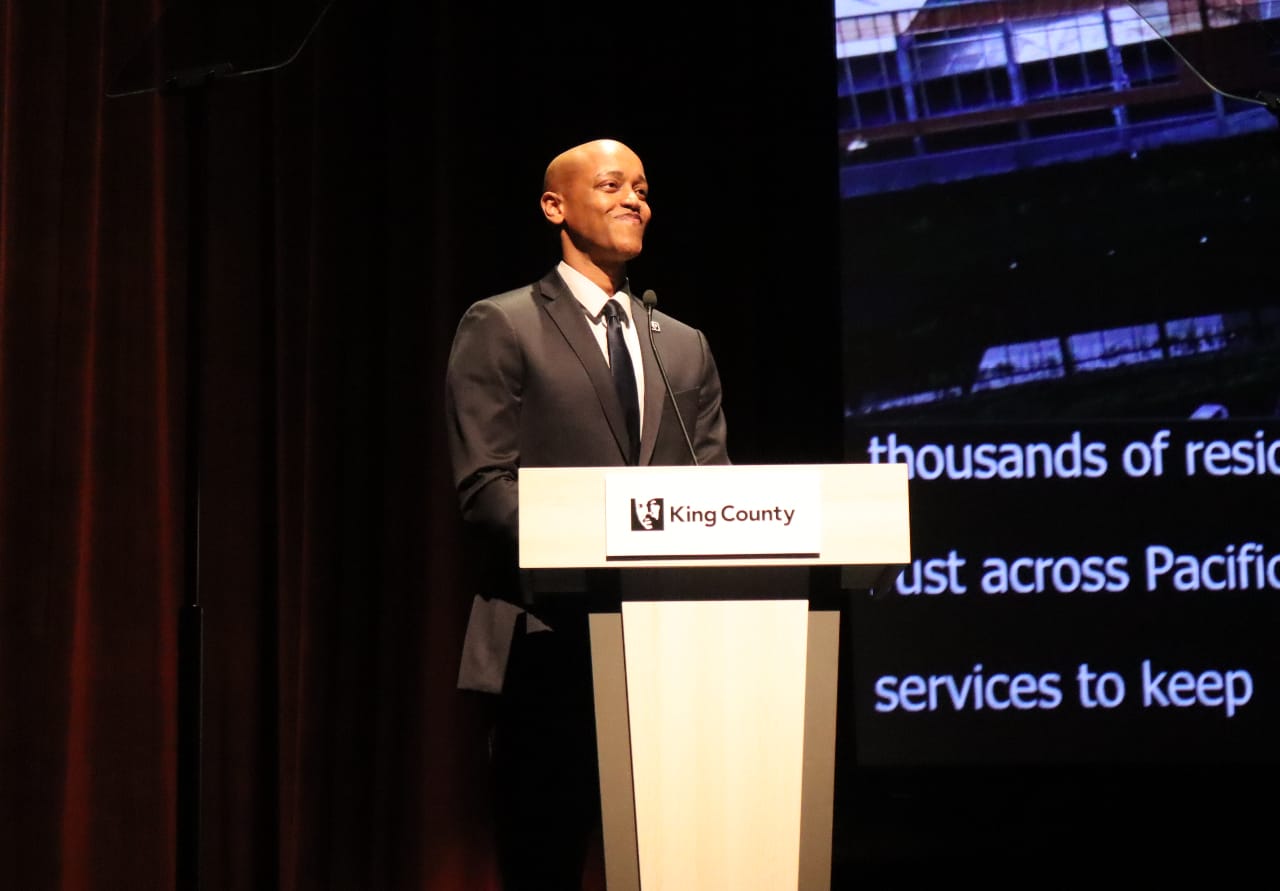
When King County Executive Girmay Zahilay took the stage in Federal Way last week for a State of the County speech to mark his first six months in office, he had a slate of policy announcements in tow. Among the proposals to increase funding for gun violence prevention, expand access to child care, and increase government responsiveness was a new long-range plan for Metro, being dubbed "Metro's Next Stop."
Metro's Next Stop updates the Metro Connects framework currently on the books, last amended in 2021. While Metro Connects called for Metro to scale up to 5.5 million service hours by the mid-2030s – one million more than its 2019 baseline, or a 22% increase – Metro's Next Stop scales that back to a 12% bump compared to around 4 million service hours today.
Proposals for dozens of new bus routes would be pared down to just nine, on top of the plan for four more RapidRide enhanced bus lines that had been the Metro Connects minimum.
Zahilay touted the plan as being part of his administration's "Four B's" agenda that also includes the goal of building for affordability in King County, breaking the cycles of addition, homelessness, and incarceration, being in community, and creating better government.
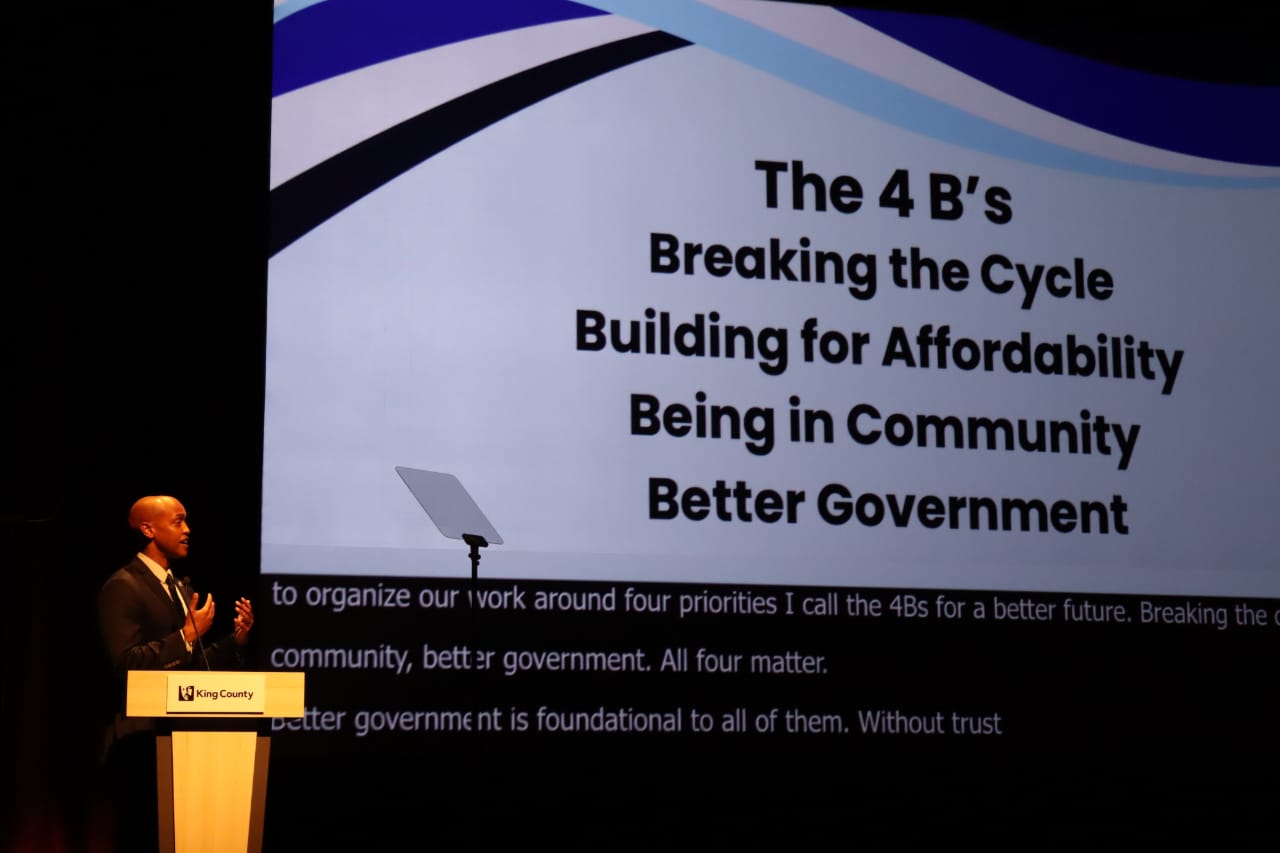
"Affordability also includes building a fast, reliable, and safe transit system," Zahilay said to a crowd at the Federal Way Performing Arts Center. "Metro's Next Stop is our transit roadmap for 2038 when King County is expected to have almost 244,000 new residents. Metro's Next Stop would do the following: it would deliver nine new bus routes, four new RapidRide routes, improve speed and reliability, increase the number of routes running every 15 minutes, and maintain the increased levels of security and behavioral health presence on busses and at transit centers to keep our communities safe."
But even the modest level of expansion that's envisioned in the plan could be poised to clash with reality, given the current budget outlook at King County Metro. The release of Metro's Last Stop coincides with a presentation planned tomorrow at the King County Council that paints a much more urgent picture around the need to readjust for a structural budget deficit at Metro that's set to manifest itself by the early 2030s.
Metro's structural budget challenges have been a known fact for some time, coming out into the open during budget work in late 2024. The agency is currently exhausting its reserves faster than it can raise new revenue, after amassing significant cash balances during the pandemic. Last year, interim Executive Shannon Braddock's budget for Metro significantly scaled back planned bus fleet electrification work, putting the agency's next major bus base retrofit in Tukwila on ice.
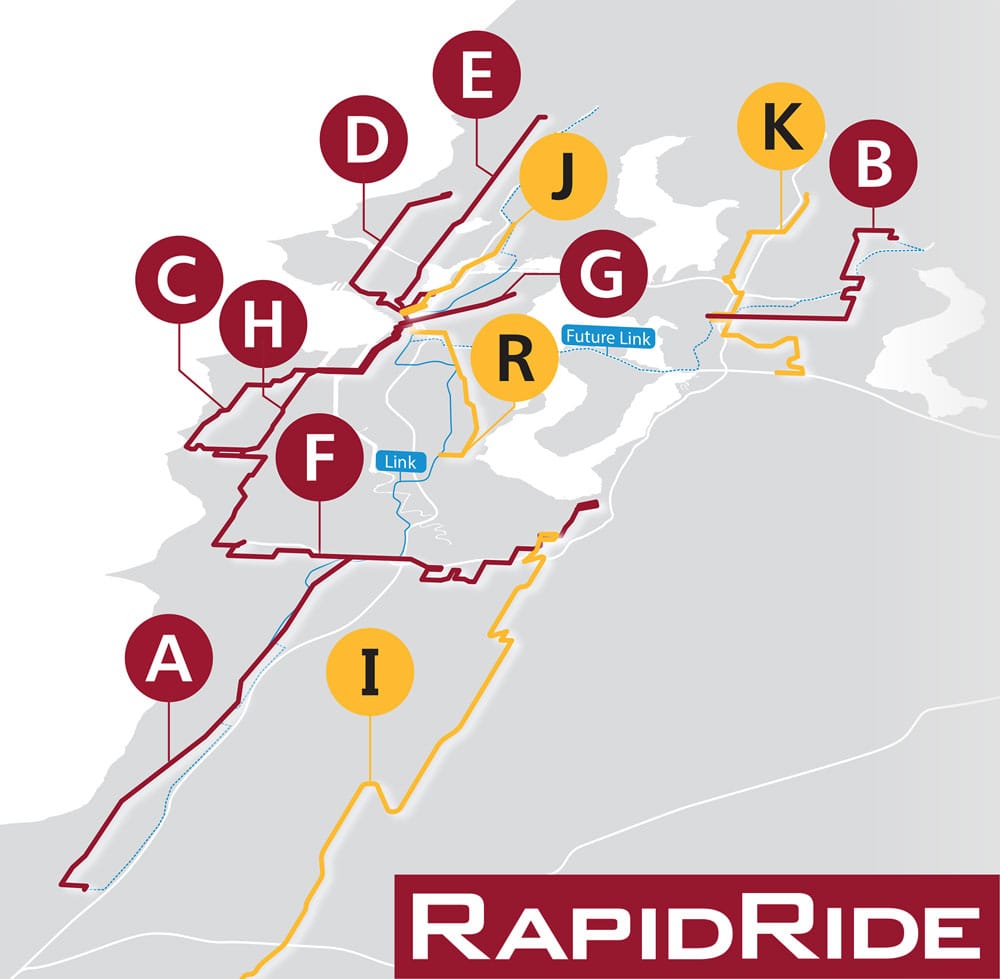
That budget, ultimately adopted by the county council, also scaled back the budgets for the next two RapidRide lines in planning: the K Line between Kirkland and Bellevue and the R Line through the Rainier Valley. But those moves ultimately only pushed back the cliff, rather than solving it entirely.
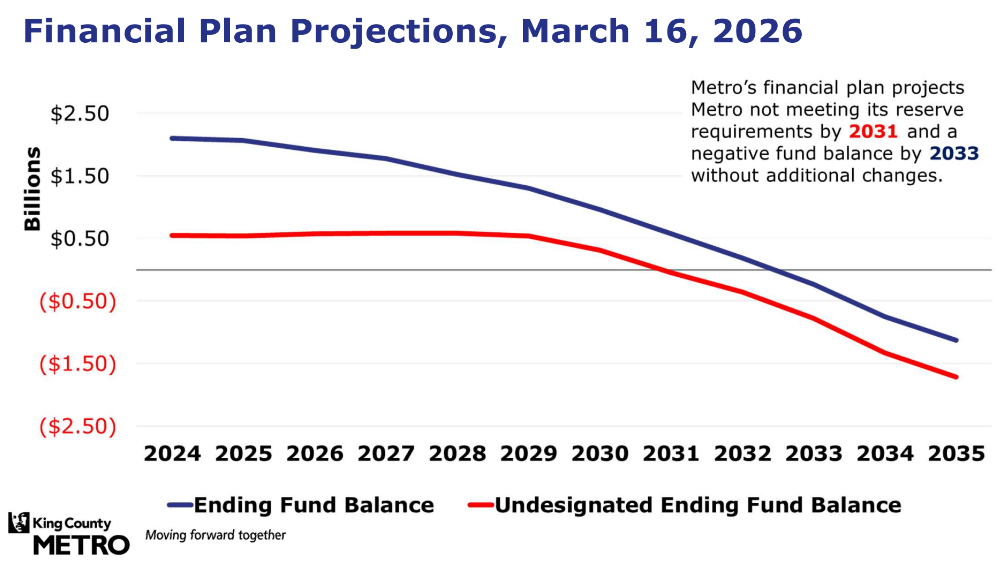
"Metro’s 2026-2027 budget estimated that, after significant cutbacks [...], Metro would face a $1 million reserve shortfall by 2030-2031 and a $755 million reserve shortfall by 2032-2033. This shortfall could require service cuts by 2030," a staff report created for Tuesday's presentation noted. Slides note that "[d]ifficult choices lie ahead for the 2028-2029 budget," up to and including further RapidRide and fleet electrification project reductions, planned service increases that could get deferred and even future service reductions.
The Metro's Next Stop plan doesn't ignore these financial issues, and a more realistic long-range plan may well be warranted given nearly a decade of giving Metro Connects short shrift. The plan also identifies several potential revenue sources that could be tapped into to achieve the plan's vision, with a funding gap of around $500 million per year identified from 2032 through the plan horizon of 2038. To get to that point, Metro would likely need to start building back its reserves long before that.
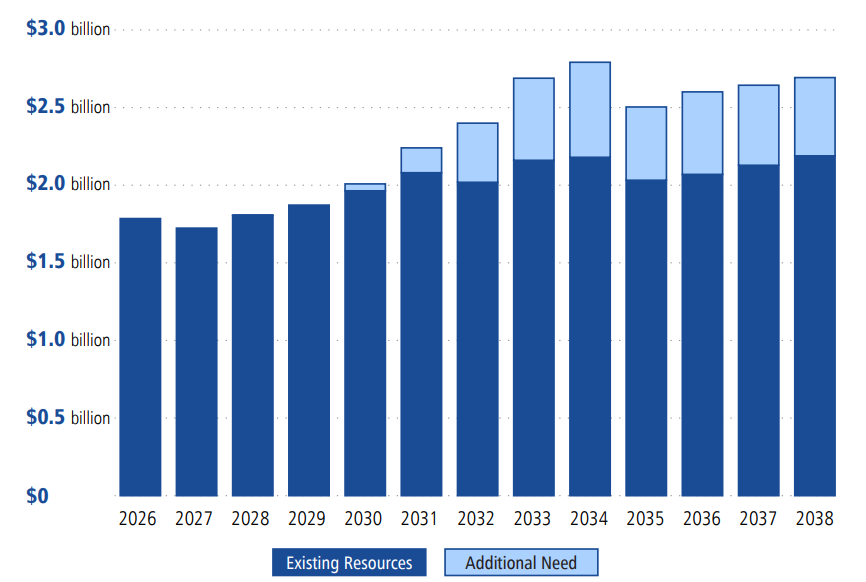
"Metro’s Next Stop reflects the needs and values of communities across King County. Metro is advancing projects that support increased bus service, a faster and more reliable network and a safer experience," the plan states. "At the same time, Metro must carefully manage limited resources, strengthen partnerships and build the workforce and funding needed to maintain and expand service over time."
The most likely source of new funding for Metro is the King County Transportation District, the same authority tapped into last week with a new 0.1% sales tax largely for King County's road services division. Another 0.2% in sales tax authority could unlock more than $200 million per year, with additional vehicle license fees (VLF) also available to turn to. Every $10 in added VLF unlocks $15.5 million per year up to a $100 total cap on voter-approved license fees. The politics of raising the fee that high may prove challenging countywide.
This fall Seattle's leaders are poised to ask voters to unlock the 0.3% sales tax maximum available under the city's transportation benefit district for supplemental bus service and additional transit projects. But even if King County went to the ballot at some later point to receive that same 0.3% authority, the measures may not fully stack on top of each other. With a countywide measure approved, the Seattle counterpart would likely be scaled back, either fully or partially.
And then there's the issue of fare revenue. In the wake of a recent report that more than one in three King County Metro riders are declining to pay their fare and the agency's newly restarted fare enforcement program only issued eight citations across seven months in 2025, the county council is also set to discuss the issue Tuesday.
But unlike at Sound Transit, where a relatively small number of fare gate installations are poised to allow the agency to significantly recoup lost revenue from fare evasion, solutions at Metro aren't easy. Few regional leaders are expressing a willingness to return to a more punitive fare evasion regime that includes criminal citations, on top of the fact that scaling Metro's fare enforcement team across the entire system would come with a considerable cost.
"Fares are an important revenue source and will remain essential for Metro’s financial sustainability," the Metro's Next Stop plan declares. "Our future focuses on keeping transit affordable for those who need it, and ensuring that those who can pay, do. We expect fares to cover a larger share of our operating costs to maintain a strong, reliable system."
It's worth noting that 63% of Metro's fare revenue comes from bulk ORCA card pass purchases through businesses, making a transition to something like a payroll tax on large employers more of a natural fit – though it would take the state legislature to authorize an option like that as an alternative to sales taxes and VLFs.
Will Metro's Next Stop turn into a road map for transit expansion during Zahilay's tenure leading Washington's largest transit agency, or will it join Metro Connects on the shelf, collecting dust? That remains to be seen. It is clear there are big tasks to tackle at Metro before that question can be answered.
 Ryan Packer
 Ryan Packer