Mayor Katie Wilson rolled out her proposed renewal for the Seattle Transit Measure (STM) last week, and local headlines fairly uniformly focused on the doubling of the sales tax rate from its current 0.15% to 0.3%. During a time of high economic uncertainty and intense cost pressures on household budgets across the city, that focus is unsurprising and warranted.
On the other hand, that focus is also causing the measure's potential impact on Seattle's broader transit system to get lost in the shuffle. The boosted funding would allow an additional 100,000 bus trips per year in Seattle, a sizable boost.
If the mayor's proposal is approved by the Seattle City Council by mid-July, Seattle voters will be tasked with deciding this November whether to inch the city's sales tax rate to 10.7% with a 0.15% increase that would unlock around $138 million in funding for public transit annually. Unlike the 2020 measure still in effect now, the majority of the renewal is focused on getting more buses on existing routes, fulfilling one of Wilson's core campaign promises and a major priority espoused since taking office.
But what do those extra service hours actually mean for riders?
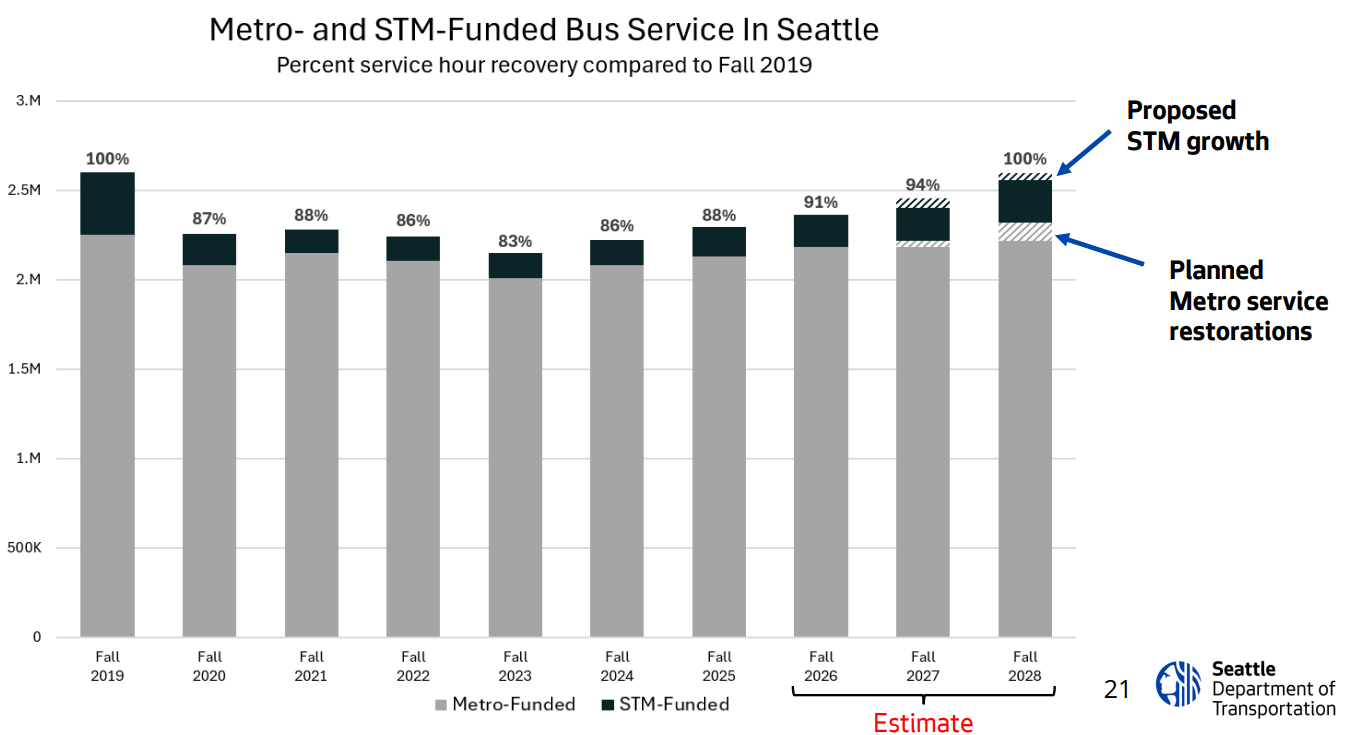
Last Thursday, councilmembers got their first chance to dig into the proposal, and understand the boost to the citywide transit network that would come from the potential sales tax bump, an increase that works out to around $29 per year for a median household in Seattle. The STM renewal would enable King County Metro to fully restore overall Seattle bus service to levels provided in 2019, before pandemic cuts.
Service would be deployed differently than in 2019, however. Responding to new ridership patterns, Metro has shifted to prioritize all-day service over commuter-oriented, peak hour-only routes that were common pre-pandemic. Seattle would also follow this framework when deploying its additional 100,000 bus trips if voters give the go-ahead.
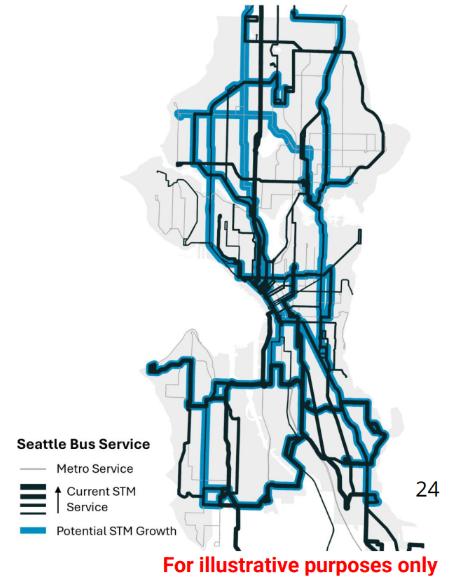
Riders surely are excited to hear what bus routes would see additional service and the particulars of all-day service. The answer to those questions is a bit opaque at the moment, but the Seattle Department of Transportation (SDOT) showed councilmembers a map illustrating which routes are top candidates for additional service.
SDOT Transit Service & Strategy Manager Jen Malley-Crawford told councilmembers that an increased STM would allow additional investments on 10 to 15 routes. However, SDOT's map was marked as merely "illustrative" of future service investments.
The lack of complete certainty stems from the delicate dance between SDOT and Metro over investments. The City of Seattle uses a STM prioritization framework that responds to the service levels that King County Metro is providing, layering on additional trips to provide service at least every 15 minutes consistently throughout the week including on weekends and later at night.
"We would be using the same data-driven, equity-centered investment strategy that we use today," Malley-Crawford said. "These are not the exact investments, but using our investment methodology, these are routes that we would consider making because they are high on that list."
At a high level, Malley-Crawford explained how the methodology works. Bus routes that traverse through "equity priority areas" are scored higher, which has led the city to prioritize boosting service on routes like the 8, 36, 107, 124, and H Line – largely in South Seattle and the Central District.
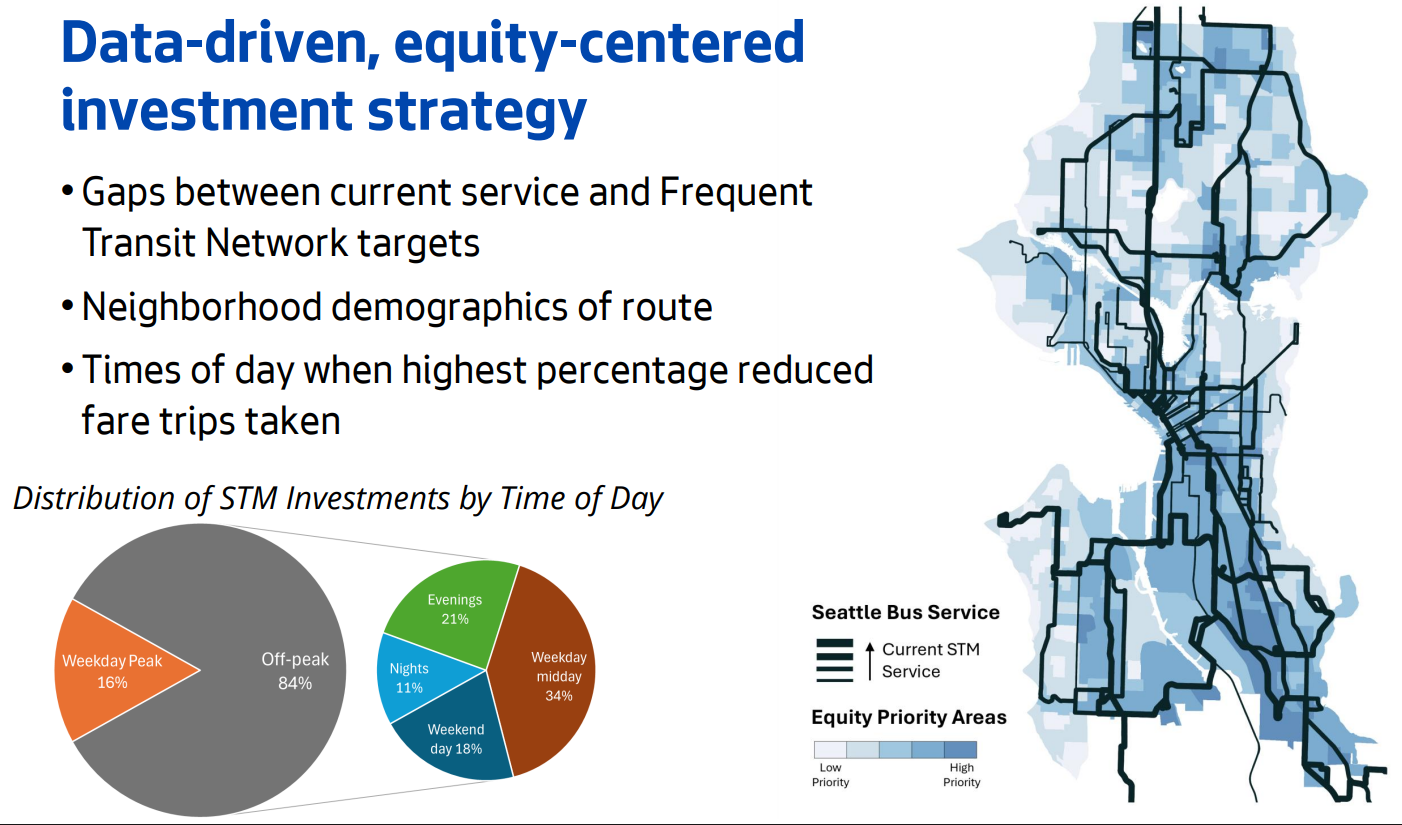
"We have our Frequent Transit Network, which is our vision for being able to get across the city at all times of day, where you don't have to look at a schedule, you just know your bus is coming," Malley-Crawford said. "We start with that [network] and we compare it to what's on the ground today. Then we're looking at the demographics of each neighborhood: we have an equity-based methodology that actually mirrors what King County Metro has for their equity investment and we see those routes are going through those neighborhoods – if it's a higher equity priority area, those trips get a higher score."
Another factor taken into account is the percentage of riders on existing routes using low-income transit passes or fully subsidized ORCA cards, and the times of day those cards are used.
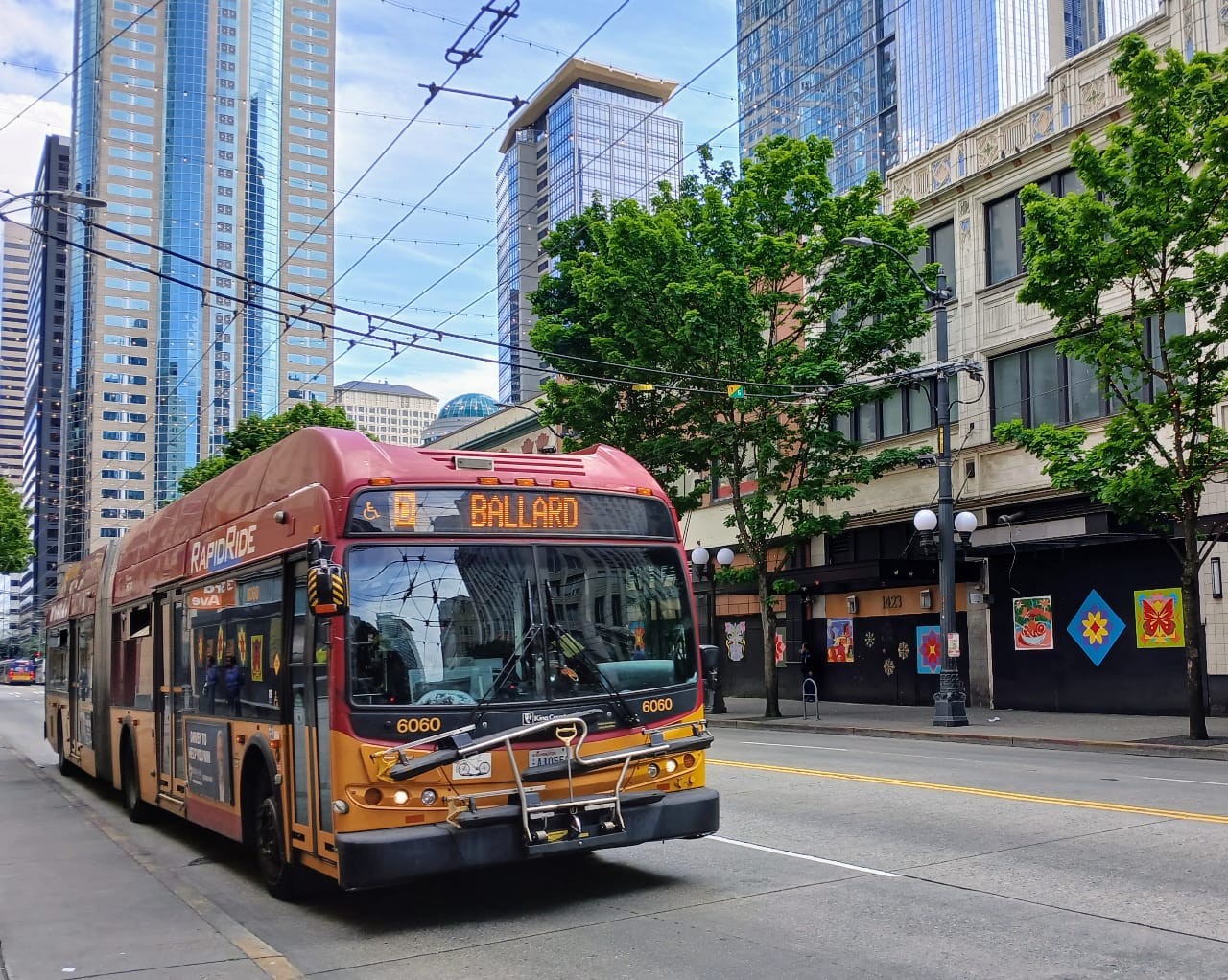
Some of the potential service boosts laid out by SDOT on Thursday are significant: bumping up the D Line to Ballard and Crown Hill from today's 15-minute service on weekends to service every 10 minutes is a top example, as is filling in late-night gaps on the Route 36 to Beacon Hill. The Route 67, a key connector between light rail stations in North Seattle, could be brought to 15-minute service on weekends late into the evening.
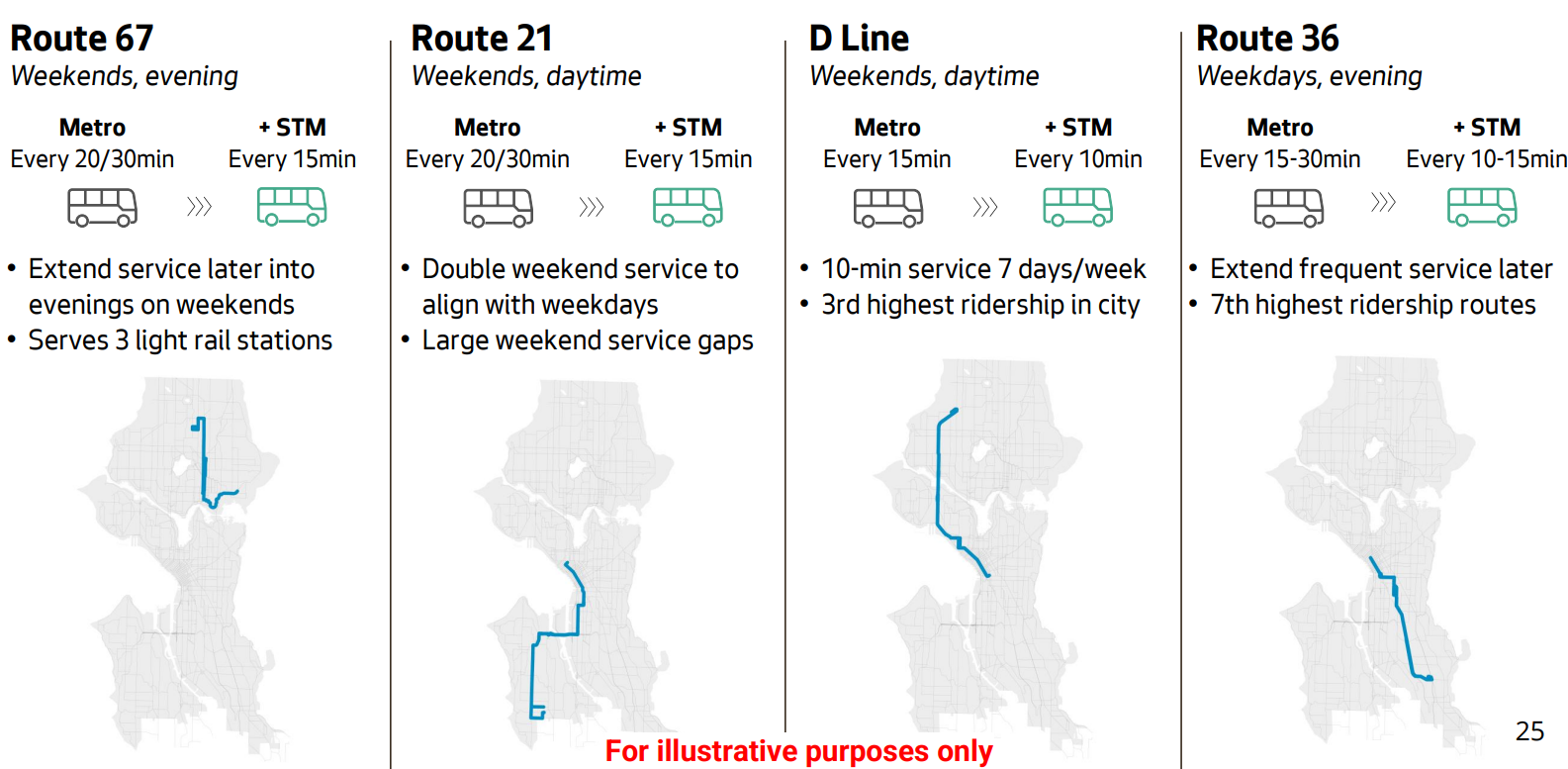
The Route 21 along 35th Avenue SW in West Seattle could go from running every 20 to 30 minutes on weekends to every 15 minutes, dramatically increasing the utility of that route. Most Route 21 buses turn into Route 5 downtown and continue north through Greenwood up to Shoreline, and vice versa – presenting the prospect of another frequent transit route stretching end to end through the city.
It's important to keep in mind that the City of Seattle's investments via the STM would come on top of service expansion in Seattle already being planned by King County Metro, as the agency works to fully return to pre-pandemic service levels. And while that isn't likely to include the restoration of peak-only routes like West Seattle's Route 37 between Downtown and Alki Beach, Metro is not holding the network stagnant either.
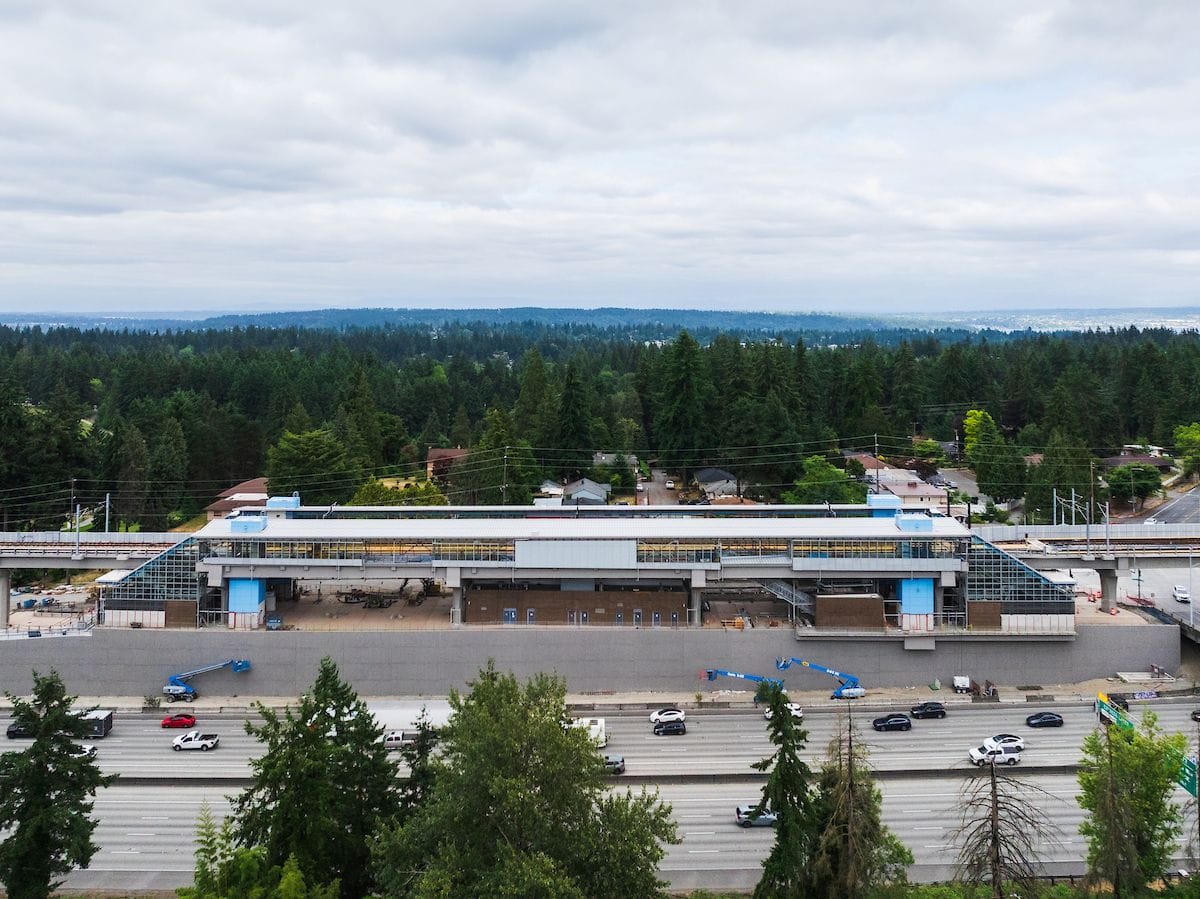
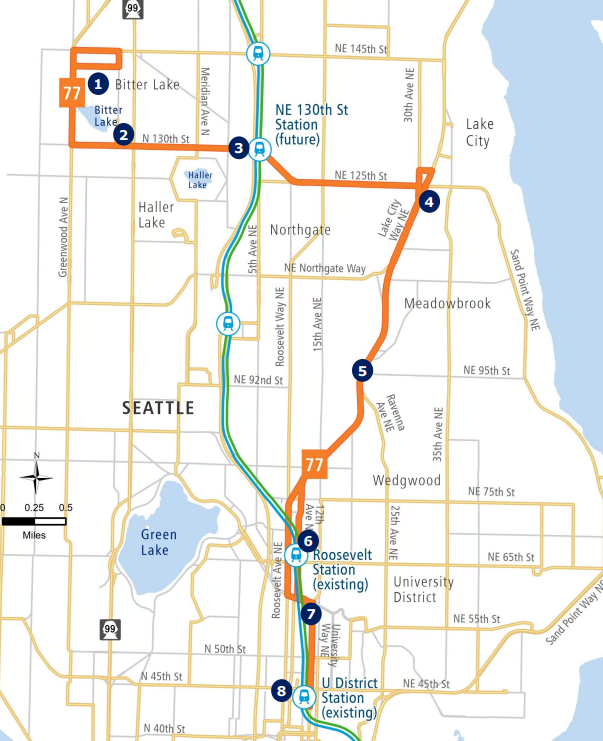
This fall, the agency will launch the new Route 77, connecting Lake City with Bitter Lake and the University District and providing riders with a direct connection to the new light rail station at 130th Street in Pinehurst. Thanks to the current version of the STM, that route will run every 15 minutes throughout the day on weekdays instead of every 30 minutes, as it would have without any city-funded boost in service.
The STM renewal is getting much more attention than the 0.1% sales tax increase approved by the Seattle City Council last year to fund public safety programs, an increase that the King County Council also voted to adopt under the same authority. It's also getting more attention than a 0.1% sales tax measure being considered right now to fund unincorporated county roads.
Unlike those councilmanic measures, the 0.15% STM increase is set to go to the November ballot, where voters will get a chance to weigh in.
Thanks to increased costs at Metro and a drawdown of fiscal reserves for the current STM, renewing the STM at the current 0.15% rate would actually mean slashing service on routes across the city. Just holding steady with 2026 service levels would mean renewing the STM at a 0.223% rate, which would translate to about $14 dollars more spent annually for a median two-person household.
With another $15 dollars per year from the average taxpayer, the city's transit network gets to see those additional 100,000 trips. That's on top of additional investments that include more roadway improvements to benefit transit, continued streetcar operations, and a massive increase to the city's subsidized ORCA program, going from providing 10,000 passes annually to 22,000.
Seattle voters clearly have a track record of supporting transit. The current STM passed in 2020 with 80.32% of the vote, which made it the most popular ballot measure on any topic in City of Seattle history. In fact, it was the most popular public transit measure ever to be approved anywhere in the U.S.
Some pundits and councilmembers are likely to worry that sales tax fatigue will finally catch up with a city that has been so eager to invest in transit in the past. But it would need to be a monumental shift in voter sentiment to sink this measure, given past success.
 Ryan Packer
"