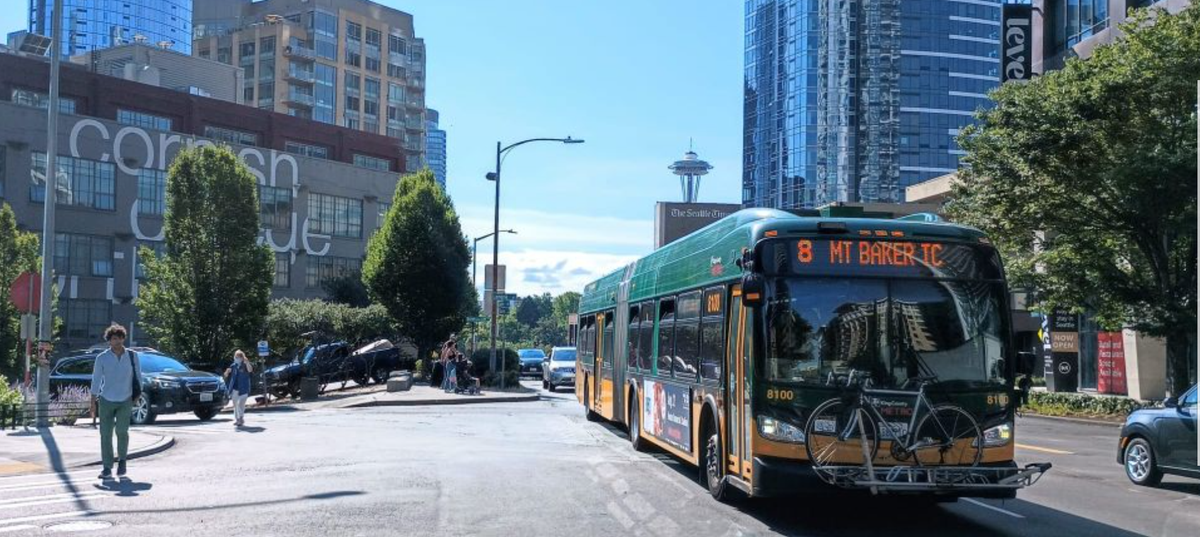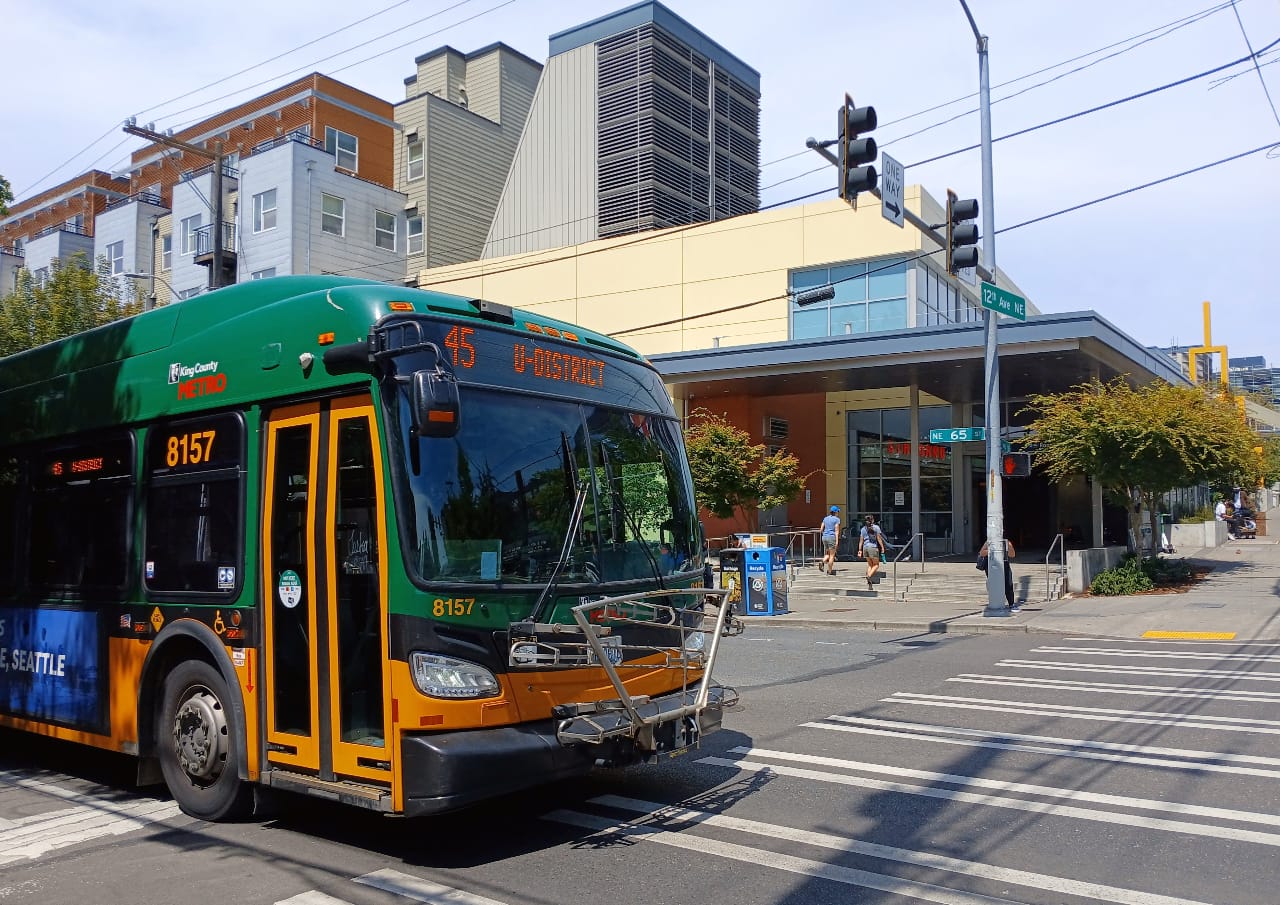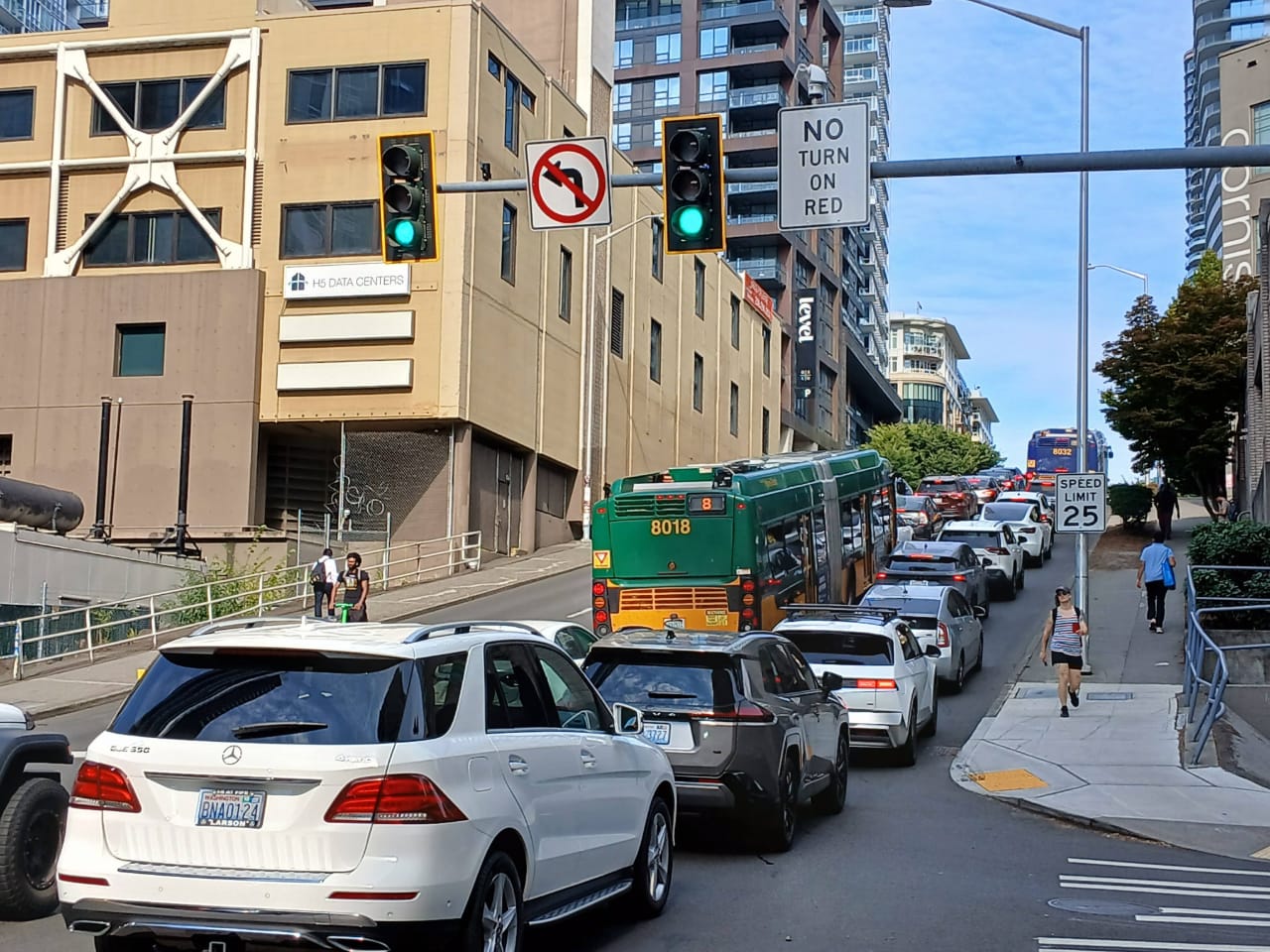
With its World Cup road construction moratorium now in the rearview mirror, Seattle is gearing up for what's likely to be the most impactful street transformation of the summer. Starting August 1, the Seattle Department of Transportation (SDOT) will begin work to un-stick the eastbound Route 8 on Denny Way, a task that transit advocates have been pushing on for many years.
The project became a major campaign promise of Mayor Katie Wilson in 2025, contrasting her with predecessor Bruce Harrell, whose administration framed expanding Denny Way bus lanes as infeasible and misguided.
When work is complete at the end of the month, Route 8 riders will have a new eastbound path through today's regular gridlock on Denny Way, with a new business access and transit (BAT) lane that extends all the way from Fifth Avenue N to Fairview Avenue N.
East of Fairview, SDOT is prioritizing bus traffic by rerouting freeway-bound motorists off the corridor, with the full closure of the often-clogged slip lane from Denny Way onto Yale Avenue to access I-5.
The changes represent a major overhaul of one of Seattle's busiest east-west corridors, and they are set to coincide with an additional infusion of bus service between Uptown, Capitol Hill, the Central District, and the Rainier Valley. After King County Metro implements its next service change in late August, frequencies on the Route 8 will bump up from every 15 minutes to every 12 minutes throughout weekday mornings and afternoons.
Taken together, the infrastructure and schedule changes will shorten wait times and increase reliability for riders throughout the day, fitting in with Metro's planned transition toward an all-day network, rather than a peak-commute-oriented system.
Wilson announced her marching orders for SDOT on Denny Way in January just days after taking office, prioritizing the issue in one of her first two Executive Orders issued. In April, SDOT spelled out its plan after giving another look at analysis conducted during the previous administration that said an eastbound bus lane would have a catastrophic impact on traffic. The new analysis took a more holistic look at the corridor, including the impact of enticing other road users onto the bus.
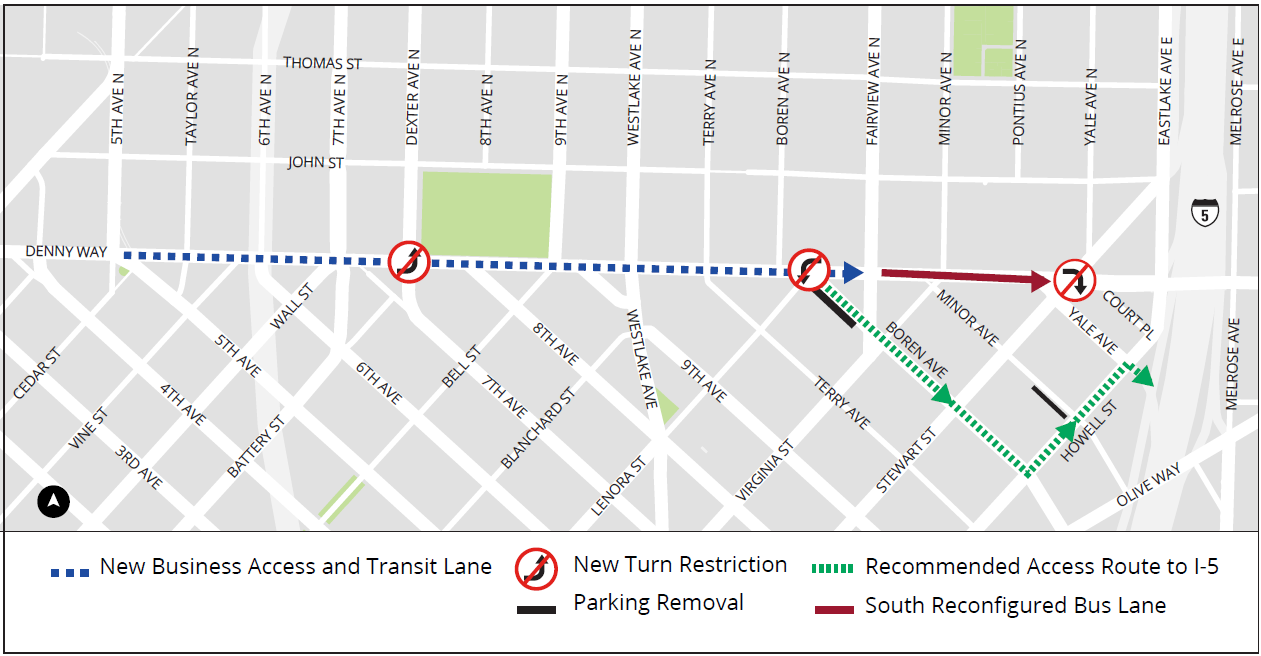
Work will happen in stages, with the slip lane's closure coming first next Saturday. The red painted BAT lanes to mark out space for buses and vehicles making right turns will go in later in the month. Instead of turning onto Yale Avenue, Denny Way drivers will access I-5 via Boren Avenue and Howell Street.
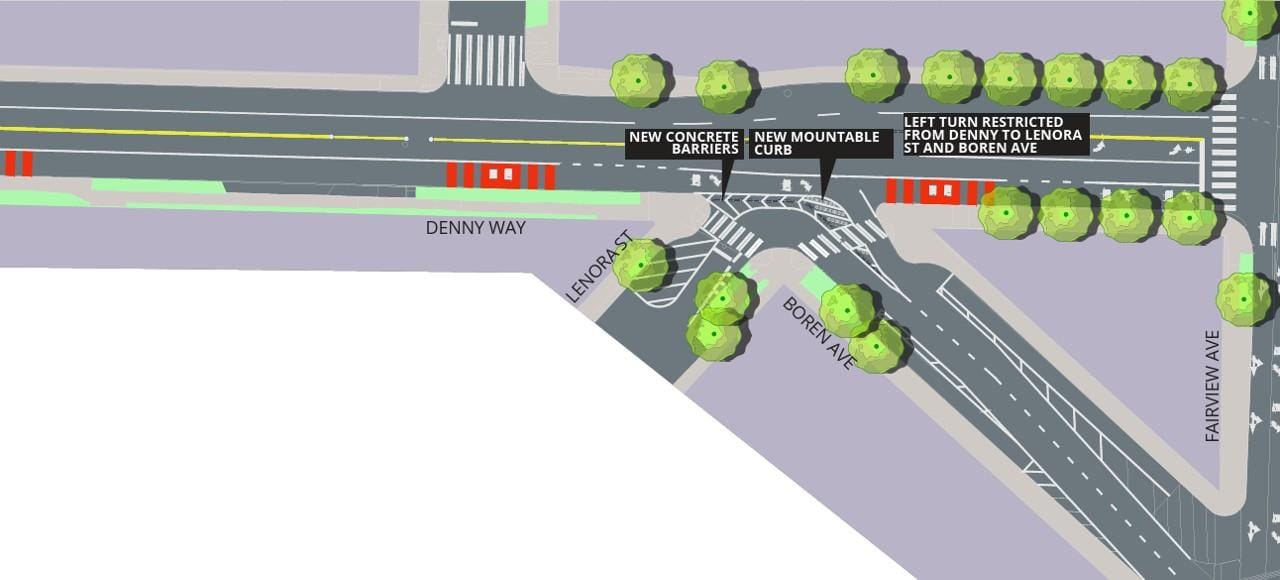
"Starting August 1, people driving to I-5 south should turn right on Boren Ave as shown by the green dashed lines in the map below," SDOT wrote on the project's webpage earlier this month. "Crew work will begin with installing new signs, pavement markings, and signal adjustments. This includes removing some parking on Boren Ave in the block south of Denny Way, and on Minor Ave north of Howell St, as well as adding left-turn restrictions from westbound Denny Way onto Lenora St and Boren Ave."
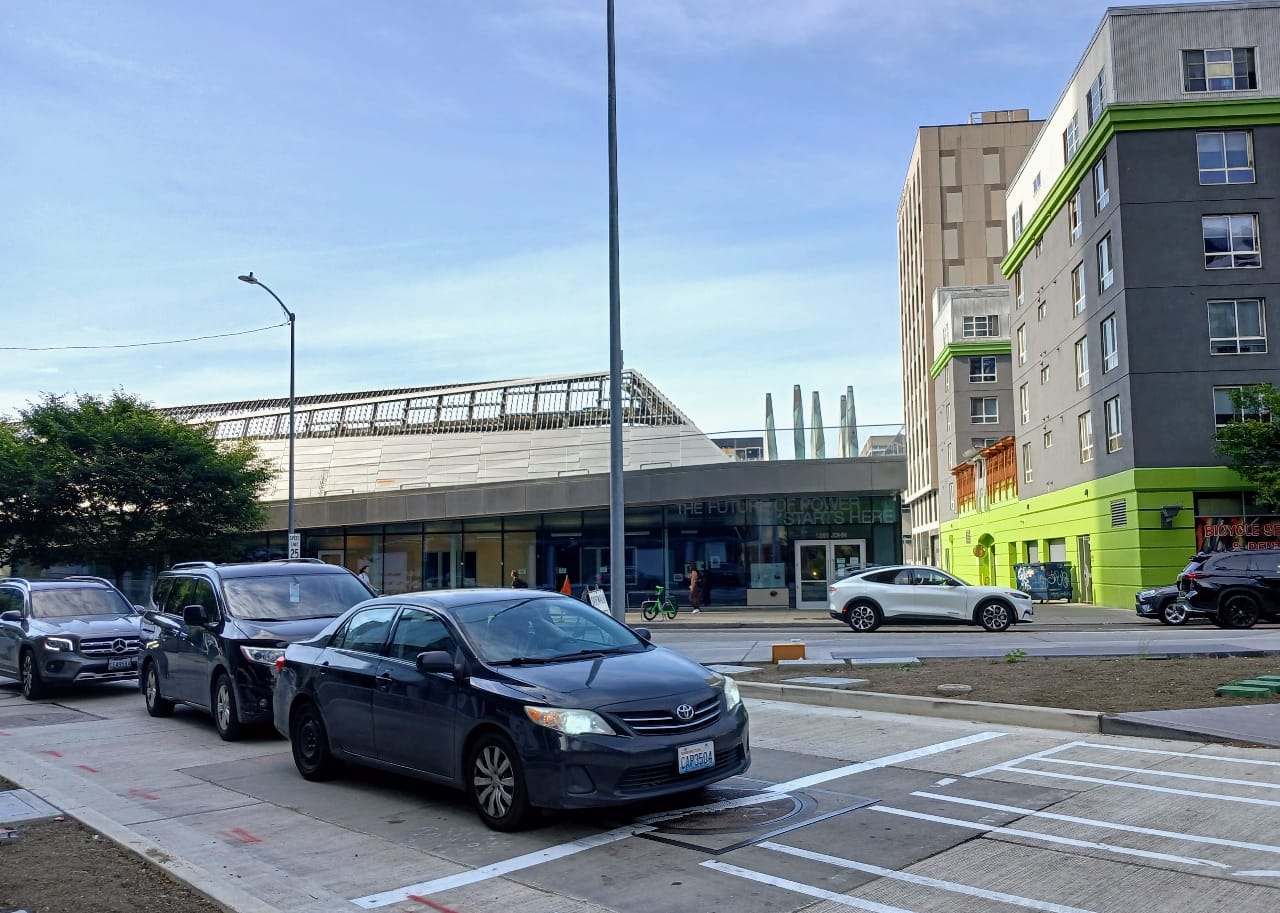
Before work begins on the full stretch of bus lane, SDOT will wait for developer OPTrust to wrap up work on Aero1200 – a $400 million project along Denny Way featuring twin residential towers above a retail galleria adorned with a 747 fuselage suspended over a breezeway. Once that is finished, the project can proceed into the home stretch, with all improvements set to wrap up by the end of August.

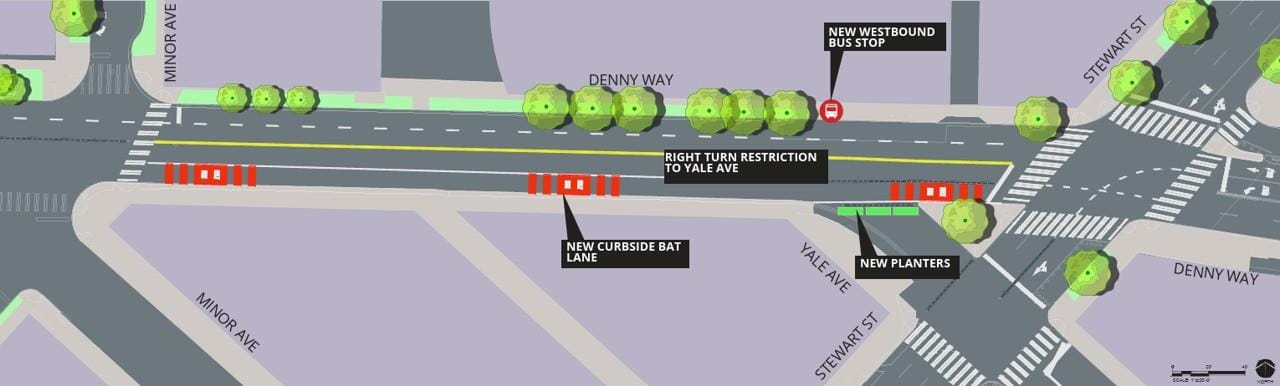
"Once the initial street adjustments are complete, crews will paint and finalize the new eastbound bus lane, install a new westbound bus stop between Minor Ave and Stewart St, and complete signal work to restrict the left turn from eastbound Denny Way onto Dexter Ave N," SDOT notes.
To accommodate the new normal when it comes to I-5 traffic, SDOT's design includes a fairly significant reworking of the Denny Way and Boren Avenue intersection. What's currently a wide open intersection, where drivers are free to speed up as they make the turn onto Boren, will be reconfigured with concrete barriers and a new mountable curb for larger trucks, ensuring drivers slow down before making the right turn through the busy crosswalk.
In this way, the Route 8 project will come to the aid of pedestrians along a bleak stretch of sidewalk.
That change will pave the way for SDOT to restore the second westbound lane on Denny Way between Stewart Street and Minor Avenue, a lane that had been eliminated in 2018 when a short stretch of eastbound bus lane was added to aid the 8. With the lane put back in place, Metro will be able to add a bus stop in front of Denny Substation, a feature planned during the design of that project. That gives riders another option to alight between Bellevue Avenue and Fairview, a fairly long stretch.
"Route 8 will no longer compete as directly with eastbound traffic queuing on Denny Way to reach I-5 south," SDOT's project webpage notes.
In May, SDOT already added a few stretches of bus lane for eastbound 8 riders closer to Uptown, putting in red paint on a lane of Queen Anne Avenue N just north of Denny Way and to several blocks of Denny Way between Queen Anne Avenue and 2nd Avenue N. That stretch of Denny Way is where the street is at its widest, making these stretches of bus lanes less contentious than the ones planned further east.
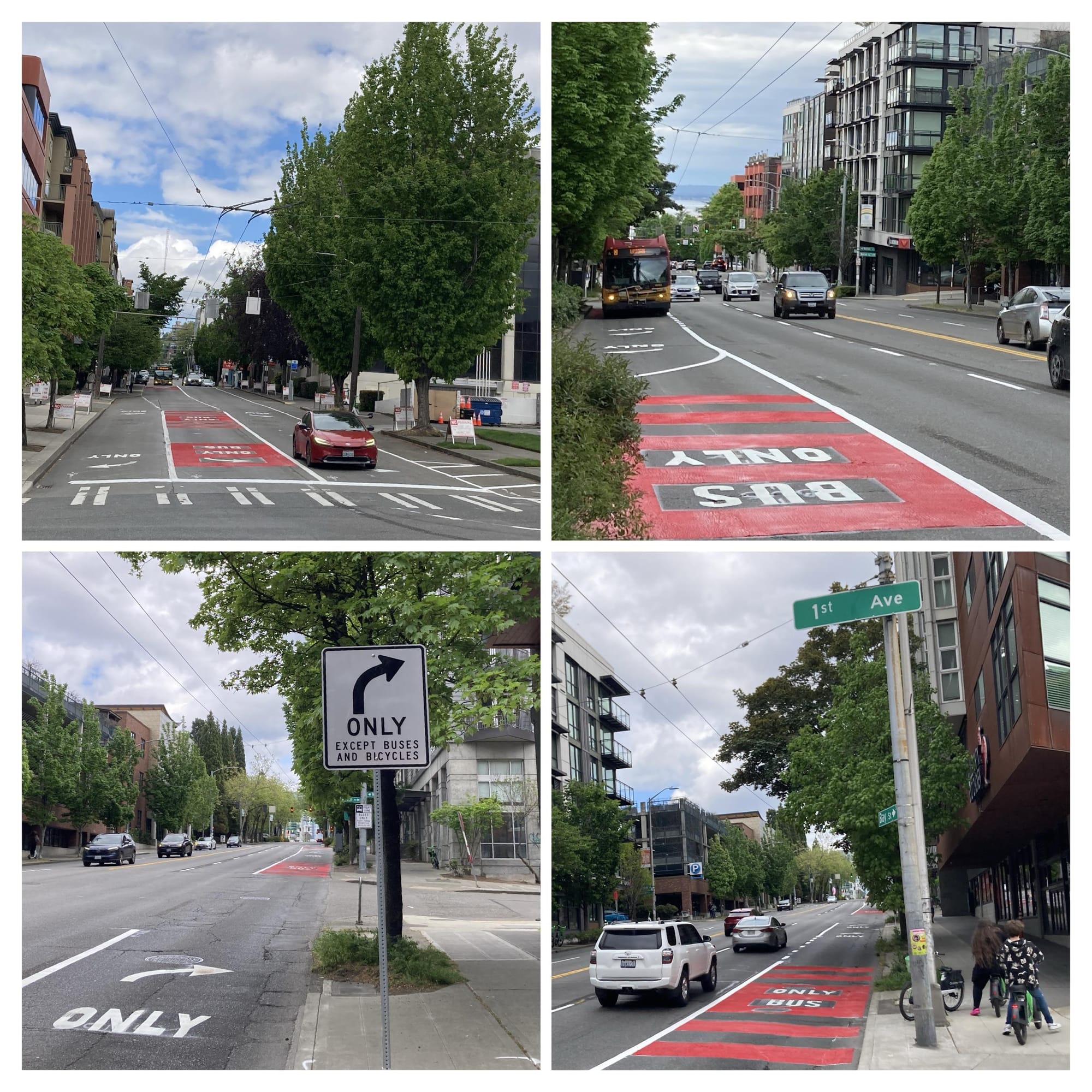
April's announcement showing Denny Way's bright red makeover prompted significant handwringing among the more windshield-oriented members of Seattle's press corps. That reaction, which prompted a direct response from Mayor Wilson, ultimately illustrated the degree to which making space for bus riders on Denny Way is revolutionary, even as it's long overdue.
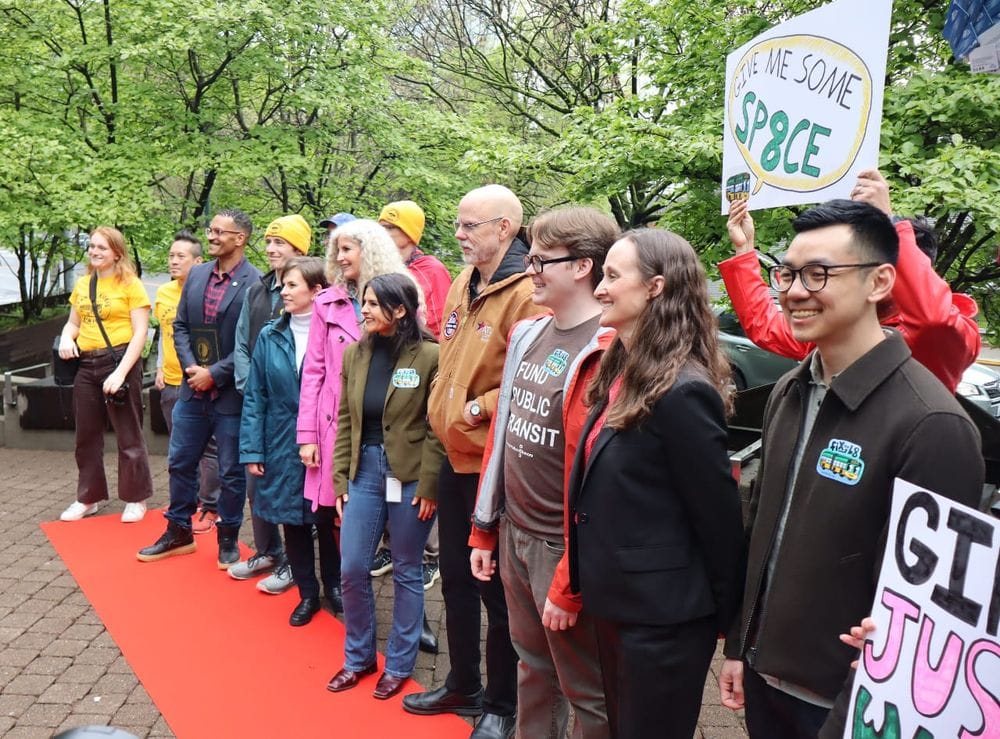
Mayor Katie Wilson's clapback after media portrayed Denny Way bus lanes as a scandal.
For transit riders just trying to get up the hill to home, work, or play, the change can't come soon enough.
 Ryan Packer
 Ryan Packer