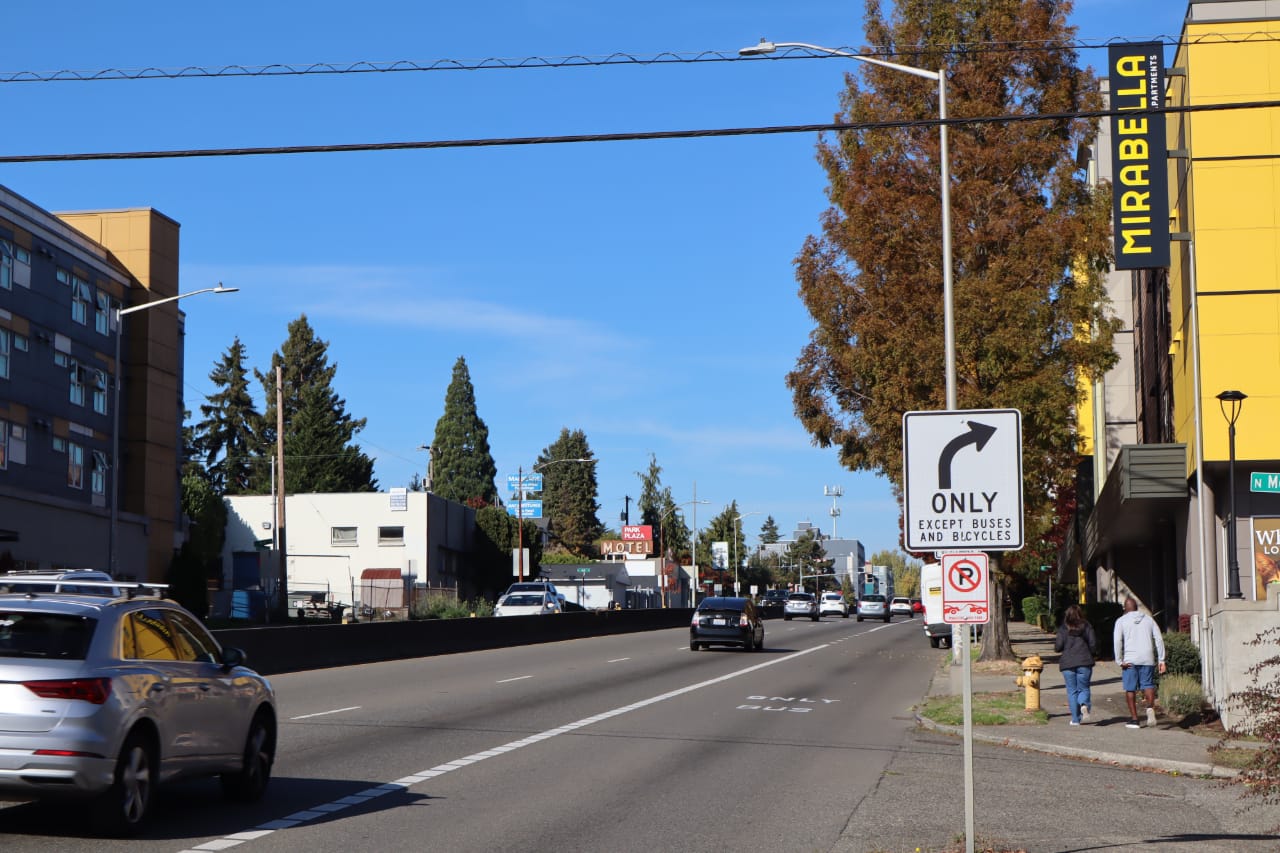
Slow progress in advancing plans for the future of Aurora Avenue appears to be leading to mounting tensions between state legislators and the Seattle Department of Transportation (SDOT). Those tensions came to a head in an email exchange just this month between Representative Julia Reed (D-36th LD, Queen Anne) and Acting SDOT Director Angela Brady, a copy of which was obtained by The Urbanist.
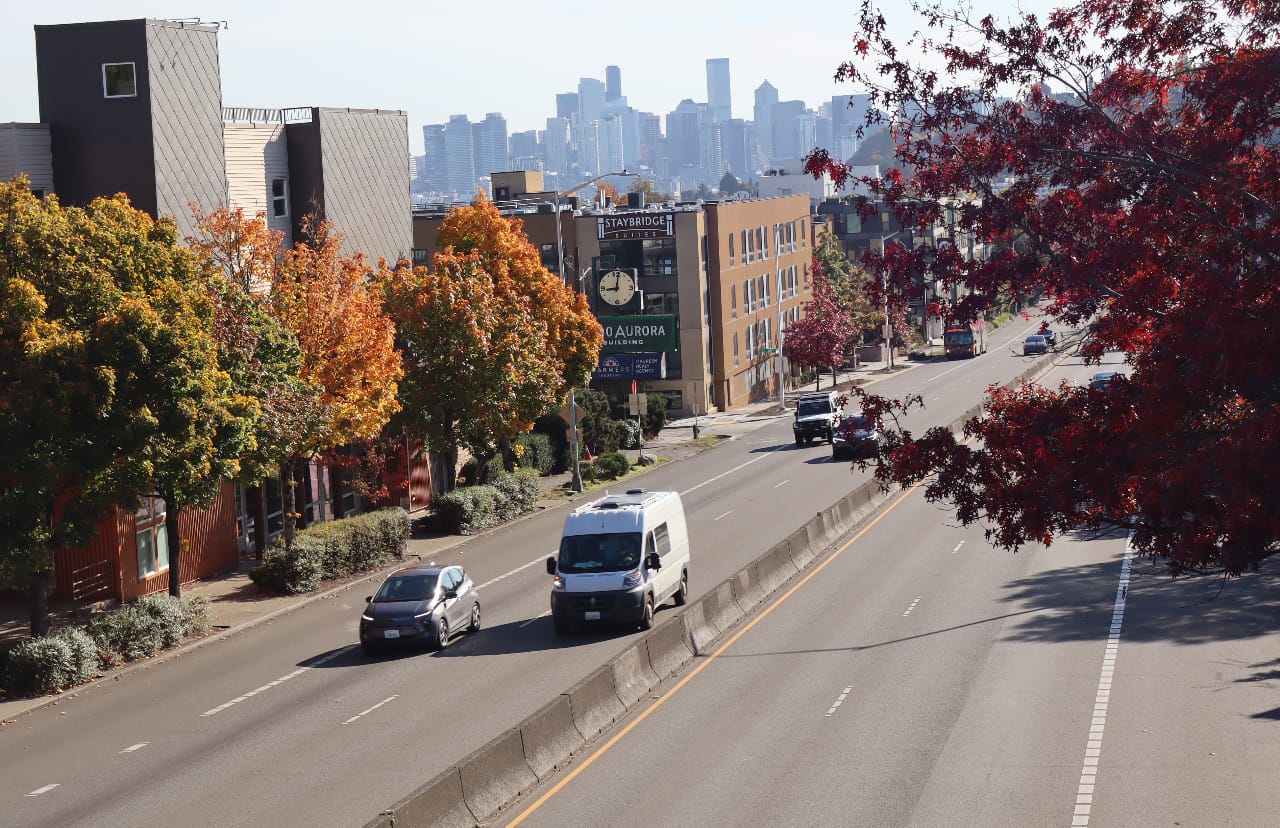
The spicy exchange comes more than four years after state lawmakers set aside $50 million for improvements to Seattle's deadliest roadway, which also operates as State Route 99 for its entire length within city limits. An earmark spearheaded by former state Senator Reuven Carlyle, who referred to Aurora as a "scar, ripping through the center of our city", those funds were intended to be a down payment on a fully transformed corridor that he compared to the Champs-Élysées.
But things remain stuck in the planning stage, despite legislative direction in 2022 targeting upgrades between N 90th Street and N 105th Street as a demonstration project that would pave the way for changes elsewhere. SDOT ultimately did not follow that direction, setting up a safety project to look at the entire corridor between South Lake Union and N 145th Street and looping in King County Metro and Seattle Public Utilities in a move that was certain to make the project harder to implement.
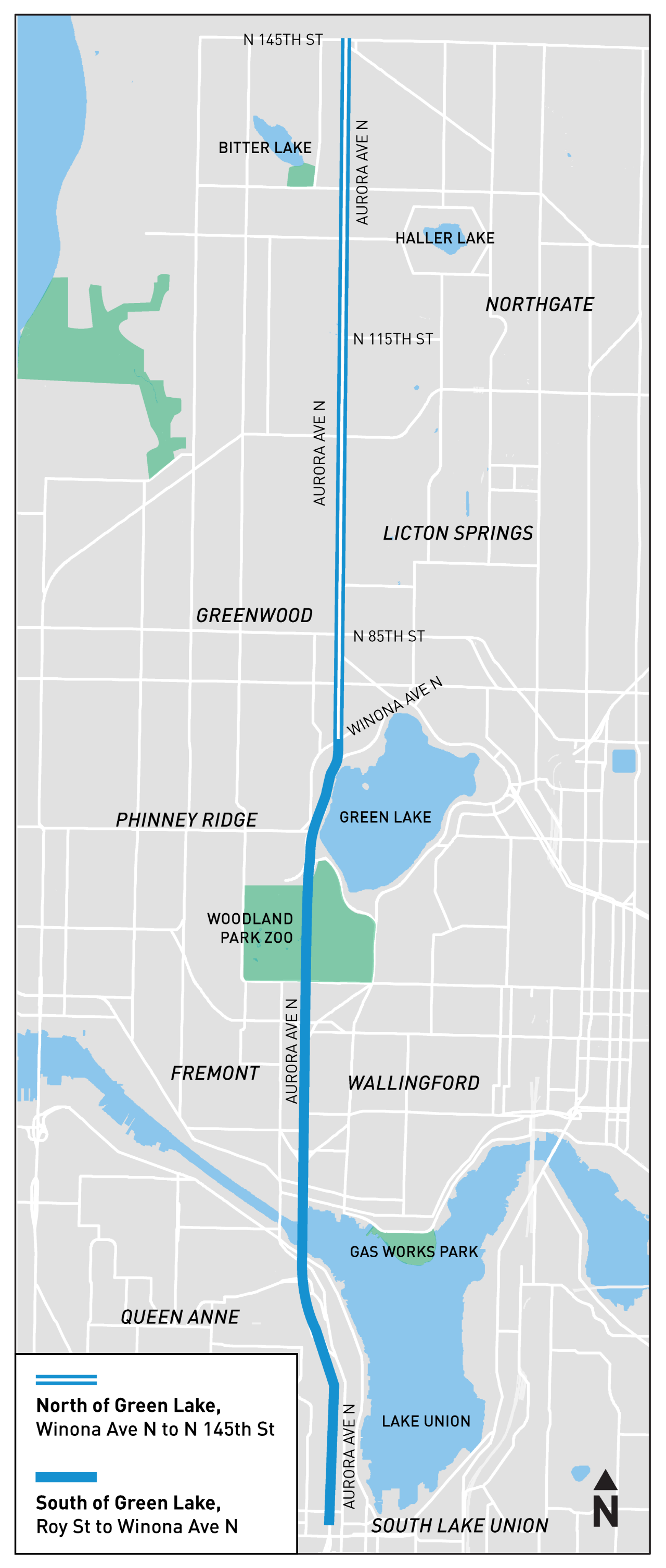
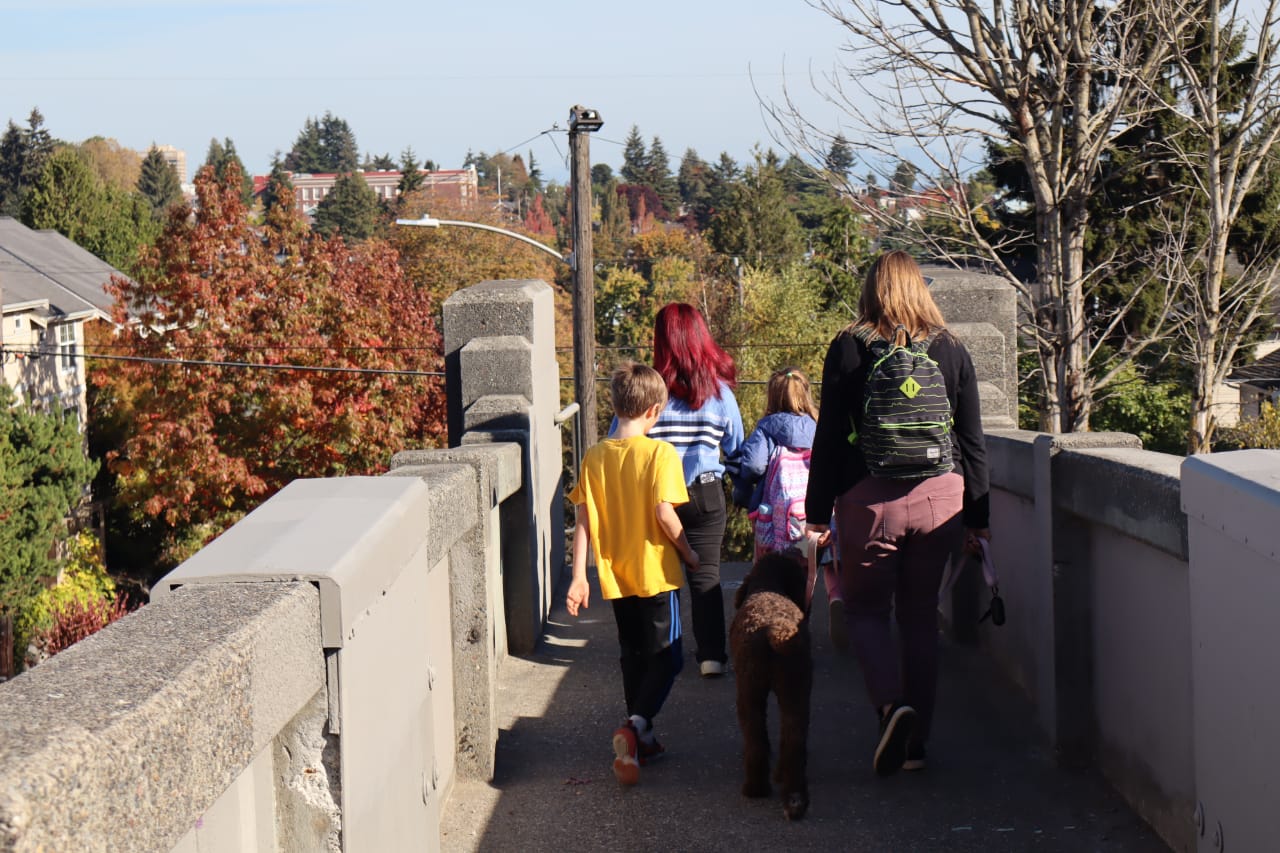
Meanwhile, transportation advocates have shifted their focus further south, to the stretch of Aurora Avenue that divides sections of the Fremont neighborhood from each other. Reconnect Fremont, a project of the Aurora Reimagined Coalition (ARC), represents a push for new marked crossings and bus stops that will start to stitch the neighborhood back together. Families with kids at B.F. Day Elementary School who live on the east side of Aurora currently have to use an overpass at N 41st Street to access school, something that doesn't really work for households who get around by bike.
"We want to cut through the endless studies and build momentum through action," ARC stated in a blog post on Reconnecting Fremont earlier this year.
That goal appears to be shared by Rep. Reed, who serves as Vice Chair of the House transportation committee. Following up on an August call that took place with SDOT and staff from Mayor Katie Wilson's office, Rep. Reed wrote to SDOT Director Brady on October 2 – more than a month after that call took place.
"Wanted to check in from our call in August about looking for the City to take action on the highly needed demonstration projects connecting Fremont across Aurora," Reed wrote. She referenced a commitment made during the calll to set up a meeting between ARC and the consultant team currently looking at potential upgrades to Aurora, from the firm Parametrix. "[I]n our call, the Mayor’s office committed to looking at these projects and taking more urgent action to implement them or at least coming up with a plan in the short term – has that happened?"
Brady's response skirted around the issue of near-term improvements along Aurora in Fremont, instead reiterating the work the SDOT already has done to improve safety on the corridor without directly utilizing state funding.
"We share the sense of urgency that Aurora Ave N is in need of improvements now," Brady wrote. "Over the last three years, we have expanded bus lane operations, installed No Turn on Red and Leading Pedestrian Intervals (LPIs), repainted and widened all crosswalks, added center medians and hardened centerlines to reduce turning conflicts, and updated signal timing corridor-wide to increase pedestrian crossing times. We are currently wrapping up construction of a new signal at N 137th St and completing designs for another package of additional near-term improvements."
But Brady, who took over as Interim SDOT Director in January after a long stint in the city's Office of the Waterfront & Civic Projects, also told Reed that the department has been having a hard time figuring out how to use the $50 million in funding from the 2022 Move Ahead Washington (MAW) transportation package.
"Generally, we have found that the MAW funds have not been easy for SDOT to use for near-term work. They are administered by WSDOT Local Programs similar to a state grant, making them challenging for the City to pivot and use quickly," Brady said. "Seattle is currently exploring various scenarios for sequencing MAW dollars – including near term improvements and a more focused, targeted approach to longer-term improvements. We look forward to discussing those options with you ahead of session."
Reed wrote back visibly frustrated, framing Brady as backing off a promise to set up the direct meeting between ARC and Parametrix, and a commitment to provide concrete next steps on quick build projects that could help to reconnect Fremont.
"I’m sure it is not the city’s intention to go back on its word to a sitting representative and member of the Transportation committee — especially since as we discussed the heart of this problem is a lack of trust in SDOT to administer the state funds effectively," Reed wrote. "I’ve worked in city government a long time so I speak roundabout email as well as anyone. Please do not spray water on my inbox and then try to convince me it is raining."
Reed was even more blunt in an aside in a follow-up email directed to Alex Hudson, at the time Katie Wilson's Senior Policy Advisor on Transportation & Livability. (Hudson has since spent several weeks filling in as Wilson's Interim Press Secretary, but is now returning to her prior role.)
"If the city does not plan to keep the commitments we discussed then I will note that 1) the City is not a trustworthy partner than can be relied on to do what it says it will do when it comes to Transportation work, which will just for the record have an influence on the level of effort I want to put in to advocate for city priorities at the state level and 2) recommend to Chair Fey that the $50 million could be better used in a more directed fashion to improve near term conditions on Aurora," Reed wrote.
Reed, responding to an inquiry about the email exchange via text, made it clear that funding for Aurora remains a priority for her office, but reiterated her frustration with the City of Seattle's pace of action.
"I will say for the record I have no wish to diminish funding for Aurora or to endanger the set aside which goes back to Reuven Carlyle days. But I do want SDOT to take ARC seriously and to take me seriously when I say that waiting two more years before you even think about doing a project is not acceptable," Reed wrote. "This is about trust as much as anything, and following through on the small commitments and pushing forward the bigger demonstration projects is how SDOT builds trust with me and the community that we’re really on the same page."
"Also I commend all the hard work ARC members have put in as volunteers to create a reasonable, achievable, and practical vision," Reed continued. "I don’t think they’re asking for that much and I think city departments should be doing cartwheels of joy to have community members who are so organically engaged at a time when SDOT routinely spends thousands trying to produce even a fraction of this engagement."
Since the email exchange, Reed and Brady met one-on-one this past Friday, a meeting that reportedly went positively. SDOT spokesperson Ethan Bergerson portrayed the department as making progress on Aurora in a statement provided to The Urbanist in the wake of that meeting.
"Acting Director Angela Brady and SDOT staff have a commitment, responsibility, and desire to improve safety on Aurora Ave N. We greatly value Representative Reed’s partnership on this important project and appreciate the work of advocates in continuing to elevate and participate in solutions for the critical needs on Aurora Ave N," Bergerson wrote. "There was a misunderstanding about a commitment made in a meeting regarding the Aurora Ave Project. Now that we’re aware of the misunderstanding, we are scheduling a meeting in November between members of the Aurora Reimagined Coalition and our consultant team."
Bergerson noted that SDOT is working toward wrapping up the planning phase on the Aurora project by next year, a condition of state grant funding the city has already received. $3 million allocated by the legislature remains unobligated, out of the city's reach. Receiving the remaining $44 million will require direct coordination with legislators.
Whether the Aurora project can finally see some forward momentum remains to be seen. And Reed's email exchange voiced concerns that many transportation advocates have raised around the slow pace of work to tackle some of Seattle's most dangerous streets, with the goings-on inside the city's insular transportation department seemingly impenetrable even to a state legislator. Though Mayor Katie Wilson issued an executive order in August directing SDOT to accelerate work on Vision Zero projects, many of the highest-profile corridor overhauls included in the 2024 Seattle Transportation Levy remain in early stages.
"Aurora Avenue is Seattle's most dangerous street. It is polluted, noisy, and divides our neighborhoods. Representative Reed is a strong and steadfast supporter of ARC and our mission to change Aurora for the better. She has worked tirelessly alongside her constituents to ensure SDOT's plan for Aurora is truly transformational," Aurora Reimagined Coalition member Carlo Alcantara told The Urbanist. "Like Rep Reed, ARC would like to see more near-term action on demonstration projects like Reconnect Fremont. These demonstration projects start to reimagine Aurora as a neighborhood main street rather than a highway bisecting our neighborhoods."
 Ryan Packer
 Ryan Packer