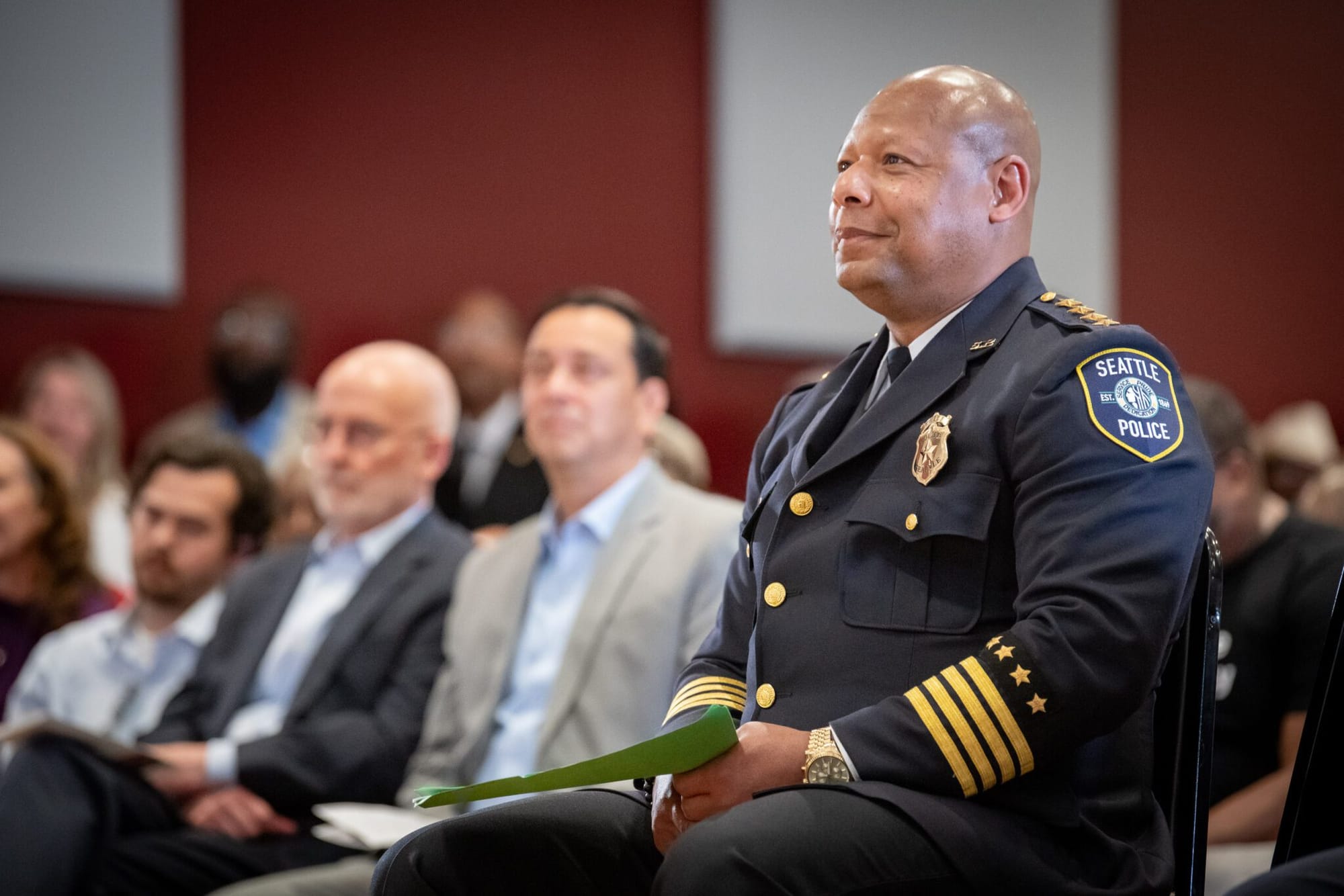
Mayor Katie Wilson ousted Seattle Police Chief Shon Barnes on Wednesday, PubliCola's Erica Barnett reported. After initially staying silent, Wilson issued a statement on Thursday, confirming that Barnes has resigned and announcing Deputy Chief Andre Sayles as Interim Chief of the Seattle Police Department (SPD).
"Chief Barnes has served this department and this city with dedication, and I am grateful for his service," Wilson said in her statement. "The courage and professionalism that the officers of the Seattle Police Department showed deserves to be honored. I share Chief Barnes' hope that we can return our focus to addressing youth gun violence and ensuring that every family can feel safe in their neighborhood and across the city.”
She followed that up with a video statement that explained her decision in more detail.
Sayles previously served as Chief of Police in Beloit, Wisconsin before Barnes hired him in 2025. "Under his oversight, SPD's Gun Violence Reduction Unit and homicide detectives have continued to close difficult cases, including the arrest of a suspect in the fatal shooting of two teenagers near Rainier Beach High School," the Mayor's Office said. "The mayor believes he is the right Interim leader for SPD in this moment and to ensure continuity while we conduct a thorough search for a permanent chief."
“My vision for public safety in this city is grounded in transparency, trust, and genuine collaboration with the community,” Wilson added. “Keeping people safe requires trust, and trust requires that this department shows up in neighborhoods every day, builds relationships with residents, community organizations, and small businesses, and is accountable to the people it serves.”
The mayor will hold a press conference at 11 am Friday at City Hall to introduce Chief Sayles and provide information on the process to find a permanent chief.
Barnes draws criticism
Chief Barnes has recently come under scrutiny for his frequent travel and absences, and his defensive response to questions on the topic.
Barnes was in Dallas attending a conference Sunday when a shooting occurred at Seattle Center's annual Bite of Seattle festival, killing three and leaving five people injured. Beyond the weekend conference, Barnes was in the midst of two weeks of planned time off he had scheduled into mid-August, most of which he attributed to a medical procedure.
Barnes flew back to Seattle to oversee the police response to the crisis, but the questions remained about his work schedule and the police department's limited communications in the immediate aftermath of the shooting.
"Our after-action review of the city's communications with the public and the media revealed real gaps," Wilson said in her Thursday video. "Information could and should have gone out much faster through social media, the emergency alert system, the SPD blotter, and/or an off-site press conference. The public should have heard sooner about outstanding suspects and the status of the Seattle Center campus. We will be working with SPD to ensure that communications go out much sooner in the future."
Chief Barnes was out of town for travel for "nearly seven weeks in the past seven months, on top of about two weeks spent on vacation and out of the office," Barnett reported, adding he had also been out of town most weekends in his first four months on the job, according to his schedule. Barnes has also faced criticism related to missteps in office (more on that later).
Barnes' frequent travels can be partly attributed to visiting his wife and kids, who continue to live in Chicago and have not followed him to Seattle, although many trips were to other destinations. Despite his frequent absences, Barnes has insisted that he is well connected to Seattle communities.
Barnes doubles down, digs deeper hole
During a Monday press conference to provide an update on the investigation into the Seattle Center shooting, Barnes lashed out at South Seattle Emerald reporter Connor Nash over a question about his frequent absences from the city he's entrusted to safeguard, and called reporting on his absences "inaccurate."
KIRO 7 segment on Chief Barnes confronting a reporter.
"I was not in town yesterday," Barnes said. "I wish that I had a crystal ball and we could schedule gun violence, but we can’t. [On Sunday] I was in Dallas at the National Organization of Black Law Enforcement Executives conference.”
At a Tuesday press conference, Barnes continued to deflect questions on his schedule, and even managed to complain about the high rent he pays for his apartment in downtown Seattle. Barnes' salary is $373,000 per year.
"Certainly, I don't travel as often as I would like to," Barnes said Tuesday. "I think any reports that I'm gone every weekend are grossly misstated. I don't have that kind of money. I'm here in Seattle. I love the neighborhood that I live in. I love my community. They love me. They know me. They see me all the time. You know, don't love the rent that I'm paying, but you know, affordability is something that we're working on. Is that right, Mayor? So I feel good about being here in Seattle. I love this community."
Police Chief is an in-person job now? RTO has gotten out of hand.
— Qagggy! (@qagggy.bsky.social) July 29, 2026 at 10:41 PM
[image or embed]
It could be that the final straw for Barnes was when he scheduled around half a dozen media interviews Wednesday largely with outlets that have been sympathetic to him, such as conservative talk radio shows. Those appearances were reportedly intended to be an opportunity to clap back at critics and defend his travel schedule, more so than to focus on the City's response to Sunday's shooting and deterring gun violence broadly.
Ultimately, Barnes canceled those appearances, and it seems he was called into the Mayor's Office to be reined in or encouraged to resign on Wednesday afternoon instead.
“This situation is very difficult, and I admire the mayor for acting decisively to move forward and rebuild strong and engaged leadership inside the department so SPD members can build trust with the communities they serve,” said Sue Rahr, former SPD interim chief and retired sheriff, in a prepared statement.
Allies rally behind Barnes
It was not immediately clear if Barnes would leave without a fight. Supporters of Barnes gathered at City Hall on Thursday morning to criticize his apparent firing. Among them were several members of local Black clergy and Sheley Secrest, president of the regional NAACP, covering Washington, Alaska, and Oregon.
“We have had a problem with law enforcement for a very long time in the city of Seattle,” Secrest told KUOW. “That she [the mayor] is going to change the leadership without talking to any of the Black stakeholders for police reform, all of the work that we’ve done, we can’t get a courtesy heads up? It’s insane.”
Secrest told KUOW Thursday morning that Barnes did not intend to resign.
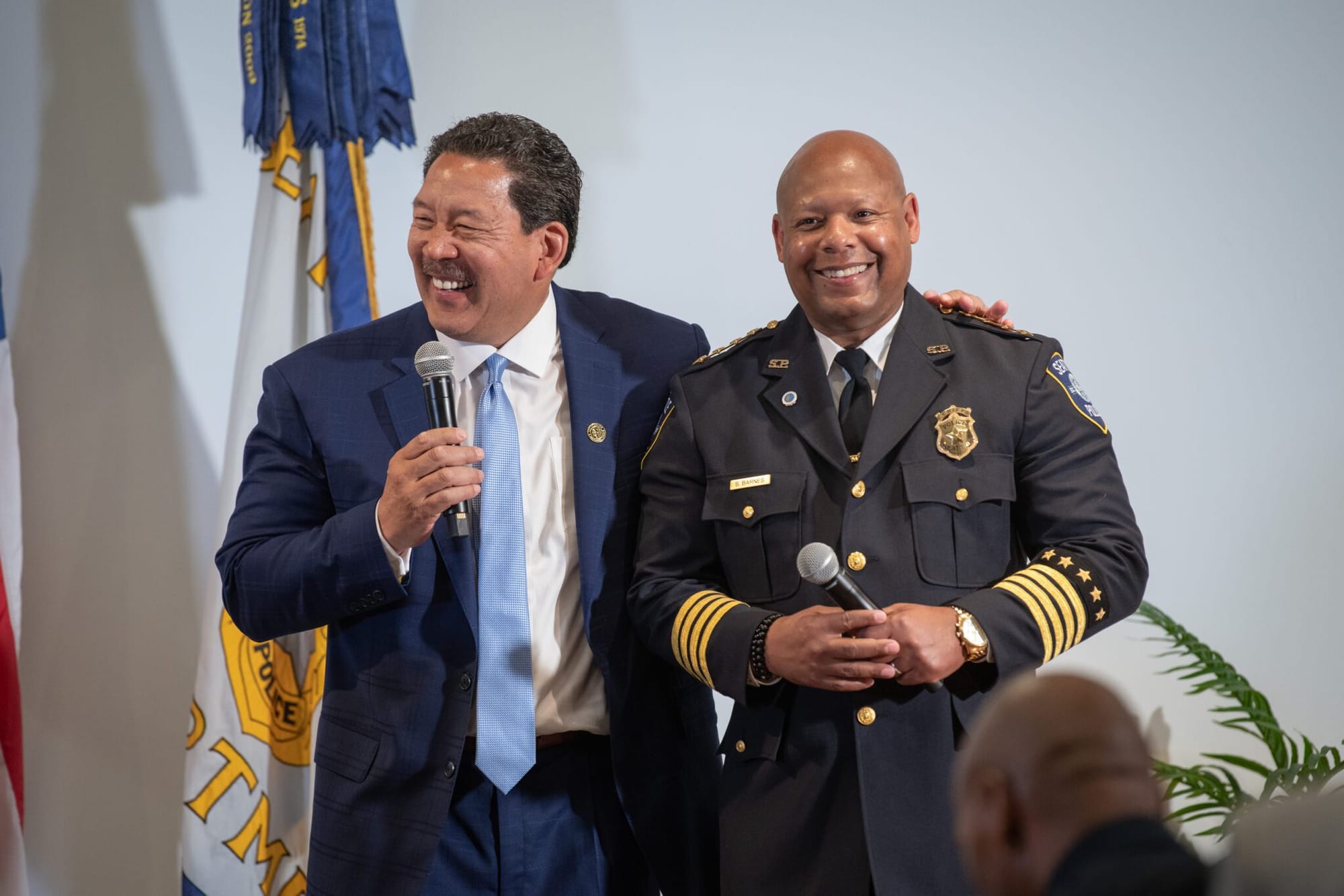
Some were surprised that Wilson retained Barnes when she took over in January, given her differences with Harrell over policing issues and public safety strategy. Wilson appeared swayed by calls for continuity and giving a chance for Barnes to prove himself, with Seattle City Council President Joy Hollingsworth and prominent members of the downtown business community lobbying for his retention. Wilson said she thought she could work with him on shared values "to make SPD a place where professionalism, integrity, compassion, and community partnership are at the center of every action."
“Public safety is a shared value, and our priorities remain intact: crime prevention, community engagement, retention and recruitment of a qualified workforce, safety and wellness, and continuous improvement,” Barnes said in a statement at the time. “These priorities will guide the Seattle Police Department into 2026. They will also position us to become a national model for exceptional policing under the leadership of Mayor Wilson and her dedicated staff. Personally, I consider this a once-in-a-lifetime opportunity and one I do not take lightly or for granted.”
Barnes' backers have pointed to rebounding police hiring and a decreasing murder rate as credit to his leadership, but it appears those developments mirror national trends.
"Seattle had been on a positive course on public safety with police hiring trending up and crime trending down, particularly in the downtown core," Downtown Seattle Association President & CEO Jon Scholes said in a statement. "It's imperative the next chief of police is able to maintain progress that's been made and instill confidence in our community."
Barnes also oversaw the end of Seattle's consent decree, which brought federal oversight following a high-profile police killing in 2010, although some observers argued the effort to meaningfully reform the police department failed.
A series of short-lived top cops
Barnes took the helm at SPD on January 31, 2025. Former Mayor Bruce Harrell tapped Barnes to replace his first chief, Adrian Diaz, who was mired in numerous scandals and fired in December of 2024, following an initial demotion. Following two internal-hire chiefs that didn't exactly thrive, Harrell instituted a national search and selected from 57 applicants Barnes, who was then the police chief of Madison, Wisconsin.
The Urbanist's Amy Sundberg noted at the time that the previous two chiefs had ended their tenures amid scandals:
His last two predecessors as permanent chiefs, Adrian Diaz and Carmen Best, both rose from within SPD ranks. Carmen Best didn’t make the original shortlist for SPD Chief back in 2018, but after criticism from community groups, including the city’s Community Police Commission, her name was added to the list, and she was eventually tapped for the job.
Best resigned two years later in the wake of the George Floyd protests and SPD’s abandonment of the East Precinct. A King County investigation later confirmed that she had deleted work-related text messages that were subject to the Public Records Act.
Diaz had an easier path to eventually being named police chief, but he lasted less than two years before Mayor Bruce Harrell asked him to step down amidst a steady stream of allegations of racial and sexual discrimination and harassment within SPD. Harrell eventually fired Diaz in December for lying about a relationship he had with his chief of staff, proof of which was provided by an Ewok-themed card found in Diaz’s car.
Barnes' scandal perhaps is garden variety and mundane in comparison, but it seems to have been enough to get him pushed out all the same.
Deeper issues were likely simmering below the surface. Wilson's initial response to Sunday's shooting appeared to have been hamstrung from leaks from within the police department that sought to blame political considerations and high-ranking Democrats (such as ensuring that Governor Bob Ferguson and U.S. Representative Pramila Jayapal could attend) for delays in communications and the initial press conference Sunday evening, which happened five hours after the shooting. Ferguson and Jayapal denied those allegations, and noted they were in the state when the shooting occurred – unlike Barnes.
While Barnes himself does not appear to have been the source of those accusations, it may have contributed to the sense he was not running a tight ship – and that SPD officials were seeking to blame others for their own flat-footedness.
Additionally, Barnes and Wilson also disagreed over use of CCTV camera surveillance, which the police chief was eager to expand, as a priority of the mayor who hired him. Wilson, conversely, preferred to wait to analyze results from the pilot program before expanding, worrying about data security, data privacy, disparate racial impact, and the effectiveness of the approach.
Under Harrell's watch, Barnes also stirred up controversy when he had sought to promote Mike Tietjen as commander of the East Precinct over Doug Raguso, a gay lieutenant who had been serving as interim commander of the precinct, which is located in one of the epicenters of Seattle gay culture: Capitol Hill. Tietjen earned numerous disciplinary writeups during 2020 police brutality protests, which had enveloped East Precinct in a protest zone, including for driving onto a sidewalk filled with protesters and failing to report his colleagues’ alleged harassment of a trans woman.
At the start of 2026, the Seattle Police Officers Guild (SPOG) appeared intent on undermining incoming progressives, including Wilson and Seattle City Attorney Erika Evans, who SPOG leaders claimed was already blocking police from making arrests, even before she was sworn in.
Evans had made it a goal to ramp up use of the City's Law Enforcement Assisted Diversion (LEAD) program, which her Republican predecessor had deemphasized in favor of greater jail time. Barnes, whether intentionally or not, contributed to the moral panic around not jailing criminals after his memo misinterpreted her guidance, which SPOG was all happy to turn into an attack line.
"Effective immediately, all charges related to drug possession and/or drug use will be diverted from prosecution to the LEAD program," Barnes wrote in a department-wide email in early January.
That guidance was incorrect, since considering diverting cases is not the same as using LEAD universally. "In her memo, Evans states that all arrests for drug possession and public drug use should be referred for review to a team within her office, who will determine whether each case is suitable for referral to LEAD," Sundberg wrote. "Evans confirmed with The Urbanist that the cases will not be directly referred to LEAD without review."
The statement from the Mayor's Office did not specifically cite what factors were also at play in Barnes' resignation, focusing instead on moving forward. A search has been pledged for a permanent police chief, with more details pledged at Friday's press conference.
"The selection process for next permanent police chief will align with city charter requirements," Wilson said in her video statement. "The permanent police chief will be selected from the three highest-ranking candidates, followed by city council confirmation, there will be strong community input as well."
In the interim period, Wilson stressed that SPD was "fully prepared" to handle future incidents.
"I want to emphasize that this leadership transition does not interrupt Seattle's readiness in any way," Wilson said. "With major public events this weekend and beyond, the department is fully prepared with officers who show up for our city every single day. Our interim chief assumes command of a team that is operationally strong and understands what it takes to keep the city safe."
This story was updated at 4pm Thursday with the mayor's statement and reactions to the Gayles promotion.
 Doug Trumm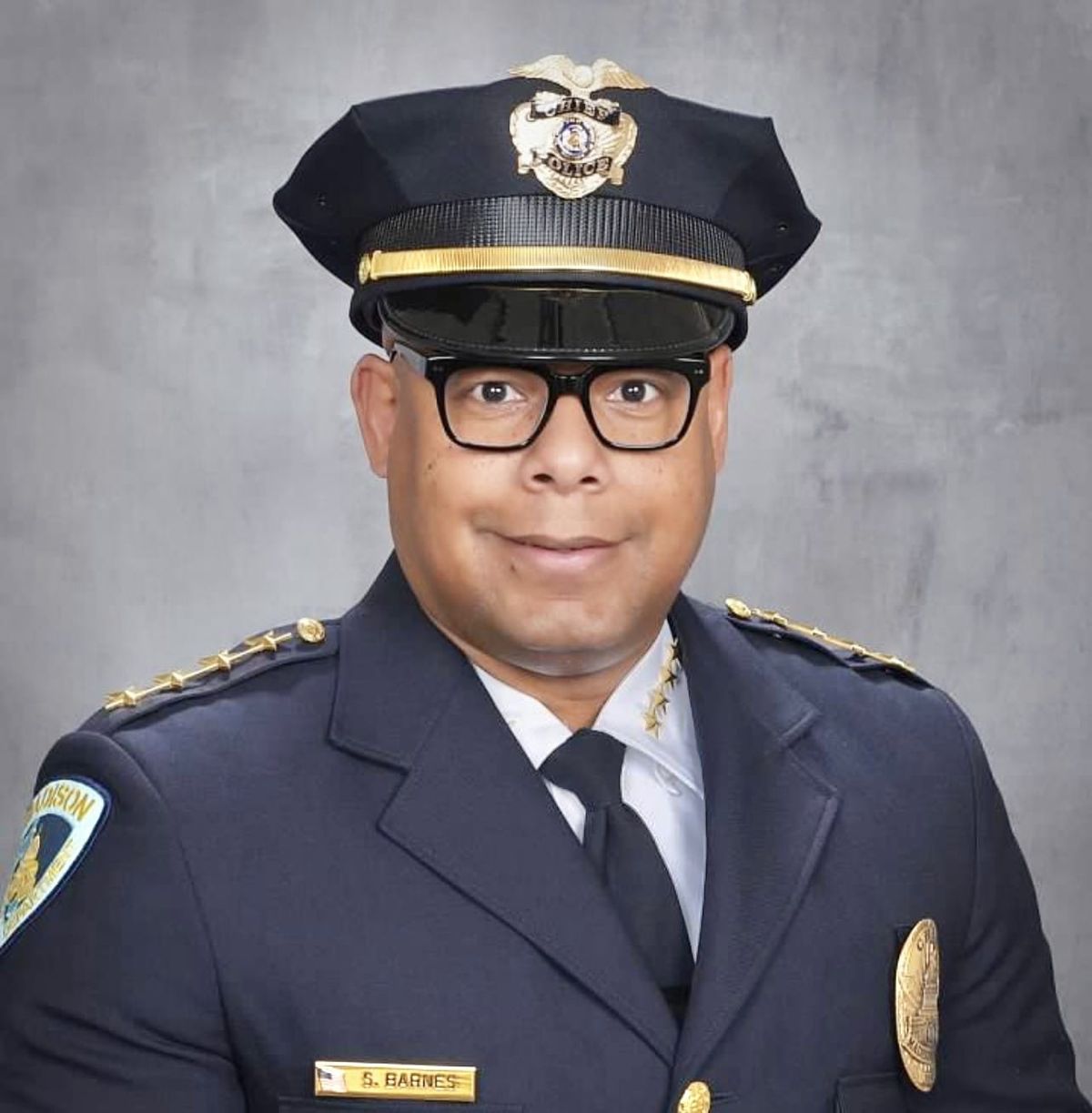
 Amy Sundberg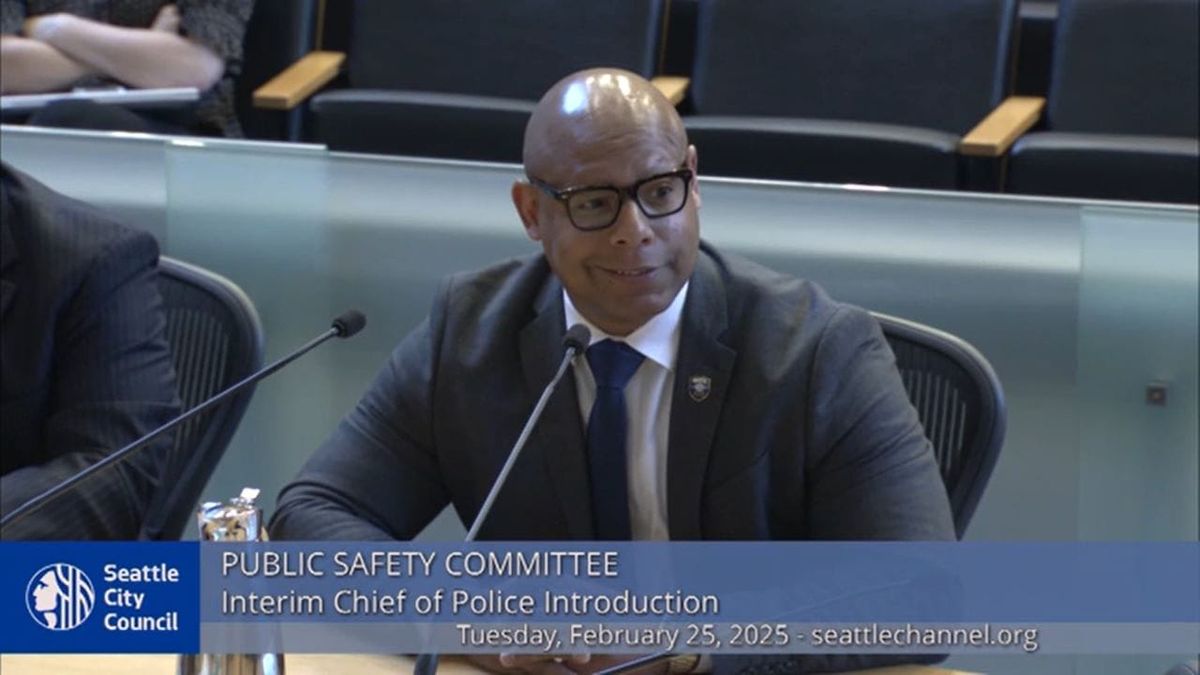
 Amy Sundberg