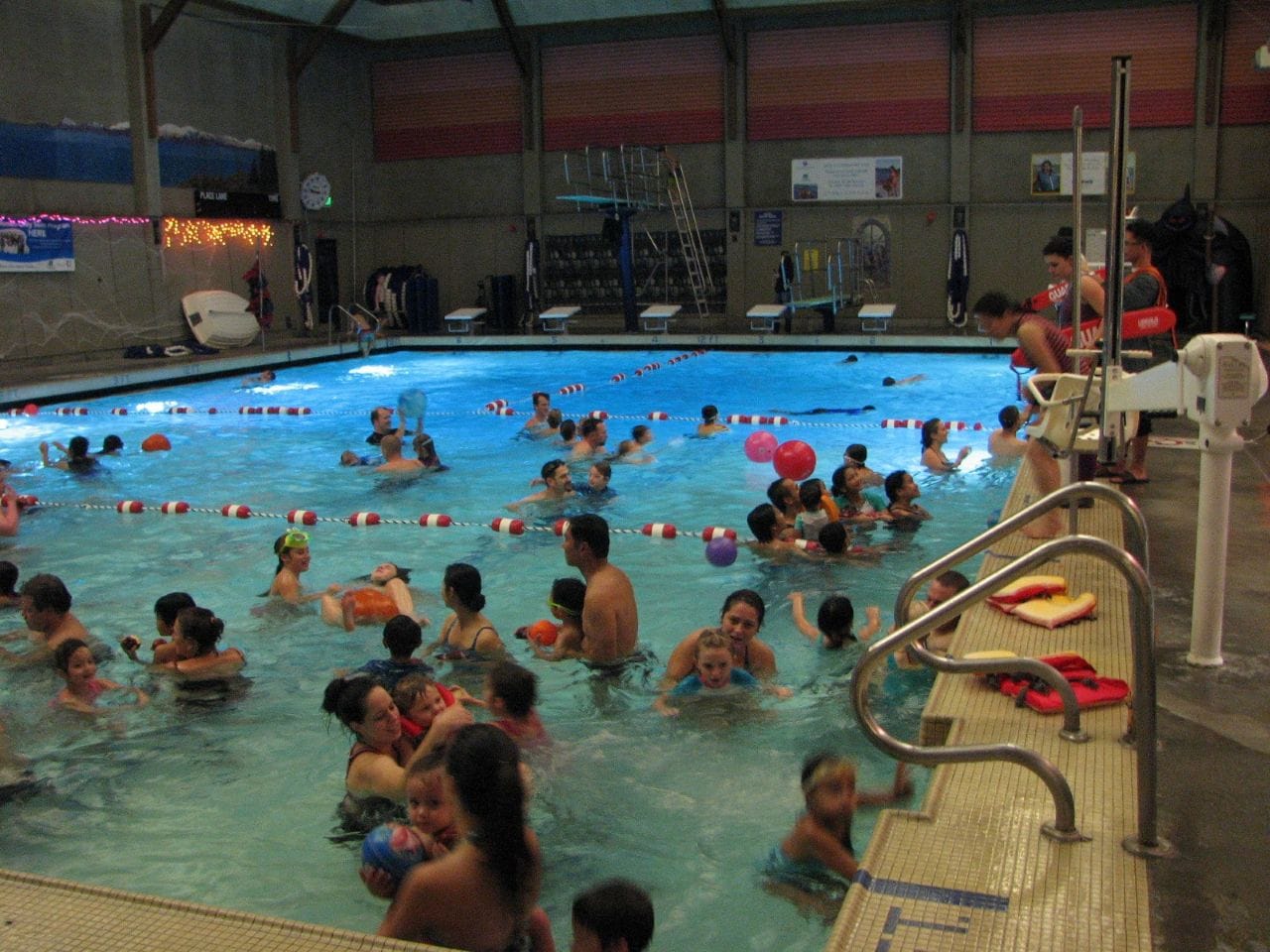
Adding public hours at university pools would ease crowding and expand access, while saving millions in pool expansion costs.
What is the community function of a university? Beyond employment, labs, and lecture halls, one underappreciated tertiary benefit is maintaining a walkable urban ecosystem as a model for urban design. For many Americans raised in the sprawling suburbs, university is the first and last time they live in a walkable community. Although universities possess neither the political nor material resources to reshape the entire national urban ecosystem, they can – and sometimes do – enhance their local communities by opening their recreational facilities to the public.
Pools are just one example of where universities could make a significant material contribution to their urban ecosystems. While opening both pools and fitness centers would be ideal, as universities could use the revenue generated to supplement student fees and theoretically decrease the cost of education, the community impact of a new pool would be far more significant.
This is because commercial fitness centers are significantly less capital intensive than pools, costing a few hundred thousand dollars to open, with the most basic facilities costing below $100,000 and only the largest most advanced facilities breaking into the millions. On the other hand, indoor commercial pools typically run into the tens of millions, and that’s before land acquisition.
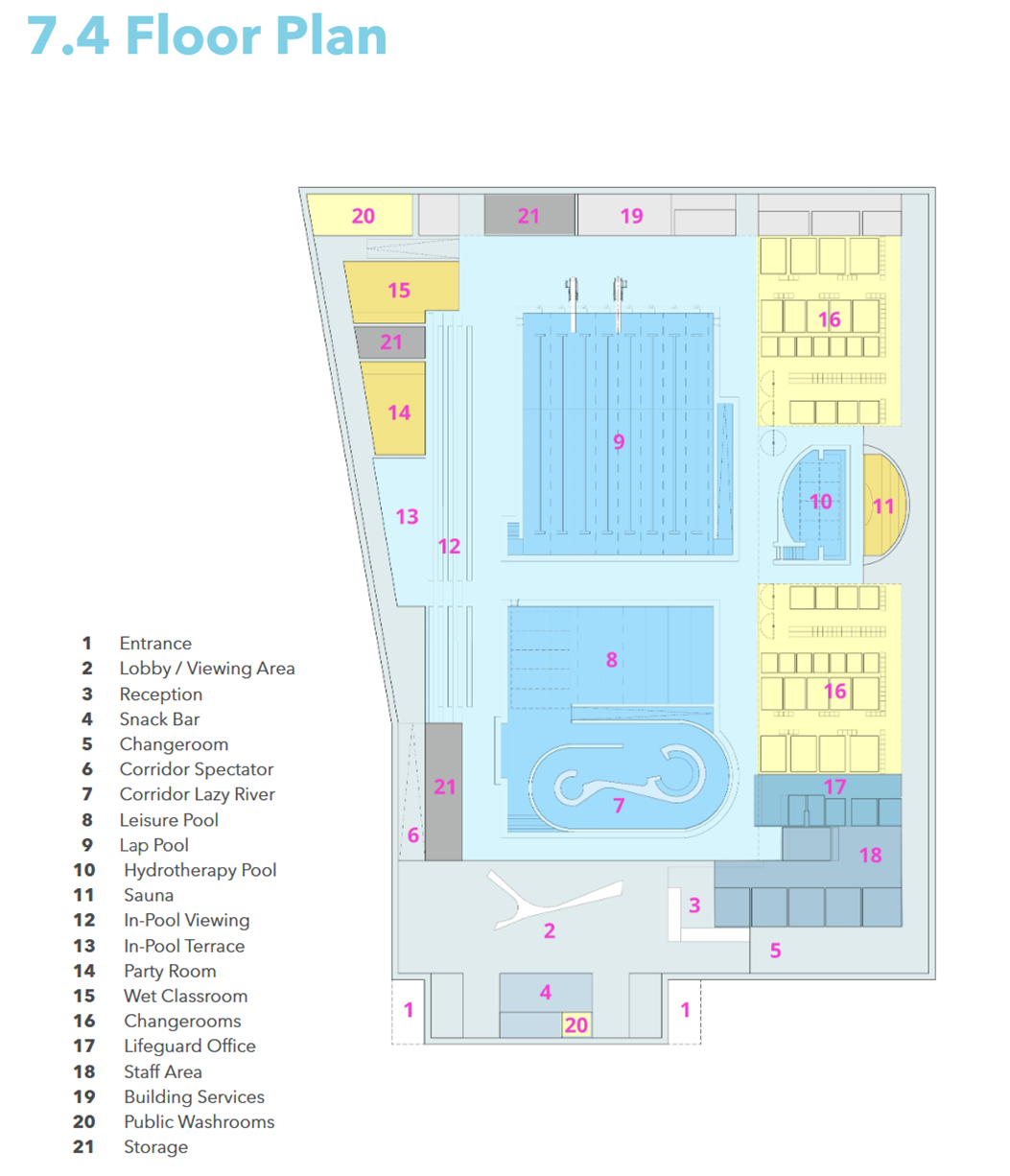
The city of Shoreline is currently providing a pertinent insight into the financial cost and community value of a centrally located public pool. The city has placed Proposition 1 on this November’s ballot, where residents will vote on the construction of an aquatics facility to replace the one it closed in 2020 with an estimated cost of $100 million factoring in projected inflation by 2028 and 15% design contingencies. The design includes a leisure pool with a lazy river, a hot tub alongside a sauna, and an eight-lane 25-yard lap pool with diving boards.
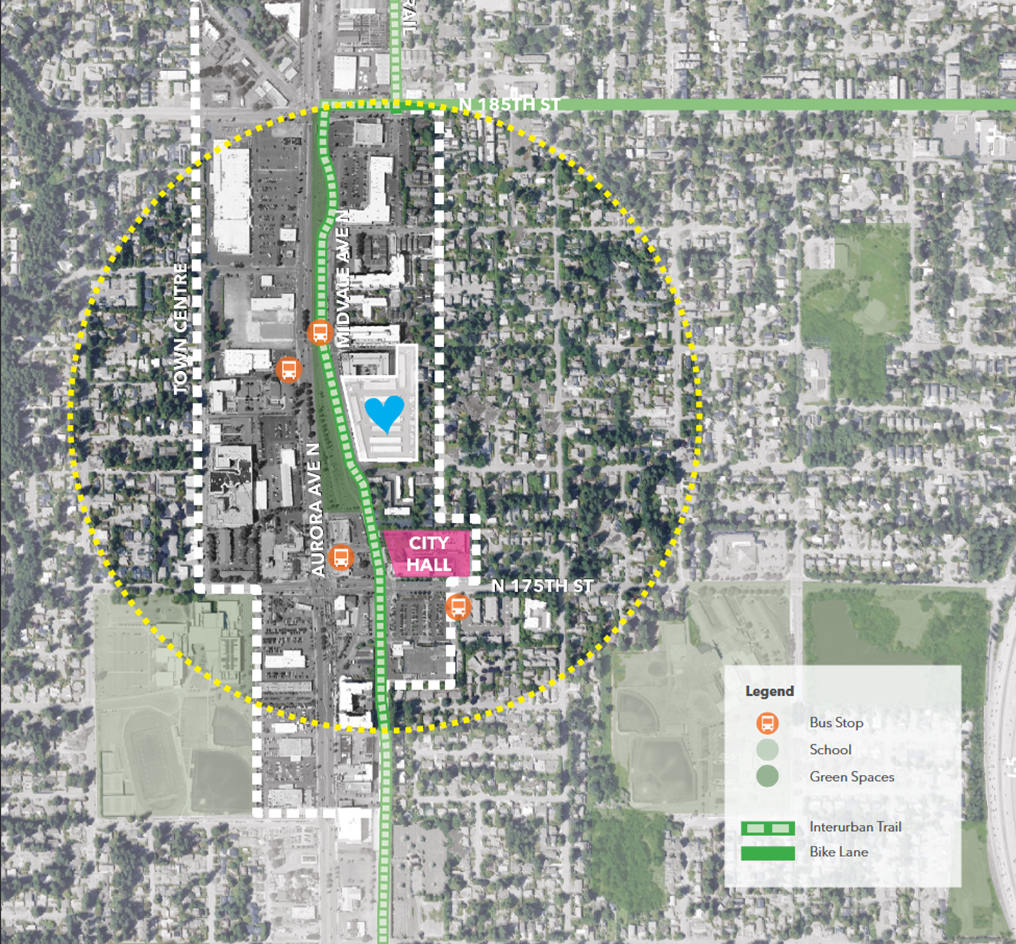
Located in the heart of Shoreline at Midvale and 178th Street, the proposed pool will be within walking distance of the E, Route 333, and 348 bus lines, Shorewood High School, and multiple supermarkets. Successful passage would triple the year-round pool space open to the public in Shoreline, as the Dale Turner YMCA has a four-lane lap pool and a smaller leisure pool, and allow residents the opportunity to swim for a lower price while supporting their local government.
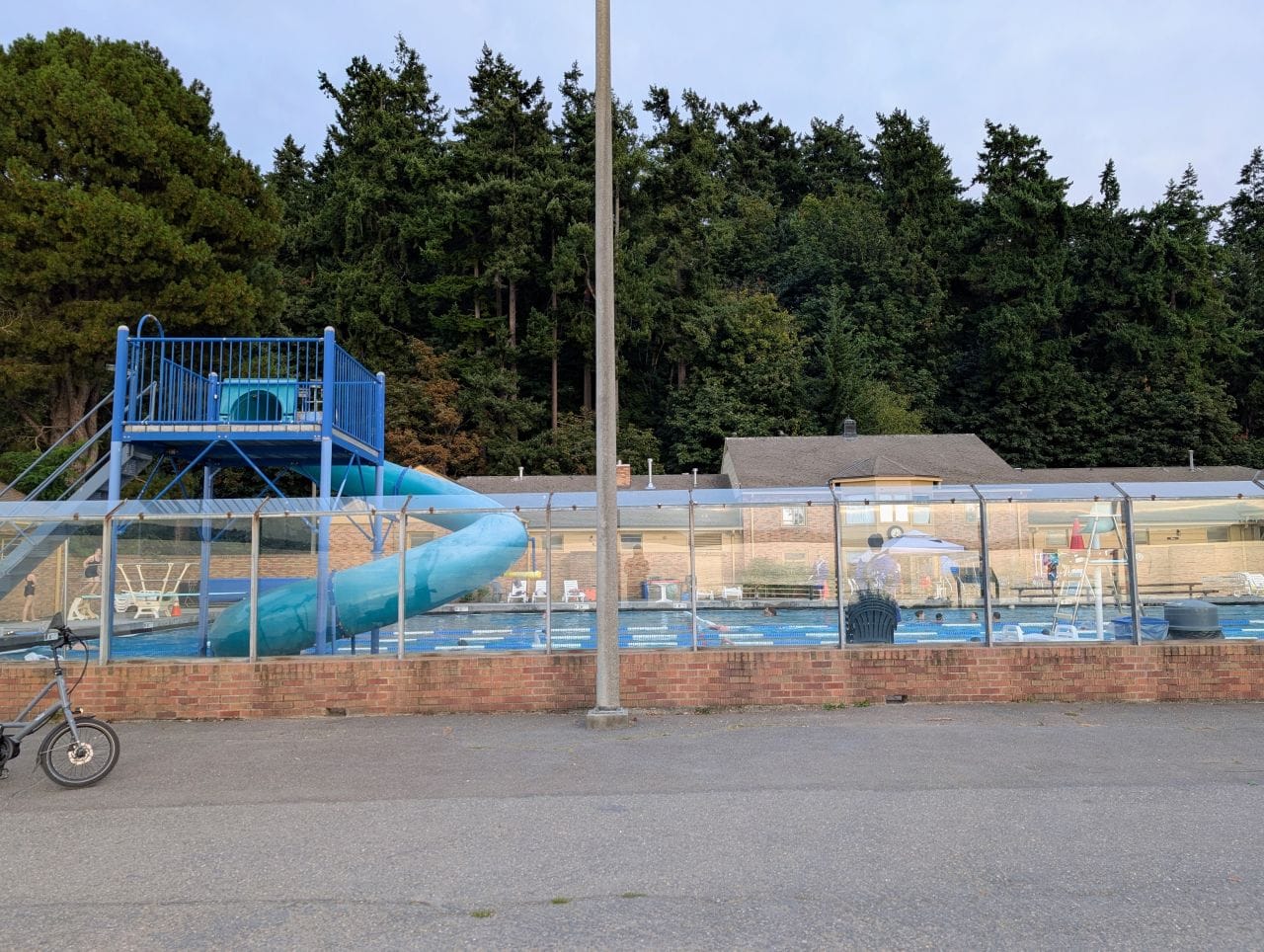
Pools are so expensive because the engineering behind them is complex: you don’t need precision angling of cement to plop some mats, barbells, and workout machines in a basic gym. The solution to increasing their availability isn’t to ignore regulations, but to recognize that the cheapest infrastructure is that which already exists. Evergreen Aquatics Center recognized this, opting to save a facility from demolition back in 2009, which saved the public tens of millions in financial and community value.
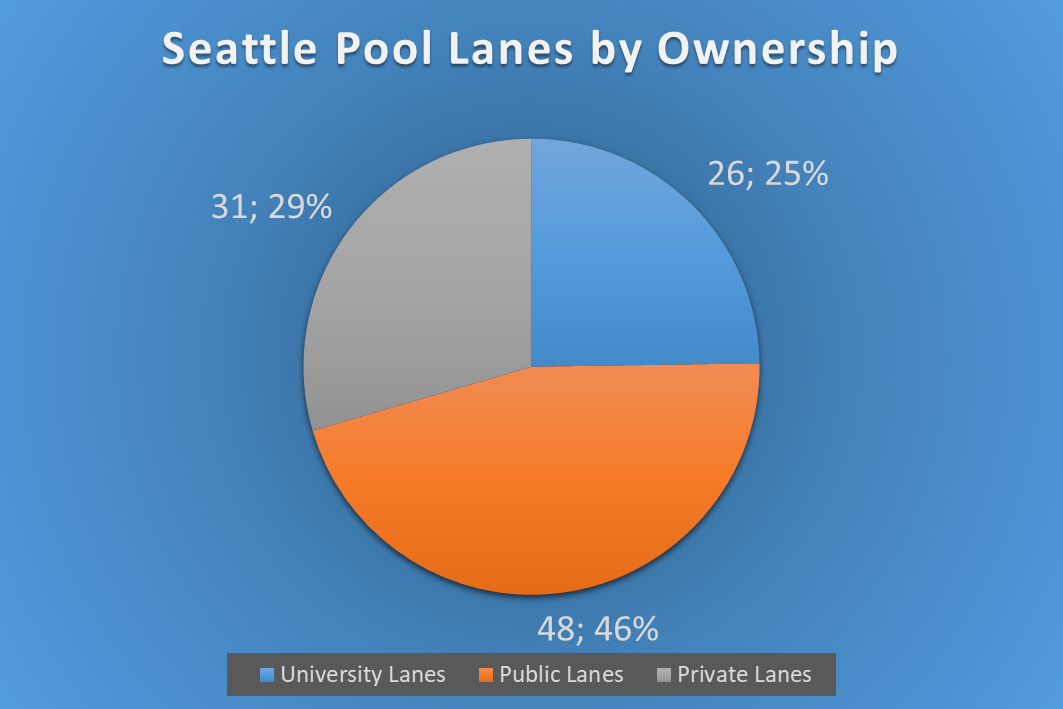
For the purposes of quantification, I’ll evaluate the ability of pools to serve lap swimming while acknowledging that pools can serve a wide variety of functions of varying capacities. All the publicly accessible indoor pools in Seattle have 79 lap lanes in total. Each lane can host eight swimmers (though I personally think sharing a lane with more than four people feels crowded), so all the publicly available pools in Seattle can host 632 lap swimmers at once at maximum capacity (316 comfortably).
All the public pools in Seattle have six lanes, and they offer the majority of space in this calculation. However, it is exceedingly rare that all lanes are open at public pools, especially in the afternoon when they have to balance demand with swimming lessons and other activities. This generally results in about one to two hours of lap swim available in the afternoon. By opening University of Washington’s 14-lane IMA pool and University of Seattle’s two six-lane pools for even just two hours of public lap swimming, these institutions would effectively add more than four public pools’ worth of lanes, absorbing demand to relieve crowding at public pools and potentially opening time and space to expand the variety of activities available.
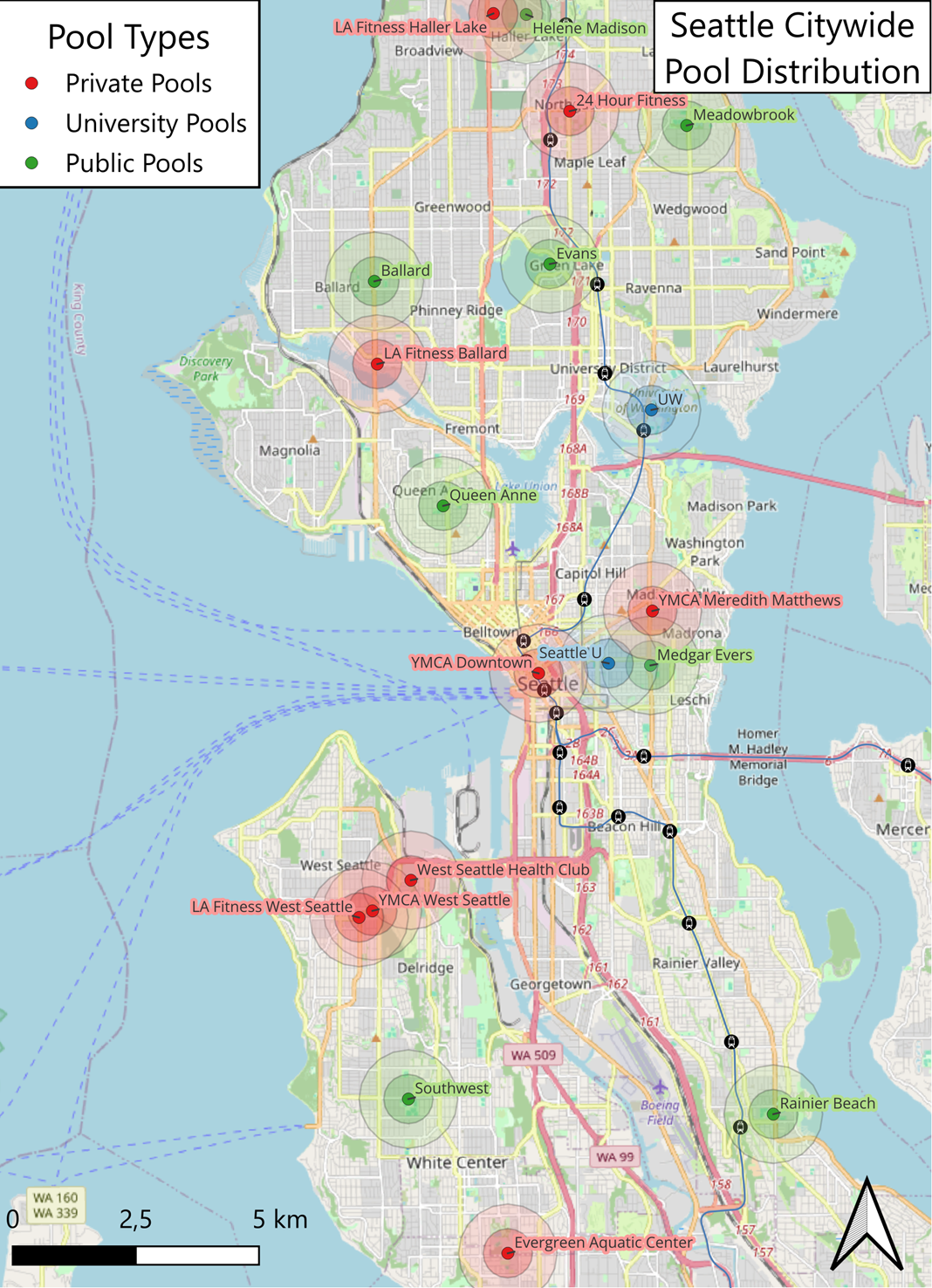
In explaining why University of Washington’s pool isn’t open to the public, Assistant Director of Operations for Recreation, Chad Yarbrough, pointed to deference to tuition-paying students who fund the facility: “The IMA (Student Recreation Center) is not open to the general public because of space limitations and because access to the facility is funded through fees paid by UW students as part of their tuition.”
When asked whether the university had considered opening to the public before, he confirmed they had: “Yes. We have discussed these options before, however, [we] are not going in that direction.”
Seattle University was more amenable to the idea of public access, as they already partner with local swim teams who rent their facility on a regular basis. Assistant Director of UREC, Melissa Wessel, explained that the pools are currently closed to the wider public because “we don't have an easy way for folks who aren't a part of a specific group or UREC members to currently swim as building-wide access could be an issue. We are currently exploring more ways to better serve the Seattle swim community.”
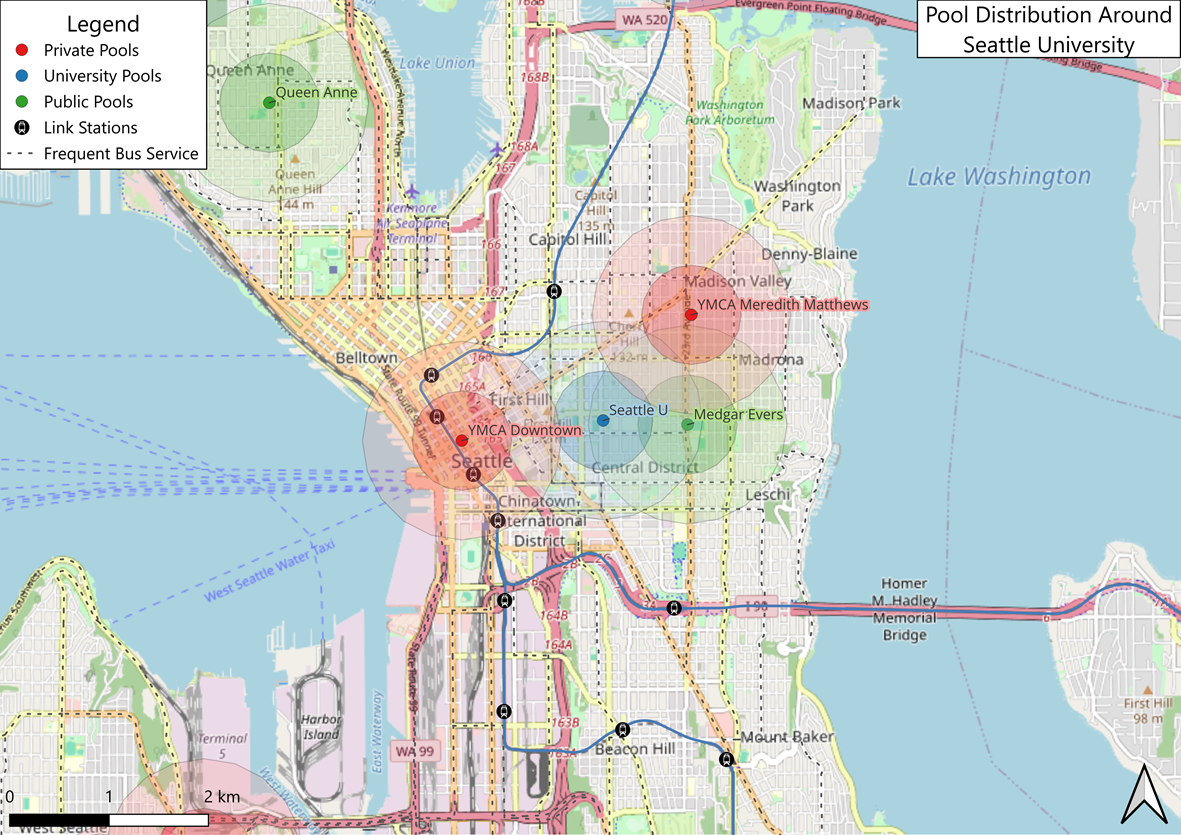
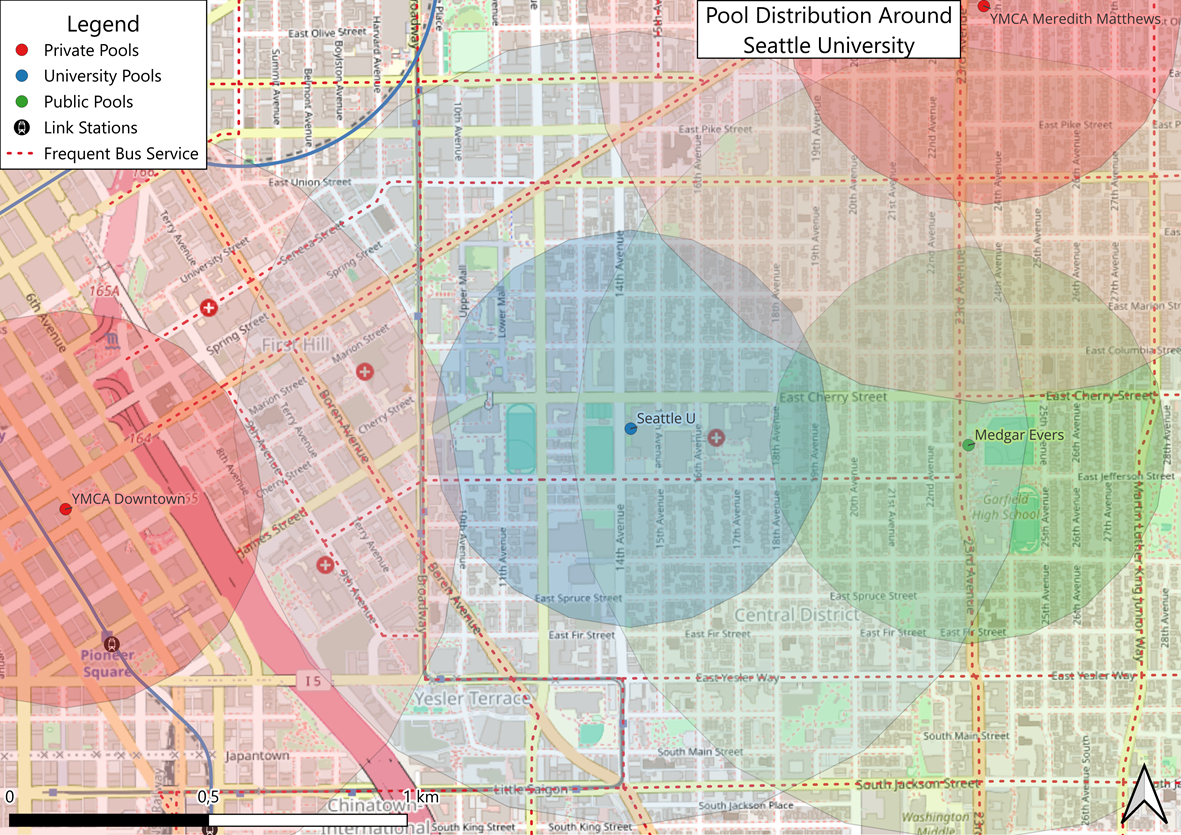
Along with relieving demand for public pools, UW and Seattle U could also enhance the walkability and bikeability of the urban ecosystem. Seattle U’s central location in a relatively dense urban area could pedestrianize a number of trips, and University of Washington’s pool is about a quarter mile from the Link station bearing the public institution’s name. From a transit perspective, University of Washington’s pool would further capitalize upon the apparent decision to prioritize traffic flows to stadiums when designing the Link and planning bus lines.
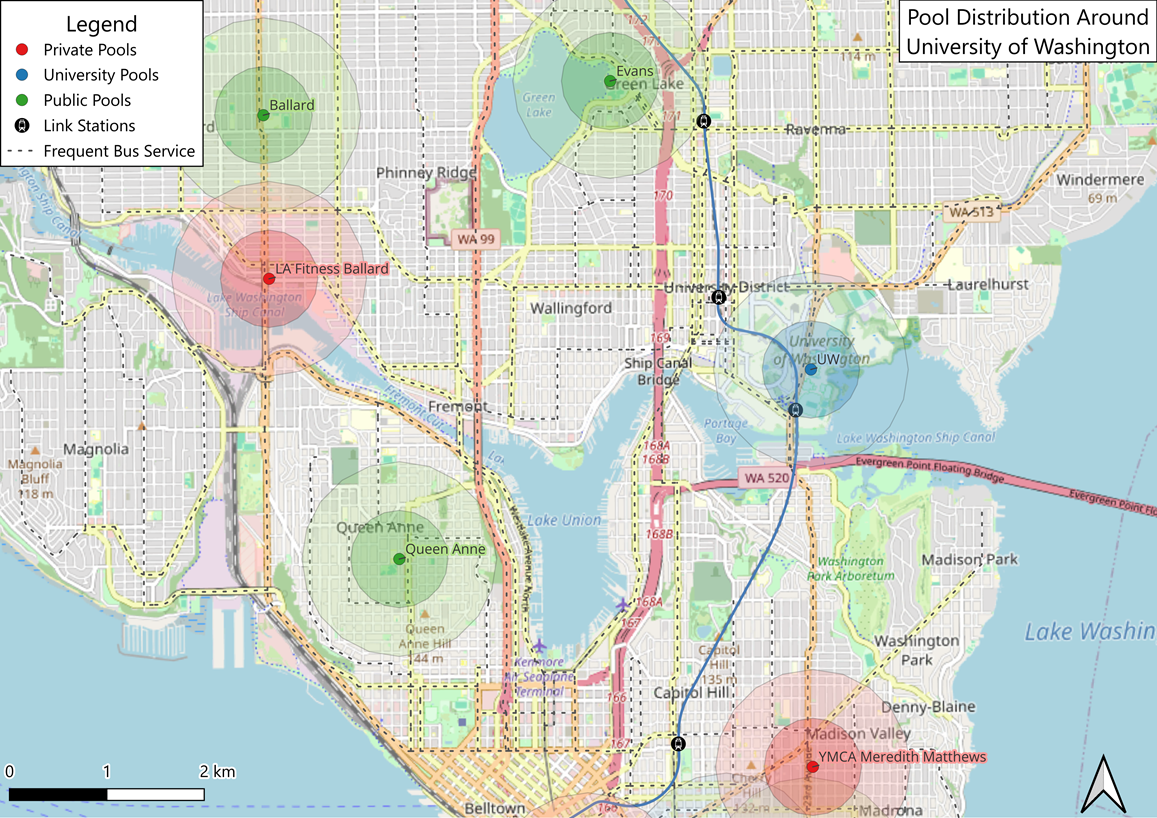
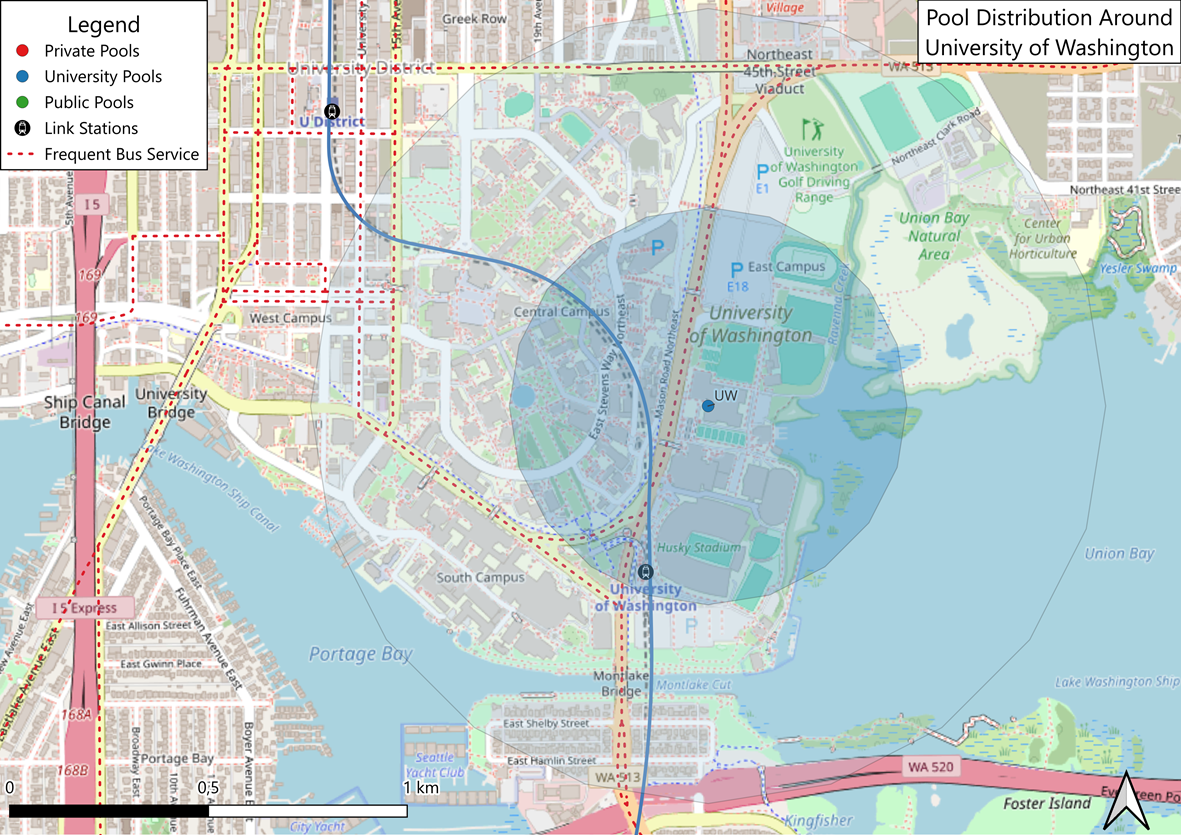
Because Seattle already hosts a decent amount of public and private pools accessible via transit throughout the city, opening university pools to the public would most likely relieve demand for lap swimming at public pools while integrating more people into the community spirits they already engender among alumni and with other programs. This is particularly true for Seattle U, where there are two YMCA pools and the public Medgar Evers pool all located close by and easily accessed via transit. It’s outside of Seattle, in cities like Tacoma and Bellingham, where universities like Puget Sound, Pacific Lutheran, and Western Washington have the potential to make the greatest impact on their local communities.
Like Seattle U, University of Puget Sound (UPS) has options for people to swim somewhat nearby and is somewhat accessible via transit. However, as central Tacoma has only two bus routes of 30-60 minute frequency that both primarily feed into downtown (the 11 and the 16), this leaves the area significantly car dependent. However, the Pierce County bus expansions contained within Proposition 1 on the ballot this November offer the opportunity to greatly boost service, if it passes.
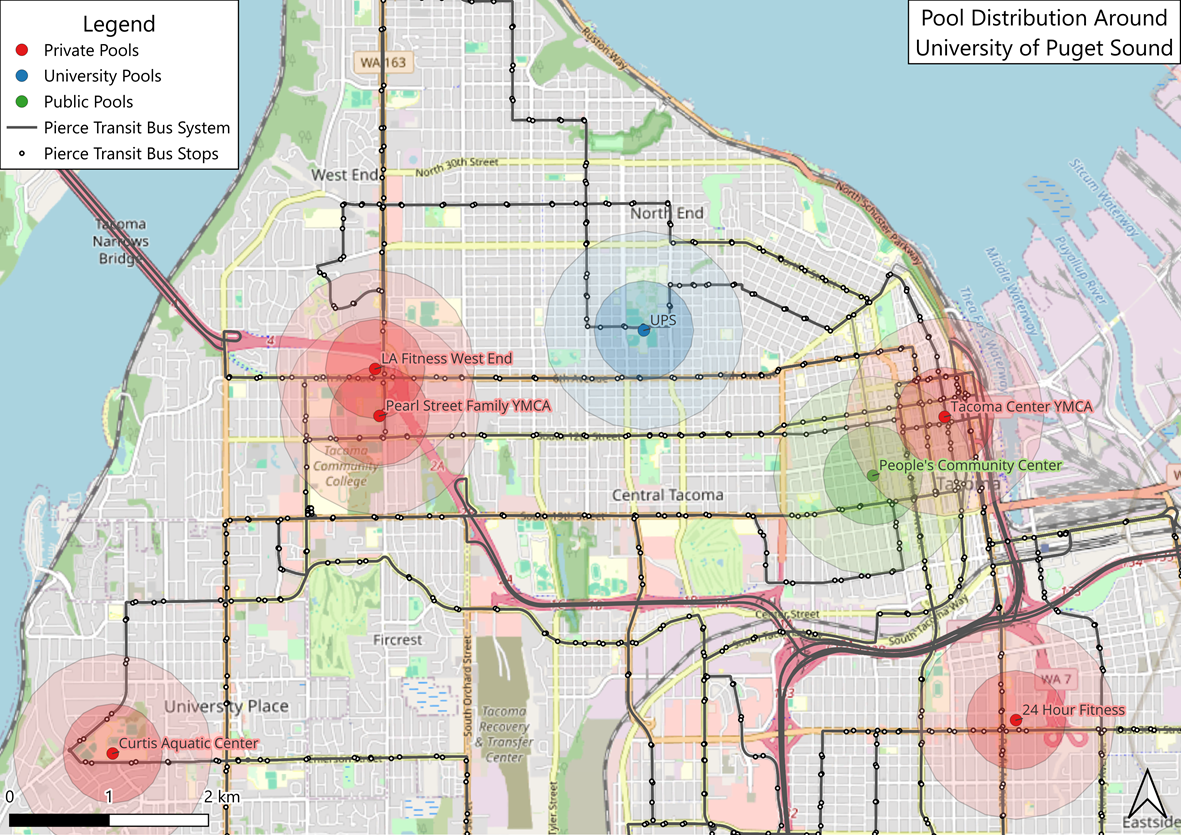
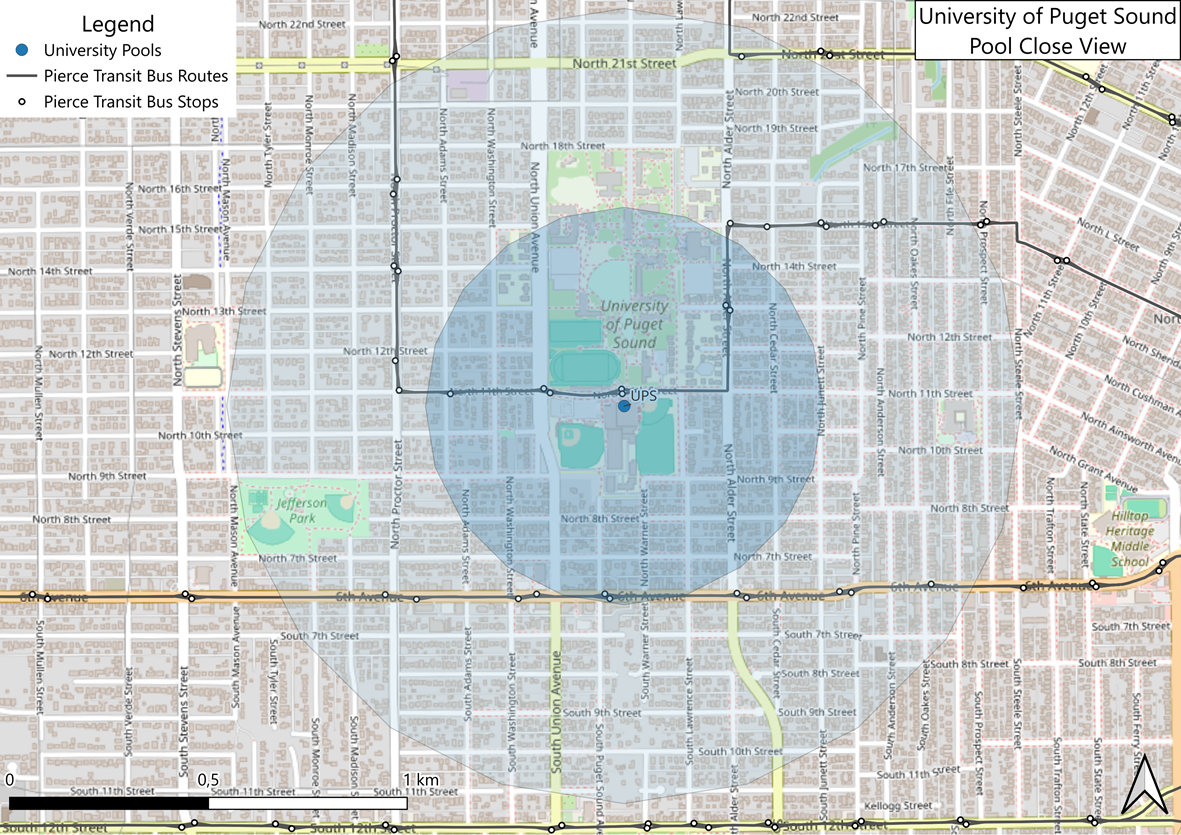
UPS’s eight-lane pool would significantly contribute to the walkability and usefulness of transit to its surrounding area if it opened to the public. With more frequent transit and a proper north-south route along Union Avenue or Alder Street, the greenspace and facilities of UPS would have even more potential to serve as a walkable and transit-oriented community hub, decreasing car dependency and generating a more localized sense of place. Unfortunately, UPS didn’t respond to my inquiries, and there is no evidence that they have any plans to capitalize upon their potential in this regard.
Further south, technically south of Tacoma, lies the Census Designated Place of Parkland, a former streetcar suburb with Pacific Lutheran University (PLU) right at its heart and along the (in)famous Route 1 down Pacific Avenue, Pierce County’s most used bus route, which ironically had once had rails. Pacific Avenue has become a prototypical sprawl-based stroad in the decades since the rails were torn away all while the area has been suffering from poverty, violence, and neglect from the government. The poverty and violence have created a stigma about the area that can cause people to write it off, and a somewhat recent example of this neglect arose with the now abandoned bus rapid transit (BRT) system to serve Pacific Avenue.
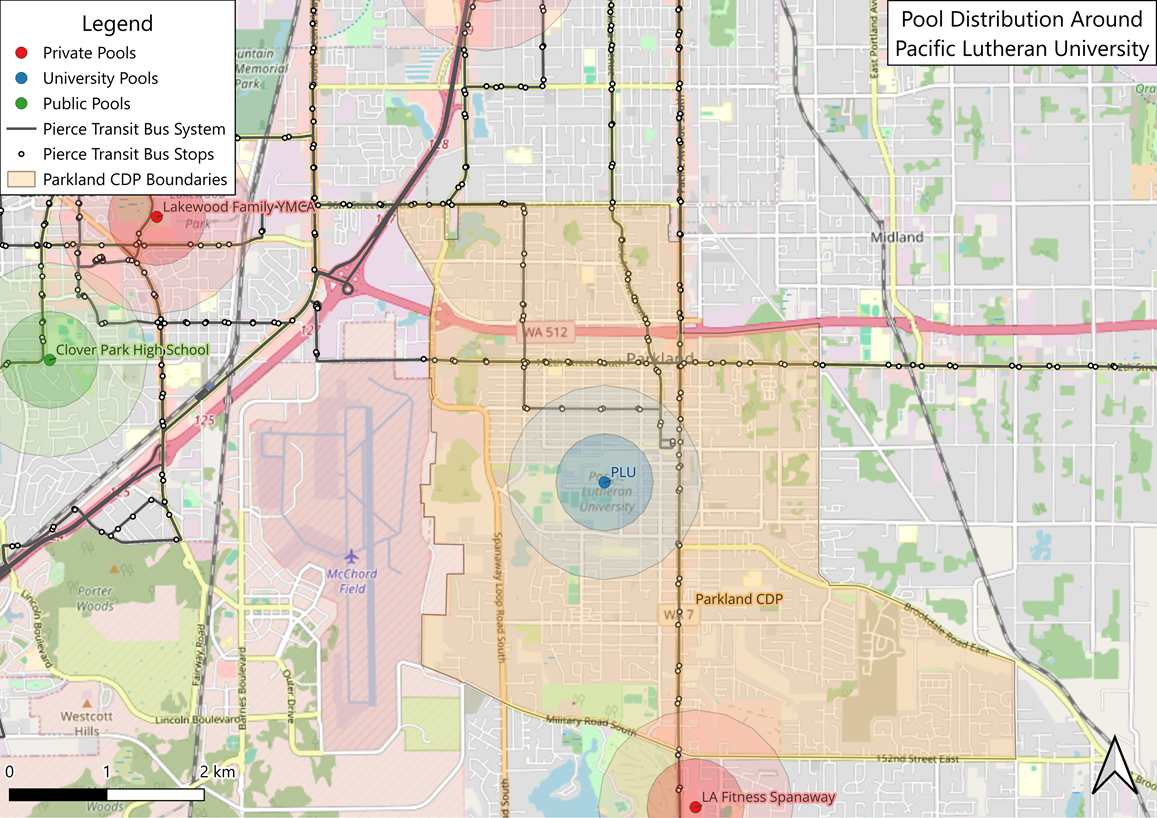
The people of Parkland do not deserve this stigma and neglect, and PLU’s location at the community’s heart places it in a perfect position to pump vibrancy back into the area if it allows the people to circulate through its system.
To its credit, PLU has taken steps to offer services to the community and begin the process of serving as a hub: the public can and does utilize its beautiful greenspaces, it plans to open a medical clinic in partnership with MultiCare, and they offer free tutoring and English Language Learning (ELL) classes at the Parkland Literacy Center. These are all good starts, especially if the clinic offers free or at least discounted services to members of the community regardless of whether they meet the strict requirements for Medicare.
When it comes to PLU’s pool, the institution has taken some very small steps by hosting affordable public swim lessons, but remains committed to keeping the pool closed to the public beyond that.
“Because the pool’s operations are funded directly by student tuition, our schedule must prioritize the intensive demands of our varsity athletic programs, student intramurals, and campus recreation," PLU’s director of digital communications Christopher Albert said. "We do not offer general public open-swim hours to ensure our students have full access to the resources essential to their collegiate experience, while keeping our public engagement focused on high-value safety programs.”
Though swimming lessons are useful, is there not a certain irony to teaching people how to swim and then not offering any window of time, however brief, to use the only lap pool in their community? The pool’s location within walking distance of Keithley Middle School, Washington High School, and blocks upon blocks of residential housing has the potential to serve as a meaningful third space, even if open to the public for only a couple hours a week, and would synergize with the steps the university is taking towards community integration. If the issue is funding, even a small membership fee would go a long way with sustained public participation.
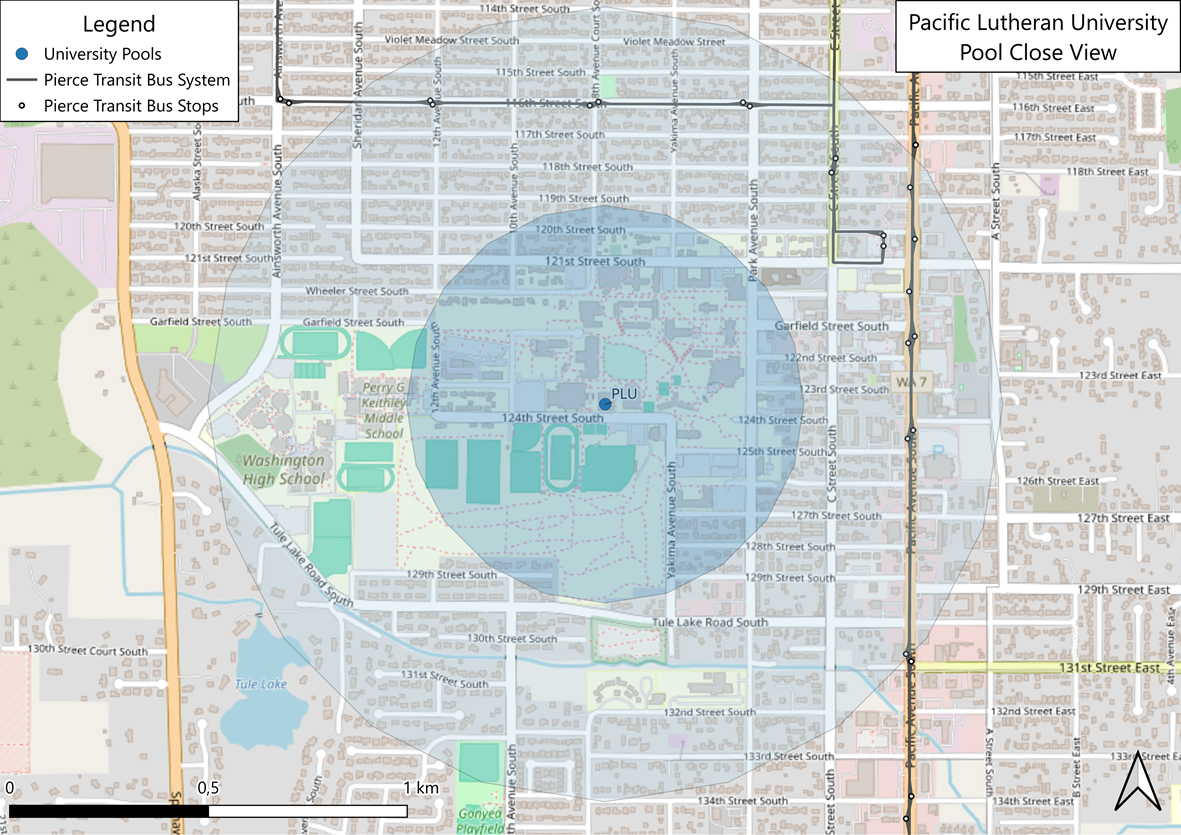
Examining the greater Tacoma region as a whole, the physical distribution of UPS and PLU are more significant than the number of lanes they would increase. Large sections of residential suburban housing across the region are severely underserved by public transportation, which leaves room for the universities to pedestrianize pool trips for the communities immediately surrounding. For both PLU and UPS, this might mean that a few limited hours with a membership fee would both ensure their facilities aren’t overstrained and provide funding to supplement student fees that support the pool.
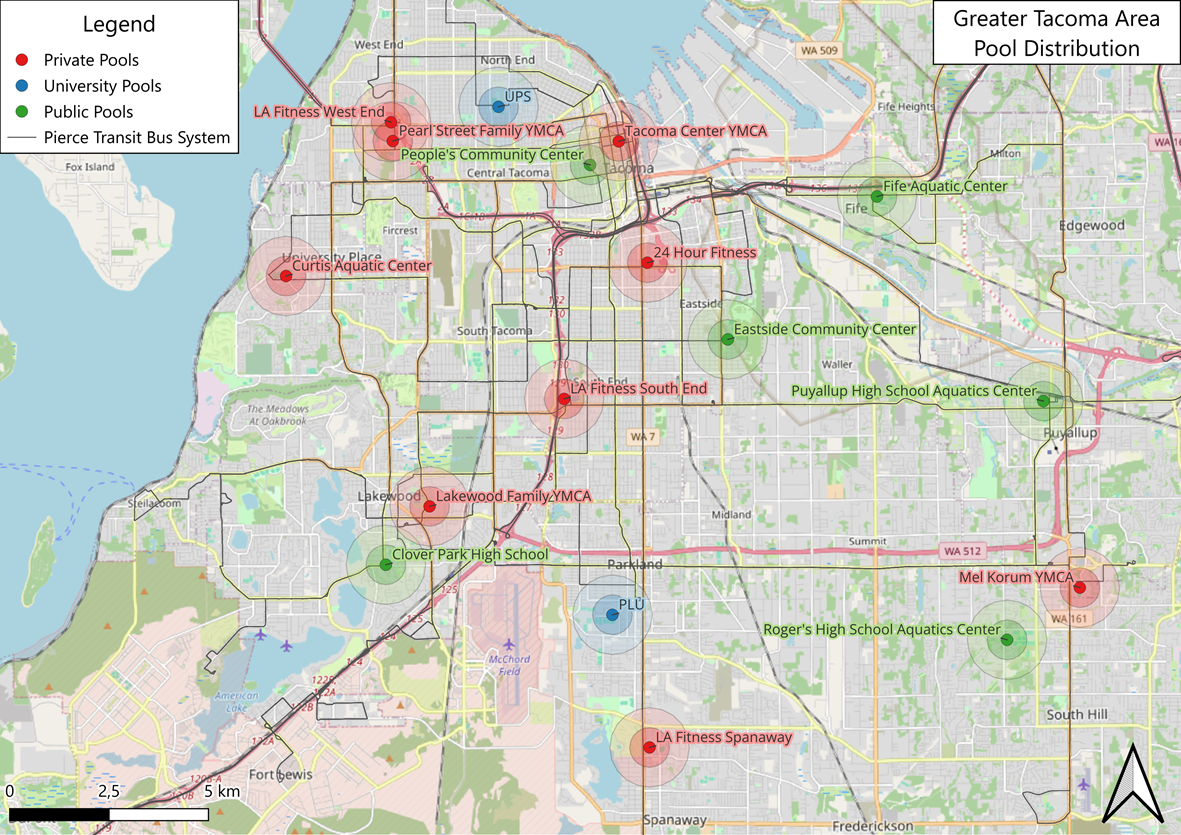
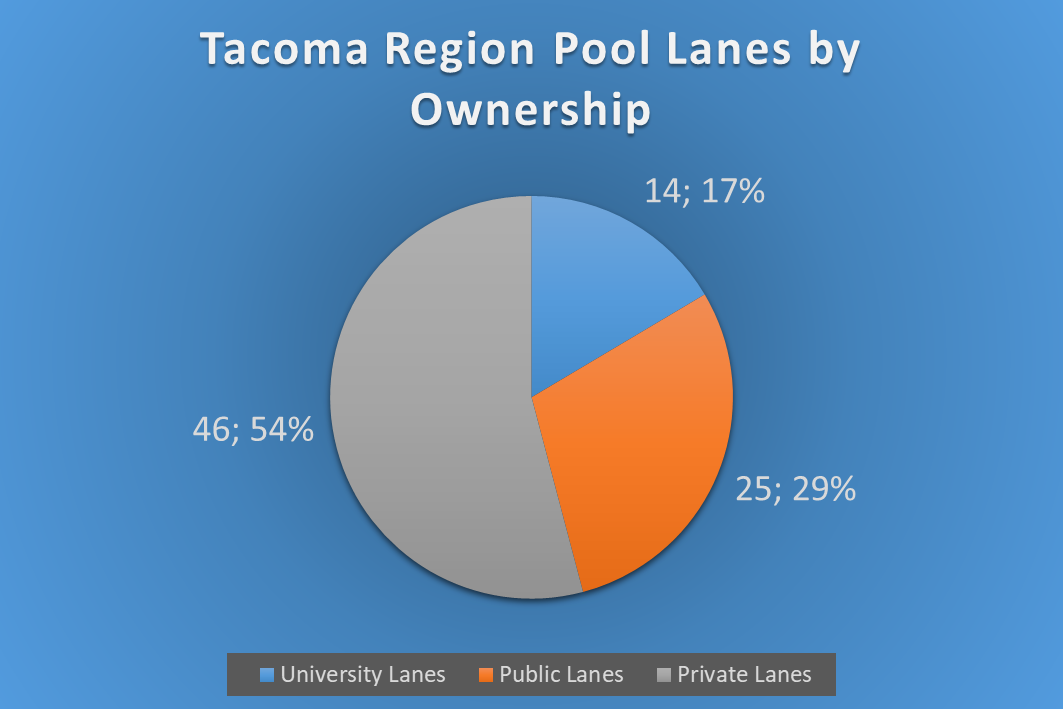
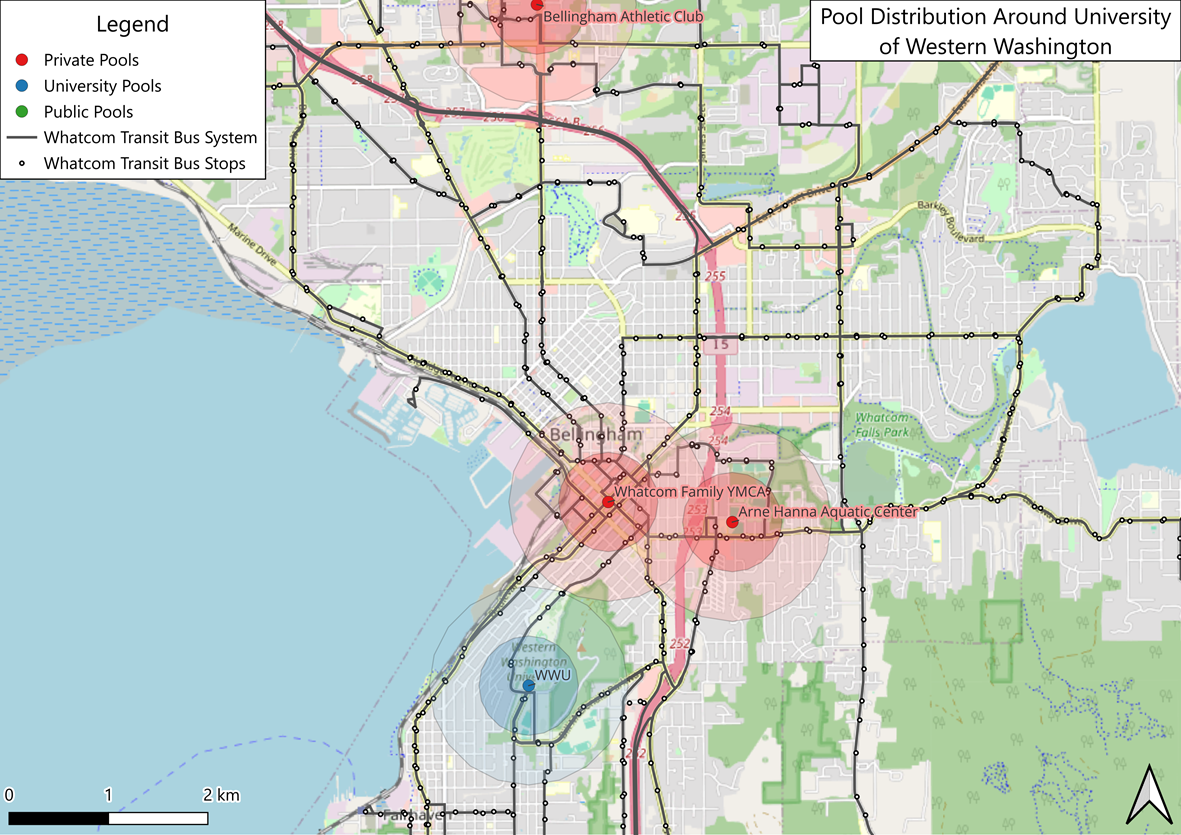
Western Washington University (WWU) in Bellingham represents a moderated synthesis of the potential for universities in Seattle by increasing the lane capacity of the entire city, and in greater Tacoma, by serving as pedestrian neighborhood hubs.
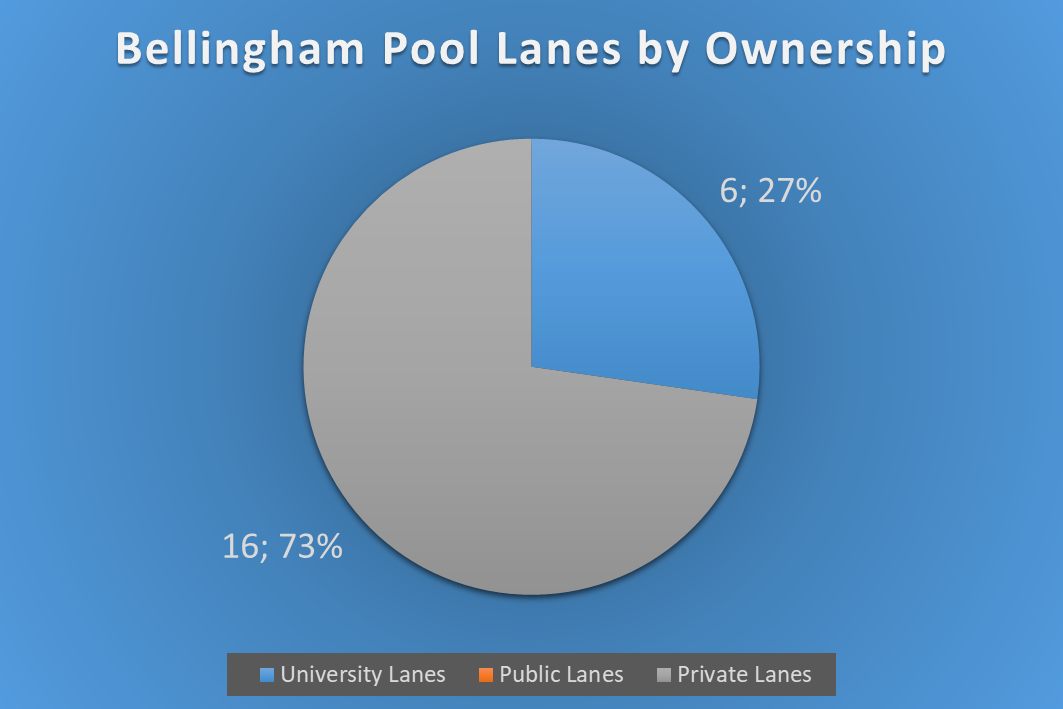
Bellingham only has 16 pool lanes open to the public, and none of them are publicly owned. This means that WWU opening its pool to the public would offer the greatest relative increase in number of lanes in its community (unless we count Parkland as its own community) and provide swimming opportunities beyond the private business sector, as WWU is a public institution.
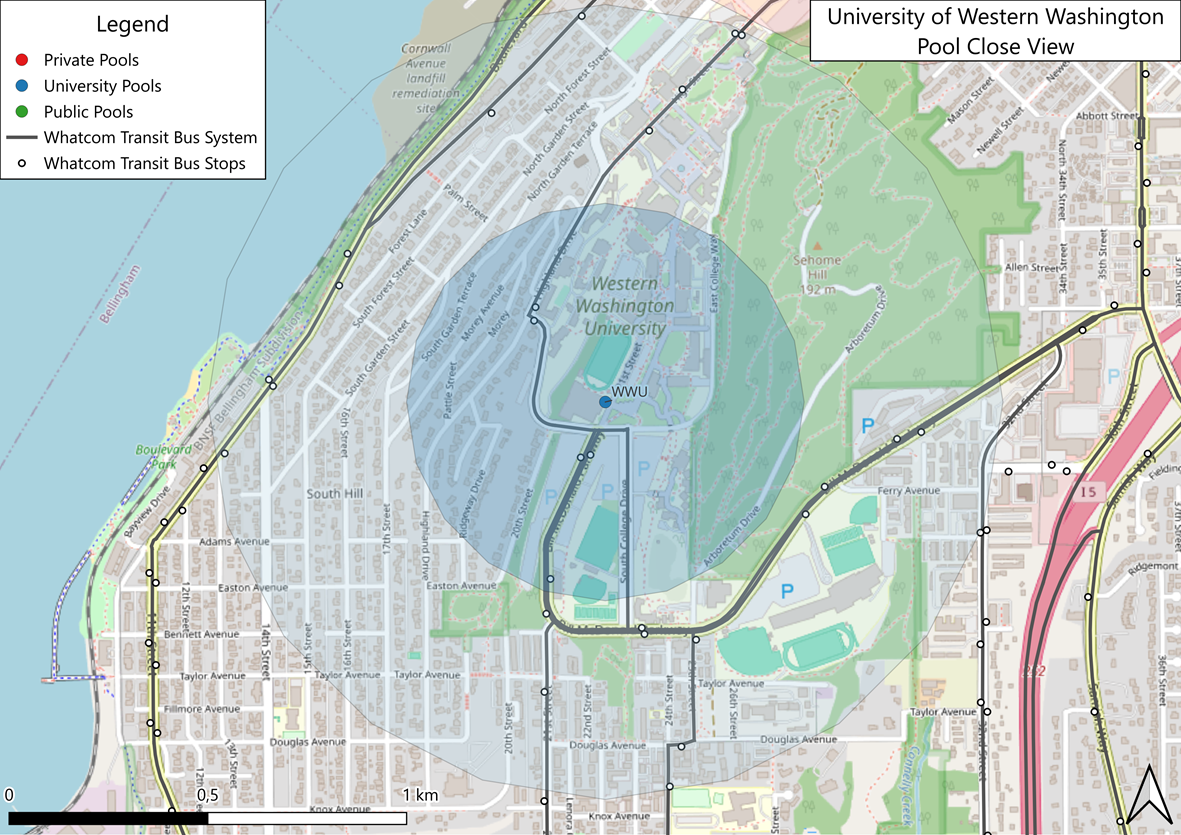
At the immediate neighborhood level, WWU’s pool opening to the public could have similar effects at pedestrianizing trips as UPS and PLU would. The main issue is that unlike the grid patterns surrounding UPS and PLU, the streets surrounding WWU are elongated with few intersections, requiring pedestrians to cut across private property for the quickest route.
The bus routes connecting to WWU also already feed into the downtown Bellingham core where pools already exist, so locals around the university would most practically cycle to the pool rather than walk or take transit. One might consider it a tertiary benefit: residents would get the benefit of a light warmup and cooldown exercise.
So what value can we attach to this contribution? Shoreline is suggesting $100 million for its new eight-lane complex with extra amenities, but this includes a non-lap pool, Jacuzzi, saunas, etc. Let’s say we say the lap pool represents a third of the value of that facility: that’s $33 million for eight lanes, a little more than $4 million per lane. As those lanes are going to be used by the public exclusively whereas university pools would require limited hours to accommodate swim teams, let’s shave that down even more to just $500,000 per lane.
At that rate, UW and Seattle U opening their pools to the public even in a limited capacity would still represent a $13 million capital improvement to the community. UPS and PLU $7 million, and WWU $3 million. This represents an extremely conservative estimate, as public pool facilities regularly cost tens of millions of dollars, and it’s all money that communities would not have to spend if these universities provided a means for the public to access their facilities even in a limited capacity that accommodates student athletics.
What about value beyond dollar figures, for those of us who aren’t neoliberal capitalists? Pools serve as a vital third space that uniquely combines relaxation and fitness to all ages and nearly all levels of ability: after work or school people can unwind in isolation by swimming laps or building community in group activities. It’s also a place to develop swimming skills which save people’s lives.
By opening their pools to the public, these universities would allow more areas to become walkable, enjoyable, and safer all while more fully integrating themselves into their surrounding communities. These are the types of broad social goals administrators at these institutions constantly profess, and they should feel fortunate that they have the opportunity to realize them so easily in this instance.