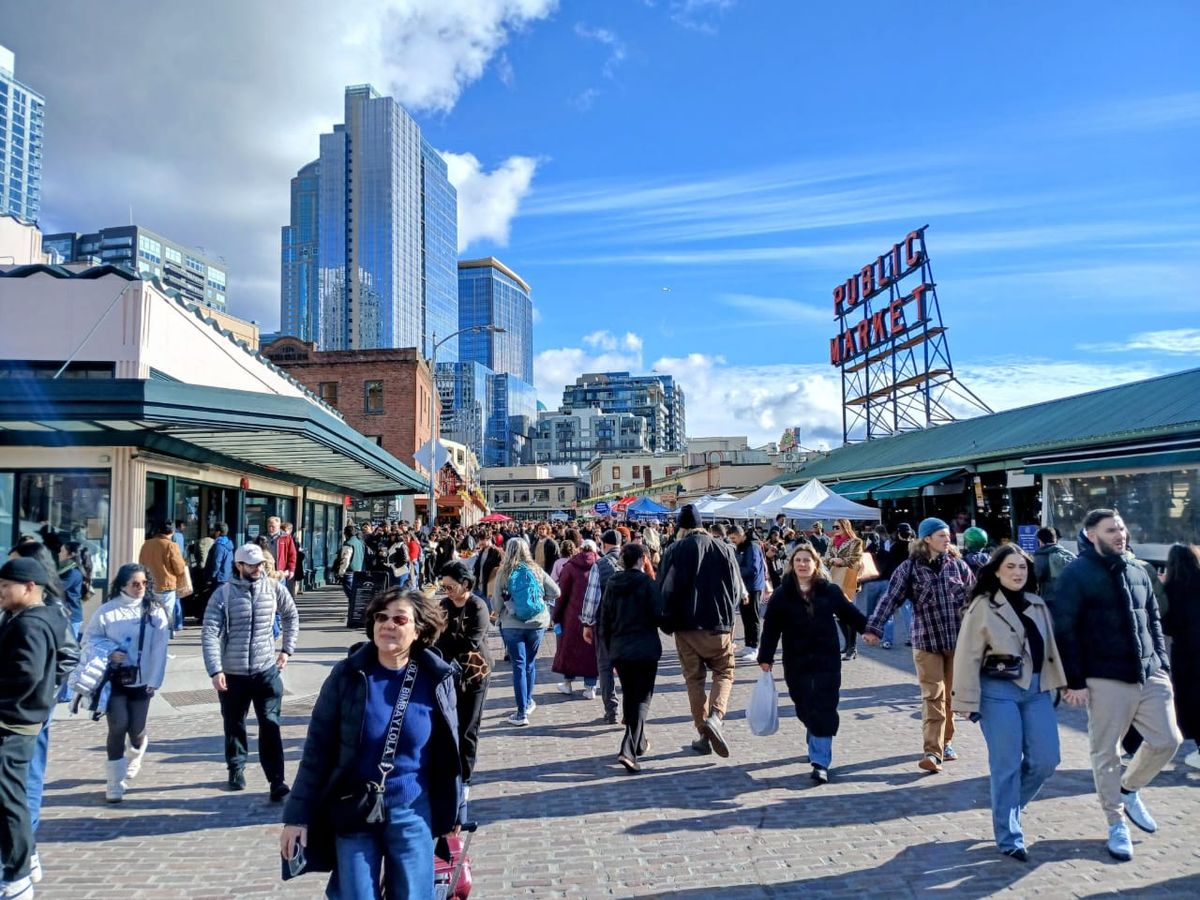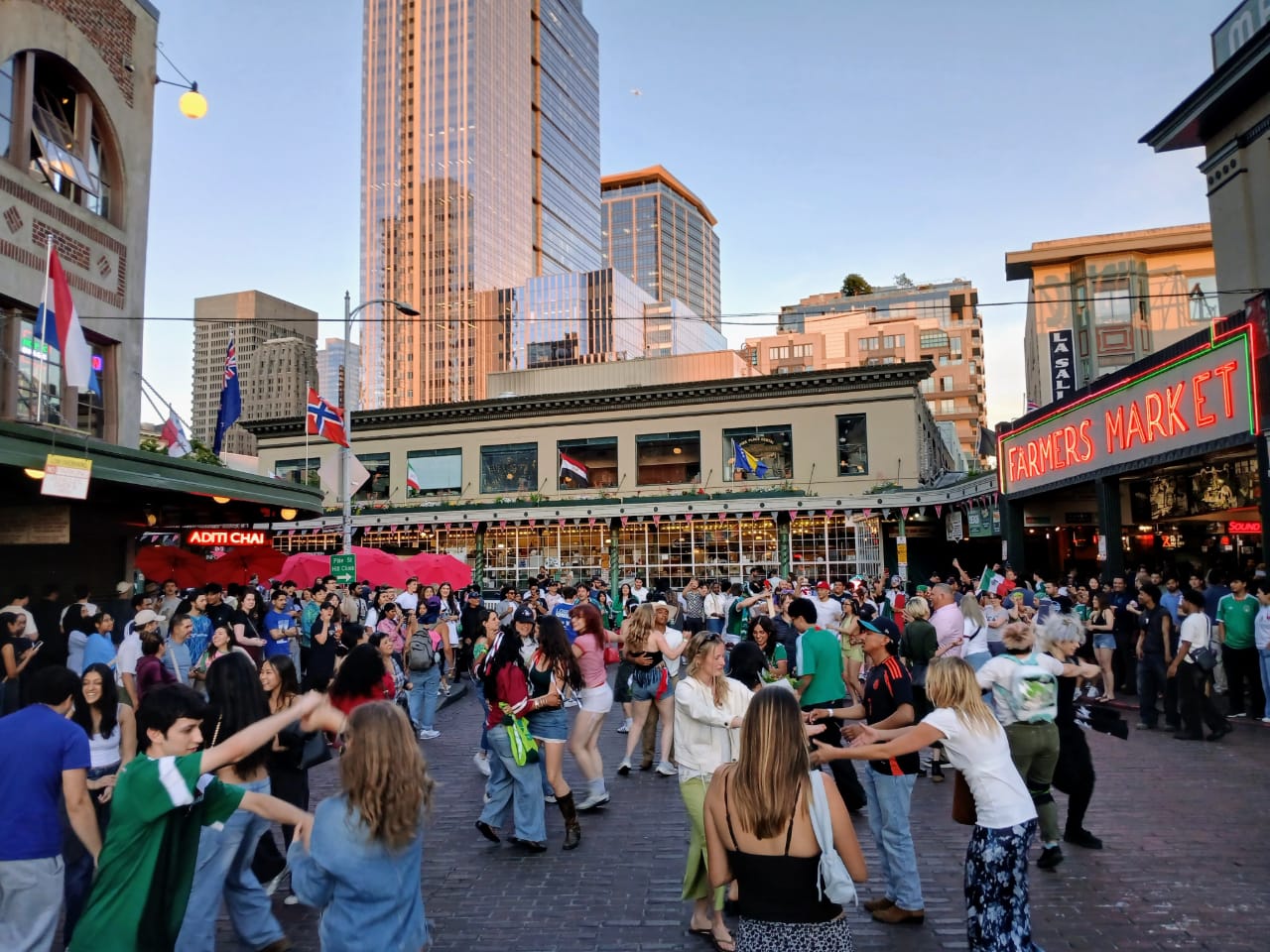
In a move that will likely be a tough pill for Seattle urbanists to swallow, the current pedestrian pilot at Pike Place Market is set to get scaled back to three days a week in October, as the Seattle Department of Transportation (SDOT) tries to find an equilibrium that pleases all stakeholders at the Market. SDOT's proposal would only implement "soft closures" of Pike Place between Pike Street and Virginia Street from 11am to 4pm Friday through Sunday, with "hard closures" with full barricades only implemented during special events.
Outside those weekend and event days, at least through March 31, all vehicles would be allowed to use the corridor without restrictions. According to SDOT's proposal, set to be presented to the Pike Place Market Historical Commission next week, new signage will instruct drivers to yield to pedestrians, with many of the barriers added to manage the busy street through the FIFA World Cup removed.
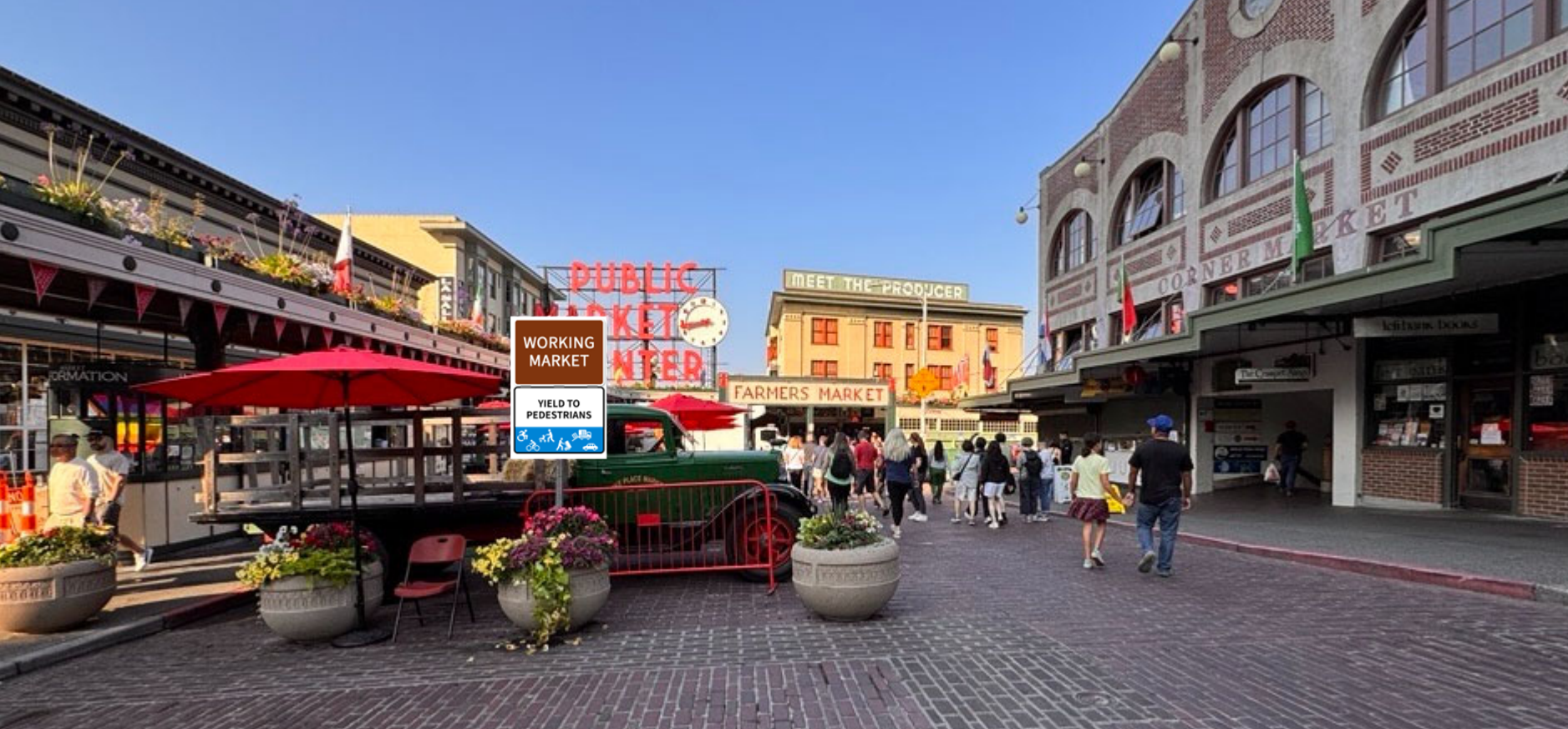
The current pilot program restricts vehicles simply wishing to drive through the street from accessing Pike Place from 10am to 4pm daily, and has been a smashing success by most metrics. Sales data shows increased business and a jump in visitors, especially locals heading to the Market more often. But it hasn't been viewed as a positive change by many inside the Market, including a substantial slice of business owners and Market advocates.
The question of how the pilot would evolve toward a more permanent iteration has remained an open one, with SDOT holding stakeholder meetings throughout the spring and into the summer to come to a consensus. In addition to SDOT staff, those meetings have included the Pike Place Public Development Authority (PDA), the Pike Place Merchants' Association, the Historical Commission, and a representative from Mayor Katie Wilson's office.
Next week's presentation notes that a June survey of nearly 5,500 Market visitors found "near universal" support for vehicle barriers at Pike Place, with only 2% not on board. In the survey, 38% of respondents affirmed the idea that there was an increase in pedestrian safety, and 25% cited a more welcoming environment for Market visitors.
But a presentation slide referencing "key learnings from summer operations" asserts that signage updates could "improve clarity to reduce confusion of who may enter and when." If SDOT surveyed visitors on whether they'd like to see the pilot scaled back for winter, the department has not released those findings.
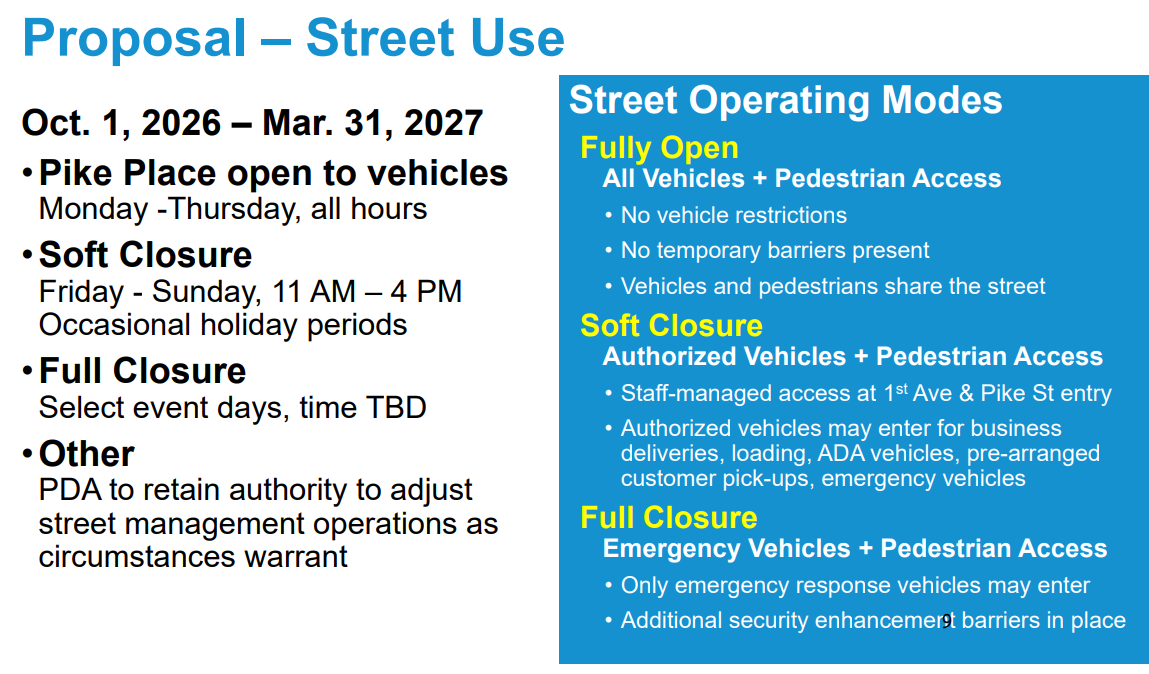
The shift to weekend-only operations through the winter mirrors a recommendation made by the University of Washington's Urban Freight Lab (UFL), which conducted interviews and surveyed both merchants and visitors over the course of this year. But the information relied on to make that recommendation is anecdotal, and does not appear to be based on any data that suggests the benefits of pedestrianization wouldn't continue to be seen through the winter months.
"This recommendation stems from both the merchant interview/survey and analysis of the visitor survey," the UFL's technical memo based on its analysis, released last month, stated. "Merchants reported reductions in sales or reduced growth was particularly acute during the winter holiday season. The typical 'busy season' occurs between May and September when the maximum number of workers are employed for over 70% of merchants. This corresponds to visitor activity: over 70% of reported visits occur between May and September."
In shifting to a scaled-back schedule for winter, the new plan makes a big concession to the idea that the pedestrian pilot is hurting a subset of businesses within the Market.
"The Merchants report relying on local shoppers heavily during winter months," the memo continues. "Visitors who travel to the Market by car are more likely to visit between October and April than visitors by other modes. Allowing access to passenger vehicles during these months would support Market businesses while minimizing conflicts with pedestrians."
During "full closures," the crash-rated Archer barriers that have been in place this summer would be replaced with more easily movable barricades, suggesting the department has moved beyond an initial safety-related justification for those barriers that was cited in the wake of the 2025 truck attack in New Orleans.
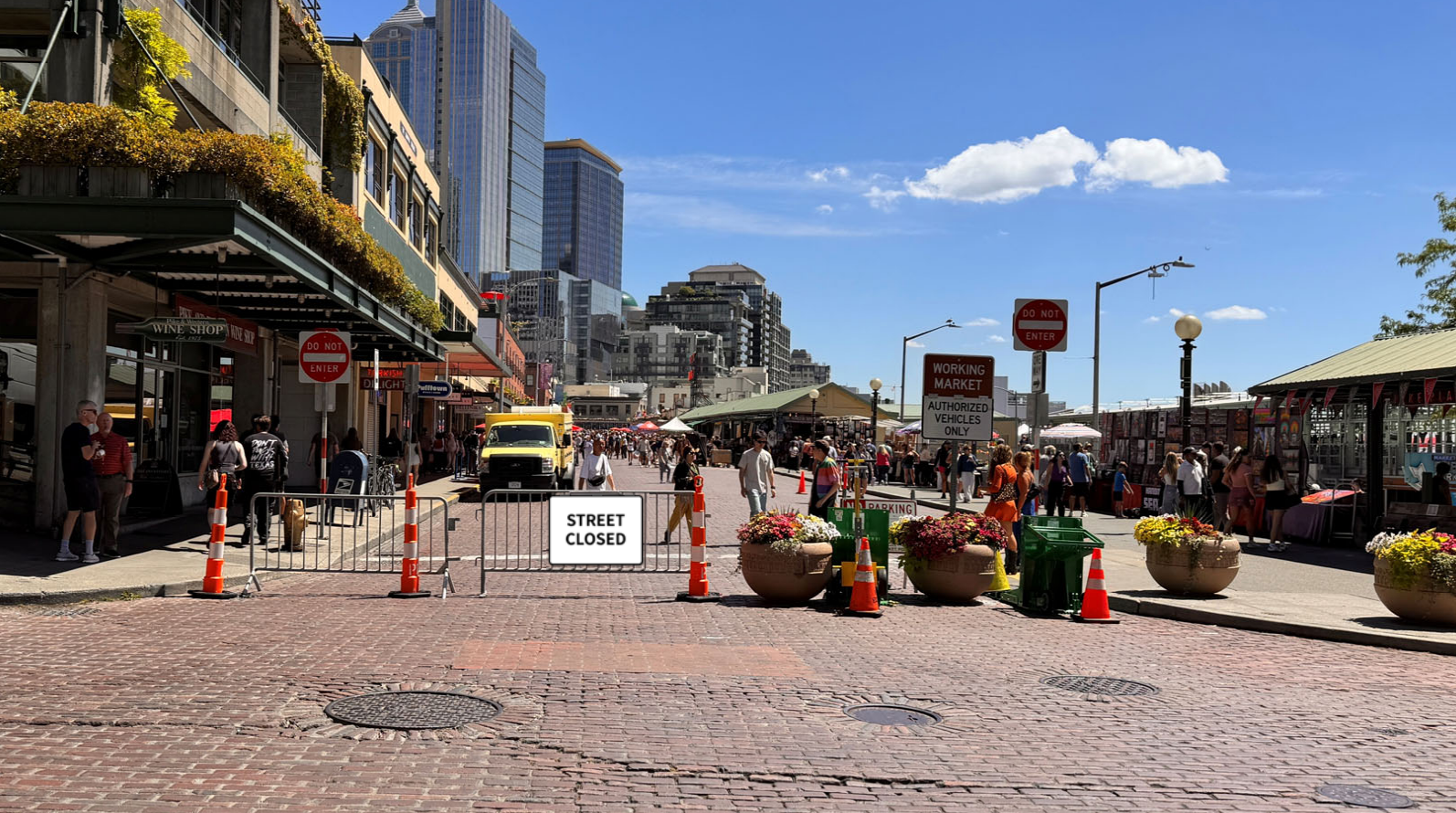
Bollards that had been added to the sidewalk at First Avenue and Pike Street would be removed, with retractable bollards in the street an uncertain prospect given that the ground underneath is not actually solid and features an "areaway" of the type found all around downtown.
Just last week, the nonprofit Allied Arts of Seattle – which holds two seats on the Market Historic Commission – held a discussion on the future of street access on Pike Place, which featured Pike Place Public Development Authority (PDA) Chief Operating Officer Katie Trent and SDOT's Radcliffe Dacanay, who is managing the access project.
"The needs of the market are a little bit different in the fall and winter, so we've been asked to think about what are some of our options, and this would be one of them: Monday through Thursday," Dacanay told attendees. "The conversation is constant, and we want to make sure we're also hearing the voices from the constituency, the merchants' association. So that has been all part of the process, and all of that feedback is coming into SDOT to our engineering department. We're not making decisions off on our own. We're constantly in communication with the PDA, asking what works, what doesn't work, how might we adjust, and it can go from details of the signage. Should we say 11 to 4, 10 to 5? What color? All of these things. We're having that conversation."
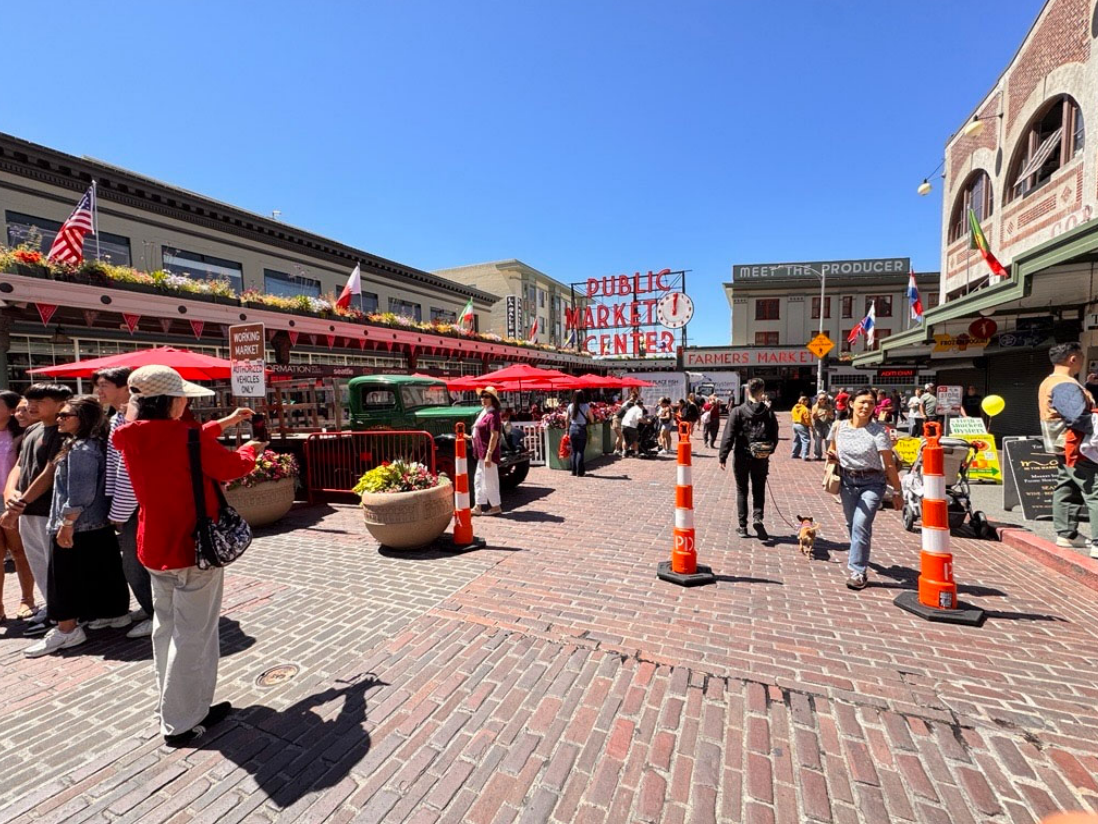
As the day-to-day operator of the entire Market, having the PDA's buy-in for the pedestrian pilot's next phase will be pretty essential, with Trent making it fairly clear last week that the PDA is on board with the direction that things are trending in. It was under the leadership of PDA President and CEO Rachel Ligtenberg, who was hired in late 2024, that the pilot was able to happen in the first place.
"There are as many opinions on the street as people providing them. Visitors are generally aligned [...] in generally preferring fewer cars on the street. But we know that grocery merchants and their customers skew much more heavily in favor of access to Pike Place to make their grocery shopping trips happen quickly," Trent said. "I think we're in a really great place coming into our next [iteration] with MHC and the proposal for fall and winter."
The panel was moderated by John Turnbull, the PDA's former Director of Asset Management, who provided a defense of allowing vehicle access along the street that echoed previous odes to the prior status quo, like former city councilmember Peter Steinbrueck calling the mixing of traffic modes "zesty" in 2022. Turnbull now serves on the Honorary Advisory Board for Friends of the Market, a group that has recently been trying to throw cold water on the positive sales data coming out of the Market.
"What I think is lost by any kind of strict regulation of what happens on the street is a sense of theater and surprise and mystery," Turnbull said.
Gordon Padelford, Executive Director of the Seattle Street Alliance, offered a defense of the current iteration of the pilot that SDOT seems poised to shift away from.
"We've got a number of opinions on what constitutes like a delicate ballet. I don't think random cars driving through the middle are part of that ballet. I think they are a hindrance to people's shopping experience," Padelford said. "I think that's why we've heard in some of the feedback that there's real frustration around what does the signage mean, because a lot of visitors are hoping to have that experience being able to walk with their families down the street, being able to push a stroller, push a wheelchair down the street, and not deal with the random vehicles. So I would say, if you're not actively loading and unloading, it's really not a good use of the street."
The Market Historical Commission will be asked to sign onto the pilot's next iteration at its August 26 meeting, with the certificate of approval for the current phase expiring at the end of September.
An earlier version of this story incorrectly attributed a quote from John Turnbull to Ben Frey of Don & Joe's Meats. We regret the error.
Doug Trumm contributed reporting to this story.
 Ryan Packer
 Ryan Packer