The Downtown Seattle Association (DSA) released a “report” that was meant to convince us that taxes on high earners are smothering the Seattle economy. Regarding such claims, I recently wrote in the pages of Geekwire that “most of these posts are long on rhetoric, short on rigor. Given Washington’s pressing needs, we should do better. And given our community’s capacity for data-driven thinking, we can do better.”
The DSA report is, sadly, yet another such example, this time in service of corporate lobbyists’ agenda. The report may be prettier than a random Linkedin post, but the reasoning is every bit as shoddy.
The DSA contends that taxes on high earners are chasing high paying jobs out of town. But the data shows a very different story. The DSA relies on the total, net number of jobs between Seattle and Bellevue to make its point. On the way, they ignore the obvious collapse of downtown retail and restaurants that impacts central cities everywhere. More importantly, the taxes they complain are the cause of this decline are not levied on retail and restaurants! In fact, the employers that do pay these taxes have largely expanded in Seattle.
Business leaders are frantic to establish their anti-tax narrative because the tide is turning and local lawmakers are increasingly embracing the push to tax the rich in order to invest in the public good — whether affordable housing or public education or clean energy. Long a state lacking an income tax, Washington finally greenlit a “millionaires’ tax’ this spring, after years of inaction and false starts at the state legislature. That tax will go into effect in 2029 — with millionaire-funded legal appeals and repeal initiatives at the ballot box likely before then.
Moneyed interests are gearing up to spend big to paint taxing concentrated wealth as misguided and counter-productive, and they’re happy to bend the truth to do it. DSA’s report is a symptom of that broader sickness.
As a reminder, the JumpStart corporate payroll tax (which Seattle approved in 2020) kicks in for earnings of ~$194,000 per year for firms paying more than $9 million in total payroll in Seattle. It starts at a mere 0.75% tax rate. For the top earners at the largest companies, it reaches a modest 2.6% rate.
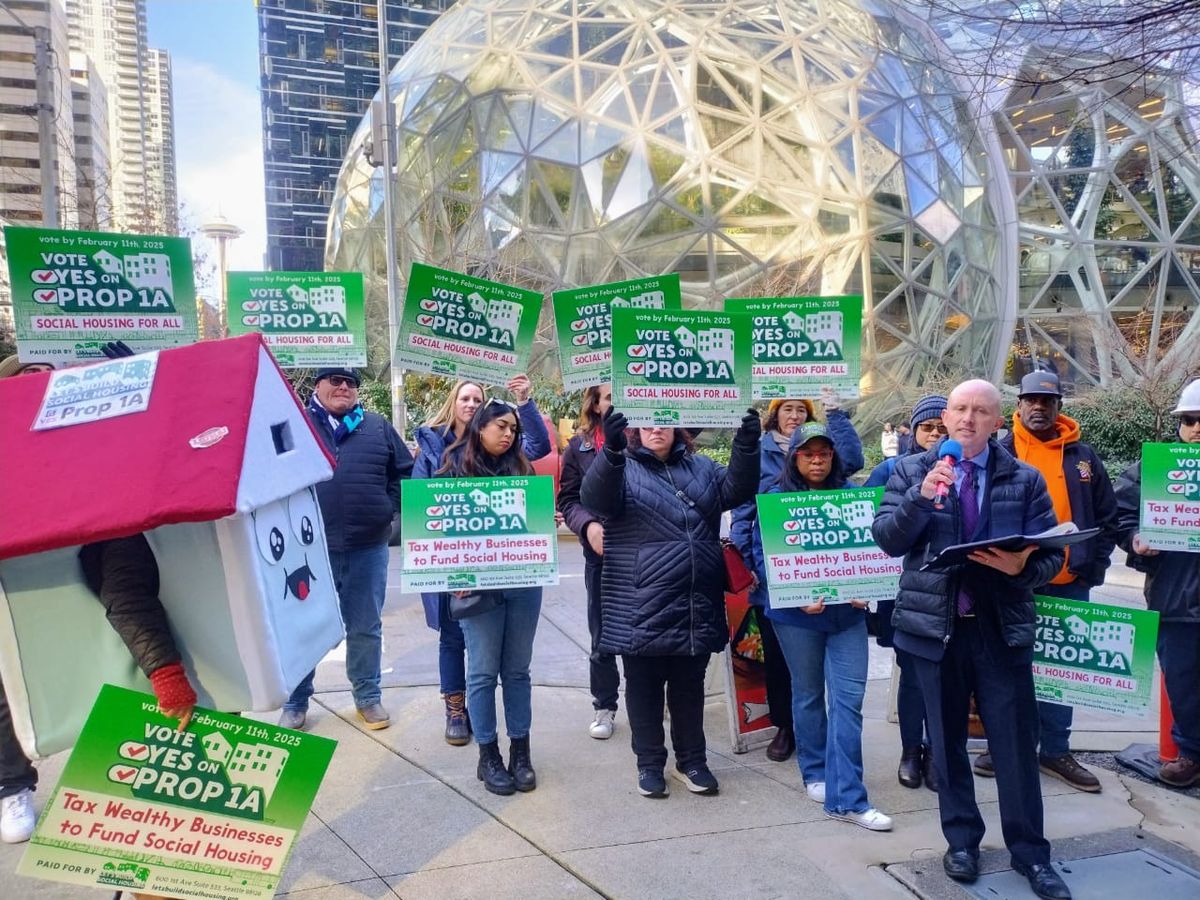
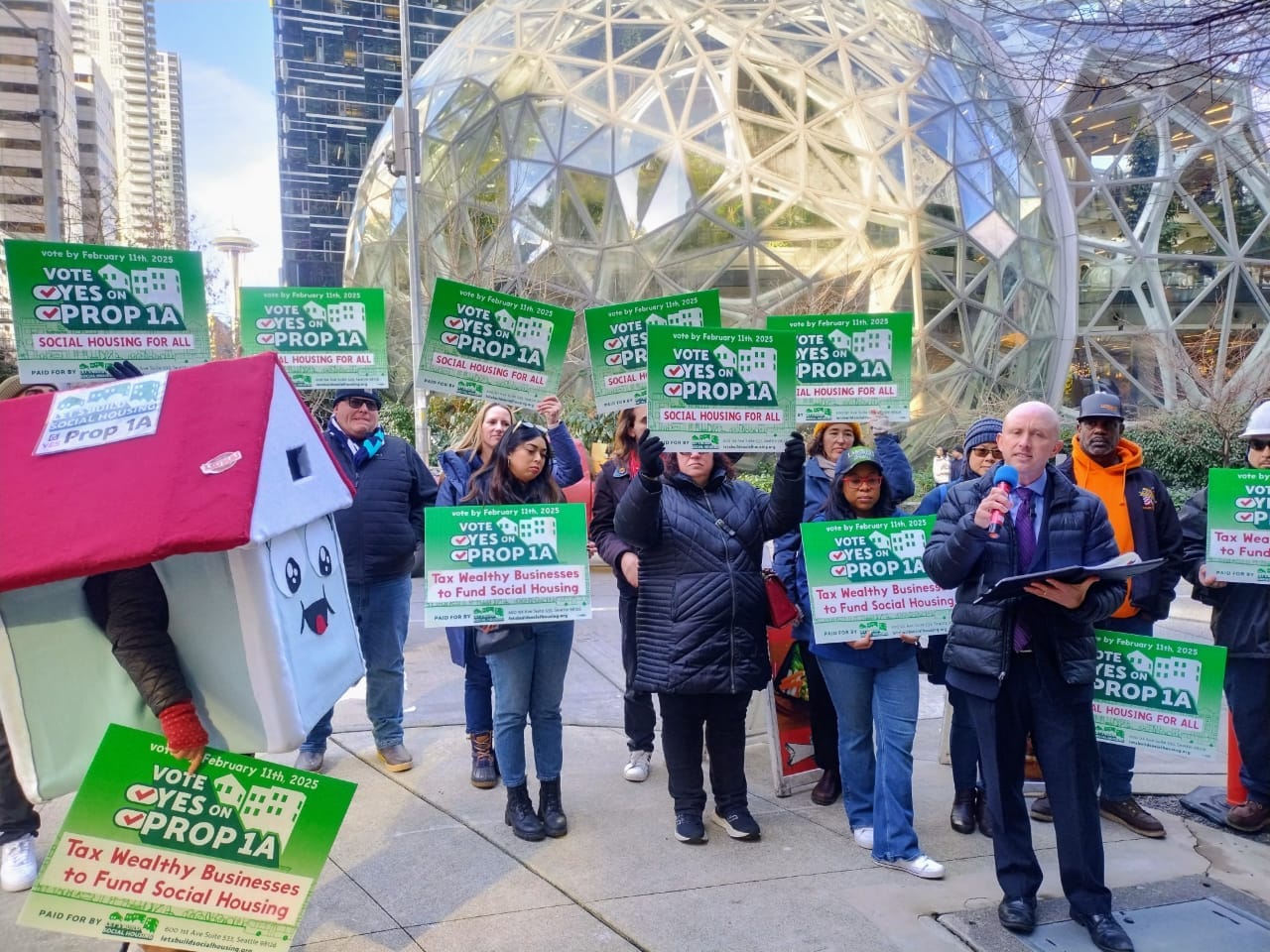
The second tax, which funds social housing and was approved by Seattle voters in February 2025, is a nickel-per-dollar payroll tax on the portion of any individual’s annual compensation above $1 million. The first million is free, every year. Both are charged to the employer, not deducted from the worker. How many restaurant workers do you know that make over a million, let alone $190,000?
The DSA's headline trumpets the 30,000 jobs lost in downtown Seattle since 2020. But this counts every job in the downtown core: retail clerks, restaurant servers, hotel staff, all of it. These are the areas that have seen significant drops in employment. And the JumpStart and the social housing taxes are for very high earners; they don’t touch any of those jobs. The fact that these lower paying jobs are down in Seattle tells us nothing about whether taxes on high earners are chasing away jobs.
The only way to know is to compare Seattle and Bellevue on the jobs that these taxes actually touch. Let’s start with by looking at what we’ll call our “general high paying sector” - which excludes Amazon for a second, for reasons I’ll explain below.
These live in two big categories: Information, and Professional, Scientific & Technical Services. They include software, engineering, design, and consulting. Using Puget Sound Regional Council covered-employment data, citywide, from 2019 (the last full year before JumpStart) to 2024 (the most recent available):
In Seattle, those jobs grew from 114,157 to 137,235 jobs — up 23,078, about 20%.
In Bellevue, they fell from 44,937 to 44,671 — down 266 (−0.6%).
In other words, during the taxing period under discussion Seattle added tons of these tech jobs and Bellevue didn't.

Now, let’s look at Amazon and other corporate HQs. I am treating this separately because a federal reclassification shifted a portion of corporate employment at companies like Amazon between two jobs categories during this time period - from “nonstore retail” (in NAICS 45) to “management of companies” in (in NAICS 55). The simplest way to account for this is to add both categories together in 2019 and 2024 and compare them across Seattle and Bellevue. (This will have some nontaxed retail jobs in it, but if anything, that will hurt Seattle in this analysis).
Seattle's employment in these combined categories remains essentially flat — about 78,000 jobs in both 2019 and 2024. Bellevue’s corporate HQ employment has grown from 8,000 to 17,000. That’s up 110%, albeit from a very small base.
This is pretty much all about Amazon, of course. Jeff Bezos’ behemoth has shifted some jobs across the lake–that is no secret. But this was a strategy announced in 2019, and Amazon set the target of 15,000 jobs in early 2020. Both were before JumpStart existed, and well after the short-lived “head tax” had been repealed, though Amazon was still mad it had ever happened. But they were not subject to the tax when they made this decision. In other words, if it weren’t for the idiosyncratic decision of this one company during a period in which none of the relevant taxes were even on the books, Bellevue’s share of regional high-pay employment would have drastically fallen behind.
In fact, given that the overall number of headquarters employees is flat in Seattle, and we know that Amazon is down a good bit from its peak employment in Seattle, it looks like non-Amazon corporate HQs are growing faster in Seattle than Bellevue too!
So where does that leave us if you put all the categories together? If we add together all four tech + HQ related categories, even accounting for Amazon, whose decision was made before the taxes DSA bemoans, Seattle has still added far more highly paid jobs (23,100) than Bellevue (8,600) during this period. Since Bellevue was starting from a much, much lower base, its percentage growth was higher, but still only slightly higher (16.3% vs 12%). And in any case, employers deciding where jobs should go picked Seattle over Bellevue at a 2.7 to 1 rate, even adding in the shift from Amazon.
Whatever is hollowing out downtown — and something real is — it isn't high earners fleeing the payroll tax. The sectors that pay the tax grew here, and quite a bit. The downtown losses are concentrated in retail, food service, and foot-traffic businesses that don't pay a dime of it.
There are other examples of mistakes and shoddy reasoning in the report. For instance, it says the 5% millionaire tax for social housing costs, “at minimum, $50,000 per applicable job.” This is false. The minimum is five cents. The first million dollars of income per year is free. You’d have to make two million dollars to generate a $50,000 tax.
The report also tries to blame Seattle’s higher downtown commercial core vacancy rate (32% in Seattle, 24% in Bellevue) on taxes. Vacancy in both cities is indeed a very serious concern to anyone who cares about our region! But this clearly has nothing to do with taxes as shown above. In 2019, before the taxes under discussion, Seattle’s vacancy rate was two and a half times higher than Bellevue’s to begin with (6.7% in Seattle, 2.5% in Bellevue) already.

Crucially, a strong national trend emerged post pandemic of office clients picking newer, more amenity-rich space, which is a much larger part of what Bellevue has to offer, as its downtown is far newer. The past vacancy differences and this trend are more than enough to explain the current differences.
Now it is true that in the last couple years (which aren’t yet included in Puget Sound Regional Council datasets), the national tech market has turned to layoffs. We are feeling this in profound ways in tech-heavy Seattle (and Bellevue, and Redmond). It has hit hard in San Francisco, Silicon Valley, and in low-tax Austin as well. But this is obviously a national trend, not a local one. And in fact, in the latest period (after the social housing tax was passed), tech layoffs look like they are hitting Bellevue harder than Seattle.
Taxes are clearly not driving these behaviors, even if they serve as the excuse after the fact.
Sadly, corporate lobbyists will seize this moment to blame progressive policy for a national trend that is reflected in our region—which I think is a gross way to prey on people’s real fears. This is a pattern for the corporate PR machine: they have blamed obvious national trends on local progressive policy time and time again—such as difficulty hiring police, retail theft, the fentanyl epidemic, and now tech layoffs. And that was just the last five years!
Those national trends do require robust local responses, of course. But we shouldn’t be fooled by lobbyists who pretend the world’s background conditions are driven by local policy. In any case, we should be careful not to swallow the party line from trillion dollar corporations.
 Ryan Packer