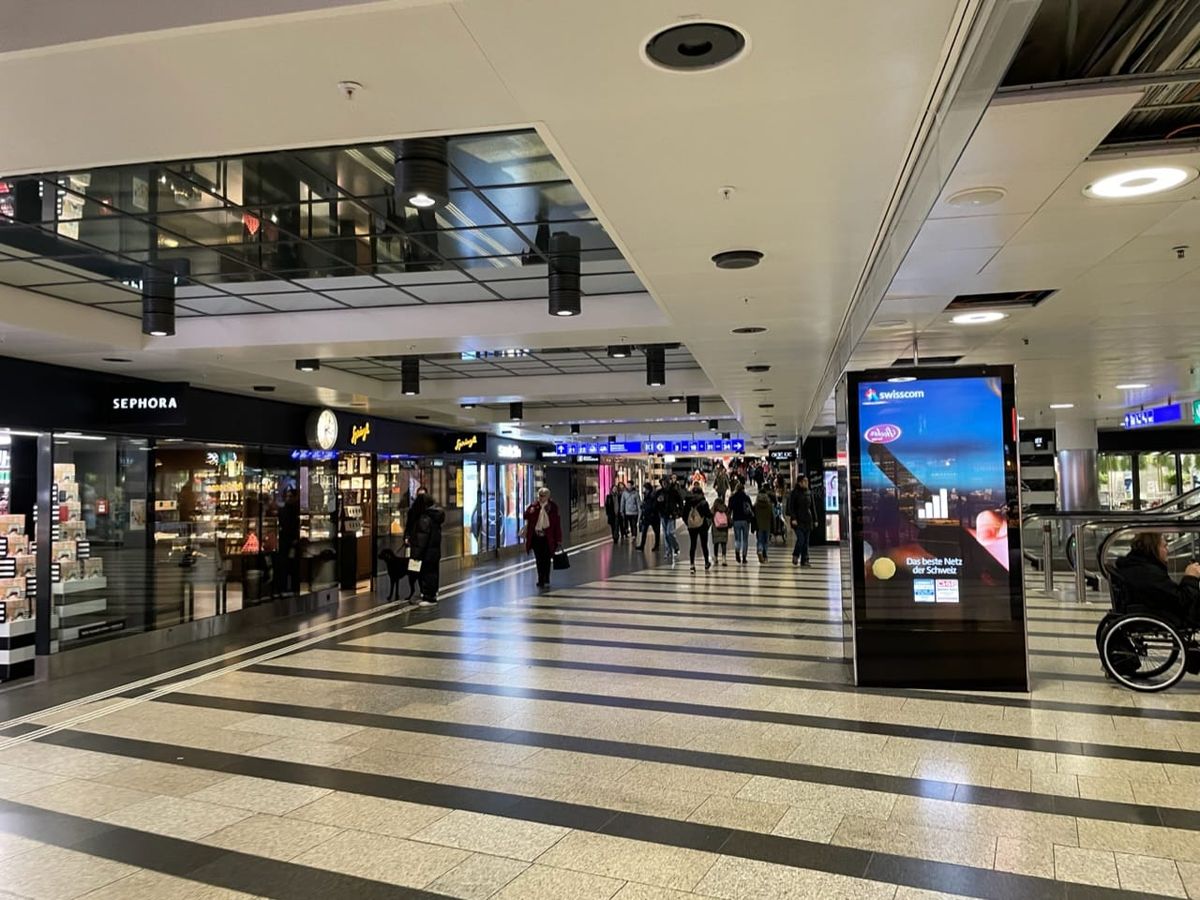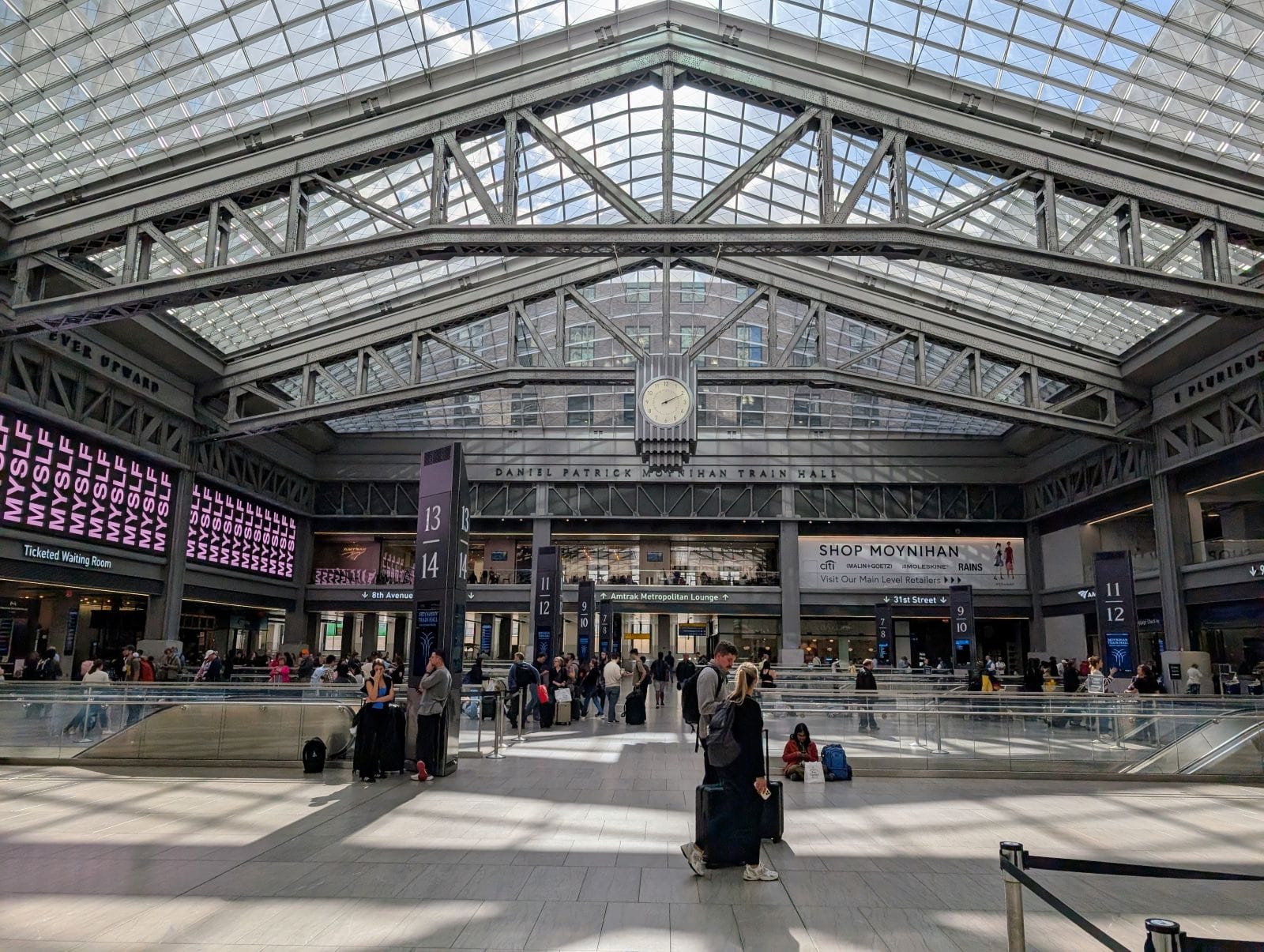
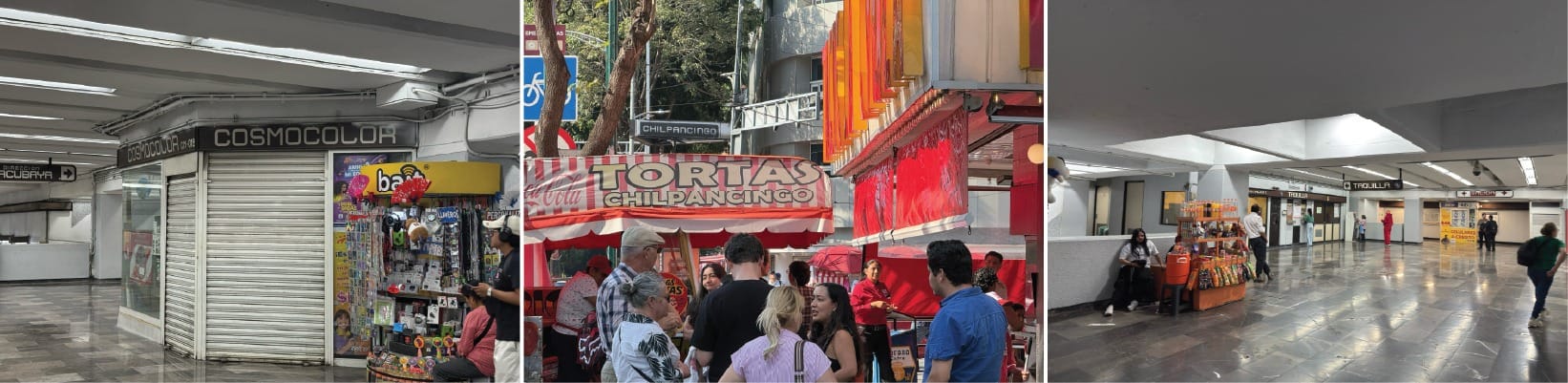
Travel to major cities in most parts of the world, use their transit system, and you’ll find integrated retail. From London and Paris, accommodating small restaurants, grocers, and cafes, to Mexico City, where food carts and other portable stands line the exteriors and interiors of stations, retail and vending is an expectation. Riders can grab a bite to eat, a coffee, or a carton of eggs while waiting for their train or as they head out of the station.
Meanwhile, Seattle’s Link light rail riders are welcomed into stations that are often cavernous and devoid of interaction. But it doesn’t have to be this way. Vending carts could relatively easily fill empty space in stations, with eyes towards more permanent retail down the line.
Common Cart: An important proof of concept
In 2023, Sound Transit prepared a retail strategy report, but largely has not pursued the idea — with a few recent exceptions. This spring, I walked into the Capitol Hill Link Station and was delighted to see something surprising — a new small business, called “Common Cart”, serving coffee and Yaupon (a type of Holly tea) to transit riders. Zaiquiri, the owner, explained to me that one of their missions is to fight for more vending in Link stations across the region by proving the business model is both possible to start up and financially viable to keep running.
“My goal was to figure out how to start a cart... [to figure] out what’s the easiest path to get there.” The process to get started wasn’t particularly onerous, Zaiquiri explained, but it required both a fair bit of luck and time.
The process for Common Cart was actually started by Diaspora Cafe, but the original application was tabled when the person spearheading the process on Diaspora’s end moved out of Seattle. They met Zaiquiri, who was interested in continuing the pursuit independently. However, Sound Transit required a detailed business plan, for which Zaiquiri had no basis for financial projections.
“This is all by happenstance because [Diaspora] were able to do this original application, and then I walked up and said ‘here’s a business plan I’ve done, I’m going to offer a similar service,’” Zaiquiri said.
From there, it was another eight months of back-and-forth to negotiate terms with Sound Transit, involving engineering diagrams of the cart itself, liability insurance, and a robust business plan. Common Cart is able to operate without a King County mobile food vending permit by limiting their sales to items covered under the King County food permit exemptions list. This allows Common Cart to avoid cumbersome requirements such as a commissary kitchen and a bathroom within 500 feet, though it also limits Zaiquiri from selling higher margin items, such as cooked food. “It’s hard to make a profit margin on that — I’m working to see if it’s possible.”
By leveraging those exemptions, Zaiquiri found the simplest path to a station-area cart — just a basic business license and a rental agreement from Sound Transit. “Just a license from Sound Transit and a business license with a reseller’s permit. Very easy to acquire.”
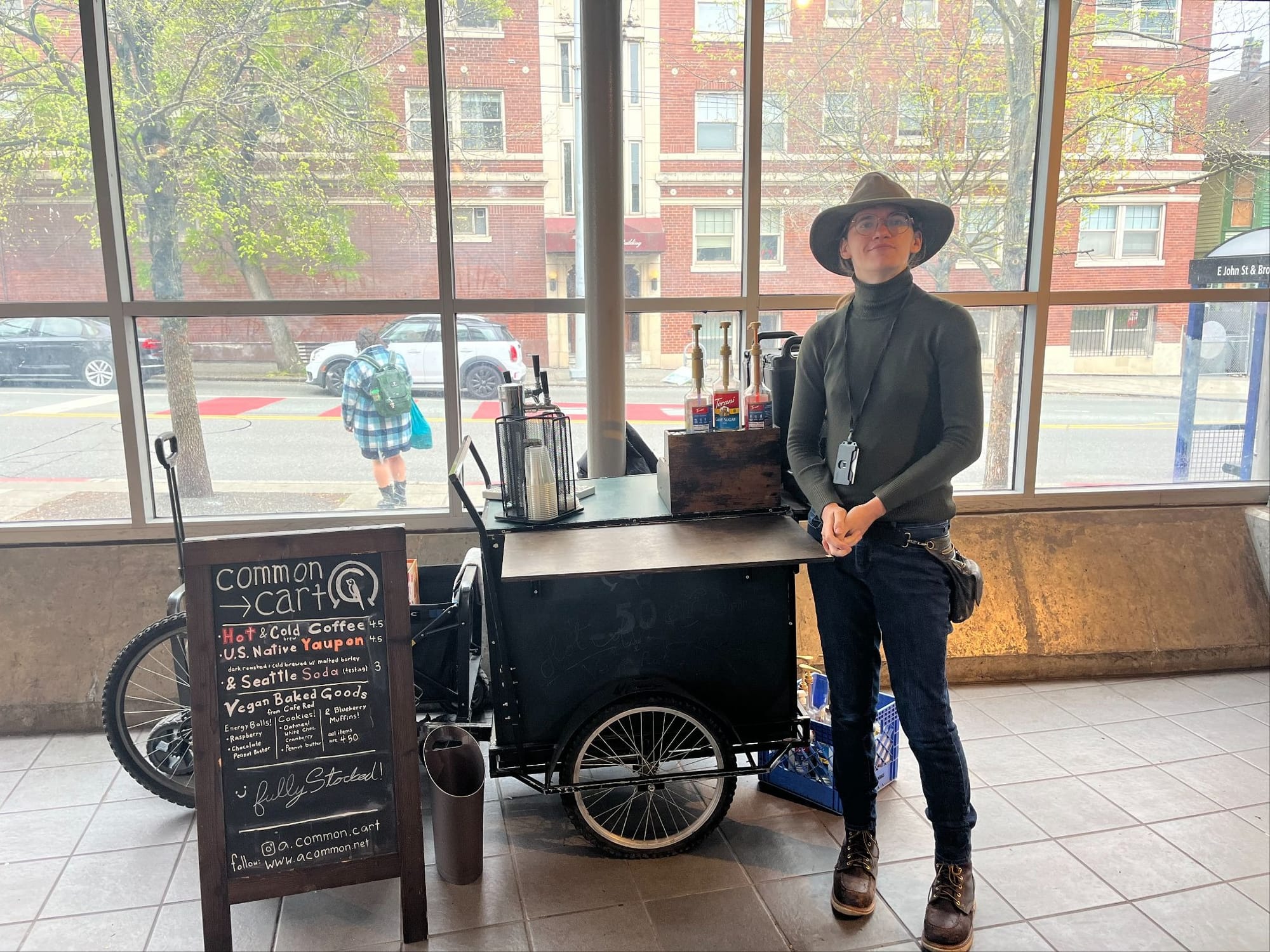
The value proposition for more vending in Link stations is threefold, with the first and most important focusing on the rider. But it’s also good for small business incubation and for Sound Transit, as we’ll get to.
Good for the rider
At the most basic level, vending in stations meets riders’ demand for convenience. In the 30 minutes I interviewed Zaiquiri, we stopped 7 times for a customer transaction — and this was after the morning rush, during a period when foot traffic is significantly slower.
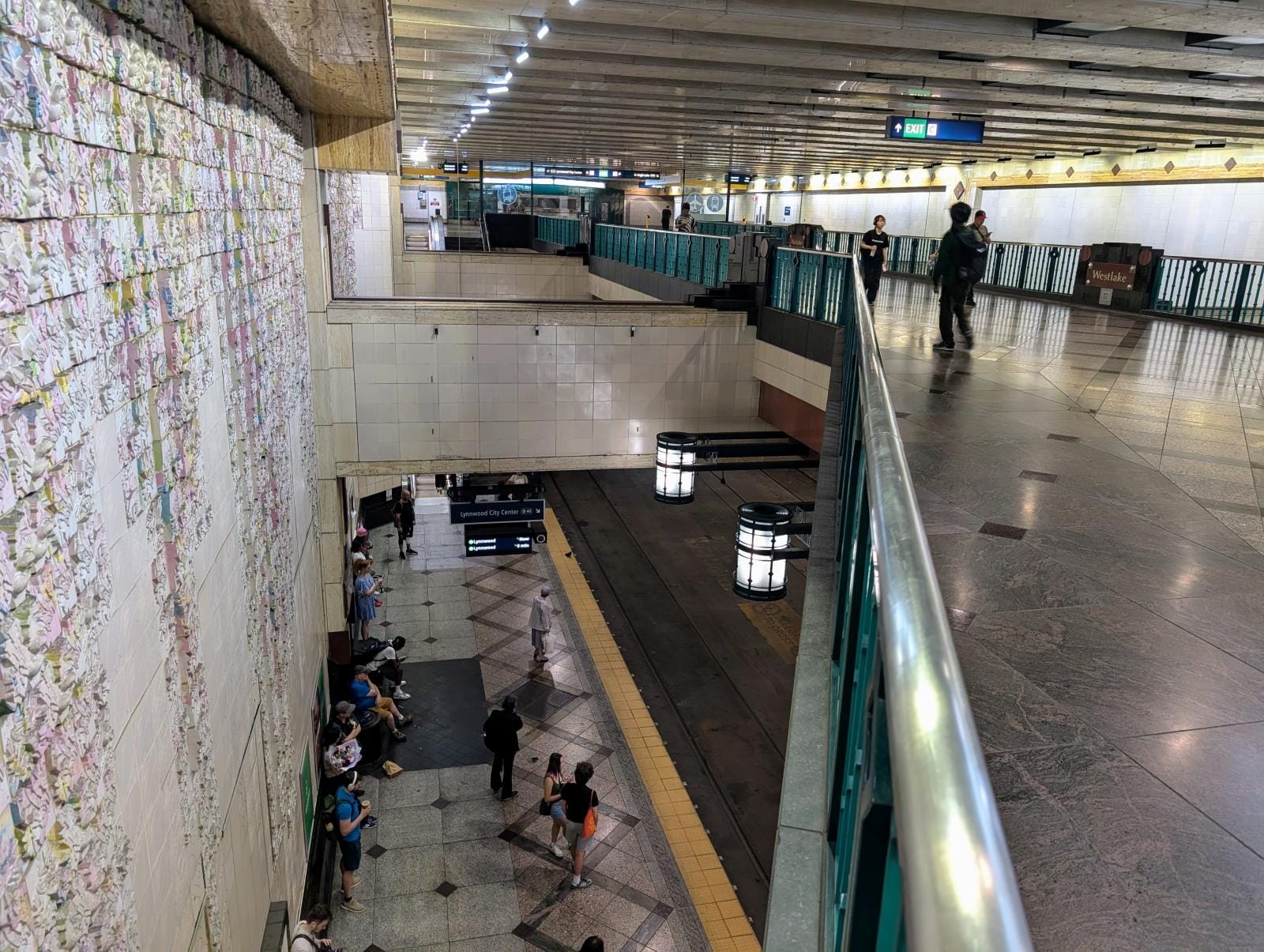
At a more abstract level, vendors in transit stations provide a real benefit by creating an “eyes on the street” effect: the vendors facilitate a safer environment simply through the presence of more people, both themselves and their customers.
Even more abstract, stepping into an area filled with life creates a certain joie de vivre, or a joy for life. Borrowing again from Jane Jacobs, there is an ephemeral increase in our quality of life simply by being around people checking in with their barista or doing a bit of shopping on our daily commutes, even if we ourselves are not the ones making the purchase.
Good for small business
I live on Capitol Hill, where it often feels like a restaurant or bar shutters their doors every week. The feeling is inescapable that small businesses are struggling more than ever. The Seattle Times described “an affordability trap” facing Seattle’s business, specifically restaurants, between the rising costs of commercial rent, supplies, and a high minimum wage.
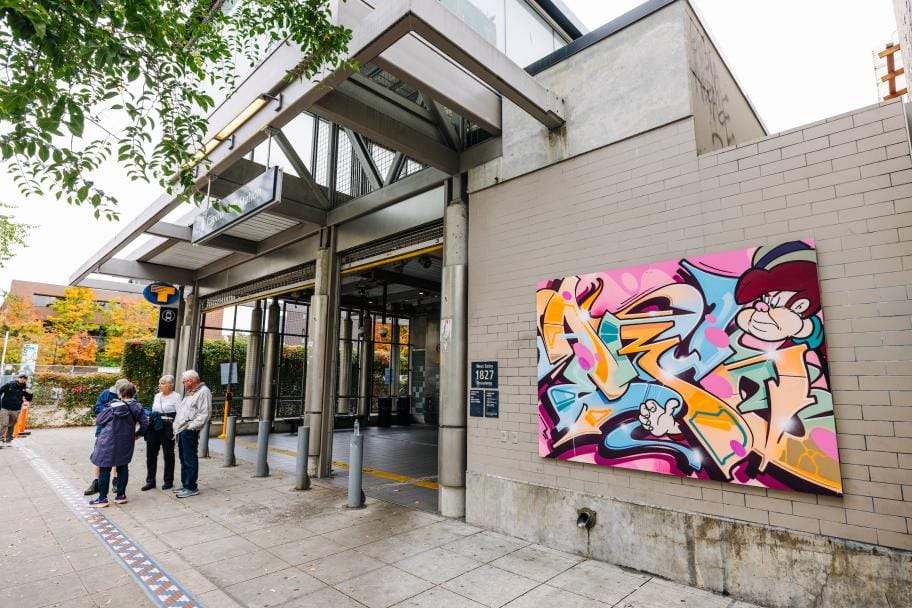
Relatedly, a Washington Hospitality Association report pinned Seattle as the nation’s second most expensive market for dining out, surpassed only by San Francisco.
Station vending could represent an important opportunity for our local governments to offer affordable rent to retail and restaurants in a market where small businesses desperately need to find some sort of edge. Zaiquiri told me their negotiated rent at the Capitol Hill Link station was $250 per month, and importantly, included access to a small storage room where they can store the cart itself, a huge logistical advantage for the business.
While comparing a food cart rental space to per square foot retail rents would represent a false equivalency, paying an annualized $3,000 to do business in an extremely high foot traffic location feels like a good deal in a market where the annualized asking rate for retail is $23.40 per square foot and most retail spaces will be at least 1,000 square feet. Shelling out $250 per month for rent is a much more manageable way for an aspiring entrepreneur to get off the ground than the retail spaces available on the market — generally, a selection of spaces with large footprints and a price tag to match.
“I had 2500 [dollars] going into this. Not a lot of capital to start a business,” Zaiquiri said.
Small-scale vending in station areas can serve as a lower-barrier pathway to small business ownership, something Seattle can only benefit from.
Unfortunately, Common Cart’s story has already illustrated how uncertain this pathway can be. A few weeks after I interviewed Zaiquri, a King County inspector determined that cold brew coffee and yaupon are temperature-controlled for safety and not eligible for exemption — despite a different official previously informing Common Cart that both items were exempt. This inconsistency has forced the cart to shut down, at least temporarily. The remaining exemptions (hot coffee, pastries, packaged goods) could still allow for a convenience-style, but losing the higher-value cold brew menu items is a huge blow to financial feasibility.
Good for Sound Transit
Finally, vending in stations is a win for Sound Transit. For minimal effort and overhead, Sound Transit gets a real public space activation strategy for their stations, and ultimately provides a positive service for their constituents.
Most importantly, such a program could open a pathway to a significant source of revenue for a financially beleaguered system. Using 2025 ridership data and Sound Transit’s Retail Strategy report, which recommended a weekday station ridership of 2,800 to support a coffee cart, the 1 Line has 11 stations that could support at least one cart. While that would amount to a meager $33,000 in rental revenue per year, it would be a positive step towards leveraging an underutilized asset. The system may already be able to support more significant retail as well, given the assumed ridership boost from the 2 Line’s Crosslake Connection, though this data is not yet available.
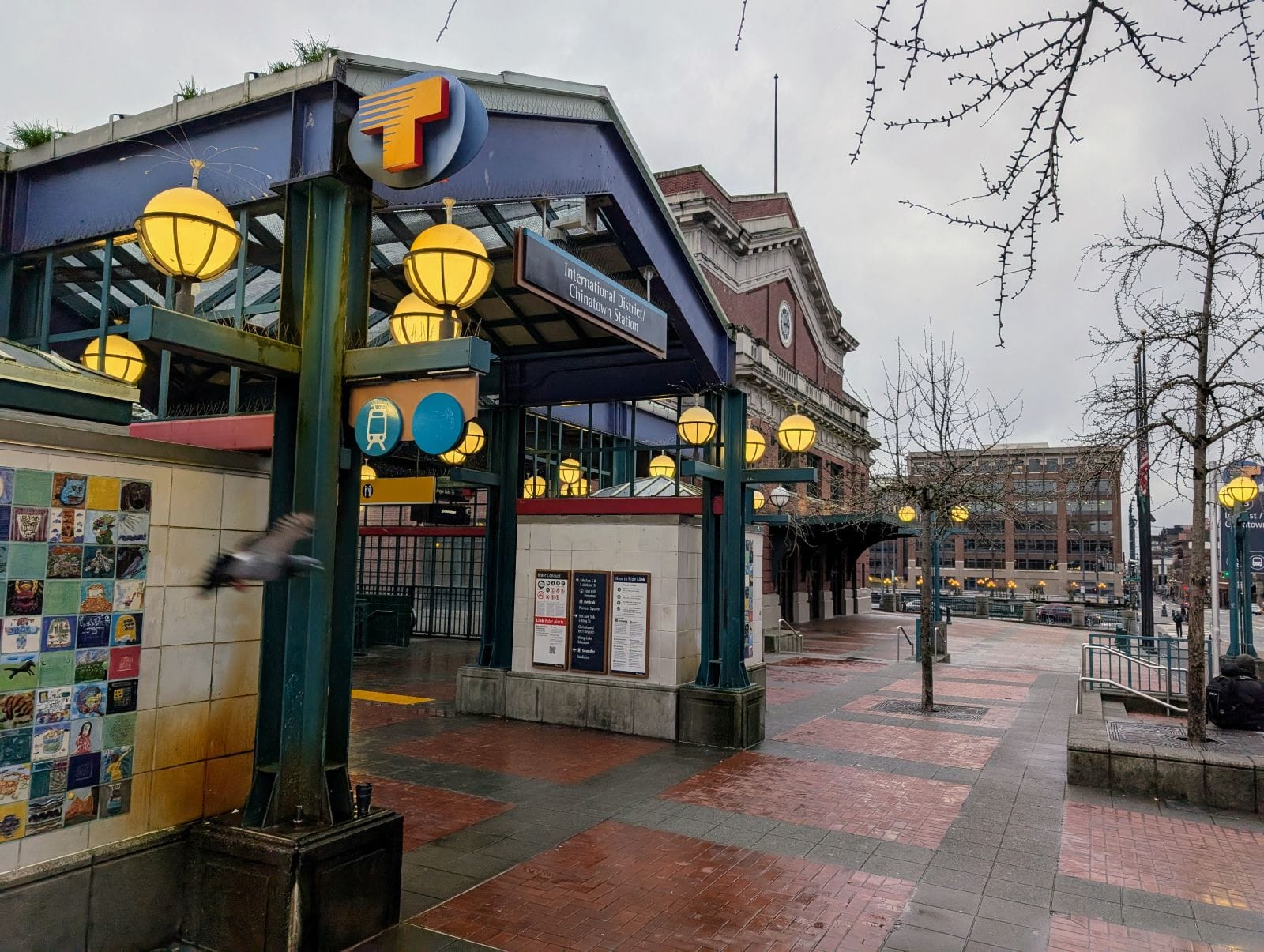
Since the 2 Line overlaps with the 1 Line from Chinatown-International District and points north, those stations will see service levels roughly double, boosting traffic in those stations – a further enticement for entrepreneurs.
Additionally, Sound Transit could make improvements to station areas that could aid the financial feasibility of a vendor program. Capitol Hill Station, for instance, doesn’t have electrical outlets available, but could be retrofitted to add them. Outlet access could open the door to items with higher profit margins, and Sound Transit could in turn charge a higher rent for space with outlet access.
Where do we go from here?
First, it’s important to acknowledge that while Sound Transit hasn’t pursued vendors and retail in stations, they’re not averse to the idea – the fact that Common Cart ever existed is proof of that. Although Common Cart is temporarily closed, if and when they reopen, the best thing supporters can do is head down to Capitol Hill Station and purchase a coffee or pastry from Zaiquiri.
Common Cart succeeding in the face of this regulatory environment would pave the way for more vendors to feel confident in the feasibility of operating in Link stations, and prove to Sound Transit that this retail strategy is something worth pursuing — that it’s something riders want, and can pencil out as financially viable for the vendors themselves.
Beyond that, there are two main areas that could make this easier: Sound Transit could invest in retrofitting core, high-traffic stations such as Capitol Hill to have electrical outlets and bathrooms, and King County could loosen restrictions or expand and clarify their list of exemptions. The sort of inconsistency, complexity, and ambiguity that led to Common Cart’s closure is the type of regulation that prevents entrepreneurs from ever getting started.
Vendors in Link stations are a win-win-win. Vending in Link stations is a layup for activating underutilized public space, and it’s a solution that feels so obvious and low overhead that we just might miss it. Vending isn’t just a basic service, but an opportunity for us to prove that we can open a door to a more lively, community-oriented, and safe transit system. Good for the rider, good for transit, good for small businesses — good for the city.
 Stephen Fesler