A loss for the City of Seattle at a Washington Court of Appeals this week could reverberate around the state, as the court confirms a major loophole in recent reforms enacted by the legislature to reduce barriers to housing production. The ruling, released Monday, will officially reopen the environmental review of Seattle's long-term growth plan and subject it to additional scrutiny.
Two different challenges had been dismissed by a lower court and the City of Seattle's hearing examiner.
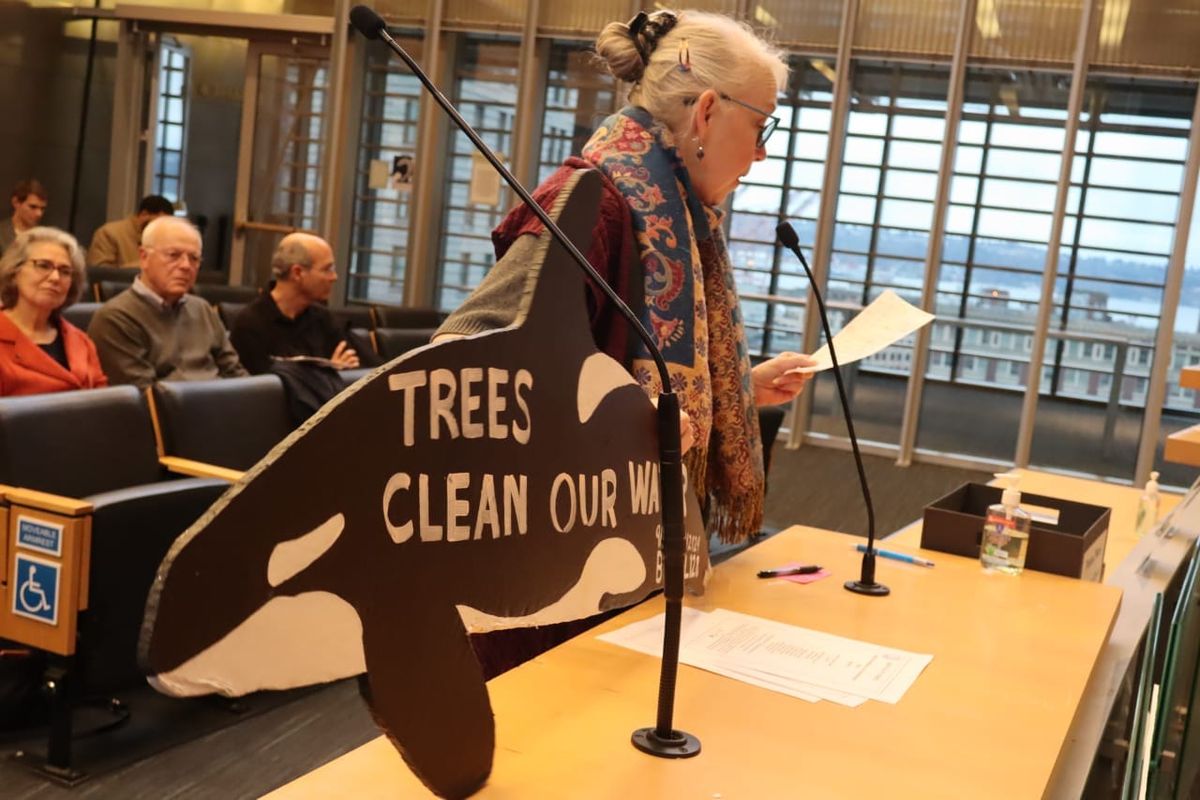
The two appeals, filed by musician and environmental advocate Jennifer Godfrey and lawyer John M. Cary in coordination with the group Friends of Ravenna Cowen, allege that the City of Seattle didn't conduct a sufficiently thorough analysis of the environmental impacts of former Mayor Bruce Harrell's One Seattle Plan.
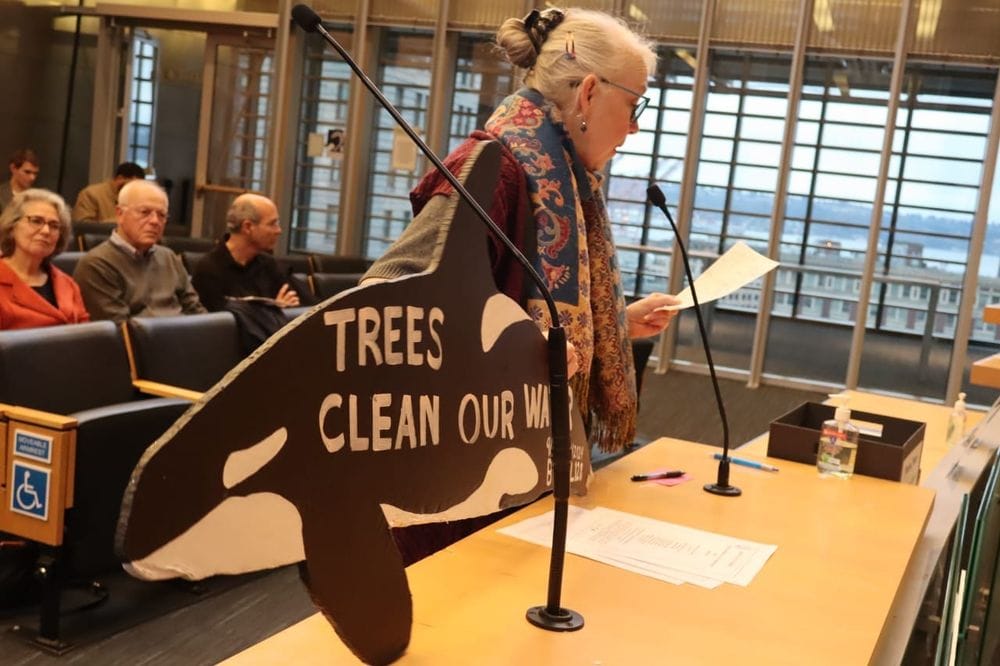
Godfrey's lawsuit – dubbed the "Orca Appeal" – has focused on the environmental impact of additional development on the ecosystem of Puget Sound, including its population of Southern Resident killer whales (SRKW), while the Cary appeal is more broad and targeted alleged deficiencies around traffic congestion, parking, property values, and the potential demolition of historic buildings.
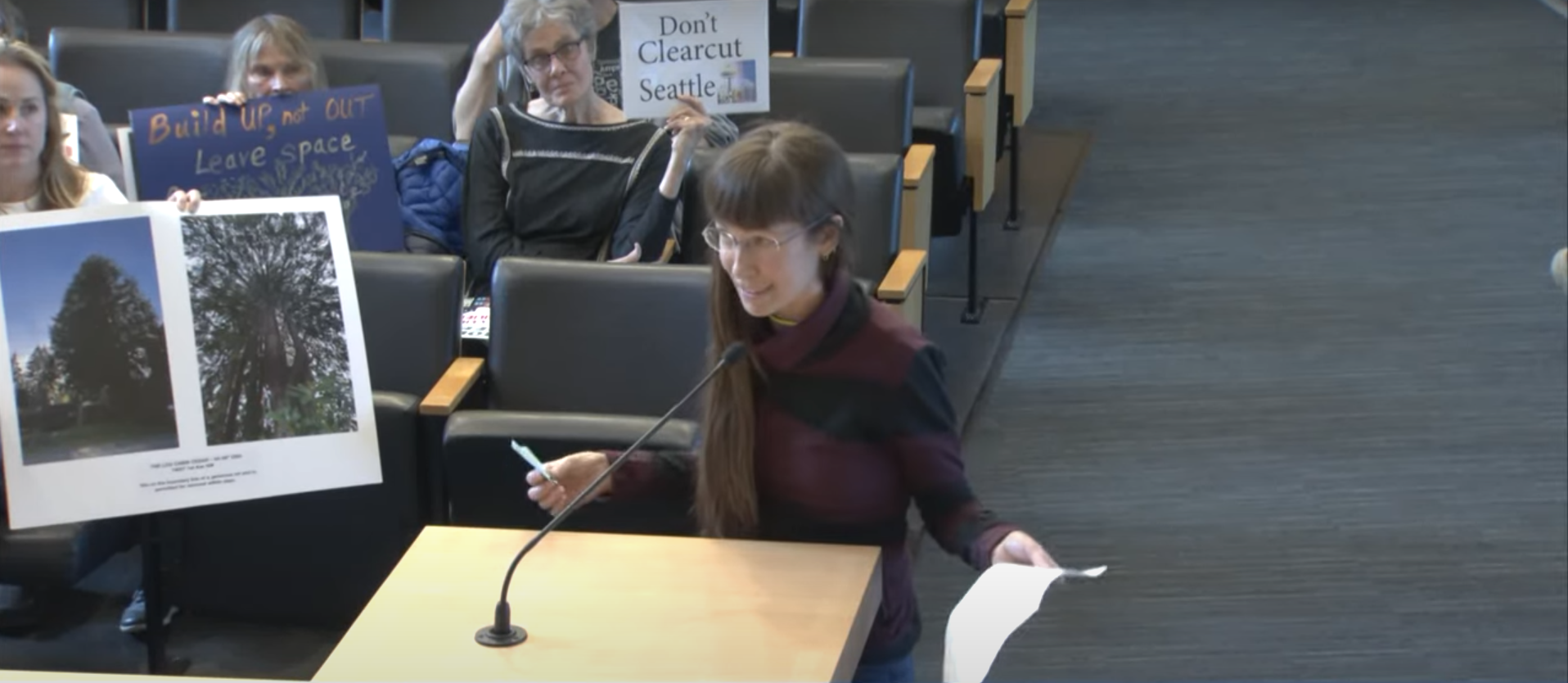
Godfrey's appeal has been joined by several major conservation groups, illustrating a stark divide in Seattle's environmental movement. The faction she comes from is concerned with micromanaging the impact of development at the project level, while another argues that move misses the forest for the trees. Dense urban housing decreases pressure causing more environmentally damaging development in the exurban fringe, which can entail full-scale deforestation.
In dismissing both appeals, Seattle's hearing examiner had relied on recent legislation targeting the State Environmental Policy Act (SEPA). Explicitly acknowledging the propensity of preservationists to weaponize the SEPA appeals process against needed housing development, legislators provided exemptions under SEPA for actions taken to legalize additional types of housing when they adopted Senate Bill 5818 in 2022.
But the three judges who heard the case at the Court of Appeals sent the matter back to King County Superior Court, finding the lower court and the City hearing examiner were too quick to dismiss, because the challenge to the Final Environmental Impact Statement (FEIS) was an appeal of a "procedural determination" and not a final action.
"The plain language of the statute makes clear that the appeal prohibition applies only to the 'adoption of ordinances, development regulations and amendments to such regulations, and other nonproject actions,' and 'actions' to comply with [state law]," the unanimous ruling stated. "While the legislature could have amended [the law] to prohibit procedural appeals on nonproject actions at the same time it enacted the appeal prohibition statutes, it did not."
Ryan Vancil, Seattle's hearing examiner, had considered that interpretation of state law when initially considering the City of Seattle's motion to dismiss the case. But Vancil had rejected it, finding that the "[a]ppellants’ interpretation would
require a conclusion that the legislature adopted statutes referencing an exemption that was meaningless, a result that if not absurd is certainly a strained consequence."
And yet that's exactly the conclusion that the Court of Appeals panel reached, pointing the blame at the state legislature for not exempting procedural determinations at the same time they exempted final actions, but also at the City for explicitly allowing administrative appeals. Many jurisdictions don't allow this, including King County, Bellevue, Tacoma, Everett.
"The City also could have amended [city statute] to prohibit appeals of the adequacy of an FEIS, but it did not," the ruling noted. "And indeed, the City’s notice of availability for the FEIS—which was issued long after the legislature enacted the appeal prohibition statutes—expressly set out that the FEIS could be appealed to the City’s hearing examiner."
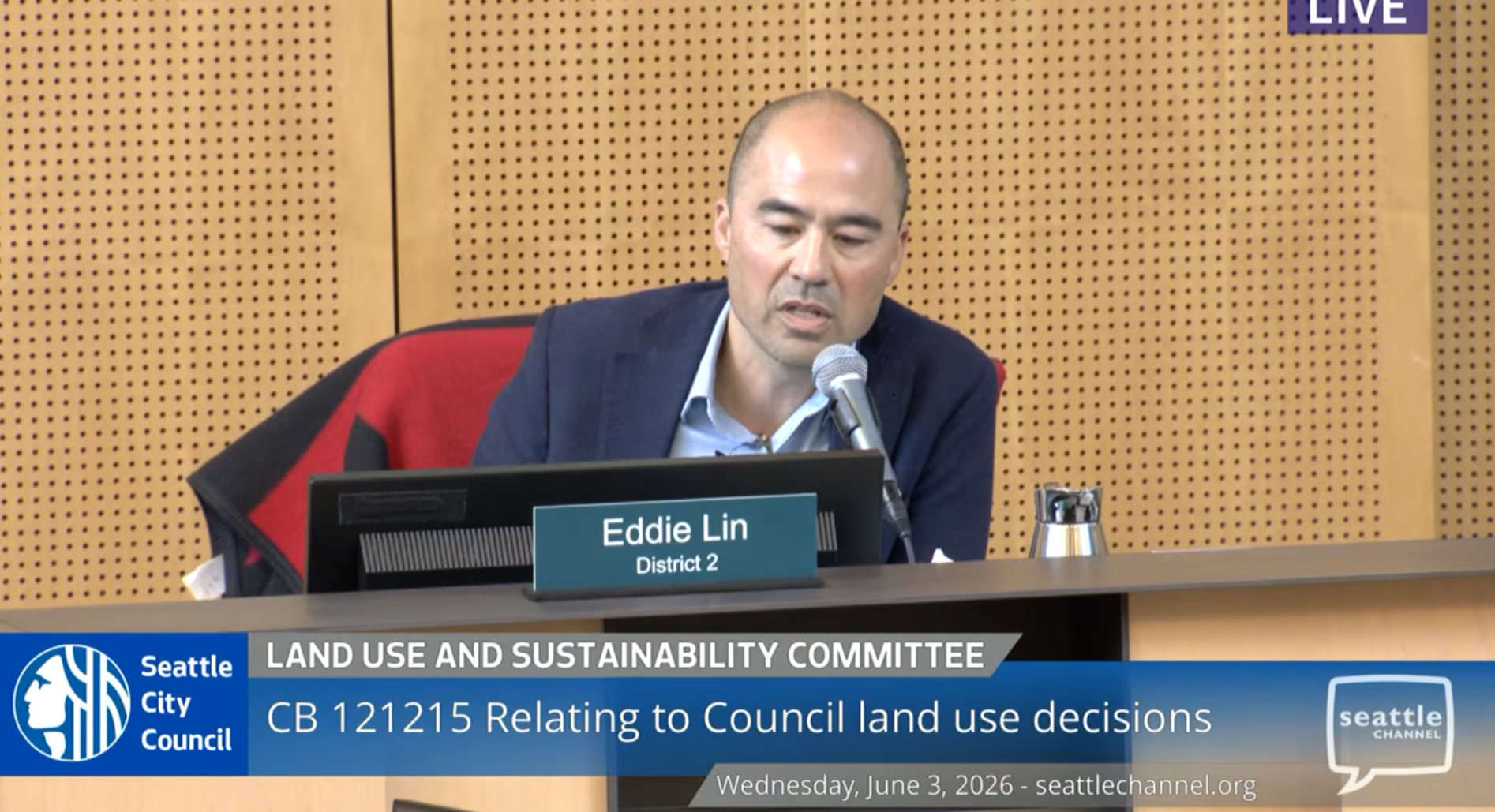
There could be a straightforward fix for the City of Seattle, in the form of a bill that had already been introduced by Land Use Committee Chair Eddie Lin that would close off the avenue of appeal to the hearing examiner for challenges to SEPA review of Comprehensive Plan updates.
But if an appeal is taken to Superior Court, the City's appeal prohibition statutes still contain this major loophole that seems to fly in the face of their clear legislative intent. For policymakers, it's not clear whether it would actually be better to have a Superior Court judge picking apart an environmental impact statement, compared to a City hearing examiner, who is much more likely to be familiar with SEPA and its related statutes.
Godfrey, who has been among the voices pushing back on Lin's proposal, commented on the ruling Wednesday at a Land Use Committee meeting ahead of a planned discussion.
"Now that the Orca appeal has won in the Court of Appeals, it's great to read the decision based in science, facts, and reason, instead of right-wing special interest pandering," Godfrey said. "Instead of focusing on ending environmental oversight and preventing council from having the best information in front of them. Why not just do a quality job on environmental review in the first place?"
Godfrey cited what she saw as errors in the City's environmental review, including a claim around pollution levels being diluted when they reach Puget Sound, and a reference to endangered species "rarely or never" using Seattle as a habitat. But the impact of those errors in a 1,300-page review (plus appendices), given the additional systems in place intended to reduce stormwater runoff and improve habitat at the project level, has been much less tangible during this saga.
Unlike Seattle's existing array of roads and parking – more than 20 square miles of pavement that contributes large amounts of toxic salmon-killing runoff – new multifamily housing is required to do stormwater retention on-site.
Lin's bill is headed for a public hearing in early July, but he offered a clear rationale for the move Wednesday.
"I don't think these hearing examiner appeals do benefit anyone. I don't think that they result in better environmental protections for our city, but they do result in significant delays," Lin said. "I personally believe that they, in many ways, are anti-democratic, contrary to some of the public comment here. I find it odd that a single person can delay the elected representatives for a city of 800,000 from taking action for six months or longer. These are hard decisions for us. There are not easy answers for any of these legislative actions. There are pros and cons to these approaches, and that is why we have electeds, that is why we have a democracy."
Councilmember Dionne Foster, also signaling her support for the legislation, suggested that SEPA is focused much too broadly on what are regional impacts when it comes to environmental degradation.
"I especially appreciated what you shared in committee a few weeks ago, highlighting the number of actions that are not eligible for hearing examiner review," Foster said. "And one of the things that I often think about is the impact of sprawl on our environment, and when we think about the folks who, whether they get displaced from the city because the price of the cost of living, or whether that is that we're not building enough housing in our city fast enough to accommodate our growth, and people are commuting in from outside of the city with higher vehicle miles traveled, all of that has an impact on our climate and an impact on our environment."
While the two appeals are now set to be sent back to King County Superior Court, they will likely end up back at the Seattle hearing examiner, potentially delaying implementation of the Comprehensive Plan's second phase at the city council. That update, which would have allowed greater density near new "neighborhood centers" and in the half block directly along transit routes, had been set to be adopted by early August. If the FEIS is fully re-opened, that timeline could be pushed back by months.
"Just to speak through our comprehensive plan process: I think that process started in 2022," Lin said. "We are now in 2026... I think we're probably going to be 2027, 2028 before we get through that process. It's supposed to be a once every 10 years process. It looks like it's probably going to take us at least six years, if not longer."
 Ryan Packer