The Seattle City Council is set to overhaul its land use appeals process in the wake of recent legal appeals that have tied up pending citywide zoning changes for months, despite ultimately being ruled meritless,
New legislation introduced by Land Use Committee Chair Eddie Lin would close off a path of citizen appeal through Seattle's hearing examiner when it comes to future environmental review of changes to the city's Comprehensive Plan, bringing the appeal framework in line with recent updates to state law intended to streamline housing production.
The bill would also reduce requirements that area-wide rezones and text updates to the city's land use code (referred to as Type V decisions) come with reports from the head of the city's planning department, a move that could significantly reduce the amount of process that comes with those changes.
Over the past few years, the state legislature has adopted several updates to the State Environmental Policy Act (SEPA), adding major exemptions with the explicit intent of reducing red tape for housing production. Senate Bill 5818, approved in 2022, makes it clear that actions taken by cities to "increase housing capacity, increase housing affordability, and mitigate displacement [...] and that apply outside of critical areas are not subject to administrative or judicial appeal."
Senate Bill 5412 passed the following year explicitly exempting many types of infill development from SEPA.
"I have this bill to address the housing crisis," Senator Jesse Salomon (D-32nd, Shoreline) said in putting forward SB 5818 four years ago. "One of the things that we've learned is, sometimes environmental laws are weaponized against pro-environmental, pro-housing ways forward. Neighborhood groups may oppose a project to provide housing in urban areas and use environmental laws to sue, when ultimately it's better to build inside urban areas and if you don't, you just end up pressing housing out to the outer boundaries [of the growth area], causing more driving, causing more carbon."

Despite this state action, Seattle municipal code still provides an avenue for appealing many types of land use decisions – including those that have been exempted under state law, with Seattle's hearing examiner required by law to dismiss those appeals. Even so, the process of dismissing cases usually eats up several months' time.
Last year, when the City of Seattle released the final environmental impact statement (FEIS) on former Mayor Bruce Harrell's One Seattle Comprehensive Plan, six neighborhood groups or residents appealed that document's validity, and the two appellants that were found to have standing ultimately had their cases dismissed due to these new provisions in state law. The delays contributed to the City overshooting the state deadline to complete its Comprehensive Plan update by about a year.
Lin's proposal would remove that avenue directing residents to the hearing examiner in the first place, with appellants still able to take any case to King County Superior Court, or to the state Growth Management Hearings Board, a body specifically set up to handle appeals of growth plans and associated development regulations.
"It's definitely an area where the state legislature has been moving quickly to amend state regulations, and we haven't quite kept up with it," Seattle Council analyst Lish Whitson told councilmembers at a first meeting on the bill last week. "There are many types of City decisions that previously were under state law required to undergo SEPA review, but the state has since exempted them from a SEPA review. However, our City laws still require SEPA review, and so in the city of Seattle, even though there is a state exemption, we still need to review projects until we update those regulations."
Being exempt from an appeal under SEPA doesn't mean that the city's other development regulations aren't in effect. Projects still need to abide by Seattle's critical areas ordinance, and adhere to any requirements around mitigation of impacts, including things like stormwater retention. What this SEPA policy revision would prevent is a timeout on any change while an appeal gets resolved that could stretch for months, an issue that Lin noted in remarks last week is unique to land use regulations and doesn't apply to other types of city legislation.
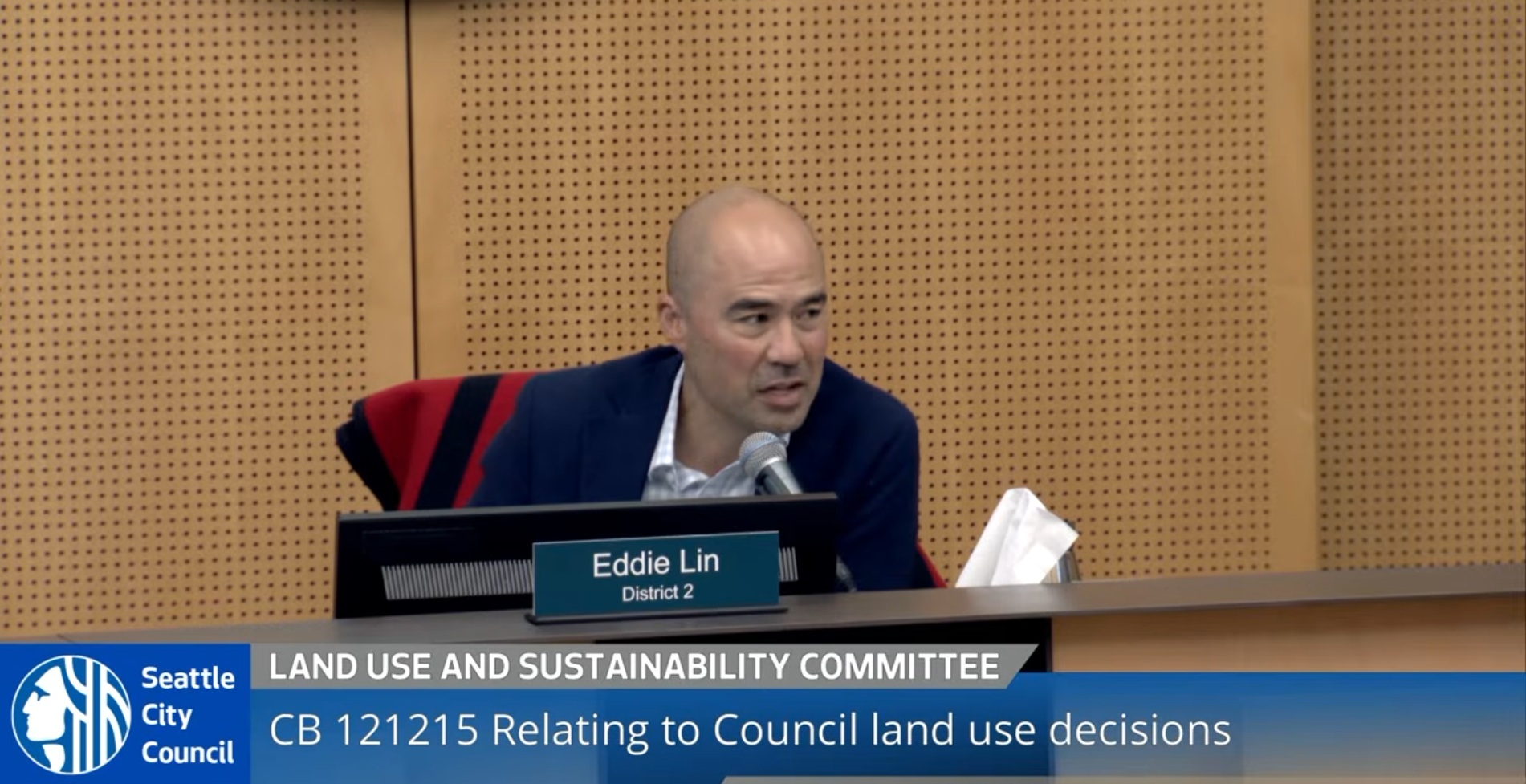
"For our city's annual budget process, is there an environmental review process, or do we give people a right to appeal that to the hearing examiner before we ever consider the city's budget?" Lin asked Whitson, receiving a clear no in response.
Lin asked a follow-up question: "If we did give those appeal rights and there were months-long delays, would that impact the city's ability to proceed with things like our City budget?" Whitson confirmed it would.
With Seattle Mayor Katie Wilson preparing to restart the environmental review process for the Comprehensive Plan's next phase, being dubbed the Taller Denser Faster plan the issue of whether an environmental review can be appealed is set to be very salient again by next year.
Taking center stage recently in the fight over who can appeal an environmental review and when is Jennifer Godfrey, a bassist with the Seattle Symphony who filed one of the six appeals against the One Seattle Plan's FEIS last fall. Since then, Godfrey has attracted media attention with what's been dubbed the "orca appeal," most recently being featured in a full-color story on the front of the Seattle Times opinion page this last Sunday, a column written by Times editorial board member Alex Fryer.
"Ecotopia, Seattle is not," Fryer lamented in describing Godfrey's unsuccessful attempt to hold up the One Seattle Plan, while acknowledging that Godfrey is still pursuing that fight at the state's Court of Appeals and at the state's Growth Management Hearings Board later this summer.
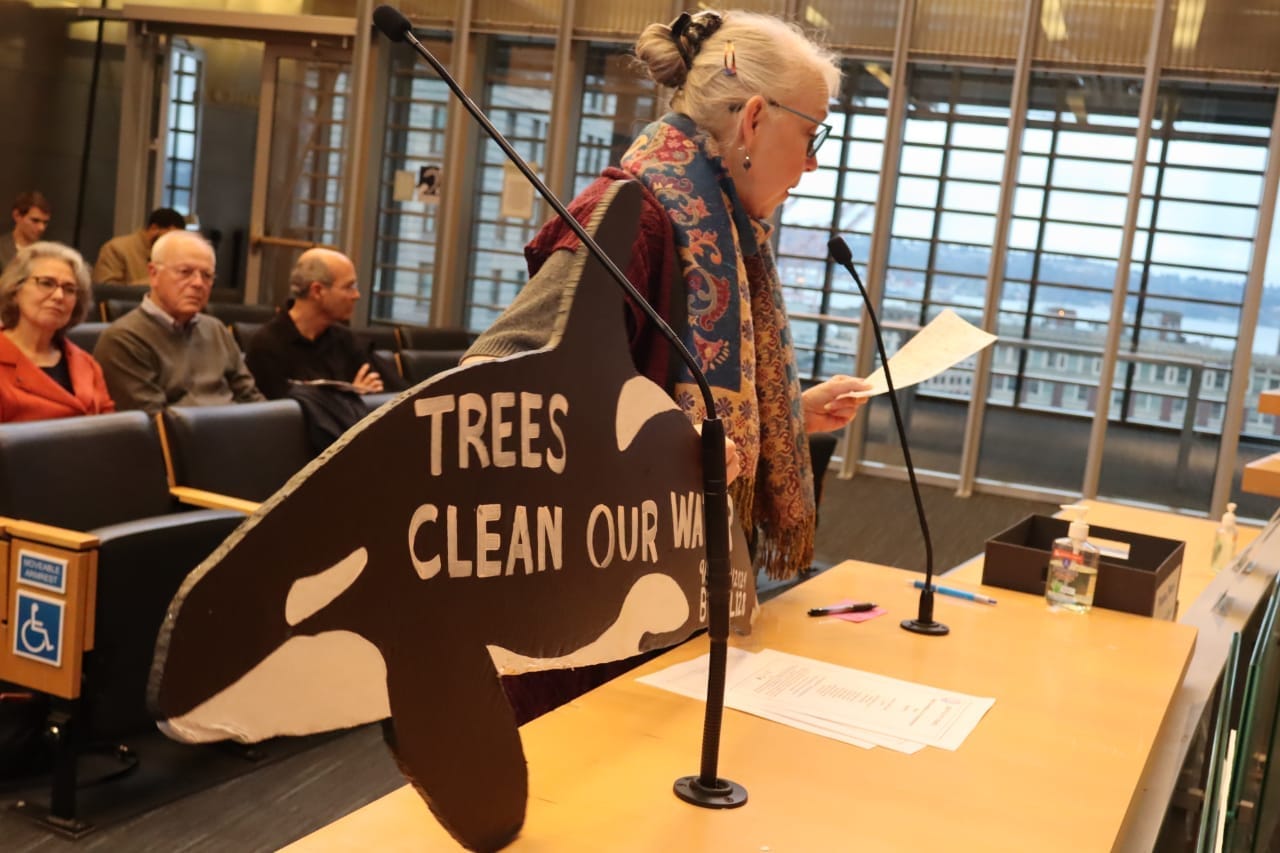
"If Godfrey wins, the Court of Appeals would send the issue back to the city hearing examiner. The hearing examiner will then take information from competing experts to determine whether the environmental review was sufficient," Fryer wrote.
Little doubt remains that the legislature has already weighed in on whether that type of environmental review should hold back the city's housing plans – the question at play in the Court of Appeals now is whether they left a loophole that can still be exploited. A ruling is expected any day.
It is also hard to argue that SEPA appeals are some type of bulwark against environmental degradation in Seattle, the thin PDF line holding back a tide of clear cutting and impervious surfaces when in actuality, most appeals get dismissed, or lead to the city's own decision-making getting upheld.
This was confirmed last week by Whitson, responding to a question from Councilmember Alexis Mercedes Rinck about what usually happens in these appeals.
"I looked back at the last 10 years of appeals to the hearing examiner, there are about 25 appeals, many of them multiple appellants, so there were, I think, 64 appellants in total for those 25 appeals," Whitson said. "The most frequent decision from the hearing examiner on those appeals is to dismiss them, and that takes between a month and three to four months to sort of consider that outright dismissal – that there isn't a legitimate appeal. There are a number where the determination is affirmed, so the hearing examiner goes through a hearing process and determines that yes, the decision was made correctly. On average, that takes 285 days, so I think that's like seven, eight months. There have only been two where the city department's decision was actually remanded or reversed."
Lin's measure is set to have a public hearing in early July, but is already drawing opposition.
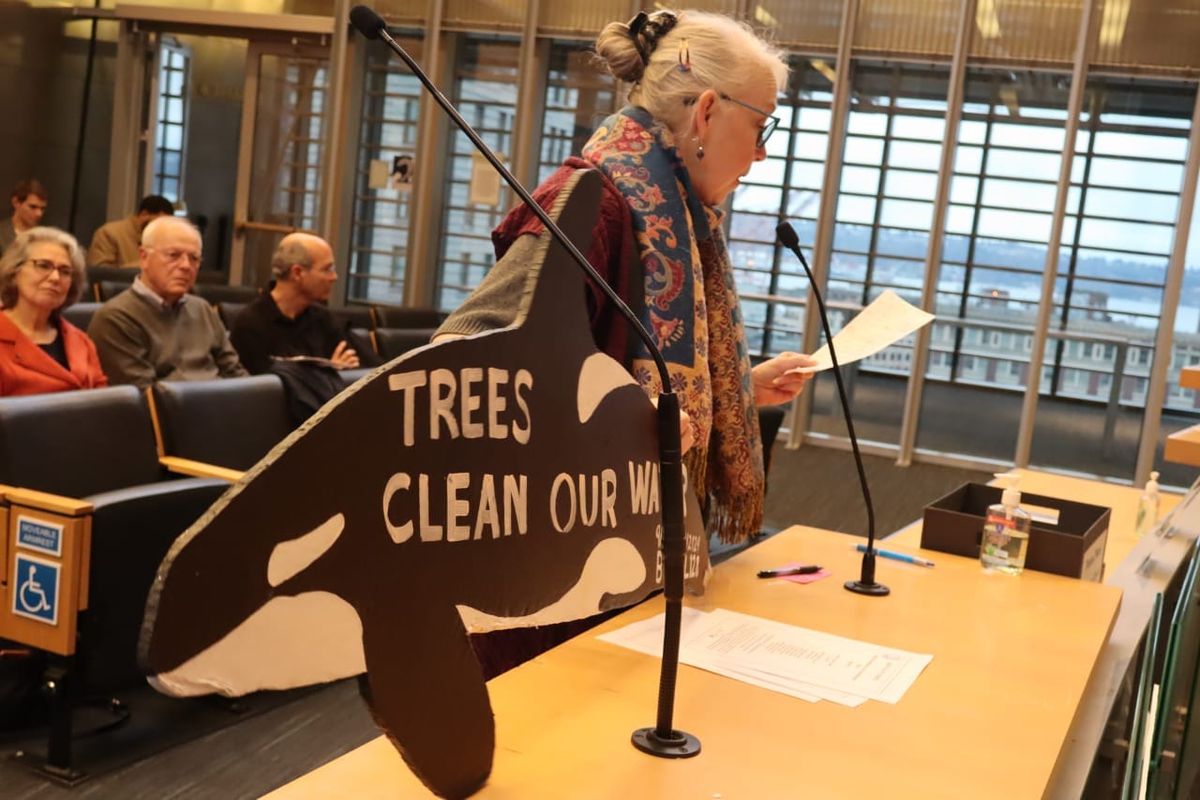
"For two years, we've been battling the Trump administration policies that are taking away our democratic rights, including environmental protections," Rachel Nathanson, a frequent commenter at City Hall when it comes to the issue of tree protections, told the Council last week. "Quietly removing Type V legislation from the current appeals process does just that – takes away environmental protections. This looks bad."
But it will ultimately be up to councilmembers to decide whether to allow the city's appeals process to catch up to state law, or instead be subject to significant delays when it comes to decision-making around land use, delays that often end up leading nowhere.
 Ryan Packer
 Ryan Packer