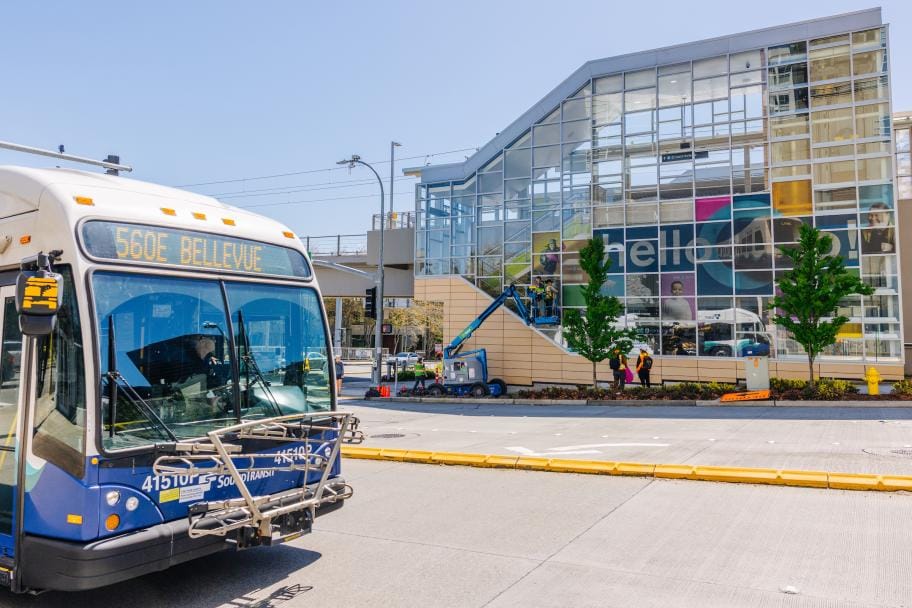
Sound Transit is proposing a spate of service changes for 2027 in a draft plan. The plan includes higher frequencies on a truncated Route 560, a new freeway bus stop pair on I-405 for Routes 532 and 535, and potential service reductions to Link light rail to facilitate maintenance work.
The transit agency’s banner proposal for ST Express Route 560 (West Seattle-Bellevue) would double weekend frequencies to every 30 minutes all day, and increase weekday service up to every 20 minutes during the day and every 30 minutes in the evening. This is made possible by trimming the length of the route.
Under Sound Transit’s proposal, the Route 560 segment between Westwood Village in West Seattle and Burien Transit Center would be eliminated. This tees service up for when the Stride S1 Line bus rapid transit line replaces Route 560 in 2028, which will trace much of the proposed Route 560 alignment.
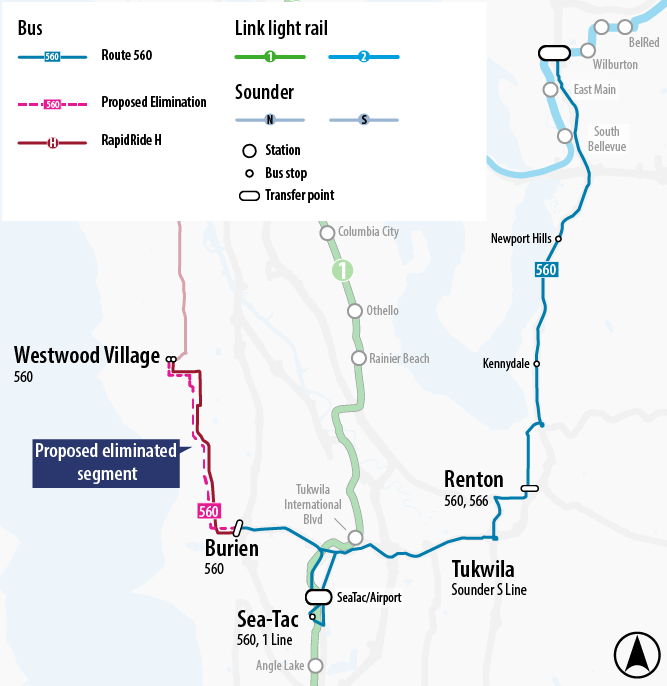
The segment elimination won’t leave riders between Westwood Village and Burien without options, however. The RapidRide H Line essentially offers existing shadow service along a similar alignment and will continue to operate with 15-minute or better frequencies on weekdays and weekends – as frequent as every seven minutes during select weekday hours. Since its inception, the H Line has been the largest recipient of augmented service via the Seattle Transit Measure, which goes to voters for renewal at a higher rate in November.
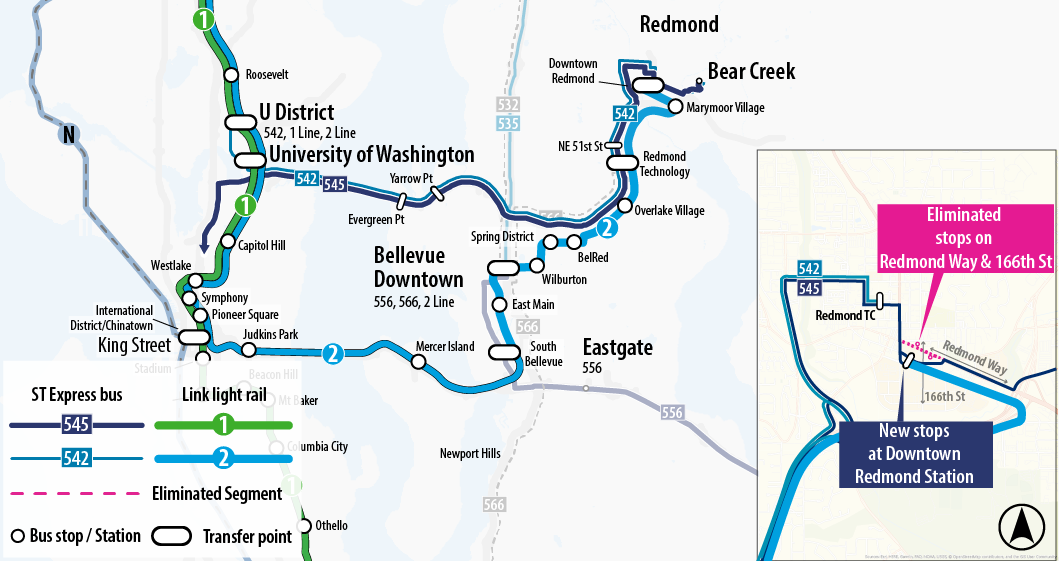
In Redmond, the alignment of ST Express Route 545 is proposed to be slightly adjusted in the city center. A stop pair would move from Redmond Way at 166th Avenue NE to the Downtown Redmond Link 2 Line station, a block to the south.
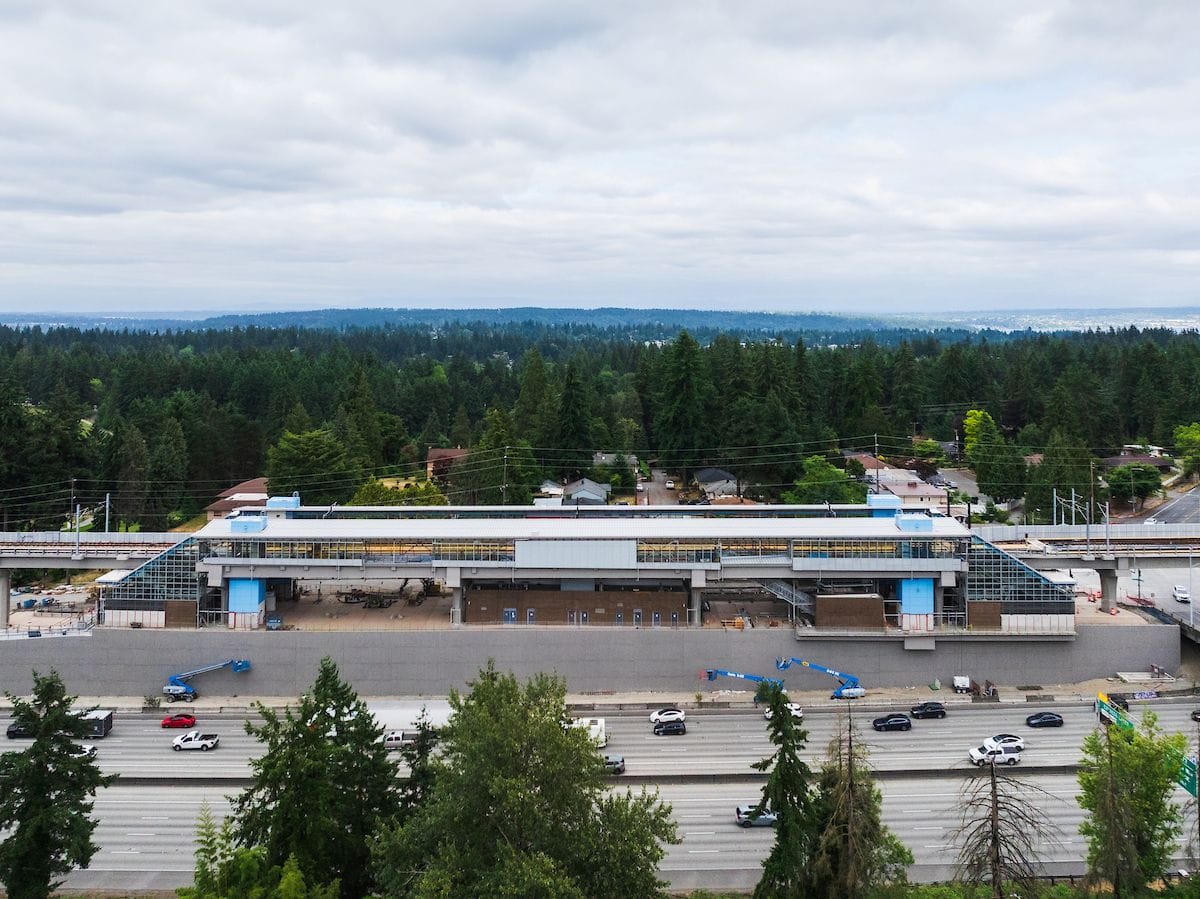
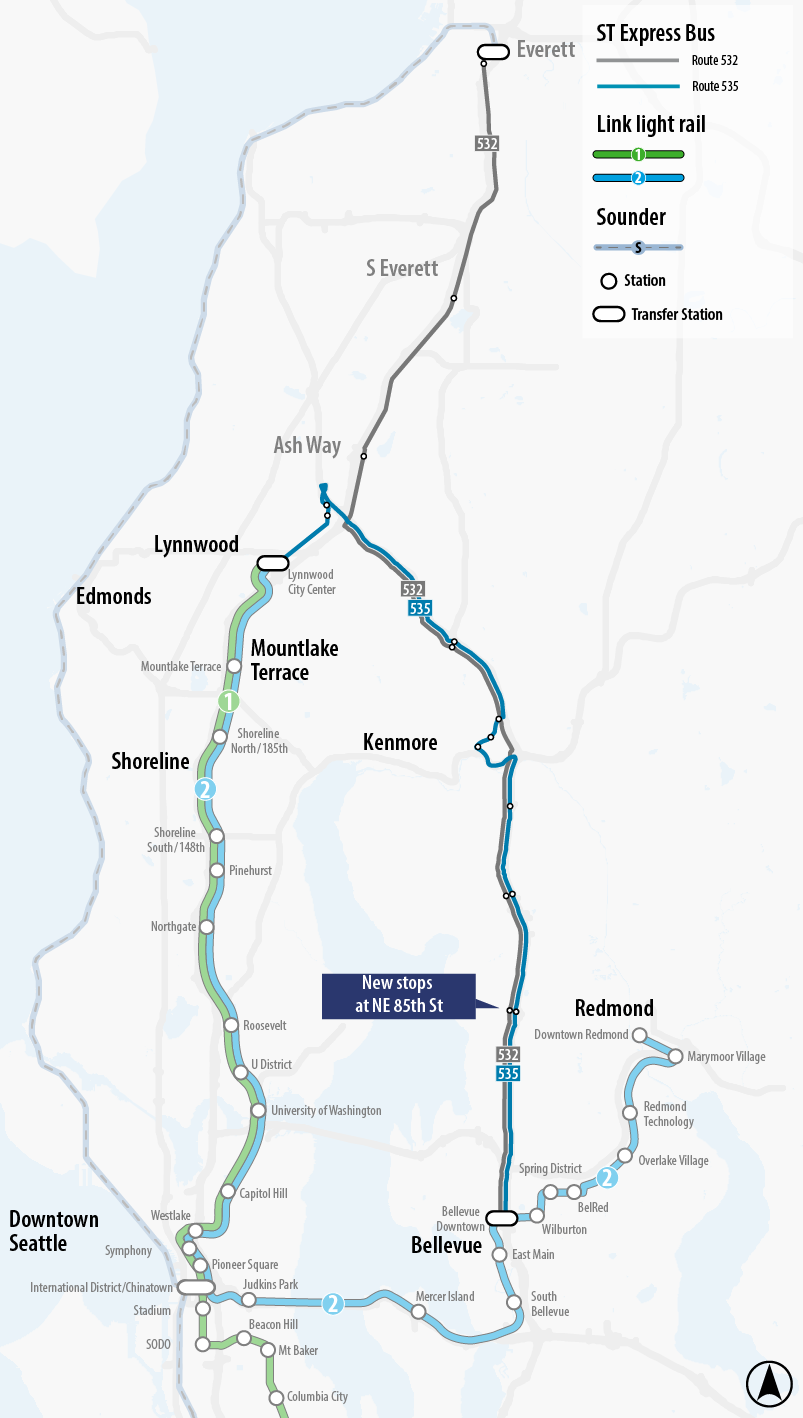
In Kirkland, ST Express Routes 532 (Everett-Bellevue) and 535 (Lynnwood-Bellevue) would serve a new freeway stop at the I-405/NE 85th Street interchange. The new stop pair is being delivered as part of the transit agency’s Stride S2 Line project, which funded over $300 million for the Washington State Department of Transportation interchange and freeway station projects. The S2 Line is slated to begin service in 2029.
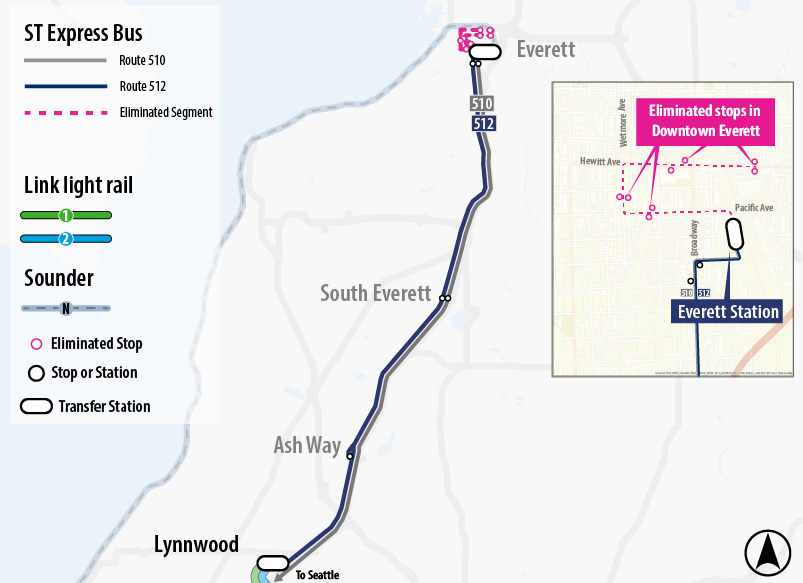
In Everett, Sound Transit is proposing to eliminate extended service to Downtown Everett on ST Express bus Routes 510 (Everett-Seattle) and 512 (Everett-Lynnwood). For many years, service on the routes during early morning and late night hours have extended service between Downtown Everett and Everett Station. That extended service segment would be fully eliminated on both routes, so that service on the routes begins and ends at Everett Station only.
As for Link light rail, Sound Transit is contemplating changes to service to expand the maintenance windows on the lines to keep up with maintenance needs and reduce consequent unplanned service disruptions. Usually, maintenance occurs at night when service isn’t operating, but it also happens during special daytime maintenance periods, often on weekends.
While a specific proposal hasn’t been put forward, Sound Transit is evaluating several options that would affect light rail services, such as ending nighttime service earlier, starting morning service later, more frequent scheduled weekend segment closures, closing individual tracks during certain hours and reducing corresponding frequencies, servicing only segments of a line during certain hours, or a combination thereof.
In the case of earlier service end times and later service start times, Sound Transit is suggesting that a corresponding night bus service could become operational so that Link riders can still trace the corridor during hours that Link would otherwise be running, albeit at slower trip times. Replacement shuttle buses would continue to support Link on weekends where segment closures are in effect.
Sound Transit has an online survey open on all of the service change proposals through Sunday, July 26. Feedback could be especially critical in informing Sound Transit on priorities around Link maintenance windows and its consequent service changes.
Ultimately, the transit agency plans to return in September with a final service plan that will then go to the Sound Transit Board of Directors for adoption in the fall. Implementation of the final service plan is then expected to go into effect in the spring and fall of 2027.
 Doug Trumm
 Doug Trumm