Should Seattleites be despondent about Ballard light rail, in the wake of a newly adopted Sound Transit system expansion plan that leaves much of the long-promised line unfunded? The regional transit agency's top leadership say no, bringing a cadre of transit reporters into Sound Transit headquarters earlier this week in the hopes of assuaging concerns and laying out what they see as a viable path to get to Market Street in Ballard.
With the much-publicized $34.5 billion shortfall now in the rearview mirror, the agency still needs to find an additional $7 to $9 billion in new revenue – or additional cost savings – to get Ballard Link fully funded. But Sound Transit CEO Dow Constantine appeared irked by news coverage portraying the Ballard and Interbay stations as cut or shelved.
"I keep hearing things online or in conversation that are not entirely accurate," Constantine said. "The board action to update the system plan did not kill or cancel or delete or defer or postpone the Ballard project. To the contrary, it kept Ballard on schedule with an investment of $18.1 billion, and that plan that the board adopted gives us the framework and the guidance and the tools needed to roll up our sleeves and to work on solving this puzzle of that money."
Despite voters approving the Sound Transit 3 (ST3) plan in 2016 and several subsequent Seattle mayors pledging to accelerate work on the project, Sound Transit doesn't expect to reach full design on Ballard Link until 2031, with the unfunded segment included in plans thanks to pressure from advocates and Seattle officials.
Constantine raised the prospect that the budget gap could be closed and the whole line still built together, rather than in truncated fashion. In fact, with construction work set to start in SoDo, the agency wouldn't need full construction funding to get north of Seattle Center until 2033 or 2034, according to a slide shown to reporters. The agency's deep downtown tunnel is going to be the most complicated and time-consuming part of the project
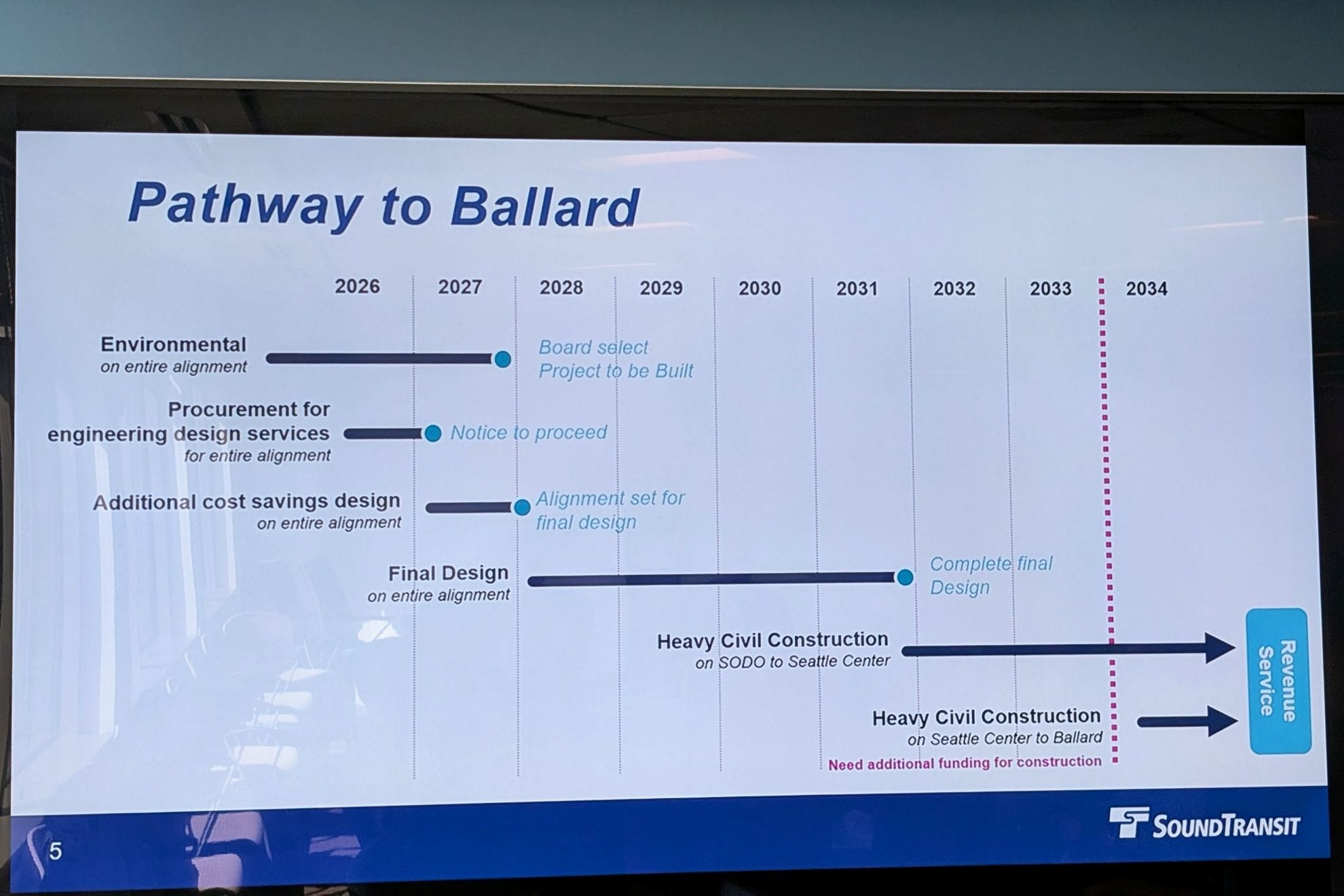
What that ultimately means is that there's a fair amount of time left for work that could enable Ballard Link to open closer to its previous 2039 timeline, even as the agency is set to provide a date range for Ballard Link's opening that could stretch toward 2060 if no additional funding is located.
Ahead of the final May 28 vote, the Sound Transit board ultimately rejected an amendment from Seattle Councilmember Dan Strauss would have forced a look at a different Ballard Link construction approach that prioritized the segment between Westlake Station and Ballard. In this week's briefing, Constantine doubled down on the agency's longstanding approach that prioritizes a new rail tunnel through downtown Seattle, a piece of infrastructure that is seen as having regional benefit.
"The current schedule shows the downtown portion of the tunnel to be the critical path, so we need to get moving on that," Constantine said, asserting that the agency would be "aggressively pursuing" options to reduce costs and raise revenue at the federal, state, and local level. "There are several years, potentially up to six or seven years altogether, in which to identify the resources we need to bring the full project in at one time on schedule. We have runway ahead of us, and now we need the time to put our heads down, focus on the task at hand, in collaboration with all of those partners."
Also on hand at the briefing was Brad Owen, who currently heads up the capital team designing both Ballard and West Seattle Link. Soon Owen will step into the role of Deputy CEO for Capital Delivery following the recently announced departure of Terri Mestas in early July. With Mestas the first hired into the role, Owen will be the second person at Sound Transit to head up "megaproject delivery."
Owen assured reporters that work is proceeding full steam ahead on Ballard Link, as the agency works to get to 100% design. On Thursday, the board's system expansion committee gave initial approval for another $16.3 million contract extension with CSP Engineering for work on Ballard Link, as it approved $406 million to get West Seattle Link into final design.
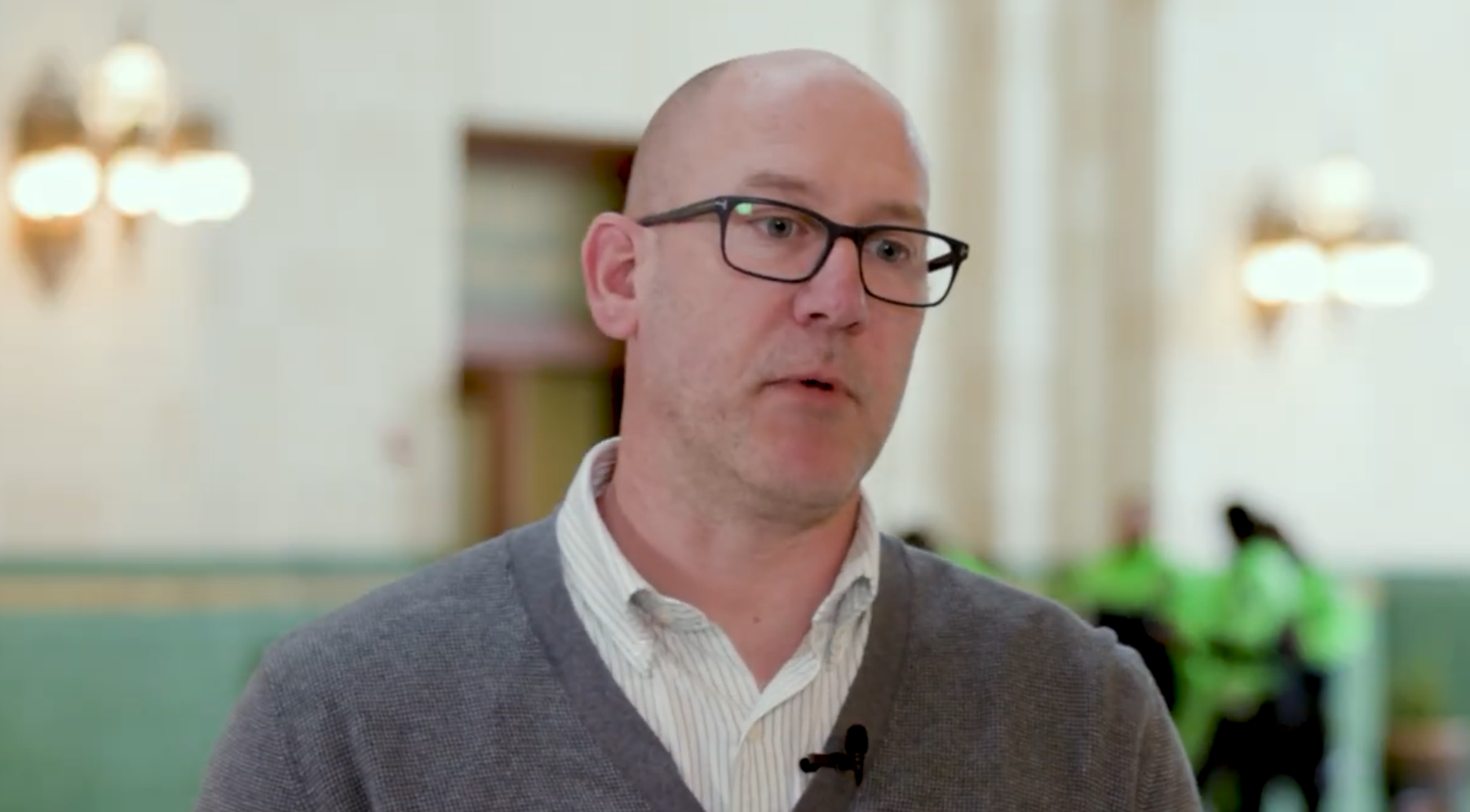
"The recent system plan vote doesn't require us to change our Ballard plan," Owen said. "Ballard is moving through the environmental design process on the entire alignment."
That doesn't mean it's smooth sailing from here. Sound Transit continues to face delays in getting approval from the Federal Transit Administration (FTA) to release the Ballard Link Draft Environmental Impact Statement (DEIS), and a chart of upcoming milestones was notably missing a release date for that document, even as it listed a date for Everett Link's DEIS release this fall. Those delays come with real costs.
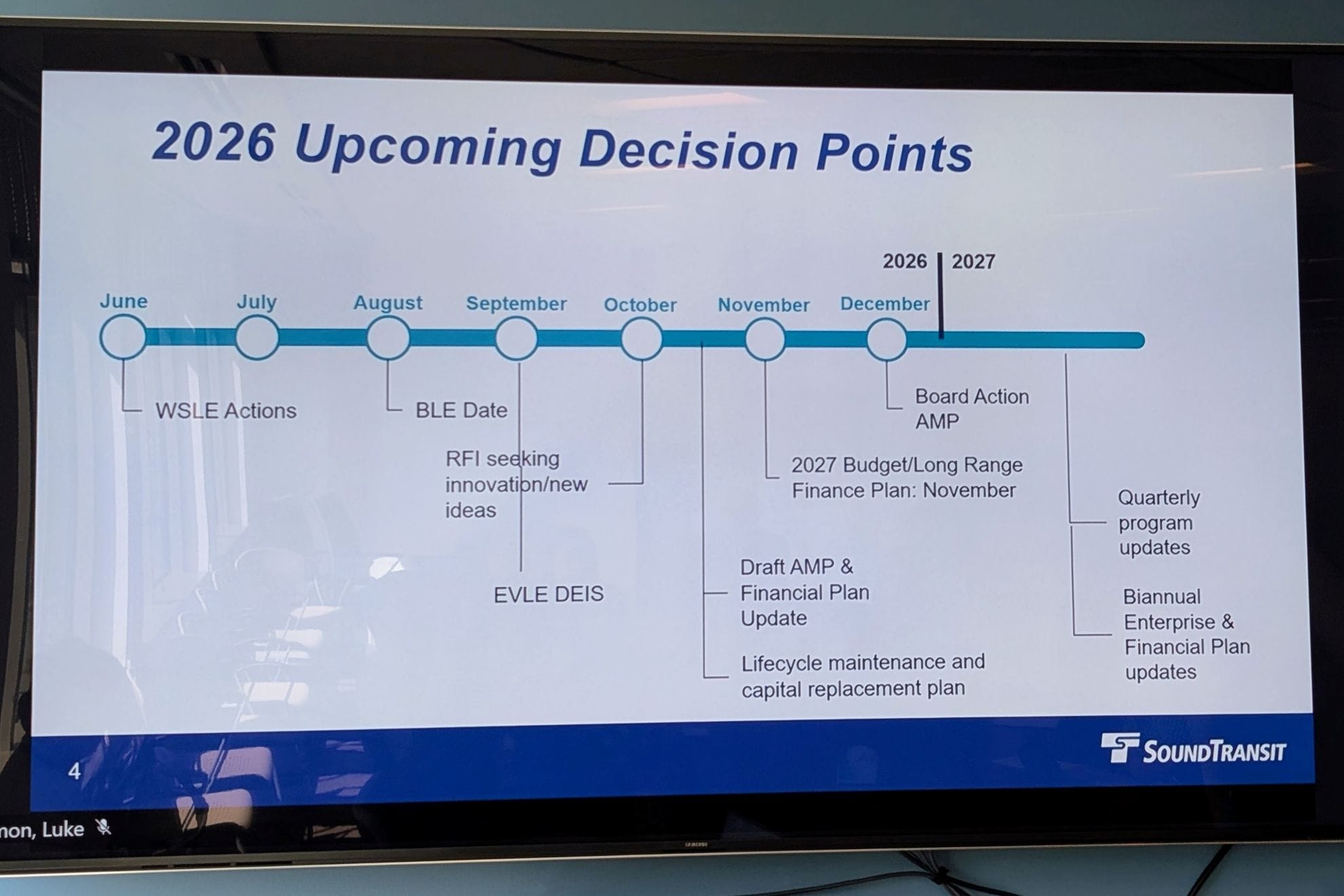
"If you think about a delay to a project like Ballard, you're not delaying the project right now, you're delaying it in the future," Owen said. "The delay is tacked onto the end of the project, not the beginning of the project, and so there are real costs to delay. I think we have publicly stated for West Seattle, we said it was in that $20 to $30 million a month delay [range], just from cost of inflation and other things. I don't have that number for Ballard, but that number is bigger for bigger projects."
Last pegged above the $20 billion mark, Ballard Link's budget estimate is roughly quadruple West Seattle Link's latest figure. That said, if West Seattle Link isn't able to begin break ground in 2028, as agency is still hoping to do, delay costs could push the budget back up, to the tune of about $300 million per year of delay per the agency's inflation factor.
Without advancing through the environmental review process to land on one single route to fully develop, the work to bring costs down on Ballard Link won't fully kick into gear. Owen referenced recent work to bring down costs on West Seattle – work that likely meant that project stayed off the deferred list. In fall of 2024, West Seattle Link was expected to cost $7.1 to $7.9 billion, compared to $4.9 to $5.3 billion today, due to both the elimination of a station at Avalon Way but also a myriad number of other changes that riders will never notice.
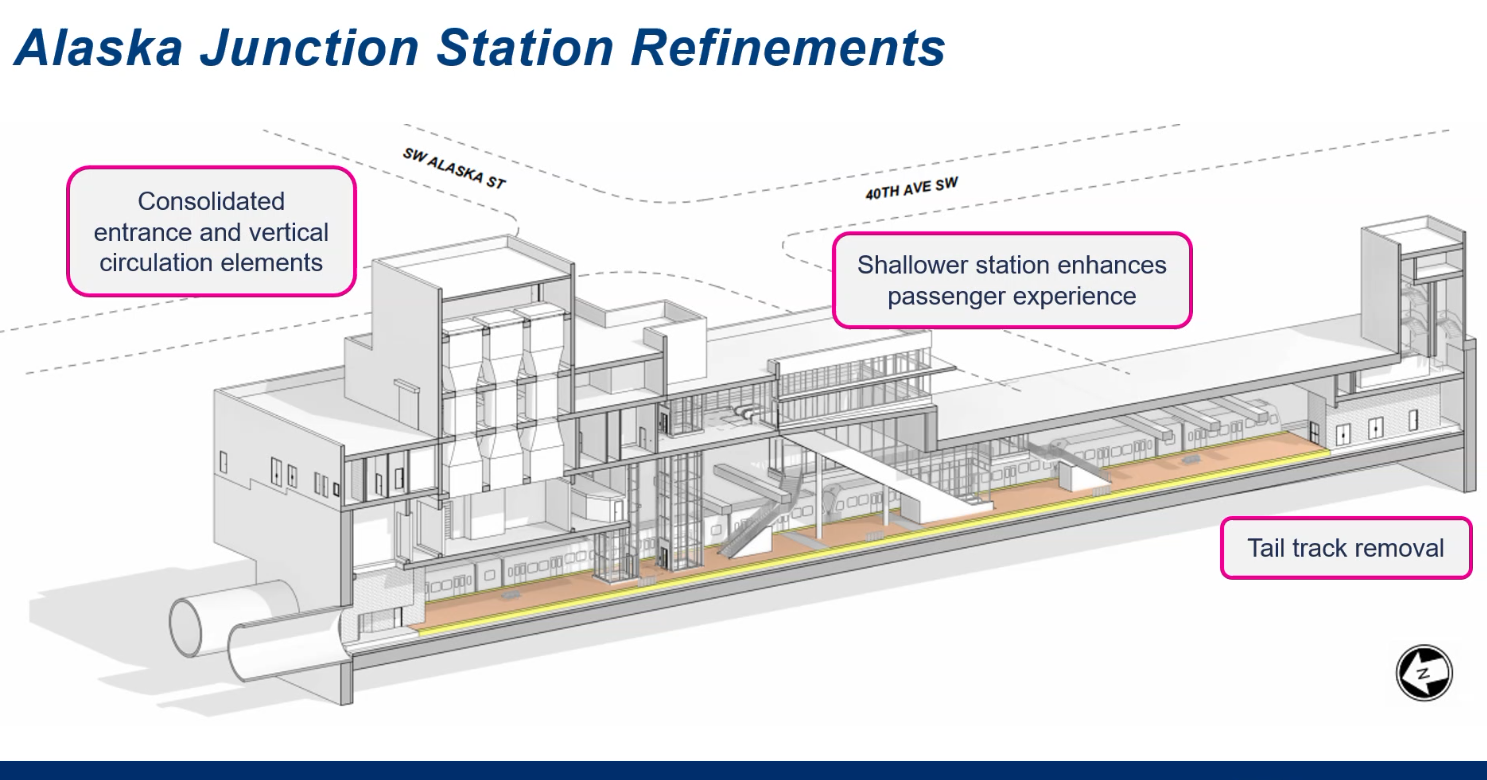
"What you saw in West Seattle was once we brought a final designer on board and we started moving out of that environmental phase into the sharpening our pencils phase, we were able to identify quite a few cost savings and efficiencies on the project, and so we're really looking forward to that phase of the project," Owen said.
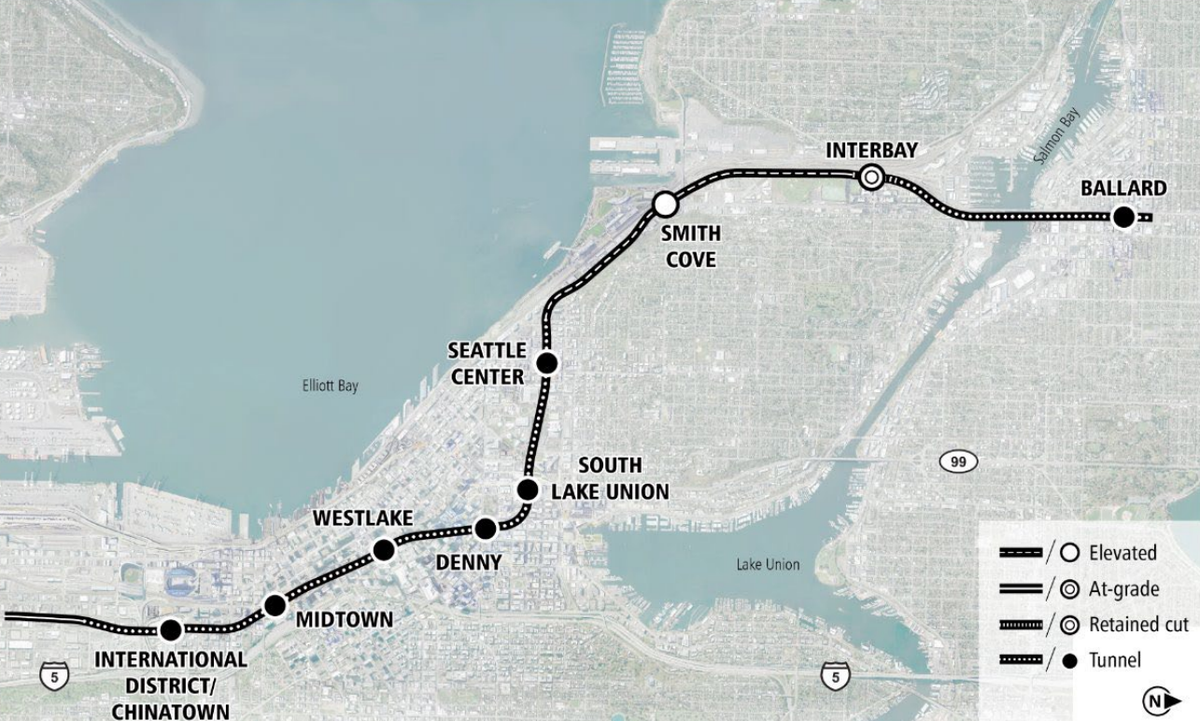
Some cost savings on Ballard Link have already been unlocked, with the South Lake Union station now traded away for a slightly shifted Denny station that reduces construction impacts along busy Denny Way. A redesigned Seattle Center station that is now more "trapezoidal" also brought in big savings, but it's unclear how many additional half-billion dollar tweaks are hiding under the couch cushions.
On the finance side, Sound Transit is clearly going to start another push to unlock the 75-year bonds that are available under federal law via the Transportation Infrastructure Finance and Innovation Act (TIFIA) loan program, after falling short in 2026. But the agency's finance heads couldn't confirm how much that move would unlock for the capital program, or Ballard Link specifically.
Hughey Newsome, Sound Transit's Chief Financial Officer, said that the impact of longer bond authority depends on macroeconomic factors at the time of bond execution, a fact that might make it harder to convince a skeptical state legislator to vote yes.
"What I tell people all the time is it's a tool in a toolkit that we would use," Newsome said.
Bonding appears unlikely to close the whole gap on its own, and a source for additional funding to close the Ballard gap is not yet clear. Agency board members from Pierce and Snohomish Counties poured cold water on the idea of a regionwide 'ST4' measure topping up unfunded ST3 projects and potentially adding new projects. Seattle members pushed back on the suggestion to close the budget gap all on their own.
Meanwhile, the trend on federal transit contributions appears to be in the direction of shrinkage, rather than expansion.
On Wednesday, Sound Transit officials confirmed the agency is not planning to break ground on West Seattle Link without a full funding grant agreement with the Federal Transit Administration, which it had been counting to cover about half of costs. The Trump administration has issued no new transit grants since taking office in 2025, and actually has taken the unusual step of trying to claw back some past awards.
Further complicating matters is a Trump-led push in the U.S. House of Representatives to steeply cut transit grant funding nationwide, with legislation boasting broad bipartisan support in the House transportation committee. The bill includes a 45% cut to programs designed to fund new transit and rail projects, Urban Institute's Yonah Freemark reported.
If those federal transit funding cuts go through, it would balloon Sound Transit's budget gap once more, with the agency counting on federal grants on several projects. Theoretically, a new president will be taking over in 2029, but it may take some time to undo the damage to transit funding streams, even if they're inclined to do so.
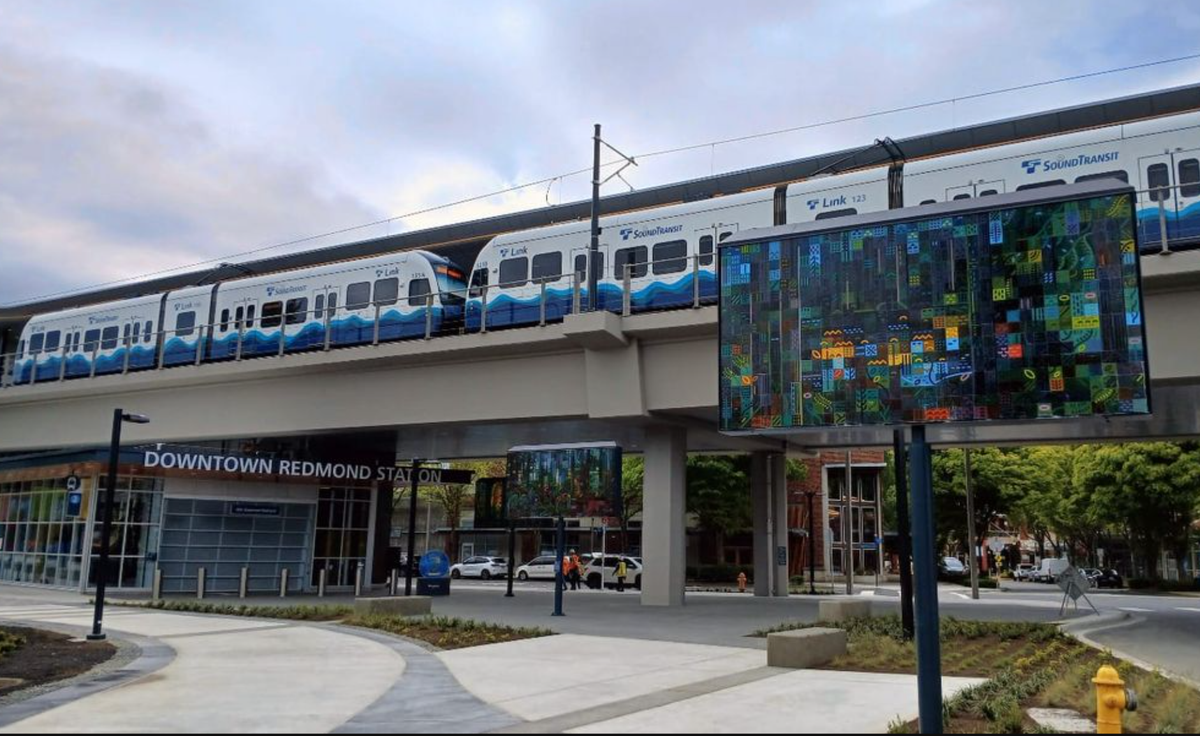
Touting the efforts of Sound Transit staff navigating through this major system plan update at the same time that the agency was opening light rail extensions to Redmond, Federal Way, and across Lake Washington, Constantine clearly tried to paint the May 28 vote as a major accomplishment, not a setback.
"I'm continuing to strain to think of anyone who's solved for a $35 billion gap, at least locally, probably statewide. Of course it involved difficult trade-offs and difficult conversations and disappointment for some," Constantine said. "I think in the end that disappointment will turn out to not be entirely warranted, but it's understandable as we continue to expand our service, more and more people want it."
But whether Ballard residents' cold comfort will ultimately turn to satisfaction in the years ahead remains to be seen. Sound Transit has given itself a high bar to clear getting the project fully on track, despite federal headwinds.
Doug Trumm contributed to this reporting.
Correction: An earlier draft listed the Ballard Link budget gap as $9 billion to $11 billion. That is the estimated gap for the whole ST3 portfolio. We regret the error.
 Doug Trumm
 Ryan Packer