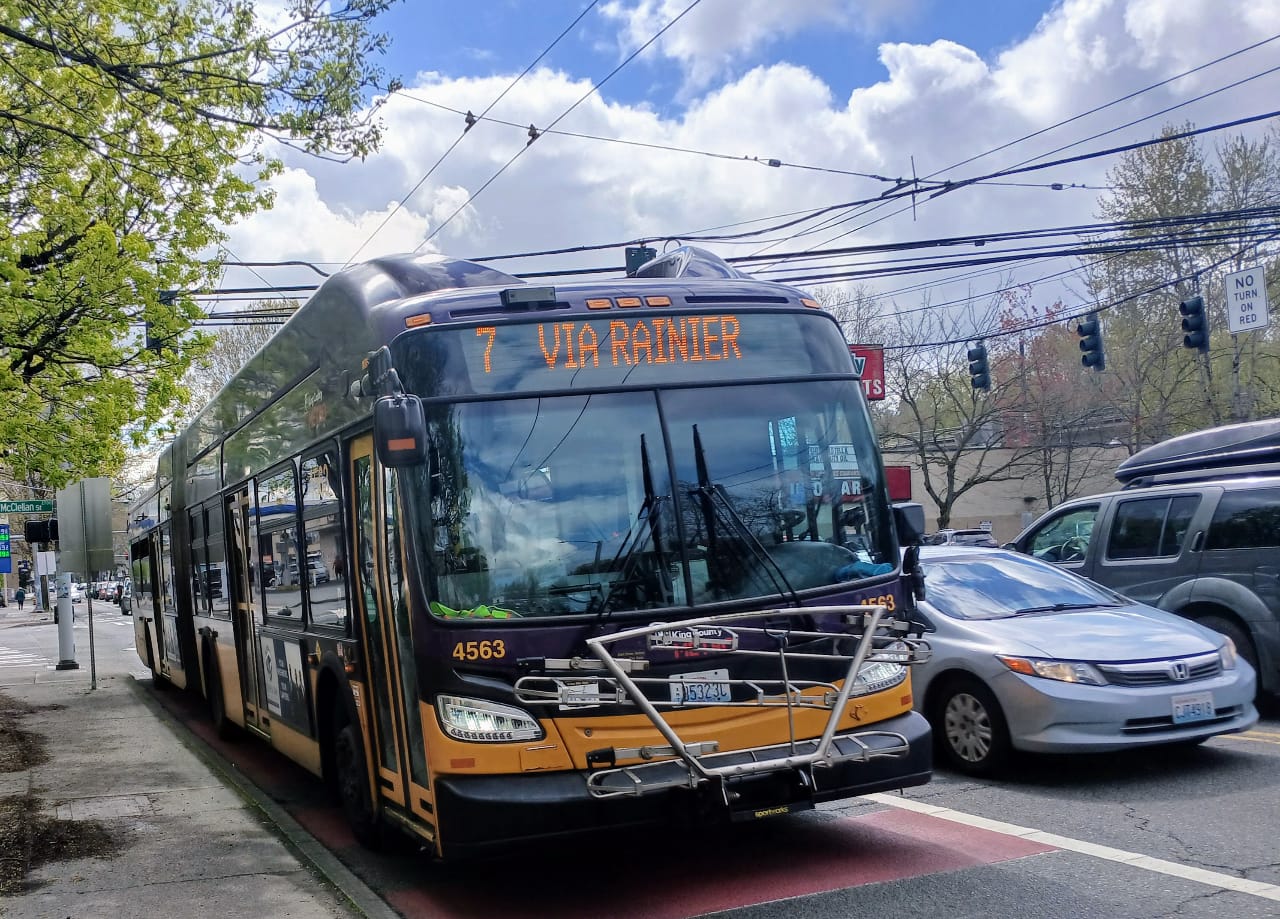
Facing a July 31 deadline to overhaul its growth plan after a state hearings board found it wasn't up to snuff, the Mercer Island Council adopted a raft of zoning and land use changes last week intended to get the city back into good standing. The updates will add some additional housing capacity within Mercer Island, allow more varied types of housing including emergency shelter and permanent supportive housing, and tweak affordability requirements with the intent to spur construction across income levels.
While these changes had been getting slowly advanced for months, the final votes came amid a cloud of defiant pushback from some Mercer Island residents, advocacy that was largely met with staid resignation from members of the City Council. Without getting its growth plan back to compliance, the city won't be able to qualify for millions in state funding, and could open itself up to additional state oversight in the future as part of 2025's Housing Accountability Act.
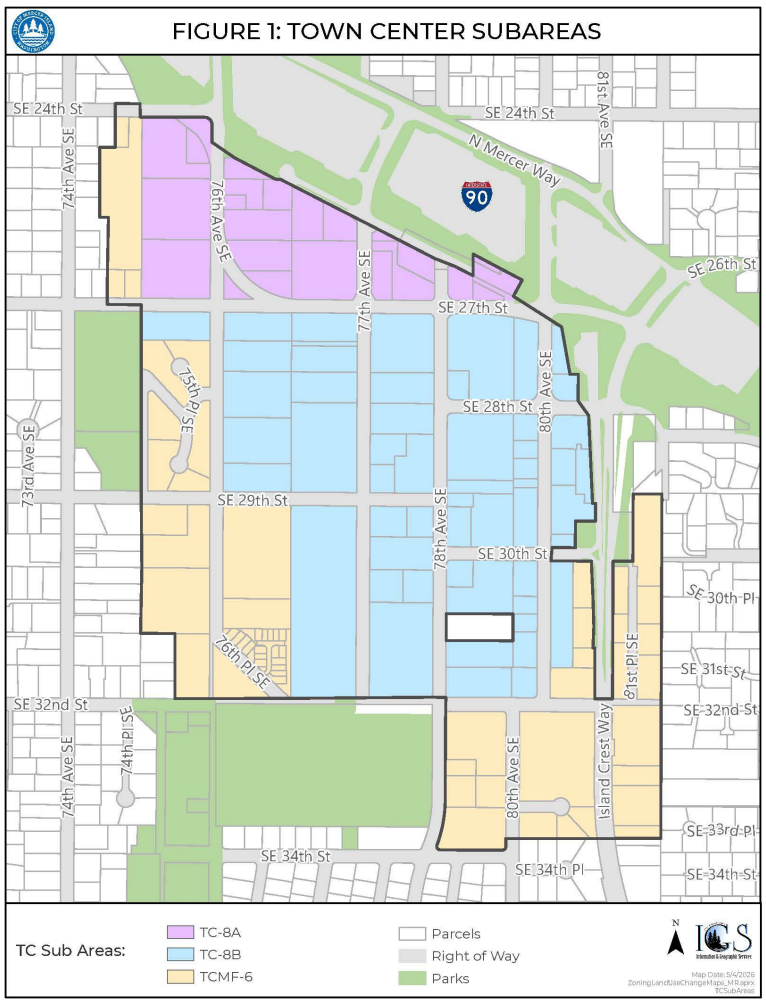
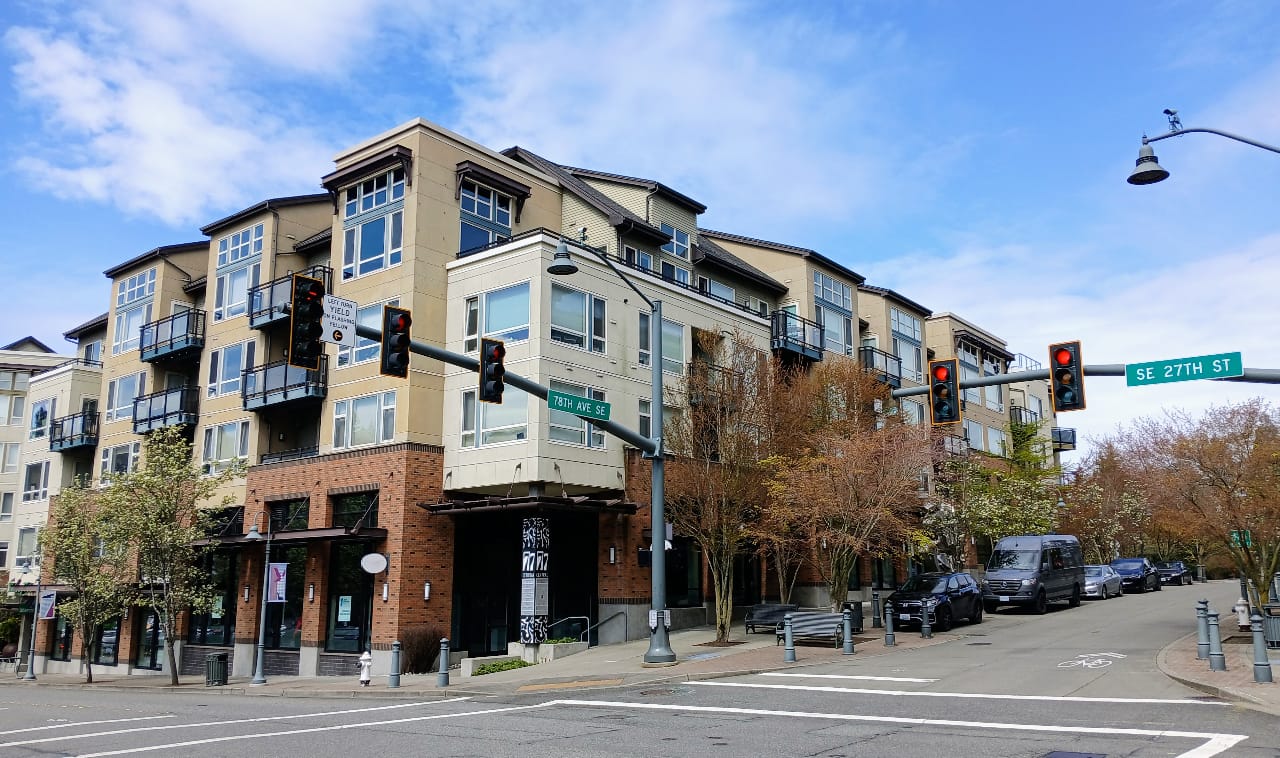
The zoning shifts adopted were not seismic, with higher-density housing still allowed mostly just in the Town Center neighborhood just south of I-90 and the city's brand new Sound Transit light rail station. The town center's boundaries were slightly expanded, with a more fundamental shift expected by 2029 to comply with Washington's new transit-oriented development law. Height limits were slightly increased, rising to six to eight stories across the neighborhood, with affordability requirements for new mixed-use developments ramped down from 15% to 10% with the aim of actually creating a pathway toward the creation of those units.
But the most controversial elements of the updates to Mercer Island's land use code were revisions to allow emergency shelters and transitional, emergency, and permanent supportive (STEP) housing within more areas of Mercer Island, a move made in response to the passage of House Bill 2266 earlier this year. Since Mercer Island is still in the process of updating its Comprehensive Plan when most cities around Puget Sound have already wrapped that work up, the city has to adopt those regulations ahead of other jurisdictions.
HB 2266 lowers the barriers that many cities across Washington have added to permitting housing intended for folks experiencing or directly exiting homelessness. In addition to requiring Mercer Island to explicitly allow those types of housing in all neighborhoods, the law invalidates an existing requirement that emergency shelters be located at least 600 feet from "educational or recreational facilities where children are known to congregate" which includes the entirety of the I-90 trail and all parks, churches, schools, libraries, and community centers. Another requirement that banned siting any shelter from within 1,000 feet of another shelter was also pulled out.
On top of that, Mercer Island can no longer require a public hearing before issuing an approval decision on emergency or transitional housing, with city code now simply requiring at least one public meeting at some point in the approval process. What that also means is that a mechanism for citizen appeal of that approval decision has also been removed, something that would have also likely led to delays in permitting.
Ahead of last Tuesday's vote, well over 1,000 people had signed an online petition that framed opposition to the pro-housing changes as something that would "Keep Mercer Island Safe."
"We understand that people who are unhoused with addiction, mental-health issues, or behavioral issues need housing, treatment, and support. But residential neighborhoods near homes, schools, parks, playgrounds, or daycares are not the right places to meet those needs," the petition stated. "Safety is one of the main reasons families choose Mercer Island to raise their children and seniors choose Mercer Island to retire. We have a thriving Town Center with parks and local businesses, where children, seniors, and other vulnerable residents can walk, bike, enjoy parks, and move around the community with a level of safety that is increasingly rare. The proposed code changes resulting from HB 2266 would put that at risk."
And while that petition was directed at state lawmakers – all three of the legislators who represent the 41st District, which includes Mercer Island, voted yes on the bill earlier this year – there was a fair amount of frustration that was directed at the Council, with some suggesting that the city stand up to these new state rules.
"I wanted to beseech you, strongly, to urge you, to beg of you, to remind you that we've chosen you, we count on you not to work for the staff, not to work for external counsel, not to work for the Democratic party or our state representatives, not to be boy scouts, but to be bulldogs, to defend our community," Mercer Island resident Andrew Lane told councilmembers last week. "It may be that we need to comply, at this time, with these court orders. Perhaps that is true. It may be that we need to hold our tongue, but I hope these are choices that you're making individually, not at the behest of staff reports, not at the behest of external counsel who are paid to be as cautious as possible."
In the end, there were no dissenting votes on the Mercer Island Council to take these steps to get into compliance with state law, with Mayor David Rosenbaum directly addressing the calls from Mercer Island residents to get more involved at the state level in remarks earlier this month.
"We have been advocating and working with our state legislators for years. For as long – I've been on the council since 2020. I think our first legislative session, we spent an enormous amount of time talking about housing. We presented our perspective on these issues numerous times, and the best we can do is make that case. We did that, and I would encourage folks to contact the state legislators, contact your legislators, talk to the rest of the legislature and explain your perspective on this. We don't get to pick and choose the laws that we follow," Rosenbaum said. "I think we presented arguments to the state legislature that were further in depth than a lot of other cities, a lot of other organizations. We did our homework, and we made the case, and we are now bound – I think duty-bound – to follow the laws as presented to us."
But it was Councilmember Craig Reynolds, speaking following the final vote on July 21, who defended the moves to comply with HB 2266. Reynolds made a case for permanent supportive housing as a needed tool to address homelessness, but also noted that Mercer Island's reputation as opposing state-level housing reforms and being a hotbed of "not in my backyard" (NIMBY) activism appears to be marginalizing the city's leadership.
 Ryan Packer
"We all benefit when people like school district and city employees have housing options here on the island, and I do not think it is healthier for our children to grow up in a community of only wealthy people," Reynolds said. "Expecting other communities to bear the costs and burdens while we sit on the sidelines is not fair, and it leads to the sort of anti-Mercer Island and resentment that keeps us from being an effective partner in addressing this regional problem and in getting the legislative changes that we want. NIMBYism is not an effective strategy politically. In discussing this issue with our state legislators, it's become clear to me that our perceived resistance to do our part to address affordable housing needs, as one has no allies, and has hurt our effectiveness as a voice for change and solutions we can live with that address the underlying problems."
While Mercer Island clearly views the suite of changes that were adopted to be enough to show that the city's now in compliance with state law, that will ultimately be up to the Growth Management Hearings Board, which will conduct a compliance hearing on September 15.
 Urbanist Staff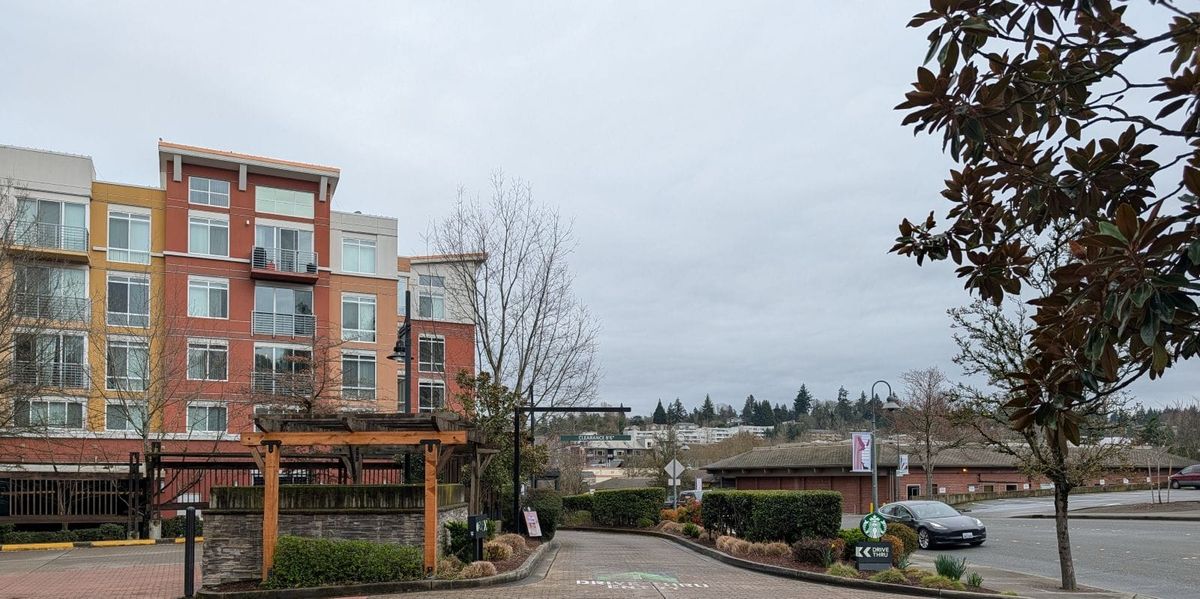
 Ryan Packer