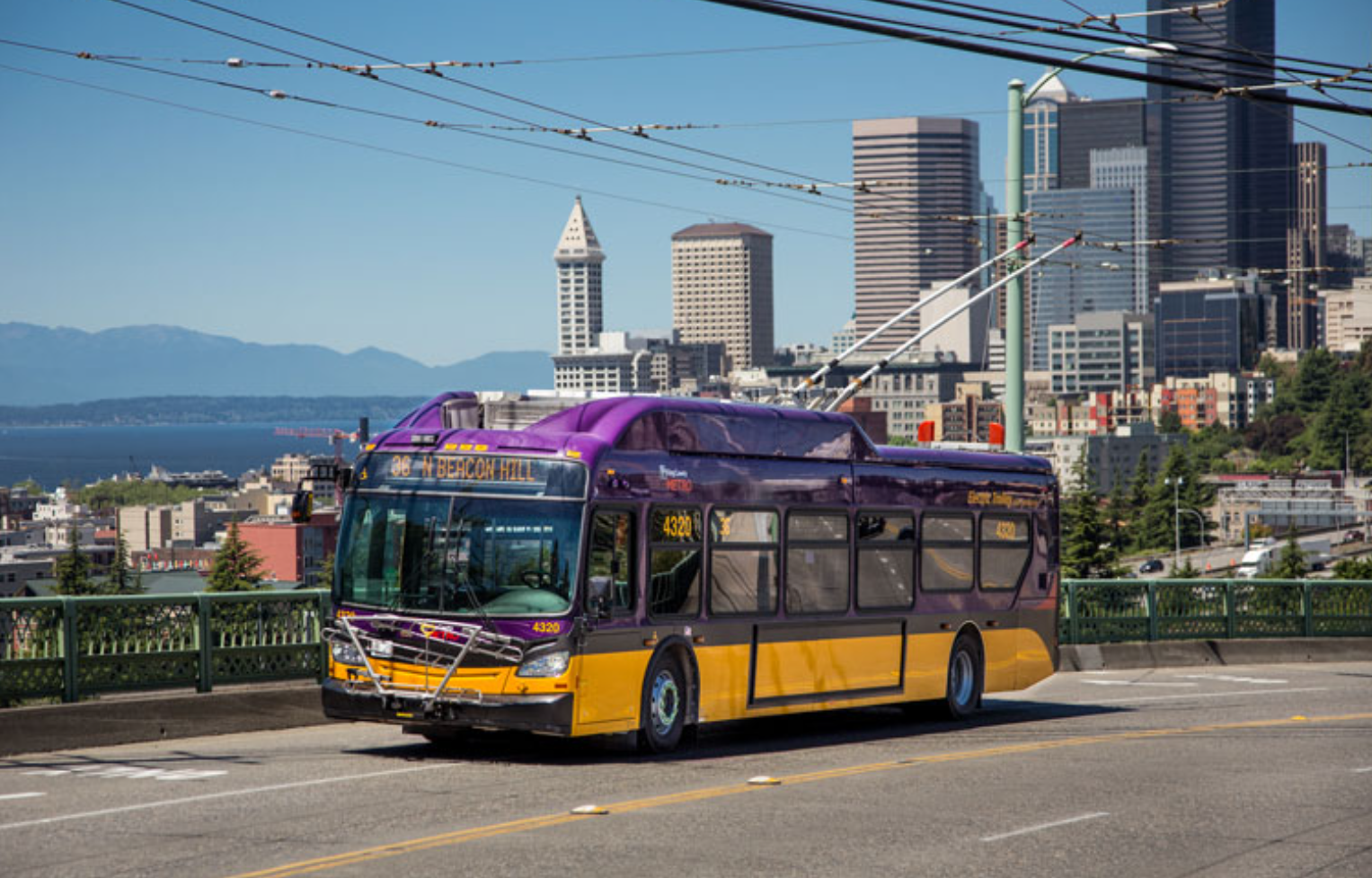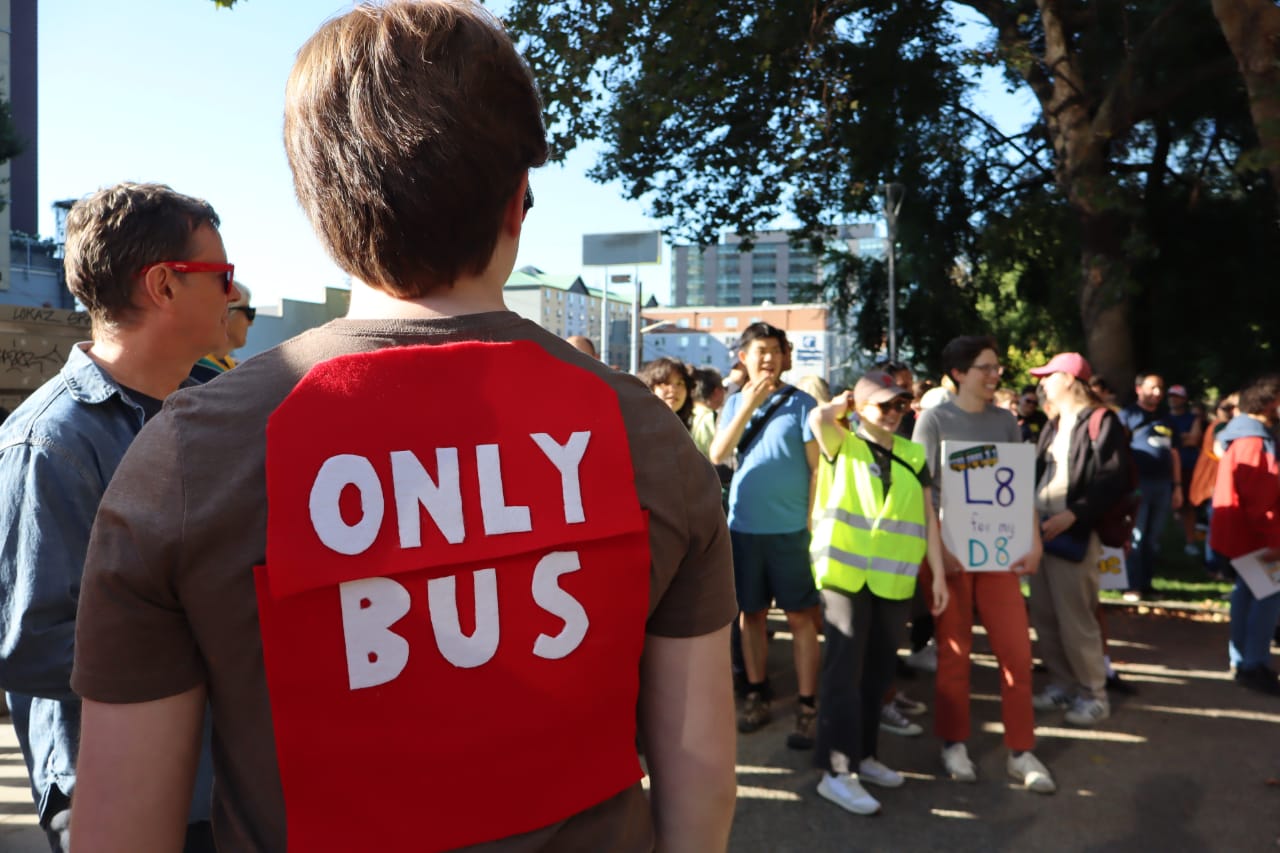
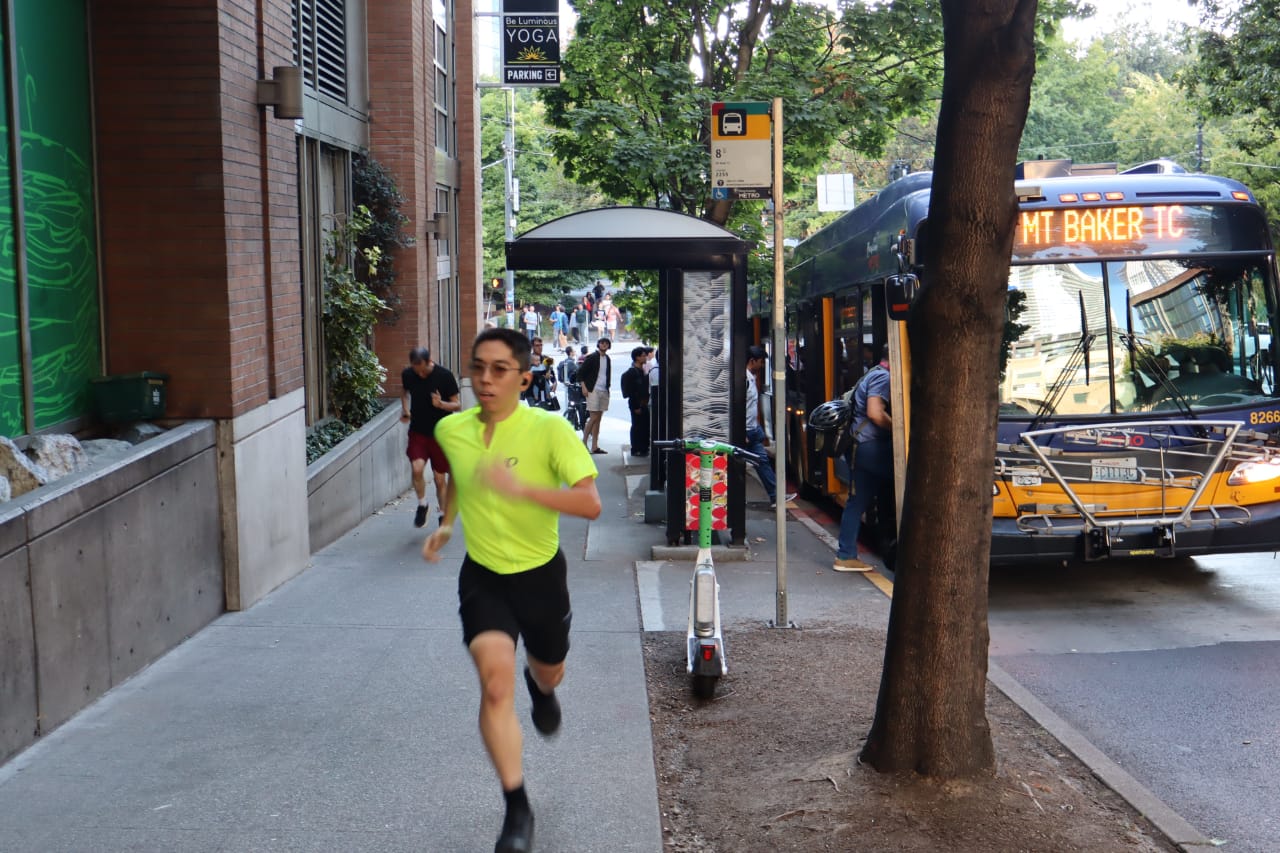
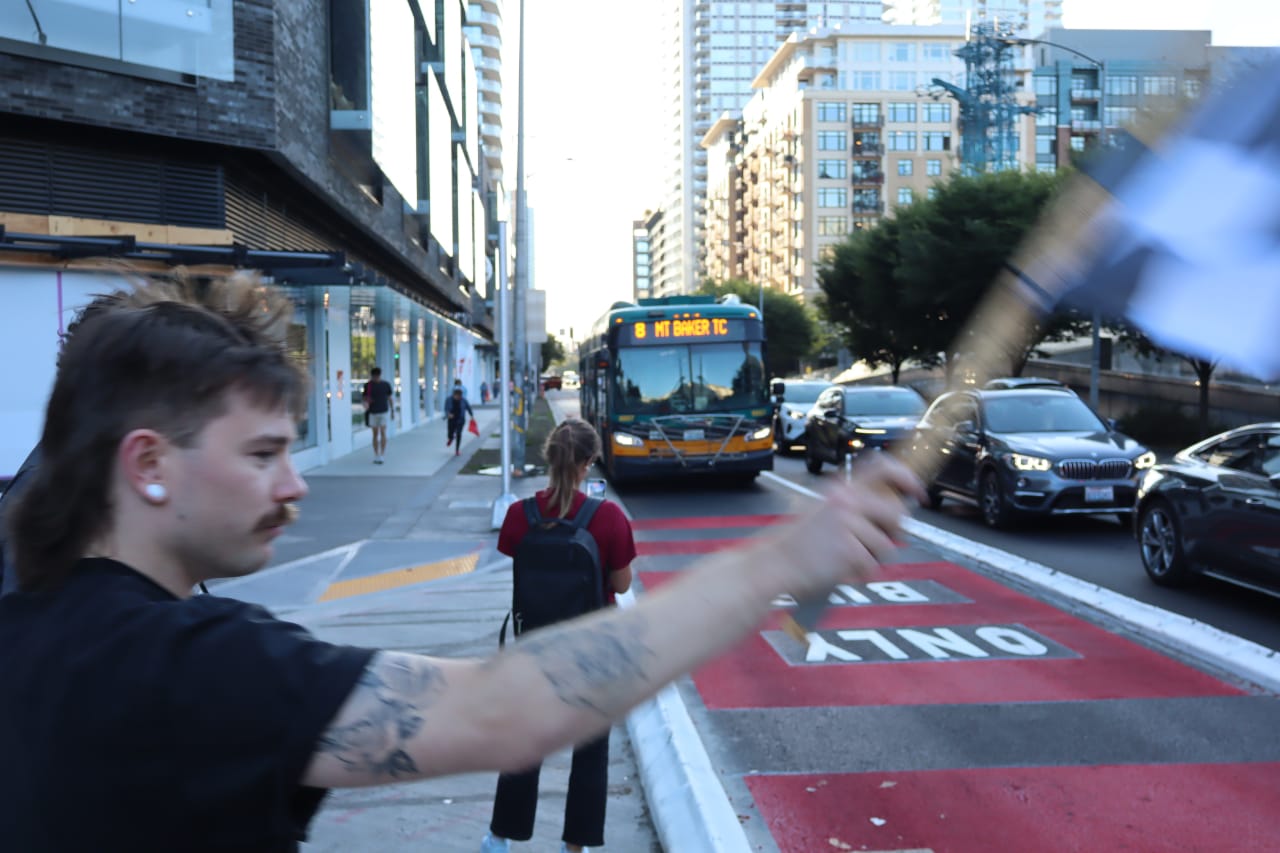
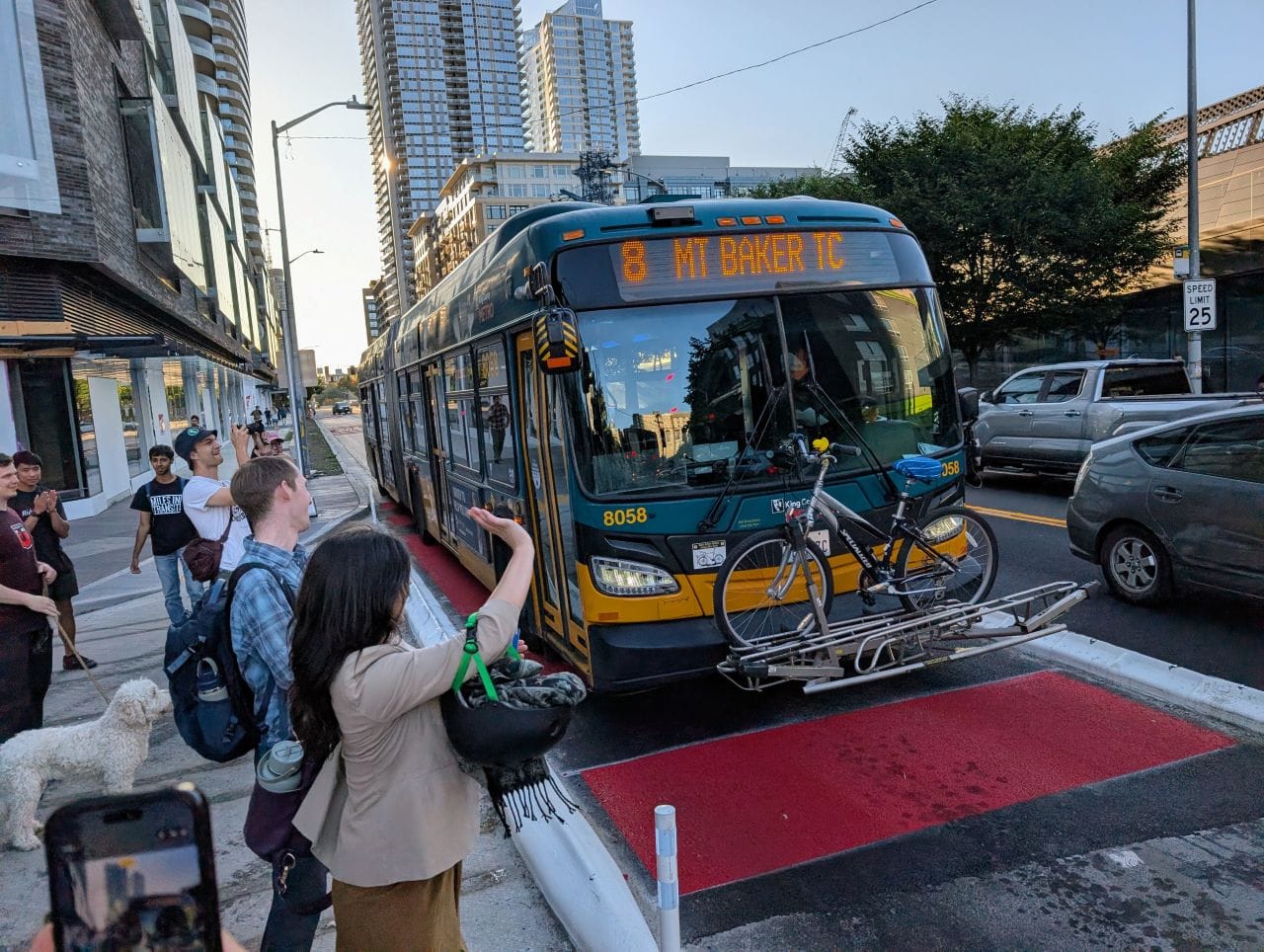
It was never going to be a fair race. Not with the new secret weapon in Metro's arsenal, a bright stretch of red paint extending all the way from Tilikum Place in Belltown to I-5. It's a bus lane that previous Seattle leaders had thought unthinkable, but at 5pm Tuesday more than 150 transit advocates showed up in South Lake Union to race a Route 8 bus up Denny Way, and got smoked by King County Metro.
The Urbanist's Fall Member Drive is in full swing! Support our work, read ad-free, and help us hit our goal for the member drive!
Well, most of them got smoked. Three runners, all of whom had clearly been getting their training days in, did manage to beat the 8 to Denny Way and Stewart Street by a few seconds, thanks in large part to extra bus dwell time to handle a sizable crowd of riders at Westlake Avenue.
Most of Tuesday's "racers" proceeded much more slowly than that first 8 coach did. Many even got to wave as another bus passed by on the way up the hill.
The event was a rematch, after last July's "Race the L8" saw cha-cha dancers, leapfroggers, and even someone driving a tiny car on the sidewalk ultimately beat a Route 8 coach up Denny Way. A whimsical illustration of the prior state of the infamous L8 bus, the event attracted significant media attention and shined a light on the issue in a brand new way.
The topic of the slow 8 was catapulted into the Seattle mayor's race, with then-candidate Katie Wilson (a regular Route 8 rider) making the trek up the hill with everyone else. The issue formed a clear contrast with former Mayor Bruce Harrell, whose administration was closed off to the idea of expanding bus lanes on Denny Way and reversed plans to add Third Avenue bus lanes in Belltown.
Wilson makes Denny bus lanes a priority
That attention turned into Mayor Wilson's very first executive order after taking office in January, spelling out a compact timeline to get red paint on the ground – this year. The road redesign included a reroute for traffic headed to I-5 onramps, which previously turned Denny Way into essentially a parking lot.
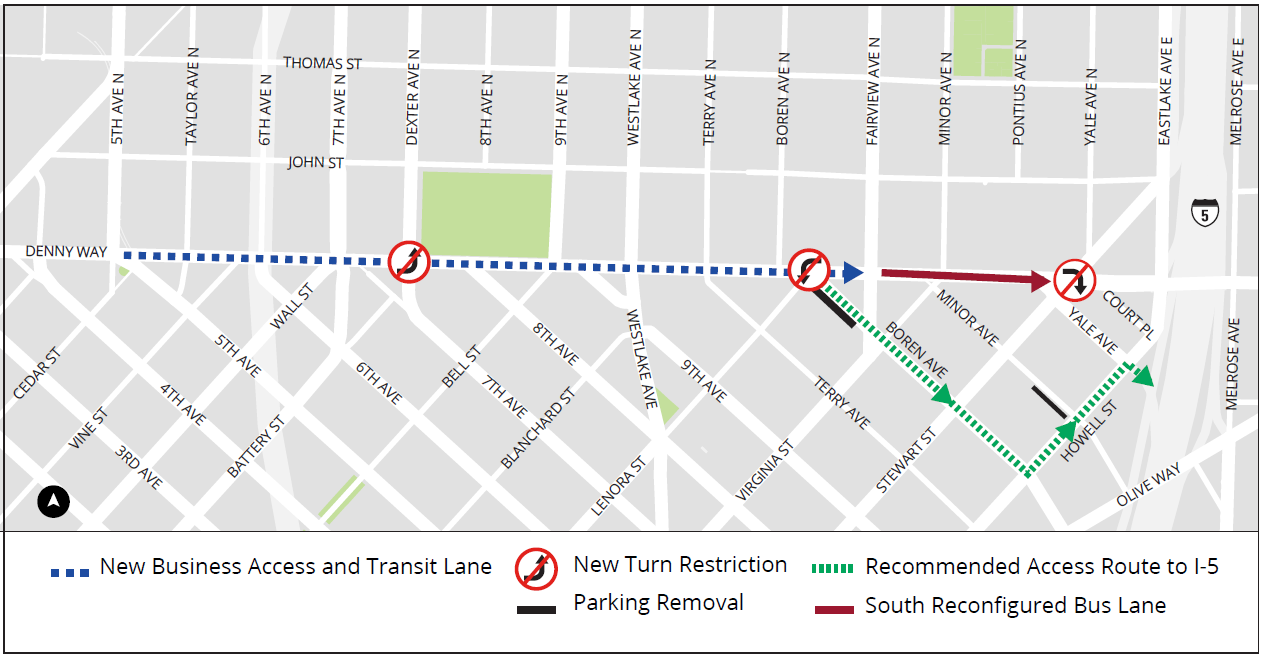
Things are very different 14 months later. With the new bus lane, Route 8 buses are traveling three times faster during the afternoon and evening peak period, according to preliminary data relayed by Wilson herself Tuesday. Riders traveling between Dexter Avenue and Fairview Avenue saved an average of 3.5 minutes – a huge amount multiplied across all of the route's riders – with the Route 8 recording its fastest travel times on Denny Way in at least seven years.
Racers saw even more dramatic bus acceleration in action Tuesday amid rush hour traffic. The bus took 21 minutes to complete the traffic-clogged half-mile race course back in 2025. On Tuesday, the bus took just four minutes – a staggering five times faster than the last race.
The reliability of the route has dramatically improved as well. Metro's trip times along the corridor varied by less than one minute last week, when it would oftentimes be more than 10 minutes without the bus lanes.
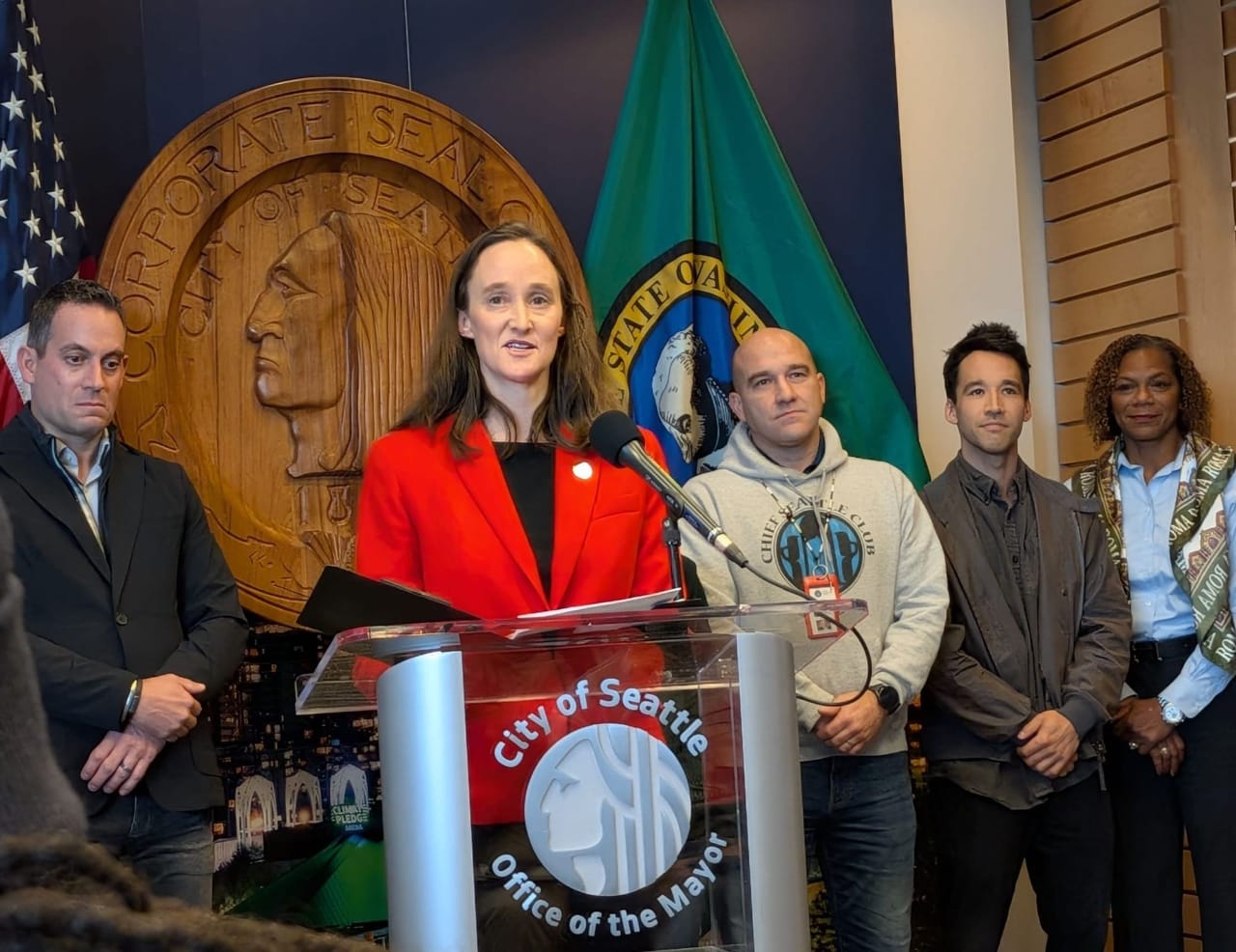
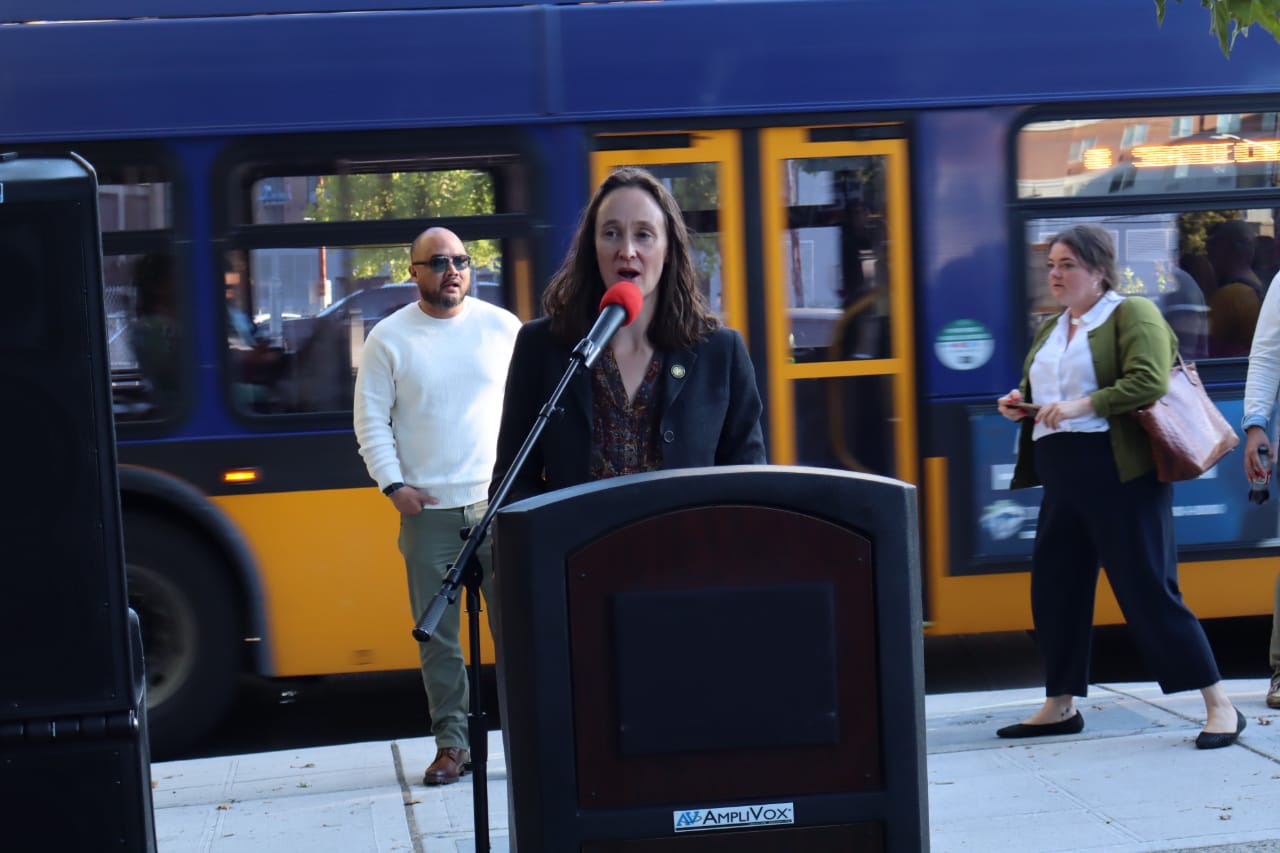
"Last summer, I joined many of you here to race the L8, and we saw firsthand what Route 8 riders have experienced for years and years and years: busses full of people stuck in traffic on one of the busiest corridors in our city," Wilson said in remarks to the crowd. "Riders and community advocates have been pushing for better Route 8 service for years, and I was proud to stand with them then. And I am very proud that we are here today celebrating real progress."
Making this project happen didn't just require a shift in mayoral priorities, it required a shift in departmental mindset. Last year, the assessment of a multi-block bus lane on eastbound Denny Way from inside the Seattle Department of Transportation (SDOT) was that the street grid couldn't handle such constriction of general-purpose traffic.
Traffic doom never came, proving models wrong
"This traffic congestion is expected to impact the ability of buses to access the bus lane and could result in backups in the bus lane itself," an SDOT blog post from last August stated. "Overall traffic would likely be significantly worse along Denny Way, with estimates showing general purpose travel times nearly doubling during peak travel times."
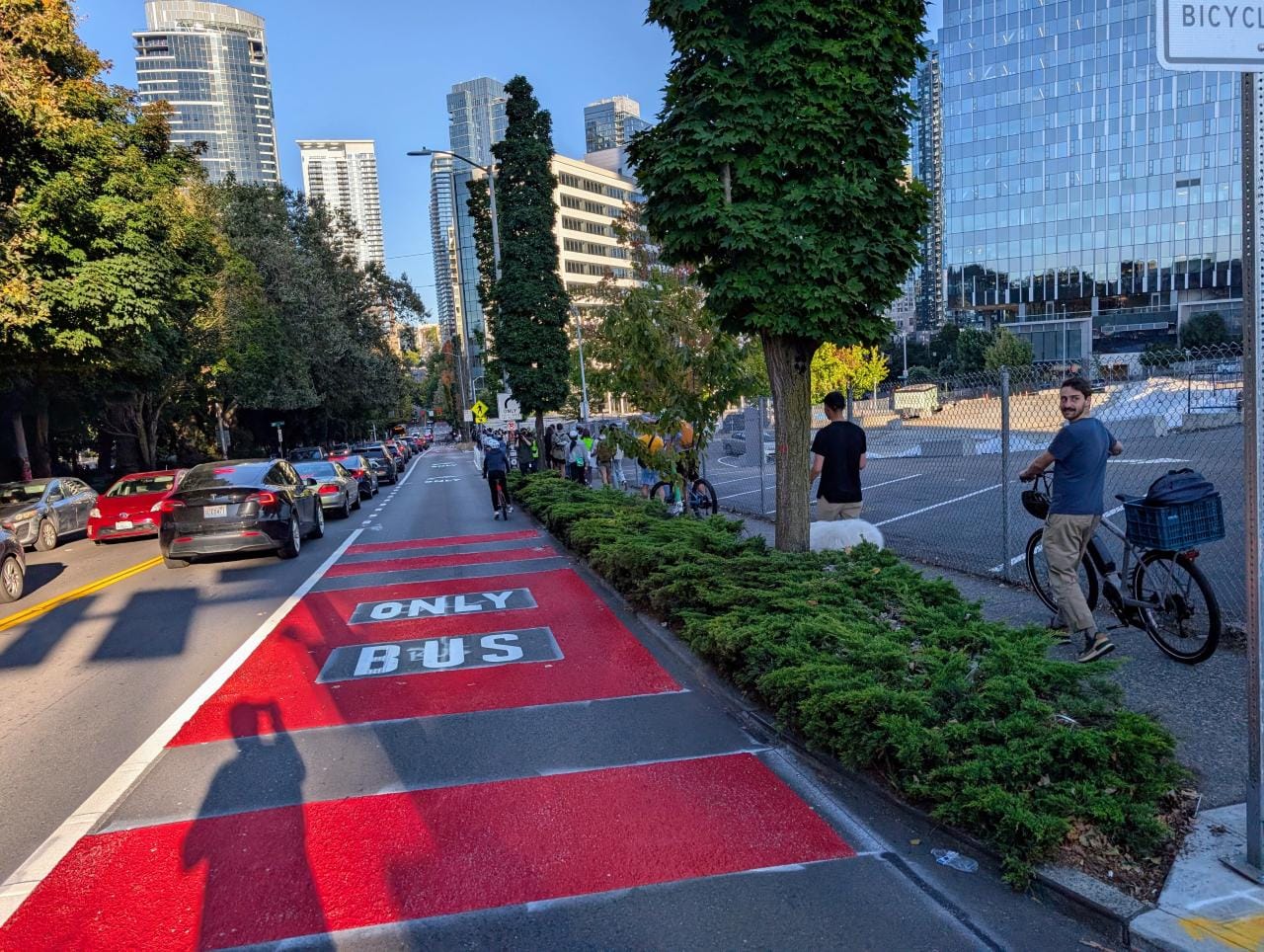
That traffic nightmare never came to pass.
"We were told that it was not possible to put a bus lane on Denny Way," Nick Sattele, who co-founded the Fix the L8 campaign in 2023, told racers Tuesday. "That the delay for drivers would be too high. It would destroy the bus, the transportation network. It would blow up traffic in South Lake Union. But we knew they were wrong because their studies didn't incorporate that drivers would take different routes, or that some drivers maybe would become transit riders as well."
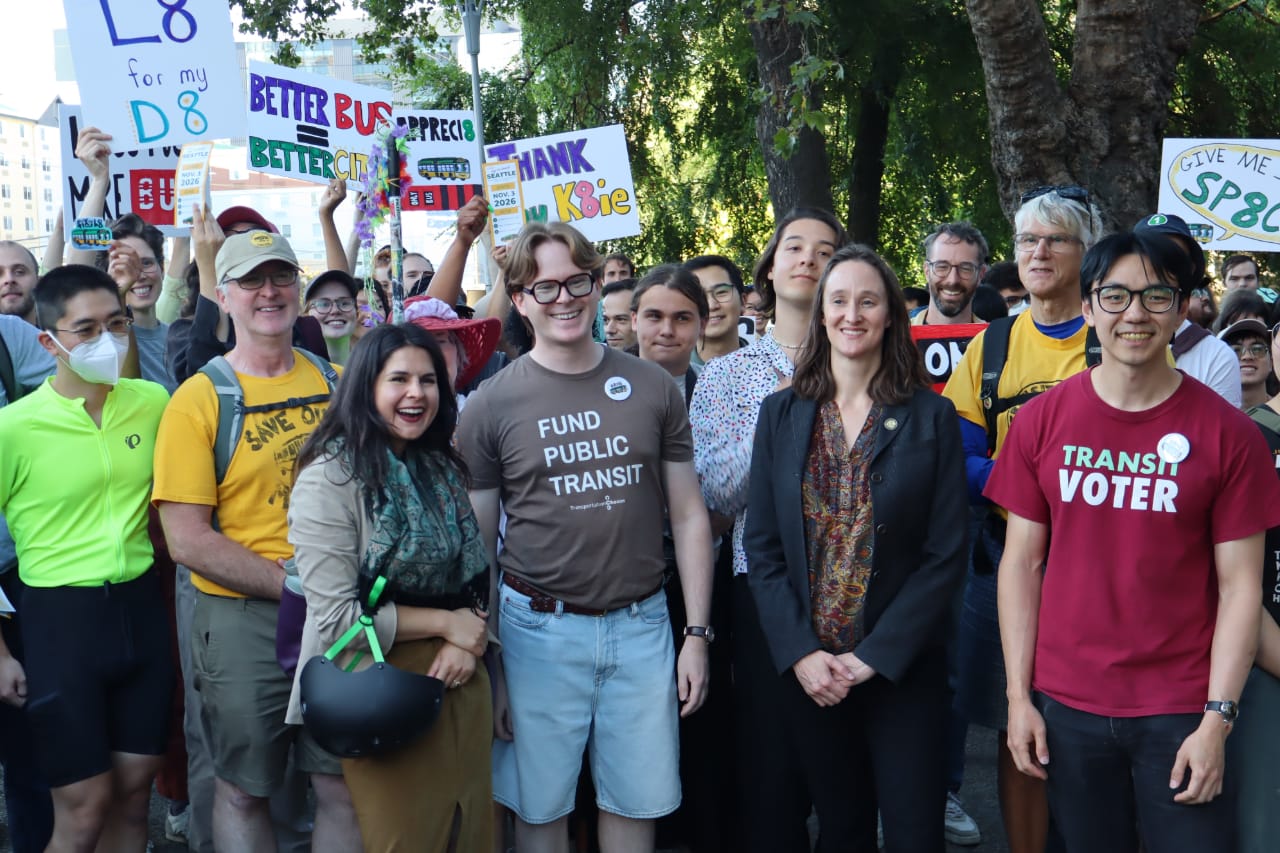
Just a few weeks after the bus lanes were installed in mid-August, the traffic grid seems to be adapting to the new normal on Denny Way just fine. Travel times to Capitol Hill or I-5 by car are not dramatically up, and stretches of the road often look deserted during rush hour compared to past years. The traffic model was wrong, a fact that should have broad implications for transportation planning in Seattle way beyond the confines of Denny Way.
In addition to a faster bus, the project also resulted in safer sidewalks with fewer conflict points with car traffic. The former Yale Avenue intersection that used to clog the sidewalk and road with I-5 traffic has been curbed off to car traffic and is now a small pedestrian plaza where advocates congregated and mingled after the race.
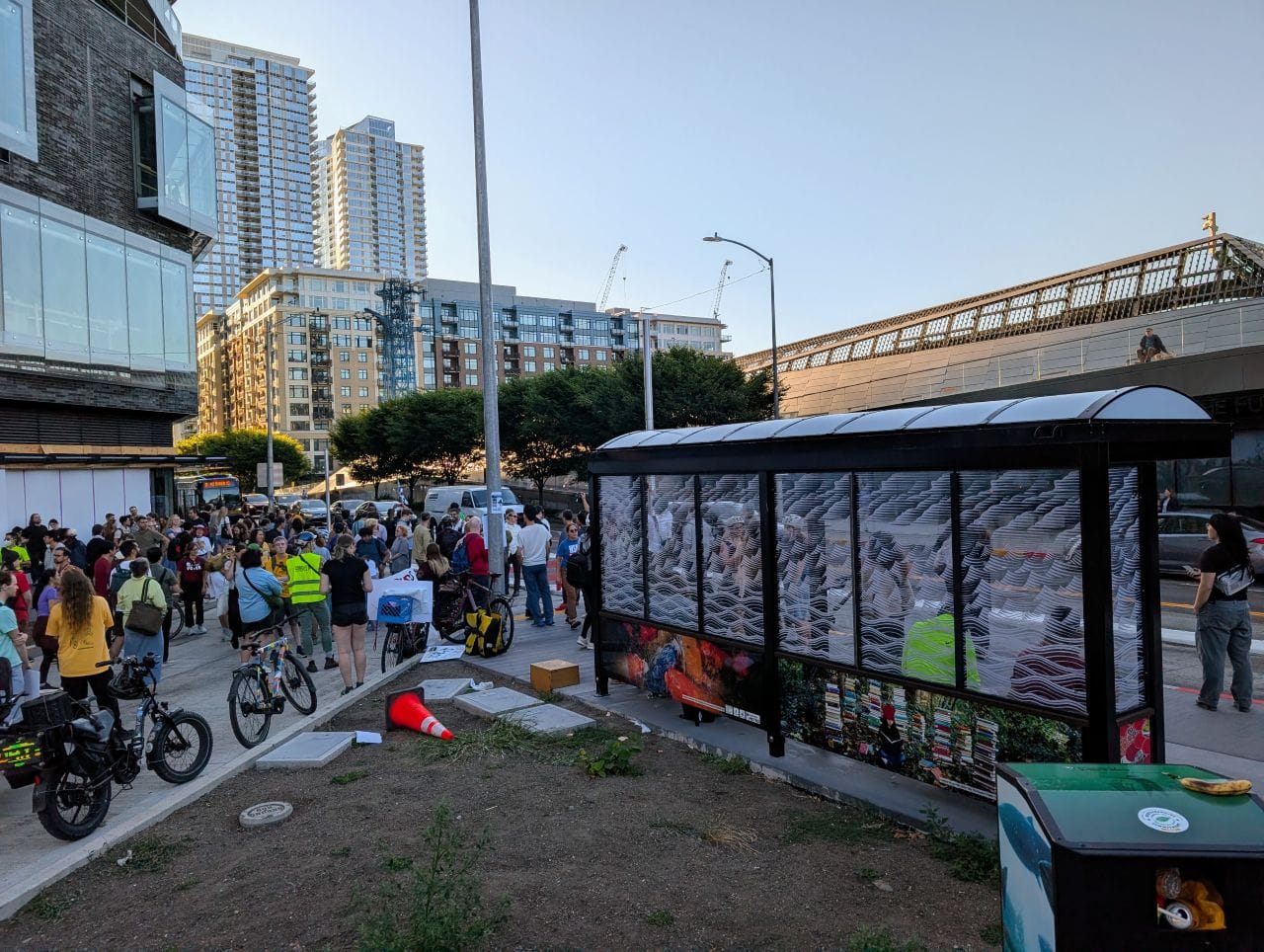
Another remarkable aspect of the Denny Way project is the speed with which it was implemented. Bus lanes have traditionally taken years to be implemented in Seattle, subjected to substantial planning timelines or tied to larger capital projects. A northbound bus lane for the city's second-busiest bus, the Route 7 on Rainier Avenue, entered planning in 2022 and wasn't actually implemented until 2025.
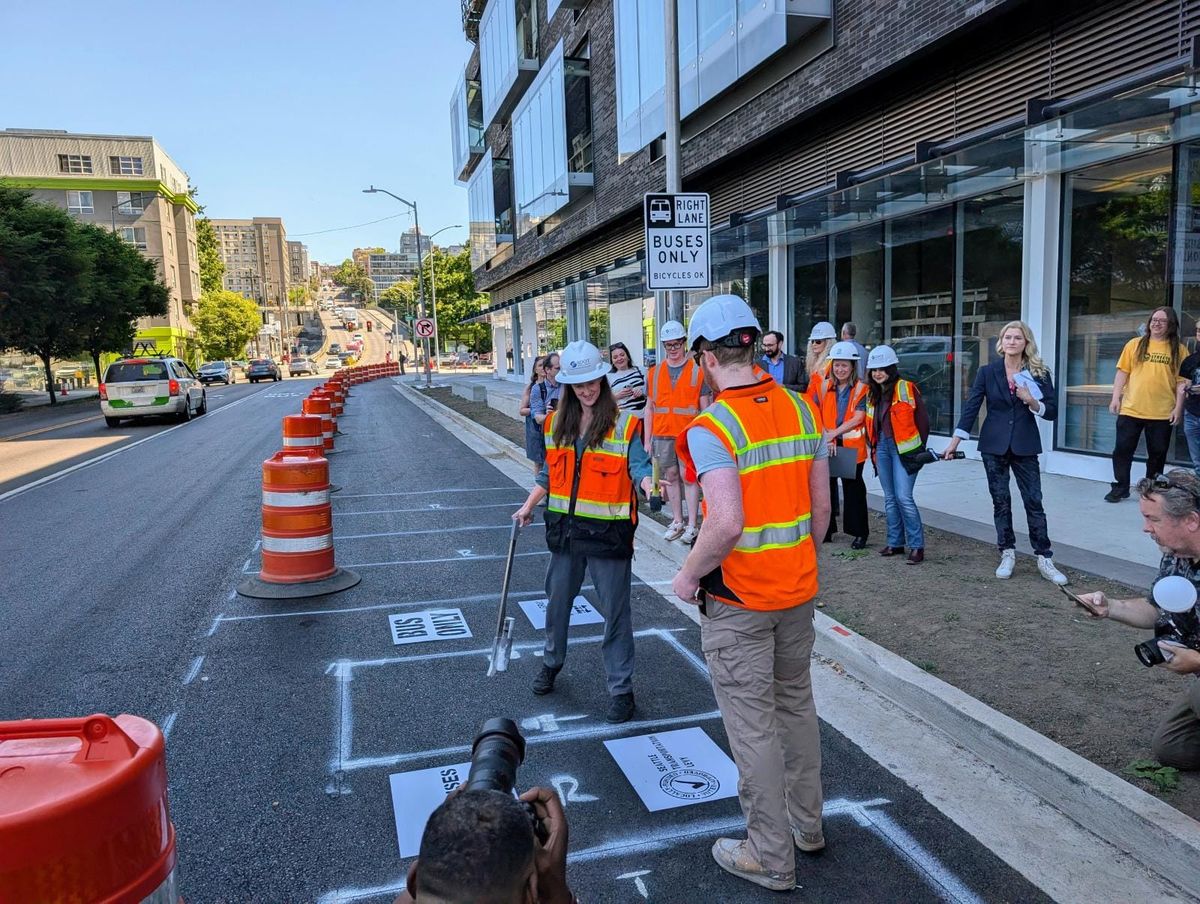
In contrast, the Denny Way bus lane shows us how much that timeline can be compressed to prioritize transit riders sooner if the political support is there. Wilson and Councilmember Alexis Mercedes Rinck even helped paint bus lane markings themselves in a press event in late August.
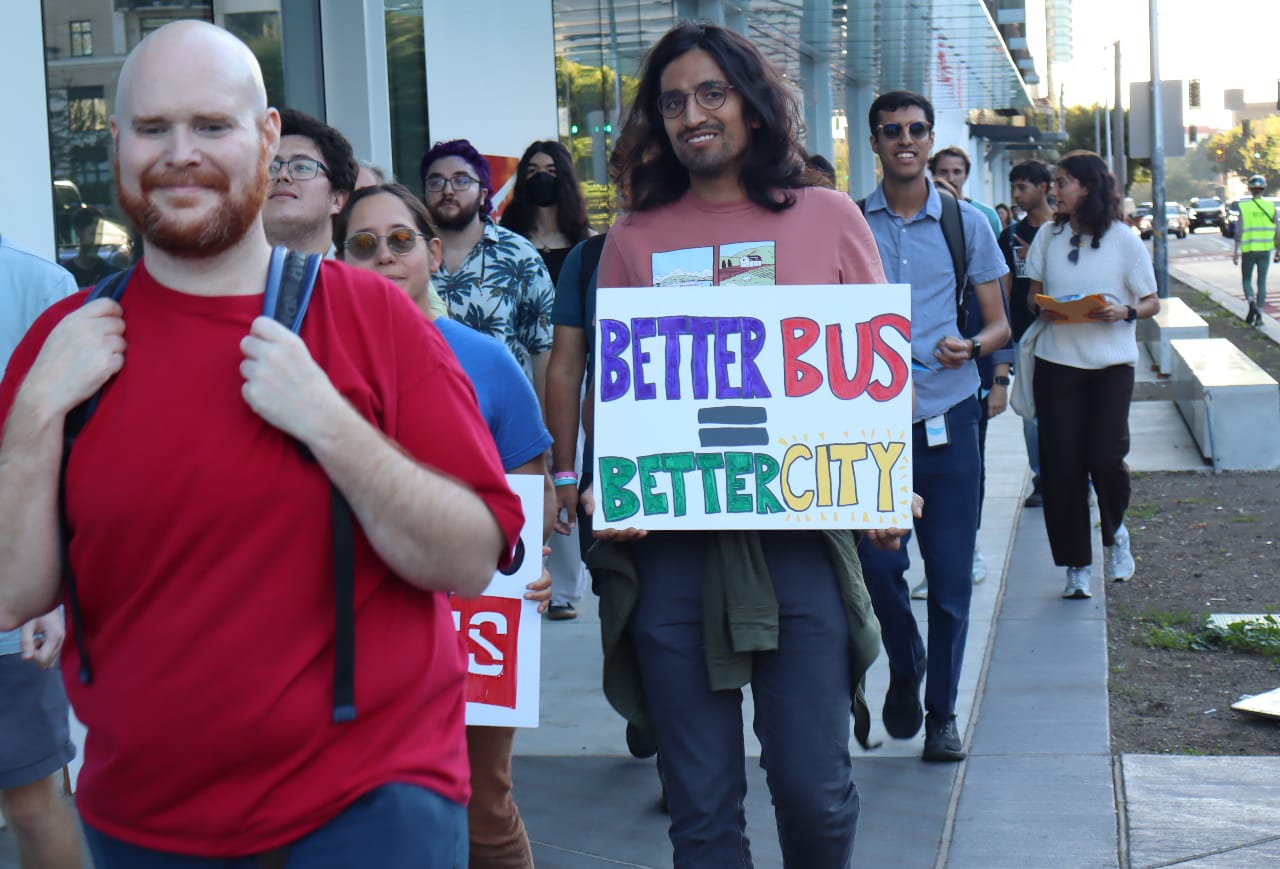
"This is an incredibly encouraging start. Route 8 carries more than 7,000 riders every day and connects Downtown, South Lake Union, Capitol Hill, the Central District, and Mount Baker," Wilson said. "These are not just numbers. Saving time on the bus means more predictable trips to work, school appointments, and of course, home to spend time with your family. That is what reliable transit should do: make it easier for people to get where they need to go."
Faster transit draws rave reviews
In fact, some people have moved to Seattle in part because of the attraction of the city's fast-improving transit, as race participants told The Urbanist on Tuesday.
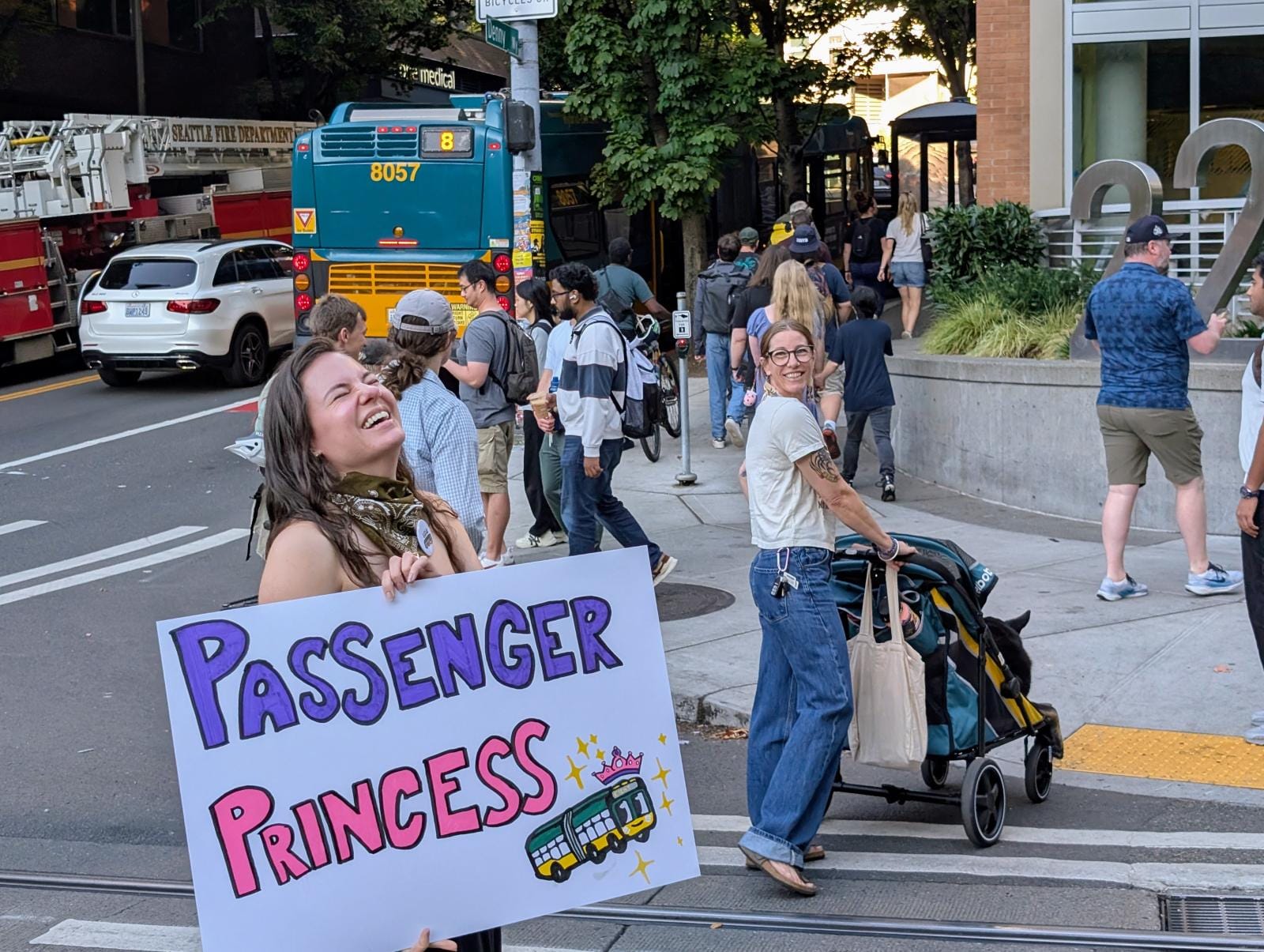
"I just moved here too, and I'm from the south, where they hate public transit," Melissa said. "And it's f*ing awesome. It's so cool to have it."
Melissa raced with Aubrey and her dog Lola. Aubrey moved to Seattle after living all over the country, most recently in Olympia.
"As soon as I moved here and started taking transit, I immediately noticed how quick [it is]," Aubrey said. "I just think the dedicated bus lanes are amazing in general, and I do take the 8, and it avoids this whole cluster right here, which is great on the bus-only lane."
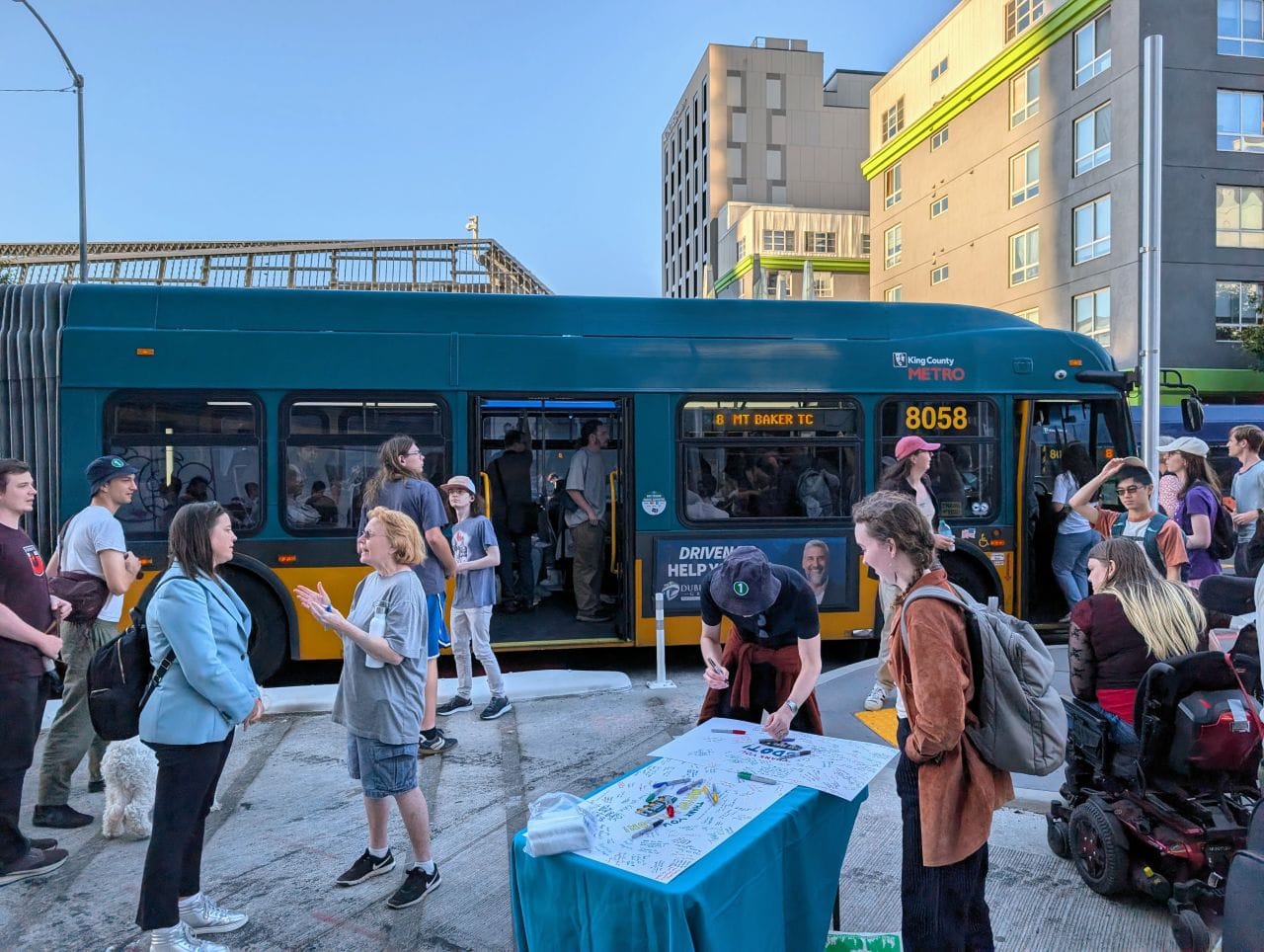
Taylor, who lives in Belltown and participated in the race, said used to avoid the 8 because it was a miserable experience to ride it, but that's changed seemingly overnight.
"Well, I have Ubered instead of taking the 8 because it's the only bus ride that I would get sick on from all the traffic," Taylor said. "I get carsick easily, and the 8 is the only bus that I consistently get carsick. It's the stop and start that would make me really dizzy."
Boosting bus frequency with Seattle Transit Measure
Now the only thing holding back Route 8 is its frequency.
Earlier this month, Metro was able to boost frequency on the route during the afternoons on weekdays, bumping headways from 15 minutes to 12 minutes. But buses are still very full on rush hour, likely leading many riders to envy the frequency on the popular RapidRide G Line along Madison Street.
The good news is that more Route 8 trips could be on the way next year, if Seattle voters sign onto Wilson's plan to phase in 100,000 more annual bus trips with a beefed-up Seattle Transit Measure in November.
With the impossible now achieved on Denny Way to the benefit of thousands of daily transit riders, City leaders will have to decide whether to roll with the momentum created here... or be left in the dust.
 Doug Trumm
 Doug Trumm
 Doug Trumm