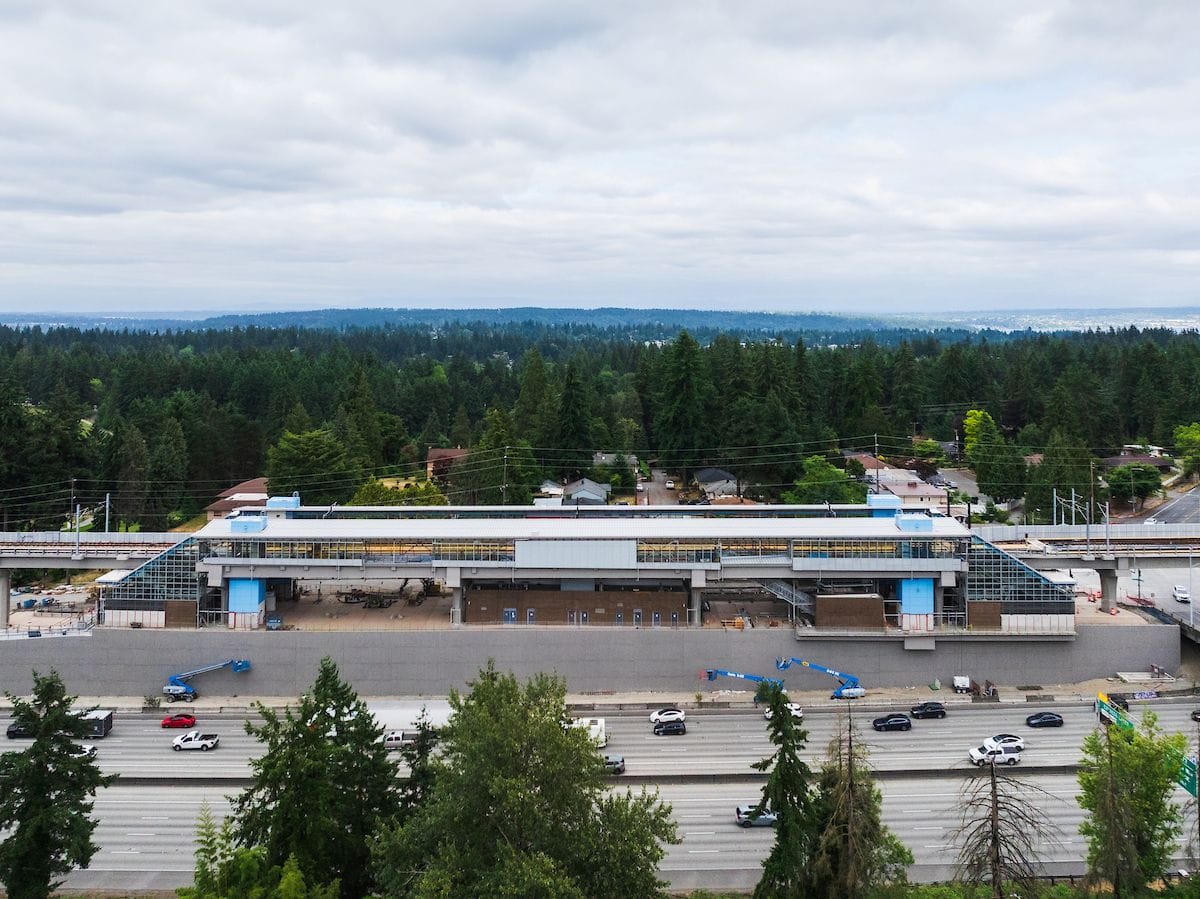
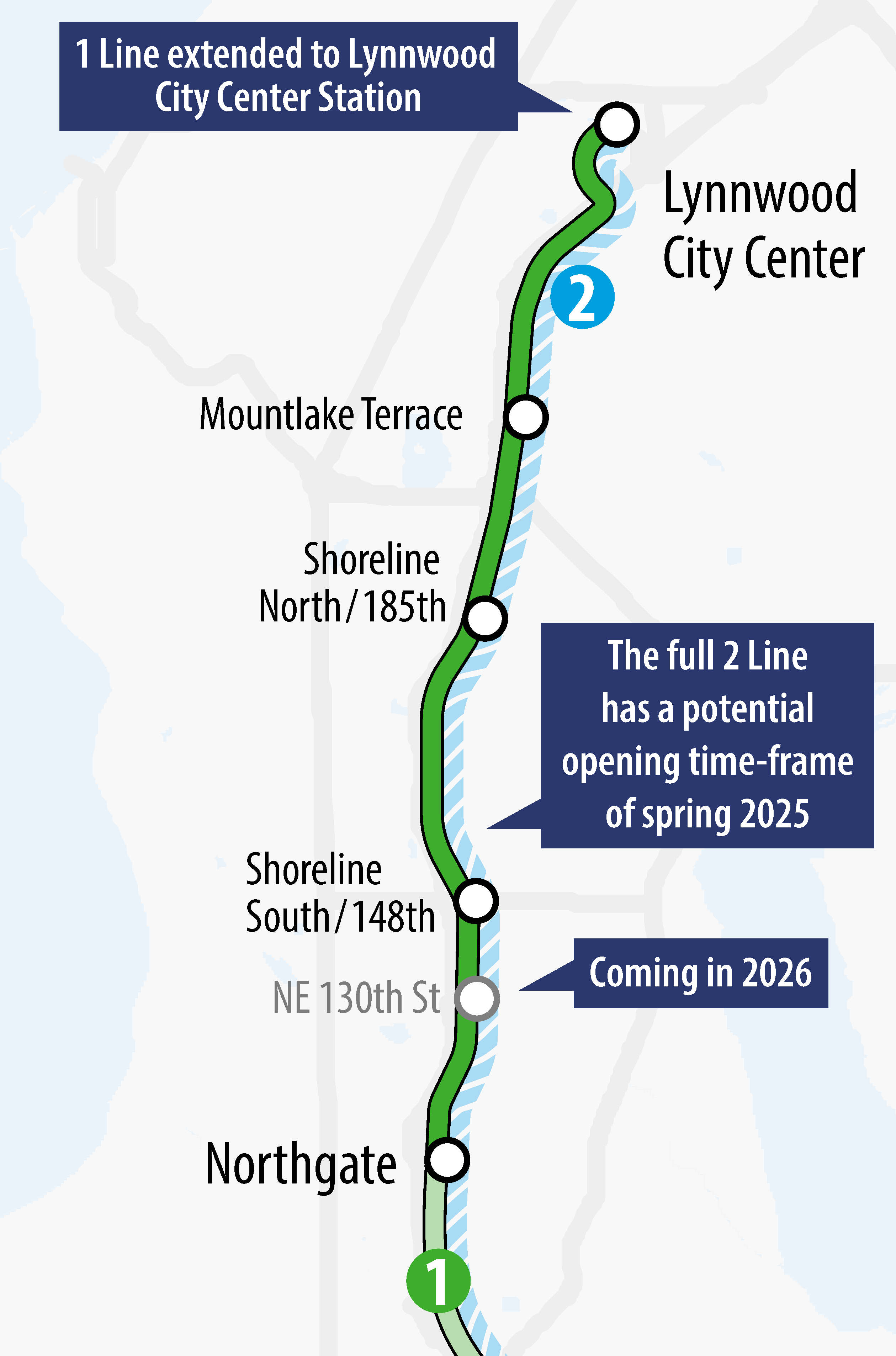
As of today, Pinehurst Station officially has an opening date: Wednesday, September 30. The infill light rail station between Northgate and South Shoreline will serve both the 1 Line and the 2 Line, attracting an estimated 3,400 daily boardings. The late September opening coincides with the start of classes at the University of Washington and meets the agency's goal of opening the station in the third quarter of the year.
The combined headways of the two lines gives riders frequent service between Lynnwood and the International District, with trains arriving every four to five minutes. Sound Transit has pledged to keep riders abreast of opening festivities on its Pinehurst website, but there are signs that the event will be a subdued affair compared to other recent line openings.
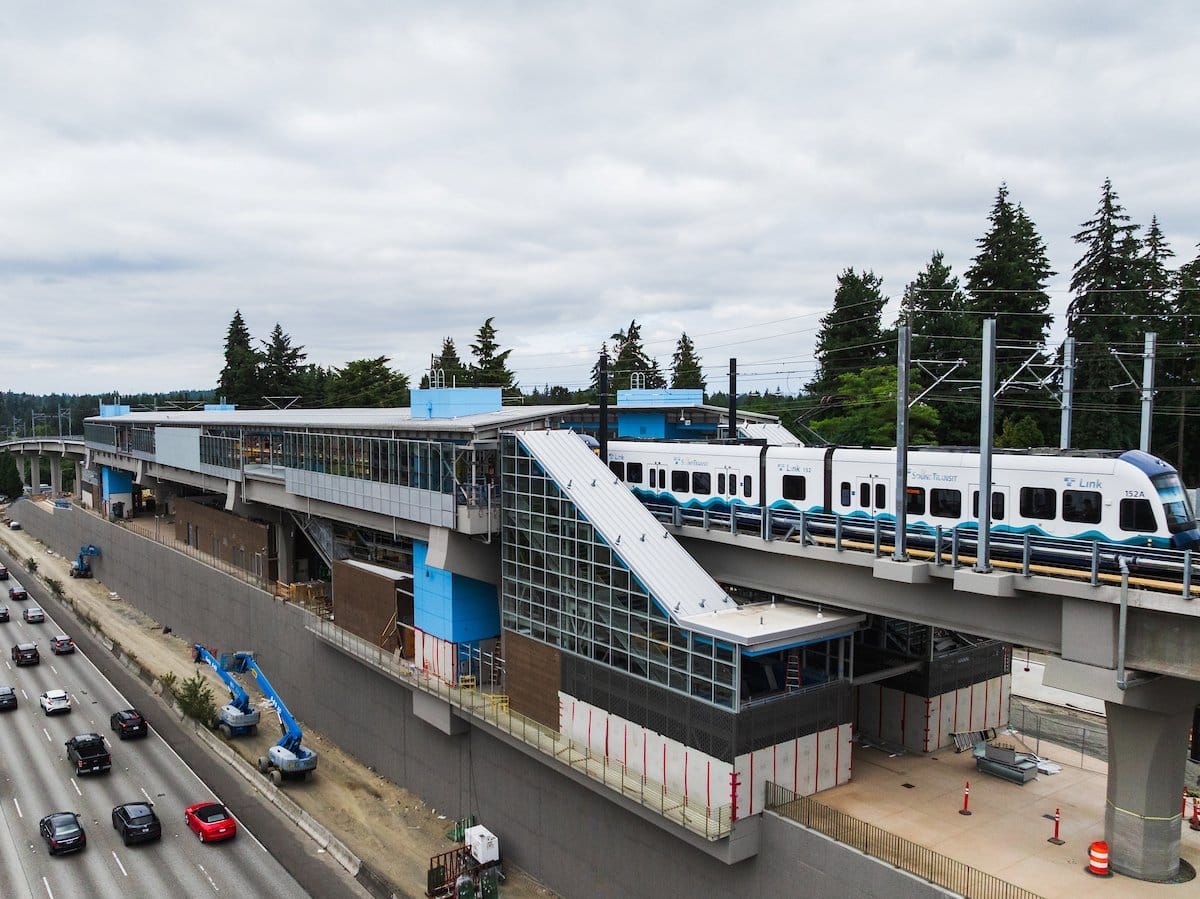
This summer, Sound Transit crews have been hard at work putting finishing touches on the elevated station, which sits just north of NE 130th Street. The platform sits high up overlooking I-5 and leafy neighborhoods and parks surrounding it.
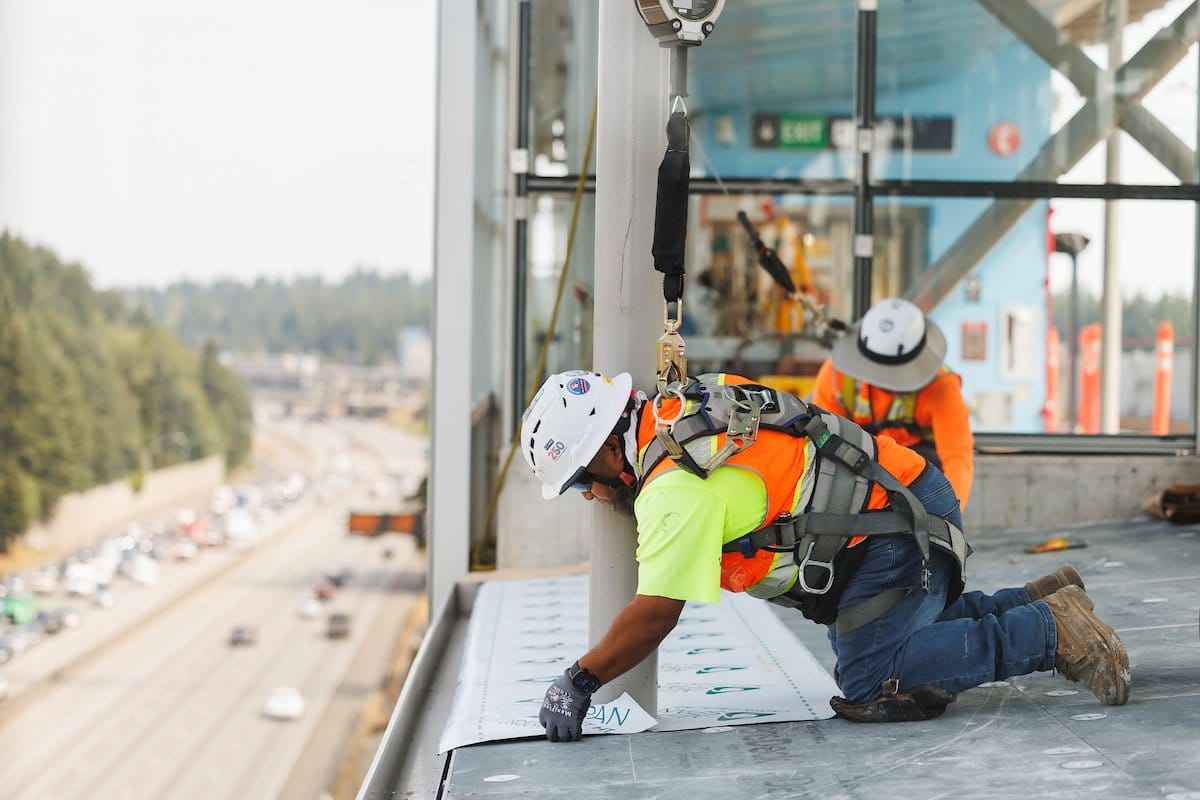
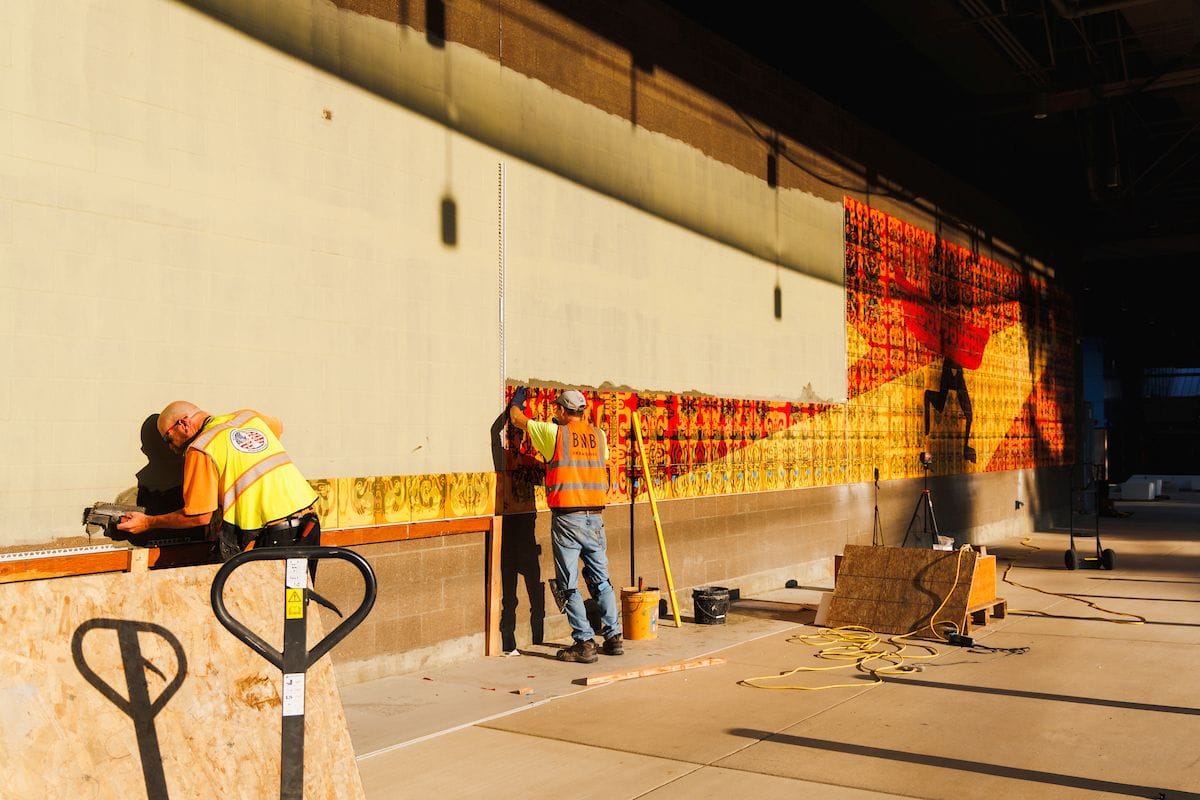
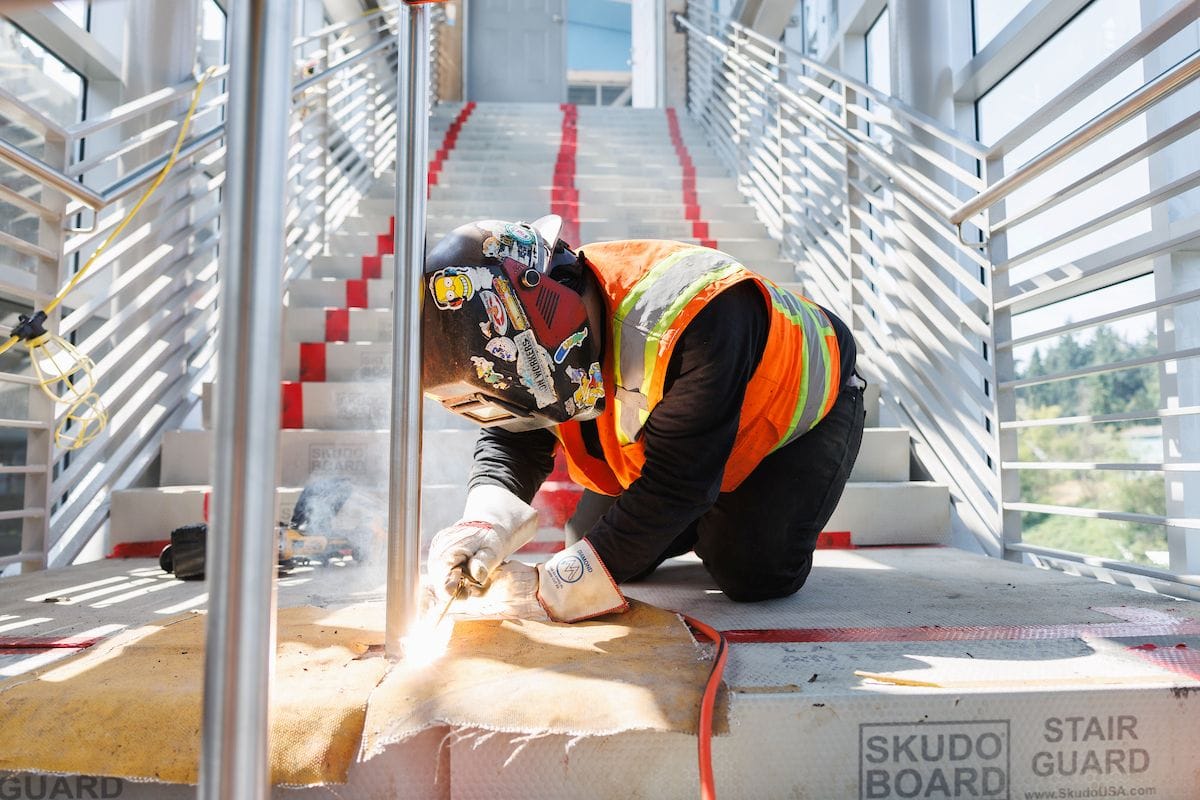
Workers installed station art and surface finishes this summer. (Peter Bohler / Sound Transit)
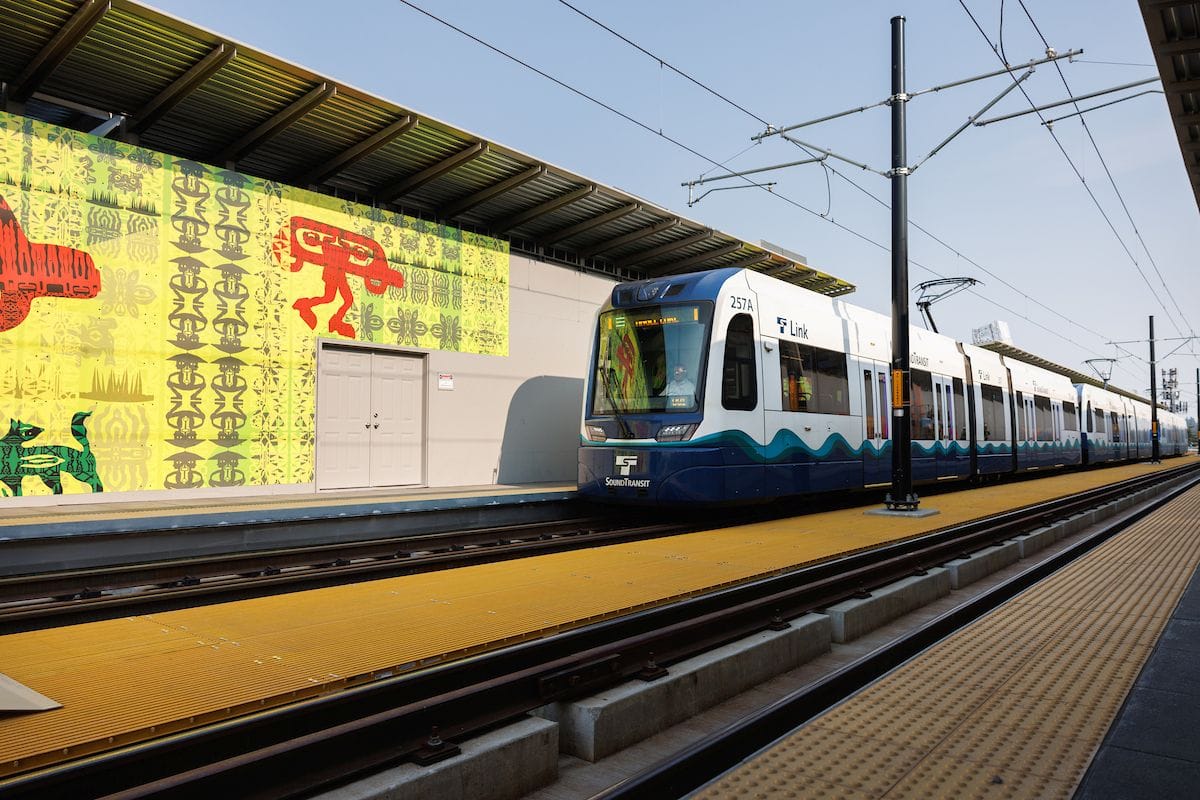
Among those finishing touches is station art, which was designed by Seattle-based artist Romson Bustillo, who was born on the island of Mindanao in the Philippines. The art will have a South Pacific feel, with human and animal figures brightly patterned in red, yellow, and green.
"[Bustillo's] layered works and immersive collaborations go back to his Philippine lineage, his South Seattle/Pacific Northwest upbringing, and numerous research travels," Sound Transit's Katie Metzger noted in 2025. "His artwork will be translated into richly colored, porcelain enamel panels that wrap around the entrances and into both north and south lobbies."
Adding a station to this location has been long in the making, a project approved in 2016's Sound Transit 3 (ST3) ballot measure, grafting a stop onto ST2's Lynnwood Link Extension. In 2020, Sound Transit accelerated the project's timeline from 2031 to 2025, which was later revised to 2026, to put it closer to Lynnwood Link's 2024 launch. That occurred largely due to the advocacy of District 5 Councilmember Debora Juarez, who served on the Sound Transit board at the time and had lobbied to get the station included in the ST3 plan in the first place.
Like most ST3 expansions, the station faced the threat of major delay, but survived the 2021 realignment still on its accelerated course in part because adding an infill station years later only adds expense and complication. The construction work next to an active rail line was complicated enough happening in the immediate aftermath, requiring some single tracking during platform work.
"These decisions ultimately resulted in a faster, less disruptive construction process for the station to be able to open ahead of its original schedule," Constantine said Thursday. "I would also note that September 30th is the first day of classes for fall quarter at the University of Washington. So we will be welcoming aboard students, faculty, and staff who have now a more convenient way to get to campus."
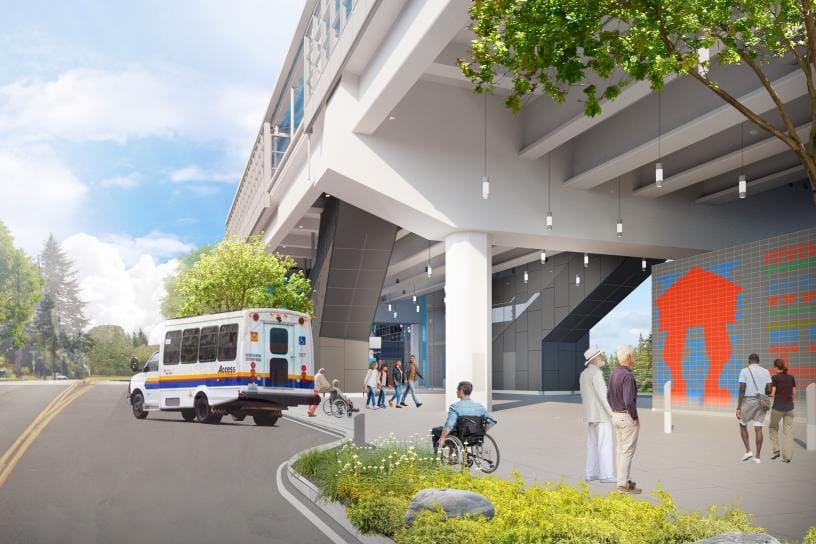
Thanks to a funded plan for the infill station, the initial build of Lynnwood Link was able to incorporate space for the Pinehurst platform into the elevated structure. More recently, workers came back to fill out with station amenities, like elevators, escalators, and stairs down to street level, where card readers, signage, bike parking, and a new drop-off zone for paratransit vehicles welcome riders.
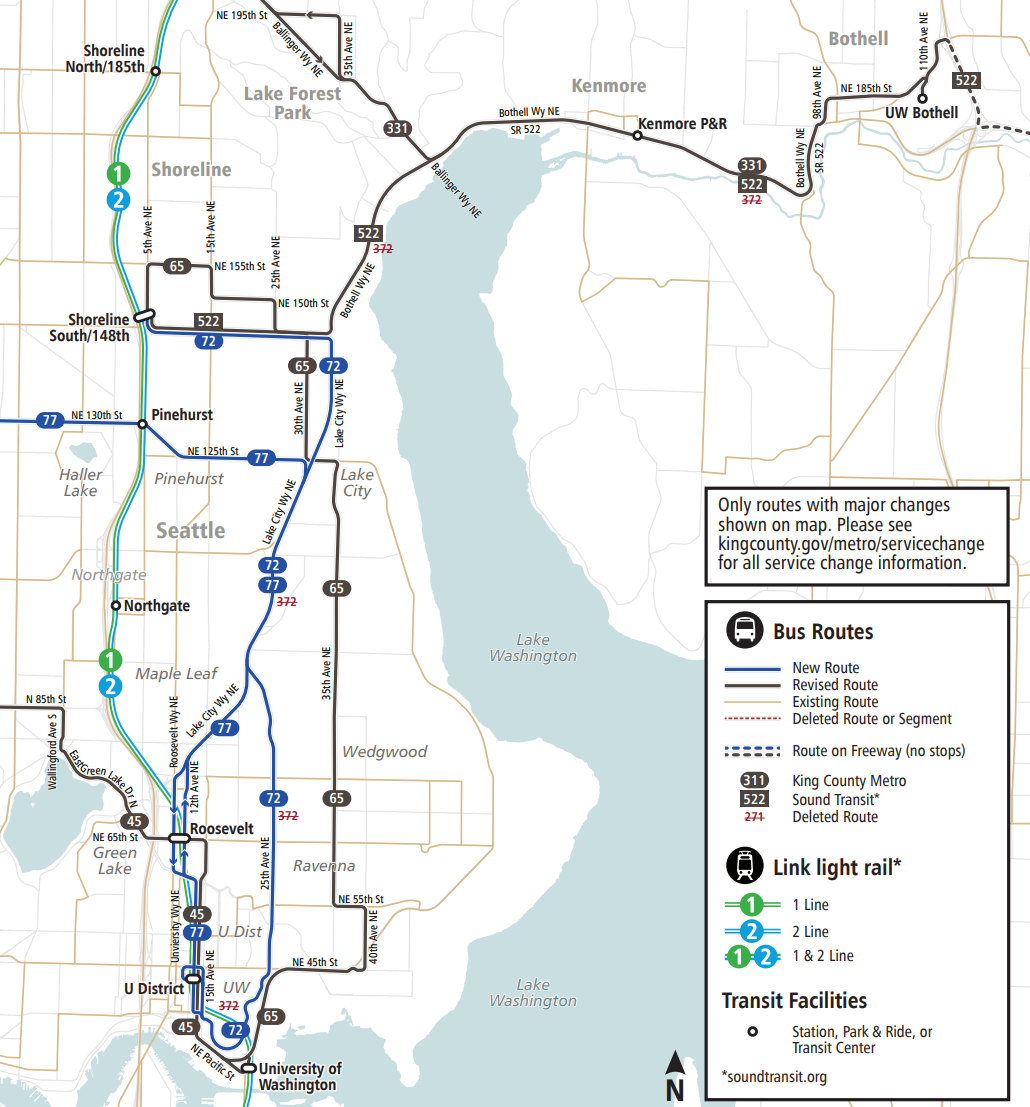
King County Metro has already added a Route 77 in the fall service change that will feed the station when it opens, connecting Lake City and Bitter Lake like never before. Before the change, the station location was a dead zone for bus service, but the case for the station always rested in part on adding an east-west bus line to serve a broader corridor, like the 77 will do, using NE 130th and 125th Streets.
“Traveling around our city and region should be easy and affordable. Every new light rail station gets us further toward that goal. Pinehurst Station will create more and better options for people in North Seattle to get to the important places in their lives,” said Seattle Mayor Katie Wilson said in a statement. "It’s great news that people now have a date to look forward to and plan around. Next stop - Pinehurst Station!”
The Seattle delegation on the Sound Transit Board of Directors argued keeping the Pinehurst opening on track was a priority and an early win deliverable for the ST3 measure, and they were backed by a campaign from local residents. Seattle officials promised rezones nearby to grow a dense neighborhood in the midst of the freeway-adjacent station. However, those rezones hit the Seattle process and have only been partially delivered so far.
Seattle attached the long-studied Pinehurst rezones to the Comprehensive Plan major update that was due in 2024, but delayed by the Harrell Administration before being mired in citizen appeals. As a result, the City has failed to have its new zoning plan in place by the time the station open. In turn, this means no large-scale housing development projects are under construction in the vicinity.
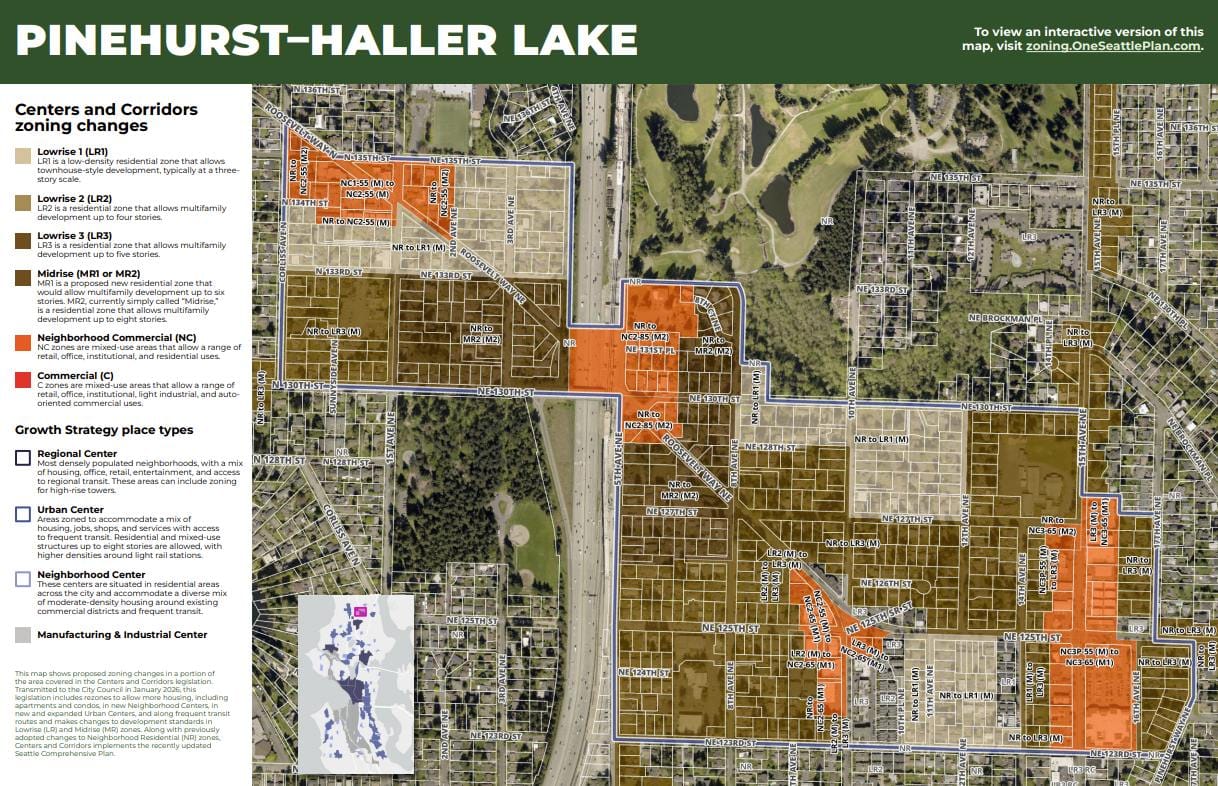
The draft zoning plan includes a relative small patch of Neighborhood Commercial 85-foot zoning near the station, and some broader patches of Midrise zoning, before giving way to Lowrise. When the upzones do go live, eight-story apartment buildings with some ground-floor retail could be on the way. Just how quickly is uncertain, with the City appearing to have missed the development cycle by dragging its feet. Housing permit activity have been trending sharply downward across Seattle.
Even in 2023, the Pinehurst rezone delays drew the ire of Dave Baker, the former Kenmore City Councilmember who served on the Sound Transit board of the time.
“I’m sorry Mayor Harrell, I’m not trying to throw stones, but it’s just reality that they’ve had the opportunity to increase zoning in the area to make it more transit-friendly, but it’s still not done,” Baker said. “They’ve had since 2015 to fix the zoning, and it’s now 2023 and the zoning has still not been fixed. I would love to see a successful station… and the system to be as functional as it can. Everything else seems to be happening except this one.”
Harrell brushed off the criticism, declining to respond at the time.
Seattle's planning efforts have also punted on the issue of Jackson Park, a fenced-off, 160-acre, publicly-owned 27-hole golf course which advocates had called for adapting to broader, more accessible park uses. Some also called for integrating housing into the campus, which likely would require a park land swap given Initiative 42 stipulations, which prohibits park lands from being appropriated for other uses without making up for the loss of land elsewhere.
As it stands, the golf course disrupts walking routes to the station from the northeast, in addition to putting a low-density use next to high-capacity transit.
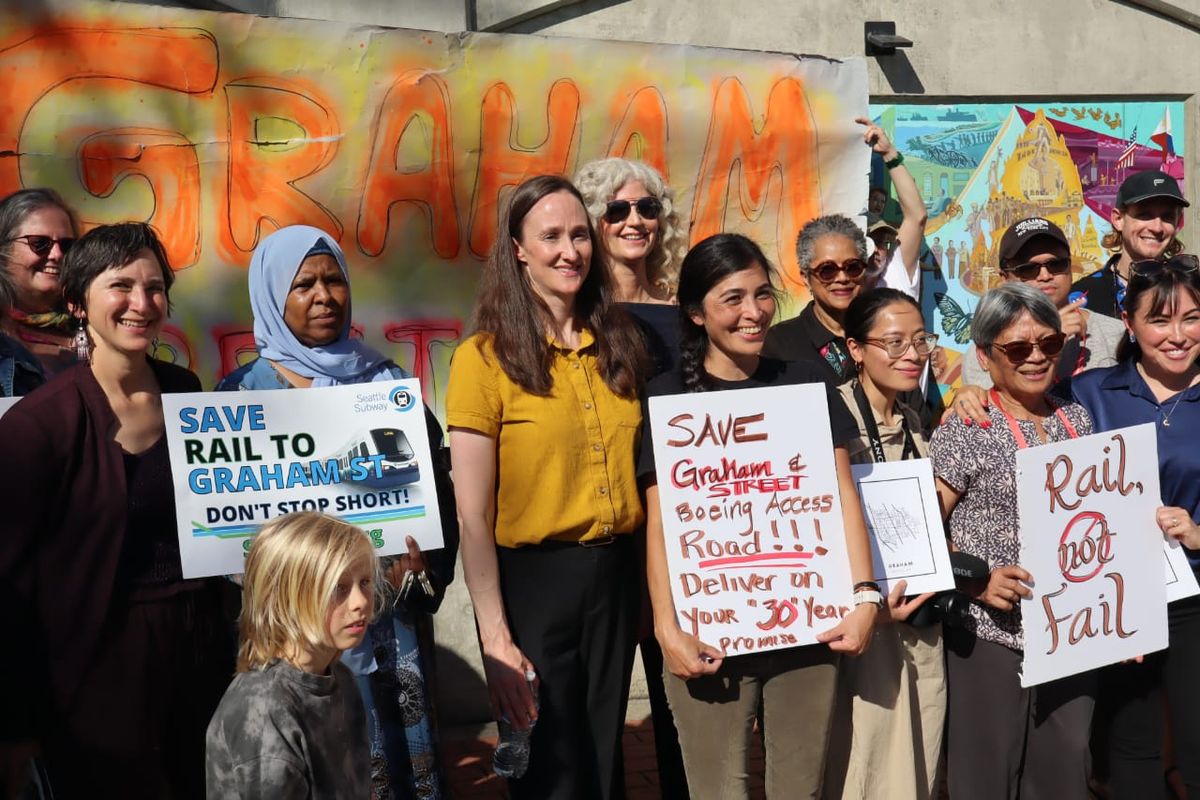
While Pinehurst has an imminent opening date, things are less certain for ST3-approved infill stations at Graham Street in South Seattle and at Boeing Access Road in Tukwila. Both stations were formerly promised in 2031, but Tukwila has no opening date after the board's May 28 vote left the agency without the full amount for construction included in its financial plan.
Meanwhile, Graham Street was only saved from the chopping block when the City of Seattle gave assurances of up to $30 million in last-in funding to back the project. That could prove to be a tricky precedent for the City to have set down the road, as the agency grapples with more overruns on Seattle projects. But riders can take solace in Graham Street remaining on course to open in 2031 or thereabouts.
“The opening of Pinehurst Station is a significant milestone as the first infill station added to an existing light rail line. It’s another step forward in delivering the light rail investments communities across King County have been counting on,” said King County Executive Girmay Zahilay in a statement. "I look forward to continued progress on the remaining infill stations, including Graham Street Station and Boeing Access Road Station.”
Constantine pledged that the lessons learned from Pinehurst will inform plans for Graham Street and Tukwila's infill station, which faces stiff headwinds due to ballooning cost estimates. While Pinehurst Station came in at $240 million, estimates for Boeing Access Road have jumped as high as $475 million.
 Ryan Packer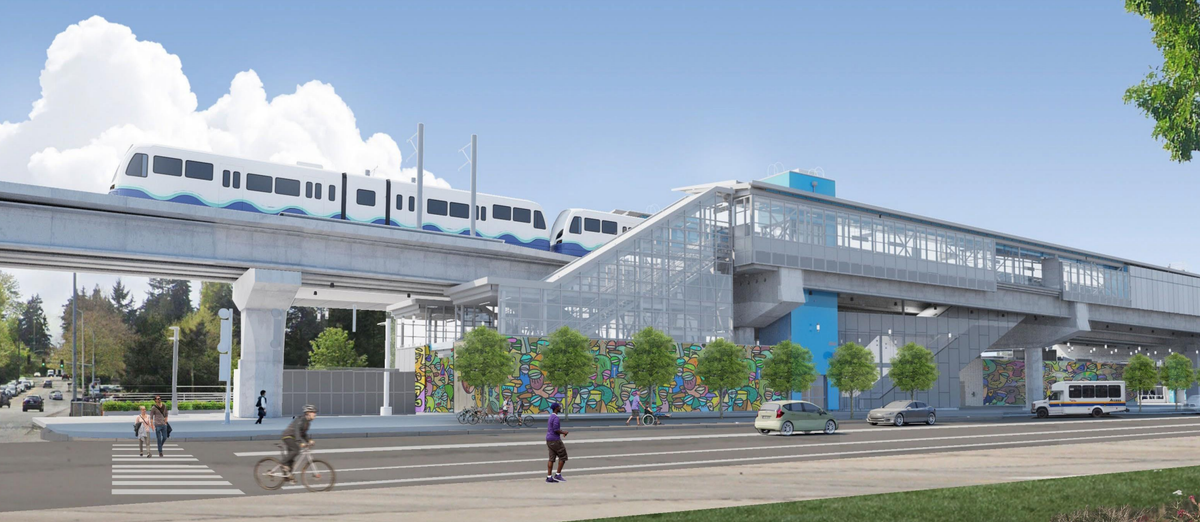
 Ryan Packer