Residents will help guide investments in Tacoma's transportation levy.
The passage of the Connect Tacoma: Safe Streets and Sidewalks levy marked a sea change in voter attitude. Just last April, a more ambitious transportation measure failed at the ballot box. But this year, the levy garnered nearly 60% of the vote in the August primary.
So what changed?
“A big lesson that the city learned between last year's failure and this year's success was not taking our community for granted and making sure to start the conversation significantly earlier with more people,” Tacoma Mayor Anders Ibsen said. “The other difference was the content. We listened to the people after last year's failure and we learned that the voters wanted something a bit more modest.”
While the failed 2025 renewal effort included no sunset clause and would have raised funding indefinitely, the 2026 measure includes a 10-year sunset.
The levy serves as a continuation of the 2015 Tacoma Streets Initiative that ended last year. The 2015 initiative, a 10-year funding measure, approved $325 million for repair and maintenance around the city, including in residential neighborhoods. The Connect Tacoma levy, which goes into effect on Jan. 1, 2027, raises $200 million over 10 years, and aims to leverage an additional $120 million through grants, investing in transportation projects that address safety, connectivity, and access issues around the city.
But this new levy also comes with several important differences, particularly when it comes to flexibility in what it can fund and the City’s decision to prioritize funding only after allowing residents to weigh in on what upgrades they would like to see. In other words, project lists are still being crafted.
Taxes continue at same level as previous levy
Funding for the 2026 levy comes from a variety of sources, but the bulk of the money — about $200 million of the estimated total — will come from a mix of utility and property taxes. But because these taxes are a continuation of the initiative voters approved in 2015, it means that there’s no actual increase, said Laura Svancarek, the executive director of Tacoma On The Go.
As a local nonprofit organization working towards a safer, more connected Tacoma by providing and advocating for mobility resources, Tacoma On The Go pushed for the levy’s passage and worked with the city on voter outreach, and Svancarek set up a community levy committee. During levy outreach work, one of the biggest concerns the organization heard from voters was that the levy would increase their taxes. With President Donald Trump’s and Israeli Prime Minister Benjamin Netanyahu’s war in Iran continuing to drive up the price of gas and groceries, voters appeared sensitive to the risk of facing further financial hardship.
“Because the renewal did not pass last year, that meant that the original levy expired at the end of 2025. So, technically speaking, this is an increase because those property taxes [temporarily] went away, and now they're coming back,” Svancarek said. “But … they are at the same rate as the previous initial streets levy. Being able to help communicate that to people was pretty significant because it's on the ballot as an increase, but it's not really an increase.”
Like the previous levy, residents will see a tax of $0.20 for every $1,000 of assessed property value, and a 1.5% earnings tax on natural gas, electric, and phone utilities. There are still exemptions for elders and people with disabilities who qualify for property tax relief programs.
The remaining $120 million will come from a mix of grant funding and partnerships. The grant funding, Svancarek said, is “the real superpower of this levy,” and the levy allows the city to leverage more grant match dollars for significant safety work on major arterials, such as South Tacoma Way.
A greater emphasis on safety and funding flexibility
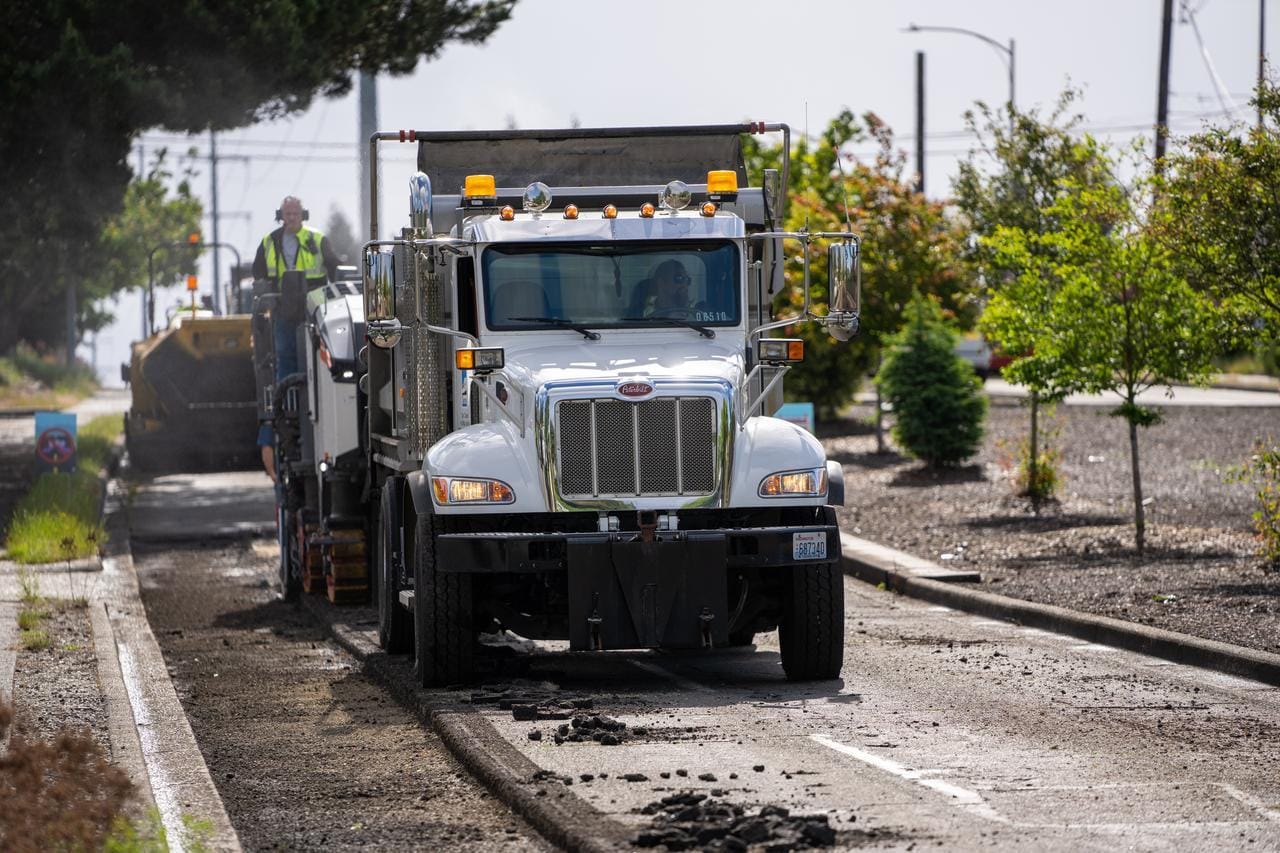
The new levy is broader in what kinds of projects it can fund. While the 2015 initiative’s wording framed funding around streets and transportation infrastructure, the new levy’s wording includes funding for maintenance work, greenways, multimodal transit, and accessibility measures.
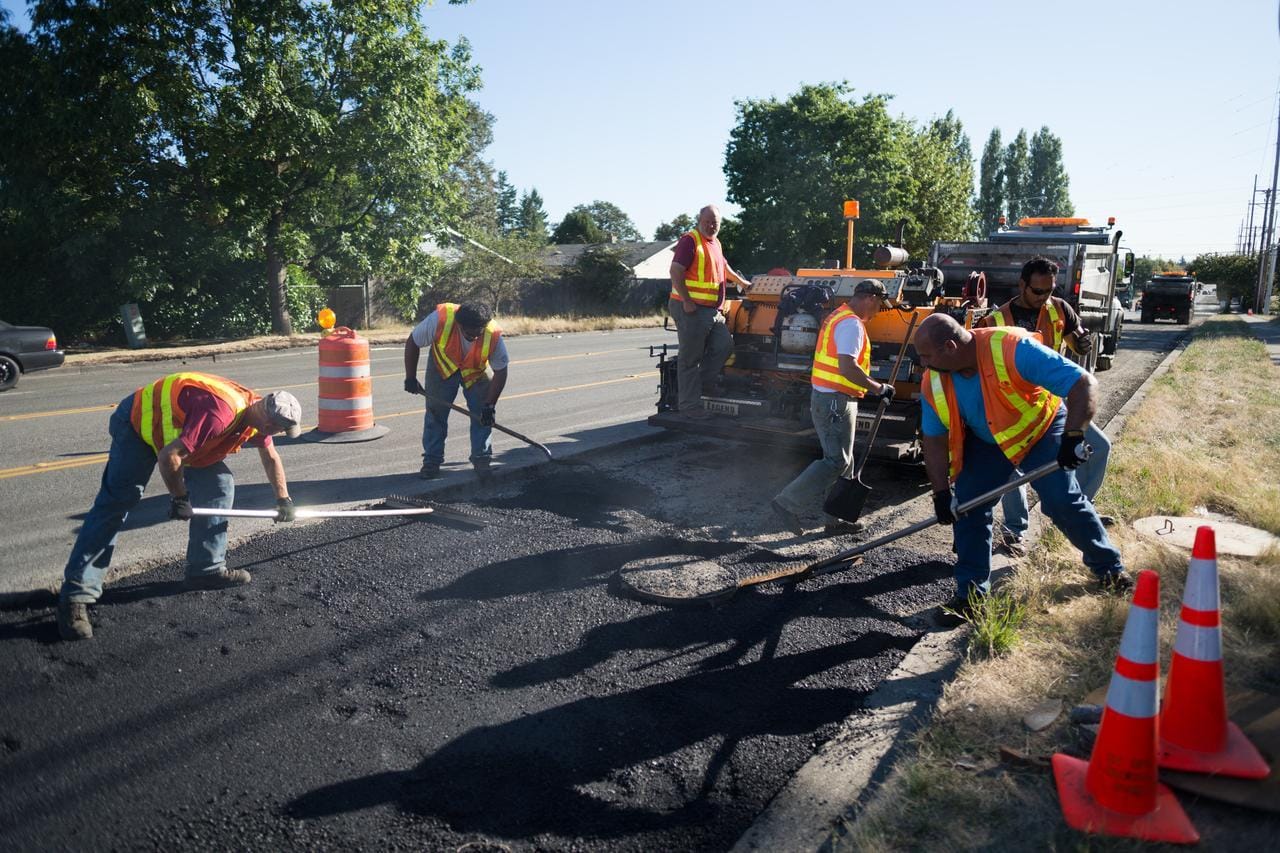
The projects the Connect Tacoma levy will fund fall into three categories: Better Neighborhood Streets, Safer Streets for Everyone, and Improved Connections.
The city estimates that about $85 million will go towards the first category, which includes residential street maintenance and improvement, and that about $159 million will go towards the second category of projects, which includes major safety and connectivity overhauls in the city’s busiest corridors and arterials. The city estimates it will allocate the remaining $76 million to the third category of projects, all of which fall under the connectivity umbrella: Americans with Disability Act (ADA) accessibility, trails and greenways, multimodal connections, and more.
But just because the city has roughly budgeted for these different categories doesn’t mean it has a priority list of projects in mind. Wrapped up in all of this work is the question of equity, especially because several areas of the city — such as Hilltop, Fern Hill, and the South End — suffered decades of redlining and neglect.
“While those covenants are gone now, we still live with the repercussions of those policies, and the decades and decades of intentional choices to not invest in neighborhoods that are primarily people of color or low-income families,” Svancarek said. These neighborhoods “face a real infrastructure deficit that the city is now working to address. [ … ] The way [this levy is] structured allows for a lot more flexibility and being able to go into those neighborhoods and fix some of those missing link pieces, finish some of those active transportation connections and be more able to address emerging safety issues than the previous levy allowed. The previous levy was very strict in what it could be used for.”
In 2018, the city developed the Equity Index, which is meant to help address and resolve disparities. The index wasn’t in place when the first levy passed, but the city used it in its outreach work, and will continue to utilize it in developing the projects the levy will fund.
While the city will not choose to, for instance, pave a street purely on equity data without considering other factors, like crashes and pavement condition, Ibsen said, the fact that “you can look at certain neighborhoods and guess where you are based on whether or not a neighborhood has sidewalks or trees [is] not a good thing.”
“You can fairly guess where you are on the basis of 'Does it have sidewalks? Does it have a curb and gutter? Does it have street trees?' [ … ] There is a 10 to 15 degree difference during heat waves in the North End versus the South End,” he said. “To not consider equity would be a grave disservice to our city. Over half of us live south of 6th Avenue, so it absolutely has to be a factor.”
The City said it does not intend to ignore Tacoma’s most dangerous streets, which leaders and staff say are well identified in traffic data. While it’s not among the most dangerous cities in the state for pedestrians and bicyclists, Tacoma continues to have a high fatal crash rate. Last year, 118 pedestrians were involved in crashes. Most of these people were injured, and three of them died. In 2024, 15 pedestrians died in crashes.
In addition to its Equity Index, the City will also be utilizing its six-year Comprehensive Transportation Program and its 20-year Transportation and Mobility Plan, pointing to a need to address the maintenance backlog and get “the most bang for our buck.”
“There is an order of magnitude of cost to rebuilding a completely failed street versus taking a street that's in the middle of its life and adding more life to it,” Ibsen said.
No specific projects — yet
In passing the 2015 levy, voters told the city that they largely wanted the city to focus on residential streets. But based on voter feedback, that is not necessarily true this time around, and assuming that voter accountability stops at the ballot box would be a mistake, explained Public Works Director Ramiro Chavez.
Within the context of resident choice, Chavez explained, the City is in the process of developing a work plan based around the three categories the city designated for levy funding allocation. Staff will present a plan to Tacoma’s Infrastructure, Planning, and Sustainability Committee for feedback around mid-to-late October. He said that he hopes the City will be able to start incorporating specific projects in the late autumn, but also noted that some of those projects may not fit neatly into a 10-year plan, due to the possibility that certain projects’ conditions — particularly when it comes to finances — could change in that time.
“Much of those transportation dollars [do] not directly come from the City. [They come] from the federal and state governments in the form of grant money,” Ibsen explained. “If we had a fixed amount of projects that we said [are] immovable, we can't change anything in 10 years, then that would not only make us incredibly inflexible for opportunities that may come up, but it would deny the community to have any real voice [versus] if we are nimble and we focus our dollars on having great designs at the ready so that our engineers can immediately take advantage of grant opportunities.”
The City also included a program within the levy aimed at accessibility and connectivity fixes, which specifically focuses on ADA improvements, Tacoma’s Safe Routes to School program, sidewalk repairs, and enhancements for people who choose or who have no choice but to get around without a car by walking, rolling, biking, or taking public transit.
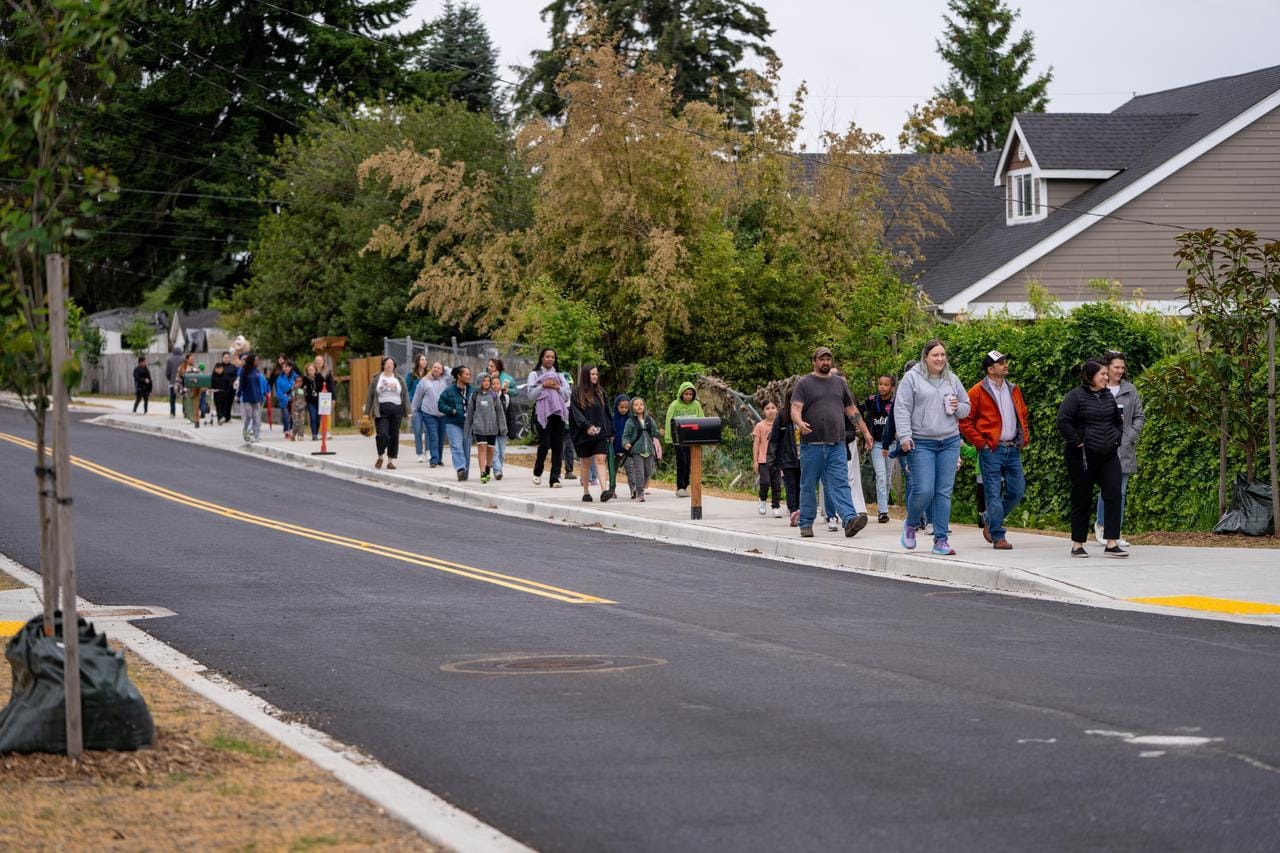
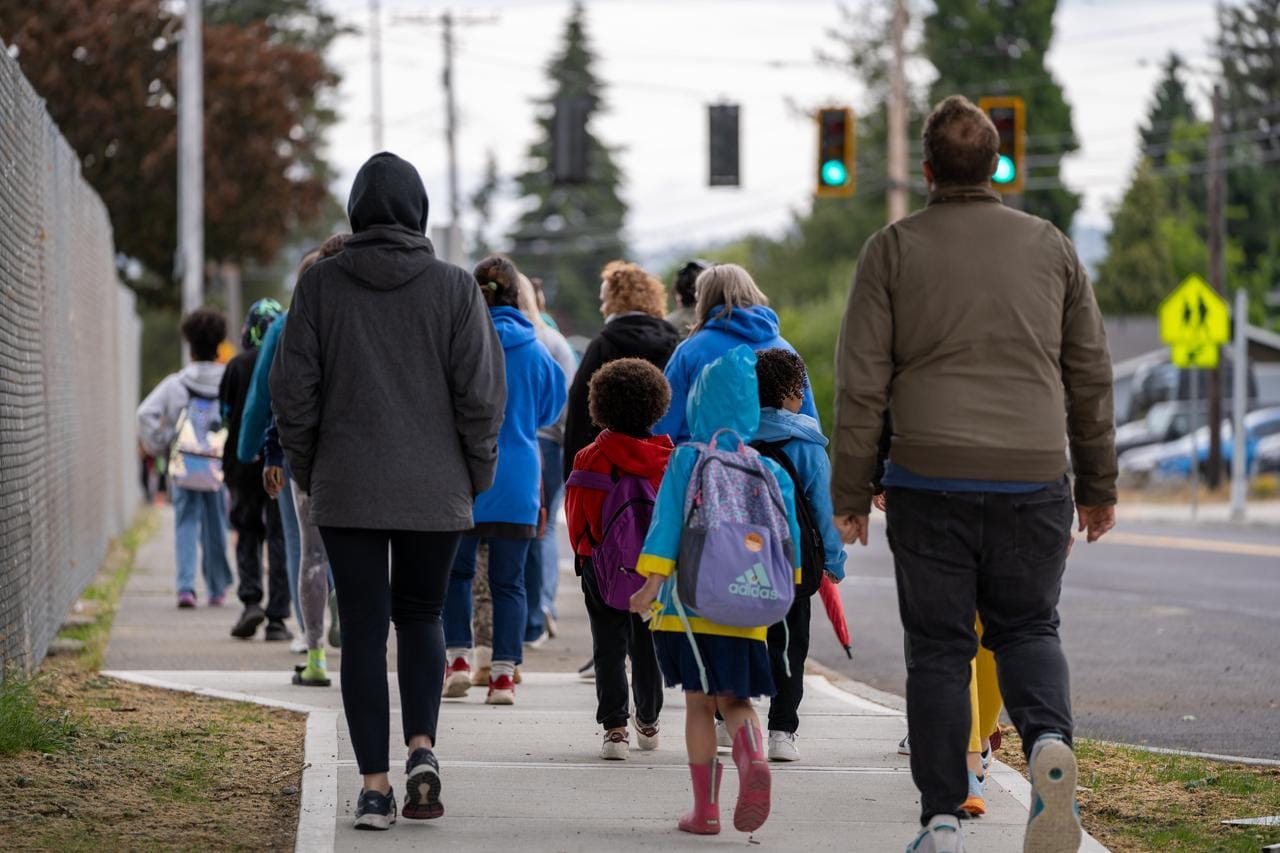
In 2017, in partnership with area schools and community organizations, the City launched its Safe Routes to School program. Chavez said that, at this point, Tacoma doesn’t have any locations picked out — “we need to take a little more time as to how we coordinate with the school district, the specific schools, and start identifying what are the specific needs or the gaps” — but that the passage of the levy allows the City to pursue grant opportunities that require local matching dollars. Those matching dollars will come from the levy.
Tacoma is also in the middle of finalizing what is known as its “transition plan,” which is an assessment of all ADA accessibility needs across the city, such as where the city might need to install ADA-compliant ramps or street curbs.
“It may be [that there are] already some existing ramps in the city, as we have all over the place. But [ … ] some of those ramps maybe were built to old standards, maybe 15, 20 years ago, and [by] today's standards [don’t] meet the ADA requirements,” Chavez said. Every new project will also have to be ADA-compliant. Chavez said that the City hopes to finalize that plan early next year.
Increasing tree cover
The city is also using the levy to pursue its tree canopy cover goals, which target 30% tree canopy cover by 2030 — the ratio is around 20% as it stands. While funding for tree cover isn’t directly addressed as part of the overview of any of the three categories, Chavez said that tree cover is actually part and parcel of a safe street or sidewalk. For one, trees provide shade and shelter — and, as Ibsen noted, some places in the city can be 10-15 degrees hotter than others. Trees can also create a more welcoming environment for pedestrians.
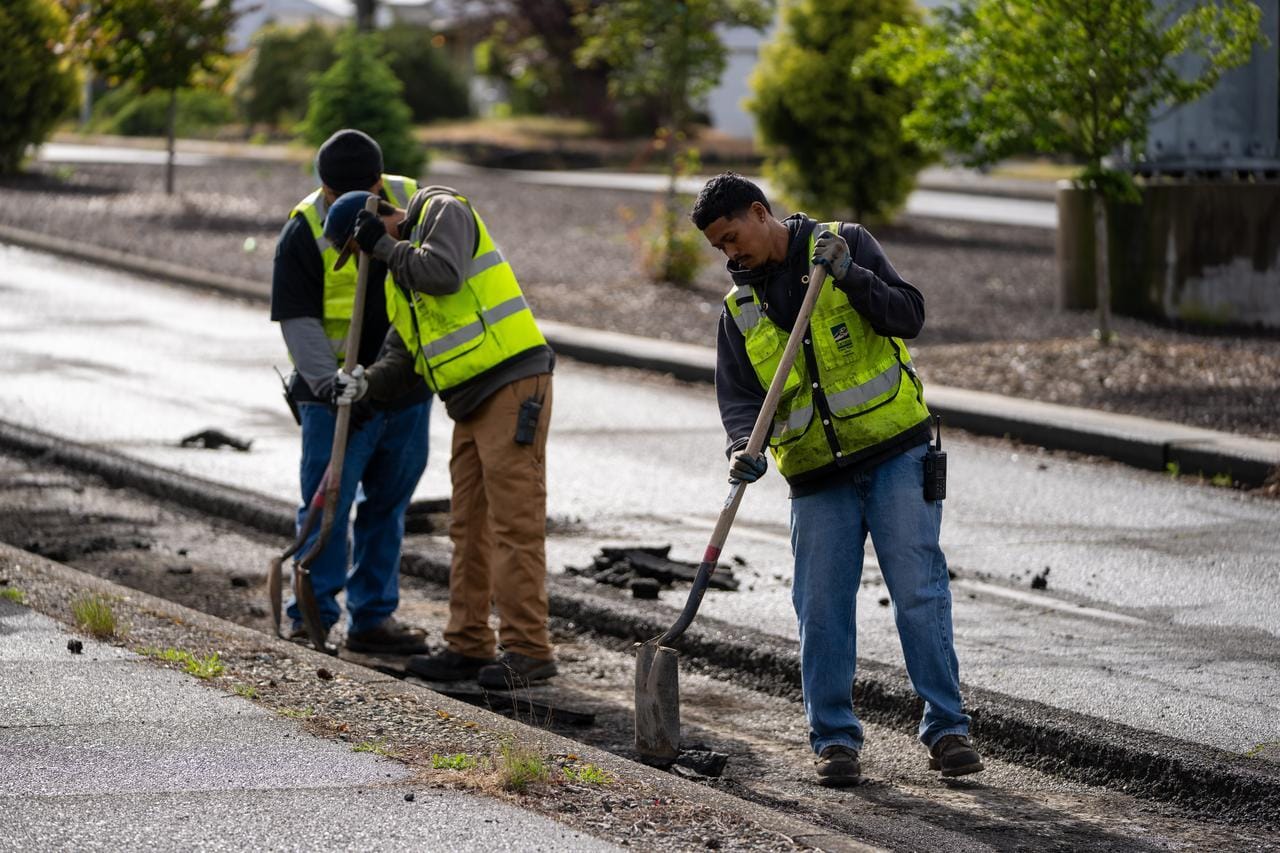
But this doesn’t mean the city can just plunk a tree down anywhere in Tacoma and call it a day.
“We have to make sure that we put the right trees at the right location. Over time, trees have been planted across the city, and some instances may not necessarily be the right kind of trees, because they have an effect on the sidewalks,” Chavez said. “Those trees that we may plant may serve a stormwater component, depending on the solutions for the stormwater. [ … ] It's creating that inviting environment, where [ … ] we need the intent of traffic circulation, but also the pedestrians and bicyclists are part of that.”
Chavez also noted that the City is looking into de-paving some areas, and just received a grant from the Department of Ecology to depave some of the medians along S Union Avenue.
“What we're going to be doing in depaving is taking the asphalt or the concrete out and then we'll start planting trees,” he said. “So that is another strategy that we're going to be contemplating down the road because Tacoma is a built environment and there are a lot of paved areas. We're going to have to see what areas [would] be conducive to depave and replant trees in those areas.”
Future plans
Ibsen said that one of the highlights of the levy is that it gives leaders both “a measurable time frame” and “enough flexibility to chase after grant dollars.”
“This is dedicated money that we will always have lockboxed away towards transportation, which allows our engineers to very strategically focus on having great designs ready to go,” he continued, “and that means that when we apply for grant dollars, which most capital projects, like major resurfacing, major arterials, major connections, [are] going to have to involve [ … ] we have a huge leg up over a lot of the competition [for those grants] because we've already paid for those designs with local dollars.”
But the source of these funds isn’t going to be available forever, given the levy’s 10-year sunset.
“Something I'm endeavoring to do is gathering the same people that we worked with in the initial outreach [ … ] and having some sort of permanent brain trust of these smart people who have a direct stake in the success of this, and making sure that we're permanently baking in their recommendations, their oversight, into how we're spending the money,” Ibsen said.
The mayor also highlighted that he wants the City to keep working on how it prioritizes projects, and how it can encourage housing development in key neighborhoods and continue to build connections and mobility in industrial centers and certain downtown areas “that can really use a shot on the arm, like around [the University of Washington] - Tacoma.”
Most importantly, Ibsen said, the city’s future plans, as he sees them, “have a lot less to do with asking for money and a lot more to do with continuous engagement. That's one of my chief ambitions with this measure [ … ] that we're making engagement the norm rather than just something that we do on a 10-year basis.”
 Doug Trumm
 Carolyn Bick