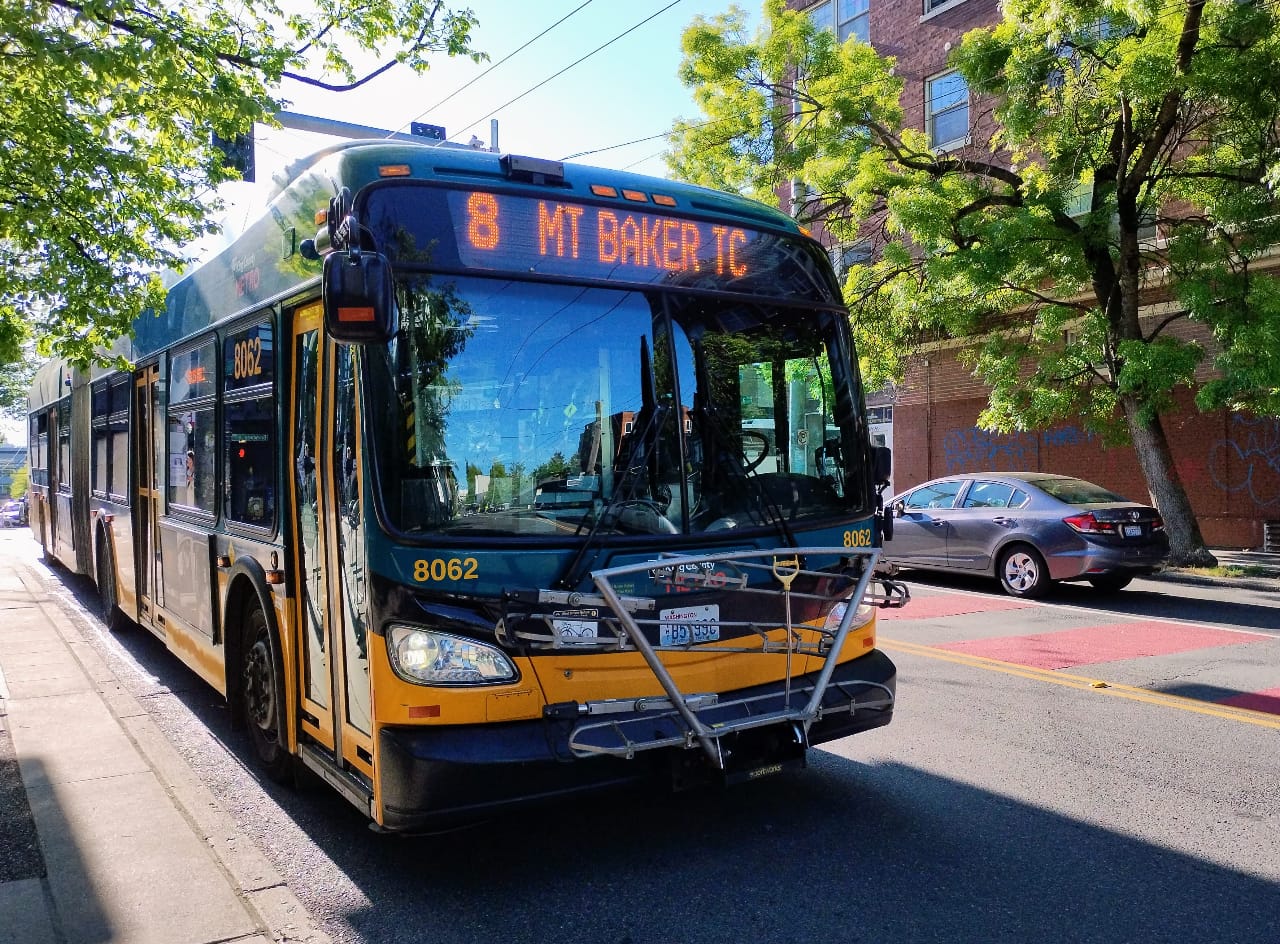
King County Metro's next service change is less than four weeks away, and it's a doozy. After holding off on major changes to the bus network until after the FIFA World Cup, Metro will implement adjustments to increase access to light rail stations across the region. Eight existing bus routes will be retired, replaced with eight new ones and two new Metro Flex zones, with more than 3,000 bus trips added every week compared to service levels being provided today.
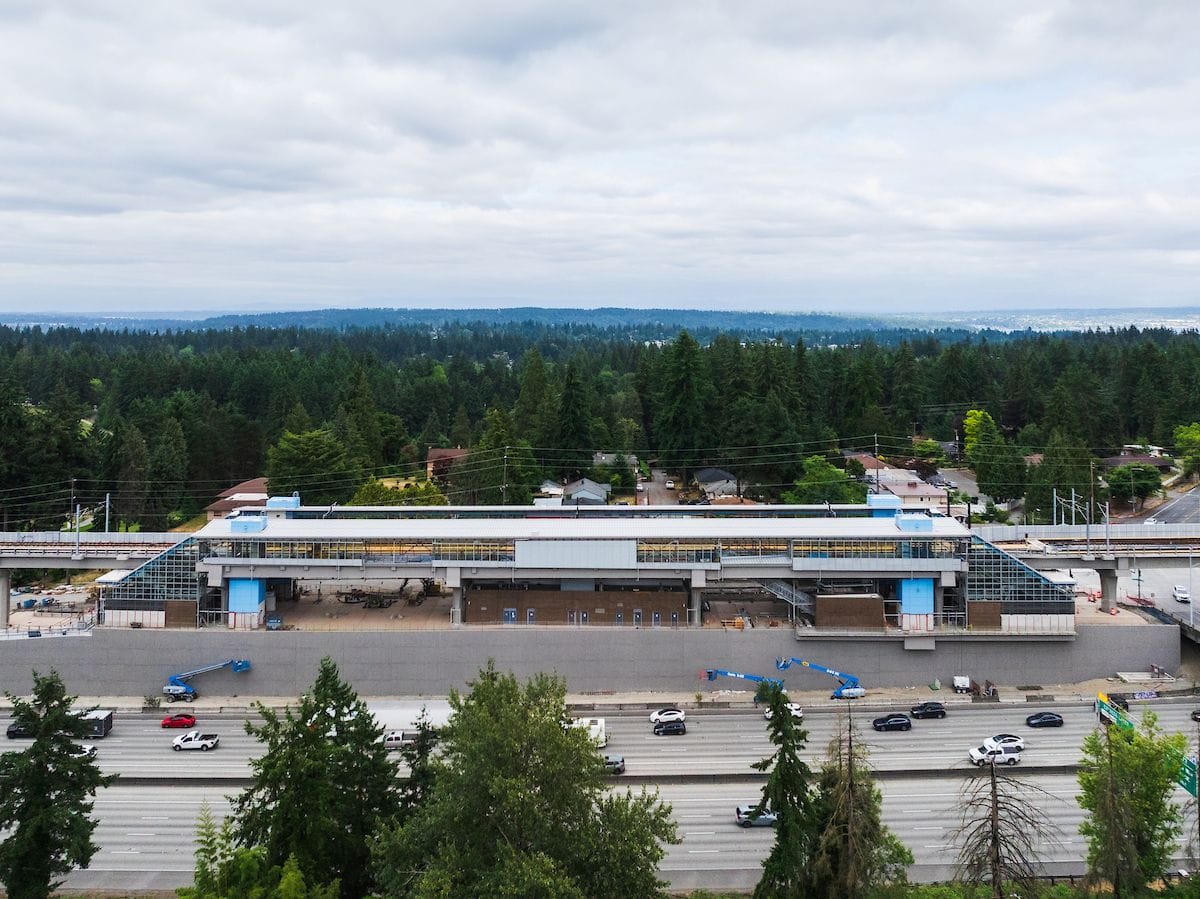
The route adjustments on deck were all approved by the King County Council at different times, as part of area-wide restructures planned in conjunction with Sound Transit light rail extensions to Lynnwood, Federal Way, and Redmond. Later this year, Sound Transit will also open its station in Pinehurst at NE 130th Street, providing riders with another option for light rail access between Northgate and Shoreline.
“Across King County, Metro bus routes connect communities to dozens of light rail stations, extending the reach of public transportation farther than ever before,” Metro General Manager Michelle Allison said in a statement timed with the release of new bus schedules earlier this week. “When buses link up with light rail, it doesn’t just make trips easier—it helps connect people. Strong transit connections bring neighborhoods closer, make everyday travel simpler, and give everyone a clear path to reach the places they want to go.”
On top of the route adjustments, Seattle transit riders will see additional service on the Route 8, 72, 75, and 77 thanks to investments from the Seattle Transit Measure. Voters in city limits will have a chance this fall to keep those expansions coming, with a beefed-up, 10-year renewal of the measure proposed by Mayor Katie Wilson and unanimously approved last month by the Seattle City Council appearing on November ballots. Those increased dollars will fund an additional 100,000 trips per year on city streets, with a focus on night and weekend service.
The added Route 8 service will boost frequencies from every 15 minutes to every 12 minutes throughout the day. They are set to happen at the same time that the Seattle Department of Transportation (SDOT) makes major changes to Denny Way that will improve the reliability of that route, another major priority of Wilson's.
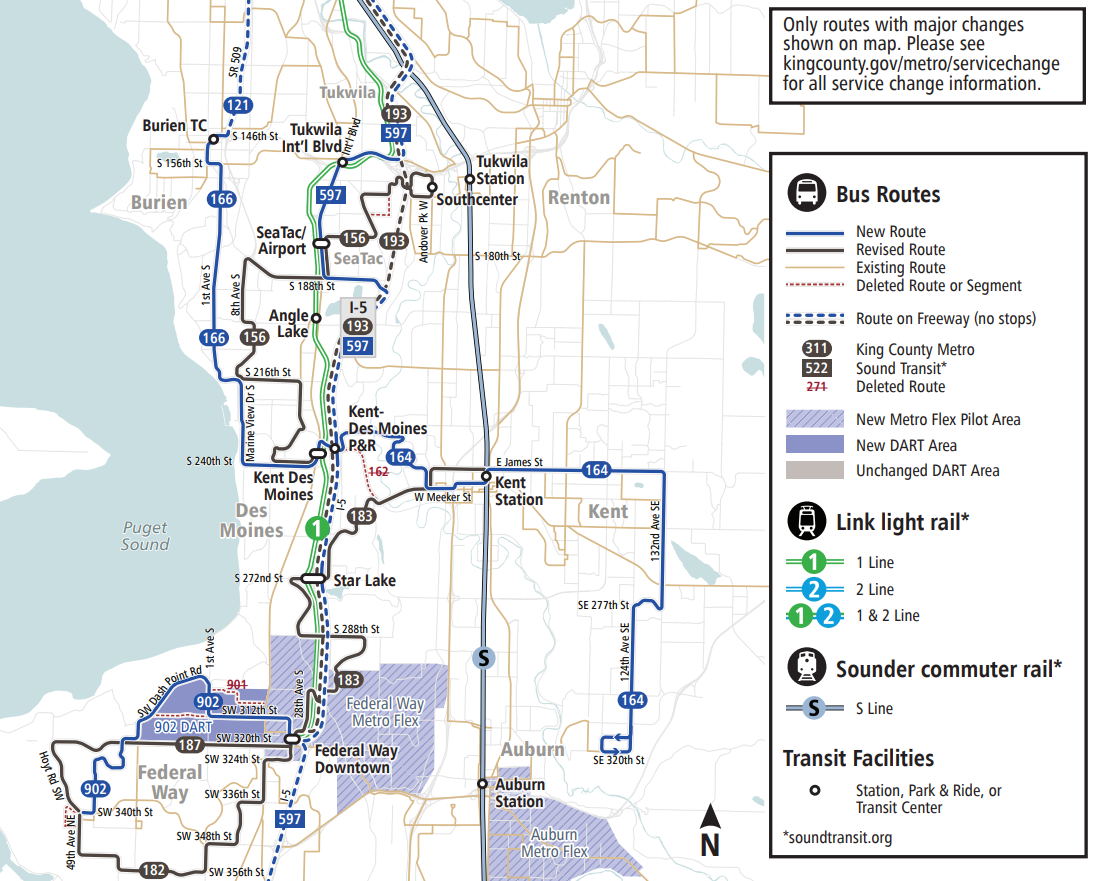
But the biggest changes this year will happen in South King County, where weekend service levels are set to jump by 72% and weekday levels by 51%, as Metro both adds new service and reallocates service on retired routes to better connect to Link stations instead of going to Downtown Seattle. Around 8,500 riders are already using Kent-Des Moines, Star Lake, and Federal Way Downtown station every day – with Federal Way seeing the lion's share of those riders – before the bus restructure was even implemented.
Among the biggest changes on deck: the elimination of the long Route 165 in favor of two new routes, the 166 between Burien Transit Center and Kent-Des Moines Station and the 164 between Kent-Des Moines Station, Kent, and Auburn. Route 183 between Kent and Federal Way will see Sunday service for the first time, along with expanded Saturday hours, and the RapidRide A line will ramp up overnight frequency to every 30 minutes.
In Federal Way, the DART 901 will be replaced with the 902, providing service to Twin Lake, and Metro will add a new Metro Flex zone – providing on-demand van trips – to a swath of areas around Federal Way Downtown station on either side of SR 99. Another Flex zone will go into place around Auburn Station.
In North King County, riders around Lake City, Lake Forest Park, and Kenmore will see the biggest adjustments. Metro will retire Route 372 between the University of Washington and Bothell, providing riders on Lake City Way with the new Route 77 through Pinehurst and the Route 72 to Shoreline South Station. Lake Forest Park riders will have to switch to the 331, which will be extended to UW Bothell to the east in addition to terminating at Mountlake Terrace Station.
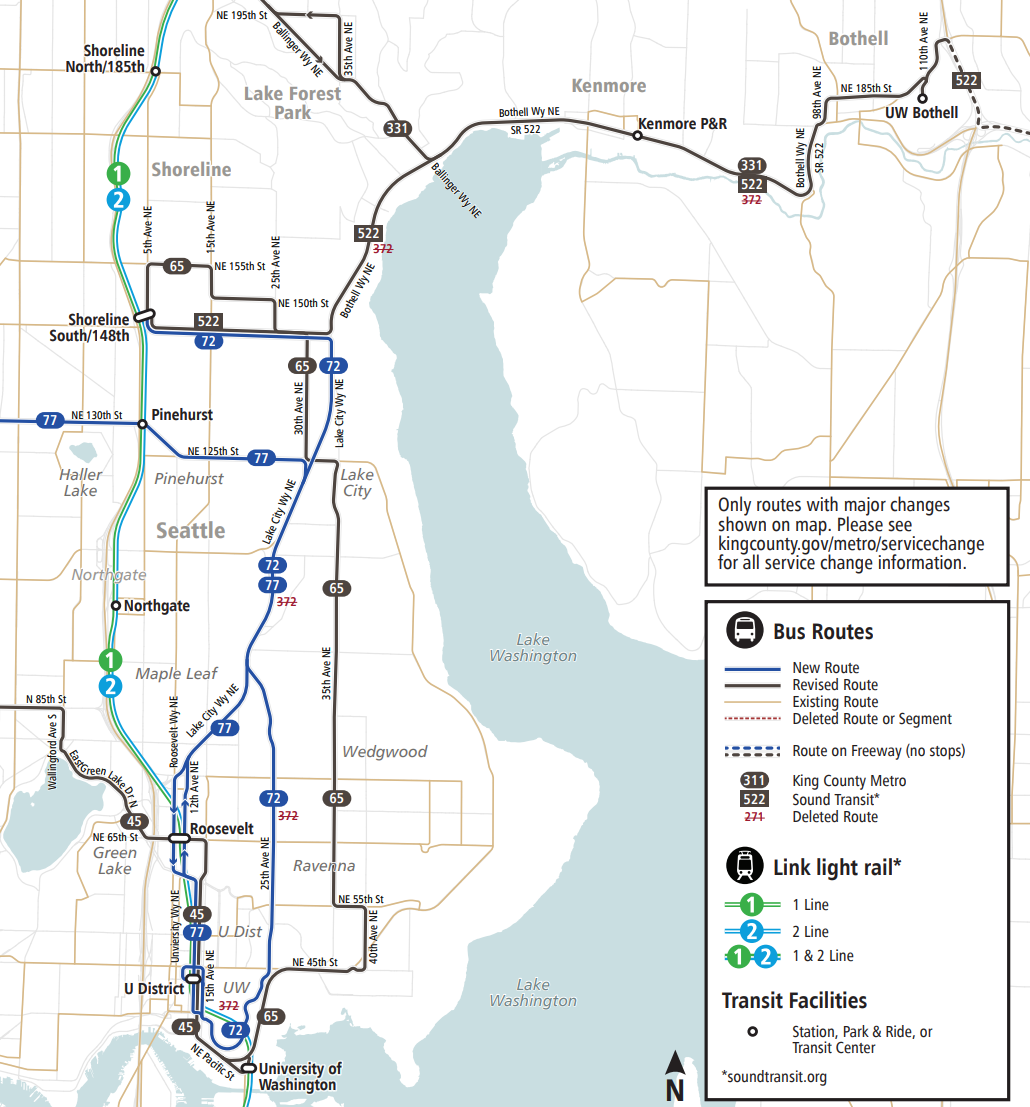
Those changes have proven controversial, with the Lake Forest Park City Council recently advancing a letter urging Metro to reconsider eliminating the 372, a move that would require the County Council to reconsider its entire route restructure plan in the area. That letter was signed onto by both the Kenmore and Bothell councils as well, as well as some of the biggest transit advocacy groups in the region, but it's unclear if their push will be able to gain traction without a direct intervention by King County Councilmembers.
On the Eastside, Metro will finally truncate the circuitous and unreliable 271, creating the 270 between the University District and Bellevue. Local service between Bellevue and Issaquah will instead be provided by the 203 along Newport Way, with the new Route 220 also providing riders another option between Downtown Bellevue and Eastgate.
The Route 269 will be extended to provide Sammamish riders with a direct connection to Mercer Island Station, with much more service added to that route, though riders in the Issaquah Highlands will lose their direct connection to Issaquah Transit Center.
But perhaps the biggest change planned on the Eastside is the new Route 215, which will provide the Snoqualmie Valley with a direct connection to light rail, on top of significantly expanding the operating hours of the current 208 to Issaquah Transit Center. That route doesn't operate at all on Sundays, leaving riders in North Bend and Snoqualmie with no service.
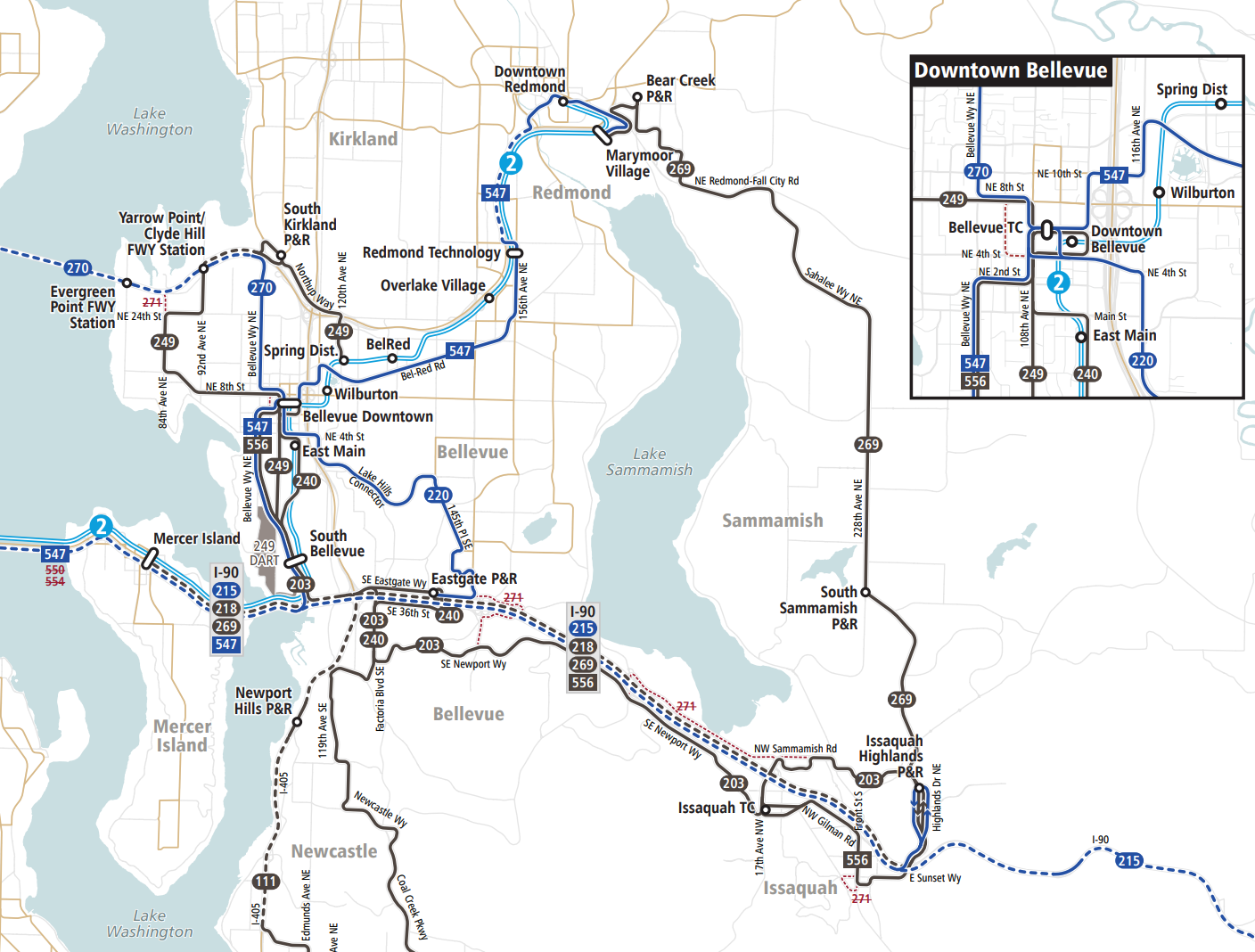
On top of all of these changes at Metro, Sound Transit is also making some significant adjustments of its own, also starting August 29. The Route 550 between Seattle and Bellevue will be retired, given its duplication with the 2 Line, and the Route 554 to Issaquah will be replaced with an all-day 556, terminating in Downtown Bellevue. While Issaquah riders will lose their one-seat ride to Downtown Seattle, they will gain additional bus frequency, with much more service expected later into the evening than they had before.
Sound Transit will stop running the 586 between Tacoma and the University District, and retire the 515 between Lynnwood and Downtown Seattle. The 522 will switch to serving Shoreline South Station instead of Roosevelt, and serve Woodinville on every trip instead of every other one.
Sound Transit plans new bus routes as well. The current 570 providing overnight service between SeaTac and Downtown Seattle will be converted to the 597, and extended all the way to Lakewood. Another overnight bus route between Redmond and Downtown will also start service, the 547, giving riders on the Eastside another option to be able to stay out late and take transit home. Due to staffing constraints at Community Transit, the overnight bus between Everett and Downtown Seattle, planned as part of the same network, isn't yet at the point of launch.
With so many changes on deck for riders, the adjustments will likely take some getting used to, but ultimately all move the region in the direction of being able to provide the most frequent service to the highest number of riders, leveraging the investments that have already been made in the light rail network.
 Ryan Packer
 Ryan Packer