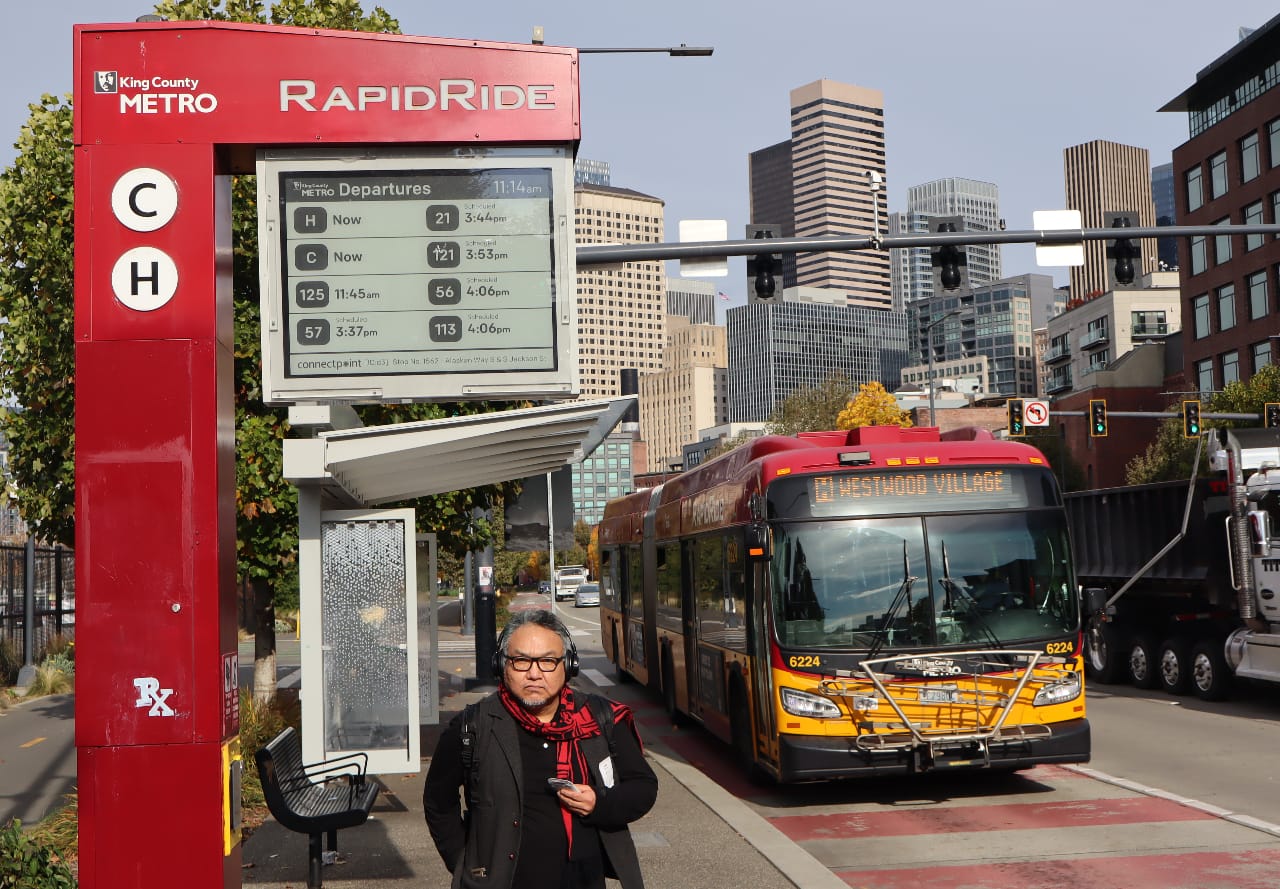
Bus riders in Seattle and Pierce County are poised to see increased transit service in the wake of successful funding measures, with early returns showing strong voter support in both jurisdictions. Seattle's transit measure, which renews an existing sales tax measure supplementing King County Metro service, is ahead with 72.5% of the vote, while the funding measure for Pierce Transit is leading with a very respectable 57.7%.
Both propositions will bump up the local sales tax rate by 0.3% to fund bus service, with Seattle's measure set to enable nearly 100,000 more King County Metro bus trips every year on top of the 180,000 currently provided. It would also continue funding existing transit-related programs, including streetcar service and a major expansion of the number of subsidized ORCA transit cards provided by the City of Seattle.
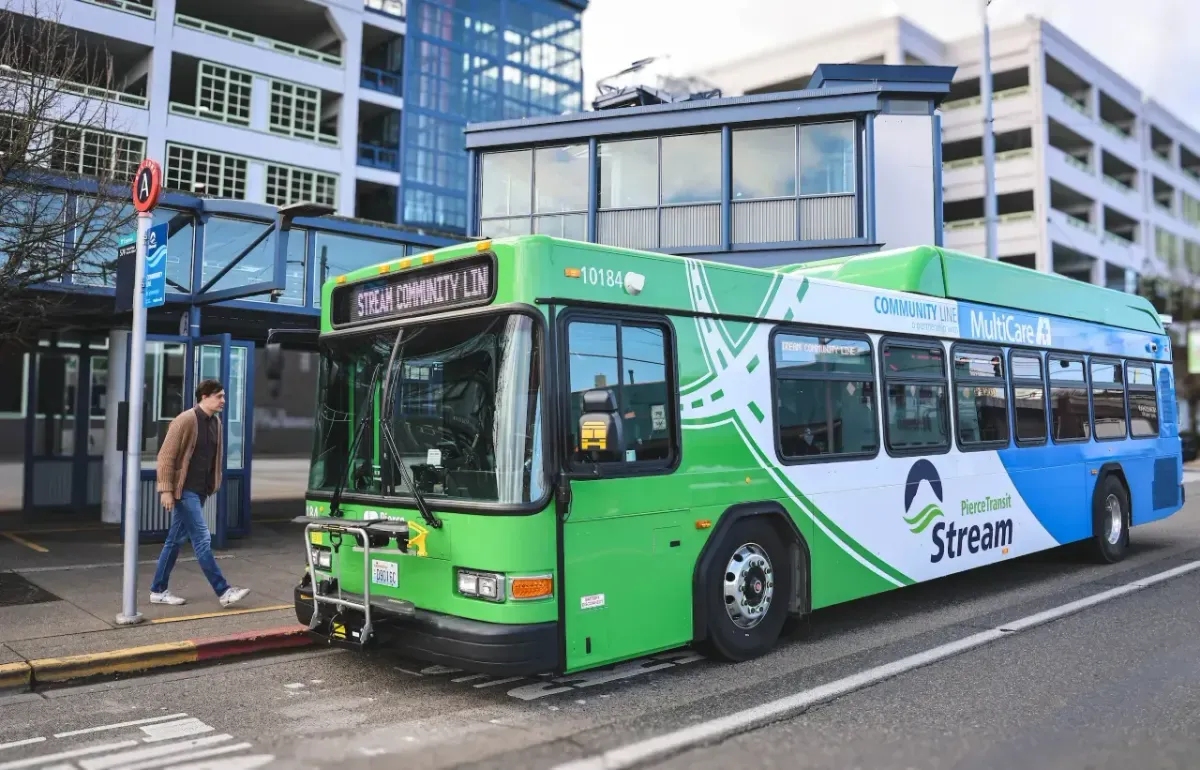
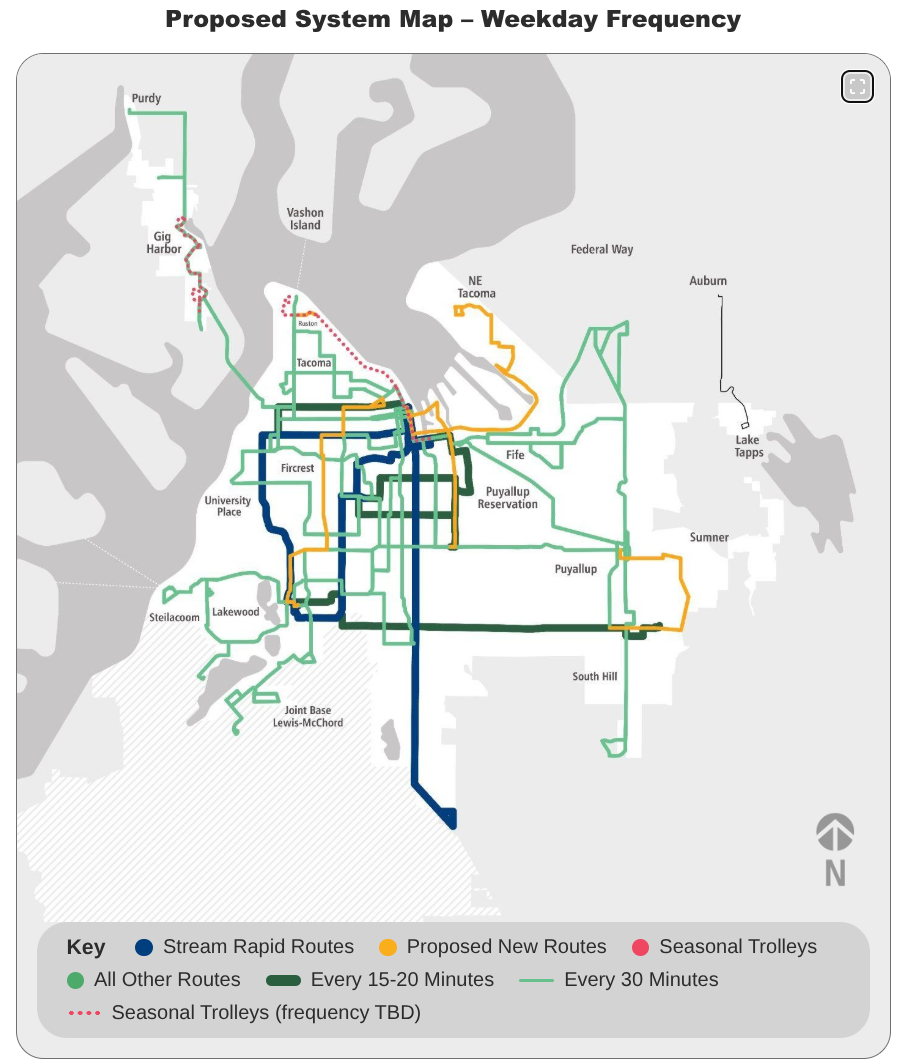
Pierce Transit's measure will bump up service by nearly 50% compared to the levels seen today, expanding hours of operation and frequency across the entire network along with adding four brand new bus routes. It will also enable the agency to eliminate fares for seniors, building on the existing statewide free youth fare program.
A new direction for Pierce County
A success at the ballot box in Seattle was all but assured, given the track record of the existing Seattle Transit Measure, which has been in place since 2014. The 2020 renewal passed with 80.3% of the vote, a nationwide record for a transit funding measure that has still never been surpassed. But for Pierce Transit, things were much less less certain in terms of going to the voters for more funding.
Serving Tacoma, Puyallup, Lakewood, University Place, Spanaway and Gig Harbor, Pierce Transit has been operating at a lower funding level than other peer agencies across the region for decades. A pair of defeated measures in 2011 and 2012 led to substantial service cuts and a contraction of the agency's total service area.
Those defeats ultimately led to a reluctance to head back to the ballot that was overcome this year, prompted by strong polling and high expected turnout during a midterm election.
The results are a major source of vindication for Pierce County's elected transit champions, including Tacoma City Councilmember Kristina Walker and Pierce County Executive Ryan Mello. Mello has been clear about the need to expand transit access in Pierce County since being elected in 2024, taking over after eight years of Republican leadership.
"For me, what it means is finally having a transit system that will connect more people to opportunity, to run their life and the essentials of their life," Mello told The Urbanist in an interview Wednesday morning. "So many of the things that I'm working on: connecting people to opportunity, connecting people to jobs, getting to school, after school programs to keep people safe, connecting vulnerable community members to healthcare and other services — the common barrier, time and time again, is transportation."
The 47% increase in service will be phased in by the early 2030s, ending the era of the hourly bus on the Pierce Transit network. The number of bus routes that operate every 30 minutes will jump from 18 to 24, with seven routes going to 15-20 minutes – frequency boosts that will represent a game changer for access across Pierce County.
Mello told The Urbanist that the 15-point margin on election night was a pleasant surprise.
"I was prepared for a much closer margin. I know we ran a really good campaign. I know we had a really clear message about what we were going to deliver, but you know, it's a tax measure in this economy, in this significant sense of uncertainty, there was a lot of concern about: would voters still be willing to invest in themselves and our community in this way," Mello said. "But they they surely see the value of making sure that more people can get access to opportunity, and I'm so proud of my neighbors for seeing the power of transit to connect more people to opportunity."
A win for a former transit organizer
The passage of the Seattle Transit Measure Tuesday night notches a major win for Mayor Katie Wilson, who proposed doubling the existing 0.15% sales tax rate to 0.3%. Though that move was met with a hand-wringing over cost impacts that hasn't been seen with other sales tax bumps – including a 0.1% increase for public safety investments approved last year by her predecessor Bruce Harrell – Wilson made the case that increasing access to transit will outweigh the sales tax bump when it comes to the affordability impact for city residents.
The voters seem to agree.
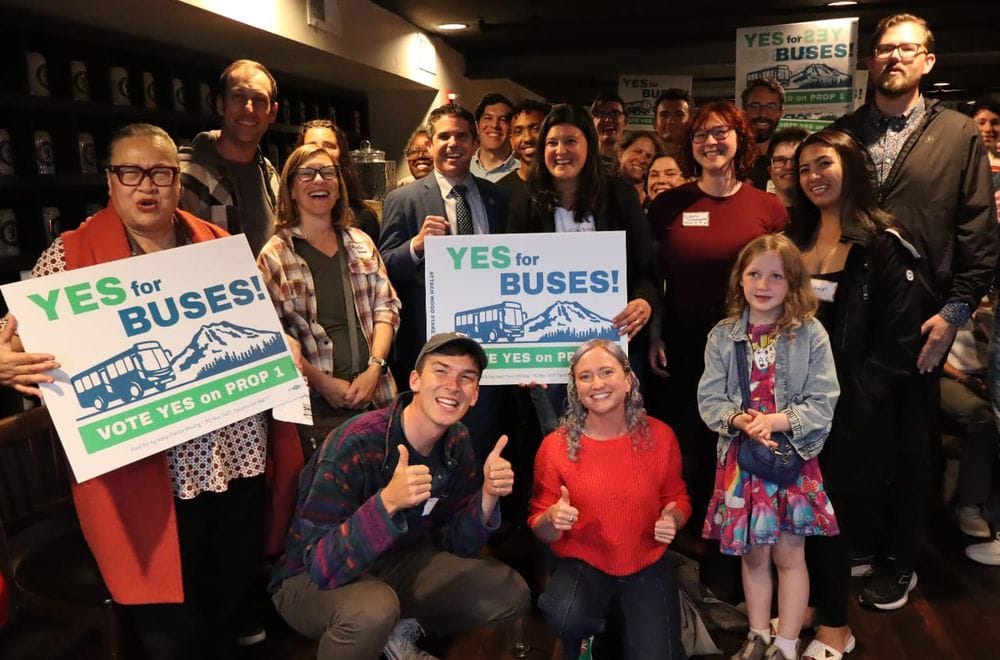
"I just want to drive home the point that this is an affordability measure, and when gas is $6 a gallon, when the price of car ownership has never been higher, this measure – fast, frequent bus service, is going to allow more people, more households around our city, to get around on a most affordable mode of transportation," Wilson told transit supporters gathered at a Proposition 1 party in Pioneer Square. "And we are not going to stop until Seattle's transit system is irresistibly good."

Wilson was clearly in her element Tuesday night, with the win representing a full circle moment. Prior to being elected Mayor, Wilson led the Transit Riders Union, an organization that got its start advocating for transit funding in Seattle. In 2011, Wilson helped to launch the Save Our Metro! campaign to push against pending Metro service cuts stemming from the Great Recession. After those cuts were averted with a $20 car tab fee approved by the King County Council, the group pivoted to other transit fights including a push for a countywide low-income fare program.
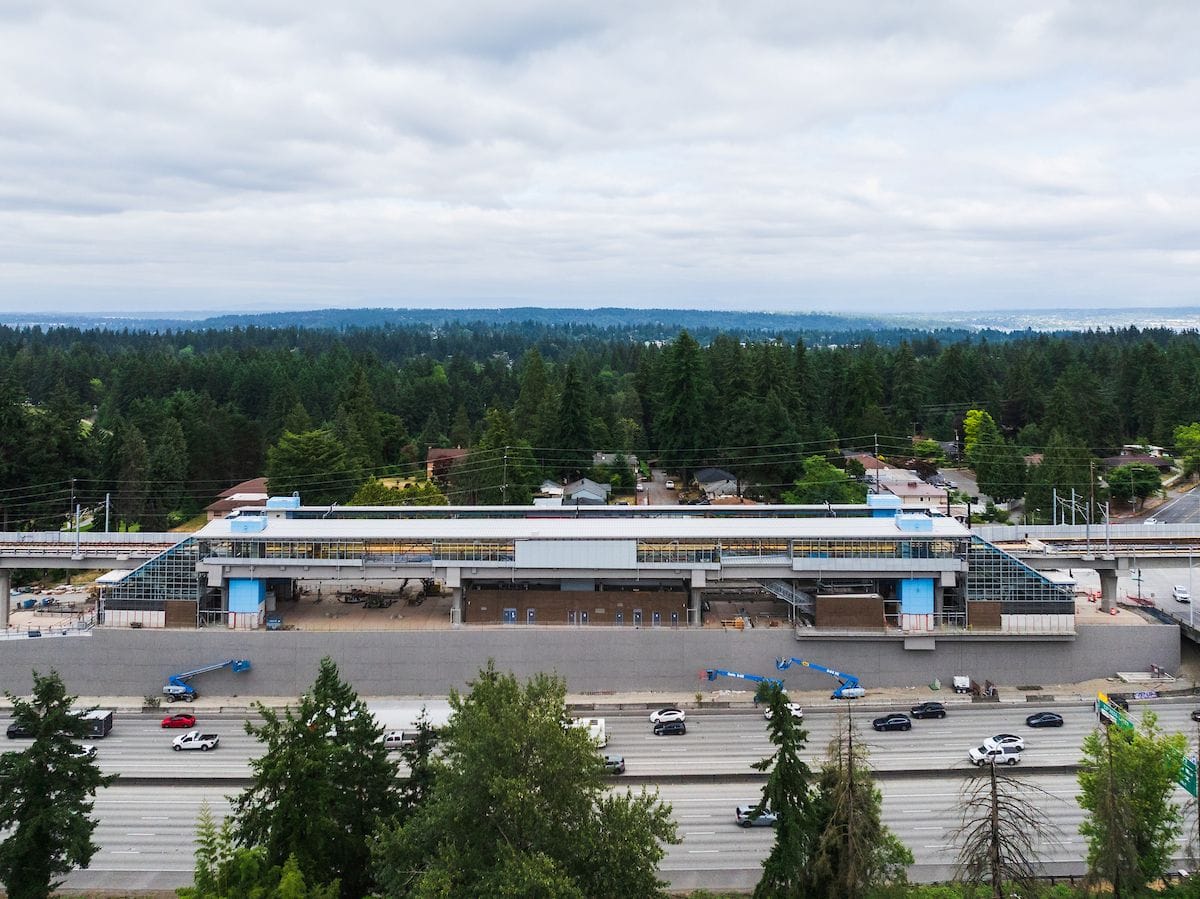
"Seattle is not just a great transit city; it is the great transit city. And tonight shows us that that is still true," Wilson said. "This year has been a banner year for public transit in our city and our region. We've had some of the highest rebounding ridership in the country. We have opened up some of the most ambitious capital infrastructure anywhere in the U.S. We now have a light rail station that has the highest ridership of any light rail system in the whole entire country."
With the 2 Line now crossing Lake Washington, Sound Transit has surpassed 160,000 daily boardings, making it the most-ridden light rail system in the country.
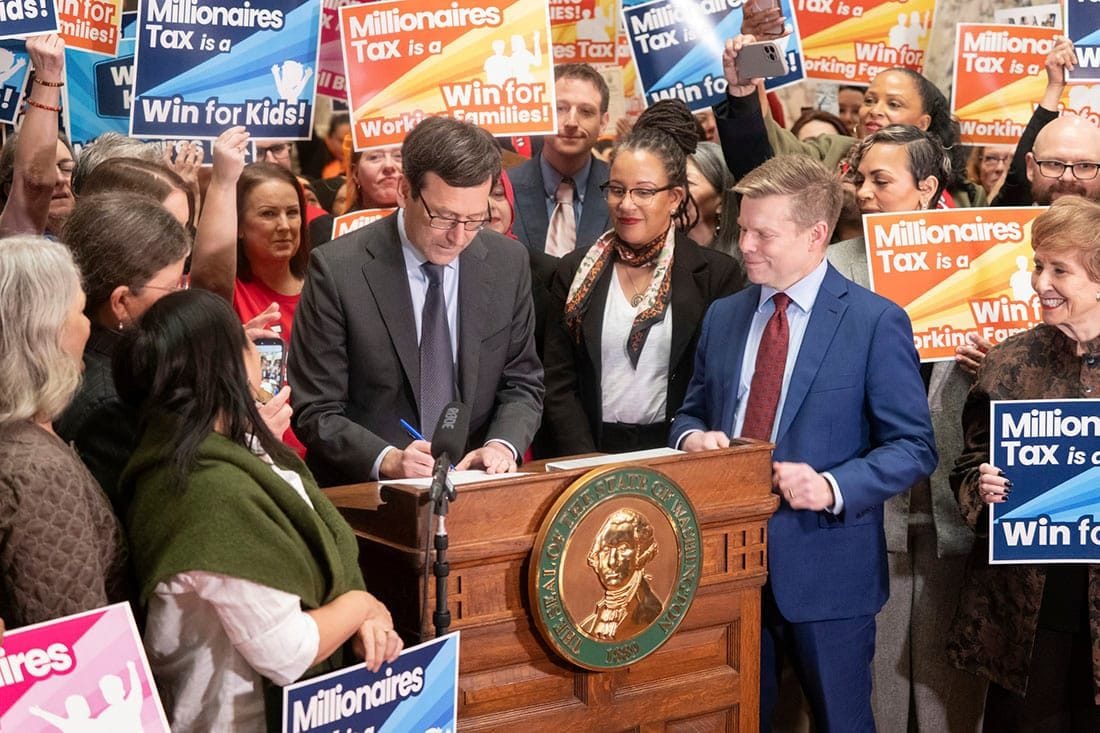
With Seattle largely maxing out its transit funding capabilities with this renewal, attention is set to turn to King County Metro, which will be buoyed by this funding but still in need of a more sustainable long-term funding source to keep the agency stable. The millionaire's tax voters also upheld Tuesday means even less sales tax funding will be flowing into Metro's coffers at the end of this decade than had been expected, due to planned sales tax exemptions. King County Executive Girmay Zahilay will have to start to address a looming budget shortfall by next year's biennial budget.
"Seattle and King County residents deserve safe, affordable, and world-class transit. Renewing the Seattle Transit Measure reflects voters’ commitment to stronger, more connected communities by adding thousands of hours of Metro service, expanding early morning and late-night service, and providing free transit passes to more students, working families, and low-income residents," Zahilay said in a statement after the results dropped. "This historic investment will help Metro reach more communities and ensure more people have a sustainable, affordable, reliable way to get where they need to go."
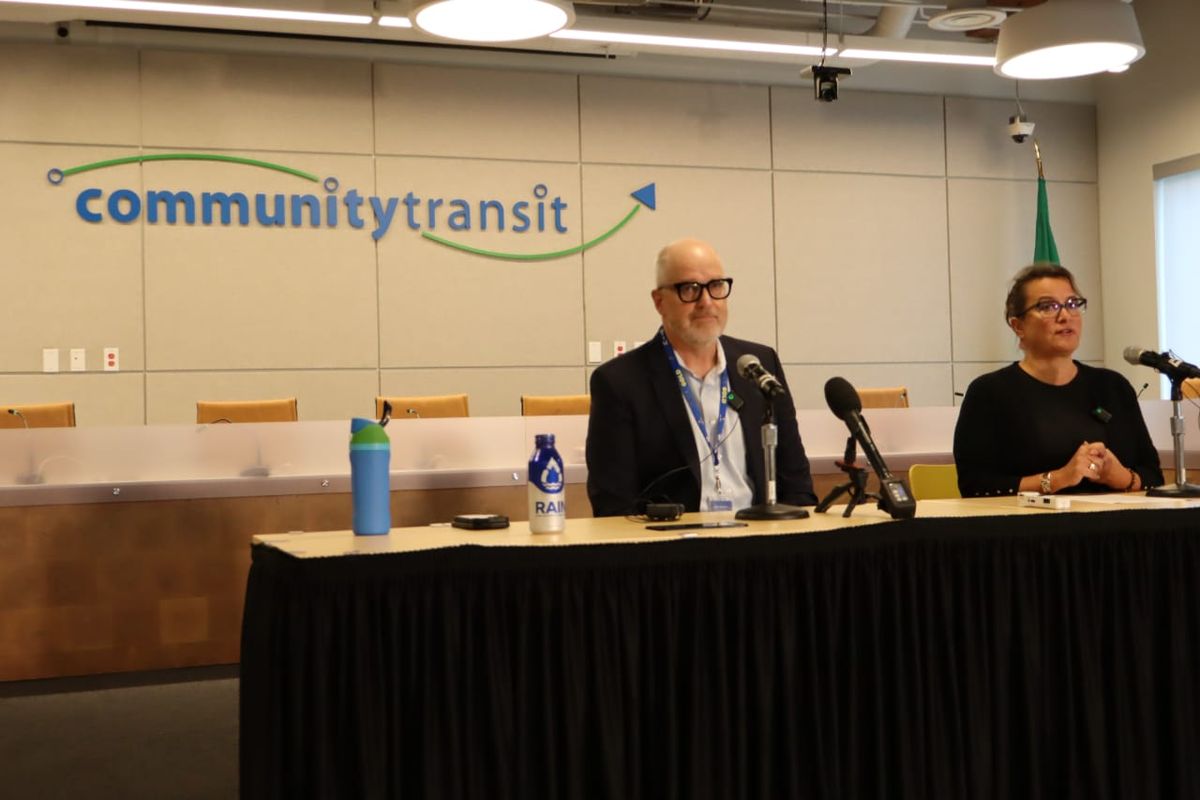
The transit funding push across the region isn't even over. On Wednesday night, the Everett City Council will decide whether to give the green light for Community Transit to annex Everett Transit, trading away the city-specific 0.6% sales tax rate for Community Transit's 1.2%. That move will come with a 50% increase in transit service within the city by 2031, and transit connections that simply can't exist with Snohomish County's largest city maintaining a completely separate transit agency.
Wednesday's vote will be followed by a vote of the Community Transit board on Thursday.
Thanks to a 2025 change in state law, Everett Transit's annexation will be able to happen without the voters directly weighing in. But the move represents a bold swing by three-term Everett Mayor Cassie Franklin, who has been making the case that the city can't grow sustainably without making substantial investments in transit.
Earlier this year, voters in and around Spokane also signed onto a 0.2% sales tax measure that will allow Spokane Transit to maintain existing service and grow in the future. Clearly, the momentum is on the side of transit expansion in 2026 in Washington State.
 Ryan Packer