As Election Day arrives, much holds in the balance. Nationally, attention will be on whether polling that hints at a national blue wave will allow Democrats to seize control of both chambers of Congress will come to pass and provide a check on President Donald Trump's power and erratic decision making.
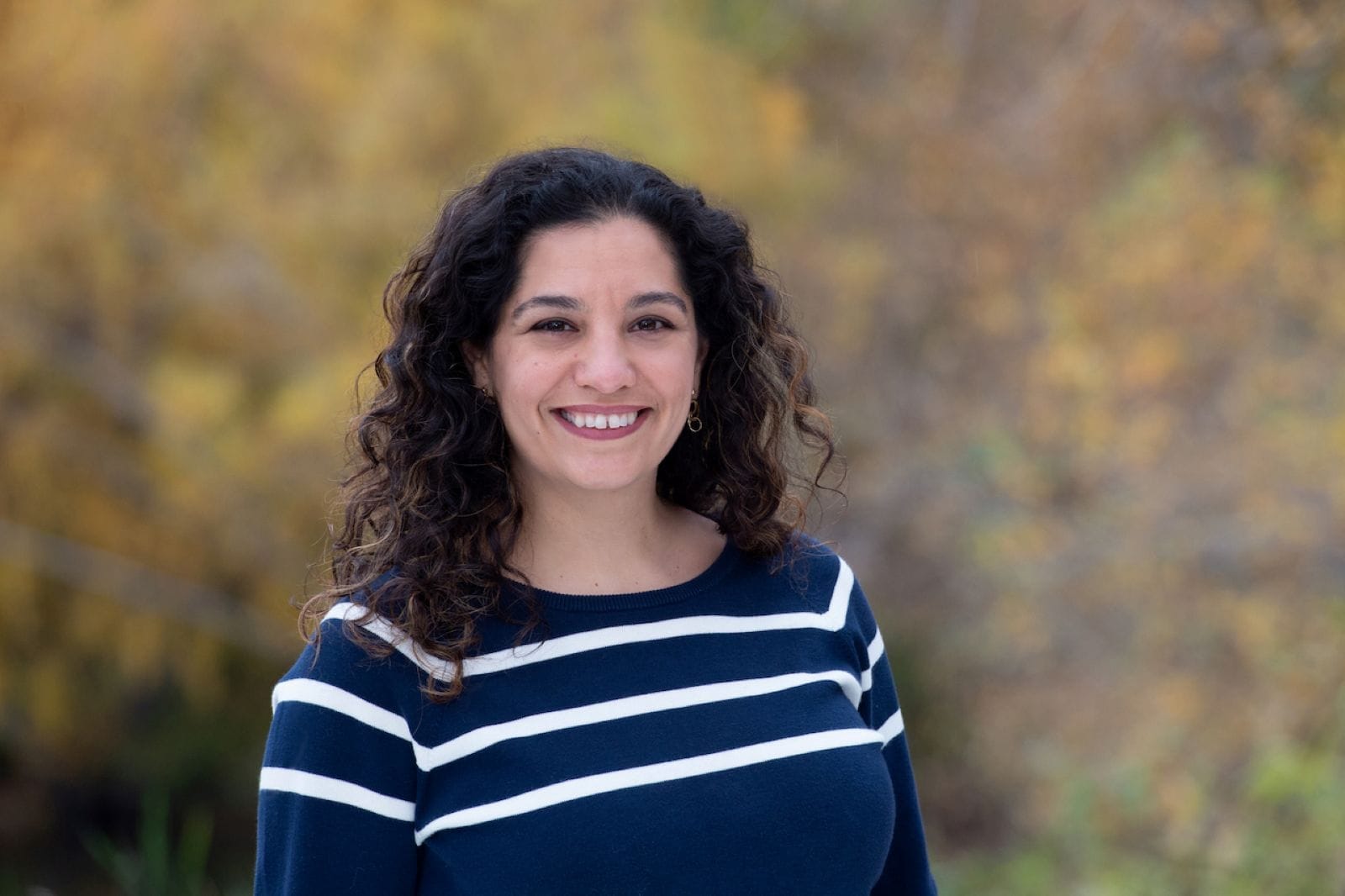
Locally, a special election in Seattle Council District 5 presents an opportunity for the progressive coalition to gain a seat and momentum heading into the 2027 election when all seven district seats will be on the ballot. Progressive standard-bearer Nilu Jenks has the advantage based on primary results, when she won 54% of the vote. The Urbanist Elections Committee (on which I serve) endorsed Jenks.
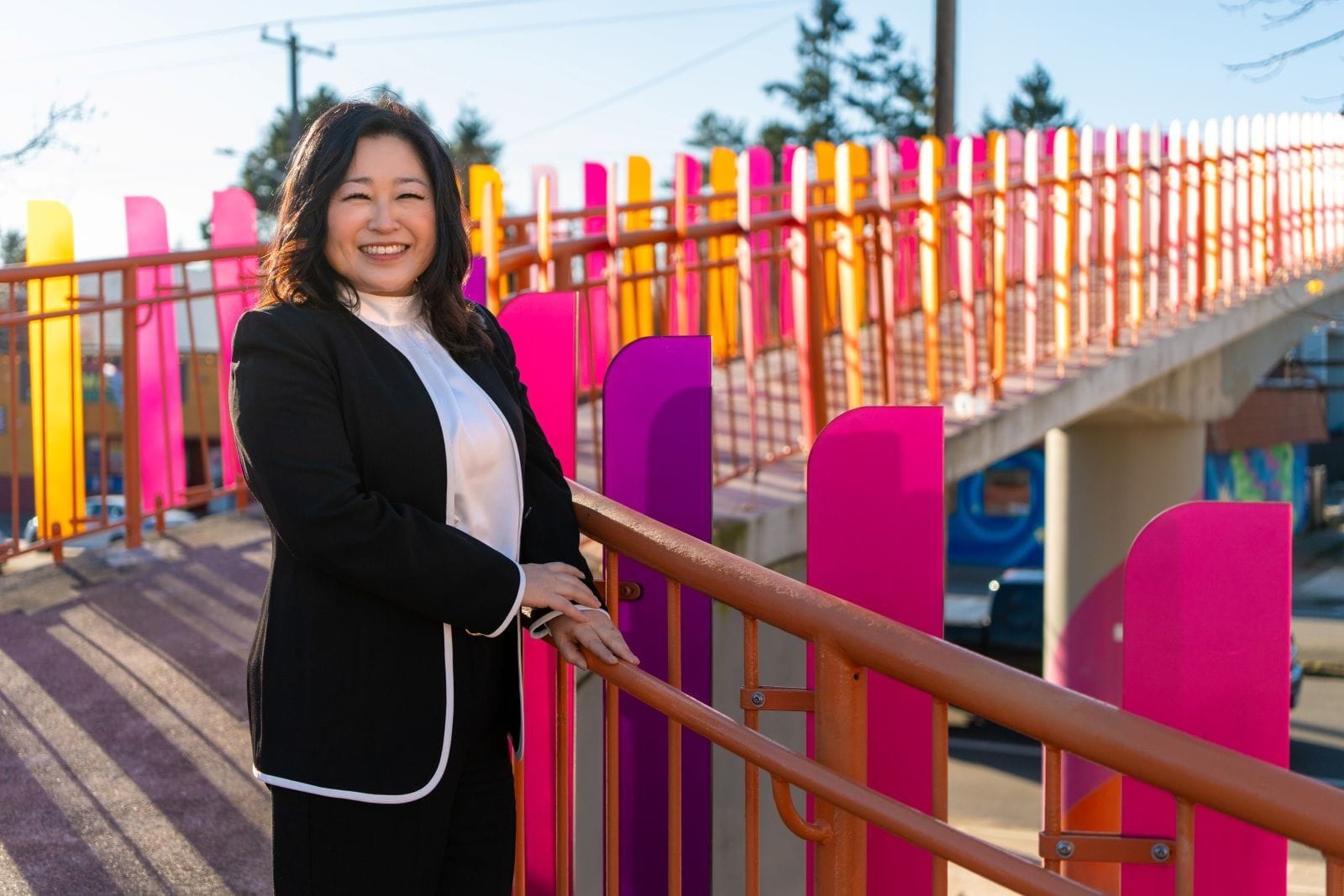
However, centrist donors are spending aggressively to prop up former bank chair Julie Kang in hopes of closing the gap. They're using a familiar formula, seeking to paint Jenks as soft on crime.
Dark money issues dog pro-Kang PAC
In their haste, a pro-Kang political action committee (PAC) called North Seattle Neighbors potentially broke election laws to rush attack ads out the door, and the Jenks campaign is calling on the PAC to fully disclose its donors and has appealed to the Seattle Ethics and Elections Commission seeking a cease-and-desist order barring it from "any further political advertising until it files every overdue report and discloses all its contributors and the true sources of its money."
John Wyble, a spokesperson for the Jenks campaign, argued this dark money-fueled attack ads has no place in Seattle politics.
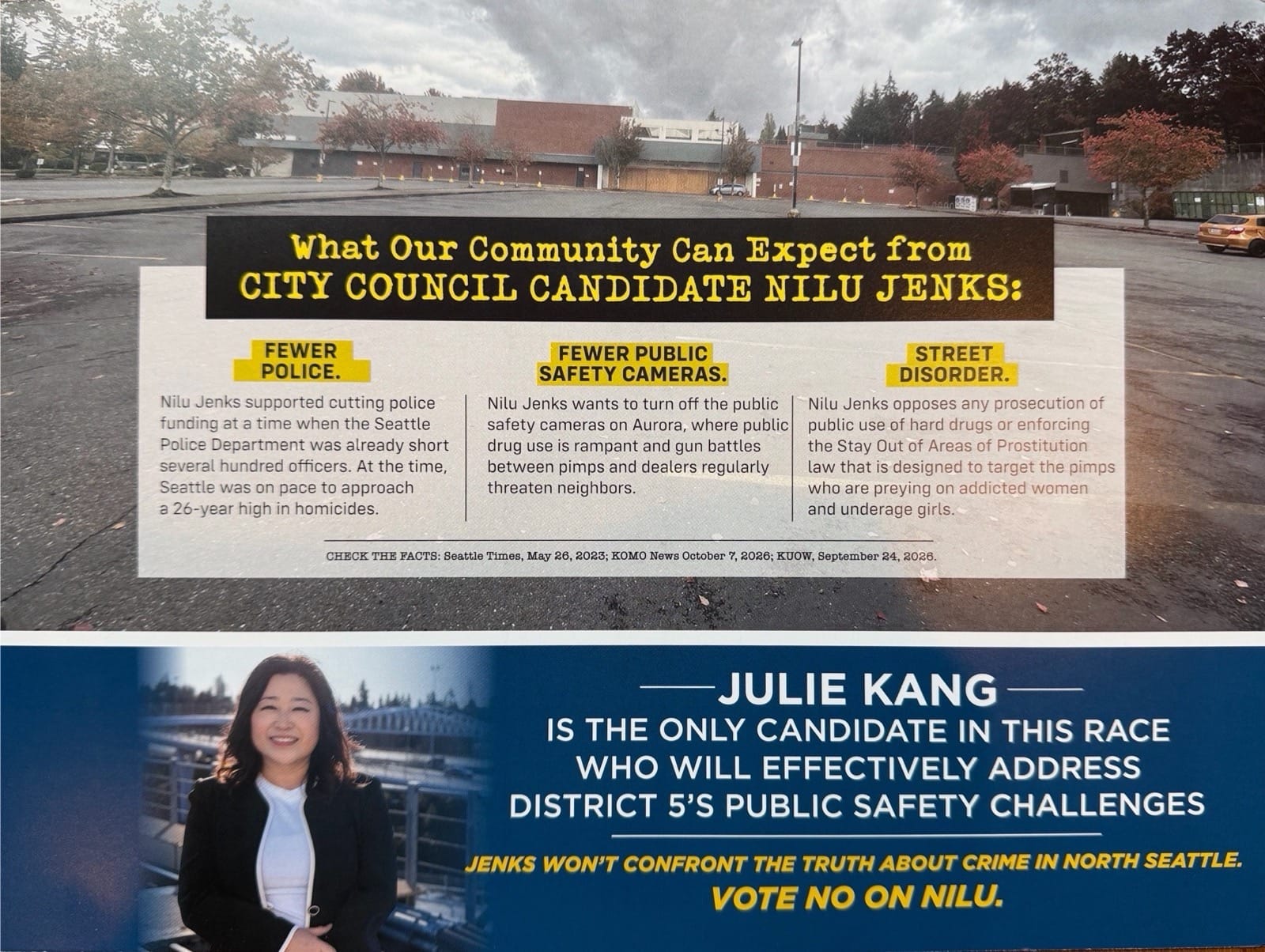
"This is how Republican super PACs operate in swing states: scary pictures, old quotes, and money nobody can trace. It has no place in a Seattle council race," Wyble said. "The PAC can't keep its own donor list straight, and the people who put up most of the money won't say who they are. District 5 voters deserve to know who's paying to fill their mailboxes, and they deserve to know before they vote."
Interestingly, a major funnel of this dark money was Seattle's former Council president who lost her seat in a 2025 election drubbing: "SeaFor is a 501(c)(4) formed by former Councilmember Sara Nelson. It is not registered with the PDC or SEEC and does not disclose its donors," the Jenks campaign noted. "According to PubliCola, its website pitched the structure as protecting 'the privacy of businesses and individuals.'"
After the Jenks campaign filed its complaint and publications like PubliCola reported on it, the pro-Kang PAC said it returned the $30,000 donation from Nelson's SeaFor group. The PAC already spent the money on mailers so returning the check that accounted for two thirds of its fundraising has sunk it into debt, forcing it to ramp up fundraising – potentially to the same donors using SeaFor.
Without the SeaFor smoke screen to hide behind, the donors will eventually be revealed, although likely not until after ballot boxes close. The contributors that North Seattle Neighbors does list include former interim Seattle Mayor Tim Burgess and several real estate bigshots including Vulcan's chief real estate officer Ada Healey, Fremont land baron Suzie Burke, and Judith Runstad.
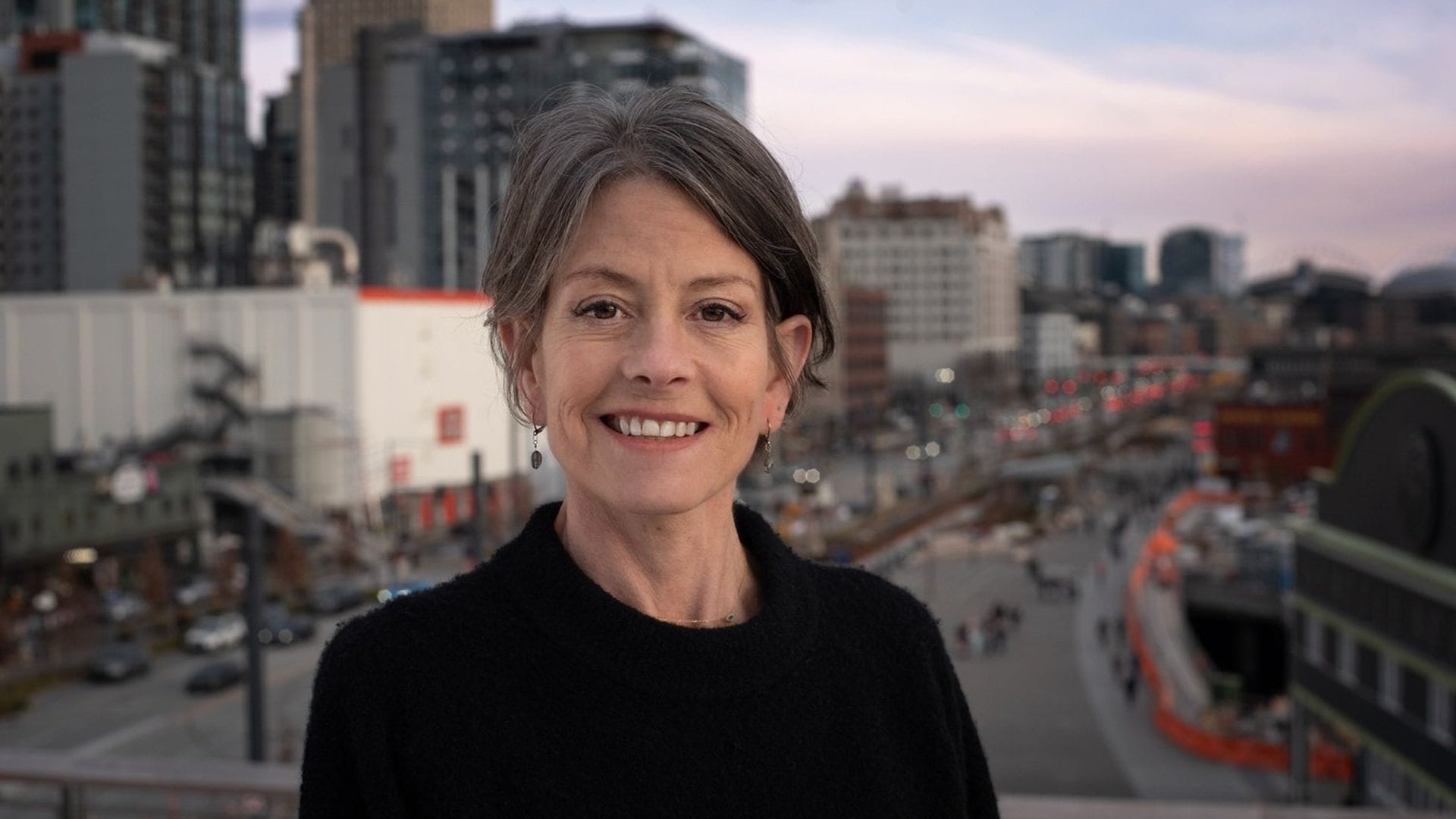
Nelson has indicated that SeaFor's 2026 spends are a test run on a broader 2027 strategy to keep control of Seattle Council in centrist hands – currently Council's progressive wing has just three members, while six councilmembers are some shade of centrist.
The other major endeavor SeaFor is engaged in: running a website built on AI-slop city hall "reporting." The website appears geared toward galvanizing more conservative leaning folks to submit comments to Council.
It remains to be seen whether Nelson and her friends will need to pull off a D5 comeback to provide a proof of concept to megadonors on their dark money project, or whether simply keeping it fairly close will be proof enough. The 2027 council elections are likely to involve big spending, either way, if recent elections are any indication.
Political cartoonist and comedian Brett Hamil argued letting Nelson get away with this scheme would set a dangerous precedent: “Sara Nelson, Tanya Woo & the Julie Kang PAC (“North Seattle Neighbors”) are in the midst of the biggest campaign finance scandal possibly ever in Seattle, and if they face no serious consequences they will run the same playbook for seven city council seats next year.”
The PAC attacks have focused on Jenks' opposition to expanding CCTV camera surveillance and stay out orders for prostitution and public drug use, which she says is based on evidence that those approaches are not effective. Jenks has portrayed public safety as a top priority, but she has emphasized expanding the role of the civilian-run Community Assisted Response and Engagement (CARE) department to boost safety. The question remains of whether surveillance cameras, stay out orders, and some vague police defunding insinuations are salient enough issues to swing voters, or whether voters view public safety from a broader and more nuanced perspective.
For now, most centrist councilmembers appear intent on kneecapping a good chunk of Mayor Katie Wilson's agenda and taking opportunistic political swings at her. Speculation is swirling at city hall that several councilmembers are mulling runs against the mayor when her seat is up in 2029. District-based members would need to survive 2027 reelection bids first unless they want to try pulling a Bruce Harrell and taking two years off from elected office before rebranding as an outsider.
Would the entry of Nilu Jenks shake up this dynamic or simply have centrist doubling down?
Transit funding measures
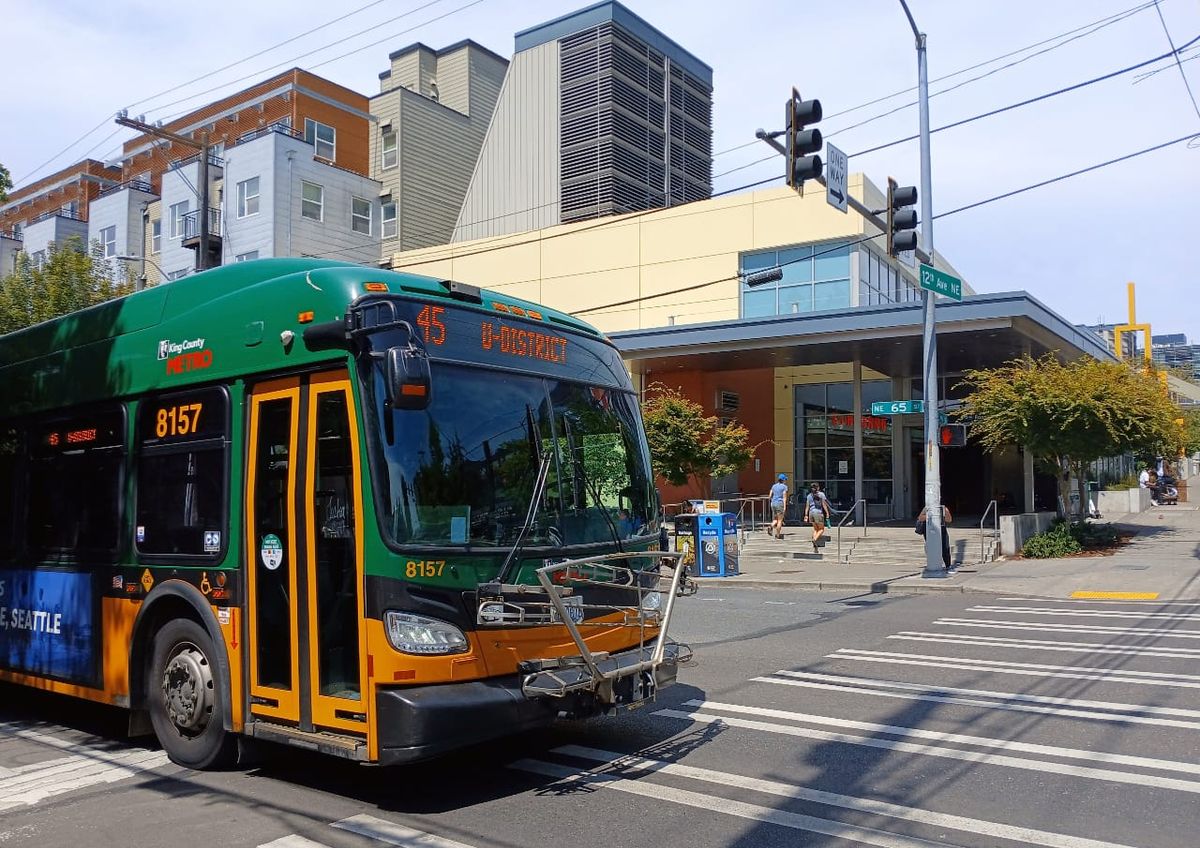
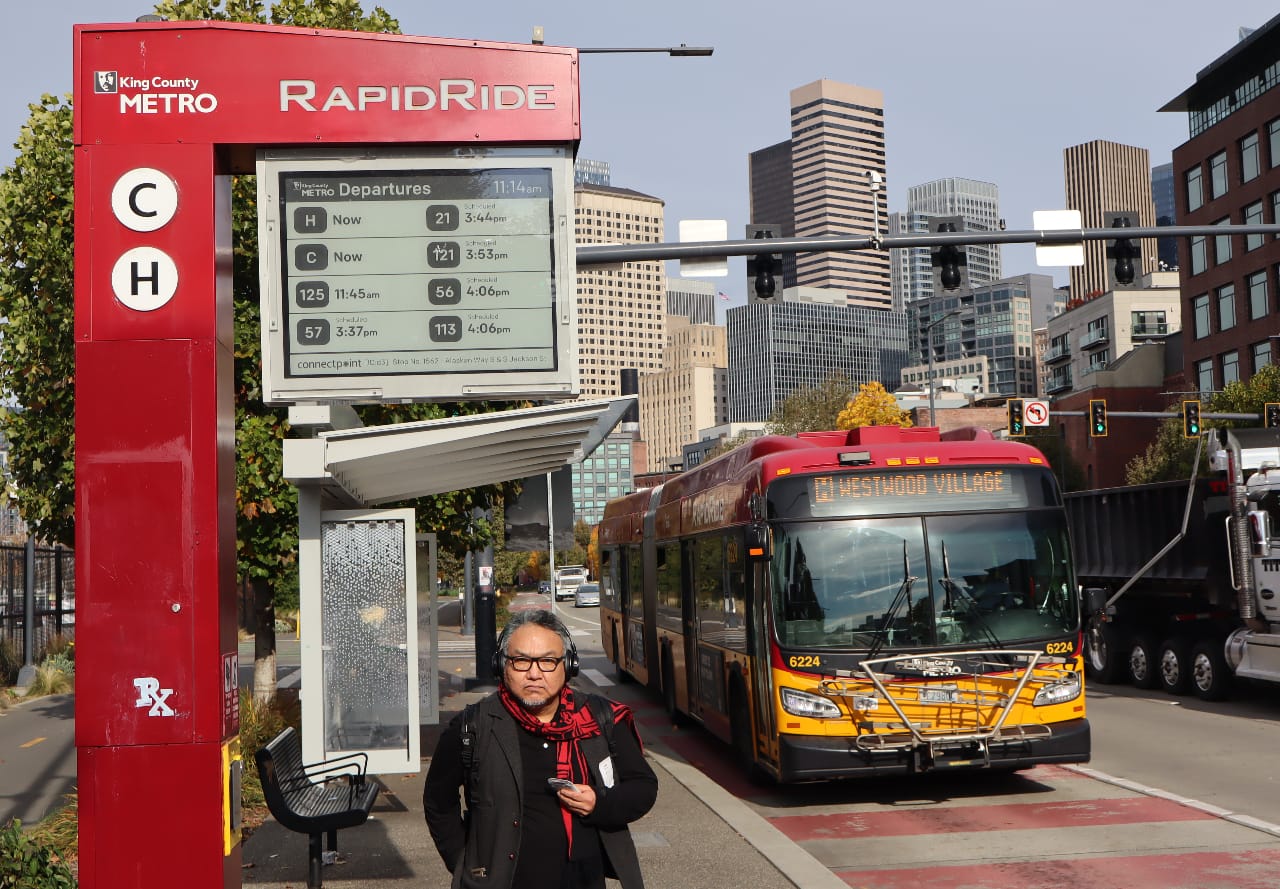
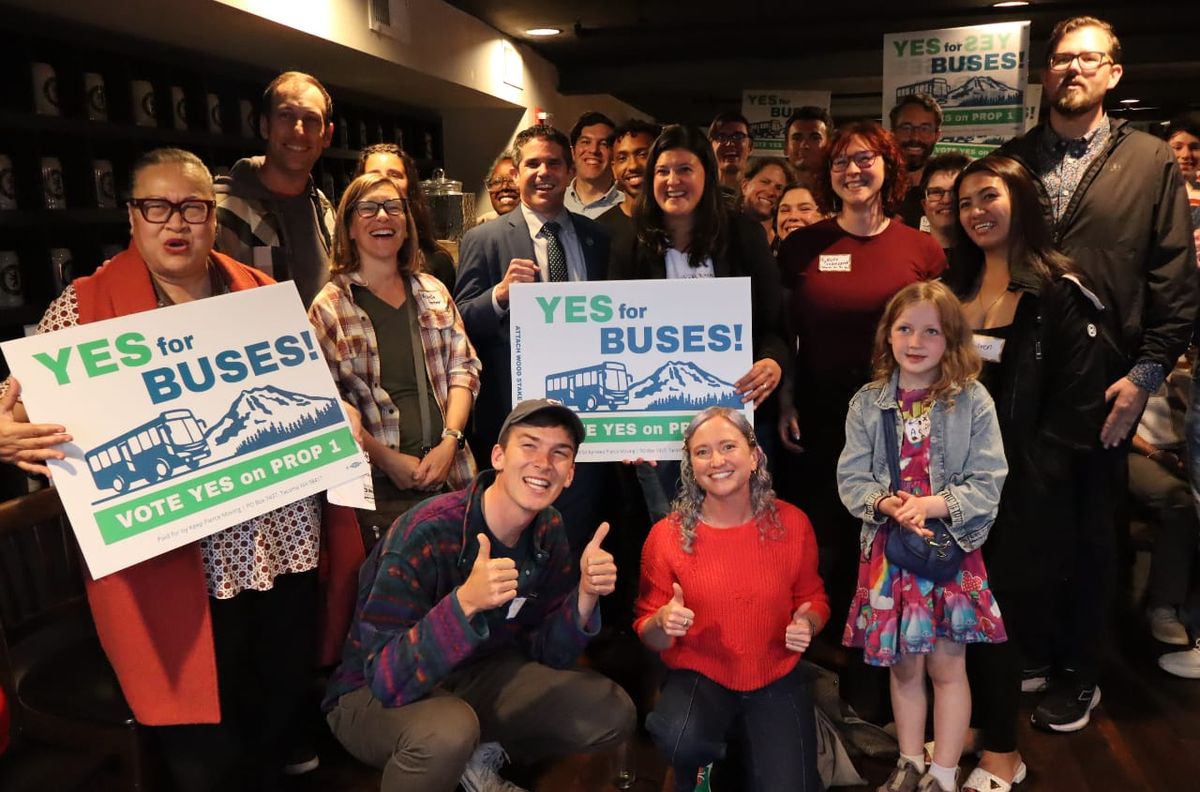
Bus funding increases are also on the ballot in Seattle and in Pierce County.
If voters approve it, the Seattle Transit Measure will renew existing bus service support and provide an additional 95,000 bus trips per year to boost service frequency on at least 10 routes. The measure also supports reduced fare programs for low-income residents.
Pierce County's measure, meanwhile, would be an even larger jump in bus investment, boosting Pierce Transit service by 47%. This would put Pierce County in closer parity with its neighbors after more than a decade of failing to approve a transit measure.
The Seattle measure appears likely to pass given the margins recent tax measures have run up in the Emerald City – and passage could give Mayor Katie Wilson some additional momentum building on her recent success speeding up Route 8 for bus riders.
Good news gaining another progressive ally on council and passing a major transit measure could act as a bit of a reset for the mayor – with some local media outlets still fixated on her handling of the fatal Bite of Seattle shooting, even more than three months after the fact.
If progressive seize control of Council in 2027, much larger policy swings would be on the table for Seattle's first progressive mayor in more than a decade. The first step is winning the opening skirmish in 2026.
 Ryan Packer
 Amy Sundberg
 Ryan Packer