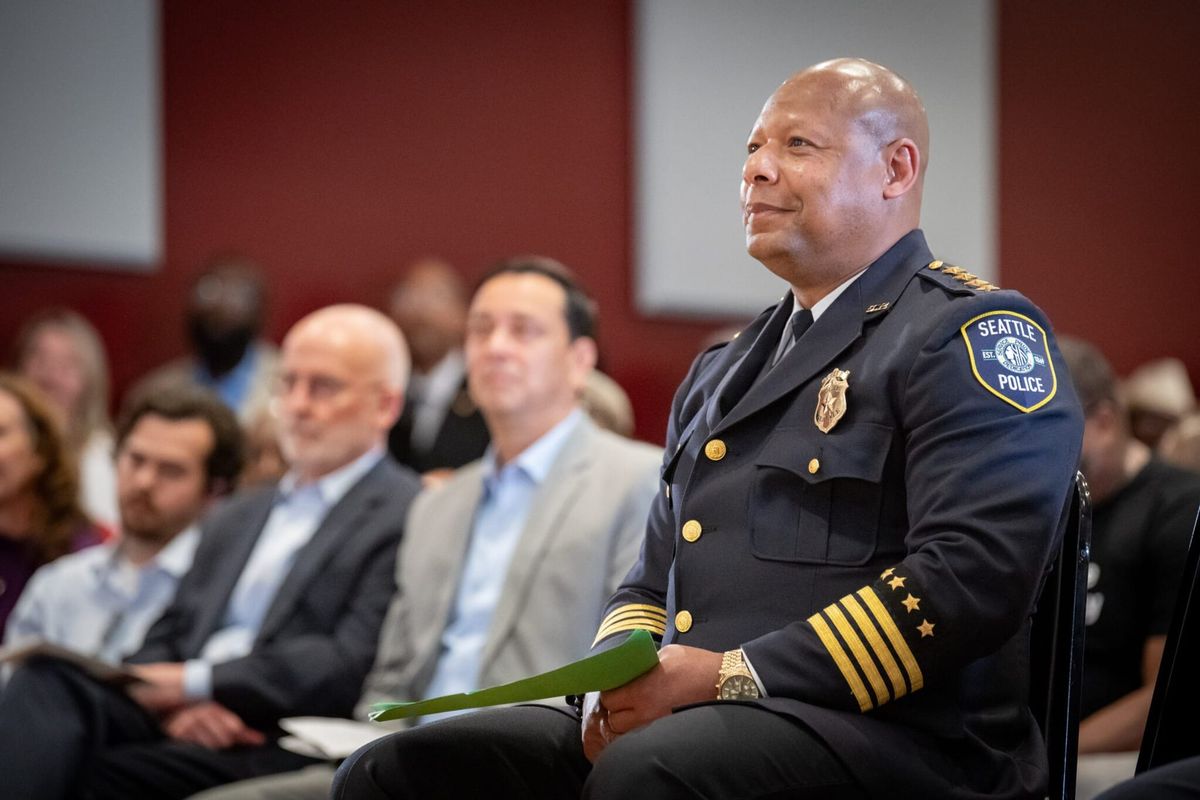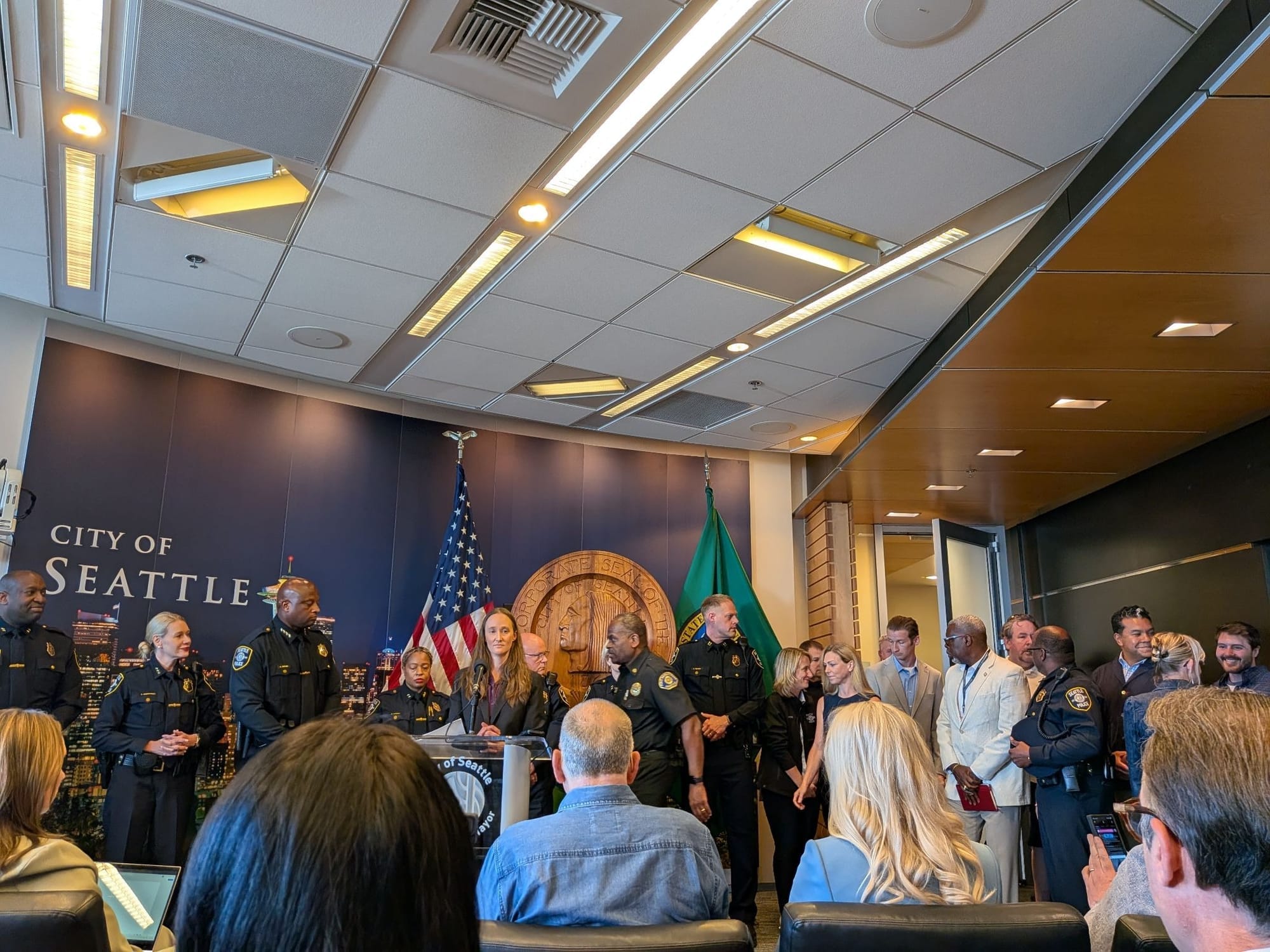
On Friday, Mayor Katie Wilson defended her controversial decision to ask for Seattle Police Department (SPD) Chief Shon Barnes’ resignation, which he proffered on Thursday afternoon. Wilson decided on the change of SPD leadership in the wake of the deadly shooting that took place at the Bite of Seattle event at Seattle Center last weekend.
Wilson has selected SPD Deputy Chief Andre Sayles to serve as Seattle’s interim police chief.
“I really believe that we're going to be able to move forward more effectively now with this change,” Wilson said at a press conference on Friday morning.
Wilson has faced criticism for the change of leadership from several Seattle city councilmembers and some Black community leaders, including those from the Seattle NAACP and the Urban League of Metropolitan Seattle.
In addition, members of the media have implied Wilson has been less than transparent when it has come to discussing her reasons for wanting to hire a new police chief. However, because they concerned personnel matters, the conversations Wilson has had with Barnes in recent days are confidential, and anything she says publicly has the potential to be used in future legal action against the City.
Wilson did suggest answers for her decision could be found in recent reporting.
“I think there's a lot of information out there that can suggest to people the reasons why this decision was made,” Wilson said. “What I'm saying is that there were multiple factors. The events of Sunday certainly played into it, and I think we've discussed some of the gaps and lapses that happened. And again, my decision here is based on what I believe is going to be best for this department and for the city.”
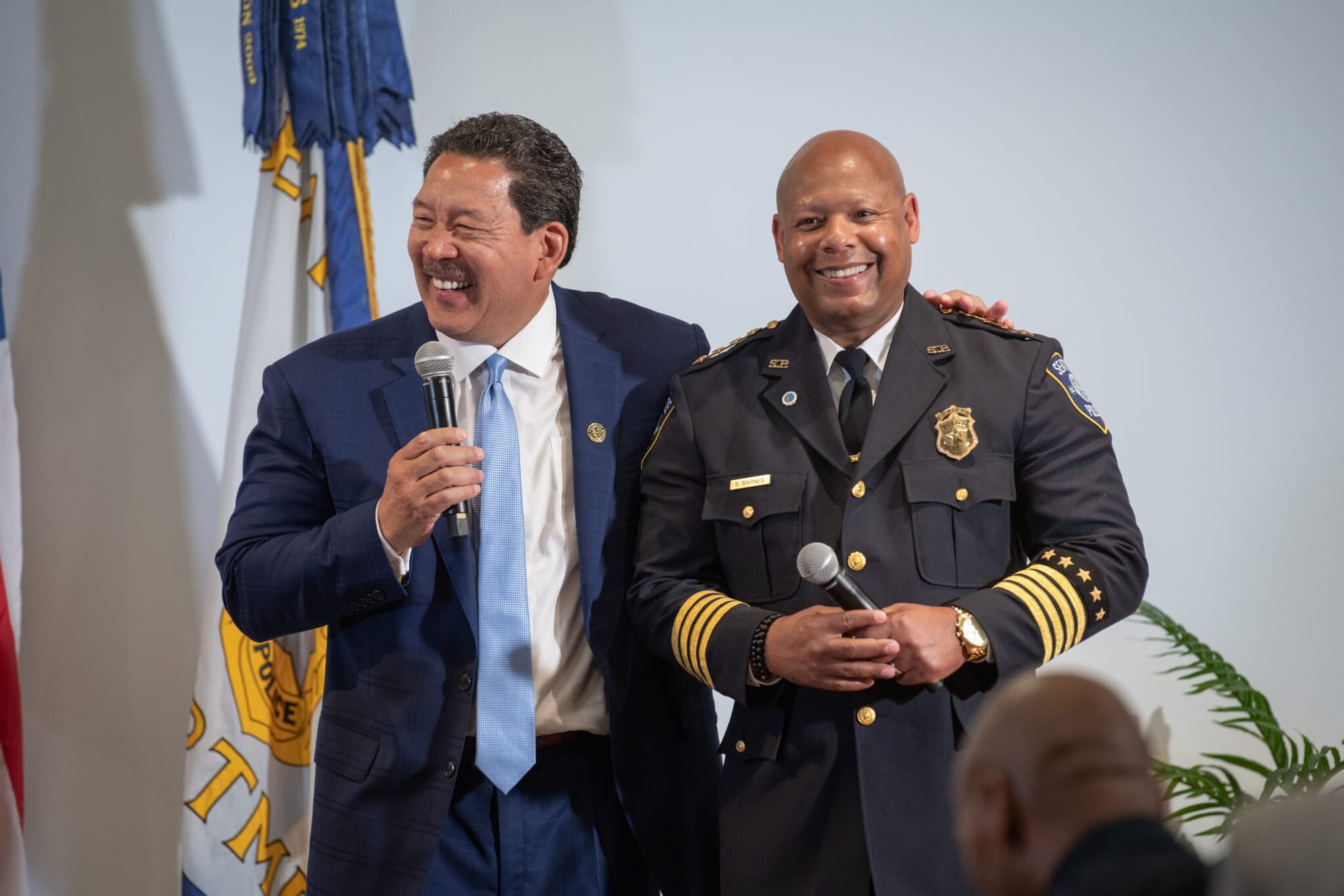
Barnes was hired by former Mayor Bruce Harrell in early 2025 to take over the beleaguered police department. SPD faced strong criticism for their behavior during the George Floyd protests in the summer of 2020, and since that time, they’ve seen a rapid turnover of chiefs. Both Carmen Best and Adrian Diaz resigned as chief – Best in 2020 and Diaz in 2024 – with Diaz later being fired from SPD altogether. Both were mired in scandal at the times of their resignations.
Sue Rahr served as a short-term interim chief while the City performed the search that led to Harrell hiring Barnes in early 2025.
While miscommunication around the shooting at Seattle Center last weekend, both between the Mayor’s Office and SPD and between the City and the public, doubtless contributed to the decision to ask Barnes for his resignation, it appears problems with Barnes may have been brewing for some time.
Likewise, while Barnes made international news this week confronting local South Seattle Emerald reporter Connor Nash, he’d clearly had an adversarial relationship with at least some members of the press in Madison, Wisconsin, where he served as chief before coming to Seattle. Journalist-owned Tone Madison, a local publication at the time of Barnes’ tenure, had this to say about him after he received the Seattle chief job:
“With Barnes’ grievances, scratch the surface you’ll find a defensive, thin-skinned man. But if you also scratch the surface of his progressive-sounding jargon, you’ll find more of the same policing. Take his signature ‘Madison-centric policing.’ For one, policing the city you’re paid to police… revolutionary. But also, the substance of “Madison-centric policing” amounted to more of the same policing we’ve always had. Barnes’ fixation on ‘data-driven’ policing, which focuses on ‘high crime’ areas, in reality translates to a feedback loop—the places that are most heavily policed and therefore have higher rates of reported crime, are then policed even more heavily.”
More clues to problems with Barnes’ tenure might be gleaned from Wilson’s list of priorities in hiring the new police chief.
“I will be looking for someone who can be an effective leader of our police department from top to bottom,” Wilson said. “In particular, that means listening to and building relationships with the people standing behind me – the experienced and dedicated people who are leading our officers on the ground in neighborhoods across our city every single day. I will be looking for someone who can earn the respect of our police force, while also leading needed changes to culture and protocol in a way that's firm and fair. I will be looking for someone who can practice clear communication in stressful situations. I will be looking for someone who is consistently present in Seattle, keeping travel to an appropriate minimum, and who also ensures that when they are away, there is sufficient SPD leadership in town to guide our city through any emergency.”
The ability to take public criticism with a modicum of grace and composure also was on the mayor’s list – a skill she has had plenty of opportunity to exercise this week as well.
“I will be looking for someone who can navigate the inevitable criticism that comes with this job, and who can course correct with grace when needed,” Wilson said. “I will be looking for someone who understands the value of our alternative crisis response system, our CARE and fire departments, and our service providers, and can forge the partnerships needed to make that successful so that we are sending the right response to every situation and our police can focus on policing. And I will be looking for a chief who moves in strong partnership with our accountability agencies to ensure effective policing in our city and active pathways for community feedback and input into how SPD approaches this work.”
Previously, The Urbanist has reported on Barnes’ seeming misunderstanding of the model of Seattle’s Community Assisted Response and Engagement (CARE) team. While Barnes has paid lip service to supporting Seattle’s emerging alternative response program, in practice, SPD officers have been undermining the program in what The Seattle Times called a “pattern of subversion.” Barnes himself did not make much time for collaborating with the CARE department and did not meet with CARE Chief Amy Barden one-on-one for more than a year, which likely hindered opportunities for partnership.
Having a police chief who fully backs the CARE team could make a big difference in seeing its higher utilization in the future.
Mayor Katie Wilson explains why she asked for Police Chief Shon Barnes resignation.
While Barnes’ supporters have pointed out that during his tenure, crime has come down and officer hiring has increased, it is important to note that Seattle’s numbers in both respects mirror national trends. Crime is steeply down across the country, and FBI data shows large American police departments are beginning to grow again.
The Seattle Times reported that Barnes will be receiving more than $590,000 in a settlement after serving as Seattle’s police chief for about a year and a half. In return, he has agreed not to sue the City.
Relationship between the Mayor’s Office and City Council deteriorates
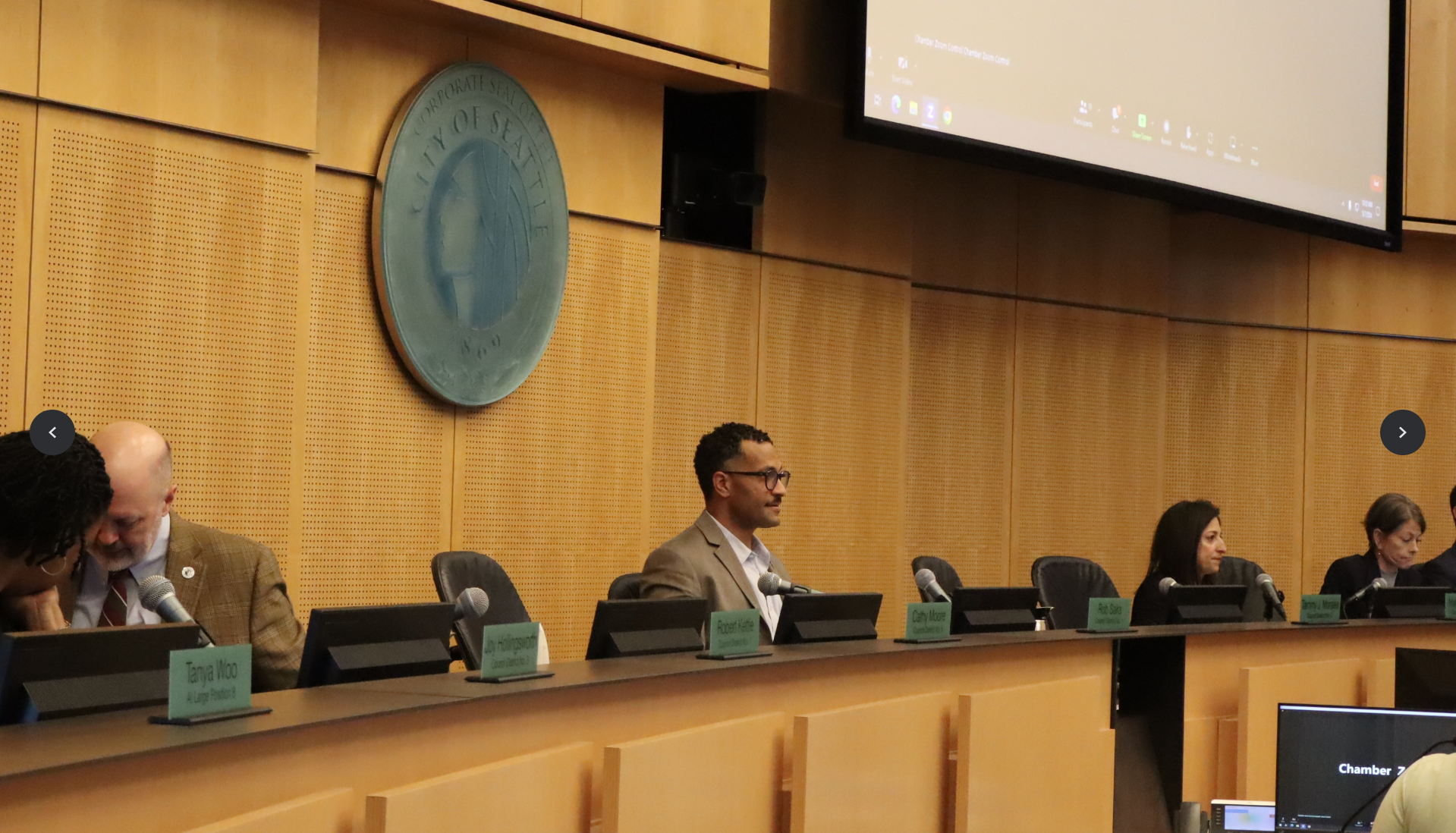
The relationship between Wilson and the city council has been on uncertain footing since her assumption of office, with cracks showing in the spring with Wilson’s shelter expansion proposals hitting council without her office having found sponsors. Wilson’s backers might have hoped staff changes at the Mayor’s Office – senior advisor on homelessness Jon Grant resigned and chief of staff Kate Brunette Kreuzer was reassigned – would have helped build some goodwill, but any reconciliation was short-lived.
Tensions flared again recently. Earlier in July, Council President Joy Hollingsworth and Councilmember Dionne Foster introduced an amendment to the Families, Education, Preschool, and Promise (FEPP) Levy that postponed Wilson’s universal school meals plan by a year while instead funding a food voucher program for low-income students for weekend and school breaks. After intense community pressure, Hollingsworth, Foster, and Councilmember Dan Strauss introduced a proposal to fund the universal meals on the mayor’s schedule after all, only through the general fund instead of FEPP levy dollars.
Wilson issued an acerbic press release in response.
“Now Council is proposing to pull this funding from our general fund, which is already facing a $175 million deficit,” Wilson said. “I look forward to seeing which critical services they plan to cut from the general fund to make their numbers work.”
The Stranger has since reported that Strauss said the money for the meals will come from other programs’ underspent funds from the year. These extra funds would otherwise almost certainly have been put towards shrinking the deficit.
Meanwhile, on Tuesday the mayor and councilmembers announced their agreement on the City’s student food access plan going forward.
However, several councilmembers clearly felt flat-footed at the news that Barnes might have been asked to resign, which began to circulate on Wednesday evening.
“We were in the process of having conversations with councilmembers, and rumors started flying before we were able to complete those conversations,” Wilson said at the press conference.
Several councilmembers stepped into the information vacuum when Barnes’ future had not yet been confirmed by the Mayor’s Office.
On Thursday, Hollingsworth told news media that she supported retaining Barnes as Seattle’s police chief.
“I think that when a city is grieving and you are coming off of an emotional and traumatic experience, to make leadership changes in this moment can seem very irrational and a little bit reckless right now,” Hollingsworth said.
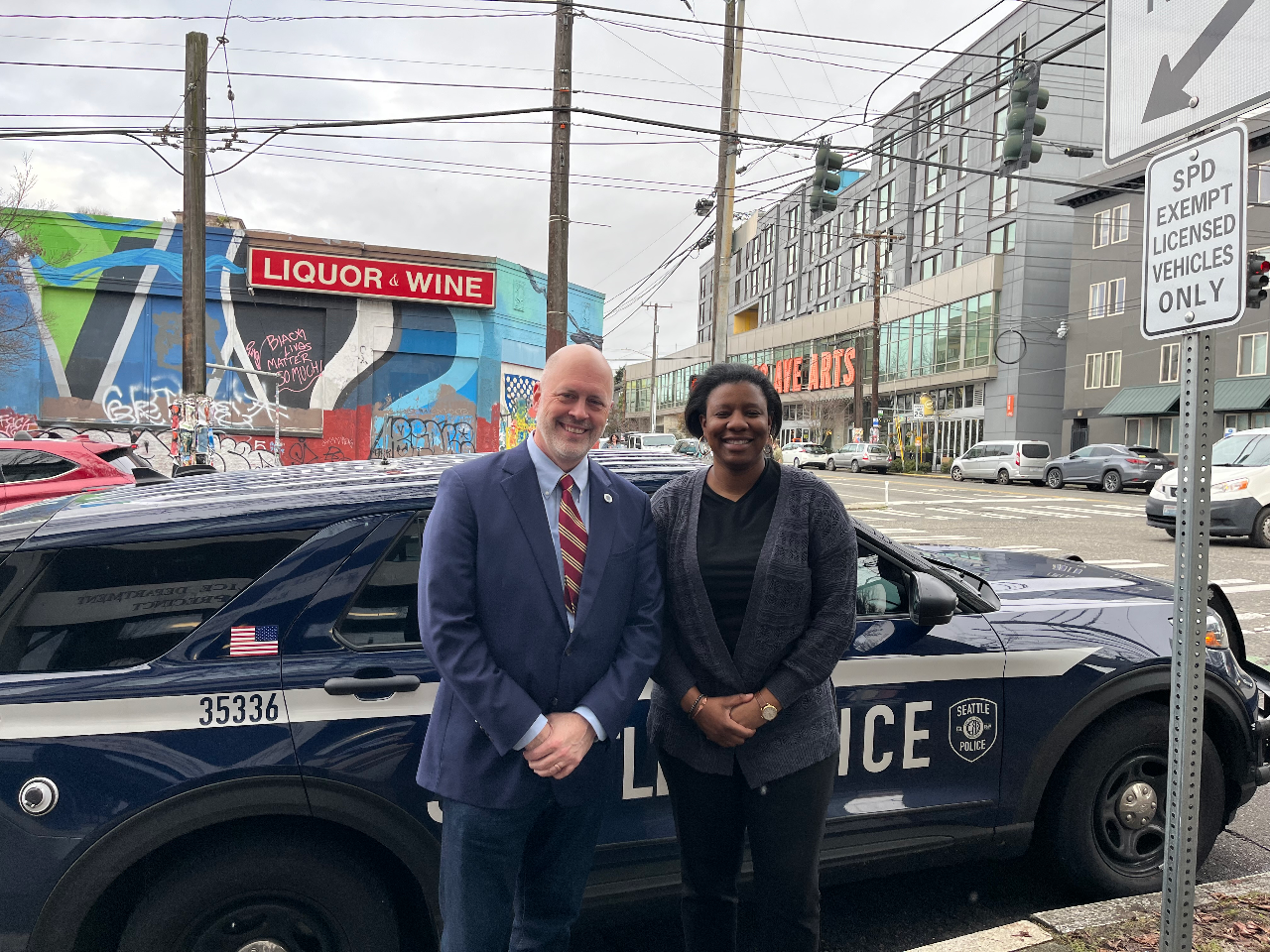
In a 21-minute interview with KOMO, Debora Juarez said she’d heard rumors of Barnes leaving in early June, before Seattle’s FIFA World Cup matches.
“I think to frame this issue correctly as an elected leader, what we're seeing under this administration, under Mayor Wilson, are more than just gaffes or missteps,” Juarez said. “I see a complete lack of leadership, and for us and some of us, no confidence in this administration.”
Even Councilmember Alexis Mercedes Rinck, who might be the most politically aligned with Wilson, expressed disappointment at the lack of communication from the Mayor’s Office.
“I am disappointed that I found out about the possible dismissal of Chief Barnes from reports on social media last night and did not receive any update or information about this development from the Mayor or Mayor's Office until mid-morning today,” Rinck said in a press statement. “Chief Barnes’ recent interactions with press have been concerning, but I have yet to receive an explanation of what decisions have or haven’t been made, or a full rationale behind why any decision has been made.”
Wilson defended her decision, saying it was the right choice at the right time for Seattle.
“As the mayor, as the executive of the city, I do have a different window into our police department, and I'm confident that as we move forward with our search for a permanent chief, we will be able to come together because I really think that we want the same thing for our city, and I think we're looking for a lot of the same qualities in a leader for this department,” Wilson said.
Charting a path forward
While Barnes had been criticized for his frequent travel, including back to Chicago where his family lives, Sayles also maintains a second residence in Illinois.
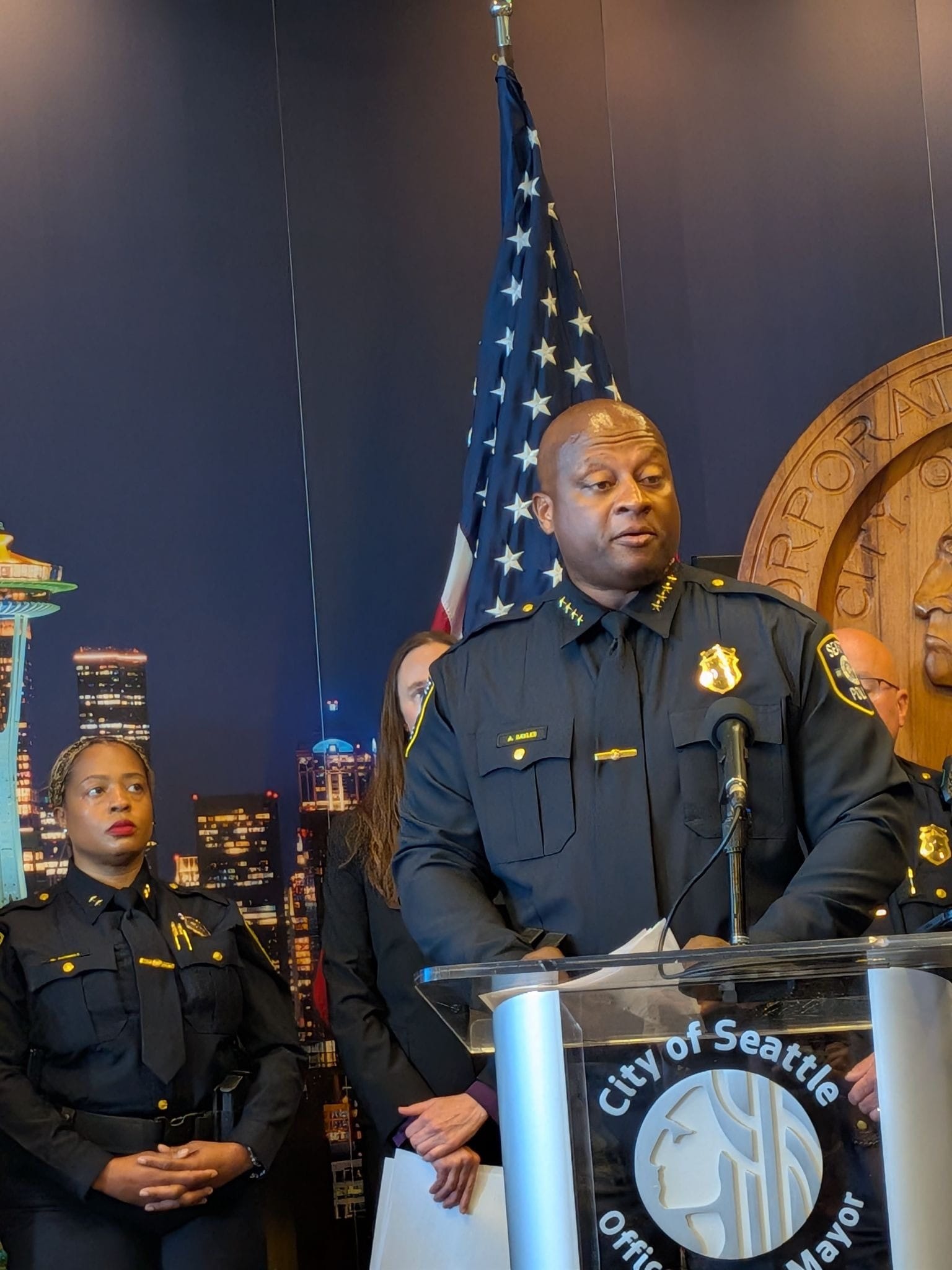
“I maintain a home in East King County here. I also have a secondary home in Illinois, not in Wisconsin,” Sayles said in response to a question from PubliCola. “I do frequently go back to visit my family, probably about every eight weeks or so. But my wife spends most of her time out here with me. We're looking to make this our home, this our area that we can retire to one day. But right now, we have some kids that need to get settled.”
Barnes and Sayles are friends, and Barnes brought Sayles to SPD just last year. While Wilson said Sayles has “done this job before and can hit the ground running,” Sayles was previously the police chief in Beloit, Wisconsin. Running a police department in Beloit, a small city with a population of about 36,000, is materially different from running a big-city police department. At 823,000 residents and growing, Seattle’s population is 22 times larger than Beloit.
Wilson said her office would be following the process to select a new chief set by the city charter, and she intends to partner with Councilmember Bob Kettle, the chair of the public safety committee, during the process. Wilson also promised to build real community engagement into the process, as well as to bring together a search committee that “reflects the full diversity of Seattle.” The final selection of chief will be made from the three highest-ranking candidates.
The promised opportunity for community engagement represents a shift from Harrell’s approach to hiring Barnes, which bypassed the normal public feedback process.
While Wilson said her office would be moving forward with urgency with the search, the reality is that police chief searches take time. Spokesperson Dawn Schellenberg told The Urbanist the process will likely take some months to complete.
 Doug Trumm