Competing visions for the future of Bellevue's transportation system were put on full display this week at a final public hearing before adoption of the city's next two-year budget. As city leaders contemplate how to utilize several new revenue streams for transportation projects, the big question is how heavily Bellevue will invest in multimodal traffic safety upgrades that reduce deaths and injuries and make it easier to get around without a car.
With a new 0.1% sales tax and a new $20 vehicle license fee likely on deck in Bellevue, the question of utilizing those dollars for safety upgrades had already been top-of-mind during council discussions over the course of this year. But the discussion took on an increased level of urgency after a driver struck and killed 57-year-old James Rupert William Phillips while he was riding his bike at Bellevue Way SE and SE 30th Street on October 15.
Phillips was killed during a planned maintenance closure of the I-90 trail, with a detour directing anyone trying to get between Bellevue and Mercer Island to city streets. According to an initial police report, Phillips, a Newcastle resident, was crossing Bellevue Way when he was struck in one of Bellevue Way's inside lanes. The driver remained at the scene, Bellevue Police Department reported.
Crossing Bellevue Way in this spot, which doesn't include any crossing infrastructure, would be a tempting choice for anyone trying to get to the westbound I-90 trail without having to backtrack from all the way from 112th Avenue NE.
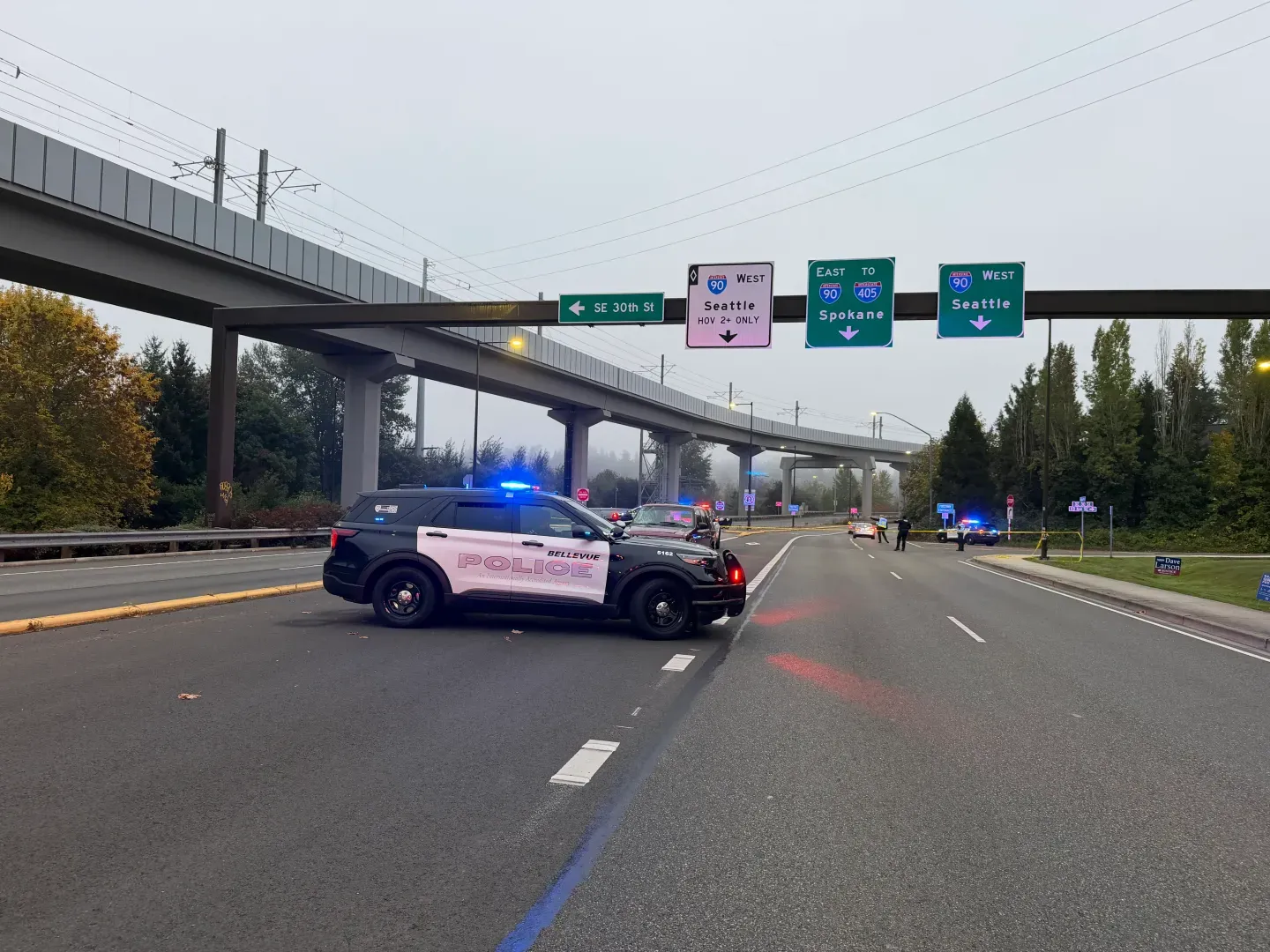
While decisions around the trail detour rested with King County as part of the North Mercer Island/Enatai Sewer Upgrade Project, the incident has thrown a spotlight on conditions on Bellevue's arterial streets.
Earlier this month, Bellevue councilmembers got a full breakdown on potential funding scenarios that would allocate more than $100 million in new funding across the Eastside's largest city over the next decade. Under the most ambitious scenario, which includes the 0.1% sales tax on top of the vehicle license fees, bicycle and pedestrian safety projects would see 28% of the city's total transportation spending through 2036. Neighborhood safety projects including traffic calming would see an additional 13%.
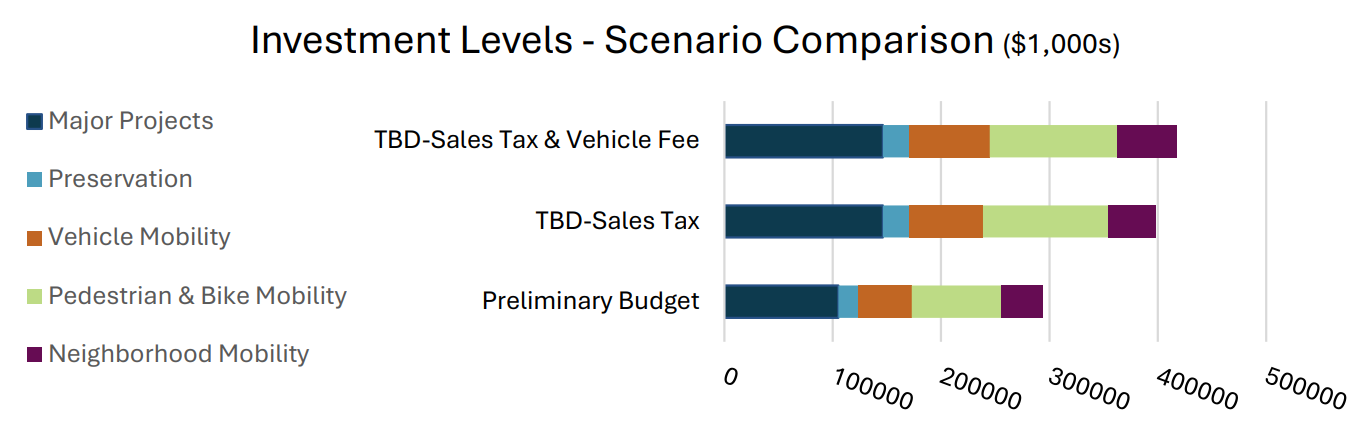
At Tuesday's hearing, councilmembers heard from Bellevue residents, workers, and visitors about whether to tweak or maintain those funding levels. Over recent weeks, signs have been popping up around Bellevue reading "no car tab tax" and "don't raise sales taxes." A fair share of speakers at the hearing told the council that new revenue tools should go to the voters, but most touching on transportation urged the city to stick to this new proposed baseline or go even further.
"I appreciate, value, and am very grateful for Bellevue adopting Vision Zero goals. We clearly need to do more," Bellevue resident Elaine White said, referencing the tragic Bellevue Way incident. "Please adopt scenario 3 in the 2027-2028 transportation budget. It funds more speed cameras, more improvements for vulnerable users and slower speeds. Yes, it will cost each household an additional $6 a month. Fellow residents of Bellevue, what might the life of your loved one be worth protecting? I'm happy to pay $6 per month for safer streets."
One area of emphasis was the "major projects" category, which would see most of the $40 million in new spending go toward getting a $74.8 million roadway project through the BelRed neighborhood across the finish line. The Spring Boulevard Zone 3 project would reconnect a segment of the street grid with sidewalks and protected bike lanes, but at an enormous cost – bringing a roadway through one of the neighborhood's only planned park spaces.
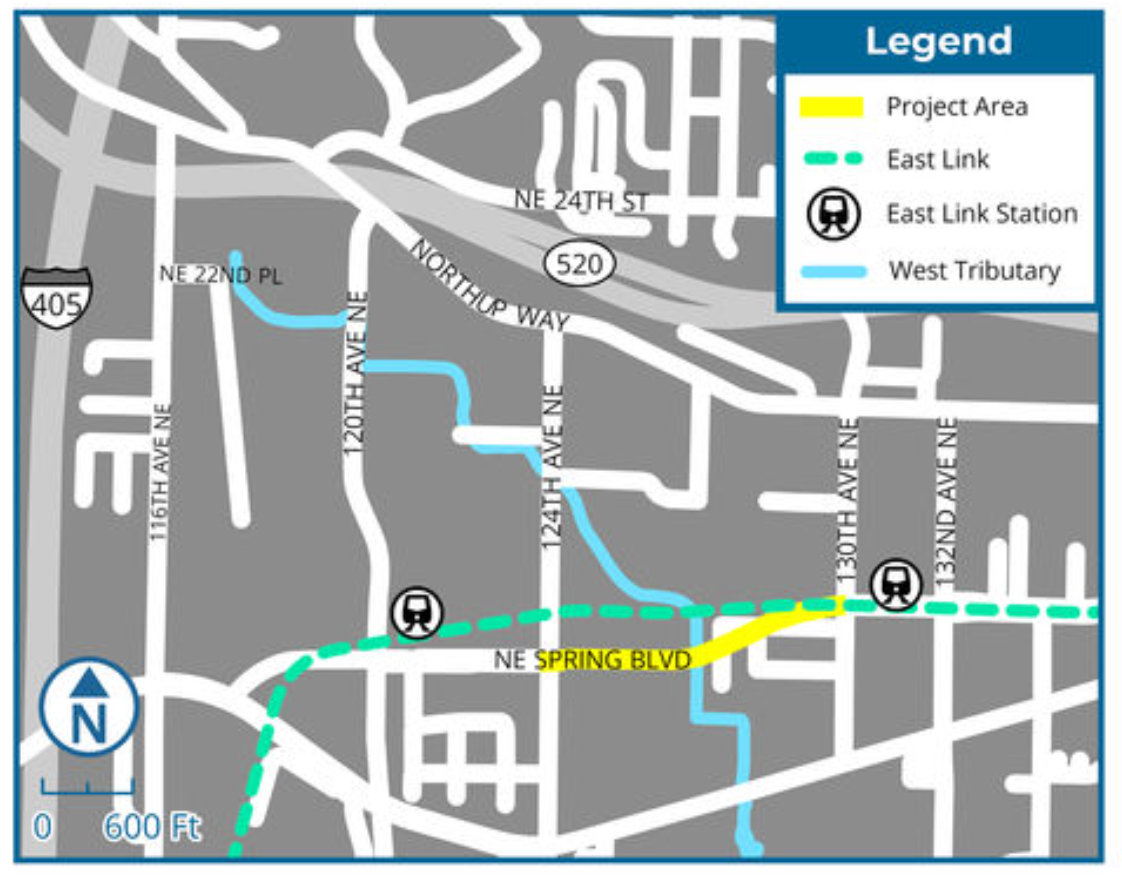
"In the last two and a half years since the light rail station was opened, nothing was made to improve pedestrian or bicycle access to the light rail station. During the last five years, we asked repeatedly for mid-block crossing on our street, and we heard no results," Crossroads resident Alex Kon said. "While then transportation department for years can't find money to fix those glaring safety and accessibility gaps, it suggests to spend $75 million dollars to build new arterial road nobody is asking for, and to add insult to injury, this road will go right through the park, so it will split into halves instead of improving connectivity for people who live there or who visit the park."
The Grand Connection Crossing, Bellevue's plan to construct a bike and pedestrian bridge across I-405 between Downtown and the Wilburton neighborhood, was also a target of public comments. While the crossing is set to receive around 10% of revenue from the sales tax increase, those dollars had been set to come from Bellevue's general fund, freeing up dollars that can be spent more broadly.
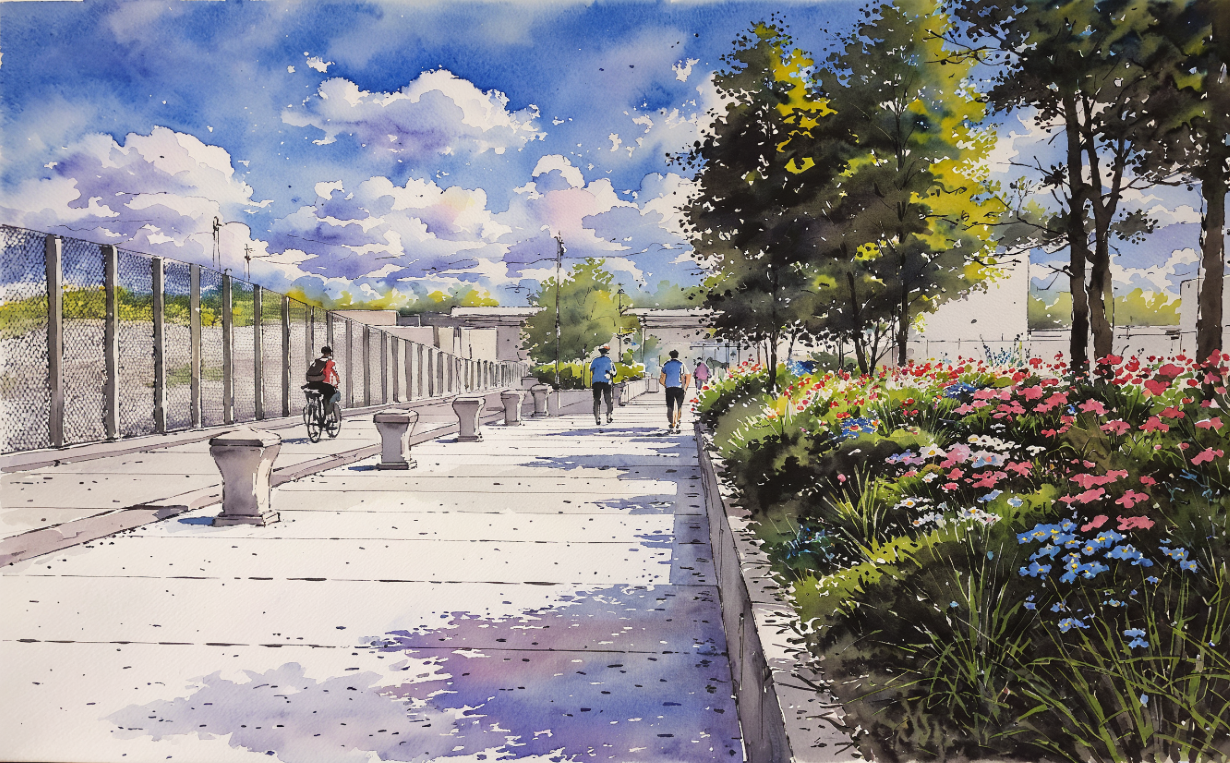
"In this budget, our central request is to keep the Grand Connection Crossing funded and moving forward," Patrick Bannon, President and CEO of the Bellevue Downtown Association. "Connecting Downtown, Wilburton, Eastrail will make it easier to reach jobs, businesses, homes, places to shop, places to eat. It will help attract the next generation of private investment and support the next wave of housing growth in our city."
While the city's business community is fully on board with the idea of building the Grand Connection Crossing, the project has its detractors.
"Responsible government should address current problems such as traffic congestion first, which would be [a] much more reasonable cost than the current proposal. Instead, the most pressing concerns of the transportation department, from the beginning, the past several years, seems to have been on serving cyclists by narrowing lanes and later by building the Grand Connection," Bridle Trails resident Anne Coughlin said. "It seems that the few blocks from 112 to 116[th] are a great barrier to those who wish to cross it on bicycle, as though it were the 3.6 million miles separating sub-Saharan Africa from the north, the Himalayas, or the Amazonian rainforest."
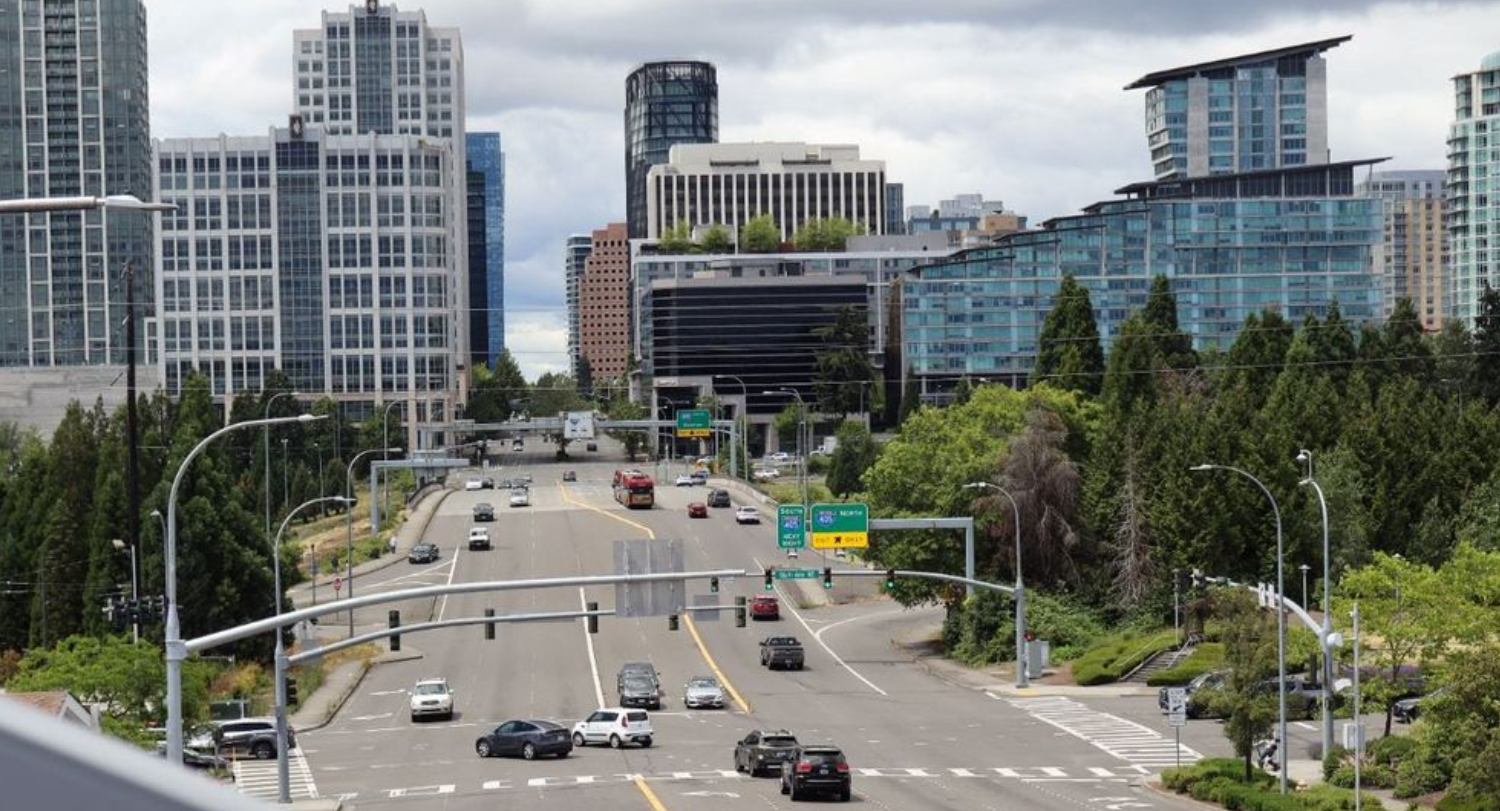
But the Grand Connection Crossing is far from the only transportation project that the business community is advocating for. Tony Sprague, Public Policy Manager for the Bellevue Chamber of Commerce, noted that their group's support for the funding package is contingent on no reductions for "vehicular capacity" projects, and has also requested that additional revenue beyond current sales tax projections be put into the "underperforming intersection" fund.
The vehicle mobility program already includes three planned intersection widenings, at SE 8th St and 114th Ave SE, NE 12th St and 116th Ave NE, and 148th Ave NE and NE 8th St, for a total cost of $24.5 million. That's more funding for three projects than the entire neighborhood mobility program would receive over the course of a full decade.
Whether any additional funding can be diverted into the types of transportation modes that Bellevue will need to grow sustainably over the coming decades – walking, biking and transit – remains to be seen in the coming weeks. Following council deliberations on November 3 and 10, a finalized budget is expected to be adopted by the Bellevue Council on November 17.
 Ryan Packer