The Bellevue City Council is on the cusp of approving a pair of new funding sources to bolster transportation infrastructure later this fall, but the fight over what exactly those new dollars should fund is far from settled. The debate playing out now is set to decide which transportation projects the Eastside's largest city prioritizes over the next decade, as it prepares to accommodate significant housing growth around public transit.
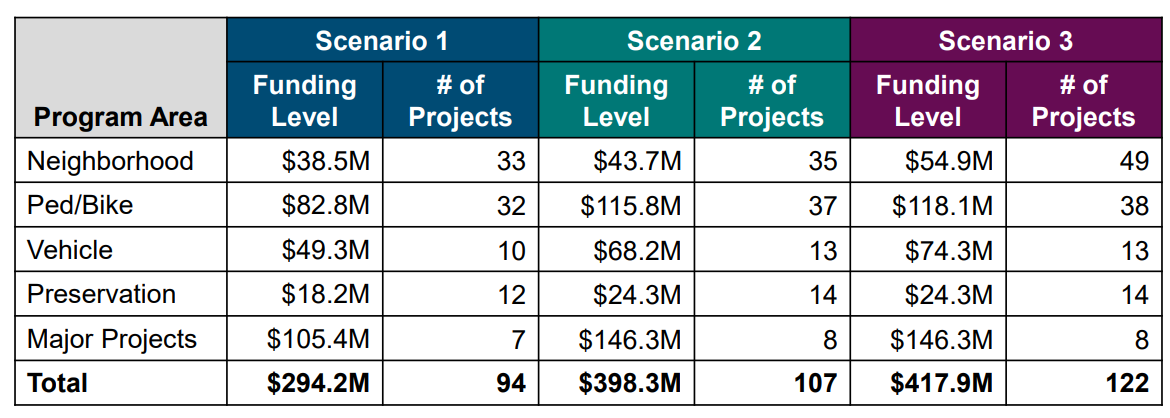
This week city officials formally presented a set of scenarios that outlined how Bellevue would use projected revenue from a potential 0.1% increase in the city's sales tax rate as well as a $20 car tab fee, unlocked from a transportation benefit district that the city has been considering tapping into since 2023. The sales tax bump would be expected to generate around $100 million for transportation infrastructure over 10 years, with the car tab only bringing in $20 million over the same period.
Sustainable transportation advocates in Bellevue have been pushing for a major infusion of resources to help reduce deaths and serious injuries, and that push has been backed up by a bloc of councilmembers standing behind the idea of prioritizing safety investments. But many of Bellevue's business interests are pushing for more investments in "underperforming" intersections to make it easier to drive around the city.
If the Council decides to adopt both the sales tax hike and the car tab next month, Bellevue would be poised to invest an additional $35 million over a decade in bike and pedestrian improvement projects, as well as $16.4 million more in neighborhood traffic calming. Combined, those two categories would amount to 31% of the city's total transportation spending, a lower number than the 40% referenced by Transportation Director Andrew Singelakis this past spring during an initial budget discussion.
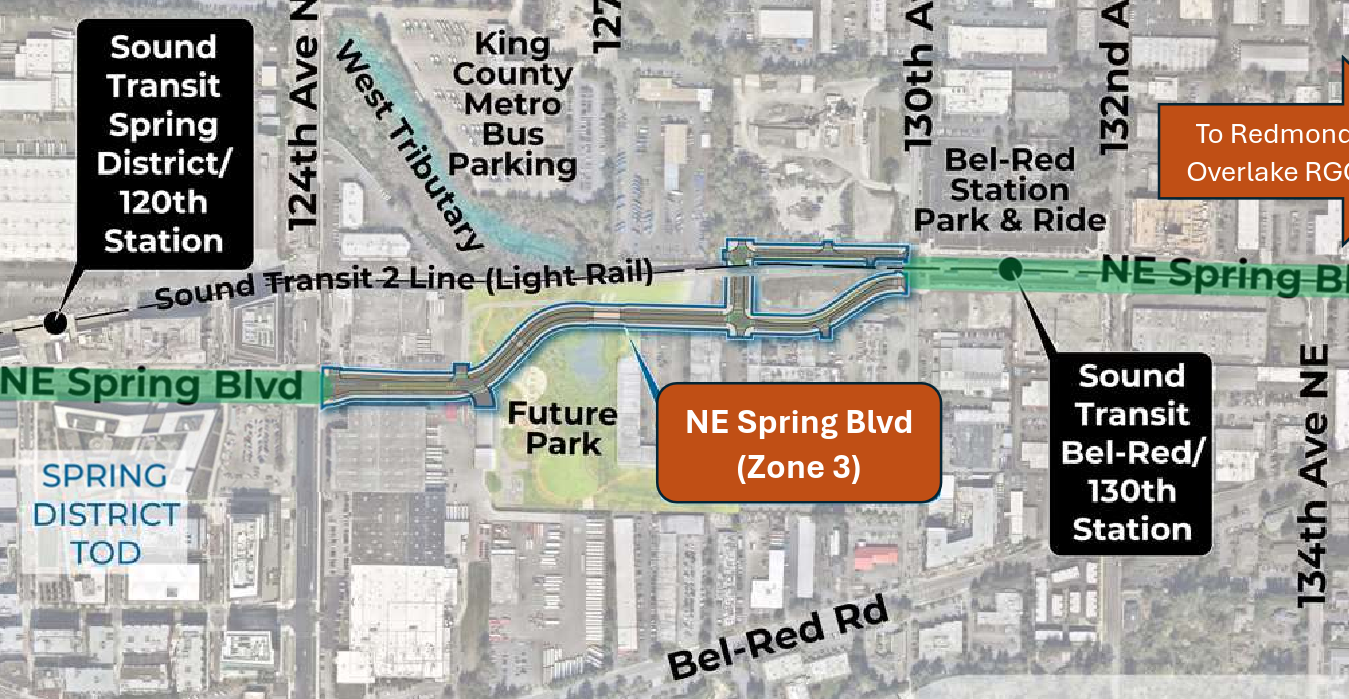
The "major projects" category would amount to a full 35% of spending, with the majority of those new dollars devoted to completing the next phase of Spring Boulevard (Zone 3) through the BelRed neighborhood. Framed as a multimodal project, the $74.8 million connection would create an alternative for pedestrian-hostile Bel-Red Road – which the Council decided against making safer for people on bikes in 2024. But with two general purpose lanes beefing up the need for property acquisition, the benefits of the project for people who walk and bike in Bellevue won't really align with its cost.
There's also the fact that the road cuts right through what is intended to be a new park for the future residents of BelRed.
The scenarios laid out on Tuesday do invest plenty in vehicle capacity in their own right. Scenario two, which includes only the sales tax increase, includes $18.9 million in new funding for projects specifically intended to address driver travel times on top of $49.3 million under the status quo. That includes $10 million to widen two intersections to improve traffic flow. With scenario three, which includes the new car tab fee, that would increase to $25 million, getting another intersection widening across the finish line.
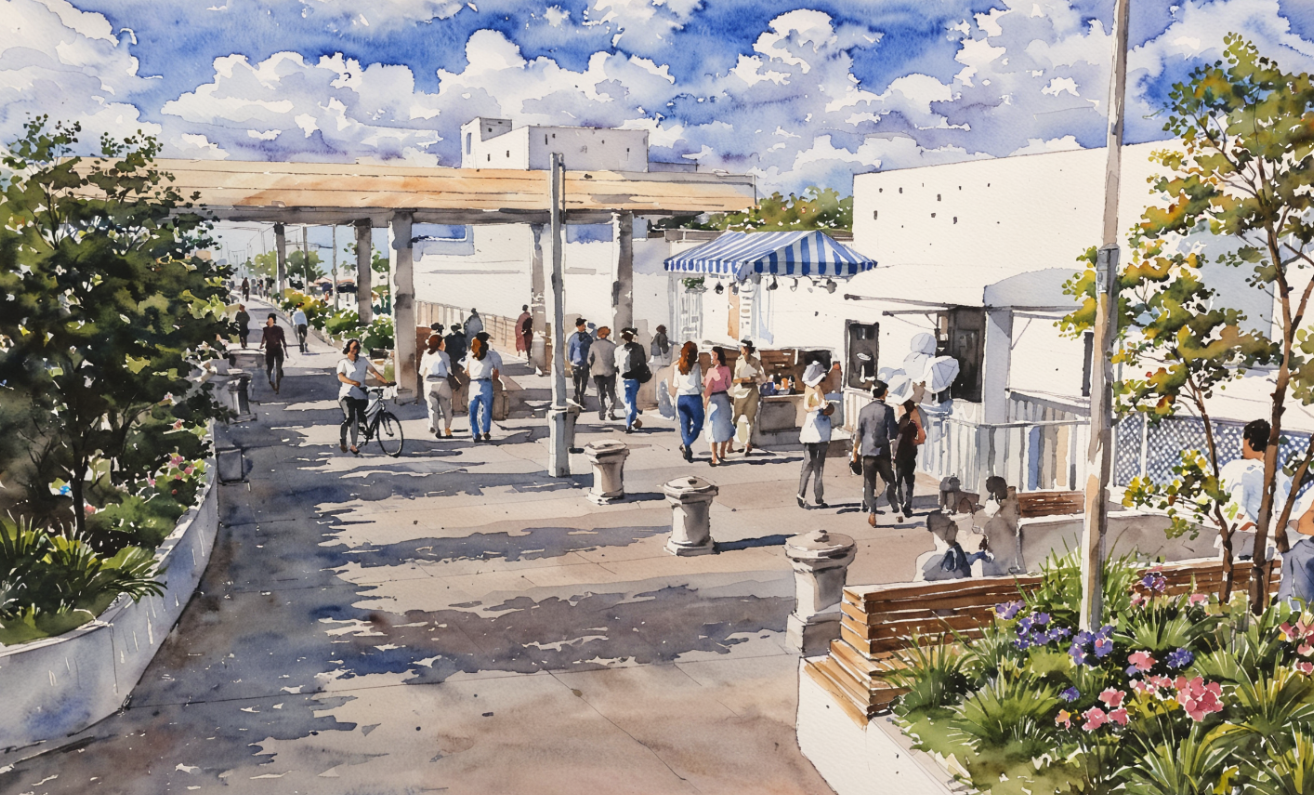
There's also the issue of the Grand Connection Crossing, Bellevue's plan to build a pedestrian bridge over I-405 between Downtown and Wilburton and create a brand new multimodal connection as well as an opportunity for placemaking. Under either scenario 2 or 3, the $265 million project would receive a $10 million investment, freeing up dollars that had been set to go to the crossing from the general fund – dollars that could potentially go to any other city spending. Recently the City of Bellevue received buy-in from several regional governments to tap into tax-increment financing to pay for a much bigger share of that project's total cost.
These potential funding sources recently won over a major Bellevue stakeholder. Three years ago, the Bellevue Chamber of Commerce had initially opposed the idea of tapping into the unutilized transportation benefit district, which cities like Seattle have long been using to fund infrastructure. But now they've come around, officially conveying support for the move Tuesday night. But the business group, which has convened a Bellevue Mobility Coalition to weigh in on transportation issues, has conditions.
The group has framed an intense desire to see the sales tax revenue generated by the 0.1% increase – "paid largely by businesses" – serve the city's high-growth areas like Downtown, Wilburton, Factoria, and Eastgate. The smaller tranche of car tab funding, the group said in an October 6 letter, should "primarily benefit neighborhoods."
In comments Tuesday night, a Chamber representative also told councilmembers they want to see any additional funding that comes in beyond projections get devoted to vehicle infrastructure – namely intersections that are considered "deficient" in terms of how much delay drivers experience getting through them. The group also made clear that they don't support the idea of repurposing traffic lanes to create bicycle facilities, one of the most cost-effective ways for cities to make streets safer.
"Our support depends on four things. First, funding for Spring Boulevard Zone 3, 120th Avenue NE Stage 4, and the Grand Connection stays sufficient to complete the projects," Tony Sprague, Public Policy Manager for the Bellevue Chamber of Commerce, told councilmembers. "Second, the underperforming intersections fund is increased and focused on growth corridor arterials with the first $10 million of any surplus sales tax collections dedicated. Third, vehicular capacity is not reduced for bicycle facilities except as a last resort. Fourth, sales tax revenue is not shifted to neighborhood programs that the car tab should fund."
Mariya Frost, Vice President of Government Affairs for Kemper Development Company (a member of the Bellevue Mobility Coalition), went even further than the Chamber, requesting that the Council put the revenue sources to a public vote and suggesting the proposals invest too much in walking and biking. The company, which recently announced an intention to sell its holdings in Bellevue, has been actively involved in transportation decisions in the city going back decades.
"If council decides to move forward without a public vote, project funding must prioritize traffic congestion relief and accommodating vehicular travel associated with Bellevue's growth," Frost said. "The rationale I've heard is that we need to balance the system across all modes, but it makes little sense to disproportionately pour millions of dollars into lower demand infrastructure while the roadway network carrying nearly 70% of our workers and residents is actively breaking down."
But so far Councilmember Jared Nieuwenhuis has been the lone voice on council framing either scenario as investing too much in walking and biking.
"Throughout the different scenarios, there's substantially more funding for bikes and pedestrians than vehicles," Nieuwenhuis said. "You're looking for that balanced approach, [a] multimodal approach. I totally agree with that, but I'm also cognizant of the fact the vast majority of people that who come into our city do so in a vehicle, in their car."
Other councilmembers have only expressed frustration that the investments the city has planned aren't able to be implemented sooner, but also haven't signaled a willingness to rebalance any of the funding scenarios by prioritizing safety projects over intersection widenings.
"Every year at this time, we have the Walk and Roll to School Day commitment proclamation. And I always think to myself, is it really safe to expect that our families are going to ask their kids to walk or roll to school?," Councilmember Lynne Robinson said. "And I know every year it gets a little safer, but we have so many holes in our infrastructure that most families I don't think do feel comfortable having their kids get to school independently, and that just creates a huge line of cars and congestion in our neighborhoods."
Councilmember Naren Briar made similar remarks, echoing comments she made back in April about wanting to see more funding devoted to neighborhood traffic calming and safety upgrades.
"If a seven-year-old has no sidewalks or a crosswalk to rely on when waiting for the bus in the dark at 7am, those children are our top concern for me, and their safety and their well-being, as opposed to prioritizing one mode over the other," Briar said. "I think neighborhood improvement is what I would really like to see. I understand that if we get to a place where taxes have to be raised, I do firmly believe that it needs to prevail through the scenario that benefits the neighborhoods the most."
While the attempt to strike a "balanced approach" illustrates Bellevue's current state as formerly car-oriented suburb trying to find a path toward being a more cosmopolitan place, there are signs that the reality of trying to keep planning around cars is starting to sink in.
"As we grow over the next 20 years, there will be limited capacity for additional vehicle facilities," Deputy Transportation Director Mark Poch said. "Right of way is limited. We have really good regional transportation we need to connect to, a lot of people connect to that by foot or by bike, as you know. Trying to find that balance so that we're able to meet that growth is really the key objective and making sure that we were aligned with what the community thinks – not one for one, but in the same ballpark, I think was important."
Bellevue's budget deliberations are set to continue throughout this month, with major decisions coming at November 3 and 10 meetings ahead of a final vote on November 17.
 Ryan Packer