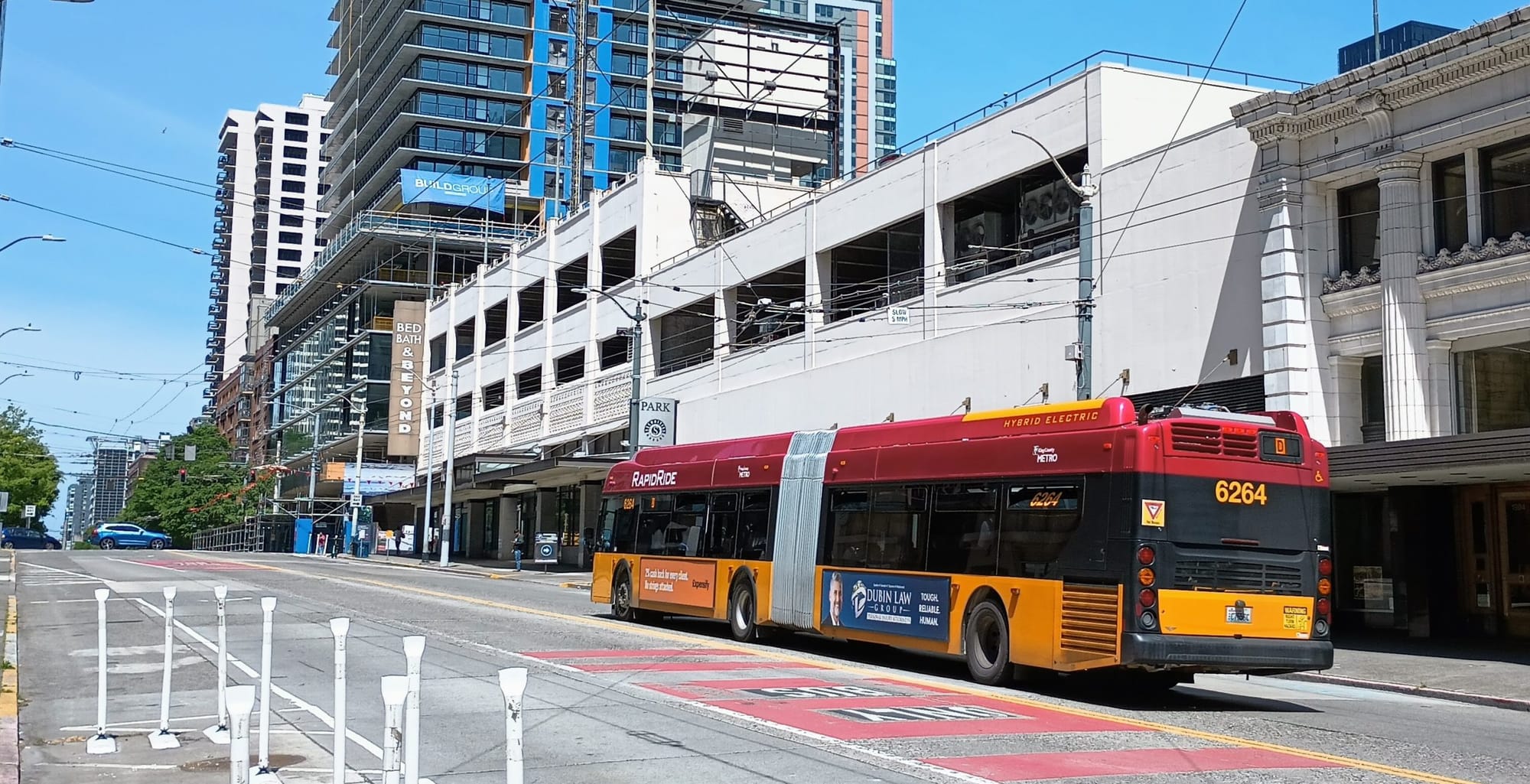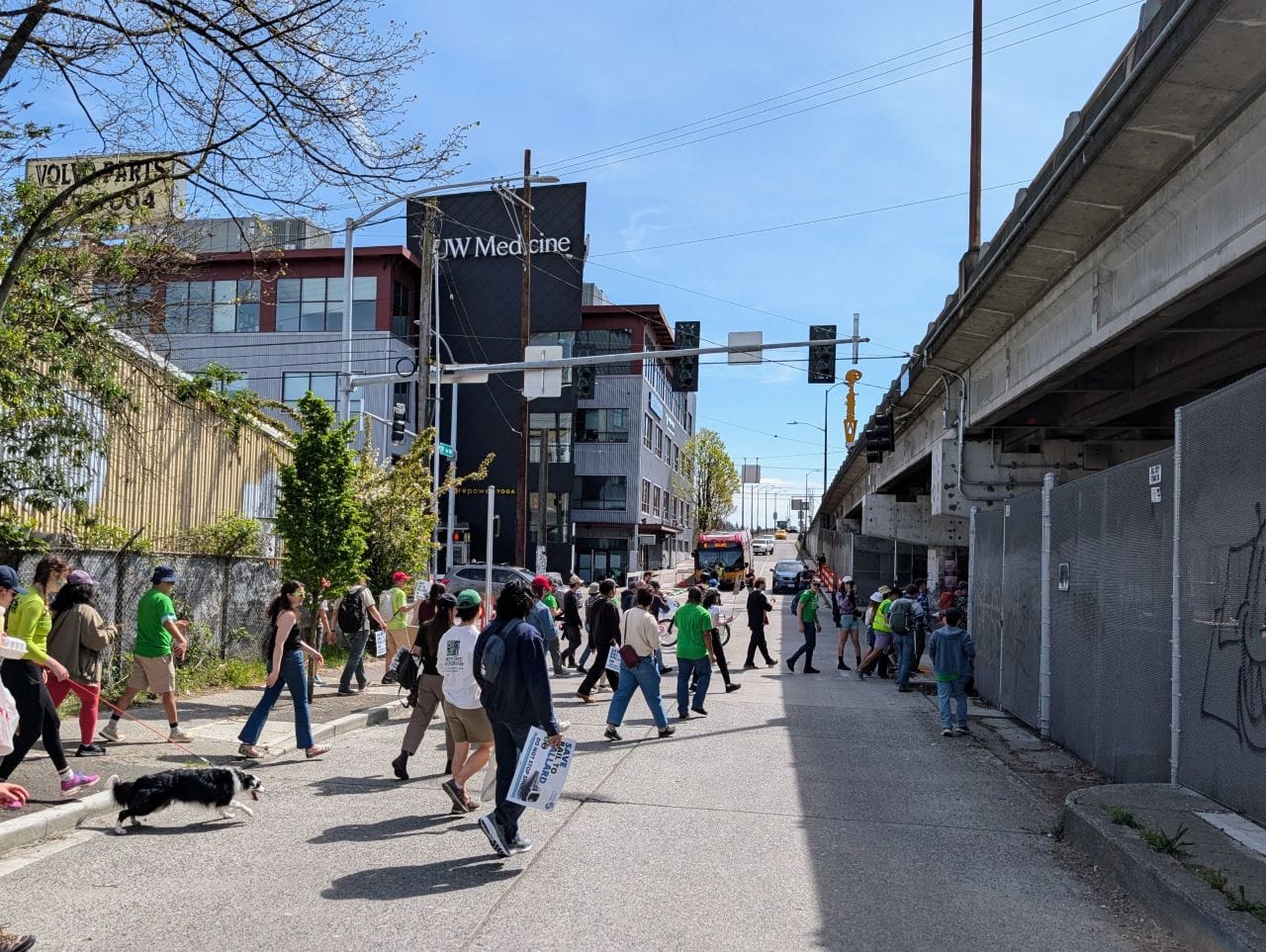
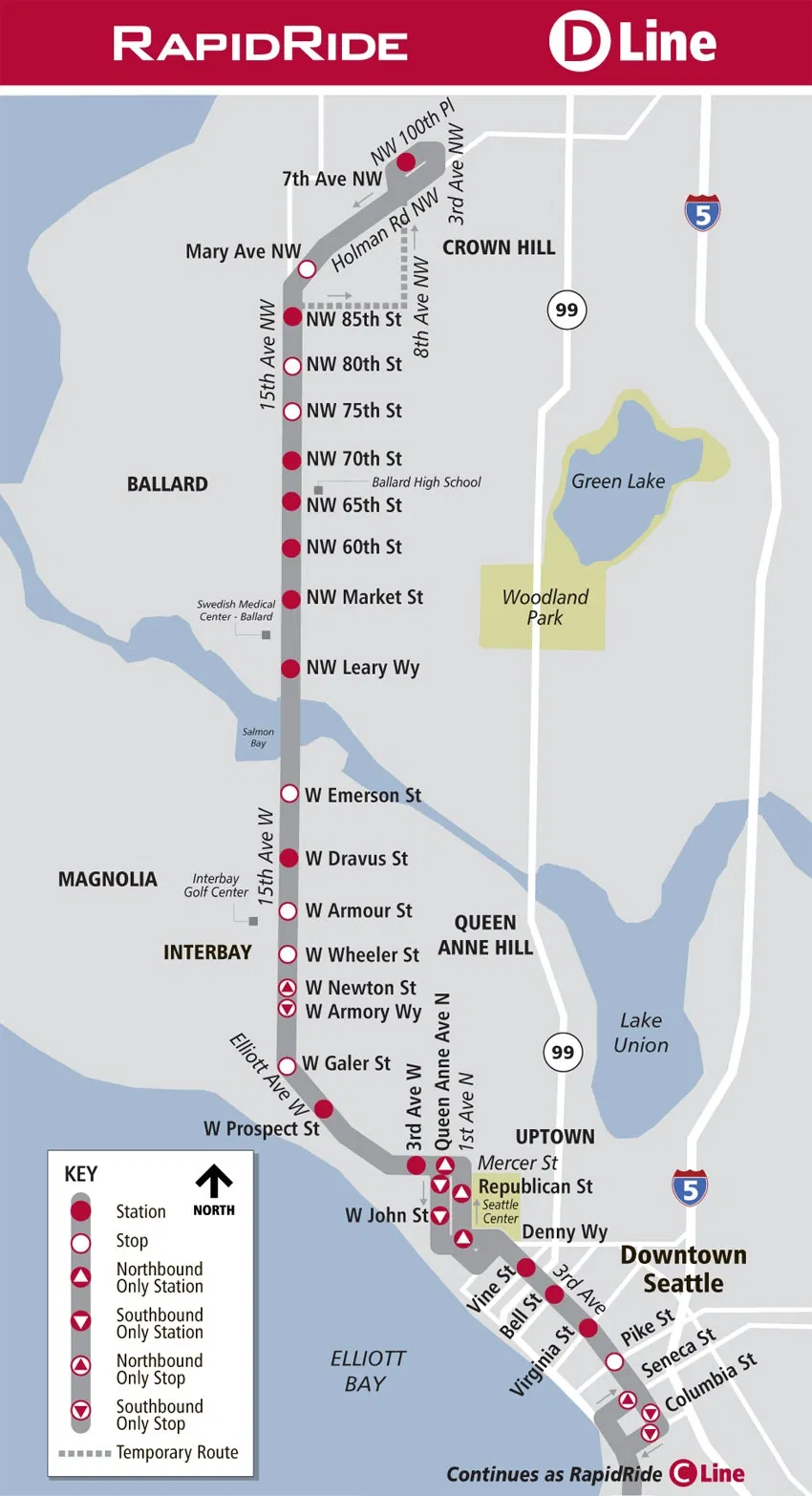
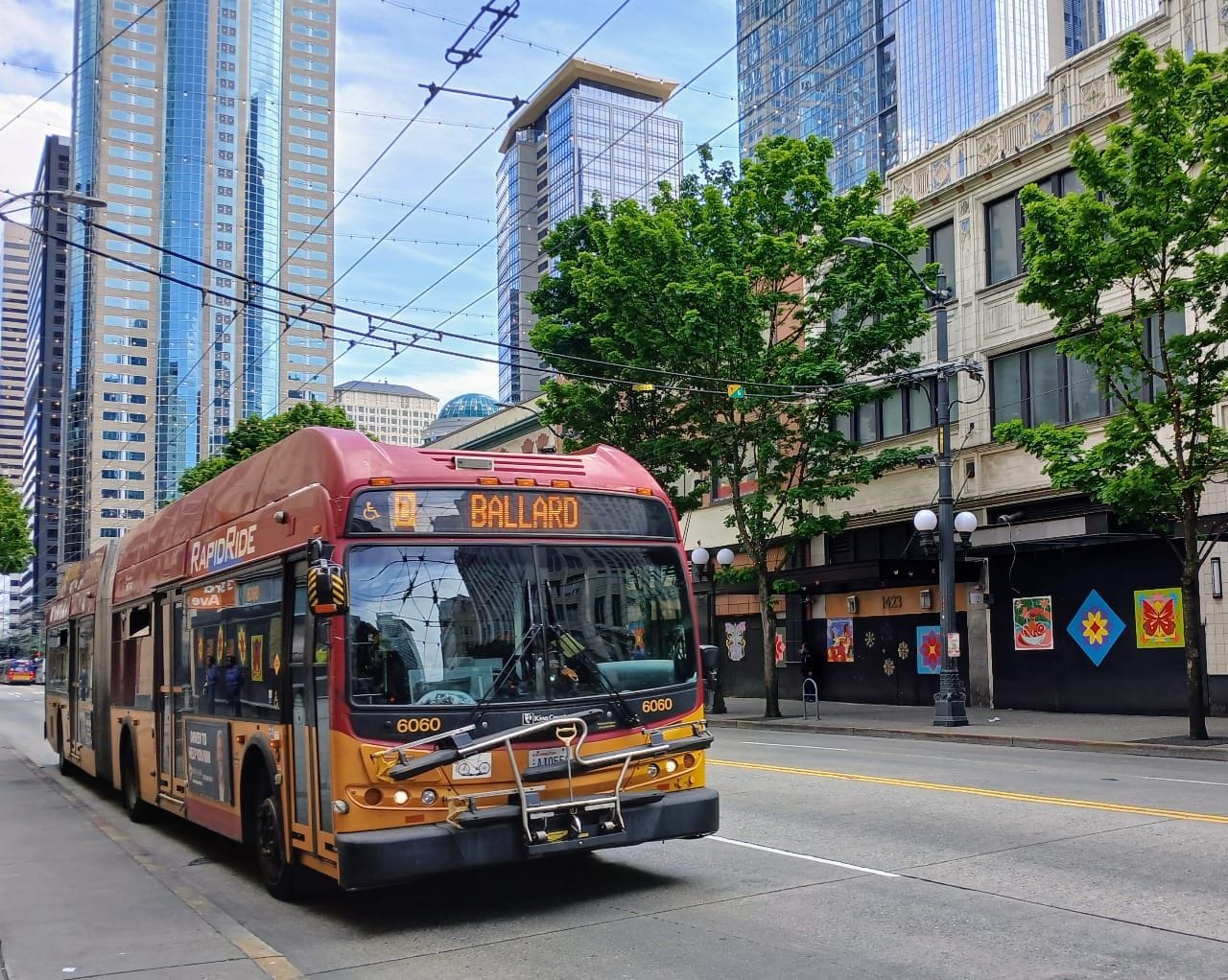
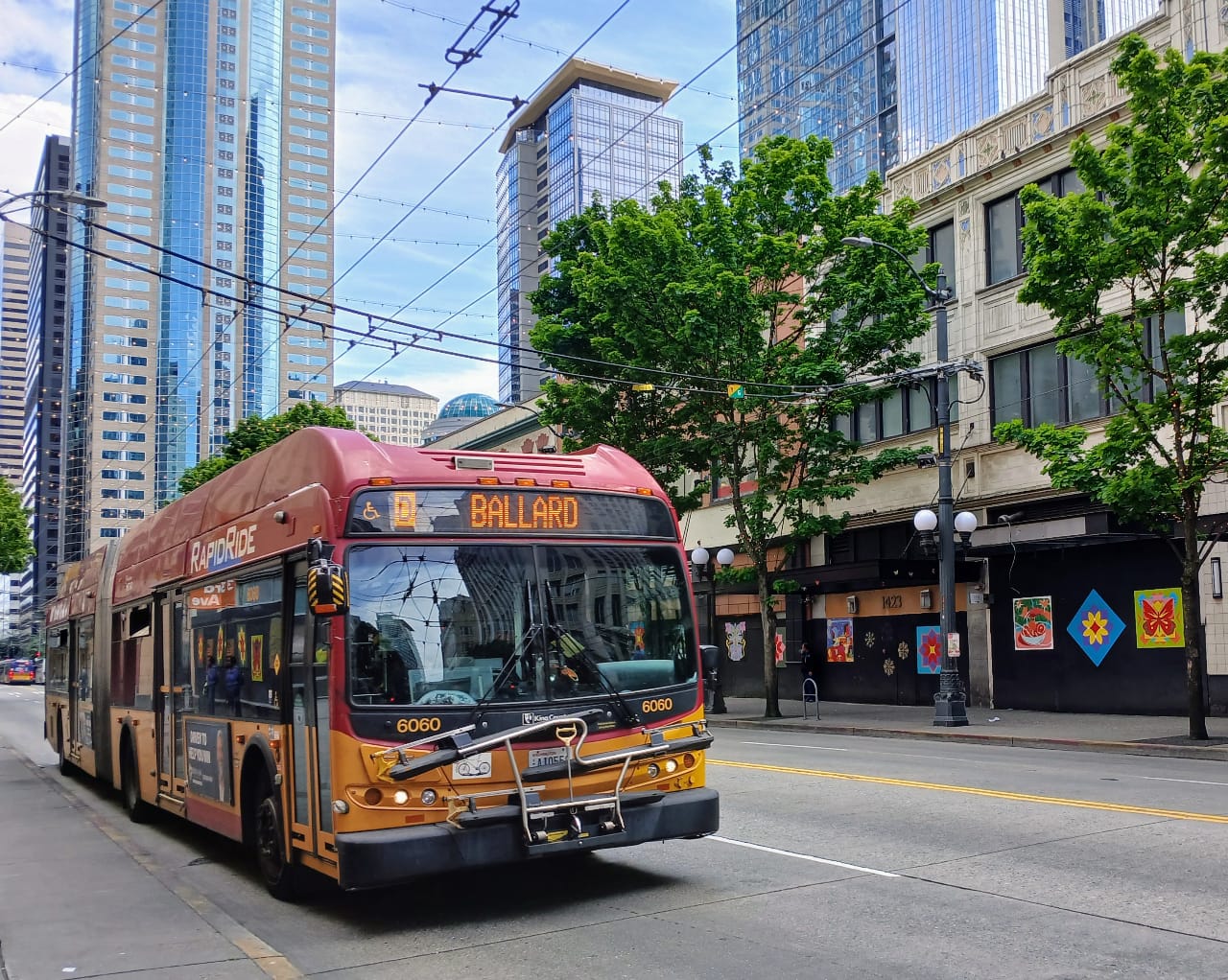
On Thursday, the Sound Transit Board allocated $500,000 to fund a study of bus speed and reliability improvements for the RapidRide D Line, which runs from Downtown Seattle to Ballard and Crown Hill. It's an early signal that D Line riders can expect a faster ride – a few years down the road, anyway.
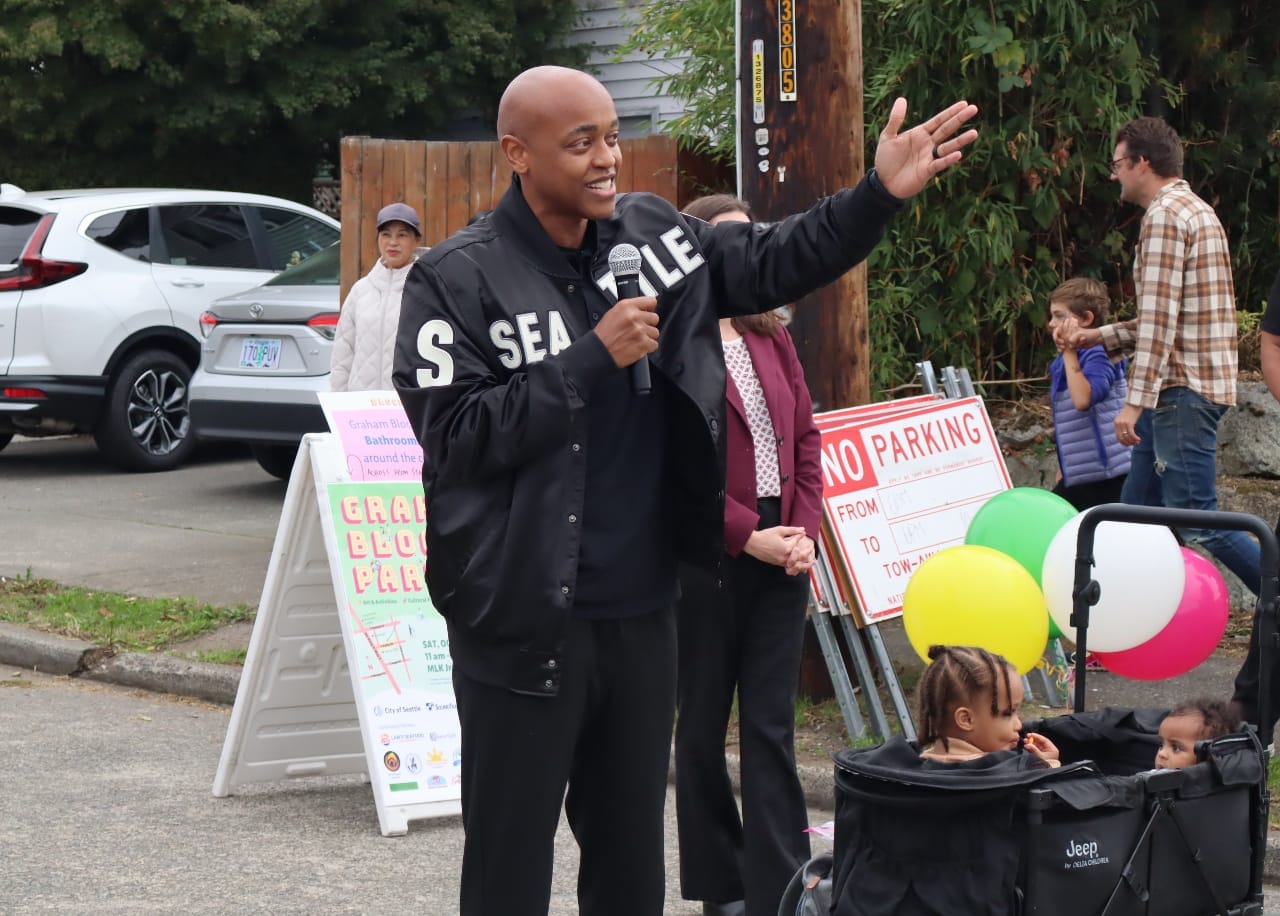
King County Executive Girmay Zahilay brought forward the budget amendment, with support from Tukwila Mayor Thomas McLeod and the entire Seattle delegation on the agency board: Mayor Katie Wilson, City Councilmember Dan Strauss, and County Councilmember Teresa Mosqueda.
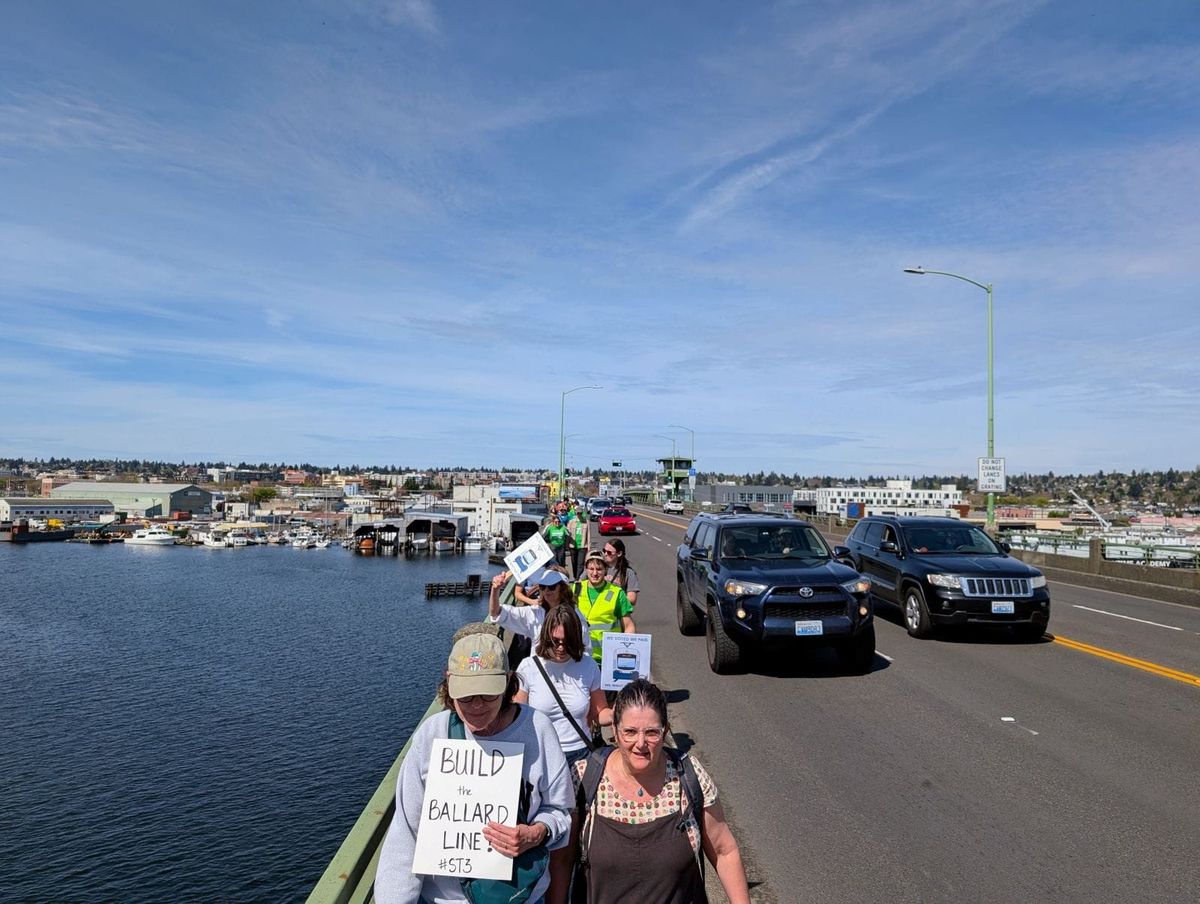
A timeline for the project was not immediately clear, but supporters noted it was important to provide interim improvements while Ballard and Interbay wait on its delayed light rail project. In 2016, the campaign for the successful Sound Transit 3 (ST3) ballot measure pledged to deliver Ballard Link by 2035, but the timeline has slipped since then.
“I’m very, very happy to be sponsoring this amendment, bringing half a million dollars forward, so that Sound Transit and the City and King County can together work to advance the planning and improve the RapidRide D to Ballard," Wilson said. "We know that that’s no substitute for light rail, but right now it is the third busiest route in King County. It carries more than 10,000 riders a day, and making this bus work better will ease the mobility burden in this regional growth center and keep people moving while we do that longer term work.”
Zahilay credited the Save Ballard Rail coalition with raising the need for D Line improvements. Designing the project will entail a collaboration between Sound Transit, the Seattle Department of Transportation (SDOT), and King County Metro. While Metro operates the bus, SDOT maintains the roadway over which it runs, and the Seattle Transit Measure also funds extra service that boosts bus frequency.
"I want to specifically thank Save Ballard Rail, who has been regularly in touch with my staff and asked us to look into ways to expedite improvements to the RapidRide D line," Zahilay said. "This amendment would move $500,000 of already committed funding for this project up to 2027 to ensure that Sound Transit, SDOT, and Metro explore options and start planning for these capital improvements that would be intended to speed up the RapidRide D."
Zahilay reminded the board that ST3 included funding for Seattle bus improvements as an early deliverable. Namely, it included $35 million to "design and implement transit priority improvements along King County Metro’s RapidRide C and D lines that provide service to Ballard and West Seattle as an early deliverable to provide improved speed and reliability, in advance of light rail starting operations to these areas."
"When voters approved Sound Transit 3, they approved a modest amount of funding to advance the RapidRide D resources for capital improvements, bus and traffic signal priority, just to help move people in the interim while the light rail station and light rail was getting to Ballard," Zahilay said.
That funding was a victim of the 2021 realignment vote, which delayed a number of projects due to pandemic-related planning delays and budgetary strain. The early deliverable went from an early deliverable to a late deliverable without a definite timeline.
"This was originally designed to be an early deliverable in 2025, but in 2021, the board voted to delay the timeline as part of a realignment plan, and I want to speed things back up again," Zahilay said. "I think this board has made it clear that getting to Market Street in the long term, as the CEO mentioned, is a priority for this board. And we have also said that, in the short term, we want to improve transit service in that area through transit mitigation efforts."
As it stands, Sound Transit's best-case scenario for light rail to reach Ballard is 2042 – although the agency has granted that many hurdles remain and has not ruled out the opening date slipping to the 2060s if those hurdles are not navigated.
Jonatan Gonzalez, an organizer with Save Ballard Rail, spoke in favor of the amendment at Thursday's board meeting.
"As we know, Ballard is waiting for light rail, and we can improve bus service now," Gonzalez said. "That'd be amazing."
Metro spokesperson Jeff Switzer told The Urbanist that Metro, in partnership with SDOT and Sound Transit, had some earlier planning to build upon, but that those concepts would need updating.
"Following voter approval of this investment in 2016, work began to identify projects that would improve speed and reliability along the corridor," Switzer said. "That effort was paused following the initial realignment process, and Metro plans to update the analysis to identify RapidRide D enhancements that can be delivered in the near term for the benefit of riders."
Wilson and Zahilay both emphasized bus improvements in their successful runs in 2025. Zahilay reiterated that accelerating the R Line project, replacing Route 7 in the Rainier Valley, was a priority for his administration, and recently cleared a King County Council committee approval vote.
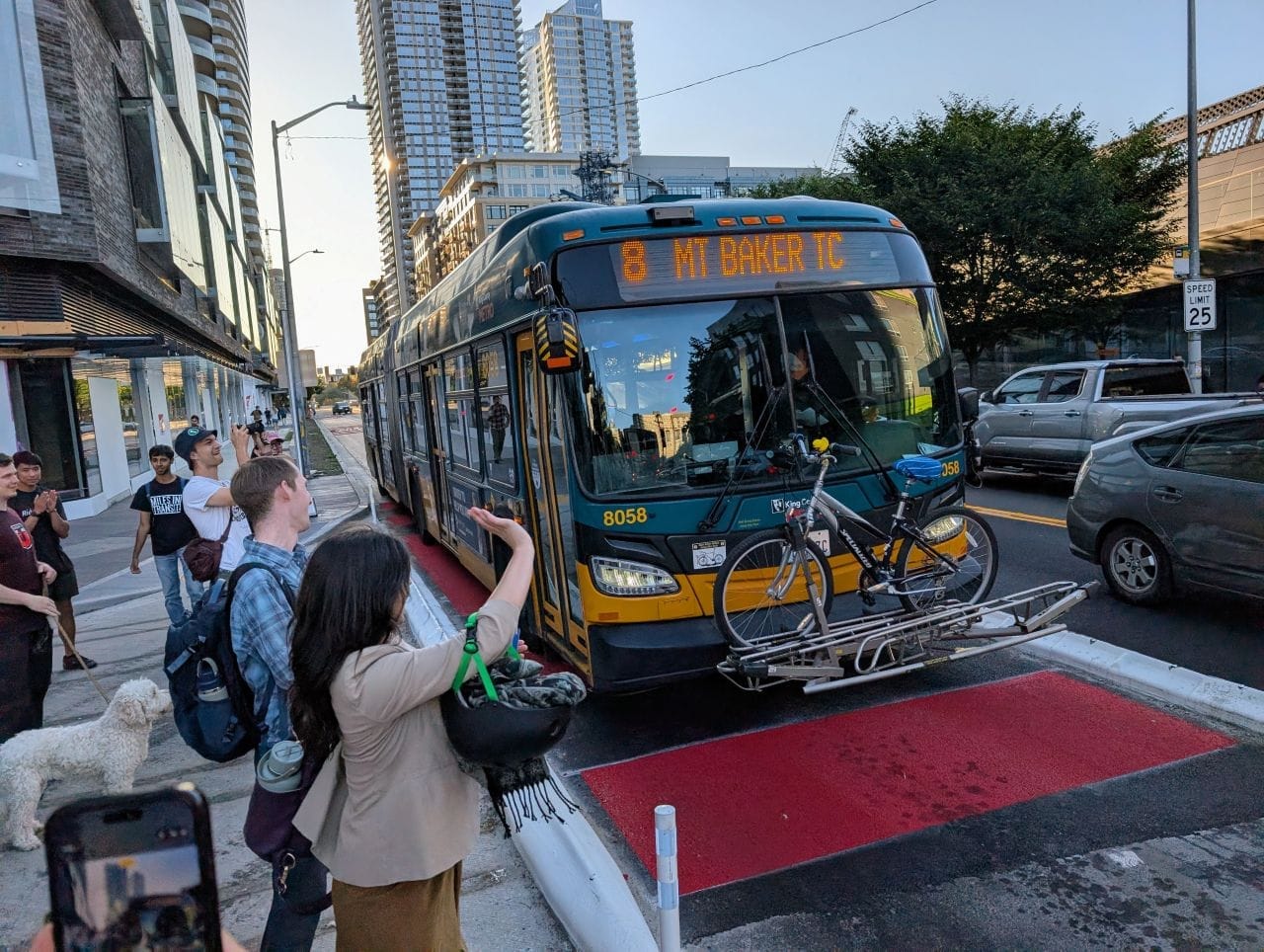
One of Wilson's signature moves in her first year, meanwhile, was rapidly rolling out a bus lane for Route 8. Long notorious for its lateness, Route 8 has since seen a dramatic jump in speed and reliability thanks to the street redesign, a project her predecessor, Bruce Harrell, had sought to frame as completely infeasible.
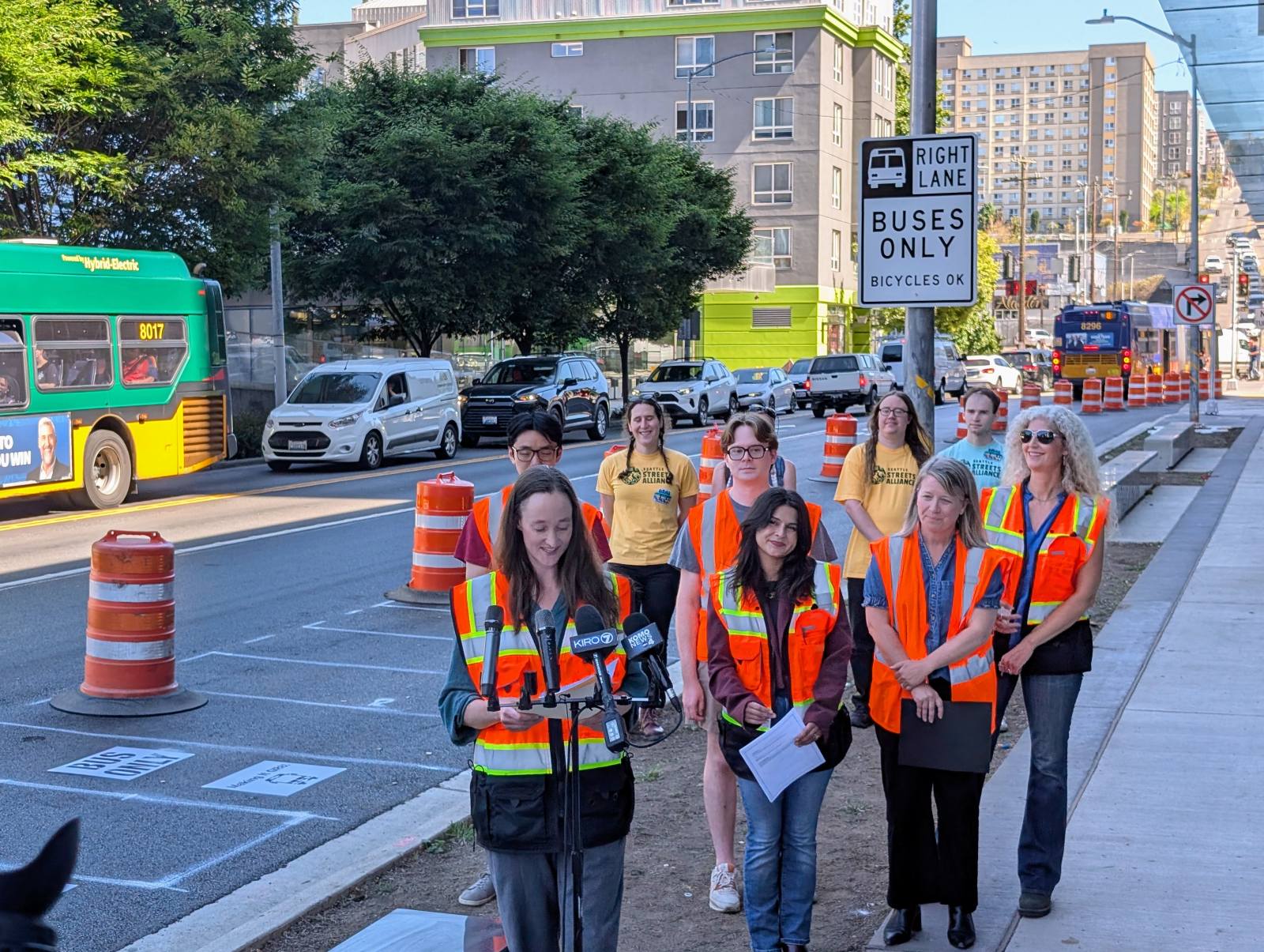
The same style treatment for the D Line could result in huge time savings for riders. The route lacks consistent bus lanes outside of downtown, with SDOT offering brief sections a few blocks at a time rather than a connected treatment.
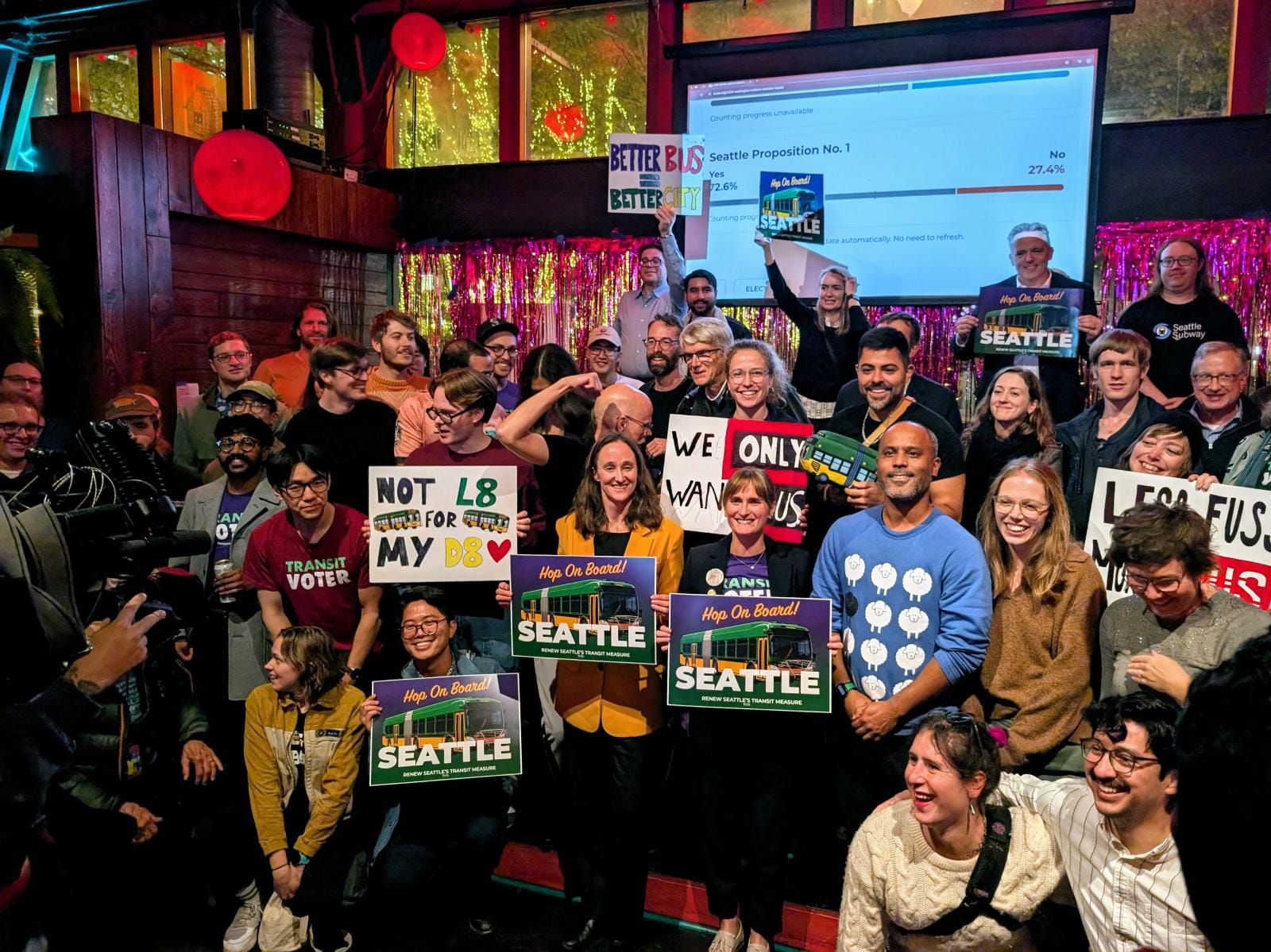
Another big move for Wilson was a renewal proposal that doubled the size of the Seattle Transit Measure, which will provide funding to boost frequencies on about a dozen bus lines, with the D a likely candidate. The transit measure passed resoundingly in November with more than 72% of the vote.
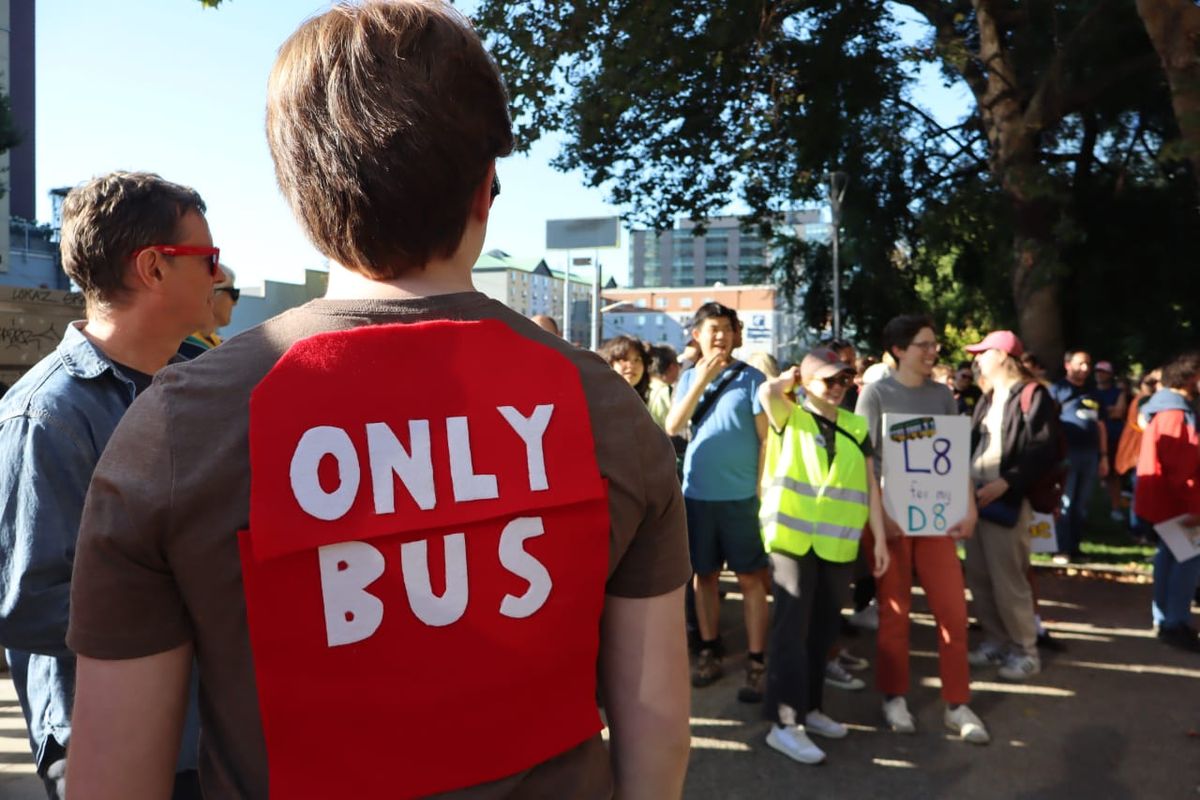
With the D Line study just now getting off the ground, the scope of the project is not yet clear. Strauss floated the idea of an express bus with reduced stops shadowing the route. He also underscored how slow the bus is now.
"I will state: that RapidRide is very slow," Strauss said. "It is a milk-run bus out to Ballard going through Uptown. Its travel times are 40 to 45 minutes from where you sit right now just to downtown Ballard."
As riders reacted to the news, some disputed the trip times Strauss has quoted as exagerrated.
"Why does he feel the need to pad everything? It's 27 to 36 minutes from Pioneer Square to Market Street depending on time of day," Seattle Transit Blog contributor David Lawson wrote in a Bluesky post. "Lots of room for improvement, but the work that's already been done has made a difference."
One joked that Strauss did not know what a milk run is, alluding to the D's straight rather than circuitous routing. On the other hand, another D Line rider noted reliability and bus bunching issues can add wait times at stops.
Strauss has mentioned on multiple occasions that he thinks the routing through Uptown to serve Seattle Center slows the route down too much. The drawback would be that skipping the Seattle Center would decrease Northwest Seattle's access to that popular destination, and it may require shifting another route over to provide adequate coverage for Uptown.
One way or the other, improvements appear inbound, although just how dramatic and imminent is yet to be determined.
"The RapidRide D Line serves 10,500 riders on an average weekday and is the third busiest route in the region. It provides critical connections between Ballard, Interbay, Uptown, and Downtown Seattle, while also linking customers to other frequent transit services throughout the city," Switzer said. "We look forward to partnering with Sound Transit and SDOT to advance improvements that enhance reliability, speed, and the overall customer experience on this important corridor."
 Ryan Packer
 Ryan Packer
 Ryan Packer
 Ryan Packer