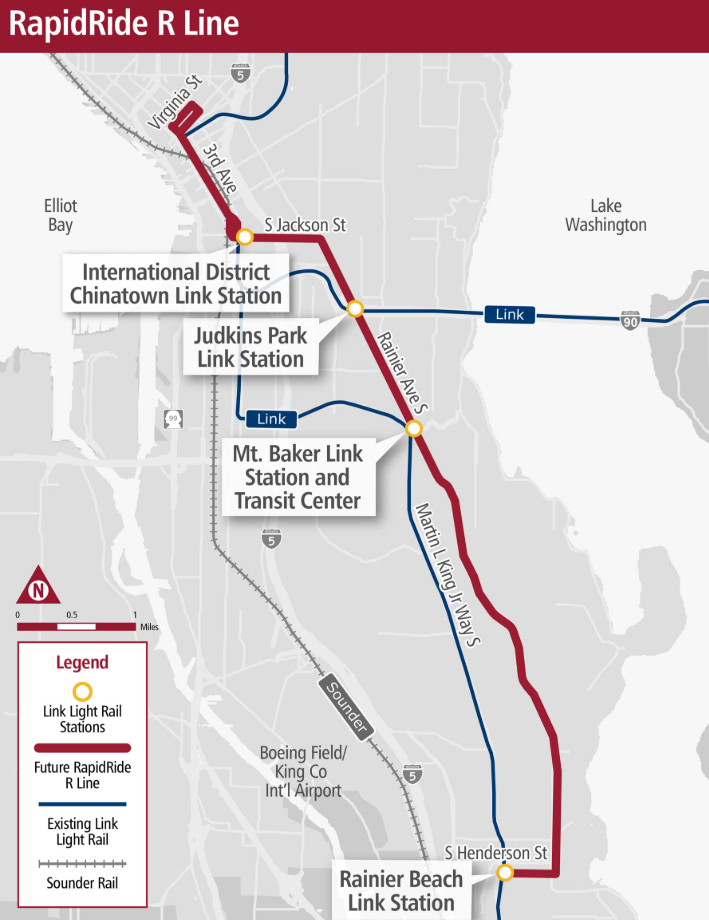
King County Executive Girmay Zahilay has proposed to advance a significant portion of the funding for Seattle's RapidRide R Line, in the hopes of achieving an "accelerated delivery timeline." The project will run between Downtown Seattle and Rainier Beach and replace the current Route 7. It is currently slated for a 2032 ribbon-cutting, which Zahilay has touted the possibility of moving up.
However, early designs for the R Line are seeing pushback, over changes that are seen as degrading an existing bus route that is already one of King County Metro's busiest.
Out of the R Line's total $91.2 million expected cost, $64.4 million would be advanced into the current 2026-2027 budget, if the County Council signs off on Zahilay's "omnibus" budget proposal as transmitted last month. That cash advance comes in the wake of a decision to not seek federal dollars for the R Line, something that reflects a bleak federal transit environment and also a hope that Metro would be nimbler without federal strings attached.
Metro is planning R Line upgrades in conjunction with major planned repaving work on Rainier Avenue being advanced by the Seattle Department of Transportation (SDOT). An overhaul of the corridor from S Jackson Street to S Walden Street in Mount Baker, being paired with maintenance work on S Henderson Street in Rainier Beach, is expected to cost the city more than $100 million and provides an opportunity to include changes like new bus lanes, enhanced sidewalks, or separated bike facilities.
"Our goal in accelerating this funding is to build a strong partnership with SDOT and bolster our shared commitment to this project," Callie Craighead, Zahilay's press secretary, told The Urbanist. "King County Metro and the Seattle Department of Transportation are actively working to develop plans for shared investments along the RapidRide R alignment that minimize construction and roadway impacts, save costs, and support an accelerated delivery timeline. We heard from SDOT that they would like King County to make a stronger funding commitment to the project to avoid another situation where uncertain funding leads to delays or pauses in the project."
As a bus route that bisects Zahilay's former county council district, the new County Executive has turned the corridor upgrade into one of his administration's major transit priorities.
"I'm challenging Metro to do anything in our power to work with the City of Seattle to build a quality product as fast as possible," Zahilay said at a Metro open house for the project in August. "Every single weekday people are relying on this [route], so I wouldn't be advocating for a RapidRide R on a personal level if I didn't know that it was going to make the service better."
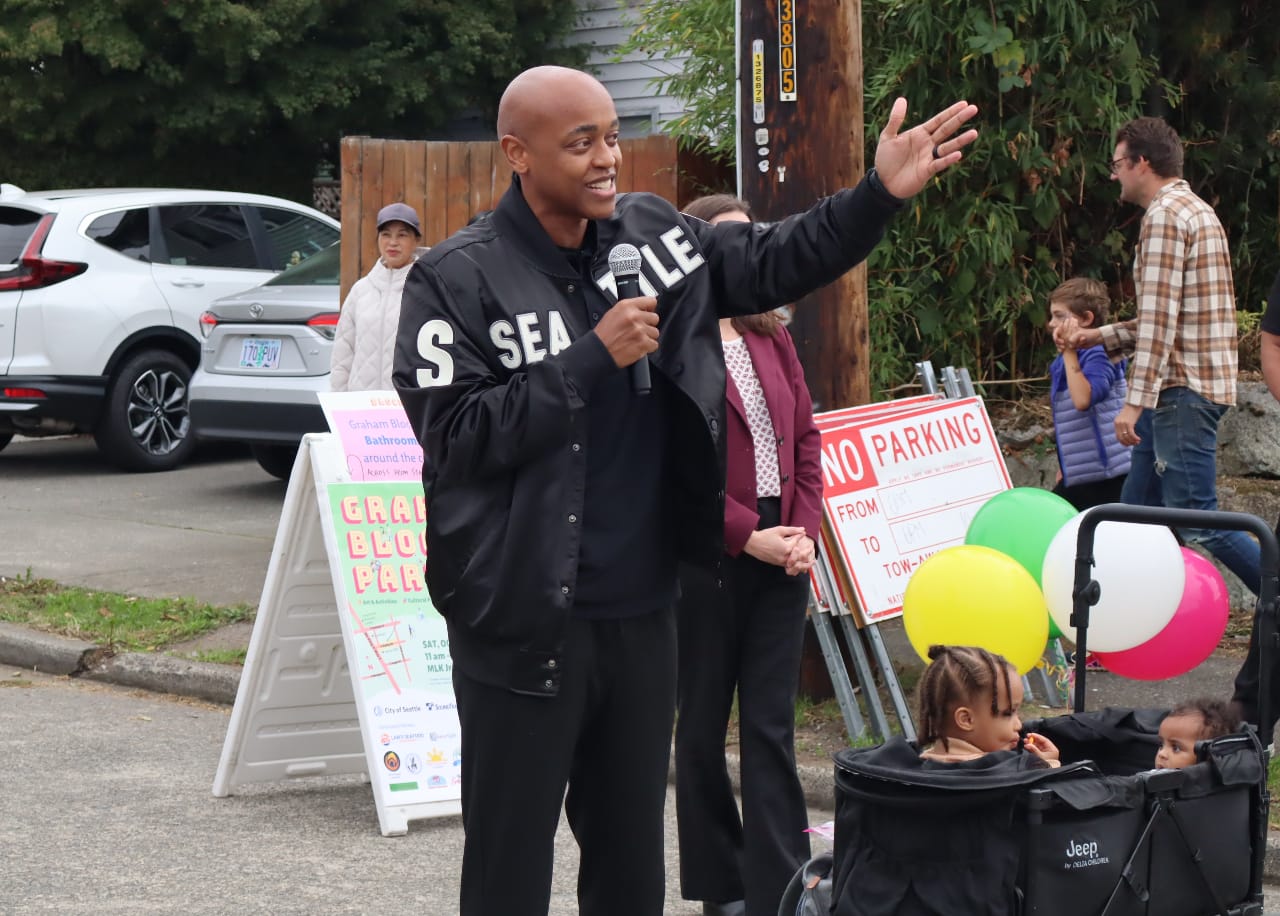
The Route 7 currently carries more than 11,000 daily riders on weekdays, making it the busiest route in Metro's network that never leaves the City of Seattle. With light rail running along MLK Way in parallel with the Route 7 for much of its route, the bus is often the choice for shorter local trips, or downtown trips for riders who aren't able to easily get to the faster train.
Officials hope the R Line will be significantly faster than Route 7, in part due to bus stop consolidation. But when early design concepts presented at open houses this summer showed that a significant number of existing bus stops were on the table to be eliminated with the conversion to the R Line, concerns mounted that current 7 riders would have longer walks to access transit than they do today, and people with disabilities might lose access altogether.
The maps that Metro recently presented resurfaced some of the same issues that plagued the project in its first iteration, before being officially put back on the shelf in 2021 due to financial constraints.
"A RapidRide would reduce the number of stops on the route, which would make it harder for people who currently rely on their local route," Urbanist contributor Ashley Archibald wrote that year, in a story that references many of the same issues that community members are bringing up now.
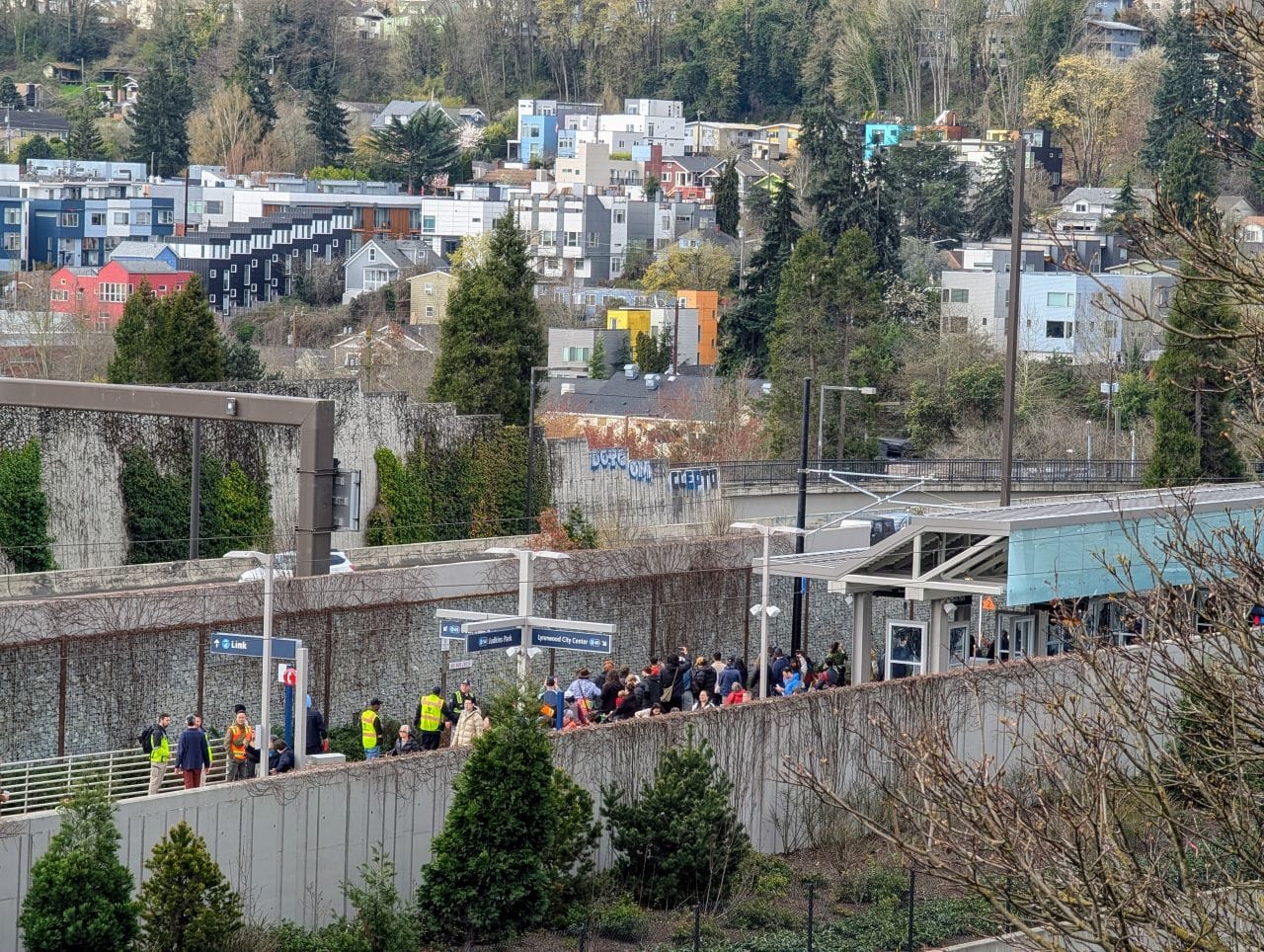
In the name of speeding up trips, Metro's initial concept would have consolidated 67 stops along the entire corridor into 45, counting both northbound and southbound trips. Along the northern segment of Rainier Avenue, for example, three northbound stops between Judkins Park Station and 12th Avenue would be converted into just one stop at S Dearborn Street. Heading south from Judkins Park, riders would have only one opportunity – at S Walker Street – to deboard before getting to Mount Baker Station.
Estimates produced by Metro in 2020 showed a travel time savings of 7.3 minutes to 11.7 minutes with the R Line during peak hours by 2040, but a big portion of those savings were expected to come from bus lanes that SDOT has actually implemented along some segments of Rainier Avenue since that time. Metro has not yet released any updated time savings data for its current concepts that reflect the gains that have already been made in reliability for the 7.
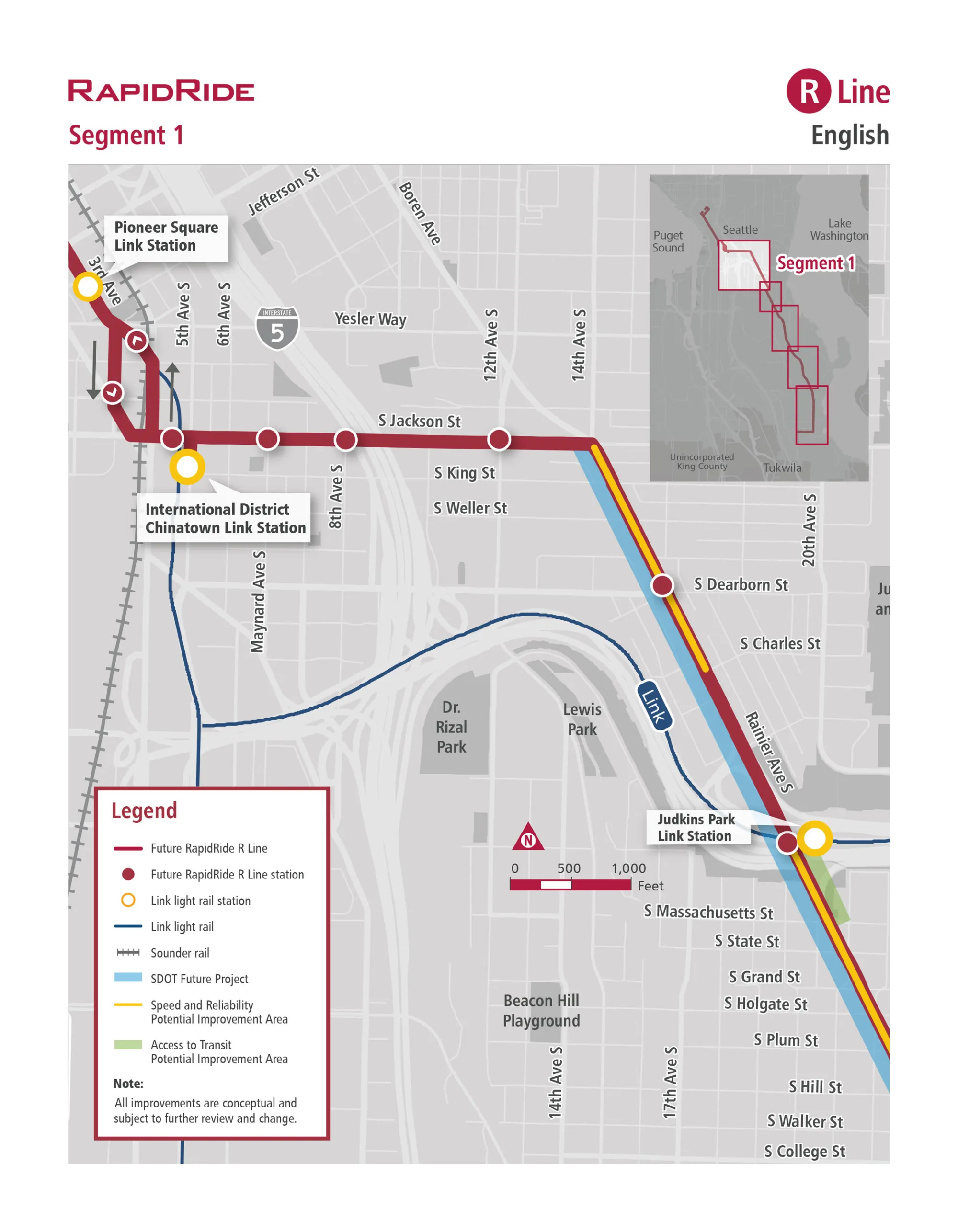
"There's a lot of folks using the bus to travel locally within Rainier Valley, and commuting to downtown as efficiently as possible is not necessarily the top priority for a lot of folks who are using transit right now on this road," Anna Zivarts, founder and executive director of the Nondrivers Alliance, told The Urbanist.
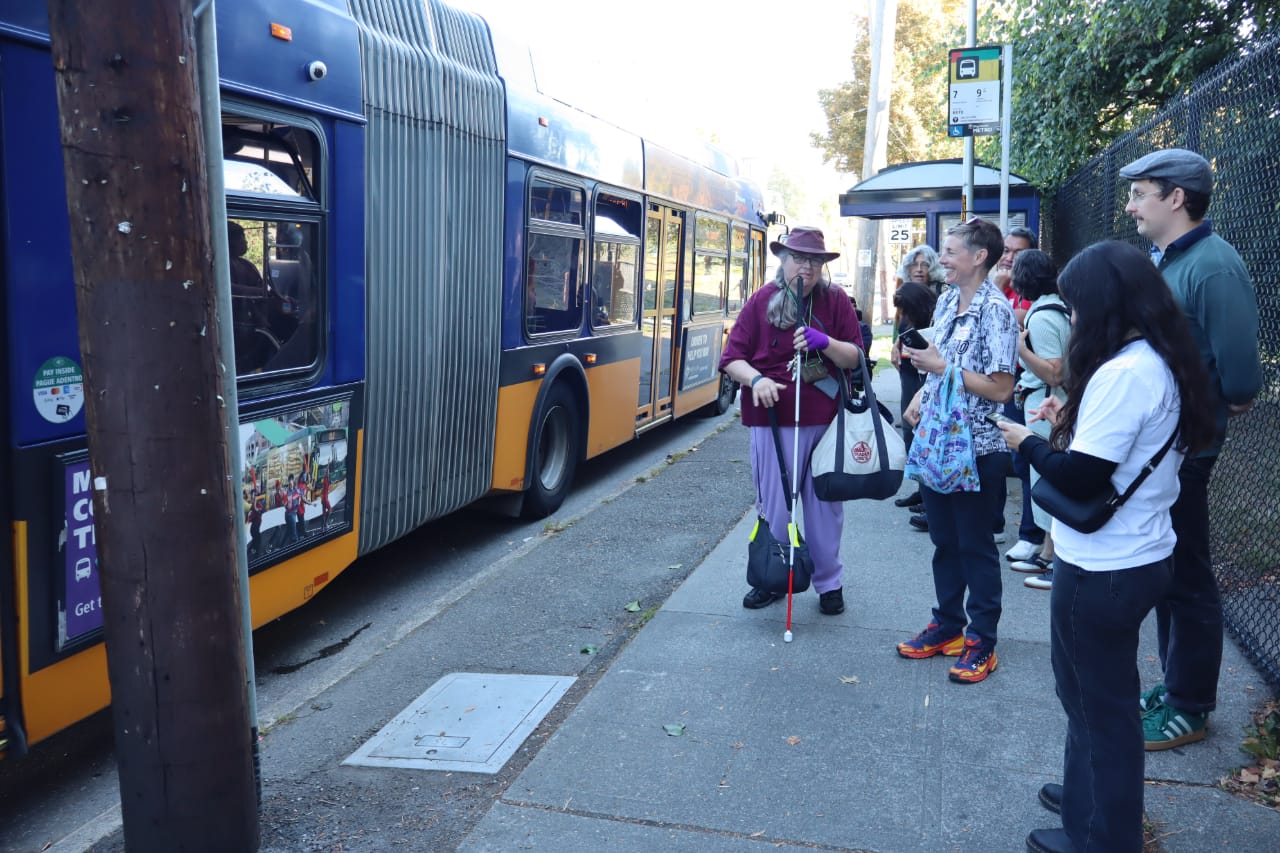
This past weekend, Zivarts hosted a Route 7 ride with local mobility advocates and elected officials to present them with an up-close view of who is actually using the bus today. In attendance were State Senator Rebecca Saldaña and Port Commissioner Toshiko Hasegawa – both are campaigning to become the next King County Councilmember for District 2 – as well as Seattle Councilmember Alexis Mercedes Rinck and 37th Legislative District state house candidate Kelabe Tewolde. The event was timed with the annual Week Without Driving.
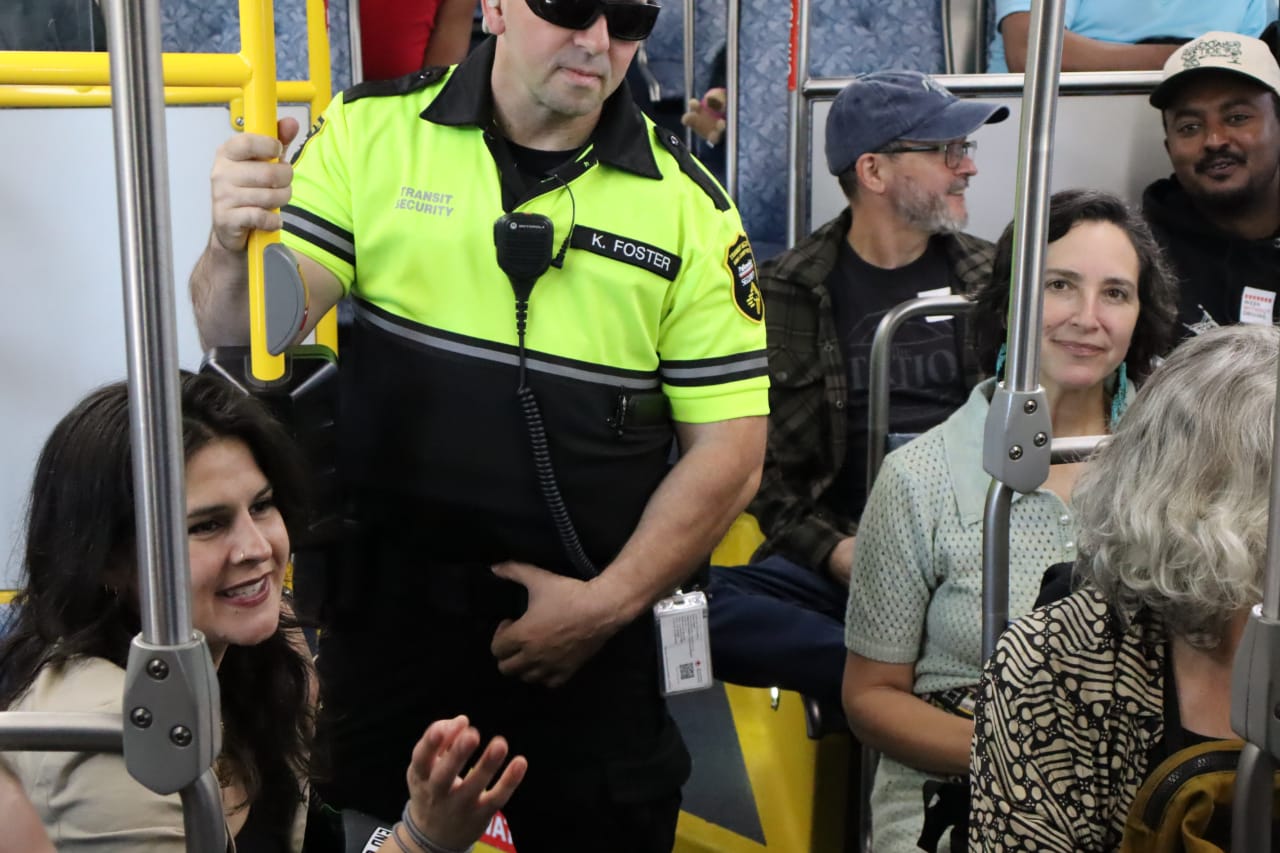
Rinck noted that Rainier Avenue was included in her "Better Bus Lanes" budget proposal that was unanimously approved last year, along with the successful Denny Way bus lanes that were installed this summer.
"We've made progress on bus lanes. We now need the frequency to match the need, and so that is why I'm really excited about RapidRide R, particularly from the frequency components that will come with it," Rinck told The Urbanist following the ridealong. "I have some outstanding concerns about the stop elimination plan, and I'm curious to learn more about what the county is thinking on that front. But the city is going to need to be a partner in those infrastructure improvements to support that project coming online. I'm really committed to working with riders and future riders of the 7/RapidRide R to make sure that it's meeting community needs."
Metro spokesperson Al Sanders told The Urbanist that the agency is still actively developing an updated proposal for RapidRide R, ahead of a potential King County Council vote confirming the route's alignment and planned stop locations next month.
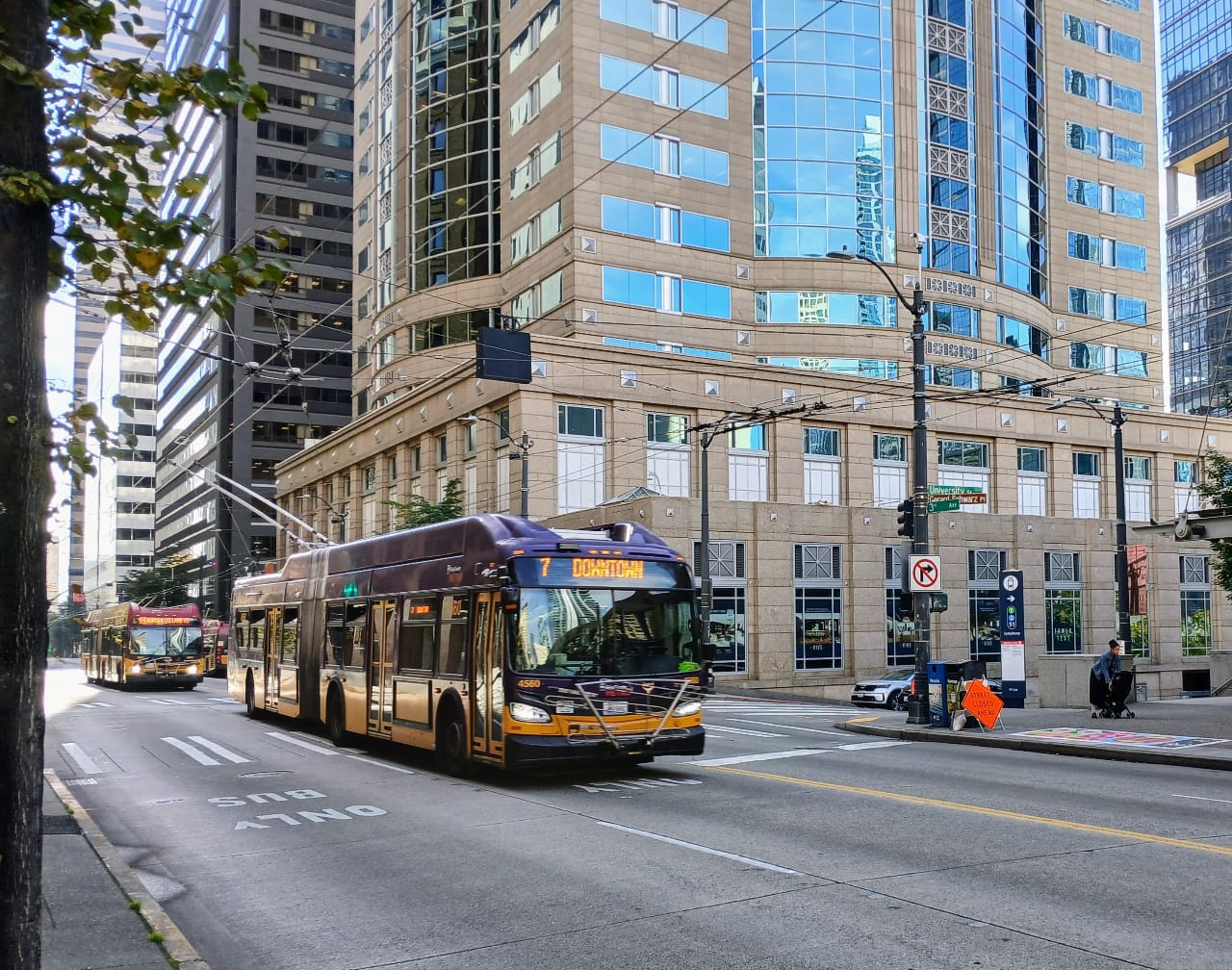
"Rescoping work for the R Line is still underway," Sanders said. "Metro is using what we’ve been hearing from the community, along with updated technical analysis, to help identify the highest-priority elements of the project. Because the corridor and travel patterns have changed since the original concept was developed, this step is critical to making sure the final design reflects current needs."
While the proposals presented this summer weren't much changed from the previous iteration of the R Line, the refreshed plans may be more aligned with current needs along the corridor and more responsive to critiques from riders.
"While we are still compiling all of the input, we have heard strong support for increased investment in transportation infrastructure in South Seattle and that riders want fast, reliable transit service throughout the Rainier Valley. We are also hearing that stop locations and walking distance are important to Route 7 riders," Sanders continued.
Craighead said that Zahilay's office has been engaged with Metro when it comes to what that updated proposal looks like.
"Our team is actively working with King County Metro to develop a RapidRide R alignment proposal to transmit to the King County Council," Craighead told The Urbanist. "Executive Zahilay and members of his staff joined open houses about the project this summer to hear community feedback directly and are working with Metro to incorporate that feedback into the proposal. Delivering long-promised and long-overdue transit investments to South Seattle continues to be a priority for the Executive."
It will ultimately fall on Zahilay's office and the Metro team to thread the needle on what is already an intensely beloved bus, even if frequent bus bunching and overcrowding does get on riders' nerves.
"If we're trying to entice people into riding transit who have other options already, that's a different priority than meeting the needs of people who are already relying on transit and don't have other options in the Rainier Valley, and that's a very large population here," Zivarts said. "And so I worry with this RapidRide proposal, it's focused more on the theoretical person who might be enticed to ride transit if their commute was shorter, versus the people who need it to get to the grocery store, the pharmacy, or whatever they need to do along this corridor."
 Ryan Packer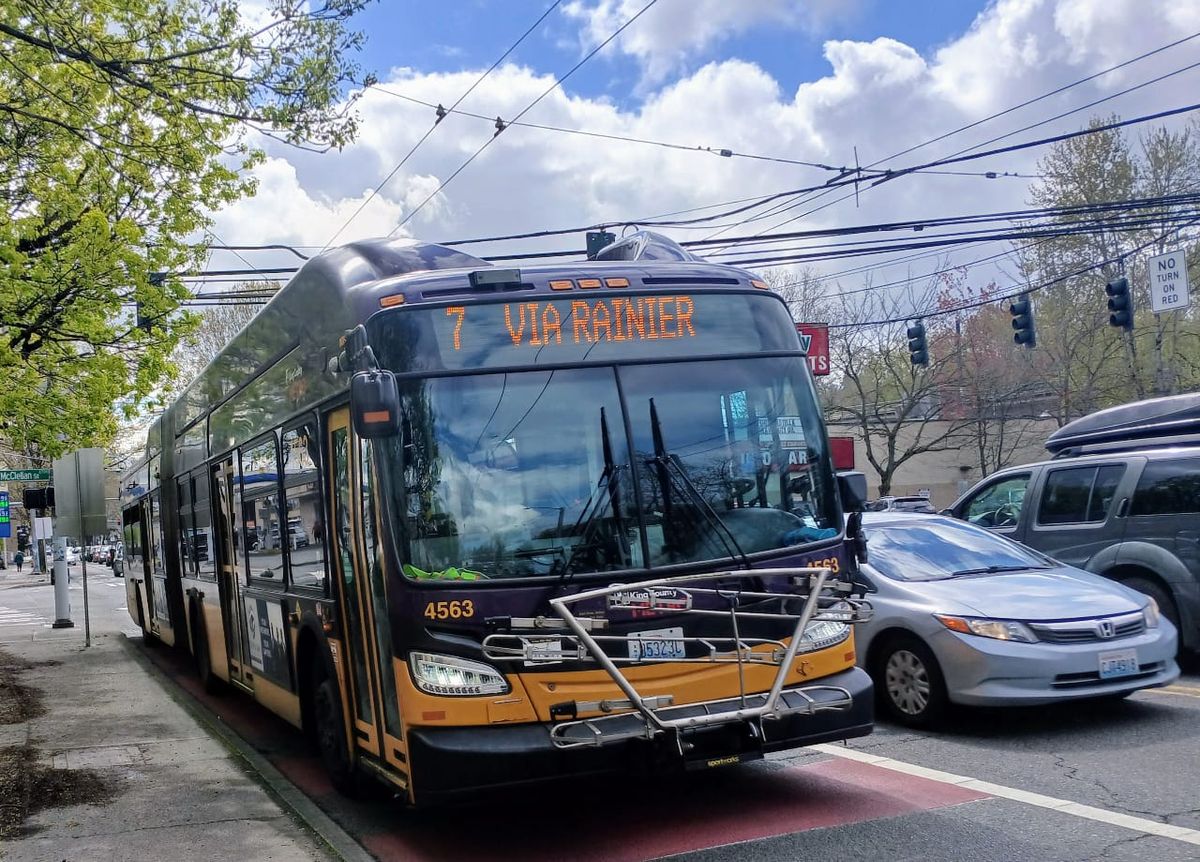
 Ryan Packer