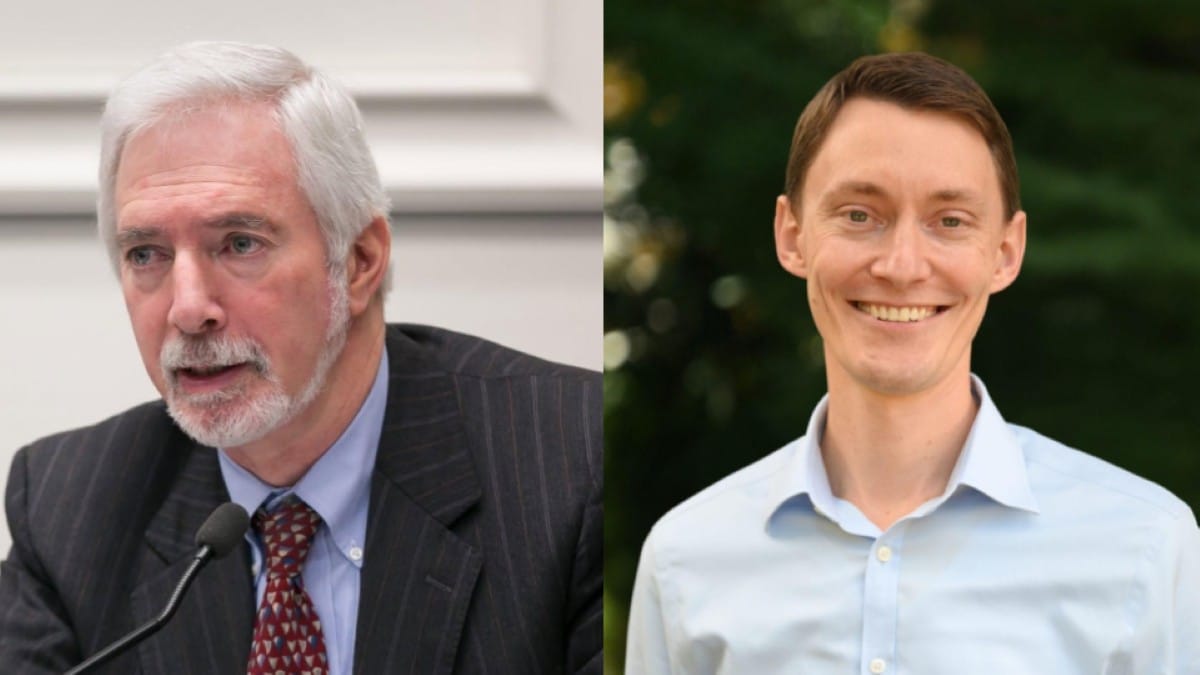
Depending how the November election goes, the residents of the 46th Legislative District in Northwest Seattle could have a new state representative after Rep. Gerry Pollet drew a relatively strong challenge from former federal prosecutor Will Dreher. Dreher has staked his campaign on a bid to lead the charge for artificial intelligence regulations, while Pollet is leaning on his experience, and his campaign has pitched him as the real progressive in the race.
In a three-way race, Pollet finished the primary on top, with 51.6% of the primary vote. Dreher won nearly 31% and has serious ground to close if he hopes to pull off the upset.
Plus, the dynamic of the race got a little weird after the primary. Tech entrepreneur and progressive rabblerouser Ron Davis, who The Urbanist Election Committee (on which I serve) endorsed, was eliminated after pulling in 16% of the vote. Rather than endorsing the other challenger or simply riding off into the sunset, Davis enthusiastically endorsed Pollet, and took to sharply attacking Dreher and defending Pollet via two long posts on his website, Rondevous.
Also catching criticism from Davis was The Stranger, which endorsed Dreher in the primary. "Let’s unleash this blue-blooded Yankee on the billionaire tech lobby that writes our laws in Olympia," The Stranger wrote. That endorsement likely sealed Davis' loss, although the gulf between the candidates was large enough he may have lost anyway.
"I came back to the same inexorable conclusion I reached in early July: that The Stranger's endorsements really are that powerful, and that it's nearly impossible for a progressive to overcome its influence even with a strong campaign and a lot of grassroots support," Davis wrote in August.
After his primary loss, Davis alleged Pollet – despite his earlier decision to challenge him for his seat – wasn't so bad, and was actually a standout on a number of issues, including education and progressive taxation.
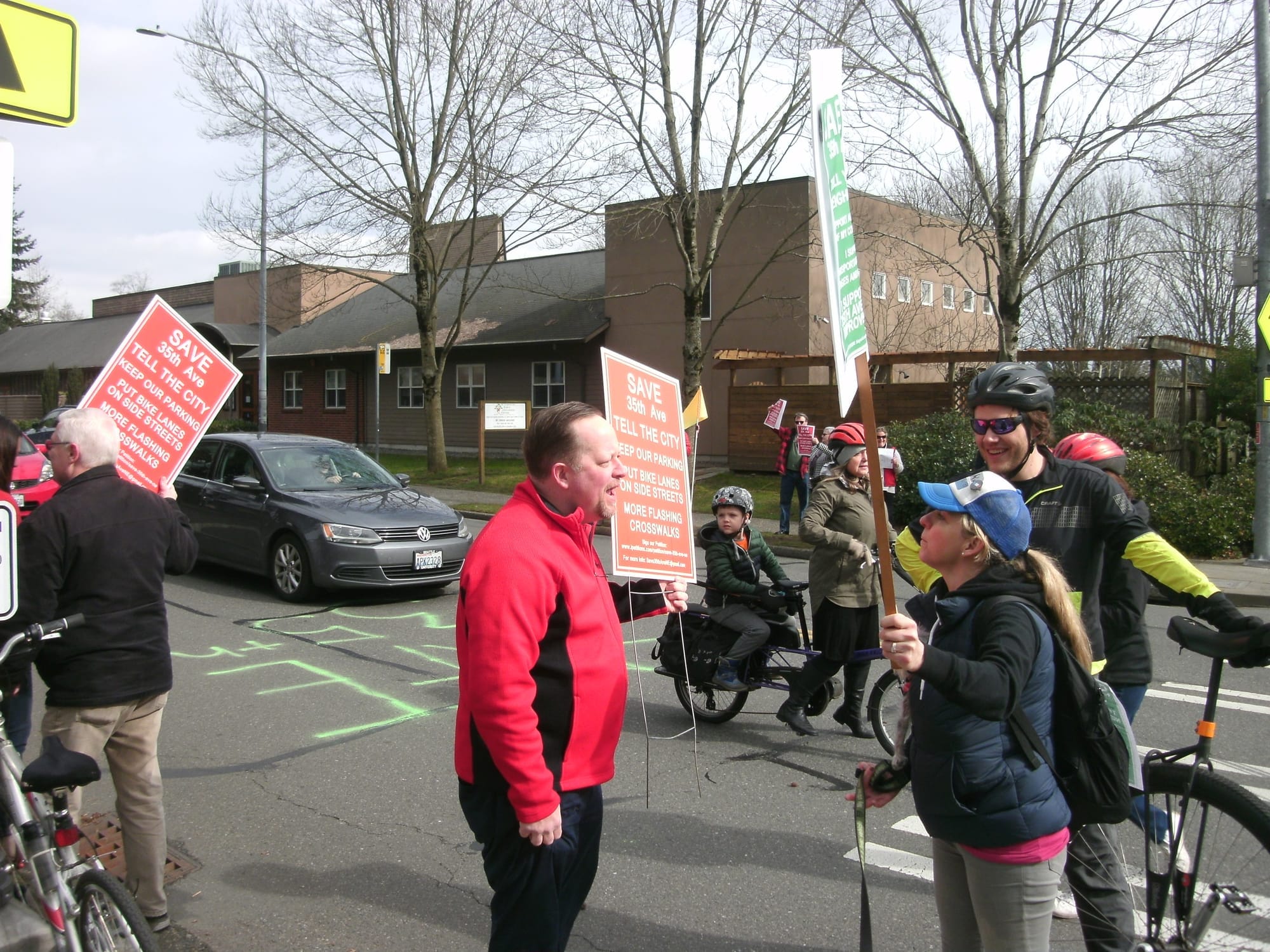
The move came as a surprise to some urbanists who tracked Pollet's anti-urbanist positions early in his career, such as opposing bike lanes in Wedgwood and obstructing statewide housing reform. In contrast, Dreher is a regular cyclist and has pledged to be a reliable pro-housing vote.
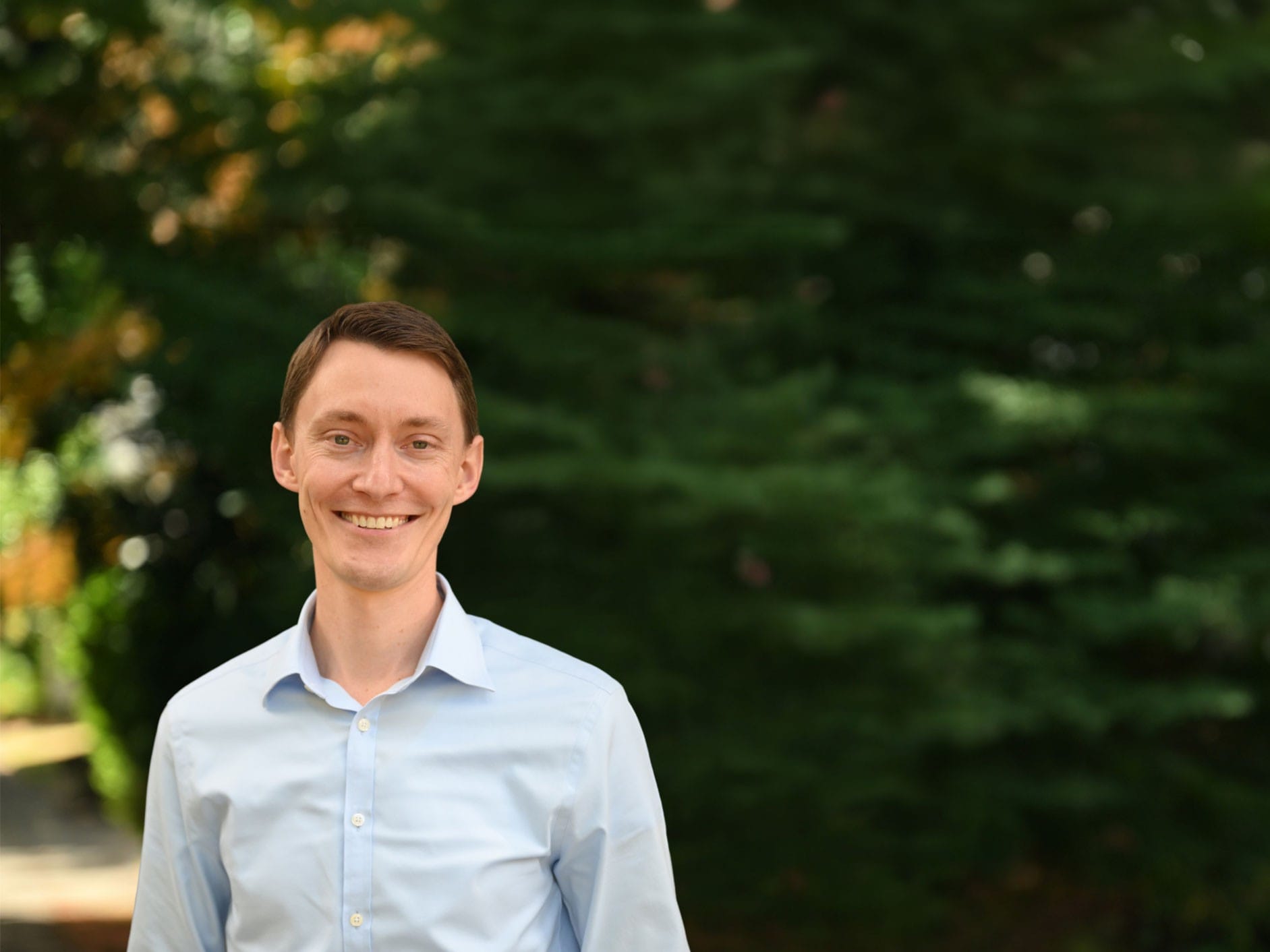
"I bike commuted for about four or five years after the pandemic started downtown from my house in Ravenna, and you know one of the things that I very quickly learned as a bike commuter was, I mean, for me personally at least, that I was not comfortable biking with traffic," Dreher told The Urbanist. "And that the number one thing for both safety and to increase the actual uptake of biking seems to have obviously not just protected bike lanes, but protected bike trails and making sure that we have a robust connected trail network."
Dreher said the state should invest more in transit and pursue congestion pricing to make roads work better for all, following in the footsteps of New York City's new highly successful congestion pricing system in Lower Manhattan.
"Manhattan is a very small island in the grand scheme of things relative to the population of New York City," Dreher said. "Downtown Seattle is a land constrained area, with only so many ways to get in or out, and congestion pricing - it's true - is useful for and can be used for raising revenue, but you know I view its primary purpose as modifying behavior in a way that helps the fight against climate change, right? And in a way that helps make our downtown both less congested, have less local pollution, and in general be helping to encourage folks to use alternative ways to get downtown."
While he granted it would take time, Dreher expressed interest in being part of a coalition advancing congestion pricing.
"The good thing is that we now have some cities that are actually exploring, and not just exploring in theory, but actually in practice using congestion pricing, and the sky has not fallen," Dreher said. "My hope would be that we can start to build a coalition around what I think is a fairly sensible policy solution that more cities in the United States should be using. [...] It's something that I think makes a ton of sense. It's something that I think we just need to start having that conversation now in order to make it become a reality at some point in the near future."
On housing issues, Dreher told The Urbanist he is interested in pursuing a statewide funded inclusionary zoning program and in exploring a land value tax. He also pledged to be a reliable vote on housing abundance, although his campaign website did formerly use some "neighborhood character"-type language that Davis portrayed as dog whistles for "not in my backyard" (NIMBY) housing opponents. Dreher has since removed the language and told The Urbanist that it was an honest mistake, rather than a dog whistle.
Dreher's linguistic choices aside, Pollet was such an obstacle as chair of the House Local Government Committee that I named him to the "zeroes" list in our annual legislative recap after the 2021 and 2022 sessions.
Davis himself noted the cost of delays from housing reform holdouts like Pollet when in his campaign rollout interview with The Urbanist back in March.
“Those years were low-interest-rate years. We could have tens of thousands, maybe 50,000 or 100,000 more modestly-priced homes in the region right now, and they would be bidding over us, instead of us bidding over what’s left. And that’s a really huge and ugly, frustrating dynamic,” Davis told The Urbanist at the time.
That frustration seemed to extend to members of the Democratic caucus, who removed Pollet as chair following the 2022 session. Democrats came back in 2023 and finally succeeded in passing statewide middle housing reform via House Bill 1110. That law recently bore fruit as the mandate kicked in last year in many cities, including Seattle, which finally phased out restrictive single family zoning and allowed fourplexes or greater citywide after more than a decade of flirting with the idea to no avail.
Pollet ended up voting for HB 1110, but not before pressing his colleagues to pass an amendment allowing up to a quarter of an affected city's residential land to be carved out of rezones by citing displacement risk. In practice, the logistics of the displacement-risk carveouts have proven complicated enough that most cities have avoided them.
Fast forward to 2026 and Pollet has the endorsement of some of the legislature's most well-known urbanists, like Rep. Julia Reed (D-36th LD, Queen Anne), and Nicole Macri and Shaun Scott (D-43rd LD, Capitol Hill).
"I know I've evolved," Pollet told The Urbanist during an interview last month. "It's important to evolve and learn and realize that I wasn't as steeped in it as I needed to be on some aspects of middle housing, I was much more focused on housing issues relating to multifamily and transit-oriented development than middle housing."
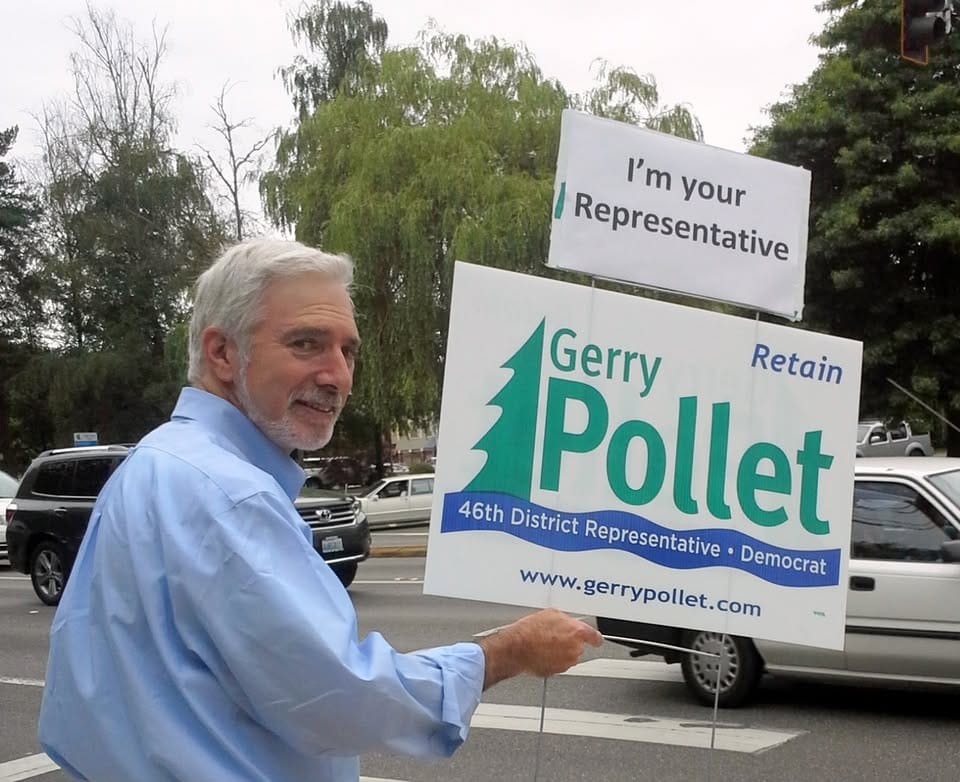
Pollet portrayed himself as better at spotting when local activists were simply making excuses, rather than raising genuine concerns, such as the frequent excuse that neighborhoods need more robust infrastructure before they can accept housing growth, whether beefier roads or utilities or bigger schools.
"One of the things I learned is that listening to people who said, 'Well, we don't have the infrastructure,' was a NIMBY response that we needed to say, 'We're going to force you to have the infrastructure if you truly don't.' But we're not just going to take your word for it because it's often a NIMBY response, and that's an example of where I feel I was very conscious of my changing position that we have to force local governments to do that."
In illustrating how he's evolved and become an asset for the urbanist coalition that rattled off a string of policy wins in recent legislative sessions, Pollet pointed out he helped ensure that statewide parking reform passed in 2025.
"I not only voted for it, but when it came to the floor of the House, we were briefed on it in caucus, and it ran into a roadblock that nearly pulled it from the schedule," Pollet said, before launching into a story about he helped broker an agreement between his colleagues and disability rights advocates to ensure those concerns did not derail the parking reform bill.
Davis, who met with The Urbanist along with Pollet last month shortly after endorsing him, vouched for his former rival, saying he was a big help in passing parking reform, which Davis was lobbying for on behalf of the Sightline Institute. (Of course, not so helpful overall that he opted against challenging him for his seat.)
Given his background, Pollet is naturally sympathetic to environmental concerns and is skeptical of efforts to streamline the State Environmental Policy Act, which has been criticized as a needless hurdle for housing projects, often hijacked by degrowth activists and NIMBYs to delay projects. Pollet's roots and his road to politics are in environmental law.
"I went to law school at the UW to be an environmental public interest attorney," Pollet told The Urbanist during a September interview. "[I] led the effort to stop Hanford from being a high-level nuclear waste dump, working with the Yakima [Tribe] to protect Gable Mountain, which is sacred to them, and ran the statewide ballot initiative to stop that in 1986, and then founded the organization leading work on the cleanup of Hanford, and along the way, you know, I was very active on many of our groundbreaking environmental laws in the state, including helping draft the Growth Management Act. I was one of the five or six authors of our state Superfund law model, and lobbied on many many environmental laws and helped pass many of them in our state."
Dreher, like Davis, is a Harvard Law trained attorney. Dreher followed in the footsteps of his father, who was a top environmental lawyer for the Clinton and Obama administrations.
Dreher famously clerked for Brett Kavanaugh, the Trump-nominated judge who won a lifetime appointment on the U.S. Supreme Court in 2018. Dreher signed a letter of support for that bid, along with fellow former law clerks. Davis used that as a frequent attack line on the campaign trail, but it didn't seem to fully resonate with voters, given the primary result.
After Kavanaugh's Supreme Court nomination happened in 2018 and the sexual assault allegations against him came out, Dreher said he changed his mind and withdrew his support. Dreher later that year signed onto a second letter supporting an FBI investigation of the allegations.
In 2019, Dreher joined the Department of Justice under the Trump administration as an Assistant U.S. Attorney in the Western District of Washington. His website notes "Dreher has the rare distinction of having prosecuted 25 January 6th insurrectionists." He spent over five years as a federal prosecutor, before leaving to join private practice as a litigator at the firm Keller Rohrback.
Dreher helped lead the firm's artificial intelligence litigation group and was appointed Co-Lead Interim Class Counsel in the copyright infringement class action Hendrix et al. v. Apple, Inc. The case alleges copyright infringement over texts Apple fed into its large language model or LLM, without permission from the authors or publishers.
Dreher has made reining in AI platforms and the tech giants behind them as a centerpiece of his campaign.
"The primary impetus for me getting in this particular race now was really just how rapidly accelerating, I think, our challenges with artificial intelligence and technology more broadly," Dreher said. "So like data privacy, mass surveillance, social media use with kids. There were just a number of tech issues that I've been working on in my current job for the last couple of years, but that I just had seen very little progress on at the state legislature, and I think even beyond that, very little focus on those issues."
Dreher pointed out that the Trump administration seemed to be going in the opposite direction, embracing a rapid expansion of AI applications for short-term financial gain. The state, meanwhile, has been flatfooted when it comes to regulating AI, in his estimation.
"My daughter, who's nine, always talks about how she wants to be a teacher when she grows up," Dreher said. "And Melania Trump in March, came out and had a rollout with a robot teacher and said, 'This will be the future of education.' And I'd say that was really the moment where it fully clicked or crystallized – that I just felt like I needed to do something to try to make sure that that was not the future of education, and more broadly, to try to kickstart or jumpstart our state to start taking seriously that battle."
On the other hand, Dreher's critics – with Davis at the vanguard – have questioned whether Dreher is ready to take on the tech giants so heavily invested in infusing AI into American life. They've pointed out that employees at the AI firm Anthropic were a top source of donations for Dreher's campaign, much of that money from out of state. Pollet, himself, seemed to take offense that Dreher was seeking to claim ownership of education reform, AI, and data privacy regulation issues, which he saw the state legislature as already making significant headway on.
"My thought is same thing goes as education. How would he know? He's not lobbied one day on these issues in Olympia," Pollet told The Urbanist. "There are legislators who know a lot more than him about those issues, and like part of that is the data center issues, right? And you know, he started this campaign, and I don't think he knew that I and others, working with [Rep.] Beth Doglio, had introduced what is viewed nationally as a model bill in terms of regulating data centers. And on data privacy, I don't think he knows, for example, what the battle has been in this state, and we have really strong champions on data privacy."
While not as versed in urbanist bread-and-butter topics as Davis, Dreher still sees himself as the standard-bearer for those issues now that Davis has been knocked out of the race.
"I frankly appreciate Ron's expertise and experience on a number of the issues that we've talked about, housing and transit issues in particular," Dreher said. "I was happy that that was one of the focuses in the race, and I intend to continue to make it a focus for the rest of the race. But now... the voters maybe have a somewhat simplified decision to make between myself and Representative Pollet."
The Urbanist Elections Committee plans to release general election endorsements next week.
 Amy Sundberg
 Ryan Packer