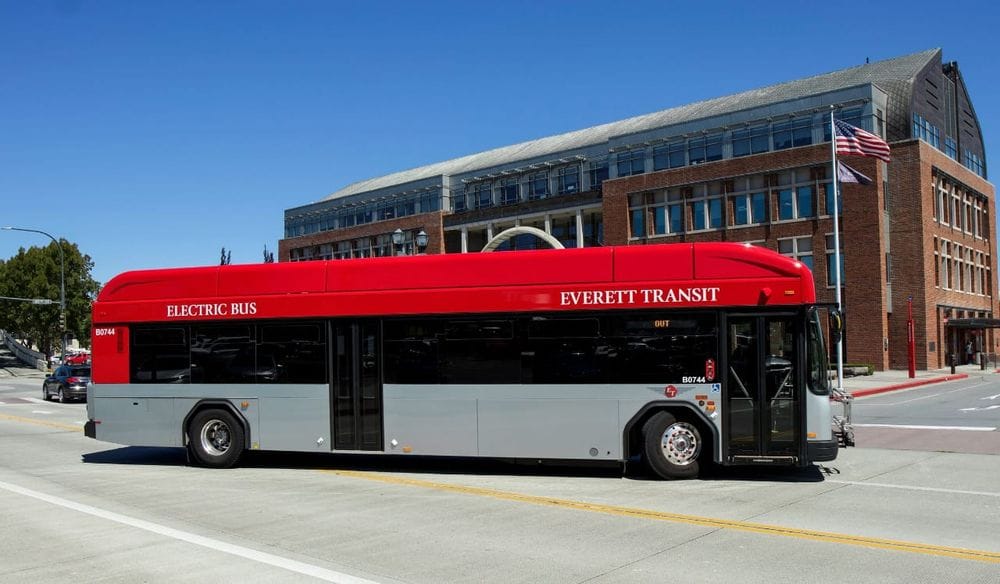
Snohomish County's largest city has had its own city-run transit system for decades, but Everett Mayor Cassie Franklin is looking forward to a different future. The annexation of Everett Transit into the countywide Community Transit system is a move that Franklin sees as essential to accommodate the needs of a growing city, she told Everett's transportation advisory committee last week.
Franklin's remarks come on the heels of an April announcement that the City of Everett was officially resuming annexation talks with Community Transit, an idea that had been bandied about in Snohomish County for years. Thanks to a change in state law approved last year, the move now does not require the approval of local voters, merely a majority vote of the Everett Council and the Community Transit board.
If enacted, the portion of the city's sales tax devoted to public transit would increase from 0.6% to the 1.2% Community Transit currently collects across the rest of Snohomish County, bringing Everett's total sales tax rate to 10.5%.
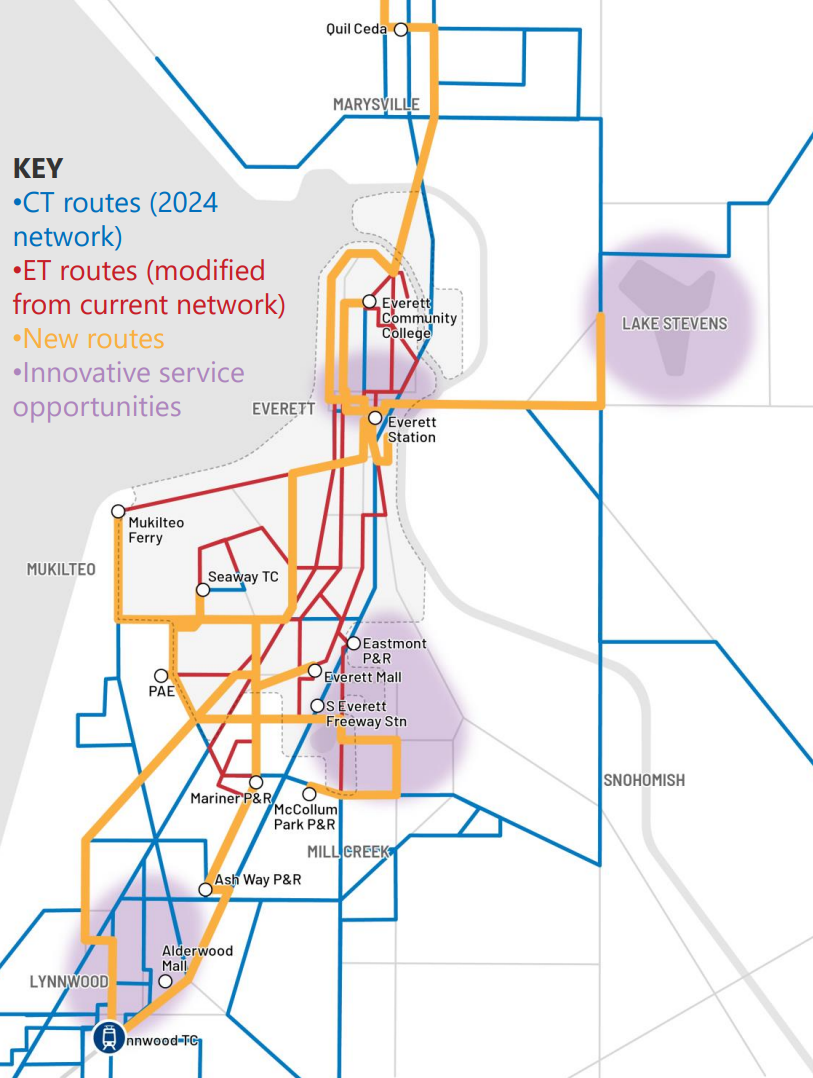
A 2023 consolidation study outlined major benefits that would stem from the move, including a near-doubling of transit service within the city and a 366% increase in the number of bus routes coming at least every 30 minutes throughout the day. Most Everett Transit routes have their last trip of the day around 8pm, if not earlier, and additional funds would allow those routes to operate later into the evening. That study included a concept map that showed the fundamental difference that annexation could mean for Everett's transit network.
But the idea of annexation is also drawing opponents like Steve Oss, the head of the Amalgamated Transit Union (ATU) Local 883, which represents current Everett Transit workers. Oss told the Lynnwood Times in April that he thinks the merger should go to the voters, and tried to tie issues with Sound Transit project delivery to operations at Community Transit, widely considered one of the best-run transit agencies in the state.
"This would be the largest sales tax increase in the history of the state of Washington without a vote of the citizens of that taxed region in the history of Washington,” Oss said to the Lynnwood Times. “That’s not right. The citizens should have a right to vote.”
It was Oss who challenged Franklin in her first bid to retain her job as Mayor in 2021, getting roundly defeated that November by nearly 50 points. Franklin is now in her third term after a closer campaign last year against Scott Murphy, with significant political capital to spend on her priorities.
Beyond broader concerns about a sales tax increase, the seniority of existing employees at Everett Transit is also a likely source of concern within ATU Local 883. If the agency was merged into Community Transit, some longtime employees fear losing that seniority, even if the annexation ultimately meant the creation of more union jobs and federal regulations exist to protect those existing jobs.
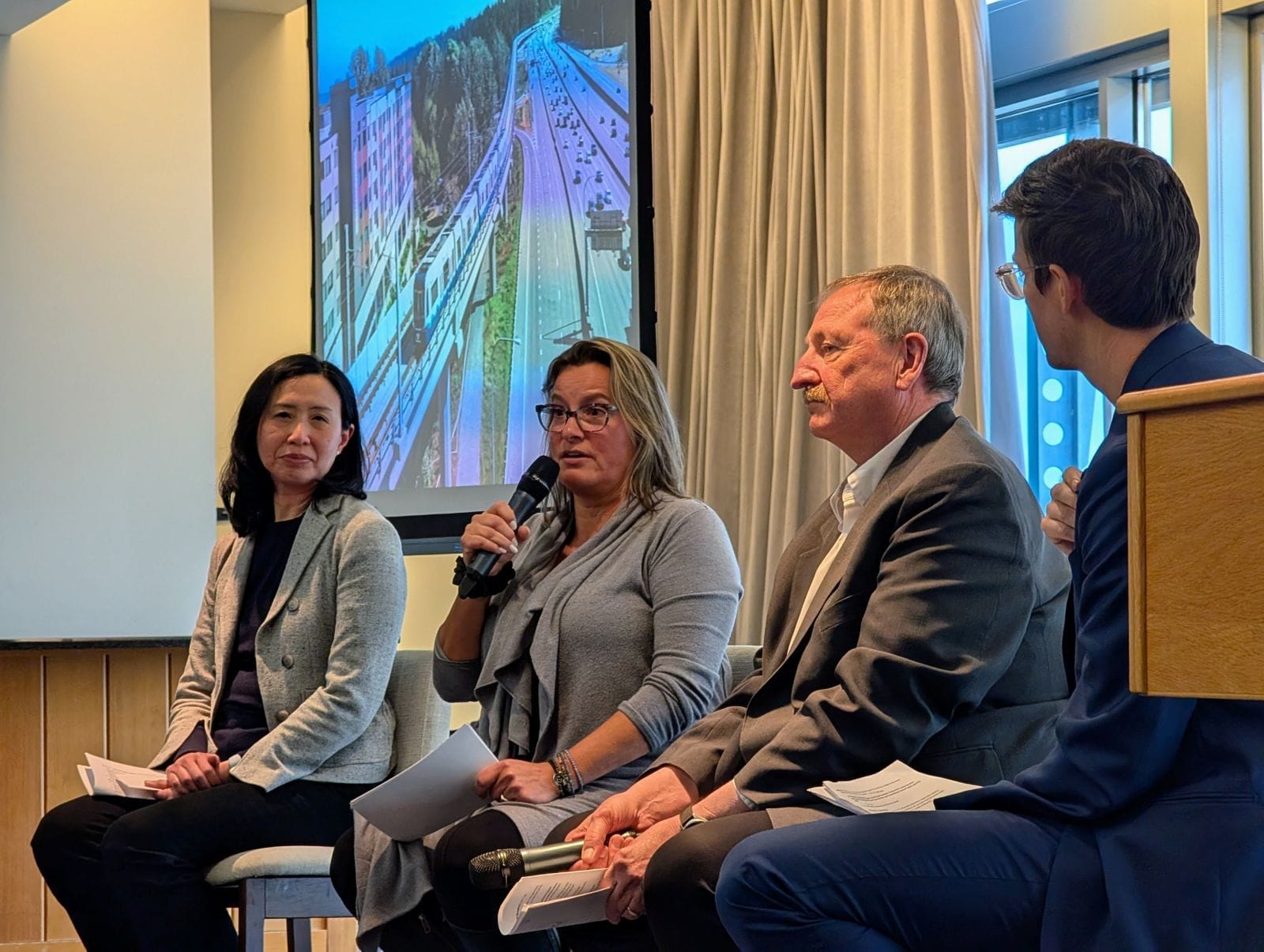
A proposed annexation agreement is still in development, but Franklin painted a clear picture of the need to increase the level of transit service being provided in Everett.
"It's been something that has been on our radar for some time, and I moved it back up to the front of our agenda to explore, mainly after watching what happened when Lynnwood light rail opened, and seeing how Community Transit buses have to serve those stations," Franklin said. "The coordinated ballet of busses coming in and out is necessary, especially as the rest of the system is growing. We really have to get people taking transit to light rail, not driving to light rail."
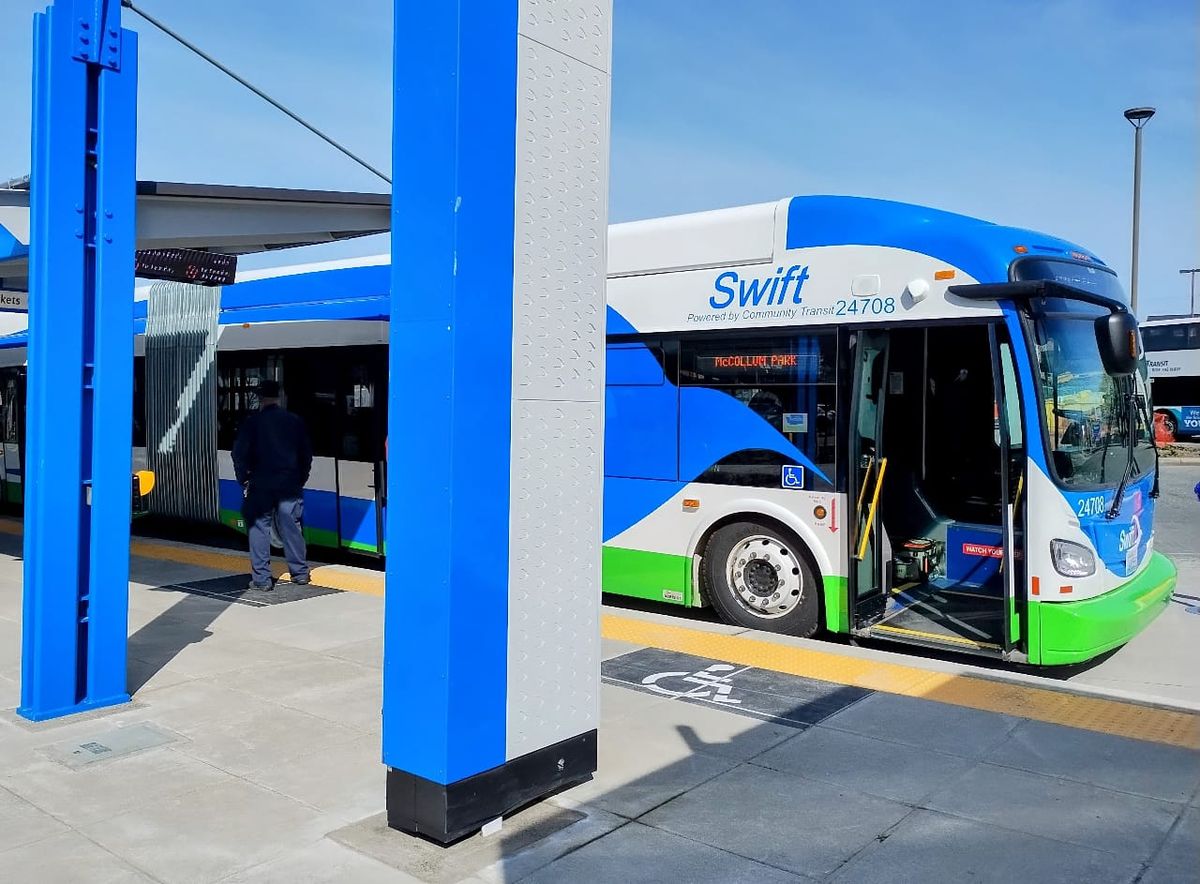
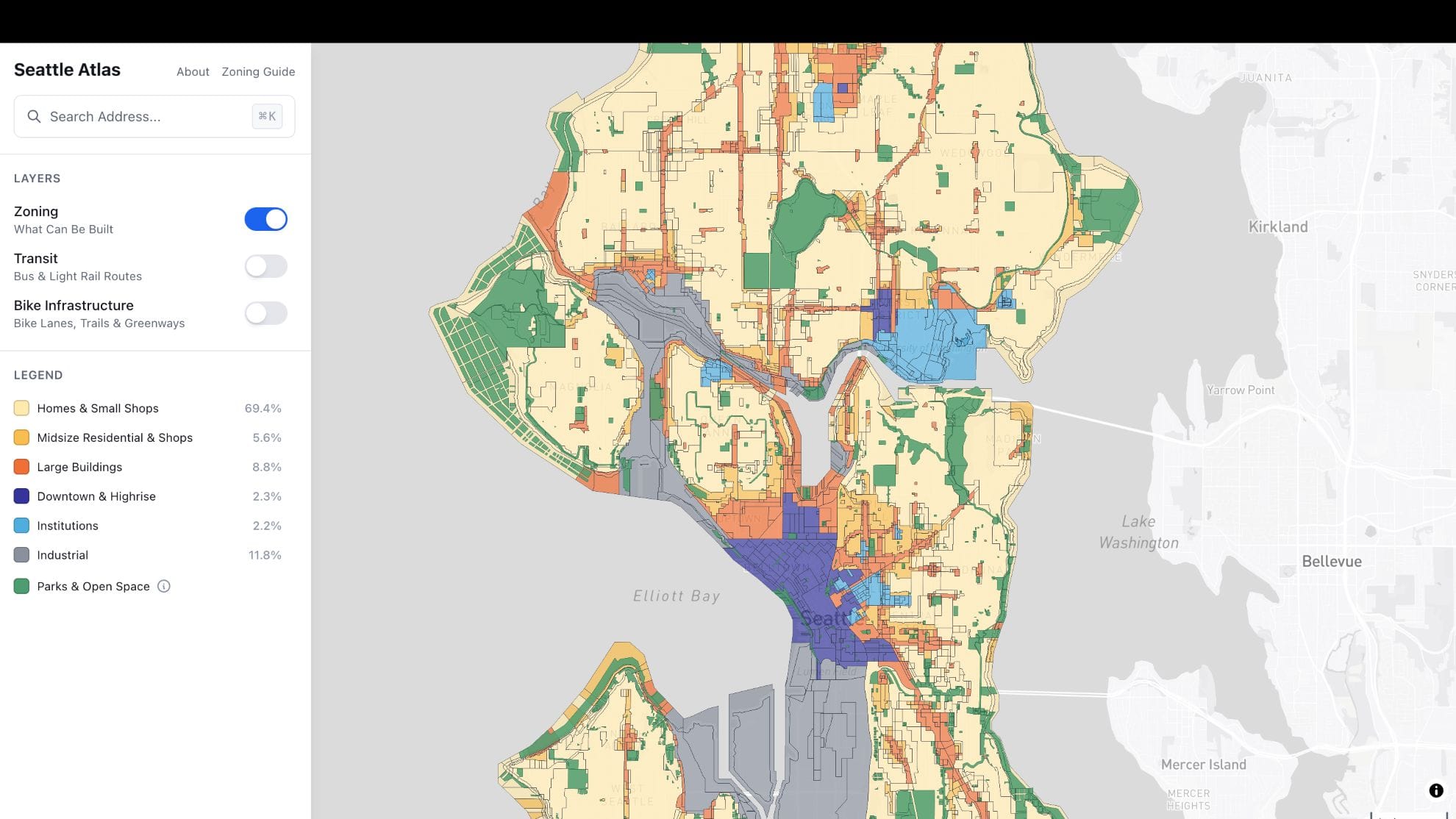
Franklin also tied annexation to Everett's plans for growth. Everett's 2025 Comprehensive Plan update built on zoning changes approved in 2019 that dramatically increased building heights in areas that are being targeted for growth, including downtown and the Evergreen Way (SR 99) corridor – where Community Transit already runs the Swift Blue Line. The target is 65,000 new residents by 2044, an increase of more than 40% compared to today's population.
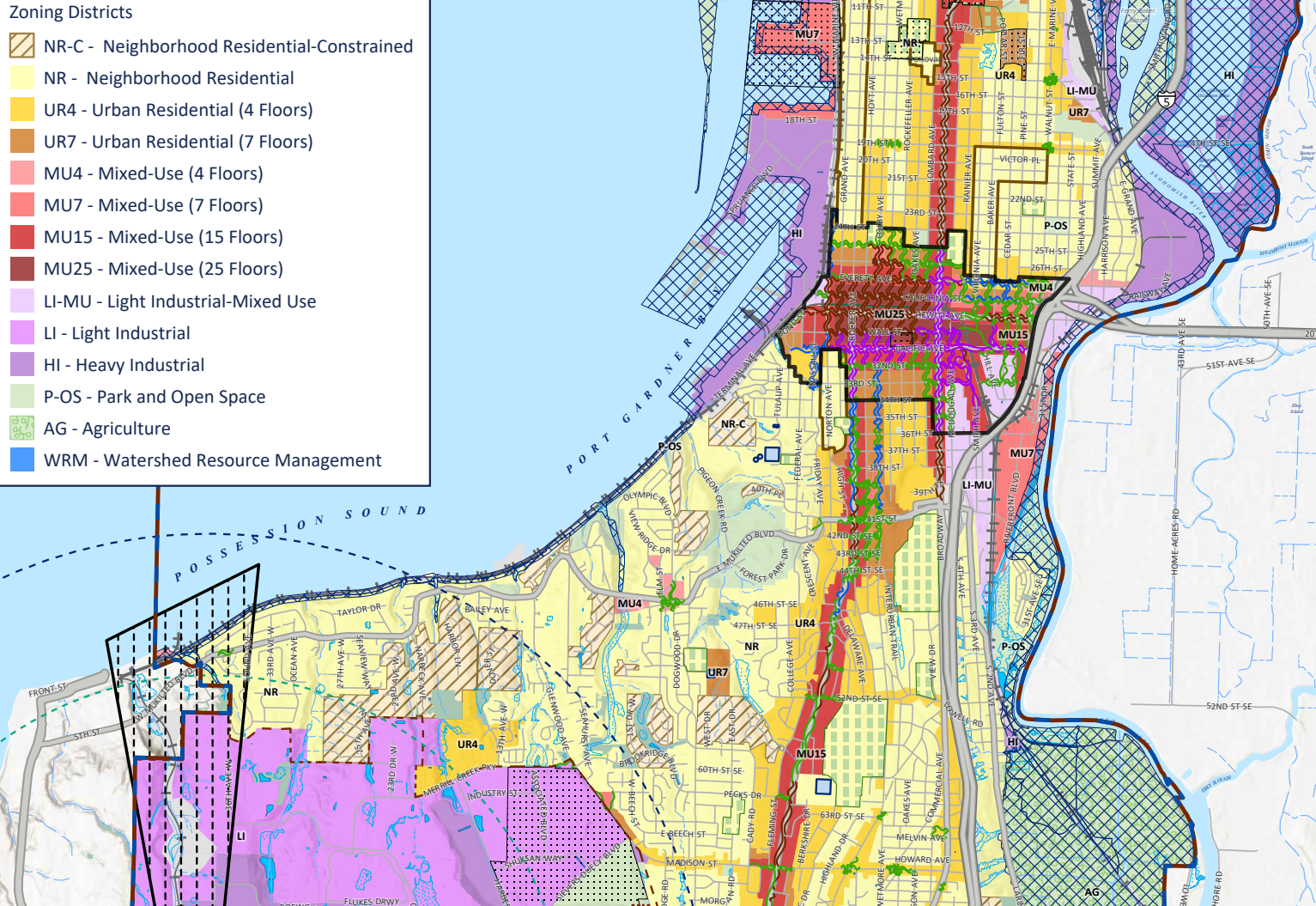
While Everett has fallen short of its population growth targets in recent decades, the catalyst of light rail's arrival could jumpstart momentum. For now, state figures suggest the city actually shrank slightly from April 2024 to April 2025, losing 100 residents. Since 2010, Everett has grown from about 103,000 residents to 114,700 residents in 2025.
"I do not want to see 65,000 more cars on our roads. I think that would be really difficult. We don't want to build 65,000 more parking spots. We need to transition more people to bus. It's very important," Franklin said. "The reason I'm looking at this is not because of today, it's because of 10 years from now, it's because of what's going to happen and what's continued to happen, and how do we get people to ride transit?"
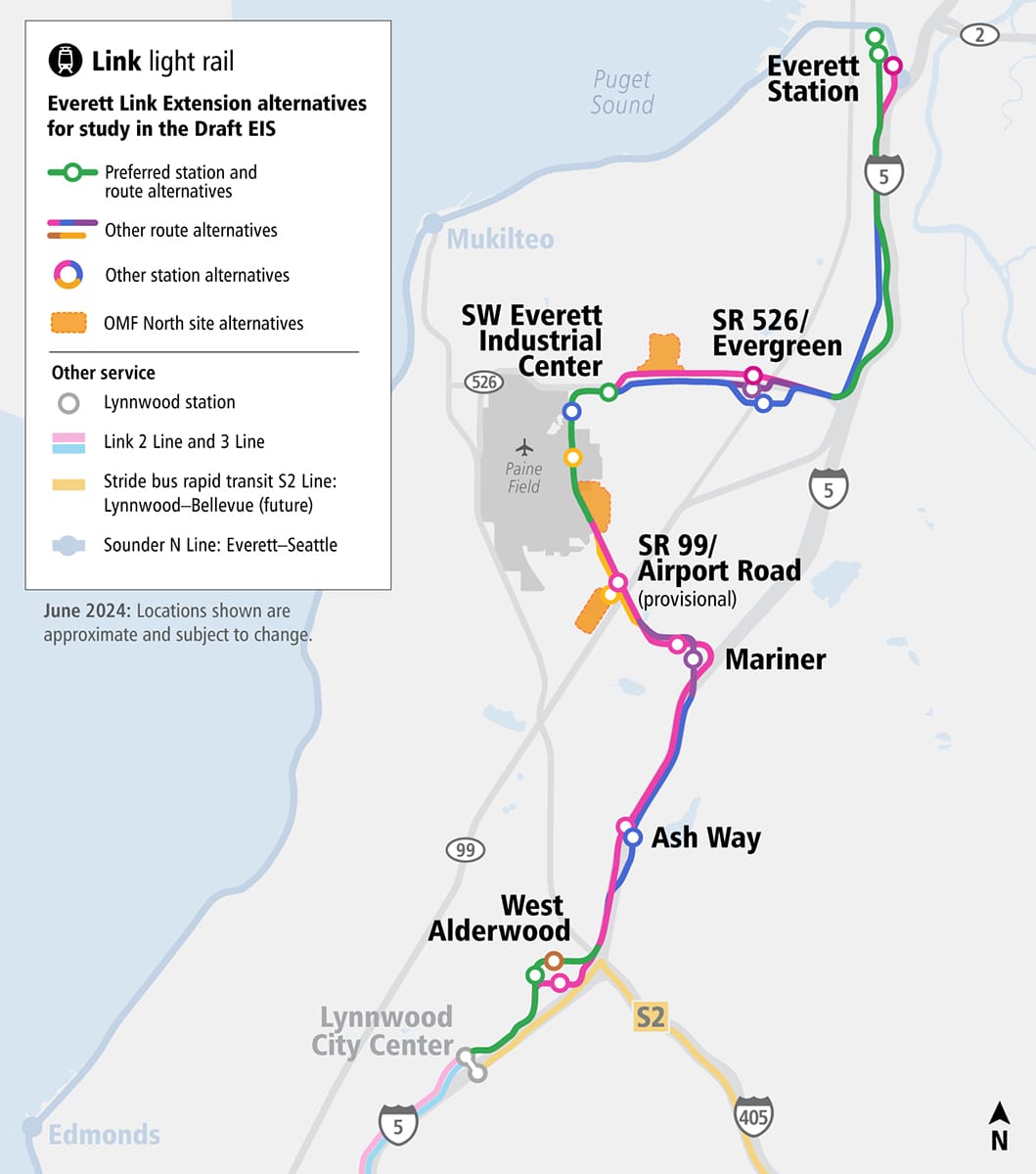
With the Sound Transit board's recent vote to continue prioritizing the light rail "spine" between Tacoma and Everett, trains are poised to start running first to Paine Field by 2037, with the next two stations at Casino Road and Everett Station open by 2041. As it stands today, the local transit network connecting to those future stations is much less robust than what Community Transit would be able to provide.
"I hear way too often about how empty our busses are, and I am grateful that the people that are on those busses love them, rely on them, that we have great relationships with our drivers, because they do such a good job. But I want those busses to be full, and the way to get those busses full is to have that frequency that's going to get more people in the busses and realize that this is a better way to travel," Franklin said.
Community Transit CEO Ric Ilgenfritz also weighed in on the benefit of more fully integrating Snohomish County's transit system. The current annexation talks coincide with Community Transit's work to advance the Gold Line, the agency's fourth planned bus rapid transit project. The Gold Line will run between Everett, Marysville and Arlington, overhauling Everett's Broadway corridor with dedicated priority for buses and turning Everett Station into an even bigger transit hub for the agency.
"This is a big challenge, but it also represents a tremendous opportunity," Ilgenfritz said. "We're very proud of our network in Snohomish County. We connect all of the cities of this county to the light rail system and to each other, and we have a little bit of a hole in the middle, and so the opportunity here is profound for people who live in Everett, the opportunity for increased service, more service frequency, more span of service, more routes is part of this value proposition for people who live in the city and want to travel outside of it."
Ilgenfritz tried to assuage concerns that annexation would mean significant changes to the existing paratransit network in Everett, which provides door-to-door service for aging residents and those with disabilities.
"The simple fact of the matter is, Everett Transit employees know their customers and know this community, and we have so much we can learn from that cohort of folks as we get acquainted with the City of Everett and the people who use transit here in this community," Ilgenfritz said. "So we look forward to that, and we want to welcome all those employees with open arms, especially the paratransit drivers. Nobody who is delivering paratransit service today is going to lose their job."
Ultimately, the picture that Franklin painted of Everett's future was that of a place where the frequency of transit makes it a viable option for many more residents. Over the coming months, we'll likely see how many members of the Everett City Council and the Community Transit board share that vision.
"We need to make everybody that is trying to get around the Snohomish County area very confident and comfortable using transit, but we don't have the frequency here in Everett that we need to convert people like me back into being transit folks, and that's what we need to see," Franklin said. "We need to see fewer cars on the road, more people taking the bus, walking, and biking, and using all the other methods of service. So that's why we're doing this."
Correction: a prior version of this story showed an outdated version of Everett's zoning map.
 Doug Trumm
 Ryan Packer
 Ryan Packer