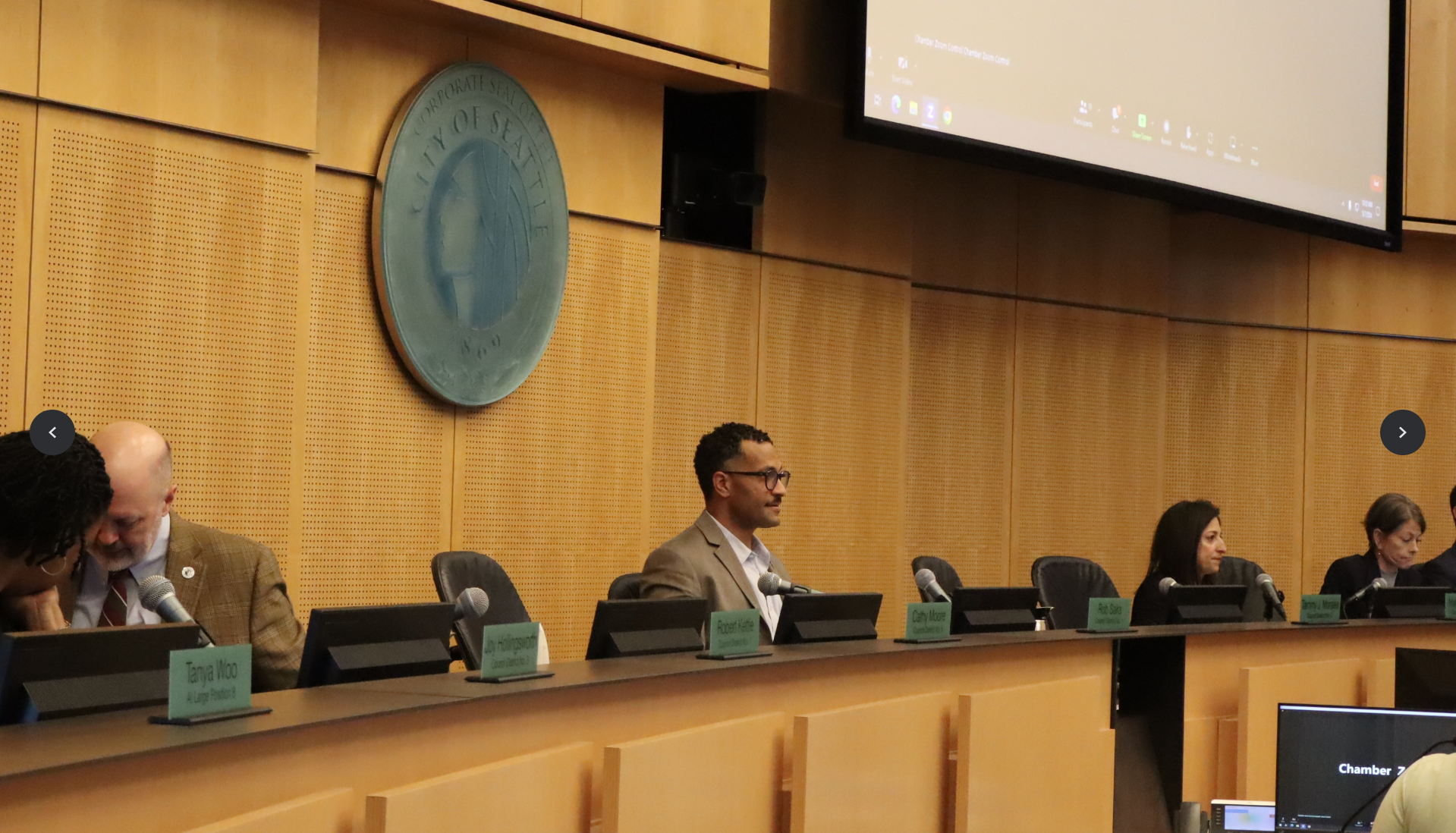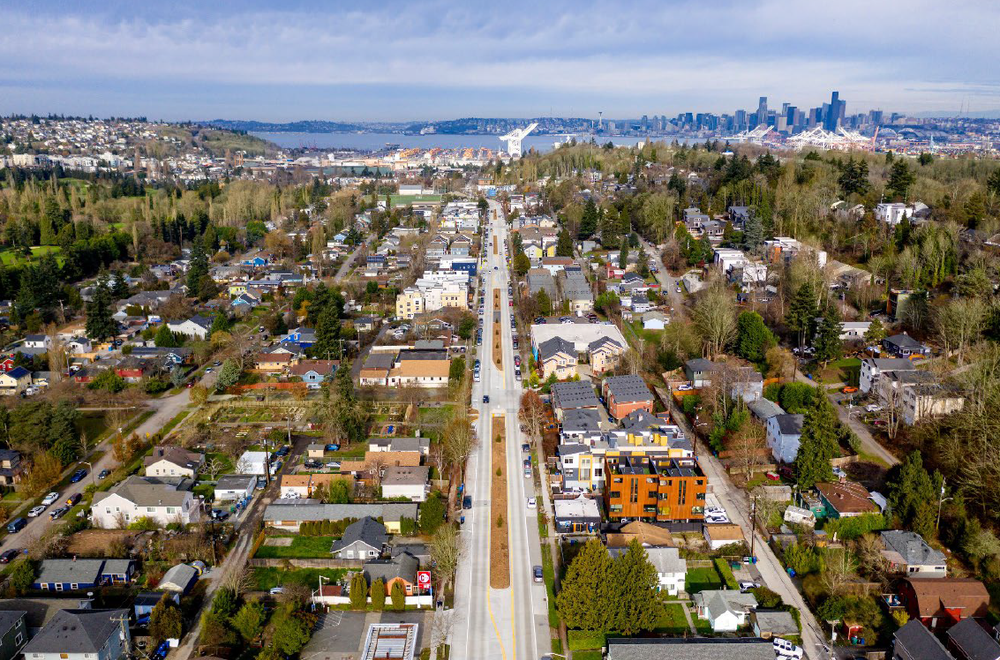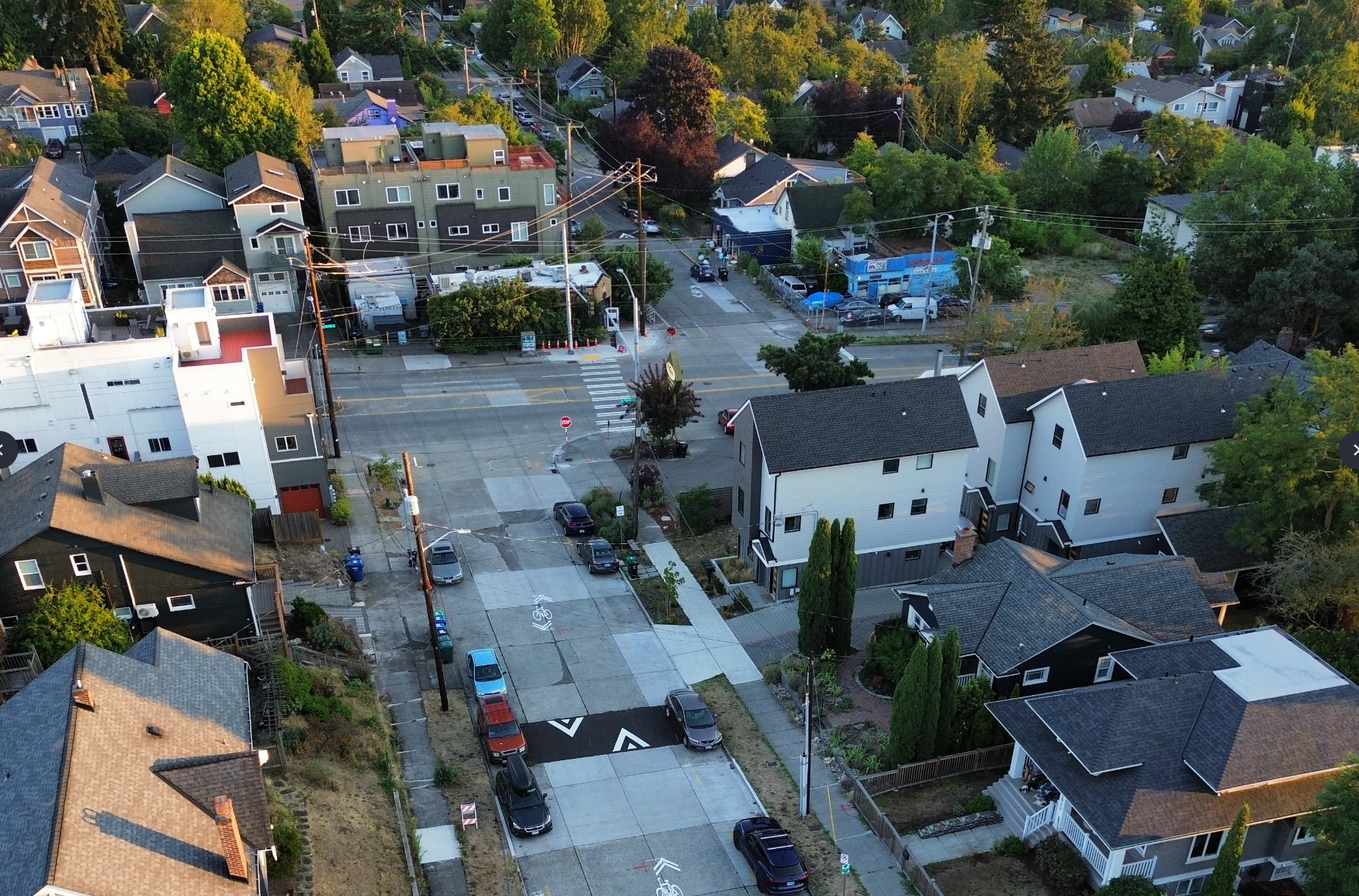
Eddie Lin, chair of the Seattle City Council's Land Use Committee, said Wednesday that consideration of the next phase of the city's growth plan "will be significantly delayed" in the wake of a recent ruling at the Washington Court of Appeals. That likely means that 30 new "neighborhood centers" and upzones directly along high-frequency bus corridors (a set of changes dubbed Centers and Corridors) won't be put into place until late 2026 or early 2027 – or potentially even later.
These zoning changes were the last vestiges of the overall growth strategy proposed by former Mayor Bruce Harrell in early 2024 and dubbed the One Seattle Plan. But a pair of appeals against that plan's environmental review under the State Environmental Policy Act (SEPA) have been winding their way through the courts, with a three-judge panel ruling on June 1 that those appeals were improperly dismissed at earlier stages.
Lin's announcement comes at the same time that the city council is considering a bill that would limit the ability for such appeals to be heard at the city level, a move that would raise the bar on future appeal filings. The legislation comes too late to help the One Seattle Plan avoid SEPA entanglements, but likely could have avoided the current delay and turmoil if the City had implemented it earlier.
The Court of Appeals ruling affirmed a major loophole in a "safe harbor" state law, which had previously been believed to exempt zoning changes allowing more housing within urban areas from SEPA, finding that final actions are exempt but "procedural motions" like the issuing of a final environmental impact statement (FEIS) are not. That leaves the door open to challenges at either the Superior Court level or the state's Growth Management Hearings Board.
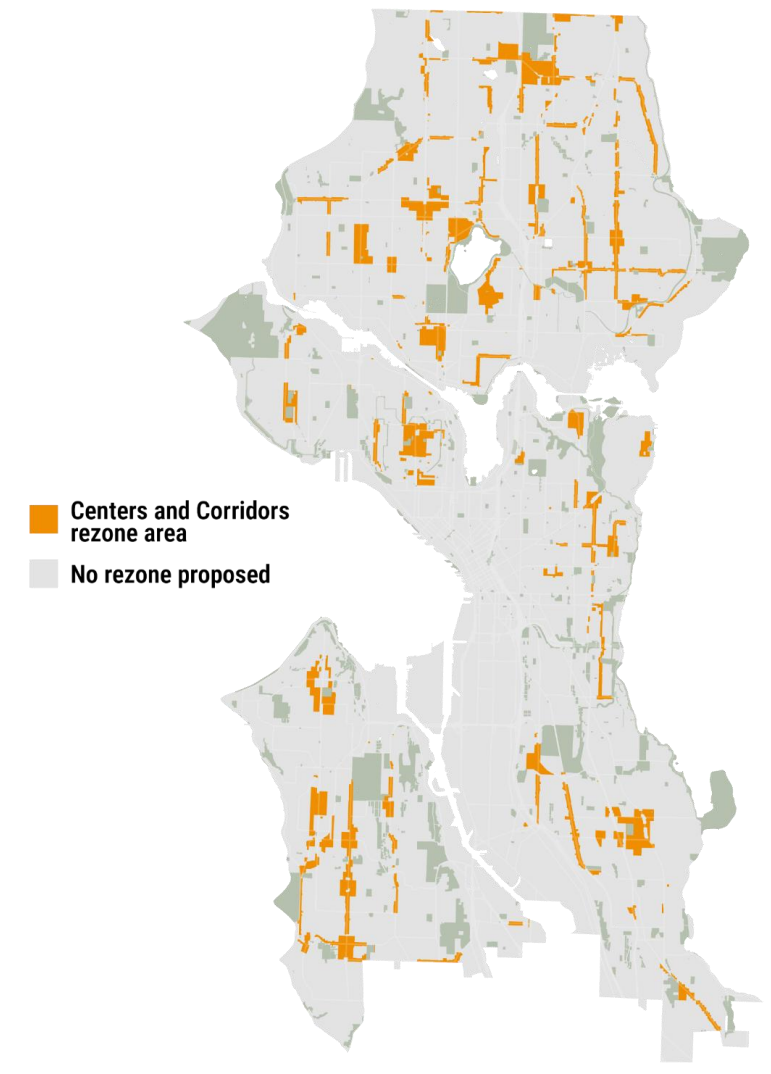
"Our phase 2 Centers and Corridors will be significantly delayed due to ongoing SEPA appeals and a recent Court of Appeals decision," Lin said. "Some members of the public were already aware that that was the likely impact, but [I] just want to acknowledge reality that this is the impact from these appeals."
Council had been pursuing the Phase 2 changes on a fairly drawn-out timeframe, not holding an initial meeting on the proposal until March 19 following adoption of the overall Comprehensive Plan in December. Apart from a public hearing held on April 6, there has been only one other council discussion of the zoning package since that date.
Meetings currently scheduled for July and August are likely to be cancelled following the court ruling.
Meanwhile, Seattle Mayor Katie Wilson has started to advance her own administration's priorities when it comes to zoning changes, in a proposal that is being dubbed "Taller Denser Faster" Plan. That plan started to be fleshed out last month, but remains in very early stages with a potential adoption date of late 2027 penciled in on the calendar.
The exact timeline around the future path of the two appeals, filed by Mount Baker lawyer John M. Cary (joining with the group "Friends of Ravenna Cowen") and conservation advocate Jennifer Godfrey, remains opaque.
Godfrey – who has branded her challenge to the plan as the "orca appeal" – has been joined by a number of well-known conservation groups including Birds Connect Seattle, the Orca Conservancy, and the American Cetacean Society, Puget Sound Chapter. That appeal contends that the City cut corners and didn't appropriately evaluate the impact of broadly allowing additional types of housing on the city's stormwater system, nor on its tree canopy.
Meanwhile, the Cary appeal contends that the city didn't consider a number of other factors when completing its review, including impact on historic homes and on traffic congestion.
Following a 30-day appeal period, the two appeals are set to be remanded to King County Superior Court, with a further remand to the City of Seattle hearing examiner likely after that. It's likely at the hearing examiner where the cases would be heard on the merits, with City officials tasked with defending the environmental review conducted on the One Seattle plan.
Final council action on or amendment of the Centers and Corridors zoning changes couldn't happen until after a final ruling. A potential ruling that the FEIS was deficient could cause even more delays.
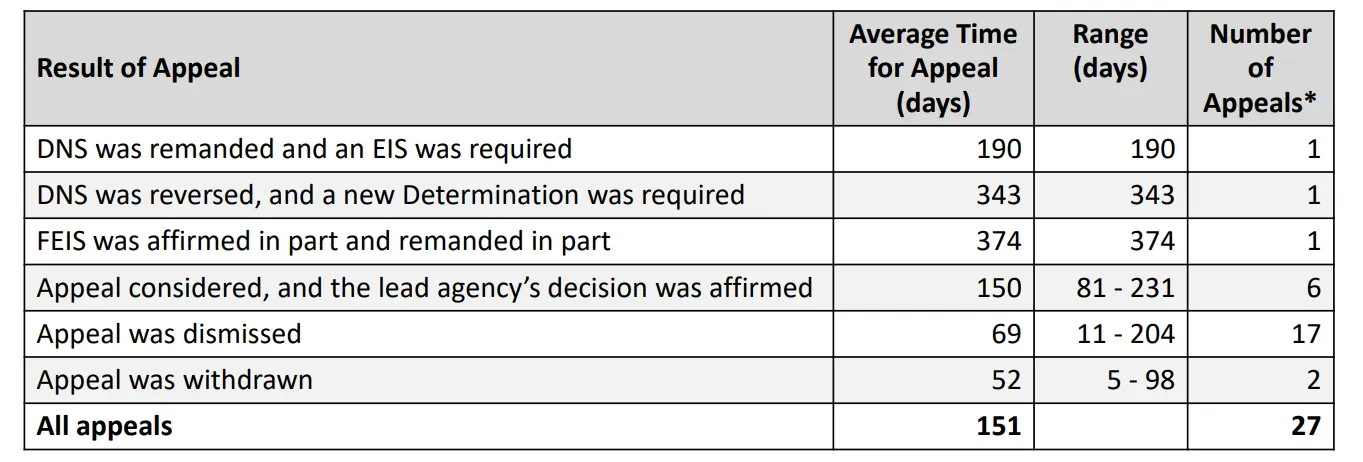
According to City analysis, the average length of time for an appeal to work its way through the hearing examiner's process is 151 days, a timeline that would currently extend into December. But it any part of the FEIS is remanded to the city's Office of Planning and Community Development (OPCD) for additional work, the appeal could stretch for much longer.
Lin's proposal to limit city-level SEPA appeals has drawn considerable criticism from many of the same groups that have traditionally used those appeals to add roadblocks to zoning changes, taking advantage of a low $85 filing fee. Earlier this month, the bill drew opposition at a meeting of the Wallingford Community Council – the same group that appealed zoning changes intended to implement the city's Mandatory Housing Affordability program in 2017, slowing their implementation in much the same way as today.
Tree Action Seattle, a group that has turned out supporters to growth plan hearings over the past few years with a goal of retaining Seattle's urban tree canopy, recently framed the changes as potentially opening the door to more data centers in the city, despite the city council recently adopting a full one-year moratorium on large data centers. Sandy Shettler, one of Tree Action Seattle's most prominent representatives, downplayed the number of appeals that get filed in comments to councilmembers Wednesday.
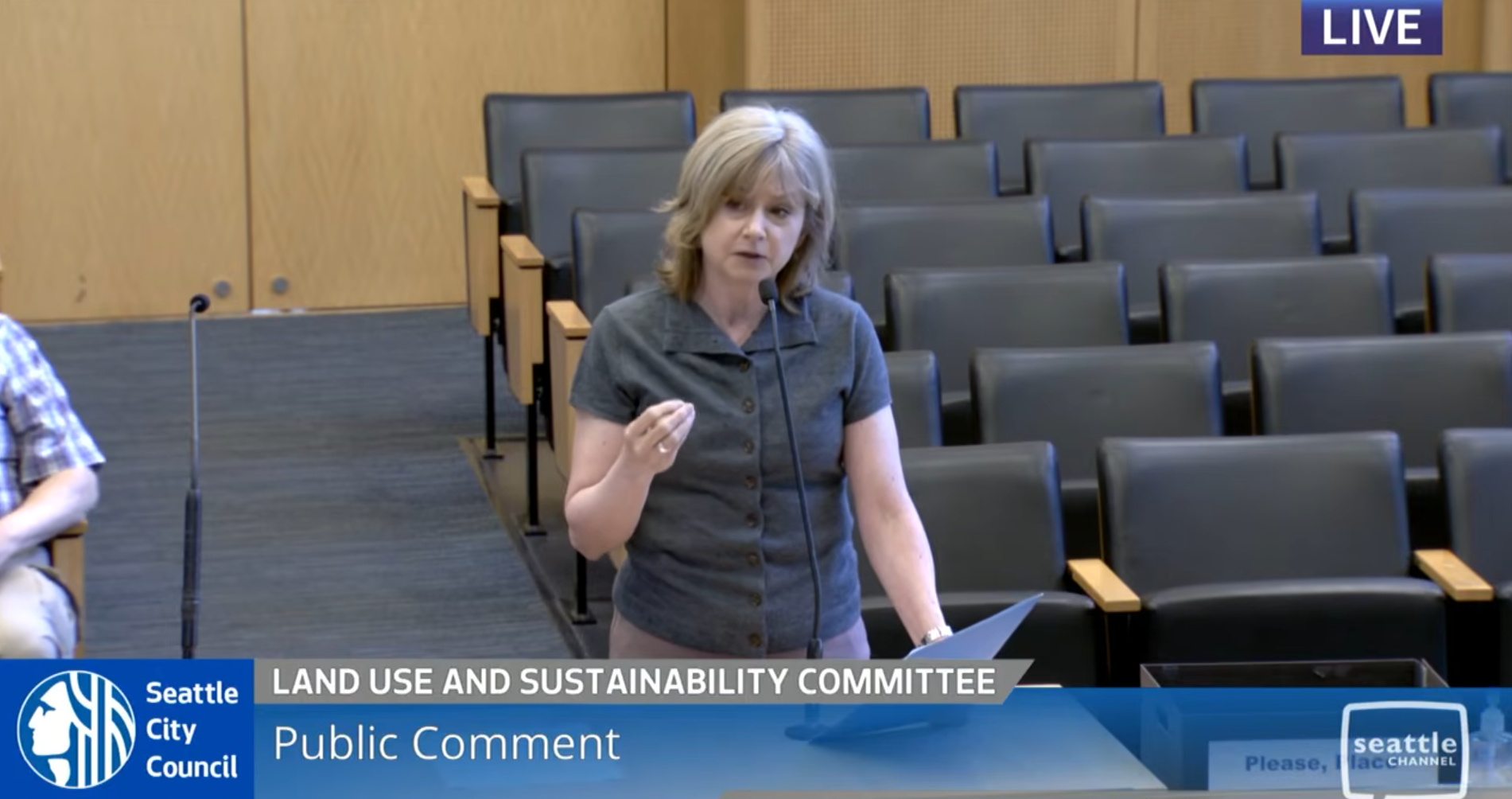
"Seattle averages only 2.7 appeals per year. Removing the public's right to appeal all environmental legislation because of 2.7 annual appeals is throwing the baby out with the bathwater," Shettler said. "Imagine applying the same logic to city council public comment. Council meetings would be more efficient without public comment. But we have decided as a city that public participation is worth the time, because democracy isn't measured by efficiency alone. Authoritarian governments are efficient, democracies are transparent and accountable."
Critics of predatory delay see the small number of appeals as a major argument in favor of aligning the city's regulations with nearby cities like Bellevue and Tacoma, which do not allow city-level SEPA appeals to their hearing examiner. That means that a small number of appellants aren't able to hold up land use changes that impact an entire city.
Lin argued that the City already does public engagement work as part of its growth planning, and contended that the City hearing examiner is the wrong forum for trying to make your voice heard in local decision making. It's this same logic that the legislature relied on when explicitly exempting decisions around urban infill expansion from SEPA in the first place.
"There's a lot of comments about wanting to have this forum, and venue, for community feedback or input, and just from my opinion, this is not a great forum for feedback. It is critically important for me, and probably many of my colleagues, that we do a good job of robust community engagement as we engage in our Comprehensive Plan or any sort of changes to our zoning. And I just personally do not see the hearing examiner process as a great place for that engagement, for that feedback."
For now, the wait begins to see how the two appeals work their way toward resolution, one way or another.
 Ryan Packer
 Ryan Packer