In July, the U.S. Congress quietly passed a significant update to federal housing policy that builders and housing advocates are saying could provide a major boost to production. The bill took effect without President Trump's signature, a policy that was initially introduced in 2025 as the Renewing Opportunity in the American Dream (ROAD) to Housing Act.
The National Low Income Housing Coalition (NLIHC) hailed the bill as "first major bipartisan housing package to become law since the 1990s." Shaun Donovan, CEO of the housing finance nonprofit Enterprise, called the bill "the most significant piece of housing legislation" in decades.
The Urbanist's Fall Member Drive is in full swing! Support our work, read ad-free, and help us hit our goal for the member drive!
But advocates have also warned the bill's impact ultimately rests on implementation steps that federal government will need to take, with Congress backing up the smorgasbord of regulatory changes with direct funding to really unlock their potential.
The bill does not allocate new dollars or directly change low income housing tax credits (LIHTC) – the primary way that the federal government funnels money to affordable housing developers in a post-Reagan America. Housing advocates have pledged a push to secure funding to the unfunded program in the year ahead, but that could prove challenging given competing priorities and budget deficits.

LIHTC counts on banks and other financial institutions applying for tax credits to lower their federal tax bills, while also meeting regulatory obligations to invest in their local communities – a bit of a sweetheart deal for the banks. When the federal government lowers the corporate tax rate – like it did under Trump 1.0 in 2017 – that in turn depresses interest in LIHTC, leading to less funding being available to affordable housing developers.
On one hand, Trump's second term has surprisingly coincided with the largest overhaul of federal housing policy in decades – after he unsuccessfully attempted to hold the bill hostage to a voter ID measure he was pushing. On the other hand, Trump's staffing cuts imperil implementation of the reforms. Plus, Trump tax cuts passed in his first term continue to depress investor interest in LIHTC, and efforts in Trump's 2025 "One Big Beautiful Bill Act" to juice LIHTC demand with lower bonding thresholds (while lowering taxes on wealthiest Americans) can only bear so much fruit in a low-tax environment, especially when plenty of other headwinds are impeding nonprofit builders.
Even without funding or broader reforms to LIHTC (such as a higher corporate tax rate to drive up interest in tax credits), the ROAD to Housing Act includes plenty of provisions that could have a significant impact either way. In all, the act is more than 400 pages long and features 59 provisions.
Mike Kingsella CEO of Up For Growth, a national coalition pushing for housing abundance, noted housing supply provisions were embedded in the act during a recent housing panel hosted by the Housing Development Consortium of King County (HDC), which I attended as moderator. The U.S. Department of Housing and Urban Development (HUD) could play a larger role in encouraging zoning reforms.
"Section 107 housing supply frameworks was initially led by a very interesting duo of members of Congress, Mike Flood, a Republican conservative from Nebraska, and Brittany Pettersen, a Dem member from Colorado," Kingsella said. "Essentially, what this provision will do, is stand up a federal task force on best practice land use and zoning policies. HUD will aggregate those best practices and establish federal model codes, both for state legislatures to take up vis-a-vis similar actions to what Olympia has taken up recently, around, for example, eliminating exclusionary zoning, it will also generate model local zoning codes that cities and towns around the country can pick up."
The Middle Housing Law passed in 2023 was Washington State's nudge to end exclusionary zoning within cities, and it was followed up with statewide parking reform that limited cities ability to heap onerous parking mandates on builders. The federal version of this phase out to exclusionary zoning ended up more as a suggestion than having any major teeth behind it, but it's still momentum toward righting a historic wrong, Kingsella argued.

"Now, this isn't without precedent," Kingsella said. "It was, in fact, the federal government, the Standard Zoning Enabling Act, that was the Johnny Appleseed of exclusionary zoning around the country, and so this is an opportunity for Congress and the federal government to correct a wrong that that occurred not over just a few months over 100 years ago. So that's a provision we're quite excited about."
One way the federal government intends to nudge local governments toward pro-growth policies and zoning reform is through new stipulations rewarding pro-growth jurisdictions with larger awards via the Community Development Block Grant (CDBG) program, which distributes about $3.3 billion in federal funds annually.
"What this provision does is it establishes a scrutiny pool of CDBG recipients, and within that recipient pool, HUD will assess – and this will be based on a clear and objective formula established in statute – are you meeting your fair share of housing production?" Kingsella said. "In other words, and it's a very simple structure: Are you above or below the median point line out of jurisdictions in that scrutiny pool? If you're falling below the average jurisdiction in a scrutiny pool, you stand to lose up to 10% of your formulaic CDBG each year. The flip is that if you exceed the 50% median mark, you're going to get bonused out extra CDBG dollars based on the number of units that your community has produced."
If it's able to trigger this bonus, Seattle would have help in expanding its lead in producing the most new affordable housing units of any metropolitan area across the country over the last decade.
Another provision will make it easier for homebuilders to avoid going through the time-consuming National Environmental Policy Act (NEPA) process, with the federal government recognizing that process is often duplicative of state and local regulatory processes and laws.
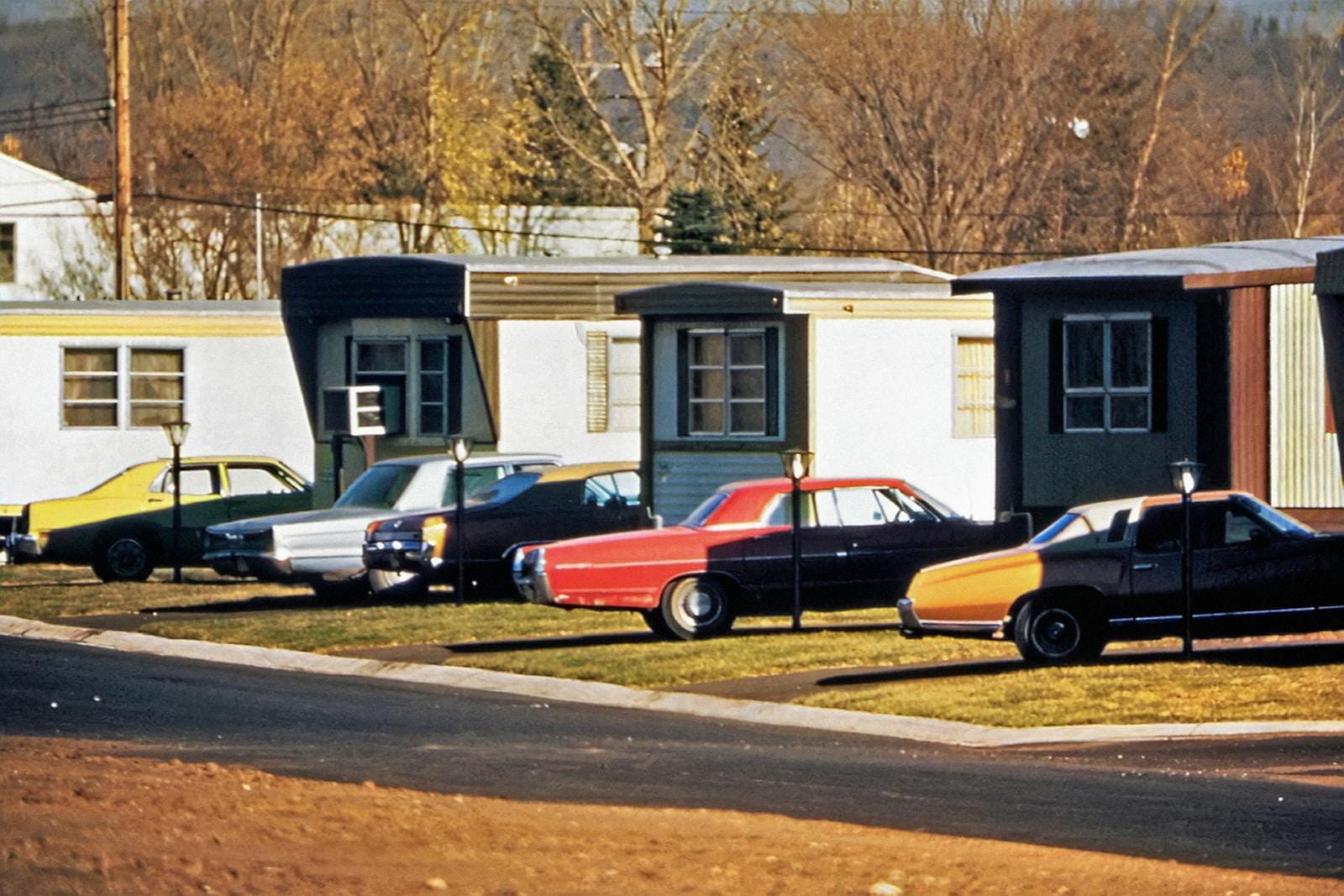
Yet another provision could boost modular housing construction by overhauling HUD's Manufactured Housing Building Code, removing the costly requirement that manufactured homes have a steel chassis. "It's arguable that this could be the most impactful provision out of the entire bill," Kingsella said.
"You have to have a steel chassis, and that's a relic of history, right? Back in the 1960s and 70s, when we were building manufactured housing, practically speaking, you have to take them down the road and to install on a pad and deliver to the user," Kingsella said. "Today, we're in a world where you have offsite construction, you have construction happening in factories... and you have panels built, and these things are getting assembled, but not built on site. Even though, in terms of the envelope and the product type, we're talking about effectively the same thing. It does not qualify as manufactured housing per the old 1960s HUD code. So you can think of this as really modernizing the code in a way that we're creating a new national building code for anything factory built that has huge implications for the scaling of modular and offsite construction, which is something that I know leadership in Washington State is quite focused on."
Beyond the need for funding, another obstacle to implementing the act's housing reform is staff capacity at HUD. The department has seen an exodus since Trump took office for the second time, in large part due to cuts to positions via the Department of Government Efficiency (DOGE).
"We're looking at a HUD that has had upwards of 30% staff [reduction in force] due to DOGE actions and decision making in this administration," Kingsella said. "I am concerned. I think many of my colleagues in DC are concerned with the capacity of HUD to effectively implement many of these provisions. So we are playing the long game."
Architect and planner Jess Zimbabwe, who is executive director of the firm Environmental Works and also was a panelist at the HDC event last month, noted that reduced capacity will be acutely felt for the provision instructing HUD to create pre-approved housing plans as a nudge to reduce zoning hurdles.
"This question about pre-approved housing plans...that sounds like a great idea in a different version of HUD, where you know Public Policy Development and Research, the the division of HUD that will eventually probably pull those pre-approved plans together is at like 75% or 80% reduced force because of DOGE cuts from last year," Zimbabwe said. "So nobody's pulling that together right now. But it's a framework in place that when there is when that is funded and staffed, it could be hugely impactful."
She added that Washington state stands to benefit since it's already innovating in this space and should be positioned to trigger incentives, like the CDBG boost.
While the ROAD to Housing Act passed with huge margins in each chamber, the issue of funding could be more contentious and push lawmakers more firmly to their ideological camps. Without those funding strings attached, the bill passed in the Senate on June 21 with a vote of 85-5, and in the House on June 22 with a vote of 358-32.
The other challenge is overcoming negative trends in the business cycle and in LIHTC demand from banks and financial institutions. Panelists who work in LIHTC shared pessimism it would be fixed overnight. Elizabeth Murphy, who is a manager on Baker Tilly’s Development Advisory Services team, did not predict big changes in LIHTC investor appetite.
"It's great that they increase the public welfare investment cap," Murphy said. "It obviously makes it a lot easier. And it's great – not part of this legislation – but we also had the reduction of the 50% test, and in the bond program, we have you know a higher cap on 9% credits. Those are all excellent policy changes, but until the market meets demand, I don't see like pricing changing all that much or investor appetite changing all that much."
Jackie Moynihan, senior policy advisor at Washington State Housing Finance Commission, agreed with Murphy, noting investors ultimately drive the LIHTC market. That adds uncertainty, but also opportunity if the feds somehow thread the needle.
"All these other pieces around gap financing are huge, and so, if also appropriations comes through, and the flexibility in different programs and the streamlining... Like if all of these pieces came together, that would be super impactful," Moynihan said. "I think we definitely operate in this sphere of not any one thing does get it done. We need all the things to move and get done."

In her introduction, HDC Executive Director Patience Malaba agreed the aspirations of the bill hinged on implementation.
"We have the first legislation in 40 years, massive legislation on housing at the federal level coming out of Congress," Malaba said. "That on its own is a critical milestone to celebrate and elevate. And then there's so much more for us to do on what gets implemented and how do we make that happen."
HDC pledged to mobilize its community to keep advocating and pushing for funding to bring to life some unfunded elements on the plan.
"How do we track what needs to move through appropriations and activate folks on the ground to push for those appropriations, whether that's fiscal year 27 or other cycles where investments will be needed to operationalize some of the great ideas around supporting housing supply, innovation and construction methods, and so much more that's been included in the legislation," Malaba said.
Congress has passed its biggest housing reform in decades, and yet so much work remains.
 Doug Trumm
 Doug Trumm