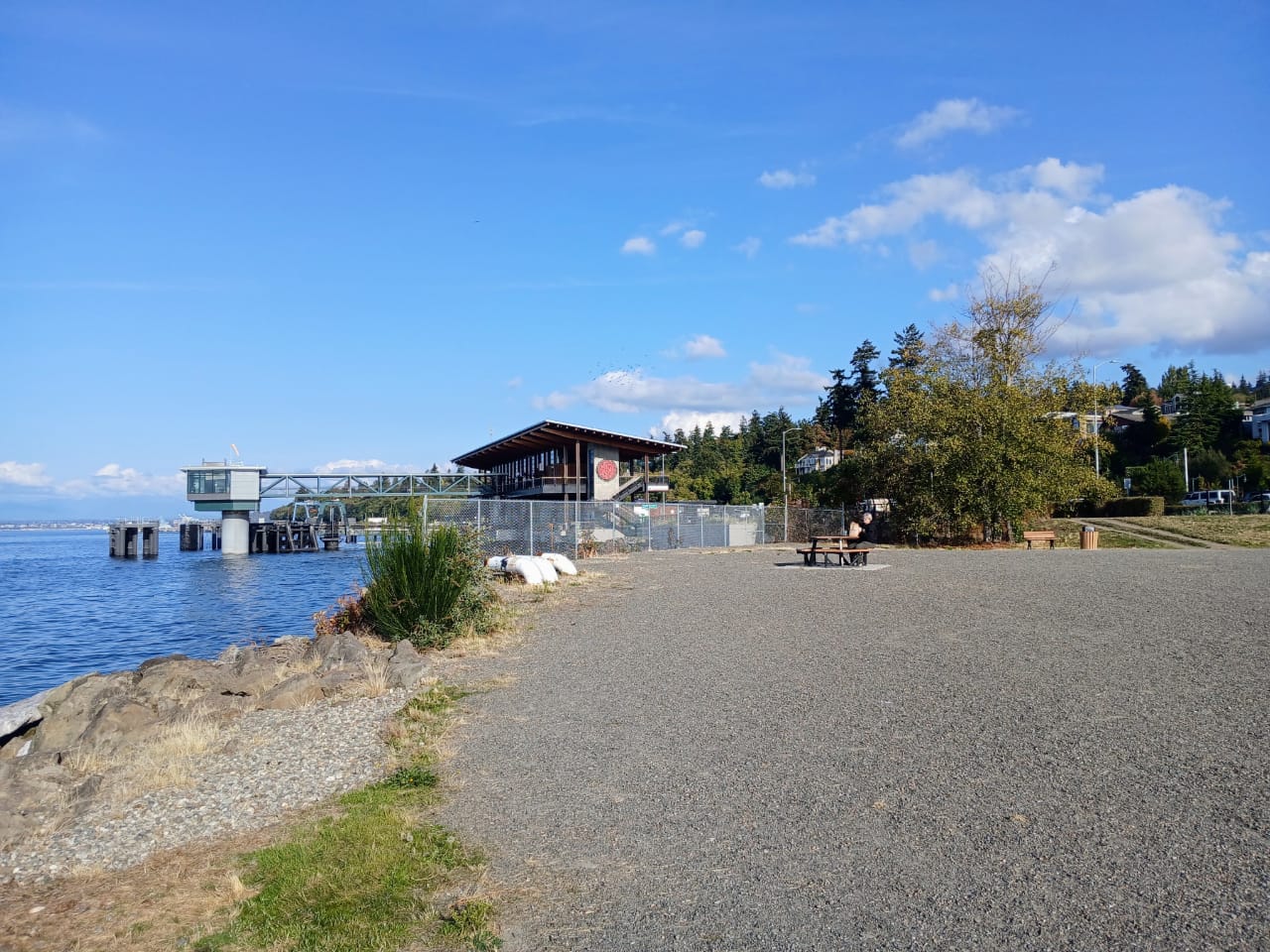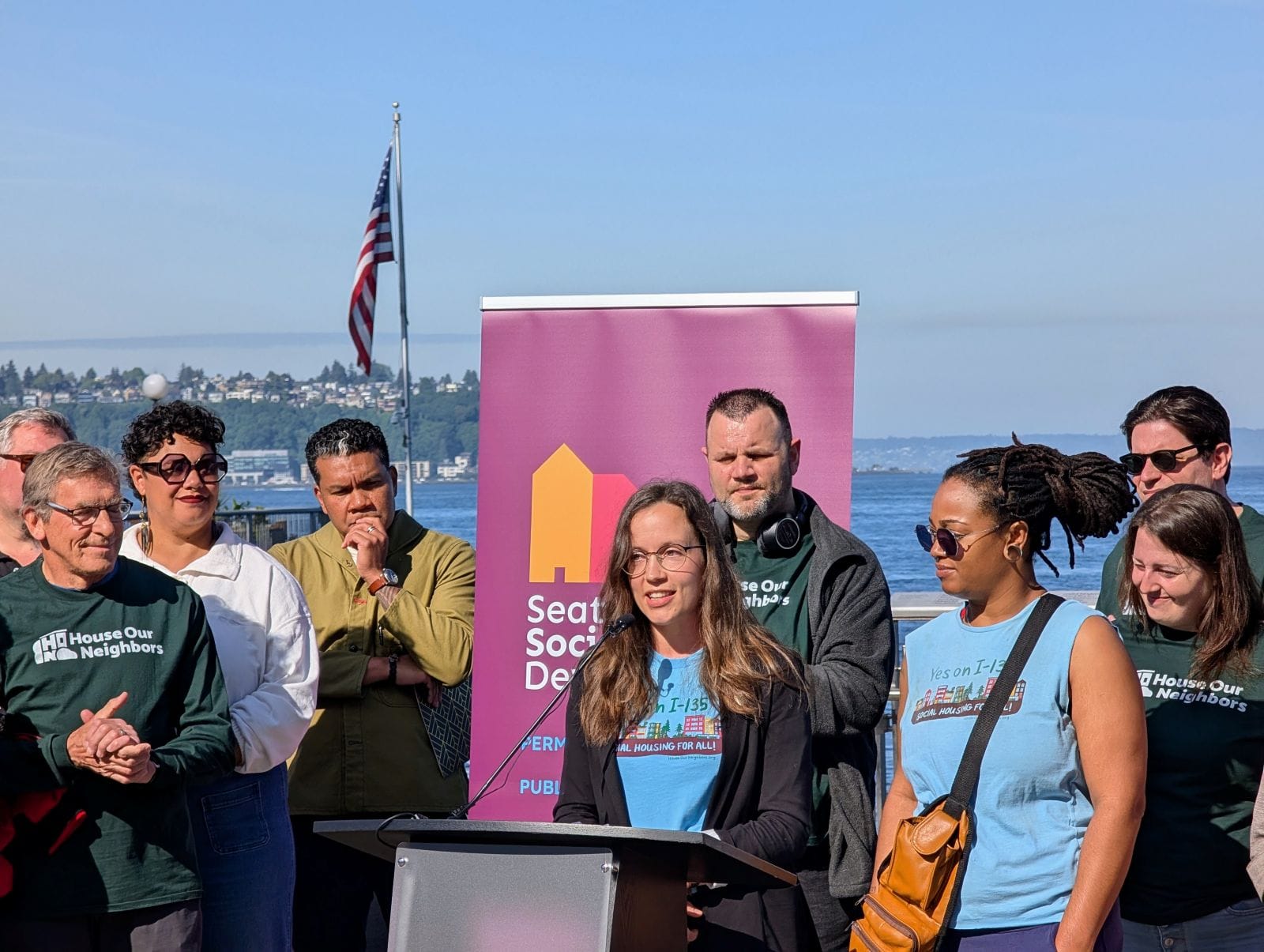
The Seattle Social Housing Developer has acquired its first building, clearing the way for it to begin renting to new tenants. SSHD interim CEO Tiffani McCoy announced the purchase Friday morning at a media event at Pier 58 in Downtown Seattle.
"The Seattle Social Housing Developer is acquiring an apartment complex right next to world-class amenities," McCoy said. "It's called Elara at the Market, and it's right next to our beloved Pike Place Market and our new Waterfront Park. It's currently a private asset, and we will be bringing it into public ownership. The building itself has 150 units, all in excellent condition. As of today, our lottery to apply for this housing is live on our website."
Interested tenants can apply here. McCoy noted that SSHD will eschew junk fees or hidden charges and intends to offer free, one-year ORCA transit passes to all residents.
On Thursday, the SSHD board approved a $60.9 million purchase of Elara at the Market, which is located at Western Avenue and Blanchard Street in Belltown. The building price works out to $406,000 per unit. Elara was built in 2018, and includes mostly one-bedroom and studio apartments, but also some two-bedroom units on upper levels.
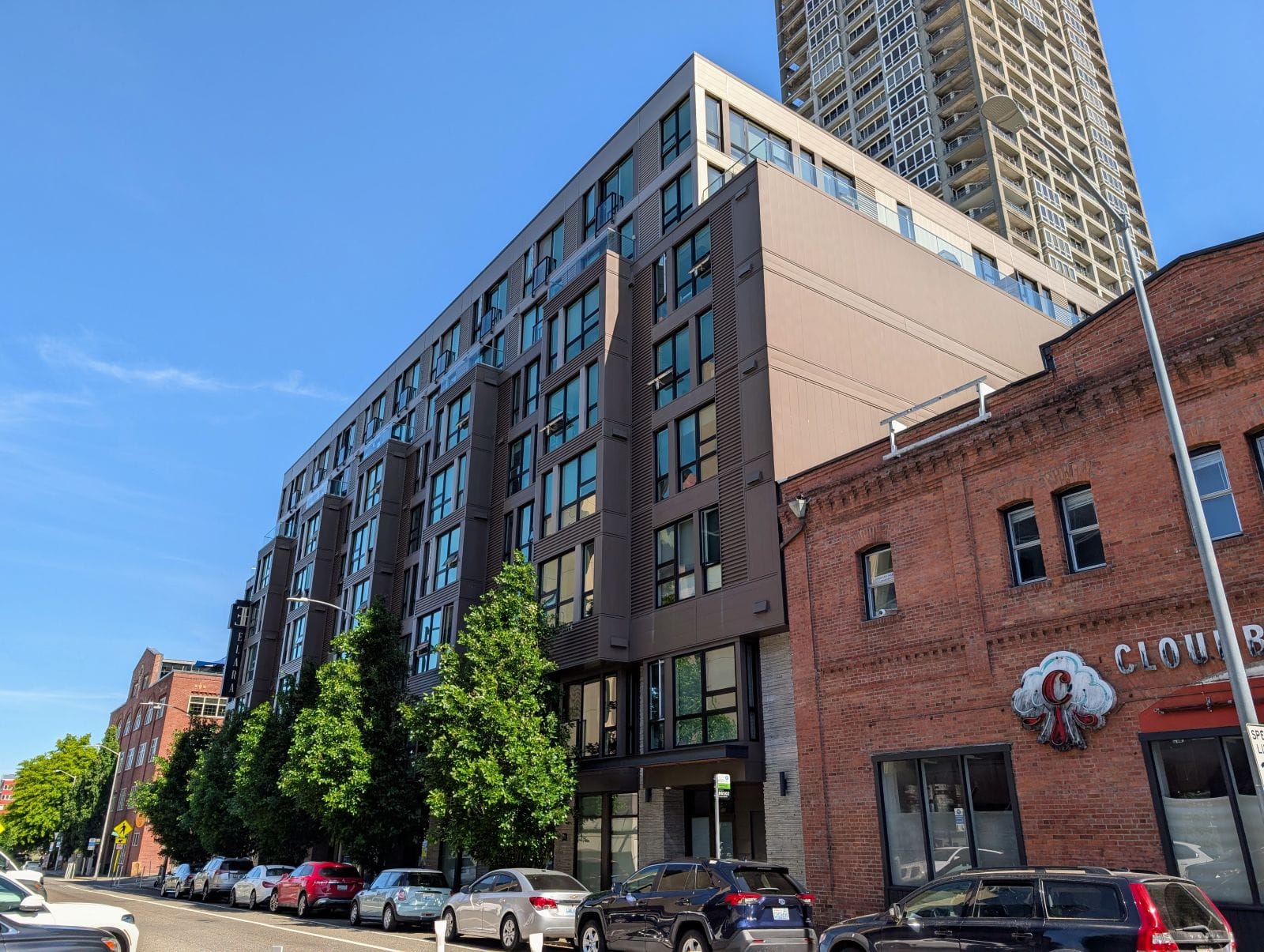
Existing tenants will be able to stay in the apartment building, and SSHD is pledging to freeze their rents for two years.
"Today a letter will be going out to all of the residents at the Elara announcing that we are going to be the new developer, and we will also be holding a town hall with residents early July to introduce them to the model, and to talk to them more, and to hear about any concerns that they might currently have in the building that we can address," McCoy said. "We will also be hiring a resident liaison position."
In accordance with its mixed-income model, SSHD is aiming to rent vacant units below market.
"We will fill the first 15 vacancies with households at or below 30% of the area median income," McCoy said. "The next 45 units will be filled with households with incomes between 30% and 50% of the median income. All told, we estimate we will be creating 60 units of deeply affordable housing in Belltown this year that would not have existed otherwise."
Once 60 units have been leased, 23 more will be leased at 65% of the area median income (AMI), followed by 22 more leased at 80% of AMI, SSHD spokesperson Lilly Ana Fowler said. These below market leases will be made as existing tenants move out.
SSHD will continue to keep 30 units affordable via the Multifamily Tax Exemption (MFTE) program, which the current owner also participated in. The agency is not counting those MFTE units toward its 75 affordable unit target. In other words, just 45 units will ultimately be "market-rate" once the building has fully turned over.
Purchasing a relatively high-end apartment building located on prime real estate next door to Pike Place Market and Seattle's new billion-dollar overhauled Waterfront Park may strike some observers as an odd choice. Some may argued the SSHD should focus on new construction to boost supply overall. However, SSHD Director of Acquisitions James Mayton noted that buying an existing high-quality apartment building has the advantage of creating a revenue stream and securing an asset off of which the developer can bond against to buy more property, treating it like a revolving loan.
"If you look over time, right now downtown apartment prices are historically depressed," Mayton said. "We are buying a building that would cost any developer at least 30% more to develop the same project in that same location. So, our discount to replacement cost is huge. We are not just going to buy buildings; we're also buying development sites – as we speak – negotiating different opportunities, pursuing new development, adding to that housing supply. But before we can develop quality projects, we need to pilot and perfect our operations model, and acquiring really great assets at a steep discount today is the perfect way for us to do that."
Peace of mind for tenants amid affordability crisis
Councilmember Alexis Mercedes Rinck, who endorsed and campaigned for the Proposition 1A ballot measure unlike a number of her council colleagues, spoke at the event. She noted the important step the purchase represented and what it would mean to tenants.
"I've always been a renter, and like a lot of Seattle renters, I have felt that low-grade anxiety that lives in the back of your mind," Rinck said. "What happens if the rent goes up again? What happens if I can't stay in the city that I love, where my family is, where my friends are? That feeling is not a personal failure, it is a policy failure. And today we take a step towards fixing it."
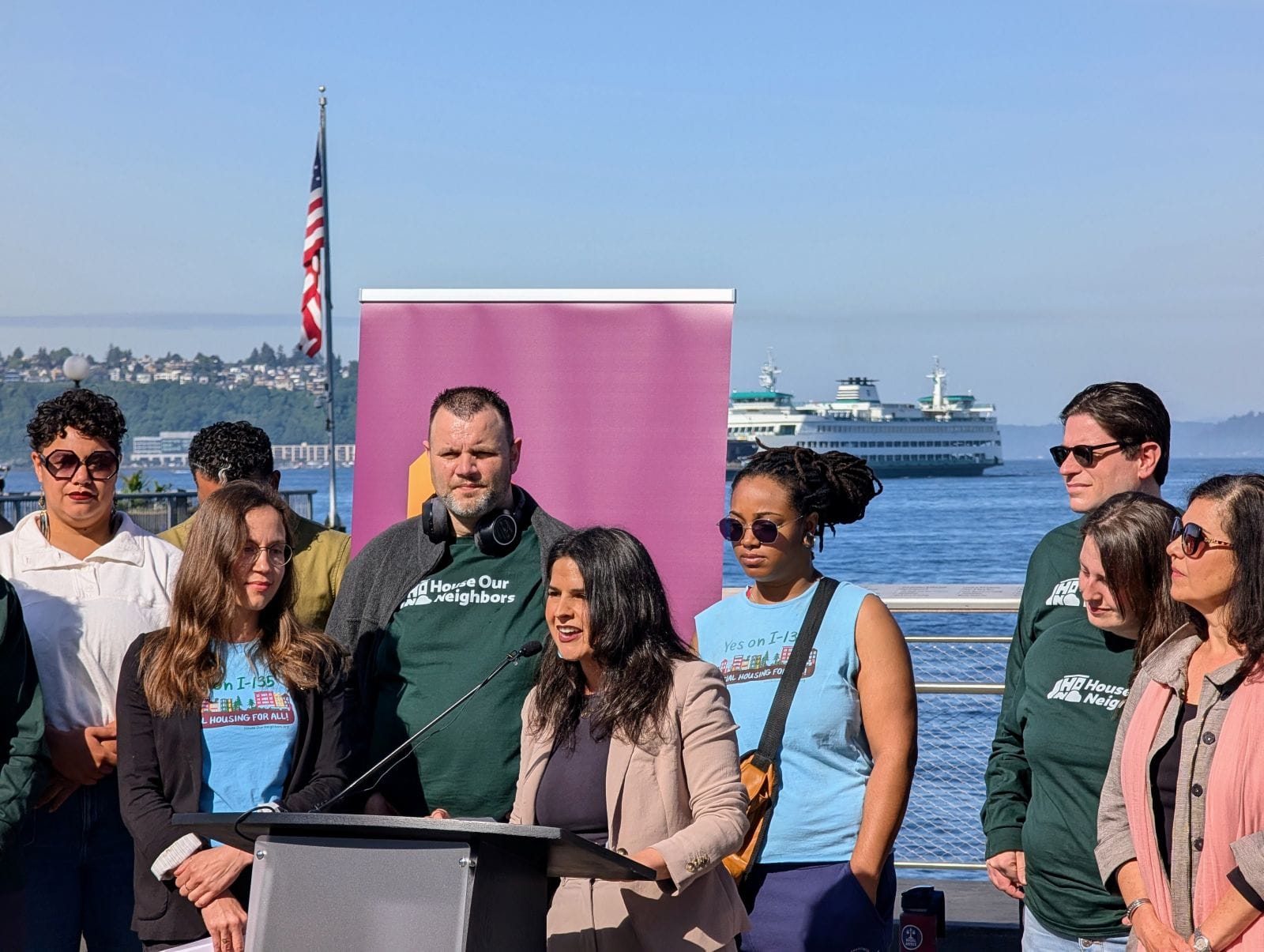
Deputy Mayor Brian Surratt echoed that sentiment, after noting Mayor Katie Wilson had wanted to attend the announcement, but had a conflicting event with a group of elementary school students.
"Social housing is no longer just an idea or a campaign, it is a reality in Seattle today, and that matters because everyone in this city knows that we are facing an affordability crisis, and at the center of that crisis is the cost of housing," Surratt said. "People across Seattle will disagree on a lot of things, but there is one broad agreement. We need to build more housing of all types, and we need to build more housing that people can actually afford. Social housing is part of how we get to that point."
Economic boost
With his economic development background, Surratt pointed out that social housing and more affordable housing broadly will be an economic boost to the city, giving residents more spending power and breathing room to invest in their futures.
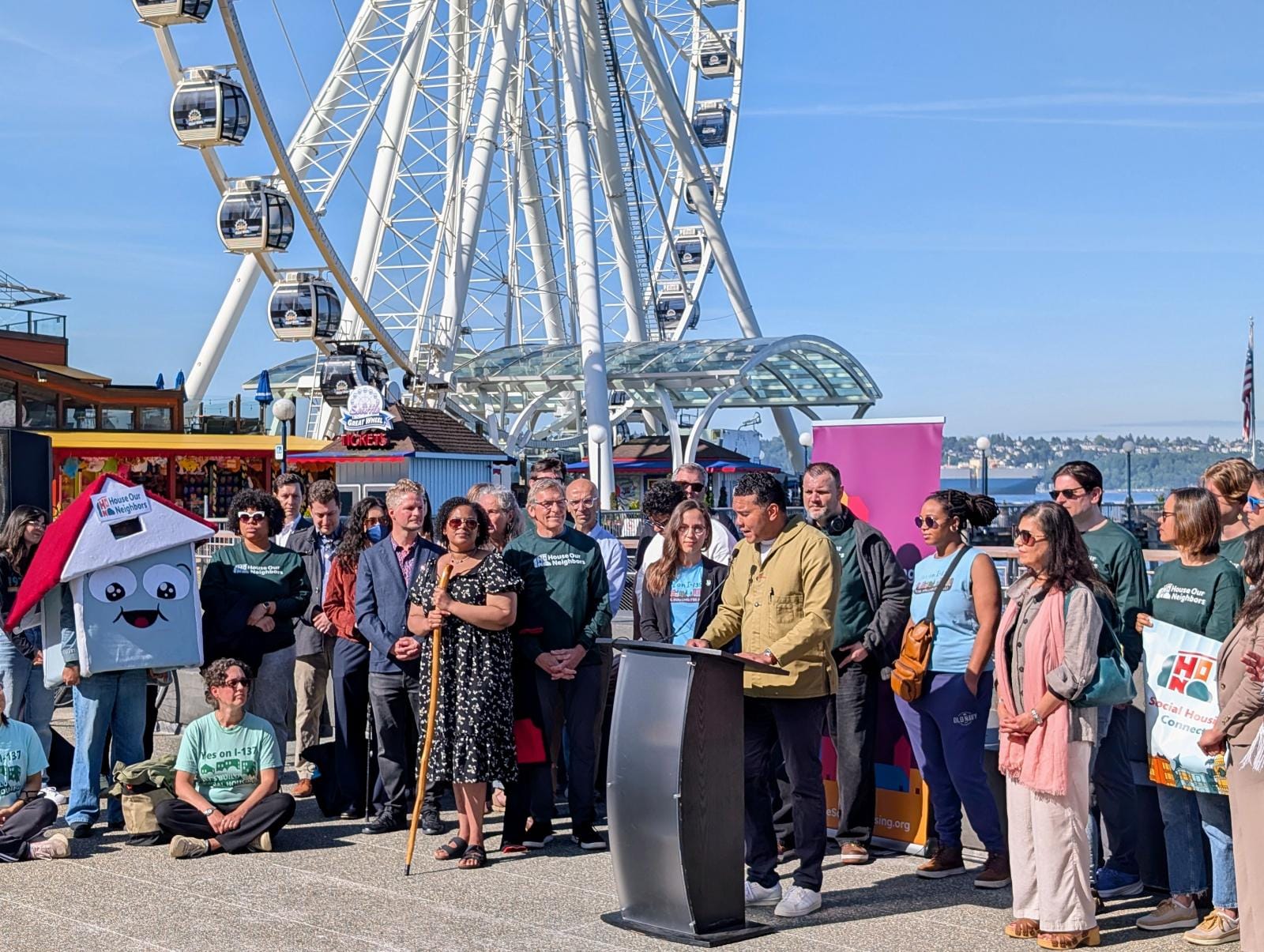
"It's not just a housing strategy, it's an economic strategy. When families are spending more than half of their income on rent, that means less money going back to their neighborhood businesses, less stability for working people and fewer opportunities for families to put down roots and build a future," Surratt said. "It makes it harder for artists, teachers, health care workers, service workers, and young families to stay in Seattle and thrive. If we truly believe that Seattle is a welcoming city, then we have to build a city where people of all different incomes and backgrounds can afford to live with dignity."
Building amenities
McCoy said they do not anticipate any significant changes to the building being necessary since it's a relatively new "Class A" property, but she said one upgrade to a common space amenity could be on deck. At the SSHD board meeting Thursday, staff and board also discussed the possibility of adding a heat pump to replace the gas boiler in the building, increasing the energy efficiency of the building, since environmental sustainability is among the goals of the public developer. No timeline or formal approval for such a project has yet been made.
"One of the common areas that we may be able to turn into something else that the residents want," McCoy said. "I see this as the first opportunity to go around to the residence and, hey, there's this room in the building that we don't think is utilized a lot. What do you think we should repurpose this for?"
Many tenants used to corporate landlords would likely find the experience of being proactively asked and encouraged to request major building upgrades as a foreign experience.
The previous owner of Elara was Johnson Development Associates, which advertised the building as a "LEED Gold certified mid-rise apartment development with top of the market amenities, including condo-quality finishes, a pet park, and a large rooftop sky-lounge with water views." The company's website stated that "the downtown Belltown market has seen average annual rent growth of 7.0% during the last five years."
The campaign that made it possible
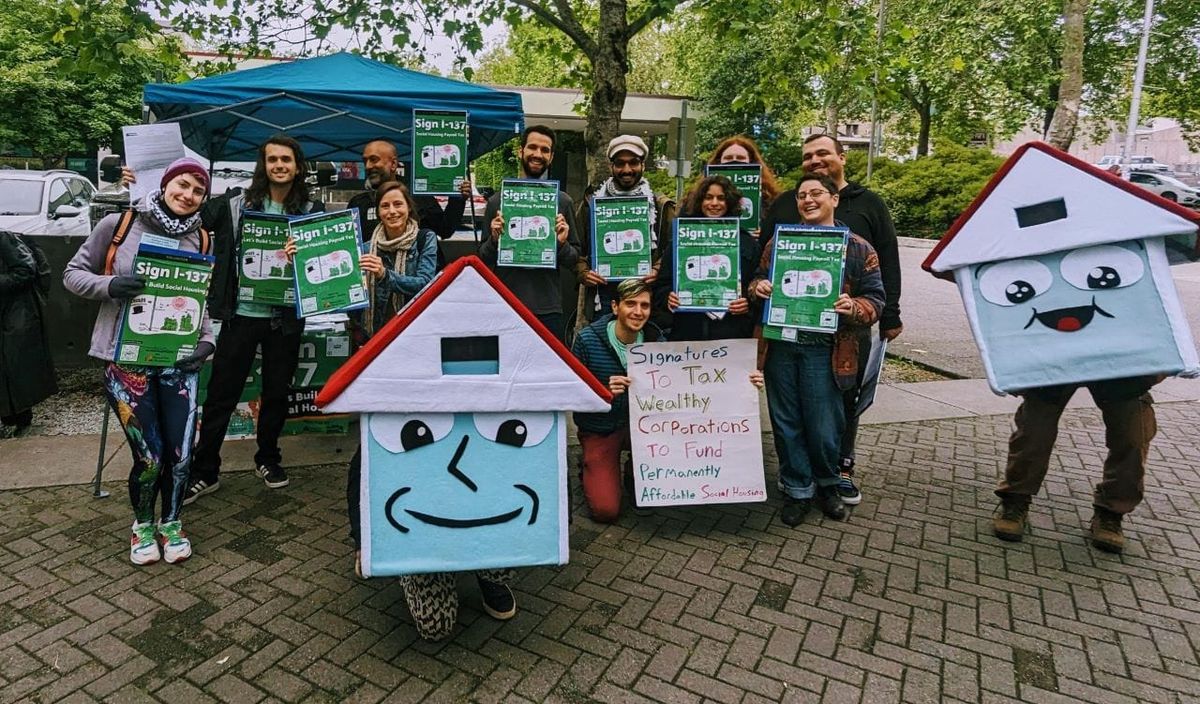
Seattle voters approved the SSHD's establishment in 2023 and backed it with a dedicated funding source via the Proposition 1A ballot measure in 2025. That revenue source is an excess compensation tax targeting companies paying individuals more than $1 million annually in salary and benefits.
"I was there the night Prop 1A won, and the energy in that room was something I will never forget," Rinck said. "People have been who had been told a tax on excess compensation to fund social housing was too ambitious, too radical, too unrealistic. Those folks were celebrating Seattle voters saying yes, not once, but a second time for this vision. And today that vision becomes a reality, as we are here to announce the first acquisition by the Seattle Social Housing Developer: 150 homes, 75 new affordable homes."
While initial projected to earn just over $50 million annually, the tax actually pulled in $115 million in its first year. Those proceeds funded SSHD's first purchase.
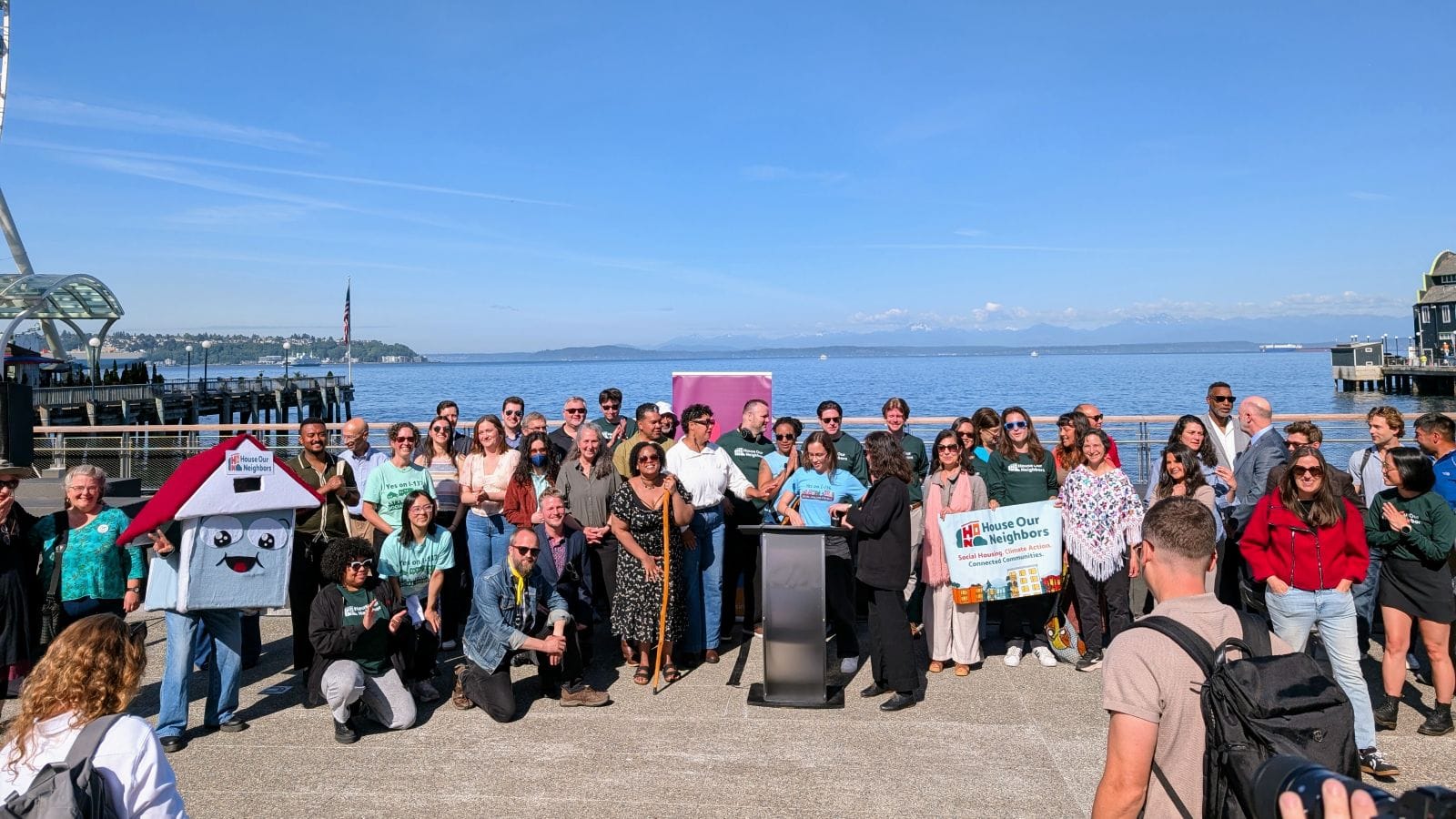
While the social housing developer does intend for most of its portfolio to be buildings it constructs itself, the plan was always to begin by purchasing existing apartment stock in order to have a safer bet as a first move and collateral to begin bonding to acquire more property. McCoy said they hope to announce their second property purchase by the end of the year.
Along with the financial boost came a shift in political winds, as Wilson credited the Prop 1A's successful campaign with convincing her to jump in the mayoral race last spring. Social housing proved a potent issue in that race, as Wilson's support for the measure contrasted sharply with incumbent Mayor Bruce Harrell being the face of the opposition. Despite being heavily outspent, Wilson ended up winning a close race, notching a 2,011-vote victory.
Even early into its advent, the Seattle Social Housing Developer is proving to be a touchstone for other cities hoping to emulate the model.
"Not even two months ago, my office hosted elected officials from 20 different cities from around the country, right here, actually just a few blocks away, to talk about affordable housing, anti-displacement, and equitable development," Rinck said. "And guess what, they wanted to hear about our social housing developer cities from across the country are watching what we're doing here, and what we are doing here today is leading a national conversation."
In closing, Rinck thanked all the campaign volunteers who helped put Prop 1A over the top.
"I'll close with some gratitude, gratitude for the 35,000 doors knocked, the 63,000 phone calls made by regular people who decided that Seattle could do better, and then went out and proved it," Rinck said. "That is why we are here today, not because it is easy, but because people loved their neighbors and their city so much they fought for them. And then the team at the Social Housing Developer took that mandate and ran with it."
Clarification: The SSHD will be counting the MFTE units separating from the 75 affordable units it is targeting to create at Elara. The original version indicated otherwise.
 Doug Trumm